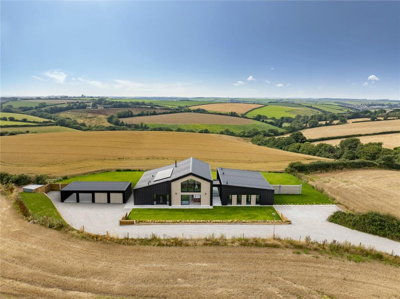
Browse 1 home new builds in Ruanlanihorne, Cornwall from local developer agents.
The Ruanlanihorne property market offers detached, semi-detached, and terraced houses spanning various price ranges and neighbourhoods. Each listing includes detailed property information, photographs, and direct contact with the marketing agent.
£398k
4
0
390
Source: home.co.uk
Showing 4 results for Houses new builds in Ruanlanihorne, Cornwall. The median asking price is £397,500.
Source: home.co.uk
Detached
2 listings
Avg £560,000
Semi-Detached
1 listings
Avg £425,000
Terraced
1 listings
Avg £275,000
Source: home.co.uk
Source: home.co.uk
Browse the latest properties for sale in Ruanlanihorne, Cornwall. Our comprehensive listing includes traditional stone cottages, historic farmsteads, and converted agricultural buildings across this beautiful Roseland Peninsula parish.

£370,000
Average Property Price
251
Parish Population
106
Households
24
Listed Buildings
15 miles
Distance to Truro
The Ruanlanihorne property market reflects the broader trends of Cornwall's rural housing sector, with detached properties commanding premium prices of around £422,000 in the current market. Semi-detached homes in the county average approximately £280,000, while terraced properties typically sell for around £230,000. Flats and maisonettes, though less common in this predominantly rural parish, average around £147,000. These figures position Ruanlanihorne within Cornwall's middle-to-upper price brackets, driven by the area's exceptional natural beauty and limited supply of available properties.
Cornwall's housing market experienced a 2.5% price reduction in the year to December 2025, with the average property falling from £284,000 to £277,000. Despite this national adjustment, the Roseland Peninsula has maintained relative stability, with demand from buyers seeking coastal and countryside properties continuing to support values. The area benefits from a diverse property stock, ranging from centuries-old stone cottages built with local grey slate to converted agricultural buildings, with 24 listed buildings and structures within the parish ensuring a rich architectural heritage.
Property availability in Ruanlanihorne tends to be limited compared to urban markets, with just 106 households recorded in the most recent census data. This scarcity of supply, combined with the parish's desirable location within the Cornwall Area of Outstanding Natural Beauty, means that suitable properties can attract competitive interest from buyers drawn to the Roseland Peninsula's unspoiled character. Recent sales data from the TR2 postcode area shows transactions completing throughout the year, including properties sold in September 2025 and February 2024, indicating ongoing market activity despite the smaller pool of available homes.
Understanding the construction methods used in Ruanlanihorne properties helps buyers appreciate the characteristics of the local housing stock. Buildings throughout the parish and its surrounding hamlets, including Ruan Highlanes, Treworga, Trelonk, and Trevillas, predominantly feature local grey slate stone as their primary building material. This slate, quarried from local killas rocks underlying the Roseland Peninsula, gives many properties their distinctive grey-blue appearance that harmonises with the landscape. Nineteenth and early twentieth-century buildings in the area often incorporate render applied over stone walls, a construction approach that provides additional weather protection while maintaining traditional aesthetics.
Historical trade through the former Ruanlanihorne quay brought building materials including coal, timber, and slate that shaped construction throughout the parish. Local brick-making operations, particularly the Trelonk works which operated from 1891 to 1907, produced bricks that were used extensively in buildings across Truro, Falmouth, and the wider Roseland Peninsula. These local bricks, fired from clay found in the area, often display the warm red-orange hue characteristic of Cornish brickwork and can be identified in period properties throughout the parish.
Local legend holds that many cottages in Ruanlanihorne were constructed using stone salvaged from the demolished Lanihorne Castle, which was built in the 14th century. If accurate, this would represent an early example of reclaimed building materials being used in the parish. The Church of St Rumon, dating from 1321 with potentially earlier structures from 936 AD, showcases the craftsmanship of medieval builders working with local stone. Given that there is little 20th-century housing in the parish and most development involves redevelopment or conversion of existing buildings, the majority of properties available in Ruanlanihorne will be constructed using these traditional methods and materials.
Properties built from solid stone walls, as most traditional Cornish cottages are, require specific maintenance considerations that buyers should understand. Solid walls lack the cavity found in modern construction and therefore have different insulation properties and moisture management characteristics. Render finishes, common on buildings from the Victorian and Edwardian periods, may require repainting or repair every 10-15 years depending on exposure to coastal weather. The proximity of the Roseland Peninsula to the sea means that salt-laden winds can accelerate wear on external finishes, particularly on south and west-facing elevations exposed to prevailing Atlantic weather systems.
Ruanlanihorne offers a lifestyle rooted in Cornwall's agricultural traditions and stunning natural landscapes, with the parish sitting squarely within the Cornwall Area of Outstanding Natural Beauty. The village and its surrounding hamlets, including Ruan Highlanes, Treworga, Trelonk, and Trevillas, form a community where the pace of life remains gentle and unhurried. The local economy has evolved from its historic roots in agriculture, fishing, and small-scale industry to one increasingly focused on tourism and conservation, with negligible unemployment recorded in recent censuses. Many residents work in care and social services or professional and scientific industries, often commuting to nearby Truro or Falmouth.
The parish is steeped in history, with the Church of St Rumon dating back to 1321 and potentially earlier structures from 936 AD, while Lanihorne Castle was built in the 14th century. Local legend holds that many cottages in the village were constructed using stone salvaged from the demolished castle, adding to the area's mystique. The historic port, once handling coal, timber, lime, and bricks traded between Roseland and beyond, has gradually silted up over the centuries, leaving behind the scenic salt marshes that now form a wildlife haven. The area's heritage of local brick-making, with Trelonk works operational from 1891 to 1907, further underscores the craftsmanship of traditional Cornish building methods still evident today.
Daily life in Ruanlanihorne requires an appreciation for rural living, with most amenities located in nearby towns. The nearest convenience shops and post offices are in surrounding villages on the Roseland Peninsula, while weekly shopping and larger services are found in Truro or St Mawes. Community activities centre around the village hall, local pubs, and the parish church, with events throughout the year bringing residents together. The sense of community in a parish of just 251 residents is notably strong, with neighbours knowing one another and a tradition of mutual support that makes rural living particularly rewarding for those seeking escape from urban bustle.
The area's natural environment offers exceptional opportunities for outdoor pursuits, including walking along the network of public footpaths that criss-cross the parish and peninsula. The nearby Fal Estuary provides opportunities for sailing, kayaking, and coastal walks, while the salt marshes attract birdwatchers interested in observing wading birds and marine wildlife. The gentle terrain around Ruanlanihorne contrasts with the hillier sections of the Roseland Peninsula, making cycling and walking accessible to most fitness levels, though the underlying Killas rock geology creates a varied topography throughout the area.
Families considering a move to Ruanlanihorne will find that the parish's rural character means primary educational facilities are located in nearby villages on the Roseland Peninsula. The closest primary schools serve the surrounding communities, with secondary education typically provided in Truro, the nearest major town approximately 10-15 miles away. Parents should research specific school catchments and admission arrangements, as catchment areas can vary and competition for places at popular schools can be strong. Many families in this part of Cornwall choose to travel to Truro for a wider selection of educational options at all levels.
The broader Truro area offers several well-regarded secondary schools, sixth form colleges, and further education facilities, making it a natural destination for older children. For families prioritising education in their property search, focusing on proximity to these established educational hubs, along with transport connections to Truro, becomes an important consideration. Private schooling options in Cornwall include several independent schools in Truro and the surrounding area, providing additional choices for parents seeking alternative educational approaches. Prospective buyers with school-age children should always verify current school performance data, catchment boundaries, and admission policies directly with Cornwall Council or individual schools, as these details can change.
School transport arrangements are an important practical consideration for families moving to Ruanlanihorne. Cornwall Council provides school transport for children of primary age who live more than two miles from their nearest qualifying school, and for secondary pupils living more than three miles away. However, families should confirm current arrangements and any associated costs, as rural transport provision can vary. The commute from Ruanlanihorne to schools in Truro takes approximately 30-45 minutes by car, so families should factor this travel time into their daily routines when considering properties in the parish.
Transport connectivity from Ruanlanihorne reflects its rural nature, with the nearest mainline railway station located in Truro, providing services to London Paddington, Exeter, and Plymouth. The village sits approximately 15 miles from Truro, requiring most residents to travel by car for daily commuting and amenities. The A39 trunk road provides the primary route connecting the Roseland Peninsula to the rest of Cornwall, passing through nearby St Mawes and Falmouth. Daily life in Ruanlanihorne typically revolves around car ownership, with local bus services offering limited but useful connections to surrounding villages and market towns.
For those working in Truro or Falmouth, the commute from Ruanlanihorne takes approximately 30-45 minutes by car, though this can extend significantly during peak hours or during the summer tourist season when Cornwall's roads become considerably busier. Cyclists and walkers will appreciate the network of country lanes and footpaths that criss-cross the parish and peninsula, though the hilly terrain and narrow roads require care. The nearest major airport is Newquay Cornwall Airport, approximately 20 miles away, offering seasonal flights to various UK and European destinations. Ferry services from nearby St Mawes to Falmouth provide an alternative crossing across the Fal Estuary for both vehicles and passengers.
Mobile phone reception and broadband connectivity deserve investigation before purchasing property in Ruanlanihorne. As with many rural areas in Cornwall, mobile signal can be patchy depending on the network provider and specific location within the parish. Some properties may require a signal booster or landline internet connection to ensure reliable communication. Broadband speeds in rural parts of the Roseland Peninsula vary considerably, with some properties having access to superfast connections while others rely on slower satellite or mobile broadband services. Checking current connectivity at any property under consideration is strongly recommended before committing to a purchase.
Explore the local property market, understand price trends in the TR2 postcode area, and familiarise yourself with the parish's character, including the prevalence of listed buildings and the rural lifestyle. Spend time visiting the Roseland Peninsula to appreciate its seasonal rhythms and community atmosphere. Understanding the limited supply of properties in this small parish will help you act quickly when suitable homes become available.
Contact lenders or mortgage brokers to obtain an Agreement in Principle before beginning your property search. This strengthens your position when making offers and demonstrates to sellers that you have secured financing. Current rates vary, so comparison shopping is advisable. For properties in the TR2 area averaging around £370,000, ensure your mortgage in principle covers the full purchase price plus associated costs.
Work with local estate agents to arrange viewings of properties matching your criteria. Given the limited stock in this small parish, be prepared to act quickly on suitable properties. Consider viewing a range of properties to understand the local market fully, including older stone cottages and converted agricultural buildings which form a significant portion of available housing stock.
Before completing your purchase, instruct a qualified surveyor to conduct a RICS Level 2 HomeBuyer Survey. For properties in Ruanlanihorne averaging around £370,000, expect to pay approximately £400-£700 depending on property value and complexity. This survey will identify any structural issues, damp, or defects common in older Cornish properties constructed from local stone and slate. Listed buildings may require the more comprehensive RICS Level 3 Building Survey.
Choose a conveyancing solicitor to handle the legal aspects of your purchase. They will conduct local searches, handle contracts, and ensure all documentation is in order. For properties in Cornwall, searches will include drainage and water authority checks. Given the rural nature of Ruanlanihorne, additional investigations into septic tank arrangements and private water supplies may be necessary.
Once all searches are satisfactory and both parties agree on terms, your solicitor will exchange contracts and set a completion date. On completion day, the remaining funds are transferred and you receive the keys to your new Ruanlanihorne home. Budget for Stamp Duty Land Tax, solicitor fees, and removal costs when planning your move.
Purchasing a property in Ruanlanihorne requires careful consideration of several factors unique to this historic Cornish parish. With 24 listed buildings and structures within the parish, buyers must understand the implications of listed status, which can restrict alterations, repairs, and renovations. If you are considering a listed property, factor in potentially higher maintenance costs and the need for planning permission for certain works. The prevalence of traditional construction using local grey slate stone, render on stone walls, and materials salvaged from historic structures means that older properties may require more maintenance attention than modern builds.
Flood risk warrants investigation given the parish's position between the River Fal and the Ruan River, with historic silting of waterways suggesting ongoing hydraulic considerations. The Ruan River was historically navigable but has gradually silted up over the centuries, and the area now includes scenic salt marshes that form a wildlife haven. Prospective buyers should request drainage surveys and review any available flood risk data before committing to a purchase. The area's proximity to the Fal Estuary also means that coastal properties may experience salt corrosion and exposure to prevailing winds, factors that can accelerate wear on roofing materials and external joinery.
Second homes constitute a significant portion of local housing stock, at around 16-20%, which can affect the character of the community at different times of year and may have implications for local services and amenities. The seasonal nature of the Roseland Peninsula means that some facilities may have reduced hours during winter months, while summer brings additional visitors and traffic to the area. Understanding this pattern helps buyers determine whether permanent residence in Ruanlanihorne suits their lifestyle preferences.
Leasehold versus freehold tenure should be verified for all properties, as ground rent and service charge arrangements can vary considerably. Many rural Cornish properties are freehold, but converted buildings or apartments within larger estates may have leasehold arrangements. Always review the terms carefully and factor ongoing costs into your budget. Properties in this area typically lack the amenities found in urban settings, so consider your requirements for internet connectivity, mobile phone reception, and access to shops and services when evaluating specific locations within the parish.
Properties in Ruanlanihorne often differ from urban homes in ways that require specific attention during the buying process. Many homes in the parish rely on private water supplies rather than mains water, with properties drawing water from wells, boreholes, or springs. These private supplies require regular testing to ensure water quality and may involve maintenance responsibilities that buyers should understand before purchase. Similarly, many rural properties in the area use septic tanks or private drainage systems rather than connecting to mains sewage, with periodic emptying and maintenance required.
Energy performance in older stone properties can be a consideration for buyers. Traditional Cornish cottages constructed from solid stone walls typically have different insulation characteristics compared to modern cavity-wall construction. Some properties may have been upgraded with additional insulation, while others retain their original construction methods. An Energy Performance Certificate is required for all property sales and will indicate the current energy efficiency rating, helping buyers understand potential heating costs and any improvement opportunities that may exist.
Planning restrictions in the Cornwall Area of Outstanding Natural Beauty can affect what owners can do with their properties. Any significant alterations or extensions typically require planning permission from Cornwall Council, and work must often meet strict aesthetic requirements to preserve the character of the area. Properties listed as protected structures require additional consent for changes from Cornwall Council's conservation team. Understanding these requirements before purchase helps avoid costly surprises if you plan to renovate or extend a property in the future.
Properties in the surrounding TR2 postcode area have an average price of approximately £370,000. Detached properties average around £422,000, semi-detached homes approximately £280,000, and terraced properties around £230,000. Flats and maisonettes average £147,000. The Cornwall average was £277,000 in December 2025, representing a 2.5% decrease from the previous year, though the Roseland Peninsula has maintained relative price stability due to continued demand for rural and coastal properties. With only 106 households in the parish and limited new-build activity, supply constraints help support values in this sought-after location.
Properties in Ruanlanihorne fall under Cornwall Council's jurisdiction. Council tax bands depend on the property's assessed value and range from Band A for the lowest-valued properties up to Band H for the most expensive homes. You can check specific bands on the Cornwall Council website or via the Valuation Office Agency using the property address. Given the premium nature of property in this AONB location, many homes fall into mid-to-higher bands, so factor these ongoing annual costs into your budget calculations alongside mortgage payments and maintenance expenses.
Ruanlanihorne is a small rural parish with primary schools located in nearby villages on the Roseland Peninsula. Secondary education is typically accessed in Truro, approximately 15 miles away, where several well-regarded schools operate. Families should research specific school catchments and admission criteria directly with Cornwall Council, as arrangements can change and vary by location. Private education options are also available in the Truro area. The school transport arrangements from Ruanlanihorne to Truro schools involve a journey of approximately 30-45 minutes, so families should consider this commute time when evaluating educational options for school-age children.
Public transport options from Ruanlanihorne are limited, reflecting its rural character. The nearest mainline railway station is in Truro, approximately 15 miles away. Local bus services connect the Roseland Peninsula to surrounding towns, but services are infrequent compared to urban areas. Most residents rely on private car ownership for daily travel. The nearest ferry crossing is from St Mawes to Falmouth across the Fal Estuary. For commuters working in Truro or Falmouth, the practical reality is that car ownership is essential for daily travel, though the scenic drive through the Roseland Peninsula makes the commute more pleasant than many rural routes.
Ruanlanihorne and the broader Roseland Peninsula attract buyers seeking lifestyle investments, holiday homes, and rental properties. The Cornwall AONB designation helps protect property values, while tourism demand supports short-term rental opportunities. However, buyers should note that second homes constitute 16-20% of local housing stock, and planning restrictions on holiday lets are evolving. The market is relatively illiquid due to limited supply, so capital growth may be slower than in more active markets. All investment decisions should consider individual circumstances and local market conditions. Properties in Ruanlanihorne can offer both lifestyle benefits and potential rental income during peak holiday seasons, though buyers should understand the seasonal nature of tourism in this part of Cornwall.
Stamp Duty Land Tax rates for residential properties start at 0% on the first £250,000 of purchase price, rising to 5% on the portion between £250,001 and £925,000, then 10% up to £1.5 million, and 12% above that. First-time buyers benefit from relief on the first £425,000, with 5% applied between £425,001 and £625,000. Properties above £625,000 do not qualify for first-time buyer relief. Always verify current thresholds with HM Revenue and Customs, as rates can change. For a typical Ruanlanihorne property at the TR2 average of £370,000, a standard buyer would pay approximately £6,000 in Stamp Duty, while a first-time buyer would pay £0 under current thresholds.
When viewing properties in Ruanlanihorne, pay particular attention to the condition of stone walls and slate roofing, as these traditional materials require specific maintenance knowledge. Check for signs of damp in solid-walled properties, and examine render finishes for cracking or deterioration, particularly on south and west-facing elevations exposed to coastal weather. Verify drainage arrangements, especially for properties relying on septic tanks or private water supplies. Given the area's history of river silting, ask about any flood risk and review whether the property has appropriate insurance. For listed buildings, confirm what restrictions apply and factor higher maintenance costs into your budget.
No specific active new-build developments within the Ruanlanihorne postcode area were found in recent searches. The parish has little 20th-century housing, with most development involving redevelopment or conversion of existing buildings rather than new construction on greenfield sites. This scarcity of new-build supply contributes to the limited overall property availability in the parish. Buyers seeking modern construction may need to consider nearby areas in the TR1 or TR8 postcodes, while those purchasing in Ruanlanihorne itself will typically find period properties requiring varying degrees of modernisation and maintenance.
From 4.5%
Professional mortgage advice and competitive rates for your Ruanlanihorne property purchase
From £499
Expert legal services for property transactions in Cornwall
From £400
Professional survey for properties in Ruanlanihorne, identifying defects common in older Cornish properties
From £85
Energy Performance Certificate required for all property sales
When purchasing a property in Ruanlanihorne, budgeting for additional costs beyond the purchase price is essential. Stamp Duty Land Tax applies to all residential purchases above £250,000 at standard rates, with first-time buyer relief potentially raising the threshold to £425,000 for eligible purchasers. For a typical Ruanlanihorne property priced at the TR2 area average of £370,000, a standard buyer would pay approximately £6,000 in Stamp Duty, while a first-time buyer would pay £0 under current thresholds. Properties priced above £625,000 do not qualify for first-time buyer relief.
Legal costs for conveyancing typically start from £499 for standard transactions, though more complex purchases involving listed buildings or unusual tenure arrangements may cost more. Local searches in Cornwall include drainage and water authority checks, environmental searches, and local authority queries, all of which your solicitor will arrange. A RICS Level 2 HomeBuyer Survey costs approximately £400-£700 for properties in this area, with older stone cottages and listed buildings potentially requiring the more comprehensive Level 3 survey at higher cost. An Energy Performance Certificate is mandatory and typically costs from £85. Factor in removal costs, potential renovation works, and a contingency fund equivalent to at least 10% of your budget for unexpected expenses.
Survey costs for properties in Ruanlanihorne reflect the age and construction type of most local housing stock. The national average for a RICS Level 2 survey is around £455, typically ranging from £416 to £639, though prices in Cornwall for properties around £370,000 may be closer to £525. Listed buildings and properties with complex historical construction may require the more detailed RICS Level 3 Building Survey, which in Cornwall typically costs between £700 and £1,200 or more. Given the prevalence of traditional stone construction and the coastal exposure experienced by properties on the Roseland Peninsula, a thorough survey is particularly valuable for identifying issues such as damp penetration, salt corrosion on fixings, or roof condition that may not be apparent from a visual inspection alone.
Properties New Builds In London

Properties New Builds In Plymouth

Properties New Builds In Liverpool

Properties New Builds In Glasgow

Properties New Builds In Sheffield

Properties New Builds In Edinburgh

Properties New Builds In Coventry

Properties New Builds In Bradford

Properties New Builds In Manchester

Properties New Builds In Birmingham

Properties New Builds In Bristol

Properties New Builds In Oxford

Properties New Builds In Leicester

Properties New Builds In Newcastle

Properties New Builds In Leeds

Properties New Builds In Southampton

Properties New Builds In Cardiff

Properties New Builds In Nottingham

Properties New Builds In Norwich

Properties New Builds In Brighton

Properties New Builds In Derby

Properties New Builds In Portsmouth

Properties New Builds In Northampton

Properties New Builds In Milton Keynes

Properties New Builds In Bournemouth

Properties New Builds In Bolton

Properties New Builds In Swansea

Properties New Builds In Swindon

Properties New Builds In Peterborough

Properties New Builds In Wolverhampton

Enter your details to see if this property is within your budget.
Loans, cards, car finance
Estimated property budget
Borrowing + deposit
You could borrow between
Typical borrowing
Monthly repayment
Est. at 4.5%
Loan-to-value
This is an estimate only. Your actual budget may vary depending on interest rates, credit history, and personal circumstances. For an accurate affordability assessment, speak to one of our free mortgage advisors.
This calculator provides estimates for illustrative purposes only and does not constitute financial advice. Your home may be repossessed if you do not keep up repayments on your mortgage. Estimates based on 4.5% interest rate, repayment mortgage. Actual rates depend on your circumstances.
Homemove is a trading name of HM Haus Group Ltd (Company No. 13873779, registered in England & Wales). Homemove Mortgages Ltd (Company No. 15947693) is an Appointed Representative of TMG Direct Limited, trading as TMG Mortgage Network, which is authorised and regulated by the Financial Conduct Authority (FRN 786245). Homemove Mortgages Ltd is entered on the FCA Register as an Appointed Representative (FRN 1022429). You can check registrations at NewRegister or by calling 0800 111 6768.

We use cookies to show you personalised content and improve your experience of our website. Find out more in our Privacy policy and Cookie policy.