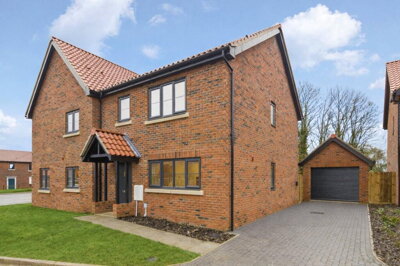
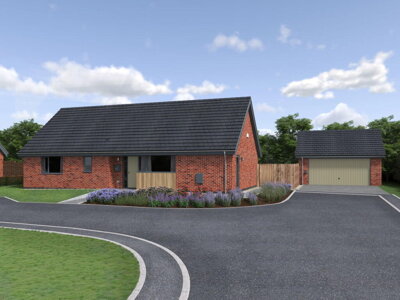
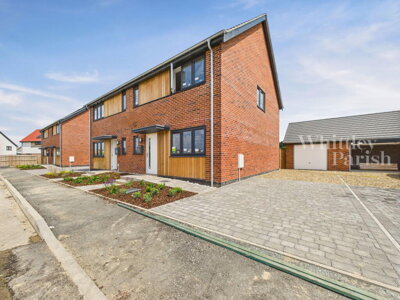
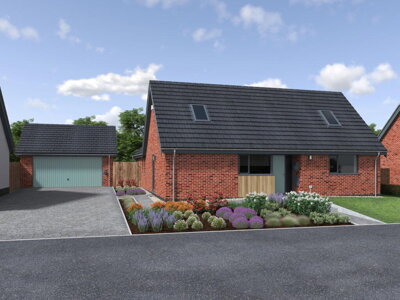
Browse 4 homes new builds in Quidenham, Breckland from local developer agents.
Three bedroom properties represent a significant portion of the Quidenham housing market, offering space for families with multiple reception rooms and gardens in many cases. Browse detached, semi-detached, and terraced options ranging across new residential developments.
£350k
1
0
110
Source: home.co.uk
Showing 1 results for 3 Bedroom Houses new builds in Quidenham, Breckland. The median asking price is £350,000.
Source: home.co.uk
Detached
1 listings
Avg £350,000
Source: home.co.uk
Source: home.co.uk
The Quidenham property market reflects the dynamics of rural Norfolk, where limited supply meets consistent demand from buyers seeking village living. Our data shows the average sold price for properties in Quidenham over the last twelve months stands at £340,000, based on postcode NR16 2AP transactions. This figure represents a significant shift from previous market conditions, with prices currently standing 46% below the 2019 peak of £625,000 and 11% below the more recent 2021 peak of £382,000. Such variations are typical for small rural villages where limited transaction volumes can cause notable price volatility between reporting periods.
Property types available in Quidenham predominantly include detached and semi-detached homes, consistent with the village's historic housing stock. Individual sales records confirm the presence of substantial period properties, including converted farm buildings and traditional Norfolk cottages constructed using brick and flint methods. No active new-build developments have been identified specifically within the Quidenham postcode area, meaning buyers seeking modern specification properties may need to broaden their search to surrounding villages such as Kenninghall or East Harling. The absence of new construction in the village itself helps preserve Quidenham's established character and historic architectural heritage.
For buyers considering a purchase in Quidenham, we recommend researching recent sales data thoroughly to understand current market conditions. The village's position within the Breckland district means property values are influenced by broader Norfolk market trends, including demand from London and Cambridge commuters seeking rural lifestyles with reasonable transport connections. Given the modest transaction volumes, each sale can have a significant impact on reported averages, making it important to examine individual property details rather than relying solely on headline figures.

Quidenham embodies the classic Norfolk village experience, offering residents a tranquil environment surrounded by agricultural farmland and gentle countryside. The village takes its name from the Old English "Cwiden's ham," indicating settlement in this location dates back over a millennium. The River Whittle flows through the village, with a monitoring station currently recording normal water levels, providing a pleasant natural feature for walks and wildlife observation. The landscape character is typical of South Norfolk, with large arable fields, hedgerow boundaries, and scattered woodland creating an open, spacious feel characteristic of the Breckland region.
The village is home to several notable historic buildings that define its architectural character. Quidenham Hall, a Carmelite Monastery dating to around 1600, stands as the village's ecclesiastical heritage. The Grade II listed Old White House, constructed in the mid-18th century, represents the Georgian architectural influence on the village. Other listed properties along Green Lane demonstrate the variety of traditional building styles found throughout the settlement, many featuring the brick and flint construction methods characteristic of Norfolk's rural villages. These heritage buildings contribute to the village's distinctive character and provide evidence of its long history as a centre of religious and agricultural importance.
As a small community, Quidenham's local amenities are limited, with residents typically travelling to nearby towns for everyday shopping and services. The market town of Attleborough, approximately five miles away, provides access to supermarkets, healthcare facilities, and other essential services. This arrangement is characteristic of villages throughout this sparsely populated region of East Anglia, where the rhythm of rural life involves regular journeys to larger settlements. Despite the need to travel for certain amenities, many residents appreciate the sense of community and peaceful surroundings that village living in Quidenham provides.

Families considering a move to Quidenham will find a selection of educational establishments within reasonable travelling distance. The village itself falls within the catchment area for primary schools serving the surrounding rural communities, with several village primary schools located within a five-mile radius. These include schools in nearby parishes, providing primary education for children from Quidenham and neighbouring villages. Parents are advised to verify current catchment area boundaries and admission arrangements directly with Norfolk County Council, as these can change and may influence school placement decisions.
For families prioritising academic excellence, the surrounding area offers several well-regarded secondary schools in nearby towns including Attleborough and Dereham. Attleborough Academy Norfolk provides secondary education with a range of GCSE and A-Level courses, serving students from the local catchment area. Secondary education options include schools in surrounding market towns, with school transport arrangements typically available for families living in this rural area. Given the rural nature of the area, families with school-age children should factor school run logistics and transport arrangements into their property search, particularly if seeking homes in the more isolated parts of the parish.
Sixth form provision is available at secondary schools in nearby towns, with additional further education colleges accessible in Norwich for students pursuing vocational or A-level qualifications. The University of East Anglia and Norwich University of the Arts provide higher education opportunities within reasonable reach for older students. Families moving to Quidenham from other areas should note that school transport arrangements are coordinated by Norfolk County Council, with eligible students entitled to free transport to their nearest appropriate school if it falls outside a specified distance from home.
Transport connectivity from Quidenham reflects its rural Norfolk location, with residents typically relying on private vehicles for the majority of journeys. The village sits approximately 5 miles from the market town of Attleborough, which provides access to rail services on the Norwich to Cambridge line. From Attleborough station, regular trains run to Norwich, with journey times of approximately 20 minutes, and onward connections to Cambridge and London Liverpool Street. The A11 trunk road passes nearby, providing direct access to Norwich to the northeast and Cambridge and the M11 motorway to the southwest, making car travel the primary mode of transport for most residents.
Bus services in the area are limited, typical of rural East Anglia, with weekday services connecting Quidenham to nearby towns and villages. The 13A bus service operated by Norfolk Green provides connections between Attleborough and surrounding villages including Quidenham, though weekend services are significantly reduced. Residents without private vehicles will find public transport options require careful planning, particularly for evening and weekend travel. Cycling is a practical option for local journeys within the village and to neighbouring communities, with Norfolk's relatively flat terrain favouring bicycle travel.
For commuting purposes, the proximity of the A11 makes Norwich accessible within approximately 30-40 minutes by car, while Cambridge can be reached in around an hour, opening employment opportunities in these larger cities for those willing to commute. Norwich provides employment across sectors including finance, healthcare, education, and technology, while Cambridge offers access to the thriving technology and bioscience industries. Home working has become increasingly viable for Quidenham residents, with superfast broadband now available in many parts of the village, though speeds can vary in more isolated properties.
Spend time exploring Quidenham at different times of day and week to understand the village's character, noise levels from nearby roads, and proximity to amenities in surrounding towns. Visit the village in person to experience the atmosphere and speak with existing residents if possible. Check local planning applications with Breckland Council to identify any proposed developments that might affect the area.
Contact a mortgage broker or lender to obtain an agreement in principle before viewing properties. This demonstrates your financial readiness to sellers and helps you understand your true budget. Given the average property price of £340,000, factor in additional costs including surveys, legal fees, and Stamp Duty Land Tax. Speak with a broker familiar with rural Norfolk properties, as some lenders have specific criteria for properties constructed using non-standard methods.
View multiple properties in Quidenham and the surrounding area to compare the varied housing stock available. Many properties are period homes requiring careful assessment of condition, so consider attending viewings with a note pad to compare features systematically. Take photographs during viewings to help remember property details later. Ask sellers about the history of the property, any recent renovations, and typical utility costs.
Once you have identified a property, arrange a RICS Level 2 Survey to assess the condition of the building. Given the age of many properties in Quidenham, with historic buildings dating to the 17th and 18th centuries, a thorough survey is essential to identify any structural issues or necessary repairs before committing to purchase. Our team includes qualified surveyors experienced in assessing period properties throughout Norfolk, including those constructed using traditional brick and flint methods.
Choose a conveyancing solicitor to handle the legal aspects of your purchase. They will conduct searches with Breckland Council, investigate the title, and manage the exchange and completion process. Ensure they have experience with rural properties and any local issues that may arise, such as rights of way, easements, or environmental considerations related to the River Whittle.
Once all searches are satisfactory and contracts are signed, your solicitor will arrange exchange of contracts with an agreed completion date. On completion day, the remaining funds are transferred and you receive the keys to your new Quidenham home. We recommend arranging building insurance to commence from the exchange date, as this is when the property becomes legally binding.
Properties in Quidenham typically include historic buildings constructed using traditional Norfolk methods such as brick and flint, solid wall construction, and rendered finishes. When viewing properties, pay particular attention to the condition of walls for signs of cracking, which could indicate structural movement. The age of many properties means electrical wiring and plumbing systems may require updating, so check when these were last renewed. Timber defects including rot and woodworm are common concerns in period properties, particularly those with original features. Our surveyors frequently identify issues with hidden timbers in older properties, where decay may not be visible during a casual viewing.
Flood risk should be considered given the presence of the River Whittle flowing through the village. While current monitoring shows normal water levels, it is prudent to investigate whether the property falls within any flood risk zones and review any historical flooding records. The Environment Agency provides flood risk maps that can help identify whether a property is in a flood zone, and we recommend requesting this information as part of your due diligence. Listed buildings in Quidenham, including the Grade I Church of All Saints and various Grade II properties, may be subject to planning restrictions affecting alterations and renovations, so verify any listed status with Breckland Council before proceeding. Properties in conservation areas or with listed status will require specialist consideration during the survey process and may require Listed Building Consent for certain works.
The geological conditions in parts of Norfolk can include shrink-swell clay soils, which pose potential risks to property foundations over time. While no specific high-risk designation has been identified for Quidenham, older properties with shallow foundations may be susceptible to ground movement during periods of drought or heavy rainfall. Our surveyors assess foundation conditions and look for signs of subsidence, including cracking to walls and doors or windows that stick. We also recommend checking the condition of roofs, as period properties often have older coverings that may require renewal within the next few years.
The average sold price for properties in Quidenham over the last twelve months is £340,000, based on postcode NR16 2AP data. This represents a notable decrease from previous years, with prices 38% down on the prior year and 46% below the 2019 peak of £625,000. The modest transaction volumes typical of this small rural village can cause significant price variations between reporting periods, so buyers should view these figures as indicative rather than definitive of current market conditions.
Properties in Quidenham fall under Breckland Council's jurisdiction for council tax purposes. Specific band allocations vary by property depending on the valuation band assigned by the Valuation Office Agency. Properties in this rural village range across various bands reflecting their age, size, and value. Prospective buyers should check the specific council tax band for any property they are considering, as this forms part of the ongoing costs of homeownership. You can search for council tax bands using the Valuation Office Agency's online tool, entering the property address to retrieve current banding information.
Quidenham is a small village with limited local schooling provision. Primary school-aged children typically attend schools in nearby villages or the nearest town of Attleborough. Attleborough Academy Norfolk serves as the main secondary school for the area, offering GCSE and A-Level courses. Secondary education is available at schools in surrounding market towns including Attleborough and Dereham, with Norfolk County Council responsible for catchment area allocations. Parents should verify current school admissions policies and transport arrangements when planning a move to the area, as these can change and may affect placement eligibility.
Public transport connectivity in Quidenham is limited, reflecting its rural Norfolk location. The nearest railway station is Attleborough, approximately 5 miles away, providing services on the Norwich to Cambridge line with connections to London Liverpool Street via Norwich. Bus services operate on weekdays but are less frequent at weekends, with the 13A service connecting Quidenham to surrounding villages. Most residents rely on private vehicles for daily transport needs, with the A11 trunk road providing road connectivity to Norwich and Cambridge. Cycling is a practical option for local journeys given Norfolk's relatively flat terrain.
Quidenham offers potential for buyers seeking a peaceful rural lifestyle rather than investment returns. Property prices in this small village can be volatile due to low transaction volumes, making direct comparisons with broader market trends difficult. The village's historic character, absence of new-build development, and limited supply of properties for sale may provide some support for values long-term. However, buyers should consider the practical challenges of rural living, including transport connectivity and limited local amenities, when assessing investment potential. The modest market size means property values can be influenced by individual sales, creating opportunities for patient buyers who understand the local market dynamics.
Stamp Duty Land Tax rates from April 2024 apply as follows: 0% on the first £250,000 of property value, 5% on the portion from £250,001 to £925,000, 10% on the portion from £925,001 to £1.5 million, and 12% on any value above £1.5 million. First-time buyers may benefit from relief on properties up to £625,000, paying 0% on the first £425,000 and 5% on the portion between £425,001 and £625,000. For the typical Quidenham property priced around £340,000, most buyers would pay no stamp duty under current thresholds. First-time buyers purchasing at this price point would also pay nothing under current thresholds.
When purchasing a property in Quidenham, budget carefully for the additional costs beyond the purchase price. Stamp Duty Land Tax applies to all purchases above £250,000 at standard rates, with first-time buyer relief available for purchases up to £625,000. For a typical Quidenham property priced at £340,000, a standard buyer would pay no stamp duty, while a first-time buyer would also pay nothing under current thresholds. These thresholds have increased in recent years, providing meaningful savings for buyers in the Norfolk property market. We recommend using the HMRC online calculator to confirm your exact liability based on your circumstances.
Beyond stamp duty, budget for solicitor fees typically ranging from £500 to £2,000 depending on complexity, with rural properties sometimes requiring additional searches. A RICS Level 2 Survey costs between £350 and £800 depending on property size and value, while an Energy Performance Certificate is mandatory and costs from £60. Survey costs are particularly important for Quidenham given the age of many properties, where historic construction methods may hide defects that require professional assessment. Factor in removal costs, mortgage arrangement fees, and potential renovation expenses when setting your total budget for the move.
Removal costs vary significantly depending on the volume of belongings and distance involved, typically ranging from £300 to £2,000 for a local move within Norfolk. Mortgage arrangement fees, when applicable, can add £0 to £2,000 depending on the lender and product chosen. For period properties in Quidenham, renovation costs should be factored into your budget, as older properties may require updates to insulation, heating systems, or electrical wiring to meet modern standards. Our team can recommend local contractors and surveyors experienced with historic Norfolk properties if needed.
Properties New Builds In London

Properties New Builds In Plymouth

Properties New Builds In Liverpool

Properties New Builds In Glasgow

Properties New Builds In Sheffield

Properties New Builds In Edinburgh

Properties New Builds In Coventry

Properties New Builds In Bradford

Properties New Builds In Manchester

Properties New Builds In Birmingham

Properties New Builds In Bristol

Properties New Builds In Oxford

Properties New Builds In Leicester

Properties New Builds In Newcastle

Properties New Builds In Leeds

Properties New Builds In Southampton

Properties New Builds In Cardiff

Properties New Builds In Nottingham

Properties New Builds In Norwich

Properties New Builds In Brighton

Properties New Builds In Derby

Properties New Builds In Portsmouth

Properties New Builds In Northampton

Properties New Builds In Milton Keynes

Properties New Builds In Bournemouth

Properties New Builds In Bolton

Properties New Builds In Swansea

Properties New Builds In Swindon

Properties New Builds In Peterborough

Properties New Builds In Wolverhampton

Enter your details to see if this property is within your budget.
Loans, cards, car finance
Estimated property budget
Borrowing + deposit
You could borrow between
Typical borrowing
Monthly repayment
Est. at 4.5%
Loan-to-value
This is an estimate only. Your actual budget may vary depending on interest rates, credit history, and personal circumstances. For an accurate affordability assessment, speak to one of our free mortgage advisors.
This calculator provides estimates for illustrative purposes only and does not constitute financial advice. Your home may be repossessed if you do not keep up repayments on your mortgage. Estimates based on 4.5% interest rate, repayment mortgage. Actual rates depend on your circumstances.
Homemove is a trading name of HM Haus Group Ltd (Company No. 13873779, registered in England & Wales). Homemove Mortgages Ltd (Company No. 15947693) is an Appointed Representative of TMG Direct Limited, trading as TMG Mortgage Network, which is authorised and regulated by the Financial Conduct Authority (FRN 786245). Homemove Mortgages Ltd is entered on the FCA Register as an Appointed Representative (FRN 1022429). You can check registrations at NewRegister or by calling 0800 111 6768.

We use cookies to show you personalised content and improve your experience of our website. Find out more in our Privacy policy and Cookie policy.