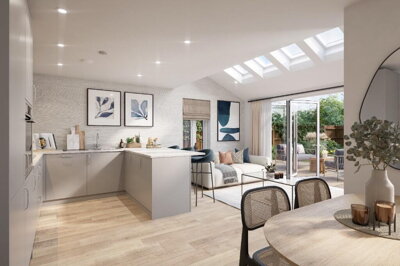
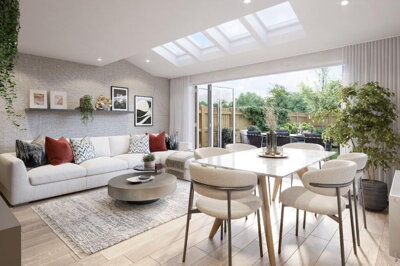
Browse 2 homes new builds in Quernmore, Lancaster from local developer agents.
The larger property sector typically features multiple bathrooms, substantial reception space, and private gardens or off-street parking. Four bedroom houses in Quernmore span detached, semi-detached, and occasionally terraced configurations, with styles ranging from period properties to modern executive homes.
£640k
3
0
146
Source: home.co.uk
Showing 3 results for 4 Bedroom Houses new builds in Quernmore, Lancaster. The median asking price is £640,000.
Source: home.co.uk
Semi-Detached
3 listings
Avg £613,333
Source: home.co.uk
Source: home.co.uk
The Quernmore property market reflects the area's exclusive rural status, with Zoopla recording an average sold price of £1,075,000 over the past twelve months. Rightmove reports a slightly lower overall average of £762,500, though this variation reflects the mix of properties sold during different periods and the limited transaction volume in this small community. The market has proven remarkably resilient despite broader national fluctuations, with prices standing 20% above the 2019 peak of £635,544 according to Rightmove analysis. This long-term growth demonstrates the enduring appeal of rural Lancashire village living and the scarcity value of properties in this sought-after location.
Transaction volumes in Quernmore are notably low, which is typical for small rural villages where properties change hands infrequently. The LA2 9NA postcode area has recorded minimal sales activity, while the wider LA2 9EF postcode has seen only 25 sales since 1995. This scarcity means that when properties do become available, particularly the traditional stone cottages and farmhouses that characterise the village, they attract significant interest from buyers seeking a slice of Lancashire countryside. The dominant property type consists of period houses built between 1800 and 1911, reflecting the village's heritage as a farming community established during the Industrial Revolution era.
For buyers considering the broader Lancaster area, nearby Caton offers more accessible entry points with detached properties averaging £422,500 and semi-detached homes around £310,000. However, Quernmore commands a premium that reflects its protected position within an Area of Outstanding Natural Beauty and its proximity to excellent schools including the highly regarded Lancaster Grammar schools. The LA2 9EF postcode has shown price growth of 3.6% since November 2023 and a substantial 39.7% increase over the past decade, underscoring the investment potential of properties in this village setting.

Quernmore embodies the essence of rural Lancashire living, sitting atop the limestone escarpment that rises above the Lune Valley. The village commands sweeping views across to the Howgill Fells and the Lake District beyond, offering residents a daily reminder of the area's natural beauty. The community traces its origins back centuries, with traditional stone farmsteads and cottages lining the winding lanes that characterise the village's layout. The name Quernmore derives from the Old Norse "korn" meaning grain and "mor" meaning moor or marsh, reflecting the area's agricultural heritage and the Norse settlement of this region in the medieval period. Local families have farmed these hillsides for generations, and the landscape bears testament to centuries of pastoral farming.
The village community revolves around the Cross Keys pub, a traditional coaching inn that has served travellers and locals alike since the 18th century. This historic establishment offers locally sourced food and cask ales, providing an important social focus for village events and gatherings. The nearby Lancaster Canal passes through the valley below the village, offering scenic walks and cycling routes that connect Quernmore to the wider canal network. The canal, once a vital artery for transporting goods including the famous Lancashire textiles, now provides recreational opportunities and wildlife corridors through the countryside. Nature lovers appreciate the immediate access to the Forest of Bowland, where ancient woodlands, heather moorland, and birdlife including rare wading birds provide endless exploration opportunities.
The nearby city of Lancaster provides comprehensive urban amenities while remaining easily accessible from Quernmore. The city offers a range of supermarkets, independent shops, restaurants, and the celebrated Lancaster Brewery for those seeking entertainment and leisure activities. Lancaster's compact city centre preserves its Georgian and Victorian heritage, with the historic castle dominating the skyline and the Ashton Memorial visible for miles around. The city also hosts regular markets in the pedestrianised area, providing opportunities to purchase local produce and artisan goods. Healthcare facilities including the Royal Lancaster Infirmary ensure residents have access to medical services without travelling to larger cities, making Quernmore practical as well as picturesque.

Education provision from Quernmore benefits from the village's proximity to Lancaster's celebrated selective schooling system. Lancaster Grammar School for boys and Lancaster Girls' Grammar School consistently achieve strong examination results and attract pupils from across the wider area. These foundation schools admit students based on academic selection, with catchment areas that typically extend into the surrounding villages including Quernmore. Parents in the village highly value the academic standards and extensive extracurricular programmes offered by these historic institutions, making the educational provision a significant factor in the area's desirability for families. The schools' proximity allows students to cycle to lessons, promoting independence and avoiding the need for lengthy school transport arrangements.
Primary education for Quernmore residents is served by several nearby village schools, with classes typically available in the surrounding communities of Caton, Halton, and Wray. These smaller primary schools offer excellent pupil-to-teacher ratios and strong community connections that parents frequently cite as advantages over larger urban schools. The Catholic primary schools in the area provide additional options for families seeking faith-based education, with St Mary's Catholic Primary School in Lancaster offering places to pupils from the village. Early years provision includes playgroups and nurseries operating from village halls and community centres in the surrounding area, ensuring young families have access to childcare and early education support.
Secondary education beyond the grammar schools includes comprehensive options such as Central Lancaster High School, which offers specialist Sports College status, and the Lancaster School of Art and Design for students with creative interests. Further and higher education opportunities are excellent, with Lancaster University consistently ranked among the UK's top universities and offering world-class research facilities alongside traditional campus amenities. The university's proximity means that students from Quernmore can access higher education without relocating far from home, while mature students may find the convenient location attractive for part-time study programmes. For families considering longer-term educational investment, the quality of local schooling significantly contributes to the enduring demand for properties in Quernmore and the surrounding villages.
Commuting from Quernmore proves surprisingly manageable despite the village's rural character, thanks to excellent transport connections to the regional transport network. Lancaster railway station sits approximately four miles from Quernmore village centre and offers direct services to major destinations including Manchester Piccadilly (approximately 80 minutes), Liverpool Lime Street (around 90 minutes), and London Euston (approximately 2 hours 40 minutes with a change at Preston). These rail connections make Quernmore viable for professionals working in Manchester or Liverpool who wish to enjoy countryside living without enduring impossible daily commutes. The West Coast Main Line runs through Lancaster, providing access to Edinburgh and Glasgow to the north and Birmingham and London to the south.
Road connections from Quernmore centre on the nearby M6 motorway, which passes approximately six miles east of the village and provides direct access to the national motorway network. The A6 trunk road runs closer to the village, connecting Lancaster to Preston and providing an alternative route to the motorway for local journeys. The scenic Lune Valley road passes through Quernmore, offering an attractive route to the Lake District and Morecambe Bay for leisure purposes. Daily commuters to Lancaster city centre benefit from reliable bus services connecting the surrounding villages, with the 89 bus route providing regular transport throughout the day. Parking at Lancaster station offers reasonable daily rates compared to northern city averages, making the park-and-rail option attractive for those travelling further afield.
Cycling infrastructure in the Lancaster area has improved significantly in recent years, with the Lancaster Canal providing a flat traffic-free route ideal for cycling to work or leisure. The Sustrans National Cycle Network passes through the area, connecting Quernmore to the wider cycling network across Lancashire and beyond. For international travel, Manchester Airport provides the most convenient access for overseas flights, reachable within 90 minutes by car via the M6 and M56 motorways. Liverpool John Lennon Airport offers an alternative within similar driving distance. The combination of road, rail, and cycle connections makes Quernmore surprisingly well-connected for a rural village, supporting the property values and sustained demand seen in the local market.
Begin by exploring current property listings in Quernmore using Homemove, reviewing recent sold prices around £762,500 to £1,075,000, and understanding the types of period properties available. Given the village's limited transaction volume, patience is essential as properties come to market infrequently. Register with local estate agents in Lancaster who handle village properties, as many sales occur off-portal before reaching major property portals.
Before viewing properties, obtain a mortgage agreement in principle from a lender or broker. This financial groundwork strengthens your position when making offers, demonstrating to sellers that you have genuine buying capacity. Quernmore's premium property values mean larger mortgage requirements, so ensure your AIP reflects the £500,000-plus range common for village properties.
Schedule viewings of properties matching your criteria, taking time to assess not just the property itself but also the surrounding landscape and proximity to amenities. Consider visiting the village at different times of day to gauge traffic levels and community atmosphere. The village's position near the Forest of Bowland offers exceptional outdoor access that should feature in your assessment.
Given the prevalence of period properties built between 1800 and 1911 in Quernmore, a comprehensive RICS Level 2 HomeBuyer Report is essential before proceeding. This survey will identify common issues in older properties including damp, roof condition, and outdated electrical systems. Book through Homemove at competitive rates from £350.
Once your offer is accepted, instruct a solicitor experienced in rural property transactions to handle the legal work. Conveyancing fees typically start from £499 through Homemove's recommended providers. Your solicitor will conduct searches with Lancaster City Council and Lancashire County Council, check any planning permissions, and manage the transfer of ownership.
After satisfactory searches and mortgage offer receipt, your solicitor will arrange contract exchange, committing both parties to the transaction. Completion typically follows within two to four weeks, after which you will receive the keys to your new Quernmore home. Arrange building insurance from the moment of exchange to protect your investment.
Properties in Quernmore are predominantly period buildings dating from the 18th and 19th centuries, requiring careful assessment during the buying process. The limestone construction typical of Lancashire village properties is generally robust but can be susceptible to specific issues that warrant professional inspection. Look for signs of settling or movement in the traditional stone walls, which may indicate foundation issues or previous structural problems that have been inadequately addressed. The rural setting means properties may be more exposed to weather extremes, making roof condition and guttering quality particularly important considerations. A thorough RICS Level 2 survey will identify these issues and provide you with negotiating leverage if defects are discovered.
The village's position within the Forest of Bowland Area of Outstanding Natural Beauty may bring additional planning considerations that buyers should investigate. Properties in designated AONBs often face stricter planning controls regarding alterations, extensions, and even external paint colours or signage. Before proceeding with any purchase, speak with Lancaster City Council planning department about any future intentions for the property to avoid costly surprises. Conservation area designations, if present in parts of the village, impose further restrictions on development and changes to the external appearance of properties. These designations, while potentially limiting, also protect the character and amenity value of the village that makes it so desirable.
Flood risk in Quernmore should be assessed using Environment Agency maps and the local drainage characteristics of your specific property location. While no significant flood risk data was identified for the village in research, properties situated at the base of slopes or near watercourses merit particular attention. The limestone geology underlying much of the area can create complex drainage patterns, so professional surveys should include assessment of any history of damp or water penetration. Rural properties frequently rely on private water supplies or septic tanks rather than mains services, introducing ongoing maintenance responsibilities and costs that urban buyers may not anticipate. Verify the condition and capacity of any private drainage systems during the conveyancing process.
Average house prices in Quernmore have shown strong long-term growth, with Rightmove reporting an overall average of £762,500 over the past year while Zoopla recorded £1,075,000 for properties sold in the twelve-month period. Prices have increased 20% above the 2019 peak of £635,544 and 39.7% over the past decade in the LA2 9EF postcode area. Given the village's position within the Forest of Bowland AONB and proximity to excellent grammar schools, this premium pricing reflects the scarcity of available properties and the enduring demand for rural Lancashire living.
Properties in Quernmore fall under Lancaster City Council and Lancashire County Council tax bands. The village's period properties typically attract Bands D through G, with larger farmhouses and detached homes frequently rated in the higher bands. Prospective buyers should obtain specific band information for any property during the conveyancing process, as band reassessments can occur following sales or improvements. Current council tax rates for Lancaster can be found on the city council website or obtained through your solicitor during the conveyancing process.
Families in Quernmore benefit from access to Lancaster's highly regarded selective grammar schools, with Lancaster Grammar School for boys and Lancaster Girls' Grammar School regularly achieving strong academic outcomes. Primary education is available in nearby villages and the city, with several good Ofsted-rated primary schools within easy reach. The proximity of Lancaster University also provides excellent higher education opportunities without requiring university students to relocate far from home, making the area attractive for families planning long-term educational costs.
Quernmore is well-connected despite its rural setting, with Lancaster railway station approximately four miles away providing direct services to Manchester, Liverpool, and London Euston. The village has access to local bus services connecting to Lancaster city centre and surrounding villages, though frequencies may be limited compared to urban routes. The M6 motorway is approximately six miles distant, providing convenient road access to the regional motorway network. Daily commuters frequently use the park-and-ride facilities at Lancaster station, making the combined public transport and driving option practical for those working further afield.
The Quernmore property market has demonstrated consistent long-term growth, with prices rising 39.7% over the past decade and 23% over the past five years in the surrounding postcode area. The village's position within the Forest of Bowland AONB, combined with excellent grammar school access and strong transport connections, ensures sustained demand from buyers seeking rural lifestyles within commuting distance of major cities. The limited transaction volume means fewer opportunities but also less market volatility, making Quernmore suitable for buyers seeking both lifestyle benefits and long-term capital appreciation rather than quick returns.
Stamp Duty Land Tax on a property in Quernmore follows standard UK rates for residential purchases. For properties priced at the current average of £762,500, buyers would pay 0% on the first £250,000, 5% on the amount from £250,001 to £500,000 (totalling £12,500), and 10% on the amount from £500,001 to £762,500 (totalling £26,250), giving a total SDLT bill of £38,750. First-time buyers benefit from relief on the first £425,000, reducing their liability significantly. Your solicitor will calculate the exact amount due based on your circumstances and residency status.
The Quernmore property market is dominated by period properties, with the majority of housing stock dating from the 18th and 19th centuries. Traditional Lancashire stone cottages and farmhouses represent the most common property types, featuring characteristic stone elevations, stone slate or slate roofs, and agricultural outbuildings that occasionally become available as converted residential units. Detached family homes on generous plots command the highest prices, while smaller cottages offer more accessible entry points to village life. No active new-build developments were identified in the LA2 postcode area, meaning buyers seeking modern specifications may need to consider properties in nearby Lancaster.
Purchasing a property in Quernmore involves several costs beyond the purchase price that buyers should budget for from the outset. Stamp Duty Land Tax represents the most significant additional cost, with standard rates applying to residential purchases in this Lancashire village. For a typical Quernmore property at the current average price of £762,500, buyers should expect to pay SDLT of £38,750, comprising 5% on the £250,000 threshold above the nil-rate band and 10% on the amount between £500,000 and £762,500. First-time buyers benefit from increased nil-rate thresholds of £425,000, substantially reducing their SDLT liability and making village purchases more accessible for those without existing property equity.
Survey costs are particularly important for Quernmore given the age and character of the local housing stock. A RICS Level 2 HomeBuyer Report, available from £350 through Homemove's recommended providers, represents money well spent on properties dating from the 1800-1911 period. This survey will assess the property's condition, identify any structural concerns, and flag issues with damp, roof condition, or outdated electrical systems that are common in period buildings. Properties in the village may also be subject to specific local authority searches with Lancaster City Council, which typically cost between £250 and £500 and cover matters including planning history, environmental risks, and local highway information.
Conveyancing fees for purchasing in Quernmore typically start from £499 for basic transaction work, rising to £1,500 or more for more complex purchases involving additional searches or leasehold elements. Your solicitor will conduct searches with Lancaster City Council and Lancashire County Council, investigate the property's title, and manage the registration of your ownership at the Land Registry. Mortgage arrangement fees vary by lender but typically range from £500 to £2,000, though many brokers can arrange deals without arrangement fees. Building insurance should be in place from the moment of contract exchange, costing from £200 annually for a modest property to £1,000 or more for larger period homes. Total buying costs, excluding mortgage fees, typically range from £5,000 to £15,000 depending on property price and circumstances.
Properties New Builds In London

Properties New Builds In Plymouth

Properties New Builds In Liverpool

Properties New Builds In Glasgow

Properties New Builds In Sheffield

Properties New Builds In Edinburgh

Properties New Builds In Coventry

Properties New Builds In Bradford

Properties New Builds In Manchester

Properties New Builds In Birmingham

Properties New Builds In Bristol

Properties New Builds In Oxford

Properties New Builds In Leicester

Properties New Builds In Newcastle

Properties New Builds In Leeds

Properties New Builds In Southampton

Properties New Builds In Cardiff

Properties New Builds In Nottingham

Properties New Builds In Norwich

Properties New Builds In Brighton

Properties New Builds In Derby

Properties New Builds In Portsmouth

Properties New Builds In Northampton

Properties New Builds In Milton Keynes

Properties New Builds In Bournemouth

Properties New Builds In Bolton

Properties New Builds In Swansea

Properties New Builds In Swindon

Properties New Builds In Peterborough

Properties New Builds In Wolverhampton

Enter your details to see if this property is within your budget.
Loans, cards, car finance
Estimated property budget
Borrowing + deposit
You could borrow between
Typical borrowing
Monthly repayment
Est. at 4.5%
Loan-to-value
This is an estimate only. Your actual budget may vary depending on interest rates, credit history, and personal circumstances. For an accurate affordability assessment, speak to one of our free mortgage advisors.
This calculator provides estimates for illustrative purposes only and does not constitute financial advice. Your home may be repossessed if you do not keep up repayments on your mortgage. Estimates based on 4.5% interest rate, repayment mortgage. Actual rates depend on your circumstances.
Homemove is a trading name of HM Haus Group Ltd (Company No. 13873779, registered in England & Wales). Homemove Mortgages Ltd (Company No. 15947693) is an Appointed Representative of TMG Direct Limited, trading as TMG Mortgage Network, which is authorised and regulated by the Financial Conduct Authority (FRN 786245). Homemove Mortgages Ltd is entered on the FCA Register as an Appointed Representative (FRN 1022429). You can check registrations at NewRegister or by calling 0800 111 6768.

We use cookies to show you personalised content and improve your experience of our website. Find out more in our Privacy policy and Cookie policy.