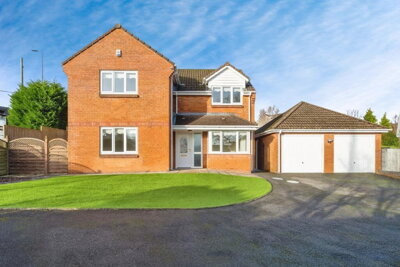
Browse 1 home new builds in Pontarddulais, Swansea from local developer agents.
£245k
12
0
105
Source: home.co.uk
Source: home.co.uk
Detached
5 listings
Avg £411,000
Semi-Detached
4 listings
Avg £203,750
Terraced
2 listings
Avg £115,000
End of Terrace
1 listings
Avg £205,000
Source: home.co.uk
Source: home.co.uk
The Stannington property market has demonstrated resilience despite broader national trends, with a modest 12-month price adjustment of -1.4% reflecting stable market conditions. Our platform showcases properties across all major types, including detached family homes commanding premium prices, semi-detached properties offering excellent value for families, terraced houses suitable for first-time buyers, and a selection of flats in newer developments and conversions. The average price of £273,088 positions Stannington competitively within the Northumberland property landscape, particularly when compared to coastal towns and Newcastle suburbs where prices typically command significant premiums.
Two significant new build developments are currently active in Stannington, providing fresh options for buyers seeking modern construction and energy efficiency. Bellway's Stannington Park development, located at NE61 6AF, offers 3, 4, and 5-bedroom homes with prices from £269,995 for a three-bedroom semi-detached property. Ascent Homes' Stannington Mews development at NE61 6AT presents luxury 2, 3, 4, and 5-bedroom homes in a premium specification. These developments complement the existing housing stock, which includes substantial pre-1919 stone properties, post-war semis, and everything in between, creating a rich of housing options across different price points and lifestyles.
The village's property stock spans multiple eras of construction, from early 19th century farmworkers' cottages built in local sandstone to Edwardian semi-detached homes constructed during the railway boom period. Post-war development in the 1950s and 1960s added brick-built semis to meet housing demand, while the 1980s and 1990s saw further expansion with various infill developments. This architectural diversity means buyers can choose between the character and solid construction of older properties or the modern insulation standards and warranties offered by newer homes. Our listings cover all these property types, allowing you to filter by age, style, and specification to find properties matching your requirements.

Stannington village centres around the historic Stannington Church and the designated Conservation Area that preserves its distinctive character. The village maintains a close-knit community atmosphere typical of rural Northumberland settlements, with local amenities serving everyday needs while larger shopping and recreational facilities are readily accessible in nearby Morpeth. The 2011 Census recorded a population of 1,260 in the Stannington parish, creating an intimate community where neighbours often know one another and local events foster social connection. The village combines agricultural heritage with modern living, evident in the mix of working farms, traditional cottages, and contemporary housing developments that coexist throughout the area.
The surrounding Northumberland landscape offers exceptional natural beauty, with the coast accessible to the east and the Northumberland National Park to the north providing extensive recreational opportunities. Residents benefit from excellent walking and cycling routes through the picturesque countryside, with the nearby Coquet Valley offering particularly attractive scenery. The village's location provides a practical balance between rural tranquility and urban convenience, making it especially popular with commuters who work in Newcastle or Morpeth but prefer the lifestyle benefits of village living. Local employment opportunities include agriculture, small businesses, and service industries, while the excellent road connections ensure that broader employment markets remain easily accessible.
Local amenities in Stannington include a village shop, traditional pub, and community facilities that serve the day-to-day needs of residents. The historic Stannington Railway Station, now operating as a heritage railway, adds character to the village and hosts seasonal events that draw visitors from across the region. Morpeth, just a 10-minute drive away, provides comprehensive shopping facilities including major supermarkets, independent retailers, healthcare services, and recreational facilities. The proximity to the A1 ensures that even without a car, residents can access public transport options while enjoying the benefits of countryside living.

Understanding the different property types available in Stannington helps buyers narrow their search based on lifestyle needs and budget. Traditional sandstone cottages, many dating from the 1800s, characterise the oldest parts of the village and typically feature thick walls, original fireplaces, and charming period details that appeal to buyers seeking character properties. These older cottages often require ongoing maintenance investment but reward owners with distinctive features impossible to replicate in modern construction. Many sit within or near the Conservation Area, meaning exterior alterations require planning consent to preserve the village's historic character.
Semi-detached properties in Stannington span several construction periods, from Edwardian homes built during the early 20th century railway expansion to post-war homes constructed in the 1950s and 1960s. Edwardian semis typically offer larger rooms, higher ceilings, and more generous plot sizes compared to their post-war equivalents, which often feature more compact layouts reflecting the housing priorities of that era. Both types provide practical family accommodation at accessible price points, with the average semi-detached price of £230,000 representing particularly good value for the area. Detached properties command the highest prices in Stannington, averaging £378,000, with premium examples offering substantial gardens, multiple reception rooms, and the privacy that comes with detached construction.
Families considering Stannington will find educational provision available through a network of primary schools serving the village and surrounding areas. The local primary school serves the immediate community, with secondary education typically accessed through schools in Morpeth and the surrounding towns. The grammar school system in Northumberland provides academic pathways for students meeting the required standards, with schools in Morpeth offering selective education options. Parents should research specific catchment areas and admissions criteria when considering properties, as school catchment zones can significantly influence property values and daily family routines in this area.
Further and higher education opportunities are readily accessible through the excellent transport connections to larger centres. Morpeth hosts further education facilities, while Newcastle upon Tyne provides comprehensive university options including the prestigious Newcastle University and Northumbria University. For families prioritising educational outcomes, Stannington's proximity to quality schools in the wider Northumberland area, combined with the village's peaceful environment, creates an attractive environment for raising children. The strong sense of community in village schools often results in smaller class sizes and more individual attention compared to larger urban schools, benefiting students who thrive in more intimate educational settings.
The King Edward VI School in Morpeth, a well-established grammar school, draws students from across Northumberland including Stannington and surrounding villages. The school consistently achieves strong academic results and provides extensive extracurricular activities. Newminster Middle School and other Morpeth primary schools also serve Stannington families, with many children progressing to the town's secondary schools. Transport arrangements for school travel are well-established, with dedicated bus services operating from Stannington to schools in Morpeth, making the daily commute manageable for secondary-age children.
Stannington benefits from exceptional road connectivity, with the A1 trunk road bypassing the village and providing direct access to Newcastle upon Tyne to the south and Edinburgh to the north. The journey to Newcastle city centre typically takes around 25-30 minutes by car, making Stannington particularly attractive to commuters who work in the city but prefer rural living. The nearby market town of Morpeth offers additional amenities and rail connections, with frequent services to Newcastle, Edinburgh, and beyond via the East Coast Main Line. Local bus services connect Stannington with Morpeth and surrounding villages, providing public transport options for those without private vehicles.
Rail travel from Morpeth station provides access to the wider rail network, with journey times to Newcastle of approximately 25 minutes and Edinburgh reachable in around 90 minutes. The proximity to Newcastle Airport, situated to the north of Newcastle, provides international travel connections for business and leisure travellers. For cyclists, the quiet country lanes surrounding Stannington offer pleasant routes for local travel, while the National Cycle Network provides longer-distance options connecting to regional networks. The excellent transport infrastructure significantly enhances Stannington's appeal to buyers seeking the benefits of rural living without sacrificing commuting convenience or access to urban amenities.
Commuters working in Newcastle particularly appreciate the A1 access at Stannington, which avoids the congestion often experienced when entering the city from other directions. The journey to the Quayside, Central Station, and business districts in Newcastle typically remains under 30 minutes outside peak periods. For those working in Morpeth, the journey takes approximately 10 minutes by car, while the town is also accessible via the regular bus service that runs throughout the day. Several major employers in Newcastle and the wider North East region are within straightforward commuting distance, supporting the strong demand for properties in Stannington from working professionals.
Prospective buyers in Stannington should be aware of several area-specific considerations when evaluating properties. The local geology includes clay soils in some areas, which can present shrink-swell risks affecting foundations, particularly where trees are present. Properties in former coal mining areas, which includes parts of Northumberland, may benefit from a mining search to identify any potential ground instability issues. While river and coastal flood risk is generally low, certain low-lying locations near smaller watercourses can experience surface water flooding, so reviewing flood risk data for specific properties is advisable.
The Stannington Conservation Area imposes planning restrictions on alterations and extensions to preserve the village's historic character. Buyers considering properties within the Conservation Area or those that are listed buildings should understand that works may require specific consents beyond standard planning permission. Properties in newer developments like Stannington Park and Stannington Mews typically offer modern construction with guarantees, while traditional stone and brick properties provide character but may require more maintenance investment. Understanding the distinction between freehold and leasehold tenure is important, particularly for flats, where service charges and ground rent arrangements should be carefully reviewed before purchase.
Older properties in Stannington, particularly those built before 1919, commonly exhibit construction characteristics that require careful inspection. Traditional sandstone and brick construction with solid walls means different maintenance considerations compared to modern cavity wall properties. Roof coverings using natural slate or clay tiles, common on period properties, may require periodic replacement and can be more expensive to repair than modern concrete alternatives. Electrical wiring and plumbing in older homes frequently require updating to meet current standards, and this should be factored into renovation budgets when purchasing character properties requiring modernisation.
Properties in Stannington showcase the traditional building methods characteristic of rural Northumberland, with local sandstone featuring prominently in older construction throughout the village. The use of locally quarried sandstone, typically a warm buff or grey colour, gives Stannington's historic properties their distinctive appearance and excellent thermal mass properties that help regulate internal temperatures. Traditional lime-based mortars and renders were used in older construction, allowing the fabric of buildings to breathe, which is an important consideration when maintaining or restoring period properties. Modern maintenance of these buildings should ideally use compatible materials to avoid trapping moisture and causing deterioration.
The Carboniferous geology underlying Stannington has shaped both the local building materials and the potential challenges facing property owners. The area's geological history includes sandstone, mudstone, and coal seams, with superficial glacial deposits of boulder clay covering much of the area. These clay-rich soils can undergo shrink-swell movement in response to moisture changes, particularly where vegetation removes moisture from the ground near foundations. Trees planted close to older properties, common in rural settings, require careful management to avoid subsidence damage to foundations and walls.
Newer properties in Stannington, including those on the Bellway and Ascent Homes developments, use contemporary construction methods with cavity wall insulation, concrete foundations, and modern roofing materials. These properties benefit from current building regulations requiring higher insulation standards, potentially resulting in lower heating costs compared to older properties. However, even modern properties benefit from professional surveys before purchase to identify any construction defects or specification issues that may not be apparent during casual viewing.
Spend time exploring Stannington and understanding which neighbourhoods suit your lifestyle. Consider commute times to work, proximity to schools, and the character of different streets. Our property listings provide detailed information about each home, helping you narrow your search before arranging viewings. Pay particular attention to whether you prefer the character of the Conservation Area properties or the modern convenience of newer developments.
Before viewing properties, obtain a mortgage agreement in principle from a lender. This demonstrates your financial credibility to sellers and estate agents, strengthening your position when making offers. Our mortgage comparison tool helps you find competitive rates suitable for your circumstances. Given Stannington's average property price of £273,088, most buyers will require mortgages in the £200,000-350,000 range, with various products available to suit different deposit sizes and financial situations.
Visit multiple properties in Stannington to compare options and understand the local market. Take notes on property condition, asking about the age of the property, recent renovations, and any maintenance concerns. Pay attention to the surrounding neighbourhood at different times of day. For older properties, note the construction materials, roof condition, and any signs of damp or structural movement that might warrant further investigation.
Once your offer is accepted, arrange a RICS Level 2 Survey to assess the property condition thoroughly. Given Stannington's mix of older properties and new builds, surveys typically cost between £400-£700 depending on property size and type. For listed buildings or properties in poor condition, consider the more comprehensive Level 3 Survey. Our survey partners understand the common issues found in Northumberland properties and can provide detailed assessments of local construction methods.
Appoint a conveyancing solicitor to handle the legal aspects of your purchase. They will conduct searches, review contracts, and coordinate with the seller's solicitor through to completion. Our conveyancing service connects you with experienced property solicitors who regularly handle transactions in the Northumberland area and understand local issues including mining searches and Conservation Area requirements.
Once all searches are satisfactory and contracts are signed, you will exchange deposits and agree on a completion date. On completion day, your solicitor transfers the remaining funds and you receive the keys to your new Stannington home. The typical timeframe from offer acceptance to completion in the Stannington area is approximately 8-12 weeks, though this can vary depending on chain circumstances and search turnaround times.
Understanding the full cost of purchasing property in Stannington extends beyond the advertised price. The most significant additional cost for most buyers is Stamp Duty Land Tax, which applies to purchases above £250,000 at standard rates. For a typical Stannington property priced at the area average of £273,088, a buyer without first-time buyer status would pay £1,154 in stamp duty. First-time buyers purchasing properties up to £625,000 can benefit from relief on the first £425,000, reducing or eliminating this cost for properties at or below that threshold. Our calculator can provide personalised estimates based on your circumstances and intended purchase price.
Beyond stamp duty, buyers should budget for solicitor conveyancing costs, typically ranging from £499 to over £1,500 depending on complexity and property value. A RICS Level 2 Survey costs between £400-£700 for typical Stannington properties, with larger or more complex homes commanding higher fees. Property searches, including local authority, environmental, and mining searches, typically cost £250-£400. Removal costs, furniture purchases, and potential renovation work should also be factored into your budget. Factor in mortgage arrangement fees, valuation fees, and buildings insurance from the outset to avoid unexpected shortfalls during the transaction process.
Additional costs specific to Stannington properties may include Conservation Area compliance expenses for listed building consent applications if significant works are planned. Properties in former mining areas require specialist mining search reports, which can add to the standard search costs. Properties with septic tanks or private drainage systems may require additional surveys and potential upgrade costs to meet current regulations. Budgeting for a contingency fund equivalent to 10-15% of the property price is advisable, particularly for older properties where renovation needs may emerge after purchase.
The current average house price in Stannington is £273,088 according to recent market data. Detached properties average £378,000, semi-detached homes around £230,000, terraced houses at £195,000, and flats from £145,000. Prices have shown a modest 12-month decline of 1.4%, indicating a stable market. The village offers particularly good value compared to Newcastle suburbs and coastal Northumberland locations. With 33 property sales recorded in the past year, the market shows reasonable liquidity for a village of this size, allowing buyers reasonable choice while supporting stable values.
Properties in Stannington fall under Northumberland Council tax bands, which range from A to H depending on property value. Most traditional terraced and semi-detached properties in the village typically fall within bands A to C, while larger detached homes and newer properties may be in higher bands. Band A properties in Northumberland currently pay approximately £1,400 per year in council tax, rising through the bands. You can check the specific band for any property through the HMRC valuation office or the local council website.
Stannington is served by local primary schools with good reputations, and secondary education is available through schools in nearby Morpeth including the well-regarded King Edward VI School. Northumberland's grammar school system provides academic pathways for suitable students. The village's small community environment often results in supportive educational settings with smaller class sizes than urban schools. Families should verify specific catchment areas and admissions criteria, as these can vary and significantly impact schooling options. Transport arrangements to Morpeth schools are well-established via local bus services.
Stannington has good connectivity despite its village setting. The A1 bypass provides excellent road access to Newcastle (approximately 25-30 minutes) and Morpeth (approximately 10 minutes). Local bus services connect the village with Morpeth and surrounding areas at regular intervals throughout the day. Morpeth railway station offers East Coast Main Line services to Newcastle (25 minutes) and Edinburgh (90 minutes), providing convenient rail access for longer journeys. Newcastle Airport is easily accessible for international travel, with direct flights to European destinations and beyond.
Stannington offers solid investment potential due to its strategic location, attractive village character, and relative value compared to nearby Newcastle and coastal Northumberland. The ongoing new build developments demonstrate developer confidence in the area, with Bellway and Ascent Homes both recently launching projects here. Properties in the Conservation Area with traditional stone construction tend to hold their value well, supported by limited supply of character properties. Commuter demand remains strong, supporting rental yields for buy-to-let investors seeking quality tenants working in Newcastle or Morpeth. The village's amenities and community spirit attract long-term tenants seeking village living.
For standard residential purchases, stamp duty rates are 0% on the first £250,000, 5% on £250,001 to £925,000, 10% on £925,001 to £1.5 million, and 12% above £1.5 million. First-time buyers benefit from relief on the first £425,000, with 5% charged between £425,001 and £625,000. Given Stannington's average price of £273,088, most properties fall within the lower tax bands, making purchase costs more affordable than in many comparable locations. A typical first-time buyer purchasing a terraced property at £195,000 would pay no stamp duty under current relief provisions.
Stannington offers a diverse mix of property types to suit various requirements. Traditional stone cottages and terraced houses characterise the historic village centre, many dating from the pre-1919 period and constructed in local sandstone. Post-war semi-detached properties are common in established residential areas, built in brick during the 1950s and 1960s. Two current new build developments provide modern options: Bellway's Stannington Park offers 3-5 bedroom homes from £269,995, while Ascent Homes' Stannington Mews presents luxury 2-5 bedroom properties in premium specifications. Flats are available in newer developments and conversions, though they represent a smaller portion of the market.
Northumberland has a documented history of coal mining, and properties in Stannington may be in areas affected by past mining activity. The Carboniferous geology underlying the area includes coal seams that have been worked historically, creating potential risks of ground instability or subsidence. Buyers should request a mining search report as part of the conveyancing process, which identifies any recorded mining activity in the vicinity. Properties within the Coal Mining Reporting Area may be affected by the Coal Authority's mining reports, which are available through solicitors conducting property searches. While many properties stand safely, professional assessment provides important reassurance.
Properties within Stannington's Conservation Area benefit from preserved character but come with planning restrictions on alterations. When viewing these properties, consider the condition of traditional features such as original windows, stone walls, and roofing materials that contribute to the village's character. Any proposed extensions or modifications will require planning consent from Northumberland Council, and the Conservation Area status may limit what alterations are permitted. Listed buildings within the Conservation Area face additional restrictions under listed building consent requirements. Factor these considerations into renovation plans when evaluating properties in these sensitive locations.
From 3.5%
Expert mortgage advice tailored to your circumstances with competitive rates for Stannington buyers
From £499
Experienced property solicitors handling your legal work including local mining and environmental searches
From £400
Thorough property condition surveys by RICS qualified inspectors familiar with local construction types
From £60
Energy performance certificates required for all property sales in England
Properties New Builds In London

Properties New Builds In Plymouth

Properties New Builds In Liverpool

Properties New Builds In Glasgow

Properties New Builds In Sheffield

Properties New Builds In Edinburgh

Properties New Builds In Coventry

Properties New Builds In Bradford

Properties New Builds In Manchester

Properties New Builds In Birmingham

Properties New Builds In Bristol

Properties New Builds In Oxford

Properties New Builds In Leicester

Properties New Builds In Newcastle

Properties New Builds In Leeds

Properties New Builds In Southampton

Properties New Builds In Cardiff

Properties New Builds In Nottingham

Properties New Builds In Norwich

Properties New Builds In Brighton

Properties New Builds In Derby

Properties New Builds In Portsmouth

Properties New Builds In Northampton

Properties New Builds In Milton Keynes

Properties New Builds In Bournemouth

Properties New Builds In Bolton

Properties New Builds In Swansea

Properties New Builds In Swindon

Properties New Builds In Peterborough

Properties New Builds In Wolverhampton

Enter your details to see if this property is within your budget.
Loans, cards, car finance
Estimated property budget
Borrowing + deposit
You could borrow between
Typical borrowing
Monthly repayment
Est. at 4.5%
Loan-to-value
This is an estimate only. Your actual budget may vary depending on interest rates, credit history, and personal circumstances. For an accurate affordability assessment, speak to one of our free mortgage advisors.
This calculator provides estimates for illustrative purposes only and does not constitute financial advice. Your home may be repossessed if you do not keep up repayments on your mortgage. Estimates based on 4.5% interest rate, repayment mortgage. Actual rates depend on your circumstances.
Homemove is a trading name of HM Haus Group Ltd (Company No. 13873779, registered in England & Wales). Homemove Mortgages Ltd (Company No. 15947693) is an Appointed Representative of TMG Direct Limited, trading as TMG Mortgage Network, which is authorised and regulated by the Financial Conduct Authority (FRN 786245). Homemove Mortgages Ltd is entered on the FCA Register as an Appointed Representative (FRN 1022429). You can check registrations at NewRegister or by calling 0800 111 6768.

We use cookies to show you personalised content and improve your experience of our website. Find out more in our Privacy policy and Cookie policy.