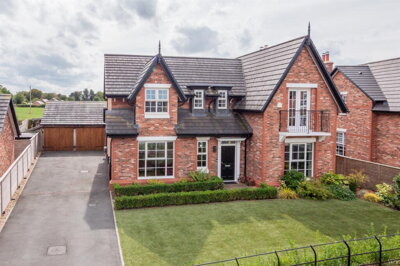
Browse 1 home new builds in Plumley, Cheshire East from local developer agents.
£1.25M
5
1
89
Source: home.co.uk
Source: home.co.uk
Detached
4 listings
Avg £1.69M
Equestrian Facility
1 listings
Avg £5.00M
Source: home.co.uk
Source: home.co.uk
The Plumley property market demonstrates the characteristics of a premium Cheshire village location, with detached properties commanding the highest prices and representing the majority of sales activity. Current data shows detached homes averaging £1,226,583, reflecting the substantial nature of family housing in this area and the premium associated with spacious accommodations with gardens and parking. Terraced properties in Plumley have sold for around £310,000 on average, offering more accessible entry points to this desirable village market while still benefiting from the same local amenities and community atmosphere that define the area.
Price trends in Plumley indicate robust market performance, with overall values standing 56% above the 2008 peak of £704,390 according to home.co.uk listings data historical data. The broader Plumley Moor Road area has shown particularly strong appreciation, with prices climbing 153% year-on-year and now sitting 32% above the previous market peak. Our property listings draw from estate agents across the Knutsford and Cheshire East region, ensuring buyers have comprehensive access to available stock. The combination of limited new build supply, consistent demand from buyers seeking village lifestyles, and the area's proximity to major employment centres supports the continued strength of Plumley's property values.
When our surveyors inspect properties across Plumley, they encounter a diverse mix of construction types and ages. The village contains properties spanning several decades of development, from historic farmhouses through to more recent additions to the housing stock. This variety means buyers should expect varied construction methods and materials when viewing properties in the area. The majority of homes use traditional brick construction, which is characteristic of Cheshire properties, though the age range means timber frame elements and period building techniques appear in older structures. Our inspectors consistently find that understanding the specific construction type and age of any property you are considering is essential for assessing maintenance requirements and potential defect risks.

Plumley offers residents a quintessentially English village experience set within the rolling Cheshire countryside, approximately three miles from the market town of Knutsford. The village contains a collection of historic buildings including the Grade II listed Malt Kiln Farm, a former farmhouse dating from circa 1650, which stands as testament to the area's deep historical roots. The surrounding landscape features the characteristic gentle hills and productive agricultural land that define this part of Cheshire, with public footpaths providing opportunities for countryside walks and outdoor recreation. Community life in Plumley centres around traditional village amenities, with local facilities serving the day-to-day needs of residents while maintaining the intimate scale that distinguishes village living from urban environments.
The proximity to Knutsford significantly enhances the lifestyle offering for Plumley residents, providing access to a broader range of shops, restaurants, and services while retaining the peace and quiet of village residence. Knutsford itself holds a reputation as one of Cheshire's most attractive market towns, famous for its elegant architecture and association with the Victorian novelist Elizabeth Gaskell, whose novels drew inspiration from the local area. The village sits within the Manchester metropolitan area catchment while maintaining sufficient distance to preserve its independent character and rural atmosphere. Families relocating to Plumley benefit from this balance, gaining access to major urban employment markets while enjoying the quality of life that village communities provide.
The surrounding Cheshire countryside offers excellent opportunities for outdoor recreation, with numerous public footpaths and bridleways crossing productive farmland and through woodland areas. The area's geology features the clay soils common across Cheshire, which contribute to the lush agricultural landscape but also create specific considerations for property owners. Our local knowledge indicates that properties with significant trees or vegetation in close proximity to structures may face shrink-swell movement risks during periods of dry weather or heavy rainfall. Understanding the specific ground conditions and any history of movement at a particular property is valuable information that our surveyors can help identify during a property inspection.

Families considering a move to Plumley will find educational provision centred primarily in the nearby town of Knutsford, which offers a selection of well-regarded schools serving different age groups. The area falls within the Cheshire East local authority, which maintains a network of primary and secondary schools designed to serve communities across this part of the county. Primary education in the surrounding villages includes provision in Knutsford and neighbouring communities, with several schools within reasonable driving distance of Plumley serving the early years curriculum. Parents should research specific catchment areas and admission arrangements, as these can significantly influence school placement decisions.
Secondary education options for Plumley residents include schools in Knutsford and the surrounding Cheshire East area, with several establishments within comfortable commuting distance by car or public transport. The presence of grammar schools in nearby towns provides additional educational pathways for academically gifted students, subject to the relevant selection arrangements that apply in Cheshire. For families seeking private education, the region offers several independent schools catering to a range of ages and educational approaches, with some operating boarding facilities. Prospective buyers with school-age children should conduct thorough research into current Ofsted ratings, admission policies, and transport arrangements before committing to a property purchase in the area.
Our team often advises buyers with children to factor school catchment areas into their property search from the outset. The hierarchy of schools and their proximity to different parts of Plumley can significantly influence which properties offer the best educational access for your family circumstances. Some properties in Plumley may fall within different admission zones depending on the specific school concerned, so verifying catchment boundaries before making an offer is prudent. The train service from Plumley station also provides access to schools in Manchester and other larger towns for families willing to consider educational options beyond the immediate Knutsford area.

Plumley benefits from its own railway station, which provides regular services along the Mid-Cheshire Line connecting Manchester and Chester. The station offers direct access to Manchester Piccadilly with journey times of approximately 40 minutes, making the village practical for commuters working in the city or requiring access to its extensive retail, cultural, and entertainment facilities. Northbound services also connect residents to Stockport and other intermediate stations, while southbound trains provide access to Chester and its wider rail connections beyond. This rail connectivity significantly enhances the viability of Plumley as a residential location for those whose employment or interests centre on major urban areas.
Road transport from Plumley connects efficiently to the regional motorway network, with the M6 and M56 providing routes toward Manchester, Liverpool, Birmingham, and beyond. The A556 dual carriageway passes nearby, offering a fast link toward Manchester Airport for residents who travel internationally for business or leisure. Local bus services operate between Plumley and Knutsford, providing an alternative to car travel for daily commuting and shopping trips. For cyclists, the Cheshire lanes provide scenic but undulating routes for recreational riding and occasional commuting, with national cycling routes passing through the broader region. The combination of rail, road, and local transport options positions Plumley as a well-connected village that does not require car ownership for basic mobility.
Our inspectors who travel to properties throughout the Plumley area appreciate the practical transport connections, though they note that some rural lanes can become narrow in places and require confident navigation. Properties on the outer edges of the village may involve slightly longer walks to the station, so factoring in accessibility to public transport links is worth considering during viewings. The proximity to Manchester Airport, accessible via the A556, adds significant value for buyers who travel regularly for work or family connections abroad. This combination of connectivity makes Plumley particularly attractive to professional buyers who need access to major employment centres while preferring village living.

Examine current listings, recent sales data, and price trends in Plumley and surrounding Cheshire villages to understand what your budget will secure in this premium market. Pay particular attention to micro-location differences within the village, as our data shows varying performance between areas like Plumley Moor Road and Plumley Station.
Contact lenders or brokers to obtain a mortgage agreement in principle before viewings, strengthening your position when making offers on properties in this competitive village market. Given Plumley's average prices exceeding £1 million, securing appropriate lending is particularly important for most buyers in this area.
Schedule visits to properties matching your criteria, taking time to assess not only the properties themselves but also the neighbourhood, nearby amenities, and commuting options. Our team recommends viewing multiple properties to appreciate the range of styles and conditions available in this varied village market.
Before completing your purchase, arrange a Level 2 Homebuyer Report to identify any structural issues, particularly important given Plumley's mix of older properties including period buildings. Our inspectors have experience surveying properties throughout Plumley and can provide detailed assessments of construction condition and any defects.
Choose a conveyancing specialist to handle the legal aspects of your purchase, including searches, contracts, and registration of your ownership with the Land Registry. We can recommend conveyancers familiar with Plumley and Cheshire East transactions.
Once all searches are satisfactory and contracts are signed, proceed to exchange and then completion, typically with a two-week gap between these milestones. Our team can guide you through each stage of the process.
The Plumley property market includes a significant proportion of older properties, with historical sales data indicating properties that have changed hands multiple times over the past several decades and some buildings dating from the 17th century. When viewing period properties in the village, pay particular attention to signs of damp, which can affect older structures regardless of their construction materials, and assess the condition of roofs, which represent a significant maintenance consideration for any buyer. The presence of clay soils in parts of Cheshire can create shrink-swell risks that affect properties with trees or vegetation nearby, so understanding the local geology and any subsidence history is valuable before committing to a purchase.
Our surveyors regularly inspect period properties across Plumley and frequently encounter typical issues associated with older Cheshire homes. These can include original timber windows requiring maintenance or replacement, outdated electrical systems that may not meet current regulations, and solid floors without damp-proof membranes. Properties of traditional construction in the area may show evidence of previous movement or settlement, and our inspectors assess these carefully to distinguish between historic issues and ongoing problems that might require attention. Understanding the specific construction type and age of any property helps our team provide accurate assessments of condition and maintenance expectations.
Buyers should verify whether properties are freehold or leasehold, as this affects ongoing costs and your long-term rights as a homeowner. Many traditional village properties will be freehold, but modern developments or converted buildings may carry leasehold arrangements that include ground rent and service charge obligations. Conservation area status or the presence of listed buildings can impose restrictions on alterations and improvements, so understanding any planning constraints affecting a property is essential before purchase. Our listings include detailed information on tenure and any known restrictions, but your solicitor will conduct thorough searches to identify all relevant obligations and protections for your new home.
Properties near the railway line may experience occasional noise from passing trains, which is worth considering during viewings at different times of day. Properties in lower-lying areas of the village may have different drainage characteristics, and our surveyors pay particular attention to signs of damp or water penetration that might indicate ground drainage issues. The proximity of agricultural land can also bring considerations regarding rural traffic, seasonal noise from farming operations, and potential odours at certain times of year, all of which contribute to the village living experience that Plumley offers.

Purchasing a property in Plumley involves several costs beyond the purchase price, with stamp duty land tax representing one of the most significant expenses for buyers. For properties purchased at the current average price of around £1.1 million, stamp duty calculations place a substantial portion of the value in the higher tax bands, resulting in SDLT bills of approximately £48,750 on a residential purchase. First-time buyers may benefit from relief on properties up to £625,000, reducing costs for those whose budgets accommodate this threshold, but most Plumley purchases will exceed this level and attract standard rates.
Beyond stamp duty, buyers should budget for solicitor fees typically ranging from £500 to £1,500 depending on complexity and property value, survey costs from £350 for a basic Level 2 inspection up to £1,000 or more for detailed assessments of larger or older properties, and mortgage arrangement fees that vary between lenders but commonly fall between 0.5% and 1.5% of the loan amount. Search fees from the local authority, water company, and environmental agency typically total £300 to £500, while land registry fees for registering your ownership add modest further costs. Our recommended solicitors and surveyors familiar with Plumley and the surrounding Cheshire East area can provide detailed quotes before you commit to any purchase, ensuring no unexpected expenses arise during your transaction.
For buyers purchasing period properties in Plumley, additional costs may arise from specialist surveys if the property is listed or requires heritage consideration. Properties over 50 years old frequently benefit from a more detailed RICS Level 3 Building Survey, which provides comprehensive assessment of construction and defects. Given the presence of historic properties in the village including Grade II listed buildings, budgeting for appropriate survey requirements is an important part of your financial planning. Our team can advise on the most suitable survey level for any specific property based on its age, construction, and condition.

home.co.uk listings data reports an average house price of £1,095,643 for Plumley, with homedata.co.uk showing £995,750 for the last 12 months and home.co.uk indicating £1,095,000. Detached properties average around £1,226,583, while terraced properties have sold for approximately £310,000 on average. The market has shown strong growth, with prices rising 131% compared to the previous year according to home.co.uk listings data. However, our team notes that price performance varies within different parts of the village, with Plumley Moor Road showing particularly strong appreciation at 153% year-on-year, while Plumley Station has experienced more modest growth with prices 12% down on the previous year.
Plumley falls within the Cheshire East local authority area. Council tax bands in this jurisdiction range from A through to H, with the applicable band depending on your specific property's assessed value. Most family homes in the village typically fall within bands D through F, reflecting the higher property values in this premium Cheshire location. Our conveyancing partners can confirm the exact band during the conveyancing process, and this information is usually available through the Land Registry documentation for any property.
Primary schools in the Knutsford area serve Plumley families, with several options within reasonable driving distance. For secondary education, students typically attend schools in Knutsford or surrounding Cheshire towns, with grammar school options available in nearby locations subject to selection criteria. The Cheshire East area includes both state and independent school options, and parents should research current Ofsted ratings and admission arrangements specific to their circumstances. The proximity of Plumley station also provides access to schools further afield in Manchester for families willing to consider educational options beyond the immediate Knutsford area.
Plumley railway station provides direct services along the Mid-Cheshire Line, with trains to Manchester Piccadilly taking approximately 40 minutes and connections to Chester in the opposite direction. The village also has bus services connecting to Knutsford, providing access to additional local amenities and transport links. This public transport provision makes Plumley practical for commuters who prefer not to rely solely on car travel. The station is within walking distance of most properties in the village centre, though buyers should verify accessibility for specific properties they are considering.
Property values in Plumley have demonstrated consistent strength, with prices rising 56% above the 2008 market peak and showing 131% growth compared to the previous year. The village benefits from limited new build supply, strong demand from buyers seeking village lifestyles, and proximity to major employment centres including Manchester. While fundamental factors supporting Plumley's property market appear supportive of continued stable values, our team always advises buyers to view property purchase as a long-term commitment rather than a short-term investment. The village's transport connections, local amenities, and proximity to quality schools continue to attract buyers who prioritise lifestyle factors alongside investment considerations.
Stamp duty rates from April 2025 apply 0% duty on properties up to £250,000, 5% on the portion from £250,001 to £925,000, 10% on amounts from £925,001 to £1.5 million, and 12% on any value above £1.5 million. First-time buyers receive relief on the first £425,000, paying 5% on the portion from £425,001 to £625,000. Given Plumley's average property prices exceed £995,000, most purchases will incur SDLT in the higher brackets. Our team can provide detailed calculations for specific properties based on their sale price, helping you budget accurately for these costs.
Plumley predominantly features detached family homes, which account for the majority of sales and command the highest prices at an average of £1,226,583. Terraced properties offer more accessible entry points at around £310,000, while semi-detached homes provide mid-range options in the village. The area also includes period properties with historical significance, including Grade II listed buildings, offering character options for buyers seeking distinctive homes. Our inspectors note that older properties may require more maintenance than newer builds, and we recommend budgeting accordingly when considering period properties in the village.
Cheshire generally features areas with clay soils, which can create shrink-swell risks for properties, particularly those with trees or significant vegetation in close proximity. Our surveyors assess these ground conditions carefully when inspecting properties throughout Plumley and the surrounding area. Properties on Plumley Moor Road and similar areas with mature trees may show evidence of clay movement, and we pay particular attention to signs of subsidence, cracking, or previous underpinning. A professional survey can identify whether any movement has occurred and whether it has been properly addressed.
From £350
A detailed inspection ideal for modern and older properties
From £600
Comprehensive survey for older or complex properties
From £499
Expert legal support for your purchase
From 4.5% APR
Competitive rates for Cheshire property buyers
Properties New Builds In London

Properties New Builds In Plymouth

Properties New Builds In Liverpool

Properties New Builds In Glasgow

Properties New Builds In Sheffield

Properties New Builds In Edinburgh

Properties New Builds In Coventry

Properties New Builds In Bradford

Properties New Builds In Manchester

Properties New Builds In Birmingham

Properties New Builds In Bristol

Properties New Builds In Oxford

Properties New Builds In Leicester

Properties New Builds In Newcastle

Properties New Builds In Leeds

Properties New Builds In Southampton

Properties New Builds In Cardiff

Properties New Builds In Nottingham

Properties New Builds In Norwich

Properties New Builds In Brighton

Properties New Builds In Derby

Properties New Builds In Portsmouth

Properties New Builds In Northampton

Properties New Builds In Milton Keynes

Properties New Builds In Bournemouth

Properties New Builds In Bolton

Properties New Builds In Swansea

Properties New Builds In Swindon

Properties New Builds In Peterborough

Properties New Builds In Wolverhampton

Enter your details to see if this property is within your budget.
Loans, cards, car finance
Estimated property budget
Borrowing + deposit
You could borrow between
Typical borrowing
Monthly repayment
Est. at 4.5%
Loan-to-value
This is an estimate only. Your actual budget may vary depending on interest rates, credit history, and personal circumstances. For an accurate affordability assessment, speak to one of our free mortgage advisors.
This calculator provides estimates for illustrative purposes only and does not constitute financial advice. Your home may be repossessed if you do not keep up repayments on your mortgage. Estimates based on 4.5% interest rate, repayment mortgage. Actual rates depend on your circumstances.
Homemove is a trading name of HM Haus Group Ltd (Company No. 13873779, registered in England & Wales). Homemove Mortgages Ltd (Company No. 15947693) is an Appointed Representative of TMG Direct Limited, trading as TMG Mortgage Network, which is authorised and regulated by the Financial Conduct Authority (FRN 786245). Homemove Mortgages Ltd is entered on the FCA Register as an Appointed Representative (FRN 1022429). You can check registrations at NewRegister or by calling 0800 111 6768.

We use cookies to show you personalised content and improve your experience of our website. Find out more in our Privacy policy and Cookie policy.