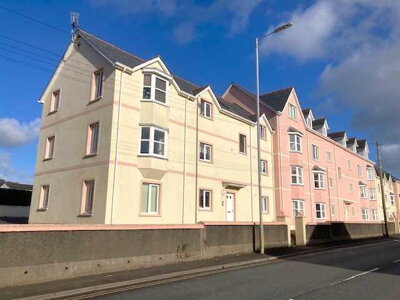
Browse 1 home new builds in Pembroke, Pembrokeshire from local developer agents.
Studio apartments feature open-plan living spaces without separate bedrooms, incorporating sleeping, living, kitchen, and bathroom facilities. The Pembroke studio market includes properties in modern apartment complexes, modern purpose-built developments and new residential complexes.
£105k
1
0
33
Source: home.co.uk
Showing 1 results for Studio Flats new builds in Pembroke, Pembrokeshire. The median asking price is £105,000.
Source: home.co.uk
Flat
1 listings
Avg £105,000
Source: home.co.uk
Source: home.co.uk
The Porthmadog property market reflects its dual character as both a working harbour town and a popular destination for those seeking a coastal lifestyle. Average house prices currently sit around £175,731 according to recent transaction data, though this figure varies considerably depending on property type and condition. Detached properties command the highest prices at approximately £250,000, while semi-detached homes typically sell for around £195,000. The town's extensive stock of Victorian and Edwardian terraced properties, many featuring the traditional "two-up-two-down" layout common to 19th-century Welsh towns, offers more affordable entry points at approximately £174,111.
Price trends over recent years reveal a market that has experienced some correction following the post-pandemic peak. Historical sold prices were around 10% down on the previous year and 14% down on the 2022 peak of £201,200, indicating a return to more sustainable values after a period of heightened activity. However, the market demonstrates resilience, with a modest 1.3% increase recorded over the twelve months to May 2024. Flats in Porthmadog average around £136,250, making them attractive options for first-time buyers or those seeking a holiday let investment in this tourism-rich area.
New build activity in the immediate Porthmadog area has been limited in recent years, with most development taking the form of conversions or renovations rather than new housing estates. The notable exception was the £7.5 million Hafod y Gest Extra Care scheme, completed in 2018, which added 40 apartments to the town centre. For buyers specifically seeking new construction, broader searches within a 15-20 mile radius may be necessary, though these will be in surrounding villages and towns rather than within the LL49 postcode itself. The broader Gwynedd area saw 13 newly built properties sell between January 2025 and December 2025, mostly in the £200,000 to £250,000 range according to plumplot data, indicating some new build availability in the wider region.

Life in Porthmadog centres around its historic harbour, where pleasure boats share the water with working vessels and the Ffestiniog Railway terminates in spectacular fashion. The town developed from the early 1800s when land was reclaimed from the sea in 1811 with the construction of The Cob, a sea wall that remains central to the town's identity today. The original settlement consisted largely of modest cottages, but substantial dwellings soon followed for captains, shipping agents, and merchants who made their fortunes from the slate trade. This layered history is visible in the town's architecture, from humble terraces on Madock Street to impressive Georgian and Victorian properties that line the wider streets.
The Porthmadog built-up area had a population of 2,574 usual residents according to the 2021 Census, with approximately 1,651 households recorded in the 2011 Census. Household composition shows a significant proportion of smaller households, with 41% being single-person households and 32% being two-person households, reflecting both the aging population and the popularity of the area for retirees and couples. Holiday homes have historically comprised around 12.5% of dwellings in the wider area, contributing to the local economy but also raising questions about housing affordability for local residents. The wider Porthmadog area has an estimated population of 12,184, with the built-up area having grown slightly from 4,185 in 2011 to 4,134 in 2019 estimates.
The economic landscape of Porthmadog has evolved considerably from its industrial origins. Today, tourism forms the backbone of the local economy, with the town serving as a gateway to both the Llŷn Peninsula and the attractions of Snowdonia National Park. The Ffestiniog Railway alone draws significant visitor numbers, while the town's shops, restaurants, and cultural events create a lively atmosphere throughout the year. However, this economic transition has created challenges, with median family income around £27,419 contrasting sharply with the approximately £37,357 annual income needed to afford an entry-level property, meaning many local households have effectively been priced out of the owner-occupied market.

Education provision in Porthmadog serves families from the town and surrounding villages, with primary education centred on Ysgol y Gorlan, a Welsh-medium primary school that provides education for children from Reception through to Year 6. The school serves the local community and reflects the bilingual character of Gwynedd, where Welsh language and culture are actively promoted in educational settings. For families seeking English-medium education, alternatives exist in nearby towns, though this may affect daily commuting patterns and should be factored into property search decisions. Parents should verify current school performance data through Estyn inspection reports before finalising their property purchase.
Secondary education in the area is provided through secondary schools in surrounding towns, which means that secondary-age children typically travel to attend their local comprehensive school. The catchment areas for these schools depend on the specific location of the property within the Porthmadog area, and prospective buyers with school-age children should verify their intended property falls within their preferred school's boundary. School transport arrangements for pupils living outside catchment areas are managed by Gwynedd Council, and details can be obtained from the local education authority. Given the rural nature of the surrounding area, travel times to secondary schools can be significant, and families should consider this when assessing the suitability of properties further from the town centre.
Beyond statutory education, Porthmadog and the surrounding area offer various opportunities for continued learning and extracurricular activities. Local groups and organisations provide opportunities for music, sport, and cultural activities that complement formal education. The town has several nurseries and playgroups for early years children, supporting families with youngest members. For families considering further education options, the nearby town of Bangor offers university-level courses through Bangor University, while Aberystwyth and Cardiff provide wider options across Wales. The presence of these accessible higher education options adds to the long-term appeal of Porthmadog as a family home, with university study remaining within reasonable commuting distance.
Porthmadog is served by Porthmadog railway station, located on the Cambrian Coast Line that runs between Pwllheli and Birmingham New Street via Machynlleth and Shrewsbury. This scenic railway provides crucial connectivity for residents who commute for work, study, or leisure, with regular services connecting the town to larger employment centres and educational institutions. Journey times to key destinations include approximately 2 hours 30 minutes to Birmingham, making day trips to major cities feasible while maintaining a peaceful coastal lifestyle. The station is centrally located within the town, providing easy access to the harbour area and surrounding neighbourhoods.
The town is well-connected by road, with the A487 trunk road providing the main arterial route through the town and connecting northward to Caernarfon and southward towards Dolgellau and the A470 toward mid-Wales. The nearby A499 provides access to the Llŷn Peninsula's western settlements. For those travelling further, the M54 and M6 motorways are accessible via the A5 after crossing into England, though journey times to major English cities remain significant from this North Wales location. Many residents have adapted to these distances, working remotely where possible or accepting the travel requirements as part of the lifestyle trade-off that comes with living in this beautiful coastal location.
Local bus services operated by Arriva Buses Wales and local operators provide connections to nearby towns and villages, though frequencies are typically reduced compared to urban areas and tend to be oriented toward school transport and market day services. For daily commuting needs, the railway generally provides more reliable and consistent journey times. The nearest major airport with international connections is Liverpool John Lennon Airport, approximately 90 miles distant, while Manchester Airport provides a broader range of destinations including international flights. Many Porthmadog residents view these distances as acceptable given the quality of life offered by coastal and mountain living, though regular travellers should factor these considerations into their property search.
Before viewing properties in Porthmadog, speak to a mortgage broker or lender to obtain an agreement in principle. This document confirms how much you can borrow and demonstrates to estate agents and sellers that you are a serious buyer with financing in place. Given the relatively lower average property prices in Porthmadog compared to many English towns, some buyers may find they have more purchasing power than expected, though those relying on mortgages will still need formal agreement in place before making offers.
Spend time exploring different neighbourhoods within Porthmadog, from the harbour area to the terraces of Madock Street. Consider factors like flood risk zones, proximity to schools, and commute times to ensure the area matches your lifestyle needs. The harbour area offers character properties with water views but carries higher flood risk, while the terraces on Madock Street provide more affordable options with easier access to the town centre.
Once you have identified properties that meet your criteria, arrange viewings through Homemove. Pay attention to property condition, noting that many homes in Porthmadog are older and may have issues with damp, roof condition, or outdated electrics that require attention or negotiation on price. Take time to view properties in different weather conditions if possible, as this can reveal issues with weatherproofing and drainage that may not be apparent during a dry viewing.
Before completing your purchase, arrange for a Home Survey Level 2 by a RICS qualified surveyor. Given the prevalence of older properties in Porthmadog, this survey is particularly valuable for identifying defects such as damp, timber decay, or structural concerns common in Victorian and Edwardian construction. Our team of qualified surveyors understand the common issues found in Porthmadog properties and can provide detailed reports that help you make an informed decision before committing to your purchase.
Appoint a solicitor to handle the legal aspects of your purchase, including searches on flood risk, planning history, and any local authority restrictions. Porthmadog's flood risk profile and listed building status mean specialist legal knowledge is beneficial. Your solicitor will conduct searches with Gwynedd Council and check the Land Registry records, as well as investigate any Environmental Agency records relating to flood risk or contamination.
Once all searches are satisfactory and your mortgage offer is confirmed, you will exchange contracts and pay your deposit. Completion typically follows within weeks, after which you will receive your keys and can begin your new life in Porthmadog. On the day of completion, ensure you have buildings insurance in place, as this is typically required by mortgage lenders before funds are released.
Properties in Porthmadog require careful inspection due to the town's unique environmental and historical characteristics. Flood risk is perhaps the most significant consideration for prospective buyers. Most of Porthmadog sits on low-lying land, and the town is at risk of flooding from the Afon Glaslyn and Y Cyt rivers as well as from the sea. During high tides, the rivers are unable to flow out to sea, and a combination of extreme rainfall and high tides puts many residential and commercial properties at risk. An updated flood model in 2022-2023 indicated an increased number of homes at risk, and buyers should consult Natural Resources Wales flood maps and discuss flood insurance implications with their mortgage lender.
The presence of listed buildings throughout Porthmadog and the neighbouring village of Tremadog means that planning restrictions are common in the area. Grade II listed properties enjoy legal protection against unsympathetic alterations, and any works to such properties require Listed Building Consent from Gwynedd Council. This protection preserves the town's character but also means that renovation options may be limited compared to unlisted properties. The conservation area in Borth-y-Gest, part of the Porthmadog community, adds further planning considerations for properties in that area. Buyers should factor the potential additional costs and timescales associated with listed building works into their budgeting.
The older housing stock throughout Porthmadog brings both charm and practical considerations. Traditional construction using local stone and slate is prevalent, with many properties dating from the 19th century. These homes often lack modern damp-proof courses or insulation, making damp a common issue. The high rainfall typical of North Wales coastal areas exacerbates this problem. Our inspectors frequently find penetrating damp in external walls, wet rot in window frames, and deteriorating pointing that allows water ingress. The slate roofing common on older properties is generally durable but can be damaged by storms and may contain asbestos in properties built before the 1980s. A thorough RICS Level 2 Survey is strongly recommended for any property in Porthmadog, as the survey will identify issues that may not be apparent during a standard viewing.
The average house price in Porthmadog is approximately £175,731 based on properties sold over the last 12 months, though asking prices average slightly higher at around £181,000. Prices vary significantly by property type, with detached homes averaging £250,000, semi-detached properties around £195,000, terraced homes at approximately £174,111, and flats at £136,250. The market has experienced some correction from the 2022 peak of £201,200, with prices around 14% below that high point. HM Land Registry data from May 2024 showed an overall average of £192,500, indicating ongoing market adjustment.
Properties in Porthmadog fall under Gwynedd Council's jurisdiction, with council tax bands ranging from A to H depending on the property's assessed value. The specific band for any property can be found on the Valuation Office Agency website or on your council tax bill. As a general guide, smaller terraced properties and flats typically fall into bands A to C, while larger detached properties and period homes with higher values may be in bands D to F. Council tax charges for Band A properties in Gwynedd start from around £1,400 per year, though exact amounts depend on property-specific factors and any applicable discounts.
Primary education in Porthmadog is primarily served by Ysgol y Gorlan, a Welsh-medium primary school located within the town. The school serves children from Reception through to Year 6 and reflects the bilingual character of Gwynedd. Secondary education is provided through schools in surrounding towns, with specific catchment areas depending on your property location. Parents should consult the Estyn inspection reports for performance data and Gwynedd Council's school admissions pages for current catchment information. The town also has several nurseries and playgroups for early years children, supporting families with youngest members before they reach primary school age.
Porthmadog railway station provides connections along the Cambrian Coast Line, with regular services to Pwllheli, Machynlleth, and onwards to Birmingham New Street. Journey times include approximately 2 hours 30 minutes to Birmingham and around 45 minutes to Machynlleth. Local bus services operated by Arriva Buses Wales connect the town to nearby villages and towns, though frequencies are reduced compared to urban areas. The A487 trunk road provides road connections to Caernarfon in the north and Dolgellau in the south, while the A499 accesses the western Llŷn Peninsula settlements.
Porthmadog offers several investment considerations for property buyers. The strong tourism sector means holiday let potential exists, particularly for properties near the harbour or with mountain views, though this market is sensitive to economic conditions and seasonal demand. The town's limited new build activity means supply remains constrained, which can support property values over the long term. However, flood risk is a genuine concern that affects mortgage availability for some properties and requires careful insurance consideration. Rental demand from local workers and seasonal tourism staff provides a tenant market, though the relatively low median income in the area may limit achievable rents for standard lettings.
Stamp Duty Land Tax rates for standard purchases are 0% on the first £250,000, 5% on £250,001 to £925,000, 10% on £925,001 to £1.5 million, and 12% above £1.5 million. First-time buyers benefit from relief on the first £425,000 of their purchase, with 5% applied between £425,001 and £625,000. Given that most Porthmadog properties fall below £250,000, many purchases incur no stamp duty, though above-threshold purchases will require careful calculation based on your status. Additional SDLT surcharges apply for non-UK residents.
Porthmadog faces significant flood risk from both river and coastal sources. The Afon Glaslyn and Y Cyt rivers pose inland flooding risks, while the harbour and low-lying areas face coastal flooding, particularly during high tides when rivers cannot flow to sea. Porthmadog Harbour, including Lombard Street and High Street, is designated as a Flood Warning Area by Natural Resources Wales. A significant portion of the town falls within C1 flood risk zone, where national guidance advises against allocating land for housing. Climate change is expected to worsen this situation, leading to more frequent storms and rising sea levels. Prospective buyers should check Natural Resources Wales flood maps and factor flood resilience measures into their property decisions, including potential costs for flood doors, raised plug sockets, and specialist insurance.
For most property purchases in Porthmadog, stamp duty represents a manageable cost given the local average price of approximately £175,731. At current thresholds, purchases up to £250,000 incur zero stamp duty under standard rates, meaning terraced properties and flats in Porthmadog often fall below the nil-rate band entirely. First-time buyers enjoy an enhanced nil-rate band of £425,000, which covers the majority of properties in this price range, providing significant savings for those purchasing their first home in the area. Second home buyers should note the additional 3% SDLT surcharge that applies to purchases of additional residential properties.
Beyond stamp duty, buyers should budget for several additional costs associated with purchasing property in Porthmadog. Survey costs for a RICS Level 2 Home Survey typically range from £400 to £800 depending on property size and value, with older properties potentially requiring more detailed assessments given common defects in the local housing stock. Conveyancing fees generally start from around £499 for standard purchases but may be higher for properties with complexities such as listed building status or flood risk considerations that require additional legal work. Search fees with Gwynedd Council typically cost between £200 and £300, with additional fees for environmental searches and drainage searches.
Mortgage arrangement fees typically range from £0 to £2,000 depending on the lender and product chosen, while valuation fees may be required by your mortgage lender and can cost between £150 and £500 depending on the property value. Land Registry fees for registering your ownership are typically under £200 for most residential transactions. Buildings insurance should be arranged before completion, with costs varying significantly based on flood risk assessments for individual properties in Porthmadog. It is sensible to budget for an additional 3-5% of the purchase price to cover these associated costs, meaning a £175,000 property may require an additional £5,250 to £8,750 in buying costs beyond the deposit and stamp duty. Our partners can provide quotes for surveys, conveyancing, and mortgages to help you budget accurately before you start your property search in Porthmadog.
Properties New Builds In London

Properties New Builds In Plymouth

Properties New Builds In Liverpool

Properties New Builds In Glasgow

Properties New Builds In Sheffield

Properties New Builds In Edinburgh

Properties New Builds In Coventry

Properties New Builds In Bradford

Properties New Builds In Manchester

Properties New Builds In Birmingham

Properties New Builds In Bristol

Properties New Builds In Oxford

Properties New Builds In Leicester

Properties New Builds In Newcastle

Properties New Builds In Leeds

Properties New Builds In Southampton

Properties New Builds In Cardiff

Properties New Builds In Nottingham

Properties New Builds In Norwich

Properties New Builds In Brighton

Properties New Builds In Derby

Properties New Builds In Portsmouth

Properties New Builds In Northampton

Properties New Builds In Milton Keynes

Properties New Builds In Bournemouth

Properties New Builds In Bolton

Properties New Builds In Swansea

Properties New Builds In Swindon

Properties New Builds In Peterborough

Properties New Builds In Wolverhampton

Enter your details to see if this property is within your budget.
Loans, cards, car finance
Estimated property budget
Borrowing + deposit
You could borrow between
Typical borrowing
Monthly repayment
Est. at 4.5%
Loan-to-value
This is an estimate only. Your actual budget may vary depending on interest rates, credit history, and personal circumstances. For an accurate affordability assessment, speak to one of our free mortgage advisors.
This calculator provides estimates for illustrative purposes only and does not constitute financial advice. Your home may be repossessed if you do not keep up repayments on your mortgage. Estimates based on 4.5% interest rate, repayment mortgage. Actual rates depend on your circumstances.
Homemove is a trading name of HM Haus Group Ltd (Company No. 13873779, registered in England & Wales). Homemove Mortgages Ltd (Company No. 15947693) is an Appointed Representative of TMG Direct Limited, trading as TMG Mortgage Network, which is authorised and regulated by the Financial Conduct Authority (FRN 786245). Homemove Mortgages Ltd is entered on the FCA Register as an Appointed Representative (FRN 1022429). You can check registrations at NewRegister or by calling 0800 111 6768.

We use cookies to show you personalised content and improve your experience of our website. Find out more in our Privacy policy and Cookie policy.