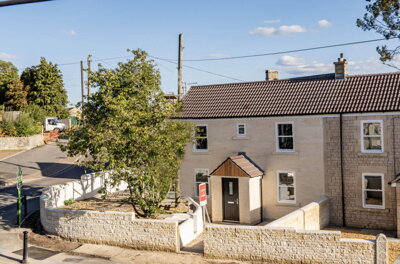
Browse 1 home new builds in Peasedown St. John from local developer agents.
The Peasedown St. John property market has demonstrated robust performance over the past twelve months, with multiple sources reporting price increases of between 4% and 10% depending on the dataset. The overall average house price stands at approximately £355,000 to £356,000, positioning the village competitively within the Bath commuter belt. According to OnTheMarket, sold prices have risen 7.3% over the last year, while the wider BA2 8 postcode area saw more modest growth of 1.9%, suggesting that Peasedown St. John itself has outperformed its surrounding areas. A total of 72 residential transactions completed in the twelve-month period, representing a slight decrease of around 5.5% compared to the previous year when 76 sales were recorded.
Property types in Peasedown St. John cater to a range of buyer preferences, though detached homes dominate the upper end of the market with average prices between £443,000 and £459,000 according to Zoopla and Rightmove data. Semi-detached properties offer more accessible entry points at around £298,000 to £305,000 on average, making them particularly attractive to families seeking generous living space without Bath-level premiums. Terraced homes represent the most affordable category at approximately £260,000 to £279,000, appealing to first-time buyers and those looking to downsize. While no specific named new-build developments were identified within the village itself, the existing housing stock includes period properties dating from the early 1800s through to more recent constructions, providing diverse options for buyers with different tastes and budgets.
The dominance of detached properties in recent sales data reflects the village's appeal to families and commuters seeking more space than city-centre properties typically offer. Semi-detached homes remain popular for their balance of price and practicality, often featuring the traditional construction methods associated with Victorian-era builds. Terraced properties, while less common in the village's housing mix, provide an accessible entry point for first-time buyers who might otherwise be priced out of the Bath commuter belt.

Peasedown St. John is a village with a distinct character shaped by its history and its proximity to Bath, one of the United Kingdom's most desirable cities. The village grew significantly during the Georgian and Victorian periods, as evidenced by the presence of period houses built between 1800 and 1911 along several streets. This architectural heritage gives parts of the village an established, characterful feel, with stone-fronted properties reflecting the Bath Stone construction that is synonymous with the wider area. The community maintains a village atmosphere despite its practical connectivity to Bath, offering residents a balance between rural tranquility and urban convenience that is increasingly sought after in the current property market.
The village centre provides essential everyday amenities including a convenience store, traditional public houses, and local services that serve the day-to-day needs of residents without requiring a trip into Bath. Recreation facilities include open spaces and playing fields that cater to families and outdoor enthusiasts, while the surrounding Somerset countryside offers extensive walking and cycling opportunities. The presence of a church and community facilities reinforces the village's strong sense of local identity. For buyers considering Peasedown St. John, the community provides a genuine village lifestyle within easy reach of Bath's extensive cultural offerings, restaurants, and employment opportunities, making it an increasingly popular choice for those seeking to escape higher property prices in the city itself.
Bath Stone, the honey-coloured limestone that gives Bath its distinctive architectural character, also features prominently in properties throughout Peasedown St. John. This locally-sourced building material, quarried from the surrounding Somerset hills, was traditionally used for everything from humble terraced cottages to grander detached homes. Properties featuring original Bath Stone exteriors often command premiums in the local market, though they may require ongoing maintenance to preserve their appearance and structural integrity. The warm, golden tones of these period properties contribute significantly to the village's visual appeal and sense of established character that distinguishes Peasedown St. John from newer residential developments.

Families considering a move to Peasedown St. John will find a selection of educational options available both within the village and in the surrounding area. The village is served by local primary schools that cater to children in the early years and Key Stage 1 and 2, with the nearest secondary schools located in nearby towns that are accessible via school transport services. Bath and North East Somerset maintains a strong network of educational institutions, and parents should research specific school catchments and admission criteria when considering properties in Peasedown St. John, as school placement can significantly influence property values and demand within particular streets and neighbourhoods.
For those seeking more specialised education, Bath offers several well-regarded secondary schools including grammar schools and independent schools that attract students from across the wider region. Sixth form provision is available in Bath city centre, with several schools and colleges offering A-level programmes across a broad range of subjects. The proximity to Bath's universities, including the University of Bath and Bath Spa University, adds to the appeal of the area for buyers with older children considering higher education. Parents are advised to check current Ofsted ratings and admission policies, as school performance can vary and catchment areas may change. Living in Peasedown St. John provides relatively straightforward access to these educational opportunities while offering more competitive property prices than Bath itself.
Primary school catchment areas in Peasedown St. John typically fall within walking distance for properties in the village centre, while families in more peripheral locations may rely on school transport or private vehicles. The journey to secondary schools in nearby towns such as Midsomer Norton or Radstock generally takes between 15 and 25 minutes by car during off-peak hours. Several Bath secondary schools operate bus services that serve the Peasedown St. John area, providing options for families without private transport. Property values along streets with favourable school catchment boundaries often demonstrate stronger demand and relative price resilience compared to similar properties outside desired catchment zones.
Peasedown St. John enjoys excellent connectivity to Bath and the wider region, making it an ideal location for commuters who work in the city but prefer village living. The A367 runs directly through the village, providing a direct route into Bath city centre approximately 5 miles away. This radial road also connects to the A36, which offers routes towards Bristol and the south coast. Bus services operate along the main road, providing public transport options for those who prefer not to drive, with regular connections to Bath bus station and railway station. The journey time by car to central Bath typically takes around 20 minutes outside peak hours, though commuters should factor in typical city centre congestion during busy periods.
Bath Spa railway station provides access to the national rail network, with regular services to London Paddington taking approximately 90 minutes and direct connections to Bristol, Exeter, and other major destinations. Bristol Airport is accessible within approximately 30 minutes by car, offering international travel options for business and leisure travellers. For those working in Bath itself, the commute from Peasedown St. John is considerably shorter than travelling from more distant dormitory towns, and the village offers free or low-cost parking compared to Bath city centre. Cyclists can also benefit from the relatively flat initial route towards Bath along the A367, though the final approach into the city centre involves some steeper gradients. The practical transport links combined with more affordable property prices make Peasedown St. John an attractive proposition for buyers seeking to optimise their balance of space, cost, and commute time.
Bus route 178 provides regular services between Peasedown St. John and Bath city centre, with stops at key locations including Bath Spa railway station for those combining rail travel with local bus connections. The First Group and other operators serve the BA2 8 postcode area, with journey times to Bath bus station typically ranging from 30 to 45 minutes depending on traffic conditions and specific stops. For commuters travelling to Bristol, the A367 connects to the A36 at Bath, providing a direct route to the M4 motorway at Warwick Circle or further routes towards the city. Traffic levels on the A367 can increase significantly during rush hours, particularly during school terms, so buyers should factor this into their commute planning when considering properties furthest from Bath.
Before starting your property search in Peasedown St. John, assess your financial position and research local prices. With average properties around £356,000 and detached homes typically exceeding £440,000, understanding what you can afford will help narrow your search effectively. Obtain a mortgage agreement in principle to demonstrate your credibility to sellers when making offers. Consider consulting with a local mortgage broker who understands the BA2 8 postcode area market dynamics.
Use Homemove to browse all available homes for sale in Peasedown St. John and the surrounding BA2 8 postcode area. Set up property alerts to be notified immediately when new listings match your criteria, as the village market is relatively active with around 72 annual transactions. Filter by property type to focus on detached, semi-detached, or terraced homes depending on your preferences and budget.
Once you have identified suitable properties, arrange viewings through the listed estate agents. Pay particular attention to the age of properties, as many homes date from the Victorian and Edwardian periods, potentially requiring surveys to check for common issues in period properties such as roof condition, damp, and outdated electrics. Take measurements and photos for comparison against other viewed properties.
For most properties, particularly older homes, we recommend booking a RICS Level 2 Homebuyer Report to assess the condition of the property and identify any repairs or issues that may affect your decision or negotiation. This is especially important for period properties that may have hidden defects. Our inspectors are experienced in assessing Bath Stone construction and other traditional building methods common in Peasedown St. John properties.
Once your offer is accepted, instruct a conveyancing solicitor to handle the legal transfer of ownership. Your solicitor will conduct searches, handle contracts, and coordinate with your mortgage lender to ensure a smooth transaction through to completion. Searches should include local authority queries with Bath and North East Somerset Council and any relevant environmental searches for the BA2 8 area.
Buyers considering properties in Peasedown St. John should pay particular attention to the age and construction of available homes, as a significant proportion of the housing stock dates from the 19th and early 20th centuries. Period properties built between 1800 and 1911 often feature traditional construction methods and materials that differ from modern standards, potentially requiring more maintenance or specialist insurance. When viewing older properties, check the condition of roofs, walls for signs of damp, and the electrical systems, as these are common areas where period homes may need attention or updating. Properties described as having "Bath Stone" features often indicate higher construction quality, but may also carry premium valuations reflecting their character appeal.
The village setting means that some properties may be subject to specific planning considerations, and buyers should review any relevant restrictions with their solicitor during conveyancing. Flood risk information specific to Peasedown St. John was not identified in current data, but standard due diligence including local authority searches and environmental checks is recommended for all purchases. For terraced and semi-detached properties, review the tenure arrangements carefully, as some homes may be leasehold rather than freehold, which carries implications for ground rent, service charges, and future saleability. The village's popularity with commuters means that properties with good parking and access to the A367 command premiums, so factor in accessibility when evaluating value. Finally, verify council tax banding with the local Bath and North East Somerset authority, as this will affect your ongoing costs as a homeowner.
Structural surveys are particularly valuable for detached properties in Peasedown St. John, as these larger homes often feature complex roof structures and may have been subject to alterations over the years. Look for signs of previous extensions or conversions that may have required building regulation approval. Original features such as fireplaces, cornicing, and timber floors add character but may require specialist maintenance. Properties with large gardens should be assessed for boundary condition and any potential issues with neighbouring properties. Given the village's position on the A367, traffic noise may be a consideration for properties directly adjacent to the main road.
The housing stock in Peasedown St. John encompasses a diverse range of property types that reflect the village's development history spanning from the Georgian era through to the present day. Detached properties represent the most prestigious segment of the local market, with prices averaging between £443,000 and £459,000. These homes typically offer generous proportions with multiple reception rooms, larger gardens, and off-street parking - features that are increasingly valued by families seeking more space than city-centre properties can provide. Many detached homes in the village were constructed during the mid to late 20th century, though some earlier examples exist.
Semi-detached homes form a substantial part of Peasedown St. John's residential character, often presenting as pairs of Victorian or Edwardian houses with symmetrical facades and original architectural details. These properties typically command prices in the £298,000 to £305,000 range, offering an accessible route to the Bath commuter belt for families who need more space than terraced properties provide. The layout of semi-detached homes in the village often includes bay-fronted living rooms, larger kitchens, and gardens that are typically larger than those accompanying terraced properties.
Terraced properties in Peasedown St. John generally represent the most affordable entry point to the local market, with prices typically ranging from £260,000 to £279,000. These homes often feature the traditional layout common to Victorian terraces, with rooms arranged over two or three floors and small but manageable rear gardens. Some terraced properties in the village benefit from Bath Stone frontages that add significant kerb appeal and reflect the local building traditions. First-time buyers and investors frequently target this sector of the market, attracted by the lower purchase costs and reasonable rental yields that terraced properties in commuter villages can achieve.
The average house price in Peasedown St. John currently ranges from approximately £350,000 to £356,564 depending on the data source. Zoopla reports £355,385, Rightmove indicates £356,564, and OnTheMarket shows £350,000, while Property Solvers cites £327,500 based on HM Land Registry data. Detached properties average around £443,000 to £459,000, semi-detached homes around £298,000 to £305,000, and terraced properties approximately £260,000 to £279,000. Prices have risen by between 4% and 10% over the past year, showing consistent growth in this Bath commuter village market. The variation between sources reflects different methodologies in calculating averages and the specific data cut-off dates used by each portal.
Properties in Peasedown St. John fall under Bath and North East Somerset Council's jurisdiction for council tax purposes. Specific band distributions vary by property, with newer and higher-value homes typically in bands D through H, while smaller period properties and flats may fall into bands A through C. You can verify the exact council tax band for any specific property through the Bath and North East Somerset Council website or the Valuation Office Agency. Council tax bills typically range from around £1,400 to £2,800 annually depending on the band, and this cost should be factored into your ongoing budget as a homeowner in the village.
Peasedown St. John is served by local primary education facilities within the village itself, with several well-regarded primary schools located in nearby communities. Secondary school options in the surrounding Bath and North East Somerset area include both state and independent schools, with admission determined by catchment areas and selective entry criteria for grammar schools. Parents should consult the latest Ofsted reports and school admission policies for Bath and North East Somerset to identify the most suitable options for their family circumstances. The journey to secondary schools in nearby Midsomer Norton or Radstock typically takes 15-25 minutes by car, with school transport services available for eligible families.
Peasedown St. John has bus services operating along the A367 with routes connecting to Bath city centre and surrounding towns. Bus route 178 provides regular connections to Bath bus station and Bath Spa railway station, with journey times typically ranging from 30 to 45 minutes. The nearest railway station is Bath Spa, approximately 6 miles away, offering direct services to London Paddington (90 minutes), Bristol, and other major destinations. The A367 provides direct road access to Bath and connects to the A36 towards Bristol, making car travel convenient for those commuting to either city. Bristol Airport is accessible within approximately 30 minutes by car.
Peasedown St. John demonstrates several characteristics attractive to property investors, including consistent price growth of 4-10% over the past year and its position within the Bath commuter belt where demand from city workers remains strong. The village offers more affordable entry points compared to central Bath while maintaining good transport links. With 72 annual transactions and ongoing demand for family homes, the market shows reasonable liquidity for investors looking to buy and let. Terraced properties at the lower end of the price range may offer attractive rental yields given the village's appeal to commuters. However, investors should consider local economic factors, potential void periods between tenants, and specific demand drivers when evaluating investment potential in this particular village market.
Stamp Duty Land Tax for residential purchases in England applies at 0% on the first £250,000 of property value, 5% on £250,001 to £925,000, 10% on £925,001 to £1.5 million, and 12% on amounts exceeding £1.5 million. First-time buyers benefit from relief on the first £425,000, with 5% applied between £425,001 and £625,000. For a typical Peasedown St. John property at the average price of £356,000, a standard buyer would pay £5,300 in stamp duty, while a first-time buyer would pay £0 under current thresholds. The relief available to first-time buyers can represent significant savings that effectively increase purchasing power in the village's property market.
The housing stock in Peasedown St. John includes a variety of property types to suit different buyer requirements. Detached family homes represent a significant portion of available properties and command the highest prices averaging around £443,000 to £459,000. Semi-detached homes offer good value at approximately £298,000 to £305,000, while terraced properties provide the most affordable entry point at around £260,000 to £279,000. Many properties date from the Victorian and Edwardian periods, featuring period character and traditional construction methods using local stone and brick. The majority of properties sold in the past year have been detached homes, followed by semi-detached and terraced properties, reflecting the village's family-friendly character and suburban development pattern.
Given that a significant proportion of properties in Peasedown St. John date from the Victorian and Edwardian periods, surveys are particularly valuable for identifying potential issues before you commit to purchase. Period properties may have hidden defects including structural movement, damp penetration, outdated electrical systems, and roof deterioration that are not immediately apparent during viewings. Our inspectors are experienced in assessing traditional construction methods common to the Bath area, including Bath Stone facades and traditional lime mortar pointing. A RICS Level 2 Homebuyer Report provides a thorough assessment of the property condition and flags any issues that may affect value or require future investment, enabling you to make an informed decision or renegotiate your offer if significant problems are identified.
From 3.84% APR
Find competitive mortgage deals for your Peasedown St. John purchase
From £499
Expert legal services for your property purchase
From £350
Professional survey by qualified inspectors
From £60
Energy performance certificate for your property
Understanding the full cost of purchasing a property in Peasedown St. John is essential for budgeting effectively. Beyond the property price, buyers should account for Stamp Duty Land Tax, solicitor fees, survey costs, and moving expenses. For a property priced at the current average of £356,000, a standard buyer would pay £5,300 in stamp duty, calculated as 0% on the first £250,000 and 5% on the remaining £106,000. First-time buyers purchasing properties up to £425,000 would pay no stamp duty under current thresholds, representing significant savings for those entering the property market in this price range.
Solicitor conveyancing fees for a purchase in Peasedown St. John typically range from £499 to over £1,500 depending on the complexity of the transaction and whether the property is freehold or leasehold. Additional costs include search fees payable to the local authority (approximately £250-£350), land registry fees, and bank transfer charges. A RICS Level 2 Homebuyer Report costs from £350 for a standard property, though larger or older homes may incur higher fees. Buildings insurance must be arranged from the point of exchange, and buyers should budget for moving costs including van hire and removal services. Altogether, buyers should typically allow an additional 3-5% of the purchase price to cover these associated costs when calculating their total budget for moving to Peasedown St. John.
For buyers purchasing at the upper end of the Peasedown St. John market with detached properties averaging around £450,000, stamp duty costs would increase to £10,000 for standard buyers, while the additional purchase costs would scale accordingly with solicitor fees and survey costs for larger properties. Budget-conscious buyers should also consider that period properties may require additional surveys or specialist assessments, such as timber condition reports or damp surveys, which can add further costs but provide valuable before committing to purchase.
Properties New Builds In London

Properties New Builds In Plymouth

Properties New Builds In Liverpool

Properties New Builds In Glasgow

Properties New Builds In Sheffield

Properties New Builds In Edinburgh

Properties New Builds In Coventry

Properties New Builds In Bradford

Properties New Builds In Manchester

Properties New Builds In Birmingham

Properties New Builds In Bristol

Properties New Builds In Oxford

Properties New Builds In Leicester

Properties New Builds In Newcastle

Properties New Builds In Leeds

Properties New Builds In Southampton

Properties New Builds In Cardiff

Properties New Builds In Nottingham

Properties New Builds In Norwich

Properties New Builds In Brighton

Properties New Builds In Derby

Properties New Builds In Portsmouth

Properties New Builds In Northampton

Properties New Builds In Milton Keynes

Properties New Builds In Bournemouth

Properties New Builds In Bolton

Properties New Builds In Swansea

Properties New Builds In Swindon

Properties New Builds In Peterborough

Properties New Builds In Wolverhampton

Enter your details to see if this property is within your budget.
Loans, cards, car finance
Estimated property budget
Borrowing + deposit
You could borrow between
Typical borrowing
Monthly repayment
Est. at 4.5%
Loan-to-value
This is an estimate only. Your actual budget may vary depending on interest rates, credit history, and personal circumstances. For an accurate affordability assessment, speak to one of our free mortgage advisors.
This calculator provides estimates for illustrative purposes only and does not constitute financial advice. Your home may be repossessed if you do not keep up repayments on your mortgage. Estimates based on 4.5% interest rate, repayment mortgage. Actual rates depend on your circumstances.
Homemove is a trading name of HM Haus Group Ltd (Company No. 13873779, registered in England & Wales). Homemove Mortgages Ltd (Company No. 15947693) is an Appointed Representative of TMG Direct Limited, trading as TMG Mortgage Network, which is authorised and regulated by the Financial Conduct Authority (FRN 786245). Homemove Mortgages Ltd is entered on the FCA Register as an Appointed Representative (FRN 1022429). You can check registrations at NewRegister or by calling 0800 111 6768.

We use cookies to show you personalised content and improve your experience of our website. Find out more in our Privacy policy and Cookie policy.