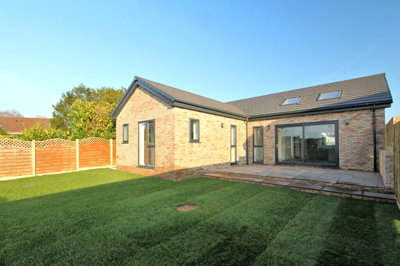
Browse 1 home new builds in Olveston, South Gloucestershire from local developer agents.
Three bedroom properties represent a significant portion of the Olveston housing market, offering space for families with multiple reception rooms and gardens in many cases. Browse detached, semi-detached, and terraced options ranging across new residential developments.
£290k
1
1
5
Source: home.co.uk
Showing 1 results for 3 Bedroom Houses new builds in Olveston, South Gloucestershire. 1 new listing added this week. The median asking price is £290,000.
Source: home.co.uk
Semi-Detached
1 listings
Avg £290,000
Source: home.co.uk
Source: home.co.uk
The Olveston property market reflects its status as a sought-after village location within easy reach of Bristol. Our data shows the average sold price for properties in Olveston over the last 12 months stands at £503,744, with prices having corrected by 17% from the previous year and 22% from the 2022 peak of £595,273. This adjustment brings values more in line with fundamental demand drivers, presenting opportunities for buyers who may have been priced out during the pandemic-era surge that affected many South Gloucestershire villages. The current market represents a more balanced environment where genuine local demand, rather than speculative investment, drives transactions.
Detached properties dominate the local market, commanding an average of £468,738, while semi-detached homes fetch around £458,750. The village housing stock spans several distinct periods, from medieval structures centred on the historic core to properties built during the significant house-building programme of the mid-1960s, when mains sewerage installation triggered population growth. This mix provides buyers with options ranging from characterful period cottages to more modern family homes, though the market lacks new-build stock within the village itself. The population rose to 2,520 in the mid-1960s due to this house-building but decreased to 2,045 after a parish boundary contraction in 1988, illustrating how infrastructure decisions have shaped the community over decades.
Current planning proposals suggest modest additions of 20-22 homes at two sites, one at Grey Gables off Vicarage Lane and another between Aust Road and Elberton Road, though these remain under consideration through the Local Plan process. The Bristol Green Belt designation generally prohibits new development except for specific uses like agriculture, leisure, infilling within existing villages, and conversion of redundant traditional buildings. This restricted supply environment supports property values by limiting the pool of available homes, making well-presented properties in the village core particularly sought after. Buyers should note that properties in good condition within the village tend to hold their value well, even during broader market fluctuations, thanks to the combination of limited supply and consistent demand from buyers seeking the Olveston lifestyle.

Life in Olveston offers a distinctive blend of rural Somerset character and practical connectivity that appeals to families, professionals, and retirees alike. The civil parish, with its origins dating back to Iron and Roman periods, encompasses diverse landscapes from higher ground rising to 200 feet above river level down to the former salt marshes that once comprised almost half the parish. These marshlands, progressively drained during Roman and Saxon times with a sea wall constructed to protect against Severn estuary flooding, have shaped the distinctive geography that residents enjoy today. The community maintains an active parish council and village hall, supporting events and gatherings that foster the strong neighbourly atmosphere for which Olveston is known.
The village centre, centred on the Church of St Mary which was originally built around 1170 and rebuilt in 1370, preserves an exceptionally well-preserved historic character. Buildings throughout the Conservation Area, established in 1975, feature traditional stone construction with clay tiled roofs, creating a cohesive architectural aesthetic that has been carefully protected. Local amenities include traditional pubs, village shops, and recreational facilities, while the surrounding countryside offers extensive footpaths and bridleways for countryside walks. The proximity to Thornbury and the broader Bristol commuter belt means residents benefit from excellent road connections via the M4 and M5 motorways, placing Bristol city centre within reasonable commuting distance.
Historically, agriculture and allied trades were the primary occupations due to the rural setting and fertile land of the Severn flood plain. Today, much of the agriculture and its buildings are being dismantled, with many converted into dwellings or light industrial uses, reflecting the evolving character of the village economy. This agricultural heritage is still visible in the landscape, with converted barns and farm buildings adding to the variety of property types available. The parish is located within the Bristol Green Belt, which generally prohibits new development except for specific uses, helping to preserve the rural setting that residents value highly.

Families considering a move to Olveston will find a reasonable selection of educational options within the local area. The village itself and surrounding parishes host several primary schools serving the community, with many housed in characterful period buildings that reflect the historic nature of the area. South Gloucestershire maintains a strong network of primary schools, with institutions in nearby towns providing additional options for families seeking faith-based education or particular pedagogical approaches. Parents should research specific catchment areas and admission arrangements, as these can significantly influence school allocation in popular villages like Olveston.
Secondary education in the area is served by comprehensive schools in nearby towns, with selective grammar schools available in South Gloucestershire for academically able students who pass the entrance assessment. Sixth form provision exists at secondary schools in surrounding towns, offering a range of A-level subjects and vocational courses. For families seeking independent education, Bristol and the surrounding area provides numerous options at primary and secondary levels. The presence of the University of Bristol and University of the West of England in nearby Bristol also influences the broader educational landscape, with good schools often clustered in areas popular with university staff and families prioritising educational outcomes.
The 2011 census recorded a parish population of 2,033, with more recent estimates suggesting a population of approximately 1,022 in 2024 and a population density of 2,621 per square kilometre. This population figure, combined with the village's popularity among families, means that primary school places can be competitive, particularly for popular catchment schools. Prospective buyers with school-age children should check current Ofsted ratings for local schools and verify exact catchment boundaries, as these can change and may differ from geographical assumptions. Visiting schools during open days and speaking to current parents can provide valuable insights beyond official statistics.
Transport connectivity ranks among Olveston's most significant advantages for buyers working in Bristol or further afield. The village benefits from proximity to the M4 and M5 motorway network, providing direct access to Wales, London, and the South West. For rail travel, Bristol Parkway station offers fast services to London Paddington in approximately 90 minutes, while Bristol Temple Meads provides connections to the wider rail network including services to Wales and the Midlands. The Severn Bridge and Aust roundabout provide direct access to Wales, further expanding employment and travel options for residents.
Local bus services connect Olveston with surrounding villages and towns, though frequencies may be limited compared to urban routes, making car ownership practically necessary for many residents. Cyclists will find the flatter routes towards the Severn estuary suitable for leisure and occasional commuting, though the hilly terrain inland presents challenges. The village's position within the Bristol Green Belt means major development is restricted, which helps preserve the rural character but also limits infrastructure investment that might otherwise improve public transport options. Bristol International Airport, located to the south, provides international and domestic flights, making Olveston surprisingly well-connected for a village of its size.
For commuters working in Bristol, the journey by car typically takes 30-40 minutes depending on traffic conditions and the specific destination within the city. The M5 provides straightforward access to the West Country, while the M4 corridor offers routes to Wales and London. Those working in Bath can reach the city via the A46 and M4 within approximately 45 minutes. The combination of motorway access and rail connections makes Olveston practical for professionals who need to reach major employment centres while enjoying village life.
Spend time exploring Olveston on different days and times to understand traffic patterns, noise levels, and the rhythm of village life. Review sold prices and property details on Homemove to understand what homes have achieved recently. Given the village's Conservation Area status and Green Belt designation, understanding what modifications are possible before purchasing can save significant time and expense later.
Contact a mortgage broker to obtain an agreement in principle before viewing properties. This strengthens your position when making offers and demonstrates to sellers that you are a serious, finance-ready buyer. Given the average property prices in Olveston, most buyers will require substantial mortgages, making broker relationships particularly valuable for navigating the application process smoothly.
Work with local estate agents to arrange viewings of properties matching your criteria. For older properties, consider the age of construction and potential for maintenance issues that may require attention. Stone-built properties with clay tiled roofs, common in the historic village core, require different assessment approaches compared to modern brick-built homes, and viewing with these factors in mind can help identify properties needing significant investment.
Once your offer is accepted, arrange a RICS Level 2 Survey to assess the property's condition. Given Olveston's historic housing stock, this survey is particularly valuable for identifying defects common in period properties, including damp issues, roof condition, and potential subsidence from clay-heavy soils. Our team provides these surveys throughout the Olveston area, with costs typically ranging from £409 to £633 for standard three-bedroom properties.
Appoint a conveyancing solicitor to handle the legal aspects of your purchase, including searches, contracts, and registration at HM Land Registry. Given the Conservation Area status of many Olveston properties, searches should specifically address any planning conditions or restrictions that may affect future modifications. Environmental searches should cover flood risk from the Severn estuary and any historical contamination from agricultural uses.
Once all enquiries are resolved and financing confirmed, you will exchange contracts and pay your deposit, with completion typically following within weeks. On the day of completion, you will receive the keys to your new Olveston home, ready to begin the process of settling into this historic South Gloucestershire village.
Understanding the construction methods used in Olveston's properties is essential for any buyer, given the village's significant heritage stock. The Olveston Conservation Area character appraisal identifies that surviving original buildings feature stone construction with clay tiled roofs, giving them a strong and solid appearance that distinguishes them from modern properties. These traditional materials require specific maintenance approaches that differ significantly from brick or rendered properties, and budgeting for appropriate upkeep is an important consideration for prospective buyers.
Traditional construction in buildings of this age managed moisture through absorption and evaporation, with stone walls and clay tiles allowing the building to breathe naturally. Problems arise when inappropriate modern materials are applied to these properties, trapping moisture and causing deterioration that would not occur with traditional maintenance approaches. A RICS Level 2 Survey can identify where inappropriate materials have been used and recommend remediation before significant damage occurs. Properties that have been well-maintained using traditional methods often represent better long-term investments than those that have received cheaper modern treatments.
Older houses, particularly those from the Georgian and Victorian periods found throughout Olveston's historic core, were often constructed without modern mathematical calculations, relying instead on tradesman's knowledge and proven techniques. This construction approach has proven remarkably durable over centuries, though it can result in features like deflecting timbers or uneven floors that a modern survey would flag. Our inspectors are experienced in assessing traditional construction and can distinguish between features that represent genuine structural concerns and those that reflect the normal characteristics of period properties.
Purchasing a property in a village like Olveston requires attention to factors beyond the standard property survey considerations. The presence of clay-heavy soils throughout the Severn Vale means foundation movement, including subsidence and heave, warrants careful investigation, particularly for properties with trees nearby or those constructed before modern building regulations. Tree roots are a common cause of subsidence in areas with clay soils, as they extract moisture from the ground, causing it to shrink and the foundations to move. This is particularly relevant for the older properties in Olveston's village core.
The historical flooding from the River Severn estuary, managed by the sea wall constructed to protect the drained marshes, should prompt buyers to enquire about flood risk and any relevant insurance implications. While the drainage of the marshes has significantly reduced flood risk, properties in lower-lying areas of the parish may still be affected by exceptional weather events. Environmental searches will reveal any historical flooding incidents and whether the property falls within current flood risk zones. Insurance costs can be higher for properties with flood history, so factor this into your overall budgeting.
Properties within the Olveston Conservation Area, which encompasses the historic village core, are subject to additional planning controls requiring Conservation Area consent for certain works including demolition and work to trees. Buyers considering properties with significant historic character, such as those within the remarkable collection of listed buildings including the Grade II* Church of St Mary and the Grade II listed Olveston Court, should understand that alterations and renovations may be restricted to preserve architectural integrity. Listed building consent is required for any works that would affect the character of these designated properties, adding complexity to any renovation plans.
Stone construction with clay tiled roofs, predominant in the historic buildings, requires different maintenance approaches compared to modern brick or rendered properties, and this should be reflected in budgeting for ongoing upkeep. Common defects in these properties include damp issues from failed tanking or defective render, roof problems from slipped or broken tiles, and deterioration of timber elements from woodworm or fungal attack. A thorough RICS Level 2 Survey will identify these issues and provide cost estimates for any necessary remediation, allowing you to make an informed decision before completing your purchase.
The average sold price in Olveston over the last year was £463,744, with detached properties averaging £468,738 and semi-detached homes around £458,750. The current market shows prices approximately 17% lower than the previous year and 22% below the 2022 peak of £595,273, offering more favourable entry points for buyers compared to recent market highs. This correction brings values more in line with fundamental demand drivers, particularly for a village location within the Bristol Green Belt with strong commuting credentials and heritage character.
Properties in Olveston fall under South Gloucestershire Council administration, with most village properties typically assessed within council tax bands C through F. Exact banding depends on property value and characteristics, and buyers can verify specific bands through the Valuation Office Agency website or their solicitor during conveyancing. Stone-built period properties in the Conservation Area may have been assessed differently from modern properties, and this can affect both council tax liability and future capital gains considerations when selling.
Olveston is served by local primary schools in the village and surrounding parishes, with secondary education provided by comprehensive schools in nearby towns including Thornbury. South Gloucestershire grammar schools provide selective education for academically able students who pass the entrance assessment, with places allocated based on ranking by assessment score. Parents should check current Ofsted ratings and specific catchment area boundaries, as these can affect school allocation and may differ from geographical assumptions based on proximity alone.
Olveston has limited public transport options, with local bus services providing connections to surrounding towns and villages, though frequencies are reduced compared to urban routes. The village is better served by road connections, with the M4 and M5 motorways providing access to Bristol and beyond, typically within 30-40 minutes by car. Bristol Parkway station offers rail connections to London Paddington in approximately 90 minutes, while Bristol Airport provides international and domestic flights, making the village practical for both commuting and travel.
Olveston's location within the Bristol Green Belt, combined with its Conservation Area status and limited new development, supports property values by restricting supply while maintaining consistent demand. The village attracts buyers seeking character properties in a rural setting with good road connections, and properties in good condition within the village core tend to hold their value well even during broader market fluctuations. Current planning proposals suggest only modest additions of 20-22 homes at two sites, meaning supply constraints are likely to persist and support values for existing homeowners.
Stamp Duty Land Tax for standard purchases up to £250,000 is zero, rising to 5% on the portion between £250,001 and £925,000. Given the average property price of £463,744, most buyers would pay approximately £10,687 in stamp duty on a typical village home. First-time buyers benefit from enhanced thresholds, paying nothing on the first £425,000 and 5% between £425,001 and £625,000, though this relief phases out for purchases above £625,000.
Understanding the full costs of purchasing property in Olveston extends beyond the purchase price to include stamp duty, survey fees, legal costs, and moving expenses. Current Stamp Duty Land Tax thresholds for standard buyers begin at zero for properties up to £250,000, with 5% applying to the portion between £250,001 and £925,000. Given the average property price of £463,744, most buyers would expect to pay approximately £10,687 in stamp duty on a typical village home. First-time buyers benefit from enhanced thresholds, paying nothing on the first £425,000 and 5% between £425,001 and £625,000, providing meaningful savings for those eligible.
Professional survey costs represent an important investment, particularly given the age and character of many Olveston properties. A RICS Level 2 Survey for a typical three-bedroom property in the village would typically cost between £409 and £633, with older or larger properties potentially attracting higher fees. Properties constructed before 1900, which includes much of the historic stone-built stock in Olveston's Conservation Area, may incur a premium of 20-40% due to the additional inspection time required and the greater complexity of assessing traditional construction methods. Given the prevalence of stone construction and period features in the village, this investment is particularly valuable for identifying maintenance needs specific to historic properties.
Solicitors' fees for conveyancing typically range from £499 for basic transactions, rising depending on complexity, and should include local searches covering environmental factors, planning history, and flooding risk that are particularly relevant to Olveston's geography. Search costs typically add £250-£400 to the overall legal bill, covering matters such as drainage and water searches, environmental searches identifying any contaminated land or flood risk, and local authority searches revealing planning history and any conditions affecting the property. For Conservation Area properties, additional checks on any Article 4 directions or planning conditions may be necessary, potentially adding to the complexity and cost of the transaction.
Moving costs, including removal services, should be budgeted at £500-£2,000 depending on the volume of belongings and distance involved. For period properties, setting aside a contingency fund of 1-2% of the purchase price for unexpected repairs is prudent, given the likelihood of discovering maintenance needs that were not visible during viewings. Properties with original features may require specialist tradespeople for any renovation work, which can cost more than standard building contractors, so factoring this into your budget helps avoid financial surprises after completion.
Properties New Builds In London

Properties New Builds In Plymouth

Properties New Builds In Liverpool

Properties New Builds In Glasgow

Properties New Builds In Sheffield

Properties New Builds In Edinburgh

Properties New Builds In Coventry

Properties New Builds In Bradford

Properties New Builds In Manchester

Properties New Builds In Birmingham

Properties New Builds In Bristol

Properties New Builds In Oxford

Properties New Builds In Leicester

Properties New Builds In Newcastle

Properties New Builds In Leeds

Properties New Builds In Southampton

Properties New Builds In Cardiff

Properties New Builds In Nottingham

Properties New Builds In Norwich

Properties New Builds In Brighton

Properties New Builds In Derby

Properties New Builds In Portsmouth

Properties New Builds In Northampton

Properties New Builds In Milton Keynes

Properties New Builds In Bournemouth

Properties New Builds In Bolton

Properties New Builds In Swansea

Properties New Builds In Swindon

Properties New Builds In Peterborough

Properties New Builds In Wolverhampton

Enter your details to see if this property is within your budget.
Loans, cards, car finance
Estimated property budget
Borrowing + deposit
You could borrow between
Typical borrowing
Monthly repayment
Est. at 4.5%
Loan-to-value
This is an estimate only. Your actual budget may vary depending on interest rates, credit history, and personal circumstances. For an accurate affordability assessment, speak to one of our free mortgage advisors.
This calculator provides estimates for illustrative purposes only and does not constitute financial advice. Your home may be repossessed if you do not keep up repayments on your mortgage. Estimates based on 4.5% interest rate, repayment mortgage. Actual rates depend on your circumstances.
Homemove is a trading name of HM Haus Group Ltd (Company No. 13873779, registered in England & Wales). Homemove Mortgages Ltd (Company No. 15947693) is an Appointed Representative of TMG Direct Limited, trading as TMG Mortgage Network, which is authorised and regulated by the Financial Conduct Authority (FRN 786245). Homemove Mortgages Ltd is entered on the FCA Register as an Appointed Representative (FRN 1022429). You can check registrations at NewRegister or by calling 0800 111 6768.

We use cookies to show you personalised content and improve your experience of our website. Find out more in our Privacy policy and Cookie policy.