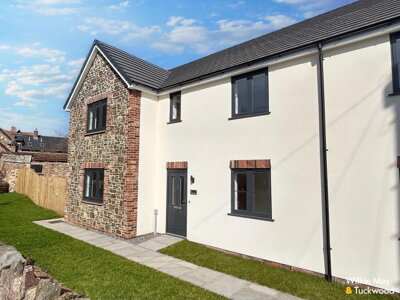
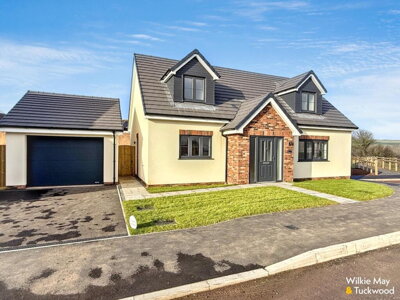
Browse 2 homes new builds in Nettlecombe, Somerset from local developer agents.
£0k
0
0
0
Source: home.co.uk
The Lancashire property market offers exceptional variety for buyers at every price point, with property types ranging from affordable terraced houses starting around £144,000 to substantial detached family homes commanding prices above £360,000. Our data shows terraced properties dominate the sales market, accounting for 37.6% of all transactions, followed by semi-detached homes at 32.9%, detached properties at 21.9%, and flats representing just 7.5% of sales. This distribution reflects Lancashire's rich architectural heritage, with extensive Victorian and Edwardian terraced stock in the mill towns and industrial areas, alongside more modern suburban developments in the expanding urban centres. The median house price of £179,000 positions Lancashire as one of the more affordable counties in the North West, making it particularly appealing to first-time buyers and families seeking more space for their money compared to neighbouring Greater Manchester or Cheshire.
New build activity continues to grow across Lancashire, with major developers including Barratt Homes, Persimmon, Taylor Wimpey, and David Wilson Homes delivering new housing developments throughout the county. Current new build prices start from approximately £175,000 for two-bedroom homes at sites like Stone Bridge Fold in Preston, rising to over £549,000 for premium five-bedroom detached properties at exclusive developments such as Whittingham Place. These new developments often feature energy-efficient designs, modern open-plan layouts, and warranty protection, though buyers should budget for potential premium pricing compared to equivalent older properties. The past twelve months have seen relatively stable house prices in Lancashire, with values remaining within 1% of the 2023 peak of £214,674, suggesting a resilient market that has absorbed economic pressures without significant price corrections.
When you are buying property in Lancashire, you will find significant variation in prices across the county. Flats in areas like Accrington and Burnley can be found from around £60,000, while premium locations in the Ribble Valley and along the Fylde coast command substantially higher prices. Our listings include family homes in popular areas such as Fulwood and Grimsargh near Preston, period properties in conservation areas throughout Lancaster's historic streets, and modern apartments in converted mill buildings that offer character and charm at competitive prices.

Life in Lancashire offers an exceptional quality of life that combines urban convenience with outstanding natural beauty, making the county one of England's most desirable locations for families, professionals, and retirees alike. The county encompasses the cultural hub of Lancaster with its world-renowned university and impressive castle, the commercial vitality of Preston as Lancashire's administrative centre, the Victorian heritage of towns like Bury and Bolton, and the golden sands of the Fylde coast including Blackpool and Lytham St Annes. Inland, the Forest of Bowland provides breathtaking walking country, while the Ribble Valley offers some of the finest gastro pubs and artisan food producers in the North West. This diversity means residents can enjoy coastal promenades, mountain hikes, cultural festivals, and Michelin-starred dining all within a short drive, a combination rarely found elsewhere in Britain.
The county's towns and villages each possess their own distinct character shaped by Lancashire's industrial heritage, which remains visible in the architecture of former cotton mills converted into contemporary apartments, ornate Victorian public buildings, and traditional pubs serving local cask ales. Local communities remain strong throughout the county, with market towns hosting weekly farmers' markets, annual agricultural shows, and vibrant festival seasons that draw visitors from across the region. The Ribble Valley market towns of Clitheroe and Skipton offer a particularly enviable combination of independent shops, quality restaurants, and easy access to open countryside, while coastal towns like Lytham St Annes provide an established community atmosphere with excellent amenities that attract buyers seeking a slower pace of life.
Lancashire's economy has transformed successfully from its manufacturing roots into modern sectors including advanced engineering at BAE Systems' facilities in Warton and Samlesbury, digital creative industries centred around Preston, and health innovation supported by leading institutions like Lancaster University and the University of Central Lancashire. The county's population of over 1.4 million people ensures thriving high streets, excellent local services, and the critical mass needed to sustain diverse employment opportunities and educational establishments. Major employment hubs in the county include the Preston city centre business district, the deep-water port at Heysham that supports maritime and logistics industries, and the growing technology and creative cluster around MediaCityUK's northern satellite presence.

Lancashire provides an impressive range of educational opportunities across all levels, making the county particularly attractive to families with children of all ages from nursery through to university. The county maintains over 500 primary schools and numerous secondary schools, with notable institutions including Lancaster's Royal Grammar School, an acclaimed selective school with a legacy dating back centuries, and Queen Elizabeth School in Kirkby Lonsdale, consistently ranked among the best state secondary schools in the North West. When you are researching properties, verify current school Ofsted ratings carefully and consider catchment areas, as admission policies can significantly impact which schools your children can access. Many families specifically target postcodes within walking distance of high-performing primary schools to secure places, so if school admission is a priority for your household, you should factor this into your property search from the outset.
When buying property in Lancashire, you will find excellent secondary education options including the highly sought-after Westholme School in Meins, the respected St Christopher High School in Accrington, and the well-regarded Cardinal Allen Catholic High School in Fleetwood. The grammar school system in Lancashire provides additional opportunities for academically gifted children, with prestigious options including the aforementioned Lancaster Royal Grammar School, Queen Elizabeth Grammar School in Kirkby Lonsdale, and Ribblesdale Secondary School in Clitheroe. For primary education, well-regarded options include Bowerham Primary and Lansbury St Lawrence's CE Primary in Lancaster, while the Claremont Primary School in Preston and Moss Bank Primary School in Bolton serve their local communities with excellent ratings. You should verify exact catchment boundaries with the local authority before committing to a property purchase.
Higher education options within Lancashire are excellent, with Lancaster University consistently ranked among the top universities in national league tables and internationally recognised for its management school and science departments. The University of Central Lancashire in Preston serves over 35,000 students, making it one of the largest universities in the UK and providing degree programmes across medicine, dentistry, business, engineering, and creative arts. For vocational training and further education, Lancashire College in Chorley and Blackpool and the Fylde College provide apprenticeship programmes and professional qualifications that directly serve local employers. The county also hosts several well-regarded independent schools including Lancaster Grammar School, St Mary's College in Blackburn, and Moorland School near Clitheroe, offering alternative educational pathways for those whose budgets accommodate private schooling fees.
Lancashire benefits from excellent transport connections that make commuting to major Northern cities entirely feasible while preserving the lifestyle benefits of county living. The West Coast Main Line runs through the heart of the county, with Preston station offering direct services to London Euston in around two hours, Manchester in approximately 45 minutes, Liverpool in under an hour, and Birmingham in roughly two and a half hours. Lancaster station provides fast services to Edinburgh and Glasgow via the West Coast Main Line, while the East Lancashire rail network connects towns like Blackburn, Burnley, and Accrington to Manchester and beyond. If you work in Manchester or Liverpool, you can realistically consider living in Lancashire and commuting by train, benefiting from significantly lower property prices while maintaining access to major city employment centres.
The county's local transport infrastructure continues to improve, with the new Ticketing Beyond the Barrier system making rail travel more affordable and the Lancashire Metro's bus network providing comprehensive coverage across urban areas. If you drive, the M65 motorway connects Preston to Burnley and the M66 provides links toward Manchester, while the A59 trunk road traverses the county from Liverpool to York via Preston and the Forest of Bowland. For commuters working in Manchester, the M6 motorway provides a straightforward car journey of approximately 45 minutes from Preston and around 30 minutes from Chorley, though traffic congestion during peak hours can significantly extend travel times. The M61 motorway connects Preston to Bolton and Manchester, providing an alternative route for those working in the northern part of the Greater Manchester area.
Morecambe and Blackpool offer their own railway stations with connections to the West Coast Main Line, making coastal living viable for commuters who prefer sea air over motorway driving. Cyclists are well-served by the Lancashire Cycle Network, including the impressive Guild Wheel route around Preston, while the Leeds and Liverpool Canal towpaths provide scenic routes for leisure cycling and walking. International connectivity is excellent via Manchester Airport, accessible within an hour from most parts of Lancashire, offering direct flights to destinations worldwide. Liverpool John Lennon Airport is also within reasonable reach for southern parts of the county, providing additional flexibility for international travel.
Lancashire encompasses diverse neighbourhoods from coastal towns to Pennine villages, each offering different lifestyle benefits, price points, and transport links. Spend time visiting areas during different times of day and on weekends to understand local character, check nearby schools and amenities, and speak to residents about their experiences. Consider factors like commute times, future development plans, and flood risk assessments for specific postcodes.
Before booking viewings, approach a broker or lender to obtain a mortgage Agreement in Principle, which confirms how much you can borrow and demonstrates to sellers that you are a serious buyer. Lancashire's competitive market means sellers frequently prioritize buyers with confirmed financing, and having this document ready gives you a significant advantage when you find your ideal property. You can compare mortgage deals from multiple lenders or work with a whole-of-market broker who can identify the best rates for your circumstances.
Use Homemove to browse the full range of properties available in your target areas, setting up instant alerts for new listings that match your criteria. View multiple properties to compare options, and do not hesitate to request second viewings of promising homes. Ask estate agents about the property's history, any recent price reductions, and how many other parties are interested. If you are looking in competitive areas like the Ribble Valley or Lytham St Annes, you may need to act quickly when a suitable property becomes available.
Before proceeding with a purchase, commission a RICS Level 2 Survey to assess the property's condition and identify any structural issues, damp problems, or roof defects that could cost thousands to remedy. Given Lancashire's extensive older housing stock, surveys frequently uncover issues with solid wall construction, historic damp, and outdated electrics that may not be visible during a standard viewing. Our inspectors are experienced in the common defect patterns found in Lancashire properties, from Victorian terraced houses in the mill towns to Edwardian semis in suburban Preston.
Choose an experienced conveyancing solicitor who understands Lancashire property transactions and can efficiently handle local searches, including mining records for former coal mining areas, flood risk assessments, and planning searches. Your solicitor will handle contracts, land registry checks, and coordinate with your mortgage lender to ensure a smooth transaction through to completion. In areas with mining history such as east Lancashire and Wigan border regions, a mining search is essential to identify any historical subsidence risks or unrecorded shafts.
When buying property in Lancashire, you should be aware of several area-specific factors that can significantly impact the enjoyment and value of your new home. Flood risk varies considerably across the county, with properties along the River Ribble in Preston, areas near Lancaster's riverside, and coastal locations around Morecambe Bay facing elevated risk from both fluvial and tidal flooding. Always request flood risk reports for any property you are considering, and verify whether the property benefits from Flood Re insurance coverage or has previously flooded. Surface water flooding can affect urban areas during heavy rainfall, particularly where drainage systems are aging, so prospective buyers should check Environment Agency flood maps and speak to neighbours about any historical flooding incidents.
The county's extensive mining heritage presents additional considerations for buyers in former coal mining areas, which include parts of east Lancashire, the Wigan border areas, and sections of the Fylde coast. A mining search is essential before purchasing in these areas to identify any historical subsidence risks, mine workings that could cause structural movement, or unrecorded shafts that might require specialist foundation treatment. Lancashire's geology includes areas of shrink-swell clay that can affect properties during periods of extreme weather, particularly where foundations are shallow, so surveyors should specifically assess this risk during the RICS Level 2 inspection. Our inspectors regularly identify clay heave and subsidence issues in properties throughout the county, particularly following periods of drought or significant rainfall.
The predominant construction materials in Lancashire include traditional red brick, local sandstone, and slate roofing, materials that give the county's towns their distinctive character but require ongoing maintenance. Older terraced properties often feature solid wall construction without cavity insulation, meaning they may have higher heating costs and require consideration of damp-proof course integrity. Suspended timber floors are common in pre-1960s properties and can suffer from rot or woodworm if ventilation is poor, while the electrical wiring and plumbing in many older homes may require updating to meet current standards. Listed buildings, of which Lancashire has hundreds ranging from medieval churches to Victorian mills and traditional farmhouses, require specialist surveys and may face significant restrictions on alterations, so buyers should ensure they understand these obligations before proceeding.
Many properties in conservation areas throughout Lancashire's historic towns and villages are subject to planning restrictions that limit permitted development rights, so you should verify these constraints before purchasing if you are considering extensions or alterations. When buying a property in areas like Lancaster's historic quarter, the Georgian streets of Lytham, or the Victorian terraces of Bury, you may find that permitted development rights are more limited than in other areas. Our team can recommend specialist surveyors experienced in heritage properties if you are considering a purchase in one of Lancashire's many conservation areas.
The average house price in Lancashire is currently £217,316 according to recent market data, with a median price of £179,000. Property prices vary significantly across the county, with terraced properties averaging around £144,000, semi-detached homes at approximately £212,000, and detached properties reaching an average of £363,000. The most affordable areas tend to be the former industrial towns of east Lancashire, including Accrington, Burnley, and Hyndburn, where properties can be found at significantly below the county average, while premium prices are achieved in desirable locations like the Ribble Valley, Lytham St Annes, and the Lancaster area.
Council tax bands in Lancashire vary depending on the local authority district and property value. The county is divided between multiple district councils including Preston, Lancaster, South Ribble, Fylde, Wyre, Chorley, South Lakeland, Ribble Valley, Hyndburn, Burnley, Pendle, Rossendale, and Blackburn with Darwen. Prospective buyers should verify the specific council tax band and current charges for any property they are considering, as these can range from Band A properties paying around £1,300 annually to Band H properties paying significantly more. You can check council tax bands and current rates on the relevant local authority website before committing to a purchase.
Lancashire offers excellent educational provision at all levels, with standout schools including the Royal Grammar School in Lancaster, Queen Elizabeth School in Kirkby Lonsdale, and Our Lady's Catholic College in Lancaster at secondary level. For primary education, well-regarded options include Bowerham Primary and Lansbury St Lawrence's CE Primary in Lancaster, while independent options like Lancaster Grammar and St Mary's College in Blackburn serve families seeking private education. University-level education is well-served by Lancaster University, ranked among the top 15 UK universities, and the University of Central Lancashire in Preston. When evaluating properties, you should verify current Ofsted ratings and understand that school catchment areas can change annually, so postcodes should be checked against the most recent admission policies.
Lancashire enjoys excellent public transport connectivity, with Preston station providing direct rail services to London, Manchester, Liverpool, Birmingham, and Glasgow via the West Coast Main Line. Local train services connect major towns including Lancaster, Blackburn, Burnley, and Blackpool, while the Lancashire Metro bus network provides comprehensive coverage across urban areas. For international travel, Manchester Airport is reachable within an hour from most parts of the county, offering worldwide flights from multiple terminals. If you commute to Manchester or Liverpool for work, you can realistically live in Lancashire and travel by train, saving tens of thousands of pounds on property prices compared to equivalent homes in Greater Manchester.
Lancashire offers strong investment potential for several reasons, including more affordable entry prices compared to neighbouring Greater Manchester and the Midlands, a diverse economy with major employers in aerospace, advanced manufacturing, and digital sectors, and ongoing new build development creating demand for rental properties. The county's universities, particularly Lancaster and UCLan, generate consistent rental demand from students and young professionals, while the lower average property prices relative to surrounding counties suggest room for capital growth as Northern Powerhouse investment continues to improve regional connectivity and economic prospects. Major infrastructure projects including the Preston Canal development and ongoing improvements to the M6 motorway continue to enhance the county's appeal to both investors and homeowners.
Stamp Duty Land Tax rates for standard buyers start at 0% on the first £250,000 of property value, rising to 5% on the portion between £250,001 and £925,000, 10% up to £1.5 million, and 12% on any amount above that. First-time buyers benefit from increased relief, paying 0% on the first £425,000 with 5% applied between £425,001 and £625,000, though no relief is available above £625,000. Given Lancashire's average property price around £217,000, many buyers will pay minimal or no stamp duty, making the county particularly attractive for first-time purchasers. Your conveyancing solicitor will calculate the exact amount due based on your circumstances and ensure payment is made to HMRC within 14 days of completion.
From 4.5% APR
Compare mortgage deals from leading lenders
From £499
Experienced solicitors handling your property purchase
From £350
Comprehensive property survey by qualified inspectors
From £60
Energy performance certificate for your property
Understanding the full costs of buying property in Lancashire helps you budget accurately and avoid surprises during what is already a complex financial transaction. The most significant upfront cost for most buyers is Stamp Duty Land Tax, which for a property at Lancashire's average price of £217,316 would result in zero stamp duty for first-time buyers under current thresholds, or approximately £336 for those who have previously owned property. Properties priced at £400,000 would incur stamp duty of around £7,500 for non-first-time buyers, while premium properties at £500,000 would attract approximately £12,500 in stamp duty charges. These costs are calculated on the purchase price and must be paid to HMRC within 14 days of completion, typically arranged by your conveyancing solicitor.
Beyond stamp duty, you should budget for solicitor fees which typically range from £500 to £1,500 for conveyancing on a standard transaction, plus disbursements including local authority searches (approximately £250-400), drainage and water searches (£100-200), bankruptcy and Land Registry checks (£50-100), and potentially a mining search if the property is in a former mining area (£50-100). A RICS Level 2 Survey typically costs between £350 and £800 depending on property size and value, while an Energy Performance Certificate costs around £60-120. Mortgage arrangement fees can add £0-2,000 depending on your chosen lender, and you should also factor in removal costs, potential renovation expenses, and the cost of buildings insurance from completion date.
With careful planning and the support of an experienced conveyancing team, buying property in Lancashire can be a straightforward process, particularly given the county's relatively stable market conditions and reasonable property prices compared to many other parts of England. The conveyancing process typically takes between 8 and 12 weeks in Lancashire, though transactions involving properties in conservation areas, listed buildings, or former mining areas may require additional time for specialist searches and surveys. If you are buying with a mortgage, your lender will require a valuation survey, though this should not be confused with the more comprehensive RICS Level 2 Survey that we recommend for all buyers to protect their investment. Our team can connect you with recommended solicitors and surveyors experienced in Lancashire property transactions to ensure a smooth path to completion.
Properties New Builds In London

Properties New Builds In Plymouth

Properties New Builds In Liverpool

Properties New Builds In Glasgow

Properties New Builds In Sheffield

Properties New Builds In Edinburgh

Properties New Builds In Coventry

Properties New Builds In Bradford

Properties New Builds In Manchester

Properties New Builds In Birmingham

Properties New Builds In Bristol

Properties New Builds In Oxford

Properties New Builds In Leicester

Properties New Builds In Newcastle

Properties New Builds In Leeds

Properties New Builds In Southampton

Properties New Builds In Cardiff

Properties New Builds In Nottingham

Properties New Builds In Norwich

Properties New Builds In Brighton

Properties New Builds In Derby

Properties New Builds In Portsmouth

Properties New Builds In Northampton

Properties New Builds In Milton Keynes

Properties New Builds In Bournemouth

Properties New Builds In Bolton

Properties New Builds In Swansea

Properties New Builds In Swindon

Properties New Builds In Peterborough

Properties New Builds In Wolverhampton

Enter your details to see if this property is within your budget.
Loans, cards, car finance
Estimated property budget
Borrowing + deposit
You could borrow between
Typical borrowing
Monthly repayment
Est. at 4.5%
Loan-to-value
This is an estimate only. Your actual budget may vary depending on interest rates, credit history, and personal circumstances. For an accurate affordability assessment, speak to one of our free mortgage advisors.
This calculator provides estimates for illustrative purposes only and does not constitute financial advice. Your home may be repossessed if you do not keep up repayments on your mortgage. Estimates based on 4.5% interest rate, repayment mortgage. Actual rates depend on your circumstances.
Homemove is a trading name of HM Haus Group Ltd (Company No. 13873779, registered in England & Wales). Homemove Mortgages Ltd (Company No. 15947693) is an Appointed Representative of TMG Direct Limited, trading as TMG Mortgage Network, which is authorised and regulated by the Financial Conduct Authority (FRN 786245). Homemove Mortgages Ltd is entered on the FCA Register as an Appointed Representative (FRN 1022429). You can check registrations at NewRegister or by calling 0800 111 6768.

We use cookies to show you personalised content and improve your experience of our website. Find out more in our Privacy policy and Cookie policy.