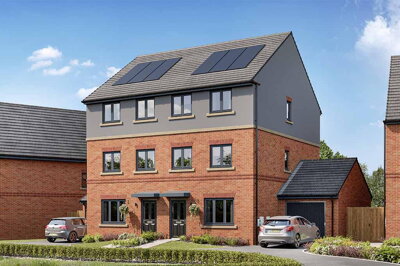
Browse 1 home new builds in NE1 from local developer agents.
The larger property sector typically features multiple bathrooms, substantial reception space, and private gardens or off-street parking. Four bedroom houses in NE1 span detached, semi-detached, and occasionally terraced configurations, with styles ranging from period properties to modern executive homes.
£0k
0
0
0
Source: home.co.uk
Showing 0 results for 4 Bedroom Houses new builds in NE1.
The NE1 property market is predominantly characterised by apartment living, with flats accounting for the majority of sales in this dense city centre postcode. Recent data shows the average price for a flat in NE1 sits at approximately £169,777, making it one of the more affordable city centre markets in the UK. Terraced properties, while less common in the immediate city centre, command significantly higher prices with average sales reaching around £390,000, reflecting the scarcity and desirability of these historic homes. The average asking price across all property types currently stands at £158,076, according to Compare Estate Agents, with Rightmove reporting sold prices averaging £174,365 over the past year.
Market activity has experienced notable shifts recently, with Rightmove indicating a 4% increase in sold prices compared to the previous year, suggesting underlying demand resilience despite broader economic headwinds. However, asking prices have softened by approximately 4.2% over the same period, creating potential opportunities for buyers who can act decisively. The volume of transactions has decreased significantly, with only 52 residential property sales recorded in the last 12 months, down by around 80% from the previous year. This reduced inventory makes competition for well-priced properties more intense, underscoring the importance of working with local estate agents who understand the nuances of this market.
New build and conversion activity continues to shape the market landscape. Recent developments include Mariners Wharf on the Quayside, where a 3-bedroom purpose-built flat sold for £320,000 in December 2024, and Hanover Mill on Hanover Street, which features 2-bedroom apartments with en-suite bathrooms and secure parking. Centralofts in NE1 4AL offers 2-bedroom apartments with balconies from around £199,000, while Pandongate House on City Road provides 3-bedroom duplex flats close to the Quayside. These newer developments complement the extensive older housing stock and offer buyers various options depending on their space requirements and budget.

NE1 encompasses some of Newcastle's most celebrated neighbourhoods, each offering its own distinct character and lifestyle. The Grainger Town Conservation Area stands as the city's Georgian heritage, featuring the magnificent Grey Street, widely regarded as one of the finest streets in the country. Here, elegant sandstone facades and ornate Victorian architecture create a streetscape that feels worlds away from typical urban living. The Quayside, running along the north bank of the River Tyne, transforms into a bustling social hub during warmer months, with its array of bars, restaurants, and regular markets drawing both locals and visitors to the waterfront.
The architecture of NE1 reflects centuries of urban development, from the Georgian grandeur of Grainger Town to the Victorian red brick of older commercial buildings. Local sandstone, often appearing in pale yellows and greys, features prominently in the grand public buildings and older residential properties, while traditional slate roofs remain characteristic of the pre-1919 housing stock. Modern redevelopments have introduced contemporary materials including steel, glass, and innovative cladding systems, particularly in the conversion of historic commercial buildings into residential apartments. This blend of old and new defines the visual character of the city centre and contributes to its unique sense of place.
The cultural offerings in NE1 are extensive and diverse. The Sage Gateshead and BALTIC Centre for Contemporary Art draw national and international audiences, while the city's theatre district provides regular entertainment options. Shopping enthusiasts benefit from Eldon Square, one of the region's largest shopping centres, complemented by the historic Grainger Market for local produce and artisan goods. The proximity to both Newcastle University and Northumbria University creates a youthful energy, with cafes, bookshops, and student-friendly venues contributing to a vibrant street life throughout the year.
The local economy benefits from diverse employment sectors that support the residential market. Eldon Square and the surrounding retail areas provide significant employment, while the hospitality sector thrives thanks to Newcastle's reputation for nightlife and entertainment. Healthcare professionals are drawn to the nearby Royal Victoria Infirmary, one of the region's major teaching hospitals, and both universities provide academic and research positions. This economic diversity helps maintain demand for city centre housing across different tenant and buyer profiles.

Families considering a move to NE1 will find a range of educational opportunities within and adjacent to the city centre. Newcastle University, one of the UK's leading research institutions, is situated nearby and contributes significantly to the area's academic atmosphere and cultural diversity. Northumbria University, with its strong emphasis on vocational and professional courses, is equally accessible from the city centre postcode. These institutions attract students from across the UK and internationally, creating a dynamic multicultural environment that enriches the surrounding neighbourhoods.
Primary and secondary education options within reasonable proximity include several well-regarded schools, though parents should carefully research current catchment areas and admission criteria as these can change annually. The central location means that schools in surrounding residential areas such as Jesmond, Heaton, and Sandyford are accessible, though transport arrangements may be necessary for younger children. Newcastle City Council maintains up-to-date information on school allocations and catchment boundaries, which should be verified before committing to a purchase given the competitive nature of admissions in popular areas.
The Royal Victoria Infirmary, one of the region's major teaching hospitals, is located close to the city centre and is affiliated with Newcastle University, making NE1 particularly attractive to healthcare professionals and medical students. For families with older children, the presence of sixth form colleges and further education providers ensures continuity of educational pathways without requiring long commutes. The city's college provision includes dedicated sixth form options as well as more vocational routes through Newcastle College and other training providers.
The student population generated by the two universities has shaped the local rental market significantly, with many city centre apartments designed to accommodate this demand. Developments such as The Bruce Building and The Glassworks cater specifically to students, offering modern furnished apartments with easy access to campuses and the RVI Hospital. This has practical implications for property investors, as properties in good condition near university campuses often attract reliable tenant demand. However, families should verify specific school allocations with Newcastle City Council before committing to a purchase, as catchment boundaries can be complex in urban areas with multiple schools competing for places.
Transport connectivity is one of NE1's strongest attributes, making it an excellent base for commuters and frequent travellers. Newcastle Central Station, located within the postcode, provides direct rail connections to major UK destinations including London (approximately 3 hours), Edinburgh (1.5 hours), and Manchester (3 hours). The station serves both Virgin Trains East Coast and CrossCountry services, offering flexibility for business and leisure travel alike. Local services connect the city centre to surrounding areas in Tyne and Wear, including coastal towns and the Metro system that links to Newcastle Airport.
The Tyne and Wear Metro provides an integrated public transport network that extends throughout the region, with several stations serving the city centre area. The system connects to Newcastle Airport in under 30 minutes, making international travel accessible without the need for a car. Bus services operated by Stagecoach and other providers offer additional options for getting around the city and reaching destinations not served by the Metro. For those who prefer cycling, the city has invested in improved cycling infrastructure, and the relatively compact nature of the city centre makes cycling a viable option for daily commuting.
Driving within and around NE1 requires some consideration of parking provisions, which can be limited in the densest parts of the city centre. Many apartment buildings offer designated parking spaces, which can significantly impact both property values and daily convenience. Spaces in secure underground car parks at developments like Mariners Wharf on the Quayside are highly sought after, while some older buildings may have limited or no parking provision. The Central Motorway passes nearby, providing access to the A1(M) for north-south travel and connections to the wider regional road network.
For those working in the city centre but seeking quieter residential surroundings, NE1's excellent transport links make surrounding suburbs and villages highly accessible while maintaining the benefits of city centre living. The Metro system extends to coastal towns including Tynemouth and Whitley Bay, making it practical to live centrally while commuting to coastal areas. This connectivity supports the city centre property market by reassuring buyers that they are not confined to the postcode for daily needs or employment.
Spend time exploring different neighbourhoods within NE1, from the Georgian elegance of Grainger Town to the modern riverside developments along the Quayside. Understanding the character of each area will help you identify where your lifestyle preferences align with available properties. Consider visiting at different times of day and week to gauge noise levels, foot traffic, and the overall atmosphere of potential neighbourhoods.
Before scheduling viewings, approach a lender to obtain an agreement in principle. This confirms your borrowing capacity and demonstrates to sellers that you are a serious buyer, which is particularly valuable in a competitive market where well-priced properties attract multiple enquiries. Given that flats in NE1 average around £169,777, many buyers will find their requirements fall within standard mortgage lending criteria, though larger terraced properties at £390,000 will require higher lending amounts.
Work with local estate agents who have in-depth knowledge of the NE1 market. View multiple properties across different price ranges to refine your requirements and understand what value looks like in different parts of the postcode. Pay attention to the condition of common areas in apartment buildings and the quality of any shared facilities, as these affect both your daily life and future resale value.
Given the age and character of many properties in NE1, including converted apartments and historic buildings, a Level 2 HomeBuyer Report is essential. This survey identifies defects such as damp, structural movement, and electrical issues that may not be visible during a standard viewing. Older sandstone buildings may present unique survey considerations, while converted commercial properties can have issues with sound insulation and fire safety that warrant professional assessment.
Appoint a solicitor with experience in Newcastle city centre transactions, particularly for leasehold properties where terms, service charges, and ground rent require careful scrutiny. They will handle searches, contracts, and the legal transfer of ownership. For properties in the Quayside area, your solicitor should specifically check flood risk assessments and any building insurance arrangements that may be in place.
Once all searches are satisfactory and finance is confirmed, you will exchange contracts and pay your deposit. Completion typically follows within a few weeks, when the remaining funds are transferred and you receive the keys to your new home. At this point, you should coordinate with your solicitor to ensure final meter readings are taken and any parking permits or access fobs are organised for your new property.
Purchasing property in NE1 requires careful attention to several area-specific factors that differ from suburban markets. Flood risk is a genuine consideration, particularly for properties in the Quayside area and other locations close to the River Tyne. While the river provides stunning views and a desirable lifestyle setting, buyers should review Environment Agency flood maps and verify whether properties have appropriate insurance coverage. Surface water flooding can also occur in urban environments with extensive hard surfacing, so drainage considerations should form part of any property assessment.
The high proportion of converted properties in NE1 means that leasehold arrangements are common, and understanding these terms is essential before committing to a purchase. Review the length of the lease remaining, the current ground rent payable, and any clauses that might allow rent to increase in the future. Service charges for apartment buildings can vary significantly depending on the facilities provided and the maintenance requirements of the property. Requesting recent service charge invoices and understanding the building's maintenance reserve fund will help you budget accurately for ongoing costs.
Newcastle upon Tyne has a rich coal mining heritage, and the underlying geology includes Carboniferous rocks with coal measures, sandstones, and shales. While the immediate city centre may have been extensively redeveloped, historical mining activity can present subsidence risks in some locations. Properties on superficial deposits containing boulder clay may also be subject to shrink-swell movement that affects foundations. A thorough survey will identify any signs of past movement or structural concerns that warrant further investigation before purchase.
Properties in conservation areas such as Grainger Town may be subject to additional planning restrictions that limit permitted development rights. If you are considering making alterations to a property, either now or in the future, confirm what permissions would be required with Newcastle City Council planning department before proceeding. External changes to listed buildings require Listed Building Consent, and internal alterations to significant features may also be controlled. These restrictions protect the architectural character of the area but can limit renovation options.
According to recent market data, the average property price in NE1 is approximately £174,365 based on Rightmove sold prices, with flats averaging around £169,777. Terraced properties command significantly higher prices at approximately £390,000 on average. The current average asking price is slightly lower at £158,076. Market conditions have shown some volatility, with sold prices rising 4% year-on-year while asking prices have softened by around 4.2%. Given the diverse range of property types in the city centre, from studio apartments to converted historic buildings, prices can vary considerably depending on location, condition, and specific features.
Properties in NE1 fall under Newcastle City Council's jurisdiction. City centre apartments typically fall into bands A through D, with the specific band depending on the property's assessed value. Band A properties have the lowest council tax charges while Band H properties, more common among higher-value historic homes, carry the highest charges. For the 2024-2025 financial year, Newcastle City Council set Band A charges at approximately £1,400 annually, rising to over £3,000 for Band H properties. You can verify the exact council tax band for any specific property through the Valuation Office Agency website or your solicitor during the conveyancing process.
While the immediate city centre has limited primary and secondary schools due to the predominantly commercial nature of NE1, several well-regarded options exist within a short distance. Primary schools in surrounding areas such as Christ Church in St. Nicholas and the Royal Grammar School for secondary education are historically popular choices. Parents should check current catchment area boundaries with Newcastle City Council, as these can change annually and competitive admissions mean early research is essential. For higher education, Newcastle University and Northumbria University are both located in the wider city area, offering world-class undergraduate and postgraduate programmes across numerous disciplines.
NE1 benefits from excellent public transport connections centred around Newcastle Central Station, which provides direct rail services to London, Edinburgh, Manchester, and other major cities. The Tyne and Wear Metro system serves the city centre with connections to Newcastle Airport (under 30 minutes), the coast, and surrounding towns including Jesmond, Heaton, and the coastal suburbs. Bus services operated by Stagecoach and others provide comprehensive coverage throughout the city and region. This connectivity makes NE1 particularly attractive to commuters who need access to regional and national transport networks while enjoying city centre living.
NE1 offers several investment characteristics worth considering. The presence of two major universities ensures consistent demand for rental properties from students and academic staff, particularly for well-located apartments near campuses and the RVI Hospital. The city centre location attracts young professionals seeking convenient access to workplaces and amenities. Property prices in NE1 are relatively accessible compared to other UK city centres, potentially offering better entry points for investors. However, factors such as flood risk in some areas, the prevalence of leasehold properties with potentially restrictive terms, and recent decreases in transaction volumes warrant careful consideration. Properties in good condition near universities or major employers tend to generate reliable rental income, but local market conditions can fluctuate.
Stamp Duty Land Tax applies to all property purchases in England. For standard purchases, the rates are 0% on the first £250,000, 5% on the portion from £250,001 to £925,000, 10% on £925,001 to £1.5 million, and 12% on any amount above £1.5 million. First-time buyers benefit from relief on the first £425,000, with 5% charged between £425,001 and £625,000. For example, a first-time buyer purchasing a flat at the NE1 average price of £169,777 would pay no stamp duty at all. However, second-home buyers and property investors face a 3% surcharge on all portions of the purchase price, which significantly increases the total tax liability on even moderately priced properties.
The primary risks specific to NE1 include flood risk in riverside areas, the prevalence of leasehold properties with potentially restrictive terms, and the age of many buildings which may require more maintenance than newer constructions. Properties converted from commercial buildings can present unique challenges including sound insulation, fire safety compliance, and alterations to original structures. Mining subsidence, while not widespread, should be considered given Newcastle's coal mining heritage, and underlying clay deposits can cause foundation movement in some locations. Obtaining a comprehensive survey before purchase is strongly recommended to identify any existing or potential issues with the property you are considering.
From 3.84% APR
Compare competitive mortgage deals from trusted lenders
From £499
Expert legal services for your property purchase
From £350
Professional survey to identify defects in your new home
From £60
Energy performance certificate for your property
Understanding the full costs of purchasing property in NE1 extends beyond the property price itself. Stamp Duty Land Tax represents one of the largest additional costs, though first-time buyers purchasing properties up to £425,000 may qualify for complete relief. For a typical flat in NE1 priced at the market average of around £169,777, a first-time buyer would pay no stamp duty whatsoever. However, for second-home buyers and investors, a 3% surcharge applies on top of standard rates, increasing the total tax liability significantly.
Additional buying costs include solicitor fees for conveyancing, which typically range from £500 to £1,500 depending on the complexity of the transaction and whether the property is freehold or leasehold. Leasehold transactions often incur additional costs due to the need to obtain management information packs, notice of mortgage fees, and lease extension documents. Search fees, payable to the local authority for environmental, drainage, and planning searches, usually add between £200 and £400, though your solicitor may recommend additional specialist searches given NE1's mining history.
Survey costs for a RICS Level 2 HomeBuyer Report start from around £350 for a studio apartment but increase for larger properties or more complex buildings such as converted warehouses or historic properties. Older sandstone buildings and converted commercial properties may require more detailed inspection, which can affect survey fees. Mortgage arrangement fees, if applicable, can add a further £1,000 to £2,000, though many lenders offer fee-free deals to compete for business.
Ongoing costs after purchase include council tax, with Newcastle City Council bands ranging from approximately £1,400 to over £3,000 annually depending on the property band. Service charges for leasehold apartments vary considerably, from a few hundred pounds per year for straightforward buildings to several thousand pounds for those with extensive facilities such as gyms, concierge services, or major maintenance programmes. Buildings insurance is typically included within service charges for apartments, but freehold property owners should budget for standalone policies. Budgeting accurately for these ongoing costs ensures that the true cost of ownership is clear before committing to a purchase in the city centre.
Properties New Builds In London

Properties New Builds In Plymouth

Properties New Builds In Liverpool

Properties New Builds In Glasgow

Properties New Builds In Sheffield

Properties New Builds In Edinburgh

Properties New Builds In Coventry

Properties New Builds In Bradford

Properties New Builds In Manchester

Properties New Builds In Birmingham

Properties New Builds In Bristol

Properties New Builds In Oxford

Properties New Builds In Leicester

Properties New Builds In Newcastle

Properties New Builds In Leeds

Properties New Builds In Southampton

Properties New Builds In Cardiff

Properties New Builds In Nottingham

Properties New Builds In Norwich

Properties New Builds In Brighton

Properties New Builds In Derby

Properties New Builds In Portsmouth

Properties New Builds In Northampton

Properties New Builds In Milton Keynes

Properties New Builds In Bournemouth

Properties New Builds In Bolton

Properties New Builds In Swansea

Properties New Builds In Swindon

Properties New Builds In Peterborough

Properties New Builds In Wolverhampton

Enter your details to see if this property is within your budget.
Loans, cards, car finance
Estimated property budget
Borrowing + deposit
You could borrow between
Typical borrowing
Monthly repayment
Est. at 4.5%
Loan-to-value
This is an estimate only. Your actual budget may vary depending on interest rates, credit history, and personal circumstances. For an accurate affordability assessment, speak to one of our free mortgage advisors.
This calculator provides estimates for illustrative purposes only and does not constitute financial advice. Your home may be repossessed if you do not keep up repayments on your mortgage. Estimates based on 4.5% interest rate, repayment mortgage. Actual rates depend on your circumstances.
Homemove is a trading name of HM Haus Group Ltd (Company No. 13873779, registered in England & Wales). Homemove Mortgages Ltd (Company No. 15947693) is an Appointed Representative of TMG Direct Limited, trading as TMG Mortgage Network, which is authorised and regulated by the Financial Conduct Authority (FRN 786245). Homemove Mortgages Ltd is entered on the FCA Register as an Appointed Representative (FRN 1022429). You can check registrations at NewRegister or by calling 0800 111 6768.

We use cookies to show you personalised content and improve your experience of our website. Find out more in our Privacy policy and Cookie policy.