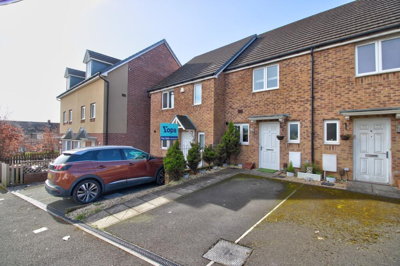
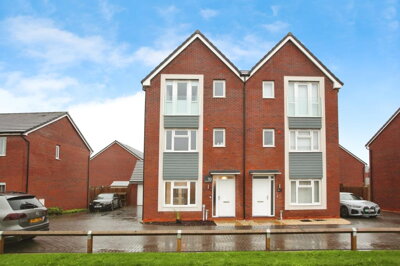
Browse 2 homes new builds in Nash from local developer agents.
£479,375
Average Sold Price (NP18)
£202,500
Nash Road Average (NP19)
Up to £618,750
Detached Properties (NP18)
+25%
Price Growth (NP18, 12 months)
5,200
Sales in Newport Area (12 months)
The property market in Nash, Newport, presents a diverse range of opportunities for buyers, with prices varying significantly across different parts of this compact village community. Our data shows the average sold house price in the NP18 area of Nash is £479,375 over the last twelve months, with detached properties commanding up to £618,750. Properties on Nash Road in the NP19 postcode have achieved average prices of £202,500, while Nash Grove properties average around £250,000, demonstrating the considerable price variation within this village setting.
House prices in Nash have shown encouraging growth, with the NP18 area reporting a 25% increase year-on-year and an impressive 38% rise compared to the 2021 peak of £447,500. In contrast, the NP19 section of Nash Road experienced a 12% decline but remains attractive for first-time buyers seeking more accessible price points. The broader Newport postcode area has seen 5,200 property sales in the past twelve months, though transaction volumes have dropped by 17.3% compared to the previous year, reflecting national trends affecting the housing market.
Nash encompasses the NP18 and NP19 postcode areas, each offering distinct property characteristics. The NP18 area, which includes the village centre and properties closer to the Newport Wetlands, tends to feature higher-value detached homes on spacious plots. The NP19 area, bordering the Glan Llyn development, offers a mix of traditional terraced homes at lower price points and newer properties with modern specifications. With 45 to 125 property sales recorded in the Nash area over the past year across different platforms, buyer interest remains steady despite broader market conditions.
Life in Nash, Newport, offers residents the best of both worlds: a close-knit village atmosphere with easy access to the amenities and employment opportunities of Newport city centre. The village sits on the Caldicot Levels, a unique landscape of reclaimed coastal land where centuries of drainage have created a distinctive pattern of fields, reens, and ancient hedgerows. The Newport Wetlands Nature Reserve, partly located within Nash, provides residents with stunning natural scenery, walking trails, and excellent birdwatching opportunities, making this area particularly appealing to nature enthusiasts and families seeking an outdoor lifestyle.
The demographics of Nash reflect a community that has grown significantly in recent years, driven partly by major housing developments in the surrounding area. Newport itself saw its population increase by 9.5% between 2011 and 2021, the largest population growth in Wales, signalling strong demand for housing in the region. The housing stock in the wider Newport local authority area shows 87.2% of households living in houses or bungalows, with semi-detached properties making up 31.5% of the housing stock, indicating a family-friendly environment with good-sized homes and gardens.
Local amenities include proximity to the Nash College campus of Coleg Gwent, which offers vocational and academic courses for students of all ages. The village is well-served by local shops and pubs, while comprehensive retail and leisure facilities in Newport city centre are just a short drive away. The nearby Glan Llyn development has brought additional amenities including a supermarket and community facilities, further enhancing the local offering for Nash residents.

Education provision in and around Nash, Newport, serves families with children of all ages, from early years through to further education. The village falls within the Newport local authority school admission catchment, with several primary schools serving the surrounding area including Lliswerry Primary School, which has an established reputation for providing quality primary education. Other nearby primaries serve the expanding communities around the Glan Llyn development and the wider Nash parish, with school catchments determined by geographic proximity.
Secondary education is available at schools including Lliswerry High School and other Newport secondary schools, which serve pupils from Year 7 through to Sixth Form. These schools have invested in modern facilities in recent years and offer a range of GCSE and A-Level courses alongside vocational qualifications. For families considering secondary education options, school performance data and admissions criteria are available through the Newport City Council website, and visiting potential schools before purchasing property is strongly recommended to understand catchment boundaries.
For further and higher education, residents of Nash benefit from proximity to Coleg Gwent's Nash College campus, which offers a wide range of vocational and academic courses for students of all ages. The college provides A-Level programmes, vocational qualifications, and apprenticeship opportunities, making it a valuable local resource for young people and adults seeking to further their education or retrain for new careers. University-level education is readily accessible in nearby Cardiff and Bristol, both reachable within an hour by train, opening up excellent options for older students and working professionals pursuing higher education while enjoying village life.

Transport connections from Nash, Newport, provide residents with convenient access to employment centres across South Wales and beyond. The village is situated near the A4810 road, which connects to the M4 motorway at Newport's eastern junction, providing direct routes to Cardiff (approximately 20 minutes), Bristol (around 45 minutes), and Swindon. The M4 corridor is a major economic driver in the region, with expanding aerospace and semiconductor industries creating significant employment opportunities for Nash residents who commute by car.
Public transport options include regular bus services connecting Nash to Newport city centre, where mainline railway stations offer direct services to destinations including Cardiff Central, Bristol Parkway, London Paddington, and Birmingham New Street. Newport railway station provides excellent connectivity, with fast trains to London taking approximately 90 minutes. For those who work in Cardiff, the journey by train typically takes around 15 minutes, making Nash a viable option for commuters who wish to enjoy village life while working in one of South Wales' major cities.
Cycling infrastructure in the area continues to improve, with cycle paths connecting Nash to Newport and the wider Gwent Levels. The flat terrain of the Caldicot Levels makes cycling accessible for most abilities, and secure cycle storage is increasingly standard at new developments. For air travel, Cardiff Airport is approximately 30 minutes away by car, offering flights to European destinations and connecting to international networks.

Prospective buyers considering properties in Nash, Newport, should be aware of specific local factors that can affect purchasing decisions and long-term ownership costs. Flood risk is the most significant environmental consideration for this area, as Nash is situated on the historically flood-prone Caldicot Levels near the mouth of the River Usk and the Bristol Channel. Natural Resources Wales has identified neighbouring Goldcliff as one of six main flood risk areas in Newport, and the Newport Local Flood Risk Management Strategy notes that climate change is expected to increase the frequency and severity of flooding from sea level rise and more intense storms. A burst water main on Nash Road in January 2022 caused significant local flooding, demonstrating that residents should be prepared for occasional flood incidents and ensure appropriate insurance cover.
The geology of the Caldicot Levels presents additional considerations, as the alluvial deposits underlying the area include clay soils that can be prone to shrink-swell movement. Properties with large gardens or those situated near trees may be particularly affected by ground movement during periods of drought or heavy rainfall. This type of subsidence is a significant cause of insurance claims across the UK, and buyers should check whether properties have been subject to any previous subsidence claims or underpinning works.
The age and construction of properties in Nash varies considerably, from medieval structures to brand new homes. Older properties may exhibit defects common to their era, such as penetrating damp in solid-walled Victorian and Edwardian homes, outdated electrical systems with wiring that may exceed 25 years, and deteriorating roof coverings with slipped or cracked tiles. Properties with timber frames or traditional construction may be susceptible to rot or woodworm where dampness or poor ventilation is present. Our inspectors frequently identify these issues during surveys, and addressing them before purchase allows buyers to negotiate appropriately on price.
Given the diverse housing stock in Nash, from period cottages to new build homes, arranging a thorough survey before purchase is strongly recommended. The average price of a RICS Level 2 Survey in Newport is around £498.95, though this varies by property value, with surveys for homes priced above £500,000 averaging £586. For older or listed properties with complex construction or visible defects, a more comprehensive RICS Level 3 Building Survey may be advisable, with surveyors able to assess the condition of historic features and advise on appropriate conservation methods.
Before you begin property viewings in Nash, obtain a mortgage agreement in principle from a lender to understand your budget and demonstrate your seriousness to sellers. First-time buyers in Wales can benefit from the Welsh Government's Help to Buy - Wales scheme, which offers equity loans on new build properties. Speaking to an independent mortgage broker can help you compare rates and find the most suitable product for your circumstances.
Use Homemove to browse current listings in Nash, Newport, comparing prices across different streets and property types. Our platform shows properties in the NP18 and NP19 postcode areas, from terraced homes around £190,000 to detached properties exceeding £600,000. Consider engaging with local estate agents who can provide insight into properties coming to market and vendor motivation.
Once you have identified suitable properties, schedule viewings to assess the condition of the home, the neighbourhood, and the local area. Pay particular attention to signs of damp, roof condition, and any flood damage indicators given Nash's flood history. Visiting at different times of day can reveal noise levels, traffic patterns, and the character of the neighbourhood.
Before finalising your purchase, arrange for a RICS Level 2 Home Survey to assess the property's condition. With the average survey cost in Newport around £498.95, this investment can identify defects that may require negotiation on price or repairs before completion. For older properties or those with visible defects, a RICS Level 3 Building Survey provides a more comprehensive assessment.
Choose a conveyancing solicitor to handle the legal aspects of your purchase. Your solicitor will conduct searches including local authority, drainage, and environmental searches, which are particularly important in Nash given the flood risk and ground conditions. Ensure your solicitor has experience with properties in the Newport area and can advise on any specific local issues.
Once all searches are satisfactory and your mortgage offer is confirmed, you will exchange contracts and pay your deposit. Completion typically follows within 28 days, after which you will receive your keys and become the proud owner of your new home in Nash, Newport.
The average sold house price in Nash varies significantly by postcode area. In the NP18 area, the average is £479,375 over the last 12 months, with detached properties selling for up to £618,750. Properties on Nash Road in the NP19 postcode average around £202,500, while Nash Grove averages approximately £250,000. The broader Newport postcode area has a median price of £213,000, with house prices showing 25% year-on-year growth in the NP18 area.
Properties in Nash, Newport, fall under Newport City Council's council tax bands, which range from Band A (the lowest) to Band H (the highest). Specific bands depend on the property valuation as assessed by the Valuation Office Agency. Most residential properties in Nash fall within Bands A to D, reflecting the range of property values in the village from more modest terraced homes to substantial detached residences. You can check the specific band for any property through the Newport City Council website or the Valuation Office Agency's online calculator.
Schools serving Nash include Lliswerry Primary School and other nearby primary schools in the Newport catchment area, with catchments determined by geographic proximity to the school. Secondary education is available at Lliswerry High School and other Newport secondary schools, which offer GCSE, A-Level, and vocational courses. Further education is provided by Coleg Gwent's Nash College campus, offering vocational qualifications and apprenticeships. For university education, Cardiff and Bristol are accessible within approximately an hour by train, providing extensive higher education options.
Nash has bus connections to Newport city centre, where mainline railway services provide direct routes to Cardiff, Bristol, London Paddington, and Birmingham. Newport railway station offers regular services, with trains to London taking around 90 minutes. The M4 motorway is accessible via the A4810, providing road connections to Cardiff (20 minutes) and Bristol (45 minutes). The nearby Glan Llyn development has improved bus services in the area, with regular routes connecting to Newport city centre and surrounding suburbs.
Nash and the wider Newport area offer solid investment potential, supported by the city's strategic location on the M4 corridor with expanding aerospace and semiconductor industries. Population growth in Newport was the highest in Wales at 9.5% between 2011 and 2021, indicating sustained demand for housing. New developments like Glan Llyn are creating new communities with supporting infrastructure. However, buyers should consider flood risk and the potential impact on insurance premiums and future saleability of properties in high-risk areas.
Stamp Duty Land Tax (SDLT) rates for standard purchases from April 2024 are 0% on the first £250,000, 5% on £250,001 to £925,000, 10% on £925,001 to £1.5 million, and 12% above £1.5 million. First-time buyers benefit from relief on the first £425,000 (0% rate) and 5% on £425,001 to £625,000. Given Nash's average prices ranging from £190,000 to over £600,000, most buyers will fall within the lower SDLT bands, though higher-value properties may incur additional charges.
Nash is situated on the historically flood-prone Caldicot Levels near the River Usk and Bristol Channel. The area experiences river, coastal, and surface water flooding, with climate change expected to increase frequency and severity according to the Newport Local Flood Risk Management Strategy. A burst water main in January 2022 caused significant local flooding on Nash Road, impacting roads and nearby facilities. Before purchasing, obtain an environmental search that includes flood risk data from Natural Resources Wales, consider the property's flood history, and ensure appropriate buildings insurance is available and affordable.
Properties in Nash can exhibit defects related to their age, construction type, and local ground conditions. Older properties may have penetrating damp due to solid-walled construction lacking modern damp-proof courses, deteriorating roofs with slipped tiles or failing mortar, and outdated electrical systems that should be tested if over 25 years old. The clay soils underlying the Caldicot Levels can cause shrink-swell ground movement affecting foundations, particularly near trees or during drought conditions. Properties near the Newport Wetlands may experience elevated dampness due to the water table and proximity to watercourses.
The Nash and greater Newport area has seen significant new build activity in recent years, most notably at the extensive Glan Llyn development on the former Llanwern steelworks site. Located in the NP19 4XX postcode area bordering Nash, Glan Llyn is a major mixed-use community offering thousands of new homes alongside schools, retail facilities, and leisure amenities. The development features homes from major builders including St Modwen Homes, Persimmon Homes, Bellway Homes, and Pobl Living, with prices ranging from approximately £250,000 for two-bedroom homes to over £450,000 for larger four and five-bedroom detached properties.
New homes at Glan Llyn include a variety of styles and configurations to suit different buyers. Stillwater at Glan Llyn by St Modwen Homes offers properties from £259,995 to £459,995, featuring two, three, and four-bedroom homes on Baldwin Drive. Springfield Meadows by Persimmon Homes offers two to five-bedroom properties from approximately £279,995 for a three-bedroom mid-terrace house up to £444,995 for a five-bedroom detached property. Bellway Homes' Alder Grove development on Queensway offers two to four-bedroom homes from £249,995 to £324,995.
For buyers seeking more affordable options, shared ownership properties at Locke Gardens by Pobl Living offer from 50% ownership, making it possible to purchase a share of a two-bedroom home from £125,000 plus rent. Hawkfield Homes also has planning permission for 21 homes at Traston Lane, near Nash Road, providing additional new build options in the local area. New build properties typically come with a 10-year NHBC warranty and modern energy-efficient specifications, though buyers should still consider commissioning a snagging survey to identify any construction defects before the warranty period begins.

Nash, Newport, is home to several historic properties that reflect the village's rich heritage, most notably the Church of St Mary the Virgin, a Grade I listed building dating to the 12th century with surviving Norman elements. This medieval church stands at the village centre and serves as a visible reminder of Nash's ancient origins, having been founded by Normans following the conquest of England. The church's fabric includes elements that have survived for over 900 years, making it a significant heritage asset for the local community.
Fair Orchard, an early 19th-century Grade II listed house, represents another piece of the village's architectural heritage, featuring characteristic cement rendered walls and a hipped slate roof typical of its period. Properties of this age may have been constructed using traditional methods and materials that differ significantly from modern standards, and buyers should understand that listed buildings require consent for alterations and modifications to preserve their historic character.
Parts of Nash are designated as a Site of Special Scientific Interest (SSSI), specifically the "Gwent Levels: Nash and Goldcliff" SSSI, recognised for its wildlife habitats, geological features, and unique landforms shaped by centuries of drainage and reclamation. The Newport Wetlands Nature Reserve, partly located within Nash, sits alongside and partly within the Severn Estuary SSSI, further emphasising the area's ecological significance. Properties in these sensitive locations may be subject to planning restrictions and should be carefully evaluated before purchase. For listed buildings or properties within designated areas, a RICS Level 3 Building Survey is strongly recommended, as specialist surveyors can assess the condition of historic features and advise on conservation requirements.

Properties New Builds In London

Properties New Builds In Plymouth

Properties New Builds In Liverpool

Properties New Builds In Glasgow

Properties New Builds In Sheffield

Properties New Builds In Edinburgh

Properties New Builds In Coventry

Properties New Builds In Bradford

Properties New Builds In Manchester

Properties New Builds In Birmingham

Properties New Builds In Bristol

Properties New Builds In Oxford

Properties New Builds In Leicester

Properties New Builds In Newcastle

Properties New Builds In Leeds

Properties New Builds In Southampton

Properties New Builds In Cardiff

Properties New Builds In Nottingham

Properties New Builds In Norwich

Properties New Builds In Brighton

Properties New Builds In Derby

Properties New Builds In Portsmouth

Properties New Builds In Northampton

Properties New Builds In Milton Keynes

Properties New Builds In Bournemouth

Properties New Builds In Bolton

Properties New Builds In Swansea

Properties New Builds In Swindon

Properties New Builds In Peterborough

Properties New Builds In Wolverhampton

Enter your details to see if this property is within your budget.
Loans, cards, car finance
Estimated property budget
Borrowing + deposit
You could borrow between
Typical borrowing
Monthly repayment
Est. at 4.5%
Loan-to-value
This is an estimate only. Your actual budget may vary depending on interest rates, credit history, and personal circumstances. For an accurate affordability assessment, speak to one of our free mortgage advisors.
This calculator provides estimates for illustrative purposes only and does not constitute financial advice. Your home may be repossessed if you do not keep up repayments on your mortgage. Estimates based on 4.5% interest rate, repayment mortgage. Actual rates depend on your circumstances.
Homemove is a trading name of HM Haus Group Ltd (Company No. 13873779, registered in England & Wales). Homemove Mortgages Ltd (Company No. 15947693) is an Appointed Representative of TMG Direct Limited, trading as TMG Mortgage Network, which is authorised and regulated by the Financial Conduct Authority (FRN 786245). Homemove Mortgages Ltd is entered on the FCA Register as an Appointed Representative (FRN 1022429). You can check registrations at NewRegister or by calling 0800 111 6768.

We use cookies to show you personalised content and improve your experience of our website. Find out more in our Privacy policy and Cookie policy.