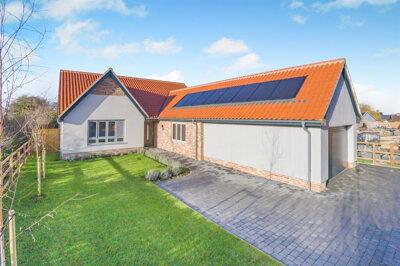
Browse 1 home new builds in Monk Soham from local developer agents.
The larger property sector typically features multiple bathrooms, substantial reception space, and private gardens or off-street parking. Four bedroom houses in Monk Soham span detached, semi-detached, and occasionally terraced configurations, with styles ranging from period properties to modern executive homes.
The Monk Soham property market reflects the character of the village itself, offering predominantly period properties in a range of types to suit different requirements. Detached properties command the highest average prices at approximately £503,636, with semi-detached homes averaging £304,643 and terraced properties around £297,250. For buyers seeking larger family homes, five-bedroom freehold houses on Monk Soham street have sold for up to £1,275,657, while more modest three-bedroom period homes typically change hands for approximately £337,366.
Price trends over the past year show a market that has experienced some correction after reaching a peak in 2023 when average prices stood at £525,295. Current prices in Monk Soham Green are approximately 21% down from that 2023 high, with the last twelve months showing an 11% decline compared to the previous year. However, longer-term perspective reveals encouraging growth, with the Monk Soham sales market having increased by 31.8% over the past decade. Property values on Monk Soham street specifically have softened by 3.7% since March 2025, suggesting opportunities for buyers who are prepared to act in a market that may be approaching its floor.
The IP13 7EY postcode area has recorded 5 property sales over the past 19 years, with the most recent sale in January 2025, indicating a constrained supply pipeline. Zoopla lists 6 properties with sold prices in Monk Soham, Woodbridge IP13, with the most recent sale in March 2025, demonstrating continued market activity despite broader economic headwinds. This limited turnover reflects the nature of village property markets, where owners often hold properties for extended periods, creating scarcity that supports values over time.
New build development within Monk Soham itself remains limited, with no active construction projects verified within the village's IP13 7xx postcode area. However, nearby market towns including Framlingham, Eye, and Worlingworth offer new build options within a 7-mile radius. Castleton Grange in Eye IP23 provides bungalows from £270,000, while Worlingworth Road in Eye IP21 offers family homes at £595,000. Langshaw Close in Framlingham features new properties from £550,000 to £595,000. Buyers who specifically require modern construction may wish to broaden their search to these neighbouring villages while still benefiting from Monk Soham's rural lifestyle.

Life in Monk Soham centres on the rhythms of the Suffolk countryside, where traditional farming landscapes and historic architecture create an atmosphere of timeless rural England. The village takes its name from the monastic settlement that once thrived here, with the Church of St Peter standing as centuries of continuous habitation and worship. The church itself showcases the characteristic building materials of the area, constructed from flint rubble with stone dressings, its nave heightened in red brick, with rendered chancel and traces of original plasterwork still visible on the tower. These architectural details reflect a craftsmanship tradition that continues to define the village's built environment.
The local housing stock predominantly consists of period houses built between 1800 and 1911, alongside medieval structures and sixteenth or seventeenth-century farmhouses that represent the agricultural heritage of Mid Suffolk. Buildings such as Primrose Farmhouse and Grove Farmhouse exemplify this heritage, their timber-framed and plastered construction topped with thatched roofs creating the classic Suffolk vernacular aesthetic. The village contains an impressive collection of listed buildings, including Abbey House, Broadway Farmhouse, Hill Farmhouse, and The Long Farmhouse, each contributing to the conservation area character that protects Monk Soham's historic integrity.
Monk Soham Hall, Woodcroft Hall, and Hartesmere Grange represent the grander residential architecture of the village, while more modest cottages including Pennys Cottage, Mount Pleasant Cottages, and Hill Cottage demonstrate how traditional building techniques were applied across different scales of rural housing. This architectural diversity creates a villagescape where Georgian proportions sit alongside medieval timber framing, and where thatched cottage roofs neighbour red brick farm buildings. For buyers, this variety means opportunities to purchase properties ranging from compact period cottages to substantial country houses, all within a compact village setting.
While Monk Soham does not host large employers within its boundaries, the village's location provides residents with access to employment opportunities in surrounding market towns and the wider Suffolk economy. The local economy remains rooted in agriculture and small-scale rural enterprises, with residents often commuting to larger settlements for professional roles. This arrangement suits those who value the separation between home and work life, returning each evening to the tranquility of village living. Community life in Monk Soham benefits from its proximity to neighbouring villages where local shops, pubs, and village halls maintain traditional social connections.
Families considering a move to Monk Soham will find educational provision centred on primary schools in nearby villages and the surrounding Mid Suffolk area. The village's small population means that younger children typically attend primary schools in surrounding settlements, with secondary education provided at schools in market towns within reasonable commuting distance. The rural nature of the area means that school transport arrangements are an important consideration for families, with many households factoring travel times and bus routes into their property search criteria.
The IP13 area and broader Mid Suffolk district contain several primary schools serving the surrounding villages, with varying capacities and catchments depending on specific location. Parents are advised to research individual school catchments and admission arrangements carefully, as rural school provision can be competitive in popular villages. Schools in nearby Framlingham benefit from the town's status as a local service centre, while primary schools in villages such as Debenham and Eye serve wider rural catchments with bus services connecting outlying villages including Monk Soham.
For secondary education, options include schools in towns such as Eye, Debenham, and Framlingham, each offering different curricula, extracurricular programmes, and examination results that families should evaluate when choosing their preferred location within the area. The Hartismere School in Eye provides secondary education for the northern part of the Mid Suffolk district, while schools in Framlingham serve the southern catchment. School transport links from Monk Soham to these secondary schools typically involve journeys of 15 to 30 minutes by school bus, depending on the specific route and pickup points within the village.
Sixth form and further education provision is available at colleges and schools in larger nearby towns, with students typically progressing to these facilities after completing their GCSEs. Suffolk has several sixth form colleges and further education providers in towns including Bury St Edmunds, Ipswich, and Lowestoft, offering specialist subjects and vocational courses. The proximity of these larger towns in Suffolk means that specialist subjects and vocational courses are accessible to students willing to travel, while sixth forms at local secondary schools provide continued education without lengthy commutes. Transport arrangements for secondary and post-16 education require careful planning in a rural area like Monk Soham, making the location of schools relative to the village an important practical consideration for families with children of school age.
Transport connectivity from Monk Soham relies primarily on road networks, with the village situated in rural Mid Suffolk away from major arterial routes. The surrounding countryside is served by a network of B-roads and country lanes that connect Monk Soham to neighbouring villages and market towns. For daily commuting or accessing larger service centres, residents typically travel by car to reach railway stations, bus services, or employment centres. The nearest railway stations with regular services are located in larger towns within the IP13 area and beyond, serving destinations including Ipswich, Norwich, and Cambridge.
The A140 provides the primary north-south corridor through Mid Suffolk, connecting Norwich to Ipswich via the market towns of Eye and Debenham. From Monk Soham, reaching the A140 involves travelling via B-roads through Framlingham or Eye, with typical journey times to the trunk road taking 15 to 20 minutes. The A14 trunk road provides east-west connectivity, accessible via routes through Ipswich or Stowmarket, connecting Monk Soham residents to Felixstowe port, Cambridge, and the midlands beyond. For residents working in Norwich or Ipswich, these road connections enable commuting by car, though journey times of 45 minutes to an hour each way are typical.
Bus services in rural Suffolk provide essential connectivity for those without private vehicles, linking Monk Soham to surrounding villages and towns on varying frequencies. However, rural bus provision in areas like Mid Suffolk typically operates on reduced timetables compared to urban routes, making personal transport a practical necessity for many residents. Services connecting to Framlingham and Eye provide access to local markets and essential services, though weekday frequencies may be limited to two or three daily return journeys. Those considering a move to Monk Soham should carefully assess their transport requirements and consider whether the village's rural connectivity matches their lifestyle needs and commuting patterns.
For residents who work in nearby towns such as Ipswich, Diss, or Framlingham, car commuting times vary depending on destination and road conditions. Cycling is popular in the Suffolk countryside for shorter journeys, with routes through the gentle valleys of Mid Suffolk providing pleasant touring opportunities. However, the undulating terrain and country lanes require appropriate fitness levels and road awareness, and cycling is not practical for all commuters. Planning a property purchase in Monk Soham involves honestly assessing your transport needs and ensuring that rural living suits your daily requirements.
Begin by exploring the Monk Soham property market thoroughly, understanding price trends, available property types, and the character of different streets and neighbourhoods within the village. With prices having corrected from their 2023 peak, buyers may find opportunities in a market where average detached properties cost around £503,636. The IP13 postcode area offers properties ranging from modest cottages to substantial country houses, and understanding which street or neighbourhood matches your requirements is the essential first step.
Contact lenders or brokers to obtain a mortgage agreement in principle before commencing property viewings. Given the rural nature of the area and property values typically ranging above £300,000, securing appropriate financing is essential. A broker familiar with rural Suffolk properties can advise on mortgage products suitable for period properties and listed buildings. For properties valued above £500,000, expect lenders to require more detailed valuations and potentially higher deposit requirements.
Travel to Monk Soham to view shortlisted properties in person, assessing the village atmosphere, property conditions, and proximity to local amenities. Pay particular attention to the condition of period features, thatched roofs, and timber-framed construction that characterise many homes in the village. Viewing properties at different times of day helps establish the true character of the neighbourhood, and visiting local shops and pubs provides insight into community life.
Once you have made an offer and it has been accepted, arrange for a RICS Level 2 survey on the property. Given the age of properties in Monk Soham, with many built between 1800 and 1911, a thorough survey is essential to identify issues such as damp, timber defects, roof condition, and structural movement. Survey costs typically range from £376 for properties under £200,000 to £930 for homes exceeding £600,000, with period and listed properties often requiring additional specialist inspection time.
Choose a conveyancing solicitor with experience in rural Suffolk properties to handle the legal aspects of your purchase. They will conduct searches, verify title details, and manage contracts for what is likely to be a freehold period property. Given the number of listed buildings in Monk Soham, including Abbey House, Broadway Farmhouse, and Hill Farmhouse, your solicitor should have experience dealing with properties subject to historic building designations.
Once all searches are satisfactory and financing is confirmed, your solicitor will arrange for you to sign contracts and pay the deposit. Completion typically follows within weeks, after which you will receive the keys to your new Monk Soham home and can begin settling into rural Suffolk life. Budget an additional two to four weeks for the legal process after mortgage offer, and ensure your buildings insurance is in place from the contract completion date.
Purchasing a property in Monk Soham requires particular attention to issues affecting period homes, given that the dominant housing stock dates from the Victorian era and earlier. Properties built before 1911 often feature traditional construction methods that differ significantly from modern standards, including timber-framed structures, lime-based mortars, and solid walls without cavity insulation. Understanding these construction approaches helps buyers appreciate both the charm and the maintenance considerations that come with owning a historic Suffolk property. Specialist knowledge of period property maintenance is valuable for preserving original features while addressing common issues.
The high concentration of listed buildings in Monk Soham means that buyers should carefully establish whether their intended purchase carries any grade of listed building status. Monk Soham contains an exceptional density of heritage properties, from the Grade I listed Church of St Peter to numerous Grade II listed farmhouses and cottages including Primrose Farmhouse, Grove Farmhouse, and The Long Farmhouse. Grade I and Grade II listed properties are subject to planning controls that affect alterations, extensions, and even some repairs, requiring Listed Building Consent from Mid Suffolk District Council. These restrictions can affect everything from replacing windows to adding satellite dishes, and buyers should factor these considerations into their decision-making process. The additional responsibility of maintaining a listed building should be weighed against the privilege of owning heritage property.
Building materials in Monk Soham reflect the local geology and Suffolk building traditions. The flint rubble construction visible in the Church of St Peter, with its characteristic stone dressings and red brick nave additions, demonstrates the traditional techniques used throughout the village. Timber-framed buildings with plastered infill panels, like those at Primrose Farmhouse and Grove Farmhouse, require careful monitoring for woodworm and wet or dry rot in structural timbers. Thatched roofs, a distinctive feature of many village properties, require specialist maintenance and insurance considerations that differ from conventional slate or tile roofing.
Flood risk in Monk Soham has not been specifically mapped in available data, though clay geology in parts of Suffolk can create shrink-swell conditions affecting property foundations. Properties in the village should be assessed for any history of structural movement or subsidence, with particular attention paid to older buildings with potentially shallow foundations. The clay deposits common across Suffolk require particular attention during dry spells, when soil shrinkage can affect foundations, and during wet periods when clay expansion may cause movement in structures built on shrinkable clay. A thorough RICS Level 2 survey will identify any concerns related to ground conditions, drainage, and the condition of external elements that protect the structure from weather and ground moisture.
The average house price in Monk Soham is approximately £537,500 based on overall sales data, with more recent transactions in Monk Soham Green averaging £413,350 over the past year. Detached properties average around £503,636, semi-detached homes approximately £304,643, and terraced properties about £297,250. Property prices have experienced a correction recently, sitting approximately 21% below the 2023 peak of £525,295, though long-term growth of 31.8% over the past decade demonstrates the enduring appeal of this rural Suffolk village. For buyers, the current softer market may present opportunities to acquire property in this sought-after village location at more accessible price points.
Properties in Monk Soham fall under Mid Suffolk District Council, with council tax bands varying according to property value and type. Band A properties represent the lowest council tax charge, while bands E through H apply to higher-value homes. Given the range of property values in Monk Soham, from modest cottages to substantial farmhouses, buyers should check the specific band for any property they are considering. Contact Mid Suffolk District Council directly or use the government council tax lookup service to verify bands for specific addresses. Council tax contributions fund local services including education, waste collection, and road maintenance throughout the Mid Suffolk district.
Monk Soham itself does not have a school within the village, with primary education provided by schools in surrounding villages. Families should research primary school catchments, Ofsted ratings, and admissions criteria for schools in nearby settlements such as Framlingham, Debenham, and Eye. The Hartismere School in Eye serves the northern part of Mid Suffolk for secondary education, while schools in Framlingham provide secondary provision for the southern catchment. Secondary education is available at schools in these market towns, with sixth form and further education options in larger nearby centres including Bury St Edmunds and Ipswich. School transport arrangements and catchment boundaries are important practical considerations when buying in this rural area.
Public transport connectivity in Monk Soham reflects its rural location, with bus services linking the village to surrounding settlements but operating on frequencies suited to occasional rather than daily commuting needs. The nearest railway stations with regular services to Ipswich, Norwich, and Cambridge are located in larger towns within reasonable driving distance, with Diss station providing direct services to London Liverpool Street and Norwich. Residents who work in nearby towns typically rely on private vehicles for daily commuting, making car ownership essential for most households in the village. Those without cars may find the limited bus timetables restrict access to employment, education, and services in surrounding towns.
Monk Soham offers potential for property investment, particularly given the limited supply of homes in this small rural village and the long-term price growth of 31.8% over the past decade. The IP13 7EY postcode has recorded only 5 property sales over 19 years, indicating a constrained supply pipeline that supports values in the long term. Properties in conservation areas and listed buildings may appeal to buyers seeking character homes with historical significance. However, the rural location means rental demand may be limited compared to towns, and any investment should account for the seasonal nature of some rural markets and the costs associated with maintaining period properties. The village's peaceful character and preserved architecture suggest continued interest from buyers seeking authentic Suffolk countryside living.
Stamp duty rates from April 2024 apply to all property purchases in England. For standard purchases, no stamp duty is charged on the first £250,000 of property value, with 5% charged between £250,001 and £925,000. Properties priced above £925,000 incur 10% on the next portion and 12% on any value exceeding £1.5 million. First-time buyers benefit from relief on the first £425,000, paying 5% between £425,001 and £625,000, with no relief available above £625,000. Given average Monk Soham prices around £413,350, many properties may attract no stamp duty for first-time buyers, representing meaningful savings for those entering the property market in this rural Suffolk village.
When buying a period property in Monk Soham, pay particular attention to the condition of timber-framed structures, thatched roofs, and lime-based mortars that characterise historic Suffolk buildings. Look for signs of woodworm or rot in exposed timbers, check that thatched roofs are in good condition with no slipped or damaged reeds, and examine render and plasterwork for cracking or deterioration. For listed buildings, factor in the costs and requirements of maintaining heritage property, including the need for Listed Building Consent for many alterations. A thorough survey from a qualified RICS surveyor with experience in period properties is essential before committing to purchase.
There are no active new build developments within Monk Soham itself, as verified by searches within the IP13 7xx postcode area. However, new build options are available in nearby towns and villages within a 7-mile radius. Castleton Grange in Eye IP23 offers bungalows from £270,000, while developments in Worlingworth and Framlingham provide detached family homes ranging from £550,000 to £595,000. For buyers who specifically require modern construction, these nearby locations offer new build options while still allowing access to Monk Soham's village amenities and countryside lifestyle.
From 4.5%
Specialist mortgage advice for Monk Soham properties, from rural lending to listed building finance
From £499
Conveyancing solicitors experienced in Mid Suffolk rural property transactions
From £376
RICS Level 2 survey for Monk Soham period properties, identifying defects in timber-framed and thatched homes
From £60
Energy Performance Certificate for Monk Soham properties, including historic buildings
Understanding the full cost of purchasing property in Monk Soham extends beyond the advertised sale price to include stamp duty, legal fees, survey costs, and other associated charges. Stamp duty represents the most significant additional cost for most buyers, calculated on a tiered scale from April 2024. For a property priced at the current Monk Soham average of £413,350, a standard buyer would pay no stamp duty on the first £250,000 and 5% on the remaining £163,350, totalling £8,167.50 in stamp duty land tax.
First-time buyers purchasing at the Monk Soham average price of £413,350 would benefit from first-time buyer relief, paying no stamp duty on the first £425,000 and therefore incurring no stamp duty liability on properties at or below this threshold. This represents a meaningful saving that makes village properties more accessible to buyers entering the property market. However, properties priced above £425,000 would see first-time buyer relief taper, with 5% applying between £425,001 and £625,000. For buyers purchasing at the upper end of the Monk Soham market, such as substantial farmhouses or extended period properties, stamp duty costs become a significant additional expense.
Beyond stamp duty, buyers should budget for solicitor conveyancing fees typically starting from £499 for standard transactions, with additional costs for local searches, Land Registry fees, and bankruptcy checks. Local searches for Mid Suffolk properties include drainage and water searches, environmental searches to identify potential land contamination, and planning searches to identify any nearby permissions or enforcement action. A RICS Level 2 survey for a property priced around the Monk Soham average would cost between £400 and £550 depending on the property's size and complexity. For period properties with timber framing, thatched roofs, or listed building status, survey costs may be higher due to the additional inspection requirements.
Mortgage arrangement fees typically range from £0 to £2,000 depending on the lender and product chosen, while valuation fees for lending purposes are often bundled with arrangement fees on more competitive mortgage products. Removal costs vary according to distance and volume of belongings, while buildings insurance must be in place from the date of contract completion. For buyers purchasing listed buildings, factor in potential costs for specialist surveys, historic building consultants, and the premium differences on buildings insurance for heritage properties. The total buying costs for a Monk Soham property typically range from 2% to 5% of the purchase price, depending on property value and individual circumstances.
Properties New Builds In London

Properties New Builds In Plymouth

Properties New Builds In Liverpool

Properties New Builds In Glasgow

Properties New Builds In Sheffield

Properties New Builds In Edinburgh

Properties New Builds In Coventry

Properties New Builds In Bradford

Properties New Builds In Manchester

Properties New Builds In Birmingham

Properties New Builds In Bristol

Properties New Builds In Oxford

Properties New Builds In Leicester

Properties New Builds In Newcastle

Properties New Builds In Leeds

Properties New Builds In Southampton

Properties New Builds In Cardiff

Properties New Builds In Nottingham

Properties New Builds In Norwich

Properties New Builds In Brighton

Properties New Builds In Derby

Properties New Builds In Portsmouth

Properties New Builds In Northampton

Properties New Builds In Milton Keynes

Properties New Builds In Bournemouth

Properties New Builds In Bolton

Properties New Builds In Swansea

Properties New Builds In Swindon

Properties New Builds In Peterborough

Properties New Builds In Wolverhampton

Enter your details to see if this property is within your budget.
Loans, cards, car finance
Estimated property budget
Borrowing + deposit
You could borrow between
Typical borrowing
Monthly repayment
Est. at 4.5%
Loan-to-value
This is an estimate only. Your actual budget may vary depending on interest rates, credit history, and personal circumstances. For an accurate affordability assessment, speak to one of our free mortgage advisors.
This calculator provides estimates for illustrative purposes only and does not constitute financial advice. Your home may be repossessed if you do not keep up repayments on your mortgage. Estimates based on 4.5% interest rate, repayment mortgage. Actual rates depend on your circumstances.
Homemove is a trading name of HM Haus Group Ltd (Company No. 13873779, registered in England & Wales). Homemove Mortgages Ltd (Company No. 15947693) is an Appointed Representative of TMG Direct Limited, trading as TMG Mortgage Network, which is authorised and regulated by the Financial Conduct Authority (FRN 786245). Homemove Mortgages Ltd is entered on the FCA Register as an Appointed Representative (FRN 1022429). You can check registrations at NewRegister or by calling 0800 111 6768.

We use cookies to show you personalised content and improve your experience of our website. Find out more in our Privacy policy and Cookie policy.