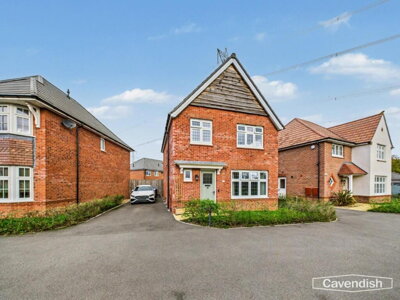
Browse 1 home new builds in Mollington, Cheshire West and Chester from local developer agents.
£550k
12
2
124
Source: home.co.uk
Source: home.co.uk
Detached
6 listings
Avg £843,333
Barn Conversion
4 listings
Avg £431,250
Detached Bungalow
1 listings
Avg £650,000
Semi-Detached
1 listings
Avg £575,000
Source: home.co.uk
Source: home.co.uk
The property market in Mollington reflects the broader appeal of south Northamptonshire and northern Oxfordshire, offering a mix of traditional village properties and established family homes. Properties in the village include charming period cottages constructed from the characteristic locally hewn ironstone, spacious detached houses with generous gardens, and the properties on the private housing estate built in 1965 that expanded the village significantly. The village has seen consistent interest from buyers looking to escape larger towns while remaining within commuting distance of major employment centres.
Average house prices in Mollington currently stand at approximately £475,154 according to Rightmove data, though this varies significantly by property type. Detached properties in the village command around £621,667 on average, while semi-detached homes typically sell for around £374,500. Flats in the village are less common but can be found from approximately £200,000. The OX17 1AZ postcode area, which covers Mollington, shows an estimated average property value of £513,671, with prices rising by around 4% over the past year in certain parts of the village. Property prices have experienced some correction from the 2023 peak of £589,071, with recent sales approximately 19% below that peak level.
Mollington attracts families seeking good school catchment areas, professionals who work in Banbury or commute to Birmingham or Oxford, and buyers looking for multi-generational living options with space for extended family. The village forms part of the Cherwell District, where property values have demonstrated consistent performance over time, supported by the strong regional economy driven by the M40 corridor and nearby technology and research sectors. Detached properties make up around 69% of transactions in parts of the village, reflecting the predominance of larger homes with gardens that appeal to families and those seeking rural lifestyles.
Recent planning applications in the village, including extensions and alterations to properties such as Lavender Cottage on Main Street and works at Manor House, indicate ongoing investment in the local housing stock. A recently completed eco barn-inspired new build property near the village was listed at £995,000, demonstrating the premium that buyers will pay for modern construction methods combined with rural settings. The mix of period properties requiring modernisation and newer homes provides options across different budget levels and buyer requirements.
Mollington offers a warm and welcoming community atmosphere that appeals to families, retirees, and professionals alike. The village maintains a traditional English character with historic ironstone buildings, the parish Church of All Saints which holds Grade II* listed status, and the Green Man public house that serves as a social hub for residents. Community events throughout the year bring neighbours together, fostering the strong sense of belonging that distinguishes village life from urban living. The pace of life here is unhurried, with countryside walks and outdoor pursuits forming part of daily routines for many residents.
Local amenities in Mollington include a village hall, two playgrounds for children, and the essential services provided by the local pub. The surrounding countryside provides extensive opportunities for walking, cycling, and exploring the network of public footpaths that crisscross the farmland. The local geology, characterised by marlstones and heavy iron-rich clays, creates attractive rolling countryside with varied terrain for outdoor activities. Residents appreciate the combination of rural tranquility and practical accessibility, with Banbury town centre reachable within approximately 15 minutes by car for those requiring urban amenities, supermarkets, entertainment, or employment opportunities.
The village's Conservation Area designation ensures that development preserves the historic character that makes Mollington distinctive. Several buildings carry listed status, including Manor Farmhouse, Mansionhouse Farmhouse, Lower Farmhouse, Mill Farmhouse, Poplars Farmhouse, The Chestnuts, and various associated structures and gatepiers. This heritage fabric creates an attractive streetscape that potential buyers frequently cite as a key attraction of the village. The predominantly 17th century and later construction using local ironstone gives the village its characteristic tawny golden appearance, with buildings ranging from grand manor houses with squared coursed stone and ashlar gable parapets to humble vernacular cottages.

Education provision in and around Mollington serves families with children at all stages of their academic journey. The village is served by primary schools in surrounding villages and towns, with several well-regarded options within reasonable travelling distance. Parents moving to Mollington can access information about local school performance through government performance tables and Ofsted reports, helping them make informed decisions about their children's education. The nearest primary schools include those in nearby villages, many of which benefit from good ratings and strong community involvement.
Secondary education is available at schools in Banbury, with several popular options accessible by school transport or car. The Hop Grass and Swale and Ise Valley schools serve the wider area, while independent school options are available in the broader Oxfordshire and Northamptonshire region. Sixth form and further education provision in Banbury and Oxford offers extensive A-level and vocational courses, ensuring that families do not need to compromise on educational opportunities when choosing village living. The Hop Grass Academy and Swale Valley School are among the options for secondary-age children, with additional grammar school options in the Buckinghamshire border area.
Prospective buyers with school-age children should research specific catchment areas and admission criteria for their preferred schools, as these can vary and may affect access to particular institutions. School transport services operate from Mollington to schools in surrounding areas, though timings and routes should be confirmed with the local authority. The proximity to Banbury means that families have access to a good range of state and independent schooling options without the need to travel to larger cities.
Mollington enjoys excellent connectivity despite its rural village setting, making it an attractive location for commuters and those who need to travel regularly. The village is situated near major road networks, with the A41 providing direct routes to Banbury and connections to the M40 motorway at Junction 11. This positioning means that destinations including Birmingham, Oxford, Coventry, and London are accessible within reasonable driving times, expanding employment opportunities for residents. The M40 corridor is a major economic driver for the region, with numerous businesses and employment centres located along its length.
Banbury railway station provides regular services to major destinations including London Marylebone, Oxford, Birmingham Moor Street, and Leamington Spa. The journey to London Marylebone takes approximately one hour, making day commuting feasible for those working in the capital. For air travel, Birmingham Airport and London Oxford Airport are both accessible within approximately 45 minutes to one hour by car, providing connections to domestic and international destinations. Heathrow and Gatwick are also reachable for international travel, though journey times extend to around 90 minutes.
Public transport options serve the village through bus routes connecting Mollington to Banbury and surrounding villages. Cyclists benefit from quieter country lanes, though the hilly terrain in some areas, characteristic of the ridgeway geology, requires consideration for less experienced riders. The village's position means that daily commuting by car to Banbury or the M40 corridor is straightforward for those who drive, while the railway connections from Banbury provide viable alternatives for rail commuters. The A361 and A422 routes also provide additional connectivity to surrounding market towns and villages.
Spend time exploring Mollington at different times of day and week to understand the community, local amenities, and neighbourhood dynamics. Visit the Green Man pub, explore the Conservation Area around the Church of All Saints, and walk the public footpaths surrounding the village to ensure the area matches your lifestyle expectations. Speak with existing residents to gain insights into village life, local events, and any practical considerations for new arrivals.
Contact lenders or mortgage brokers to obtain an agreement in principle before beginning your property search. Having your finances confirmed strengthens your position when making offers and demonstrates your seriousness to sellers. Given the property values in Mollington, with detached homes averaging over £620,000, understanding your borrowing capacity is essential before focusing your search on particular property types or price ranges.
Work with local estate agents operating in the Banbury and south Northamptonshire market to arrange viewings of properties that match your criteria. Prepare questions about the property's history, any renovation work undertaken, and details of the local area that may not be immediately apparent. For period properties, ask specifically about the condition of ironstone walls, thatch or stone slate roofs, and any previous repairs using traditional materials.
Once your offer is accepted, instruct a qualified surveyor to inspect the property. Given the age of many properties in Mollington, with significant numbers dating from the 17th century onwards, a RICS Level 2 Home Survey is advisable to identify any structural issues, dampness, or defects before completion. Properties in the village may be susceptible to issues related to clay soils and traditional construction methods that benefit from professional assessment.
Appoint a solicitor to handle the legal aspects of your purchase, including searches, contracts, and registration of ownership. Local conveyancers familiar with Oxfordshire and Cherwell District will understand any area-specific requirements, including conservation area controls and listed building considerations that may affect the property. Your solicitor will conduct searches relevant to the area, including flood risk and ground conditions.
Once all searches are satisfactory and finances are in place, your solicitor will exchange contracts and set a completion date. On completion day, the remaining funds are transferred and you receive the keys to your new home. Allow time for removal arrangements and ensure that you have contacted utility providers to transfer accounts to your name.
Properties in Mollington include a mix of older period homes dating from the 17th century onwards and more recent constructions including the 1965 housing estate, each presenting different considerations for prospective buyers. Period properties feature traditional construction methods using locally hewn ironstone, original features such as timber frames and stone mullion windows, and materials that require specialist maintenance using lime mortar and traditional techniques. When viewing older homes, pay attention to the condition of roofs, walls, and foundations, as these are common areas where age-related issues arise.
The local geology presents specific considerations for property buyers in Mollington. The area is underlain by marlstones and heavy iron-rich clays that are susceptible to shrink-swell behaviour, where clay soils expand when wet and contract during dry periods. This ground movement can affect foundations, particularly for older properties with shallow foundations. The presence of large trees near properties on clay soils can exacerbate this risk. A thorough survey should investigate foundation condition and any signs of past movement, with particular attention to properties on or near the ridgeway geology.
Flood risk should be considered when purchasing in any area, though Mollington benefits from its elevated position away from major river courses. Surface water drainage and the condition of rainwater goods merit inspection during viewings and surveys, as heavy clay soils can struggle to absorb rainfall quickly. Properties within the Conservation Area are subject to planning restrictions affecting alterations or extensions, so prospective buyers should investigate any relevant designations. The age and condition of electrical systems and heating installations should also form part of any property assessment, particularly in older homes where updates may be required to meet modern standards.
Listed buildings in Mollington require particular attention, as any alterations or extensions require Listed Building Consent from the local planning authority. These properties represent a significant portion of the village's heritage, including the Grade II* Church of All Saints and numerous Grade II listed farmhouses and cottages. Buyers considering listed properties should budget for potential higher maintenance costs and specialist repair requirements using appropriate traditional materials and techniques.
Understanding the full costs of purchasing property in Mollington helps you budget accurately and avoid unexpected expenses. Beyond the purchase price, buyers should budget for stamp duty, solicitor fees, survey costs, and potential removal expenses. Stamp duty rates in England currently start at zero for properties under £250,000, rising through bands that reach 12% for properties above £1.5 million. First-time buyers benefit from increased thresholds, with no duty payable on the first £425,000 of a purchase meeting certain criteria.
Given the property values in Mollington, with average prices around £475,000 and detached properties averaging over £620,000, most buyers will fall into the 5% stamp duty band on the portion of purchase price between £250,001 and £925,000. For a property priced at the village average of £475,154, a standard buyer would pay approximately £11,258 in stamp duty, while first-time buyers would pay around £2,507. Your solicitor will calculate the exact amount due based on your purchase price and circumstances.
Survey costs vary depending on the property type and inspection depth required. A RICS Level 2 Home Survey, also known as a HomeBuyer Report, is recommended for most properties in Mollington given the age of the local housing stock. In Banbury, the nearest major town, RICS Level 2 surveys typically range from £395 to over £1,000 depending on property value and size, with the average cost around £500. For older or listed properties requiring more comprehensive assessment, a RICS Level 3 Building Survey may be appropriate, with costs starting from around £600 and rising for larger or more complex properties. Conveyancing costs for solicitor services, including local searches, typically start from around £499 for straightforward purchases but increase for more complex transactions involving listed buildings or conservation areas.
Factor in Land Registry fees, bank transfer costs, and removal expenses to build a complete picture of your buying costs. Buildings insurance should be arranged from exchange of contracts, and life insurance or critical illness cover may be advisable depending on your circumstances. For mortgage borrowers, valuation fees are typically charged by the lender and may be included in the overall mortgage arrangement costs.
Property prices in Mollington currently average around £475,154 according to Rightmove data, though prices vary considerably by property type. Detached properties in the village command approximately £621,667 on average, while semi-detached homes typically sell for around £374,500. The village has experienced some price correction from the 2023 peak of £589,071, with recent sales approximately 19% below that level. Exact figures vary depending on property type, size, condition, and location within the village, with period cottages, family homes, and properties with larger gardens commanding different valuations. Consulting current listings on Homemove provides up-to-date pricing information for properties available in Mollington right now.
Properties in Mollington fall under Cherwell District Council for council tax purposes. Bands range from A to H, with the specific band depending on the property's assessed value. Newer or larger properties on the 1965 estate typically fall into higher bands, while smaller period cottages may be in lower bands. Properties with significant extensions or recent renovations may have been rebanded. Prospective buyers can verify the council tax band for any specific property through the Cherwell District Council website or the listing details.
Mollington is served by several primary schools in the surrounding villages and nearby Banbury. The specific school serving the village depends on catchment area boundaries, which can be verified through Oxfordshire County Council's school admission information. Secondary schools in the Banbury area include several popular options with strong academic records. Parents should research individual school performance data through Ofsted reports and examination results, as well as admission criteria, to find the best fit for their children. The proximity to Banbury means that families have access to a reasonable range of educational options without needing to travel to larger cities.
Mollington is connected to the surrounding area through local bus services, though frequencies may be limited compared to urban routes. The village is well positioned for car travel, with straightforward access to the A41 and M40 motorway linking to Banbury, Oxford, and Birmingham. Banbury railway station provides comprehensive rail connections to London Marylebone, Birmingham, and Oxford, with journey times of approximately one hour to the capital. For airport access, Birmingham Airport and London Oxford Airport are both reachable within approximately 45 minutes to one hour by car.
Mollington benefits from its position within the desirable south Northamptonshire and north Oxfordshire region, where property values have historically shown stable long-term performance. The village's rural character, heritage architecture built from characteristic ironstone, community atmosphere, and proximity to the M40 corridor support demand from a range of buyers. Properties requiring renovation may present opportunities for added value, particularly period homes with original features. The Conservation Area designation helps preserve property values by maintaining the village's distinctive character. As with any property investment, prospective buyers should consider their specific circumstances, investment horizon, and local market conditions before proceeding.
Stamp Duty Land Tax applies to property purchases in England, with rates determined by the purchase price and whether you are a first-time buyer. For standard purchases, there is no stamp duty on properties up to £250,000, with rates of 5% on the portion between £250,001 and £925,000, 10% up to £1.5 million, and 12% above that threshold. Given that average prices in Mollington exceed £475,000, most buyers will pay 5% on the portion above £250,000. First-time buyers benefit from relief on the first £425,000, with 5% applying between £425,001 and £625,000. Your solicitor will calculate the exact amount due based on your purchase price and circumstances.
Properties in Mollington face several area-specific structural considerations. The heavy clay soils underlying the village are susceptible to shrink-swell movement, which can cause foundation problems particularly for older properties with shallow foundations. Period properties built from ironstone may show signs of weathering, and roofs using traditional materials such as thatch or stone slate require specialist maintenance. Properties on the 1965 estate are now over 60 years old and may be showing signs of age-related wear. A RICS Level 2 or Level 3 survey is advisable for any property purchase in the village to identify potential issues before completion.
Properties New Builds In London

Properties New Builds In Plymouth

Properties New Builds In Liverpool

Properties New Builds In Glasgow

Properties New Builds In Sheffield

Properties New Builds In Edinburgh

Properties New Builds In Coventry

Properties New Builds In Bradford

Properties New Builds In Manchester

Properties New Builds In Birmingham

Properties New Builds In Bristol

Properties New Builds In Oxford

Properties New Builds In Leicester

Properties New Builds In Newcastle

Properties New Builds In Leeds

Properties New Builds In Southampton

Properties New Builds In Cardiff

Properties New Builds In Nottingham

Properties New Builds In Norwich

Properties New Builds In Brighton

Properties New Builds In Derby

Properties New Builds In Portsmouth

Properties New Builds In Northampton

Properties New Builds In Milton Keynes

Properties New Builds In Bournemouth

Properties New Builds In Bolton

Properties New Builds In Swansea

Properties New Builds In Swindon

Properties New Builds In Peterborough

Properties New Builds In Wolverhampton

Enter your details to see if this property is within your budget.
Loans, cards, car finance
Estimated property budget
Borrowing + deposit
You could borrow between
Typical borrowing
Monthly repayment
Est. at 4.5%
Loan-to-value
This is an estimate only. Your actual budget may vary depending on interest rates, credit history, and personal circumstances. For an accurate affordability assessment, speak to one of our free mortgage advisors.
This calculator provides estimates for illustrative purposes only and does not constitute financial advice. Your home may be repossessed if you do not keep up repayments on your mortgage. Estimates based on 4.5% interest rate, repayment mortgage. Actual rates depend on your circumstances.
Homemove is a trading name of HM Haus Group Ltd (Company No. 13873779, registered in England & Wales). Homemove Mortgages Ltd (Company No. 15947693) is an Appointed Representative of TMG Direct Limited, trading as TMG Mortgage Network, which is authorised and regulated by the Financial Conduct Authority (FRN 786245). Homemove Mortgages Ltd is entered on the FCA Register as an Appointed Representative (FRN 1022429). You can check registrations at NewRegister or by calling 0800 111 6768.

We use cookies to show you personalised content and improve your experience of our website. Find out more in our Privacy policy and Cookie policy.