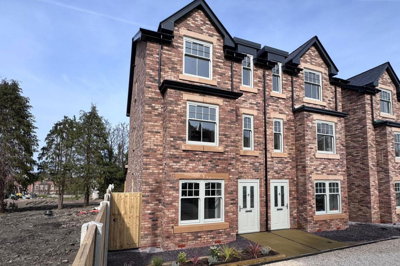
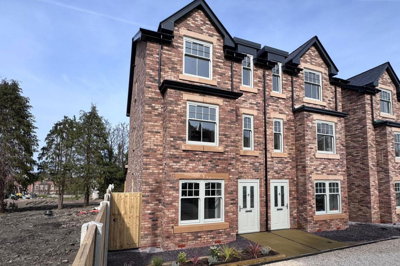
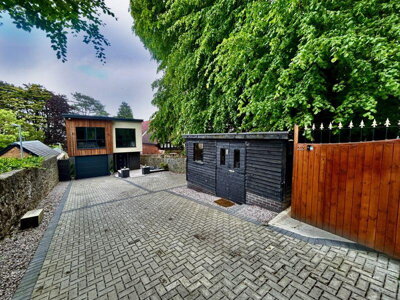
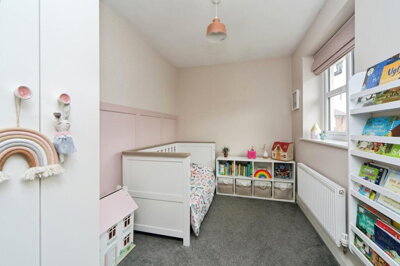
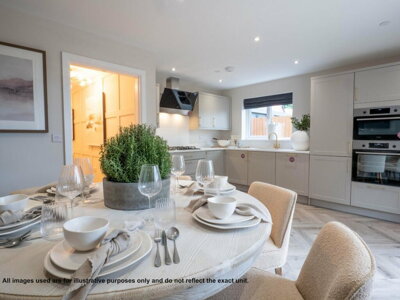
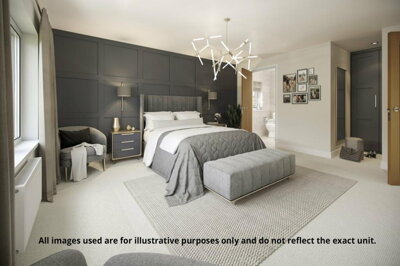
Browse 7 homes new builds in Mochdre from local developer agents.
The Mochdre property market offers detached, semi-detached, and terraced houses spanning various price ranges and neighbourhoods. Each listing includes detailed property information, photographs, and direct contact with the marketing agent.
The Little Birch property market is characterised by its predominantly detached housing stock, with 55% of properties falling into this category. Detached homes command an average price of £550,000, reflecting the premium placed on space, privacy, and the rural settings these properties typically enjoy. The detached segment has shown the strongest price growth at 4.2% annually, indicating robust demand from buyers seeking generous gardens, off-street parking, and the flexibility that freehold detached properties provide. Properties such as those along the A49 corridor and properties bordering the common land command particular premiums due to their positioning and outlook.
Semi-detached properties represent 25% of the housing stock, with an average price of £320,000, making them an accessible entry point for first-time buyers or those seeking a balance between space and affordability. Terraced properties average £250,000 and comprise approximately 10% of the market, offering more affordable options for those with tighter budgets. Flats in the area average £180,000 and represent a smaller segment, typically found within converted buildings or small blocks. The market has experienced consistent growth across all segments, with semi-detached properties rising 2.8% and terraced homes increasing 1.5% over the past year.
Property ages in Little Birch vary considerably, with around 30% of homes built before 1919 using traditional construction methods such as solid stone or brick walls with lime mortar. A further 15% were constructed between 1919 and 1945, while 30% were built between 1945 and 1980 featuring cavity wall construction. Approximately 25% are more modern post-1980 properties. This mix means buyers can choose between characterful period homes full of original features and more contemporary properties requiring less maintenance. The age distribution is particularly relevant for buyers considering survey requirements, as approximately 75% of properties were built before 1980.

Life in Little Birch revolves around the gentle rhythms of rural England, where agricultural traditions remain woven into the fabric of daily life. The local economy relies primarily on farming and small businesses, with many residents embracing the work-life balance that village living affords. The community spirit is evident in local events, parish meetings, and the network of footpaths that crisscross the surrounding farmland, offering spectacular views across the Herefordshire countryside. The parish is characterised by its underlying Old Red Sandstone geology, with the landscape featuring rolling farmland, hedgerow-lined lanes, and scattered woodland.
The underlying geology of Little Birch is characterised by Old Red Sandstone formations, with superficial deposits often including glacial till, river terrace deposits, and alluvium near watercourses. Clay-rich soils are common throughout the area, particularly where glacial till is present, which can affect foundation conditions and lead to ground movement in periods of drought or heavy rainfall. Properties in the area predominantly feature traditional red brick and local sandstone or limestone construction, with roofs typically finished in slate or clay tiles. Several Grade II listed buildings, including The Old Rectory and elements of Little Birch Court, dot the parish, reflecting its historical heritage and providing architectural interest for those who appreciate period properties.
The village benefits from a peaceful atmosphere while remaining well-connected to Hereford, where residents can access comprehensive shopping facilities, healthcare services, restaurants, and cultural attractions including the Hereford Cathedral and the Courtyard Theatre. For those seeking leisure activities, the wider Herefordshire area offers excellent walking, cycling, and fishing opportunities. The River Wye flows nearby, providing access to water sports and riverside walks. Ross-on-Wye, approximately 10 miles to the south, offers additional amenities and is famous for its position as the birthplace of the English tourism industry.

Families considering a move to Little Birch will find a selection of educational options within easy reach. The surrounding area offers several primary schools serving the village and nearby communities, with many small rural schools providing a nurturing environment for younger children. Parents should research individual school performance data and Ofsted ratings to identify the best fit for their family's needs. Primary schools in nearby villages such as Wormelow, Kingstone, and Belmont serve the Little Birch area, with school transport arrangements typically available for families residing within the parish boundaries.
Secondary education options include schools in Hereford, accessible via school transport links or the regular bus services connecting the village to the city. Hereford Academy and other secondary schools in the area offer diverse curricula and extracurricular programmes. For families seeking grammar school education, the nearby county provides options, though catchment areas should be verified before purchasing property, as these can influence school placement. The Prince Henry School in Hereford offers grammar school provision, with admission based on the 11-plus examination and catchment area considerations.
Further and higher education opportunities are readily available in Hereford, with colleges offering vocational courses and access to university programmes. The University of Worcester and University of Herefordshire provide higher education options within reasonable commuting distance. The Hereford College of Arts and NMiTE (Newport, Midlands, Trailblazer Enterprise) at Hereford offer specialized further education pathways. Parents are encouraged to visit potential schools, speak with staff, and understand admission policies well in advance of any property purchase, particularly given the rural location and transport considerations that may affect daily routines.
Transport connections from Little Birch centre primarily around road travel, with the village situated approximately six miles south of Hereford. The A49 trunk road provides direct access to Hereford city centre and connects northward to Leominster and southward towards Ross-on-Wye. This strategic positioning allows residents to reach Hereford within 15-20 minutes by car, making daily commuting feasible for those working in the city. The A449 provides additional routes towards Worcester and the M5 motorway for those travelling further afield.
Bus services operated by Stagecoach and other providers connect Little Birch with Hereford, offering regular services for those who prefer public transport. These buses provide a cost-effective alternative to car travel, with journey times typically taking 30-40 minutes depending on stops. The 476 service provides regular connections between Ross-on-Wye, Hereford, and surrounding villages. Many residents find that a combination of bus travel and walking proves perfectly adequate for regular commuting needs, particularly for those working in Hereford city centre.
For longer-distance travel, Hereford railway station offers direct connections to major destinations including Birmingham, Manchester, and London Paddington via the Welsh Marches Line. The station provides convenient access for business travellers and those visiting family further afield, with journey times to London Paddington typically around three and a half hours. Cardiff and Bristol are also accessible via rail connections, expanding employment and leisure opportunities for Little Birch residents. Cycling infrastructure continues to improve in the area, with scenic routes available for more active commuters, and the National Cycle Network providing connections to the wider region.
Explore current property listings in Little Birch and understand price trends. With average prices around £420,000 and detached homes averaging £550,000, knowing your budget will help narrow your search effectively. Register with local estate agents who can alert you to new listings before they appear on major portals, as the tight-knit rural market often sees properties sold through word of mouth or local advertising.
Contact lenders to obtain an Agreement in Principle before viewing properties. This demonstrates your financial readiness to estate agents and sellers, strengthening your position in a competitive rural market. Given that the average property price in Little Birch exceeds £400,000, most buyers will require substantial mortgages, and having finance arranged can significantly accelerate the purchase process.
Visit properties that match your criteria, paying attention to construction materials, property age, and any signs of damp or structural concerns. Given the prevalence of period properties, viewing in daylight allows you to assess condition thoroughly. Take time to explore the surrounding area at different times of day to understand traffic noise, neighbour activity, and the general atmosphere of the neighbourhood.
Commission a comprehensive survey for properties over 45 years old. With 75% of Little Birch homes built before 1980, a Level 2 survey can identify issues such as damp, timber defects, or potential subsidence from clay soils. Properties with large nearby trees may be particularly susceptible to subsidence risk due to soil moisture changes. For listed buildings, consider a more detailed Level 3 Building Survey to assess the unique construction and heritage considerations.
Choose a solicitor experienced in rural property transactions to handle legal work, searches, and contracts. They will liaise with the seller's representatives and manage the transfer of ownership. Rural transactions may involve additional considerations such as rights of way, agricultural restrictions, or septic tank agreements that require specialist knowledge.
Once all searches are satisfactory and financing is confirmed, exchange contracts with the seller and set a completion date. Your solicitor will transfer funds and register the property in your name with the Land Registry. Allow time for final walkthroughs and utility transfers before completing your move to Little Birch.
Potential buyers should be aware of the geological considerations that affect properties in Little Birch. The area sits on clay-rich soils derived from glacial till deposits, with a moderate to high shrink-swell risk, meaning properties may experience ground movement during periods of drought or heavy rainfall. A thorough survey should assess foundation conditions and look for signs of subsidence or heave, particularly in properties with large nearby trees whose roots can affect soil moisture levels. Properties built before 1945 typically have shallower foundations and may be more vulnerable to movement on unstable ground.
Surface water flooding represents a localised risk during periods of heavy rainfall, especially in low-lying areas or where drainage infrastructure may be limited. The smaller watercourses and brooks that run through the parish can experience rapid rises during heavy rainfall, and properties near these water features should be carefully assessed. Buyers should review flood risk reports and consider whether properties have appropriate drainage systems. Given the rural nature of the parish, properties often rely on private drainage systems including septic tanks, which require regular maintenance and may need upgrading to meet current regulations.
The age of many properties in Little Birch means that electrical and plumbing systems may require updating to meet modern standards. Pre-1980s properties commonly feature dated wiring and plumbing that would benefit from replacement during renovation works. Properties built between 1945 and 1980 may have cavity wall construction that requires assessment for insulation and potential damp penetration. Buyers should budget for potential rewiring costs and factor these into their overall purchase costs. Properties with original features such as timber windows, exposed beams, or flagstone floors may require specialist maintenance using traditional materials and techniques, particularly the Grade II listed buildings which require consent for alterations.
The average house price in Little Birch stands at £420,000 based on sales over the past twelve months. Detached properties average £550,000, semi-detached homes cost around £320,000, terraced properties average £250,000, and flats are priced at approximately £180,000. The market has shown consistent growth, with overall prices increasing by 3.5% over the past year and detached homes rising by 4.2%, suggesting continued demand for properties in this sought-after rural parish.
Properties in Little Birch fall under Herefordshire Council tax bands. The specific band depends on the property's valuation, but rural properties in Herefordshire typically range from Band A through to Band H. Most detached family homes in the area fall within Bands D to F, while smaller cottages and terraced properties may be in lower bands. Prospective buyers should check individual property details on the Herefordshire Council website or request this information during enquiries.
Little Birch itself has limited schooling options within the village, with primary education typically accessed in nearby villages or Hereford. Parents should research individual school Ofsted ratings and performance data, with many small rural primary schools offering excellent small class sizes and community-focused education. Primary schools in Wormelow, Kingstone, and Belmont serve the local area, with secondary education available at Hereford Academy and grammar school options including The Prince Henry School, though catchment areas should be verified with the local education authority before purchasing property.
Bus services connect Little Birch to Hereford, with regular routes including the 476 service providing access to the city centre and its amenities. Journey times by bus typically range from 30-40 minutes depending on stops. Hereford railway station, approximately six miles away, offers direct train services to Birmingham, Manchester, and London Paddington via the Welsh Marches Line, with journeys to London taking approximately three and a half hours. Road connections via the A49 provide straightforward access to the surrounding region, making car travel practical for most daily needs.
Little Birch offers solid investment potential for those seeking a rural lifestyle with good connectivity to Hereford. Property prices have shown consistent growth of 3.5% annually, with detached homes increasing by 4.2%. The limited supply of properties in this small parish of approximately 150 households, combined with strong demand from buyers seeking rural settings near Hereford, suggests continued appreciation. The scarcity of new-build developments in the area means existing properties retain value, and rental demand exists from professionals working in Hereford but preferring countryside living.
Stamp duty rates depend on your buyer status and property price. Standard rates start at 0% on the first £250,000 of purchase price, rising to 5% on the portion between £250,001 and £925,000. For a typical Little Birch property at the average price of £420,000, a standard buyer would pay £8,500 in stamp duty. First-time buyers benefit from more generous thresholds, paying 0% on the first £425,000 and 5% between £425,001 and £625,000, meaning first-time buyers purchasing at the Little Birch average price would pay no stamp duty at all.
The clay-rich soils underlying much of Little Birch present a moderate to high shrink-swell risk, which can cause foundation movement during drought or heavy rainfall. Properties with large nearby trees are particularly susceptible to subsidence due to soil moisture changes. Surface water flooding can occur in low-lying areas during heavy rainfall, and buyers should review flood risk reports for specific properties. There is no significant mining risk in the area, and being inland, there is no coastal flood risk.
Approximately 45% of properties in Little Birch were built before 1945, meaning they feature traditional construction methods including solid stone or brick walls with lime mortar. These period properties often retain original features such as exposed beams, flagstone floors, and timber windows that require specialist maintenance. Several properties including The Old Rectory and elements of Little Birch Court are Grade II listed, requiring planning consent for alterations and benefiting from sympathetic renovation approaches using traditional materials and techniques.
Understanding the full cost of purchasing property in Little Birch extends beyond the advertised price. Stamp Duty Land Tax (SDLT) represents a significant consideration for buyers. At current 2024-25 rates, buyers pay nothing on the first £250,000 of a property purchase, 5% on amounts between £250,001 and £925,000, 10% on the next portion up to £1.5 million, and 12% on anything above that threshold. For a typical Little Birch property at the average price of £420,000, a standard buyer would pay £8,500 in stamp duty, calculated as 5% on the £170,000 portion above the £250,000 threshold.
First-time buyers benefit from more generous thresholds, paying 0% on the first £425,000 and 5% between £425,001 and £625,000. This means first-time buyers purchasing at the Little Birch average price of £420,000 would pay no stamp duty at all, providing substantial savings of £8,500 compared to standard buyers. However, first-time buyer relief does not apply to purchases above £625,000, so buyers of premium detached properties averaging £550,000 should plan accordingly and budget for potential SDLT charges on the portion exceeding the relief threshold.
Additional buying costs include solicitor fees, typically ranging from £800 to £2,500 depending on complexity and property value. Survey costs for a RICS Level 2 report on a three-bedroom semi-detached property in Little Birch range from £500 to £700, while larger four-bedroom detached homes may cost £650 to £900. Land Registry fees for registering the transfer, mortgage arrangement fees, and removal costs should also be budgeted for. Buyers purchasing older properties should consider potential renovation costs, as many homes in the area require updating of electrical systems, plumbing, or heating systems to modern standards, with rewiring a typical pre-1980s property potentially costing £5,000 to £10,000 depending on the property size and specification.
Properties New Builds In London

Properties New Builds In Plymouth

Properties New Builds In Liverpool

Properties New Builds In Glasgow

Properties New Builds In Sheffield

Properties New Builds In Edinburgh

Properties New Builds In Coventry

Properties New Builds In Bradford

Properties New Builds In Manchester

Properties New Builds In Birmingham

Properties New Builds In Bristol

Properties New Builds In Oxford

Properties New Builds In Leicester

Properties New Builds In Newcastle

Properties New Builds In Leeds

Properties New Builds In Southampton

Properties New Builds In Cardiff

Properties New Builds In Nottingham

Properties New Builds In Norwich

Properties New Builds In Brighton

Properties New Builds In Derby

Properties New Builds In Portsmouth

Properties New Builds In Northampton

Properties New Builds In Milton Keynes

Properties New Builds In Bournemouth

Properties New Builds In Bolton

Properties New Builds In Swansea

Properties New Builds In Swindon

Properties New Builds In Peterborough

Properties New Builds In Wolverhampton

Enter your details to see if this property is within your budget.
Loans, cards, car finance
Estimated property budget
Borrowing + deposit
You could borrow between
Typical borrowing
Monthly repayment
Est. at 4.5%
Loan-to-value
This is an estimate only. Your actual budget may vary depending on interest rates, credit history, and personal circumstances. For an accurate affordability assessment, speak to one of our free mortgage advisors.
This calculator provides estimates for illustrative purposes only and does not constitute financial advice. Your home may be repossessed if you do not keep up repayments on your mortgage. Estimates based on 4.5% interest rate, repayment mortgage. Actual rates depend on your circumstances.
Homemove is a trading name of HM Haus Group Ltd (Company No. 13873779, registered in England & Wales). Homemove Mortgages Ltd (Company No. 15947693) is an Appointed Representative of TMG Direct Limited, trading as TMG Mortgage Network, which is authorised and regulated by the Financial Conduct Authority (FRN 786245). Homemove Mortgages Ltd is entered on the FCA Register as an Appointed Representative (FRN 1022429). You can check registrations at NewRegister or by calling 0800 111 6768.

We use cookies to show you personalised content and improve your experience of our website. Find out more in our Privacy policy and Cookie policy.