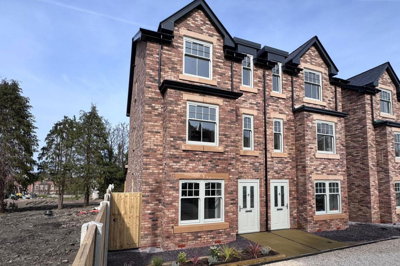
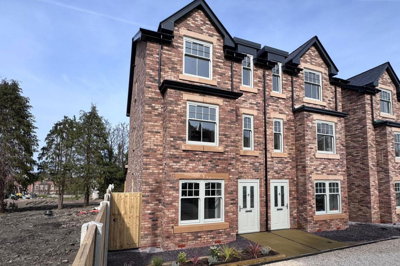
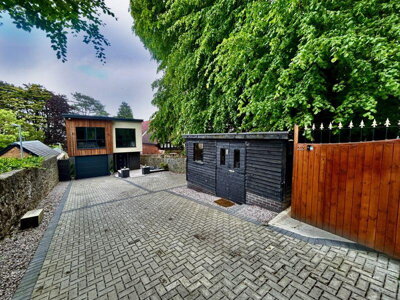
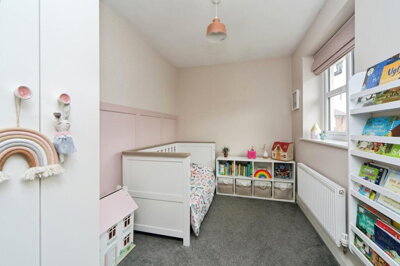
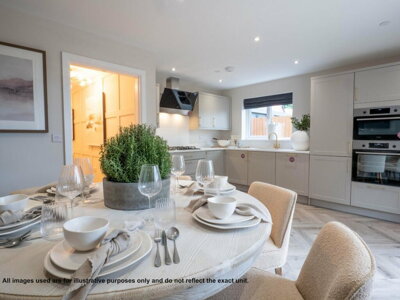
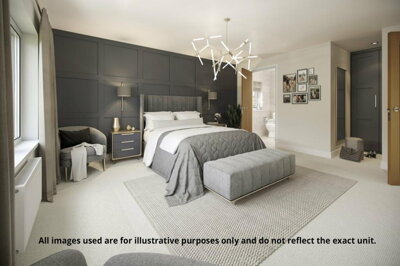
Browse 7 homes new builds in Mochdre from local developer agents.
The Little Birch property market reflects the broader appeal of rural Herefordshire, offering excellent value compared to more urbanised parts of the country. Our platform currently lists properties ranging from terraced homes at around £250,000 to substantial detached residences commanding prices up to £550,000 and beyond. The detached property sector has shown the strongest performance over the past year, with prices rising 4.2% to reach an average of £550,000. Semi-detached homes averaged £320,000, representing a 2.8% increase, while terraced properties saw more modest growth of 1.5% over the same period.
Property transactions in Little Birch remain steady, with 28 sales completed in the twelve months to early 2026. This activity level indicates a healthy market without the overheated conditions found in more metropolitan areas. The housing stock here is predominantly traditional construction, with approximately 30% of properties dating from the pre-1919 era, featuring characteristic red brick, local sandstone, and slate or clay tile roofs. A further 30% were built between 1945 and 1980, offering a mix of period charm and modern convenience. New build activity within the parish itself remains limited, though the wider Herefordshire area continues to see selective development that complements rather than dominates the rural character.
Detached properties make up the majority of the local housing stock at 55%, followed by semi-detached homes at 25%, terraced properties at 10%, and flats at 10%. This breakdown reflects the rural nature of Little Birch, where spacious plots and privacy are highly valued by buyers. The average property age means that approximately 75% of homes in the parish were constructed before 1980, making them potentially subject to issues common in older construction such as solid wall insulation limitations, outdated services, and the need for sympathetic maintenance of traditional building fabrics.

Life in Little Birch centres on the rhythms of the English countryside, with a tight-knit community that genuinely welcomes newcomers. The local economy is rooted in agriculture, with many families involved in farming or related industries, while others commute the short distance to Hereford for work in professional services, healthcare, or education. The parish council plays an active role in village life, organising seasonal events and maintaining community facilities that bring residents together throughout the year. The surrounding Herefordshire landscape offers endless opportunities for walking, cycling, and enjoying the natural beauty of the Wye Valley area.
The underlying geology of Little Birch is characterised by Old Red Sandstone, with glacial deposits and clay-rich soils creating the gentle, rolling terrain that defines the area. Several Grade II listed buildings are scattered throughout the parish, including The Old Rectory and elements of Little Birch Court, reflecting the historical significance of the village and its agricultural heritage. Properties in the area benefit from the proximity to the Wye Valley, an Area of Outstanding Natural Beauty that draws visitors to the region throughout the year and contributes to the premium quality of life enjoyed by local residents.
Despite being a rural community, local amenities are accessible within a short drive, with nearby villages providing essential services and the city of Hereford offering comprehensive shopping, dining, and cultural facilities. The combination of rural tranquility and practical convenience makes Little Birch particularly appealing to families, retirees, and anyone seeking a better quality of life away from urban congestion. Farmers markets, country pubs, and local events throughout the year create a strong sense of community that distinguishes village living here from more anonymous suburban environments.

Families considering a move to Little Birch will find a range of educational options within reasonable distance of the village. For primary education, Little Birch itself falls within the catchment area for nearby village schools, with Little Dewchurch Primary School and St. Mary's Primary School in the surrounding parishes serving the local community. These smaller rural schools are known for their nurturing environments and strong community ties, offering class sizes that allow for individual attention and personalised learning approaches. The Ofsted-rated Good and Outstanding primary schools in the wider Herefordshire area provide additional options for families willing to travel slightly further.
Secondary education is well-served by the grammar and comprehensive schools in Hereford city, approximately six miles away. Students in Little Birch typically travel to Hereford for secondary school, with regular bus services connecting the village to the city. The Hereford Cathedral School and Aylestone School are among the options available, with the former offering both primary and secondary education in the city centre. The Hereford Sixth Form College and Hereford College of Arts provide excellent further education opportunities for older students seeking vocational or academic qualifications beyond secondary school.
Parents should note that school catchment areas can affect property values and availability in rural areas like Little Birch, where proximity to popular schools often influences buyer interest. Properties within the catchment of highly-rated primary schools tend to attract families willing to pay a premium for educational access. The University of Worcester and University of Exeter remain accessible options for those pursuing higher education, with transport links from Hereford making regular commuting feasible for students.
Little Birch enjoys excellent connectivity despite its rural setting, making it an ideal base for commuters who work in Hereford or further afield. The village sits approximately six miles from Hereford city centre, with the journey typically taking 15-20 minutes by car along well-maintained country roads. The A49 trunk road passes nearby, providing direct access to the national motorway network via the M50 and M5. This connectivity means that cities such as Birmingham, Bristol, and Cardiff are all reachable within two hours, making Little Birch viable for professionals who need occasional access to major urban employment centres.
Public transport options include bus services connecting Little Birch to Hereford and surrounding villages, with services operating on broadly hourly schedules during daytime hours though less frequently on weekends. Hereford railway station offers direct train connections to major destinations, with services to Birmingham New Street taking approximately 90 minutes, Cardiff Central reachable in around an hour, and London Paddington available via the West Midlands Railway and Great Western Railway networks with journey times of approximately three hours. For air travel, Birmingham Airport and Bristol Airport are both approximately 90 minutes away by car, providing extensive international connectivity.
Cycling is popular in the area, with quiet country lanes and scenic routes through the Herefordshire countryside making cycling a pleasant option for shorter journeys. The lanes around Little Birch are generally well-surfaced but can be narrow in places, so cyclists should remain alert for agricultural vehicles. Many residents find that cycling to Hereford is a viable daily option during drier months, particularly given the relatively flat terrain characterising much of the surrounding area.
Start by exploring the Little Birch property market on Homemove, comparing prices across different property types. With detached homes averaging £550,000 and semi-detached properties at £320,000, understanding your budget against local values will help you identify the right opportunities. Take time to note which properties are selling quickly and which have been on the market longer, as this information can inform your negotiation strategy.
Before viewing properties, obtain a mortgage agreement in principle from a lender. This demonstrates your financial readiness to estate agents and sellers, strengthening your position in a market where rural properties can attract multiple interested buyers. Rural homes with character features and good plots tend to generate competitive interest, so having your financing confirmed early gives you an advantage over less prepared buyers.
Visit properties that match your requirements, paying attention to construction quality and potential issues during your visits. With approximately 75% of local properties built before 1980, consider which homes may benefit from a thorough survey before committing. Take photographs and notes during viewings, and don't hesitate to arrange second visits to properties that particularly appeal to you.
For most properties in Little Birch, a RICS Level 2 Building Survey is essential given the age and construction type of much of the local housing stock. Survey costs range from £500-£700 for a typical three-bedroom semi-detached home to £650-£900 for larger detached properties, providing valuable protection against hidden defects. The local geology with its clay-rich soils means that foundation conditions deserve particular attention in survey reports for properties in this area.
Choose a conveyancing solicitor with experience in Herefordshire rural properties to handle the legal process. They will conduct local searches covering drainage arrangements, planning permissions, and any environmental factors relevant to the specific property. Rural properties sometimes involve additional legal considerations such as rights of way, agricultural covenants, or shared access arrangements that an experienced solicitor will identify.
Once all searches are satisfactory and finances are confirmed, your solicitor will exchange contracts and set a completion date. On completion day, the remaining funds are transferred and you receive the keys to your new Little Birch home. We recommend arranging building insurance to commence before completion and taking meter readings on the day to ensure a smooth transition to your new property.
Given that approximately 75% of properties in Little Birch were built before 1980, buyers should be aware of common issues in the local housing stock. These include damp affecting period properties with solid walls, roof deterioration on older homes with original slate or clay tiles, timber defects such as woodworm and wet rot in properties with poor ventilation, and outdated electrical systems that may not meet current standards. Our local RICS Level 2 surveyors are familiar with these typical defect patterns and can provide detailed assessments for properties across the parish.
Purchasing a property in Little Birch requires careful attention to several area-specific factors that may not be immediately apparent to buyers unfamiliar with Herefordshire rural housing. The presence of clay-rich soils across the parish means that subsidence and heave risk should be carefully assessed, particularly for older properties with potentially shallow foundations. Trees in proximity to buildings can exacerbate these issues, as the seasonal moisture changes in clay soils cause ground movement that stresses building foundations over time. A thorough survey will identify any signs of structural movement, cracking, or previous remedial work that may indicate foundation problems.
Surface water flooding represents a localised concern in certain parts of Little Birch, especially during periods of heavy rainfall or where drainage infrastructure may be inadequate. Prospective buyers should check the Environment Agency flood risk maps for the specific property location and consider the implications for insurance costs and future resale value. Properties near smaller watercourses or in low-lying areas deserve extra scrutiny. The glacial till deposits common in the area can create poor drainage conditions that contribute to both surface water pooling and moisture-related defects in buildings.
Given that around 30% of the housing stock is pre-1919, traditional building techniques such as solid wall construction, lime mortar pointing, and original timber features are common throughout the parish. These characteristics require specialist knowledge to maintain correctly, and buyers should budget for the potential costs of sympathetic repairs and ongoing maintenance. Properties featuring original timber sash windows, flagstone floors, or exposed beam work will require maintenance approaches different from modern construction, and specialist contractors may be needed for restoration work that preserves the character while addressing defects.
Understanding the predominant construction methods in Little Birch helps buyers appreciate the character and maintenance requirements of local properties. The pre-1919 properties scattered throughout the parish typically feature solid wall construction in local sandstone or brick, with timber floor joists supporting ground floors and lime mortar used throughout for pointing and render. These traditional materials allow buildings to breathe in ways that modern construction does not, meaning that inappropriate modern repairs using cement-based products can cause moisture to become trapped within walls, leading to damp issues that affect both the fabric of the building and indoor air quality.
Mid-century properties built between 1945 and 1980 represent another significant portion of the housing stock at around 30%. These homes typically feature cavity wall construction with an outer brick leaf and inner blockwork, timber roof structures with concrete or clay tile coverings, and concrete ground floors. While these properties generally meet modern thermal standards better than older solid wall homes, they may have original single-glazed windows, aging service installations, and flat roof sections that require attention. Our inspectors assess these mid-century properties with particular attention to the condition of cavity wall insulation where present, the state of original windows and doors, and any signs of condensation damage resulting from inadequate ventilation.
Newer properties constructed after 1980 benefit from modern building regulations but still represent only around 25% of the local housing stock. These homes typically feature fully insulated cavity walls, combination or condensing boilers, and double-glazed windows throughout. While defects in newer properties tend to be less severe, issues can include inadequate ventilation leading to condensation, poorly installed conservatory or extension additions, and drainage problems where ground levels have been altered. Whether purchasing a period cottage or a relatively modern home, a thorough survey provides the detailed assessment needed to make an informed purchase decision in the Little Birch property market.
The average property price in Little Birch currently stands at £420,000, based on sales in the HR2 8 postcode area over the past twelve months to February 2026. Detached properties average £550,000, semi-detached homes £320,000, terraced properties £250,000, and flats around £180,000. Prices have increased by 3.5% overall over the past year, with detached homes showing the strongest growth at 4.2%, reflecting sustained demand for spacious rural properties with gardens and privacy in the Herefordshire countryside.
Council tax bands in Little Birch are set by Herefordshire Council based on property values assessed in 1991. Most properties in the village fall within bands B through E, depending on their size, age, and value. Band B properties typically pay around £1,400 annually, while larger detached homes in higher bands can pay significantly more. Prospective buyers should check specific properties with Herefordshire Council to confirm exact banding, as improvements or extensions since 1991 may affect the current band allocation.
Little Birch is served by several primary schools in the surrounding villages, with Little Dewchurch Primary School and St. Mary's Primary School among the nearest options for families in the parish. These small rural schools typically achieve good Ofsted ratings and benefit from close community connections. Secondary schools in Hereford, approximately six miles away, include the Hereford Cathedral School, Aylestone School, and King\'s School, with the Hereford Sixth Form College providing excellent further education opportunities for students completing their secondary education.
While Little Birch is a rural village, public transport options are available through bus services connecting to Hereford and surrounding communities on broadly hourly schedules during weekdays. Hereford railway station, approximately six miles away, offers direct trains to Birmingham taking around 90 minutes, Cardiff in approximately one hour, and London Paddington with journey times of around three hours via the West Midlands Railway and Great Western Railway networks. For commuters working in Hereford, the village\'s position just off the A49 makes driving a practical option with journey times of 15-20 minutes to the city centre.
Little Birch offers strong fundamentals for property investment, with prices rising steadily at 3.5% annually and a shortage of new build supply within the parish itself. The village\'s proximity to Hereford, combined with its rural character and community atmosphere, continues to attract buyers seeking a balance between countryside living and city accessibility. Properties with period features, listed status, or larger plots tend to hold their value well in this market. The relative scarcity of properties for sale in such a small parish, combined with consistent demand from buyers seeking rural Herefordshire locations, suggests continued stability in the local market.
Stamp Duty Land Tax on a property in Little Birch is calculated at 0% on the first £250,000 of purchase price, 5% on the portion between £250,001 and £925,000, 10% between £925,001 and £1.5 million, and 12% above £1.5 million. First-time buyers purchasing properties up to £625,000 pay 0% on the first £425,000 and 5% between £425,001 and £625,000. Given the average property price of £420,000, a first-time buyer would pay no stamp duty at all, while other buyers would pay £8,500 on a purchase at the average price point.
Properties built before 1980 in Little Birch require careful inspection for several common defect types. Rising damp affects many period properties without modern damp-proof courses, often visible as tide marks on ground-floor walls or deterioration of skirting boards and floor timbers. Roof conditions on older homes frequently show wear including slipped tiles, deteriorated leadwork around chimneys, and felt that has degraded over decades of service. Timber defects including woodworm infestation and both wet and dry rot occur in properties where ventilation is poor or where moisture has penetrated the building fabric. Our RICS Level 2 surveys in the Little Birch area specifically assess all these potential issues and provide detailed recommendations for remediation.
Understanding the full cost of purchasing property in Little Birch is essential for budgeting effectively. In addition to the property purchase price, buyers should budget for Stamp Duty Land Tax, solicitor fees, survey costs, and various other expenses that together can add several thousand pounds to the total outlay. For a typical family home priced around the £420,000 average, these additional costs typically range from £3,000 to £6,000, depending on whether mortgage arrangement fees apply and which survey level is chosen.
The current SDLT thresholds for 2024-25 mean that a first-time buyer purchasing a property at the Little Birch average price of £420,000 would pay no stamp duty at all, thanks to relief on purchases up to £625,000. For home-movers who have previously owned property, the calculation on a £420,000 purchase would result in SDLT of approximately £8,500, calculated as 5% on the amount above £250,000. Survey costs specific to Little Birch range from £500-£700 for a standard RICS Level 2 survey on a semi-detached property, rising to £650-£900 for larger detached homes that may have more complex construction or larger footprints to inspect.
Solicitor and conveyancing fees for rural Herefordshire properties typically start from around £499 for straightforward transactions but may increase where additional searches are required or where the property involves complexities such as agricultural ties, rights of way, or unusual tenure arrangements. Mortgage arrangement fees vary by lender but typically range from £0 to £1,500 depending on the product chosen. Factor in Land Registry fees of around £200-£500 depending on property value, plus removal costs that vary according to the distance and volume of belongings being transported to your new Little Birch home.
Properties New Builds In London

Properties New Builds In Plymouth

Properties New Builds In Liverpool

Properties New Builds In Glasgow

Properties New Builds In Sheffield

Properties New Builds In Edinburgh

Properties New Builds In Coventry

Properties New Builds In Bradford

Properties New Builds In Manchester

Properties New Builds In Birmingham

Properties New Builds In Bristol

Properties New Builds In Oxford

Properties New Builds In Leicester

Properties New Builds In Newcastle

Properties New Builds In Leeds

Properties New Builds In Southampton

Properties New Builds In Cardiff

Properties New Builds In Nottingham

Properties New Builds In Norwich

Properties New Builds In Brighton

Properties New Builds In Derby

Properties New Builds In Portsmouth

Properties New Builds In Northampton

Properties New Builds In Milton Keynes

Properties New Builds In Bournemouth

Properties New Builds In Bolton

Properties New Builds In Swansea

Properties New Builds In Swindon

Properties New Builds In Peterborough

Properties New Builds In Wolverhampton

Enter your details to see if this property is within your budget.
Loans, cards, car finance
Estimated property budget
Borrowing + deposit
You could borrow between
Typical borrowing
Monthly repayment
Est. at 4.5%
Loan-to-value
This is an estimate only. Your actual budget may vary depending on interest rates, credit history, and personal circumstances. For an accurate affordability assessment, speak to one of our free mortgage advisors.
This calculator provides estimates for illustrative purposes only and does not constitute financial advice. Your home may be repossessed if you do not keep up repayments on your mortgage. Estimates based on 4.5% interest rate, repayment mortgage. Actual rates depend on your circumstances.
Homemove is a trading name of HM Haus Group Ltd (Company No. 13873779, registered in England & Wales). Homemove Mortgages Ltd (Company No. 15947693) is an Appointed Representative of TMG Direct Limited, trading as TMG Mortgage Network, which is authorised and regulated by the Financial Conduct Authority (FRN 786245). Homemove Mortgages Ltd is entered on the FCA Register as an Appointed Representative (FRN 1022429). You can check registrations at NewRegister or by calling 0800 111 6768.

We use cookies to show you personalised content and improve your experience of our website. Find out more in our Privacy policy and Cookie policy.