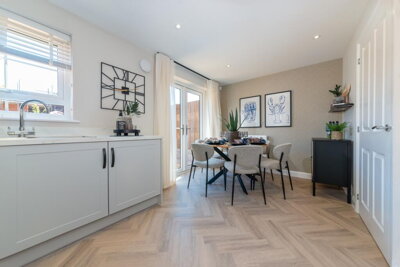
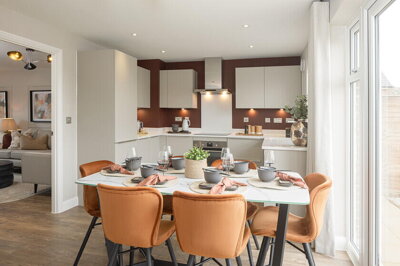
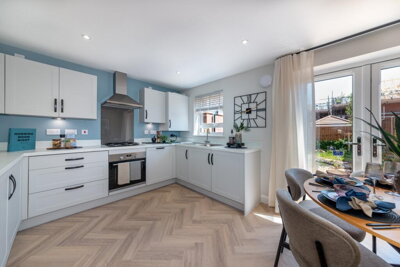
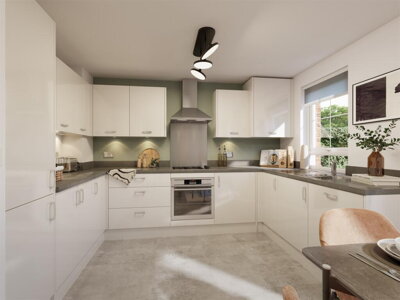
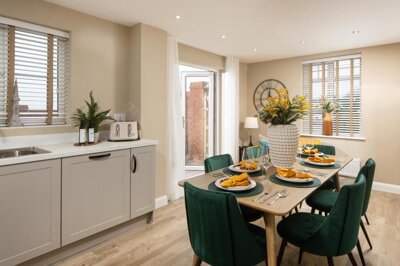
Browse 6 homes new builds in Marston from local developer agents.
Three bedroom properties represent a significant portion of the Marston housing market, offering space for families with multiple reception rooms and gardens in many cases. Browse detached, semi-detached, and terraced options ranging across new residential developments.
The Marston property market offers diverse options across all property types, with prices reflecting the area's desirable location and strong transport links. Detached properties command the highest values at an average of £431,000, making them ideal for families seeking generous living space and gardens. Semi-detached homes, averaging £245,000, represent excellent value for buyers looking for a balance between space and affordability, while terraced properties at around £190,000 provide an accessible entry point to this sought-after neighbourhood.
Property prices in Marston have demonstrated consistent growth over the past twelve months, with all main property types recording a 1% increase. This steady appreciation reflects the ongoing demand for homes in the Stafford area, driven by factors including transport improvements, local employment opportunities, and the appeal of village living within commutable distance of larger cities. The market has seen approximately 20 property sales in the past year, indicating active transaction levels for a village of this size.
No active new-build developments were identified within the Marston postcode area at the time of research. However, prospective buyers seeking brand new homes may wish to explore broader Stafford postcodes and nearby villages, where several developments are marketed. Properties in Marston predominantly feature traditional red brick construction, with a mix of housing styles reflecting the area's development from the early twentieth century through to more recent decades.
The housing stock in Marston reflects several distinct periods of development. Detached properties account for 45.4% of homes, representing the largest segment of the market and explaining the higher average prices for this property type. Semi-detached homes make up 33.7% of the stock, providing the backbone of family housing in the area. Terraced properties comprise 11.9% of homes, while flats and apartments represent just 8.9%, making Marston primarily a village of houses rather than flats.

Marston and the surrounding Yarlet Ward has a population of approximately 3,098 residents across 1,223 households, creating a close-knit community atmosphere that appeals to families and professionals alike. The area maintains a predominantly residential character, with properties ranging from charming period cottages to substantial modern family homes. The local population includes a healthy mix of demographics, with families with children, working professionals, and older residents all finding their place within this welcoming neighbourhood.
The housing stock in Marston reflects several decades of development, with around 10.2% of properties dating from the pre-1919 period, providing character homes with original features. A significant proportion, 38.1%, was built between 1945 and 1980, representing post-war expansion that accounts for much of the semi-detached family housing. Properties constructed post-1980 make up 37.2% of the stock, offering more contemporary layouts and specifications. This variety ensures buyers can find properties to suit different tastes and requirements.
Residents of Marston benefit from good local amenities while enjoying easy access to the comprehensive facilities of nearby Stafford town centre. The village offers everyday shopping essentials, local pubs, and community facilities, with larger retail parks and supermarkets available a short drive away. Green spaces and parks provide recreational opportunities, while the area's position on the edge of Staffordshire countryside offers pleasant walking routes and outdoor activities.
The local economy in Marston is primarily residential, with most residents commuting to nearby Stafford town centre or further afield for work. Key employment sectors in the wider Stafford area include public administration through Staffordshire County Council and Stafford Borough Council, healthcare at County Hospital, education at Staffordshire University, and logistics due to the area's central location and excellent motorway access. These diverse employment opportunities help sustain stable housing demand in Marston.

Education provision in Marston serves families with a selection of primary and secondary schools within reasonable travelling distance. Several primary schools in the surrounding area cater to younger children, with many receiving positive ratings from Ofsted for teaching quality and pupil development. Parents should research individual school catchments and admission criteria, as these can influence property choices and require careful planning when relocating to the area.
Secondary education options include both comprehensive and grammar schools, with the nearest grammar schools typically found in Stafford town centre. The presence of grammar schools in the wider area makes Marston attractive to families prioritising academic education. Stafford also offers further education facilities, with colleges providing A-level courses and vocational qualifications for post-16 students seeking diverse educational pathways.
Higher education is readily accessible through Staffordshire University in nearby Stafford, offering undergraduate and postgraduate courses across various disciplines. The university's presence contributes to the local economy and community, providing educational opportunities without requiring travel to major cities. Families moving to Marston can therefore plan for education at all levels within a reasonable distance of home.
When considering schools for children moving to Marston, parents should note that primary school catchments can vary significantly. Properties closer to the village itself may fall within different admission areas than those on the outskirts. We recommend checking current catchment boundaries with Staffordshire County Council and visiting potential schools before committing to a property purchase, as school placement can significantly impact daily family routines.
Marston enjoys excellent connectivity through its proximity to major road networks and public transport options. The village sits near the A34, providing direct access to Stafford town centre and connecting to the broader Staffordshire road network. The M6 motorway is easily accessible, offering straightforward routes to Birmingham, Manchester, Stoke-on-Trent, and the wider motorway network. This accessibility makes Marston particularly attractive to commuters working in larger cities who prefer village living.
Stafford railway station provides direct train services to major destinations including Birmingham New Street, Manchester Piccadilly, and Stoke-on-Trent. The station is well-connected by bus services from the Marston area, or residents can drive to the station with parking facilities available. Commuters travelling to Birmingham typically find journey times of around 30-40 minutes by train, while Manchester is accessible in approximately one hour, making regular commuting feasible for those working in these cities.
Local bus services operated by various providers connect Marston to Stafford town centre and surrounding villages, providing practical options for those not driving. The village's position away from major congestion points means car journeys to local amenities are generally straightforward, and parking provision is good at local facilities. For cyclists, the flatter areas of the village offer reasonable cycling conditions, though the hilly terrain in some surrounding areas requires more consideration for regular commuting by bicycle.
The strategic position of Marston near the intersection of major routes makes it particularly valuable for those working in logistics, distribution, or any sector requiring regular regional travel. The M6 corridor provides direct access to the wider motorway network, connecting Marston to Birmingham and the West Midlands to the south, Manchester and the North West to the north, and Stoke-on-Trent to the northwest. This central location within Staffordshire supports both commuting and business activities.
Contact local mortgage brokers or use Homemove's comparison tools to secure a mortgage agreement in principle before beginning your property search. This demonstrates your purchasing capacity to estate agents and sellers, strengthening your position when making offers on properties in Marston's competitive market.
Review current listings in Marston, comparing prices across different property types and understanding local market trends. Our platform provides comprehensive data on average prices, recent sales, and property characteristics to help you identify suitable options matching your budget and requirements.
Schedule viewings of properties that match your criteria, taking time to assess the neighbourhood, nearby amenities, and the property's condition. Consider visiting at different times of day to understand traffic patterns, noise levels, and community atmosphere before making an offer.
Given that over 62% of properties in Marston were built before 1980, we strongly recommend booking a RICS Level 2 Survey (HomeBuyer Report) before proceeding. Survey costs in the Marston area typically range from £400 to £700 depending on property size and type. This professional assessment identifies structural issues, damp, roofing problems, and other defects that may not be apparent during viewings.
Appoint a solicitor experienced in Staffordshire property transactions to handle the legal aspects of your purchase. Your solicitor will conduct searches, review contracts, and manage the transfer of ownership. Homemove offers conveyancing services from £499 to ensure you receive professional legal support throughout the process.
Once all searches are satisfactory, your mortgage offer is confirmed, and both parties have agreed on terms, you will exchange contracts and agree a completion date. On completion day, the remaining funds are transferred, and you receive the keys to your new Marston home.
Properties in Marston are predominantly constructed with traditional red brick, a hallmark of Staffordshire building traditions. The majority of homes use cavity wall construction for properties built post-1920s, while older properties may feature solid wall construction. When viewing properties, pay attention to the condition of brickwork, pointing, and any signs of movement or cracking that might indicate underlying structural issues requiring attention.
The underlying geology of the Marston area presents some considerations for buyers. Properties sit on Mercia Mudstone bedrock, which contains clay minerals with moderate to high shrink-swell potential. This means properties, particularly those with large trees nearby or inadequate foundations, may be susceptible to ground movement causing subsidence or heave. A thorough survey will assess foundation conditions and identify any signs of movement that might require specialist investigation.
Flood risk should be considered when purchasing in Marston, particularly for properties near the River Sow or in low-lying areas. Surface water flooding can affect drainage-prone locations, so buyers should inquire about historical flooding and review flood risk assessments before committing to a purchase. Properties in higher-risk areas may require specific insurance considerations or flood resilience measures.
The age distribution of properties in Marston means that many homes will require updates to electrical systems, plumbing, and insulation. Properties built before the 1980s commonly feature wiring and plumbing that does not meet current standards, and buyers should budget for potential upgrades. A RICS Level 2 Survey will highlight any outdated systems or maintenance issues that should be addressed following purchase.
Timber defects are another consideration in older Marston properties, particularly those with original features. Woodworm or rot can affect timber floor joists, roof structures, and window frames if properties have not been properly maintained or ventilated. Our inspectors specifically examine these elements during surveys, noting any signs of infestation or decay that would require treatment or repair. Properties with extensive timber framing or original wooden windows may incur higher maintenance costs than initially expected.
When purchasing a property in Marston, buyers should budget for additional costs beyond the purchase price. Stamp duty Land Tax (SDLT) is calculated based on the property value and buyer status. Standard SDLT rates for 2024-25 are 0% on the first £250,000, 5% between £250,001 and £925,000, 10% between £925,001 and £1.5 million, and 12% above £1.5 million. For a typical Marston property at £296,000, standard buyers would pay £2,300 in SDLT.
First-time buyers purchasing residential properties up to £425,000 benefit from increased relief, paying 0% SDLT on the first £425,000. However, properties priced above £625,000 do not qualify for first-time buyer relief, and the standard rates apply to the full purchase price. First-time buyers purchasing at the Marston median price of £296,000 would pay no SDLT, making significant savings compared to other buyer categories.
Beyond stamp duty, buyers should account for solicitor fees (typically £500-£1,500 for conveyancing), survey costs (RICS Level 2 Surveys in Marston range from £400-£700 depending on property size), mortgage arrangement fees, and moving costs. Land registry fees, search fees, and potential mortgage valuation fees also apply. We recommend budgeting approximately 3-5% of the purchase price for these additional costs to ensure a smooth transaction without unexpected financial pressures.
Search fees are an important consideration for Marston purchases, as local searches cover various aspects including drainage, environmental factors, and local authority information. Given the Mercia Mudstone geology in parts of the area, a mining search is particularly recommended despite Marston not being a significant coal mining area. Your solicitor will advise on which searches are necessary based on the specific property and location within Marston.
The average house price in Marston, Stafford is currently £296,000 according to recent market data. Detached properties average £431,000, semi-detached homes around £245,000, terraced properties approximately £190,000, and flats average £120,000. Property prices have increased by approximately 1% over the past twelve months across all main property types, indicating a stable and gradually appreciating market. The strong performance of all property types reflects consistent demand from buyers attracted to Marston's combination of village character and excellent transport connections.
Properties in Marston fall under Stafford Borough Council administration. Council tax bands in the area range from A to H depending on property value and type. Most residential properties in Marston fall within bands A through D, which are among the lower council tax brackets. Prospective buyers should check specific properties with Stafford Borough Council or the listing agent to confirm the exact band and associated annual costs. The majority of terraced properties and smaller semi-detached homes typically fall into band A or B, while larger detached properties may be in higher bands.
Marston and the surrounding area offer several primary schools serving younger children, with good Ofsted ratings reported for schools in the vicinity. Secondary education includes options for both comprehensive and grammar school entry, with catchment areas determining placement. Parents should research individual school admission criteria, as grammar school entry typically requires passing the entrance examination. Further education is available at colleges in Stafford town centre offering both A-level and vocational courses. The presence of grammar schools in Stafford makes the area particularly attractive to families prioritising academic pathways for their children.
Marston is well-connected by public transport despite its village character. Stafford railway station, accessible by bus or car, provides direct train services to Birmingham, Manchester, Stoke-on-Trent, and other major cities. Local bus services connect Marston to Stafford town centre and surrounding villages. The A34 and M6 motorway provide excellent road connections, making car travel to nearby towns quick and convenient. Train journey times from Stafford to Birmingham New Street typically take 30-40 minutes, while Manchester Piccadilly is approximately one hour away.
Marston offers several factors that make it attractive for property investment. The village's proximity to Stafford town centre and major transport links supports consistent demand from commuters and families. The local economy benefits from Stafford's diverse employment sectors including public administration, healthcare, education, and logistics. Property prices have shown steady growth, and rental demand remains stable given the area's appeal to working professionals and families seeking quality village living. The combination of village atmosphere with strong commuter links creates sustained demand from both owner-occupiers and tenants.
Stamp duty Land Tax (SDLT) rates for standard buyers start at 0% on the first £250,000 of property value, then 5% on amounts between £250,001 and £925,000. For a typical Marston property at £296,000, this would result in SDLT of £2,300. First-time buyers purchasing properties up to £425,000 may qualify for relief, paying 0% on the first £425,000. Properties above £625,000 do not qualify for first-time buyer relief. Your solicitor will calculate the exact SDLT liability based on your circumstances. AdditionalSDLT rates of 3% apply for second homes and investment properties over £40,000.
Given that over 62% of properties in Marston were built before 1980, common defects include damp issues (particularly rising or penetrating damp in period properties), deterioration of original roof coverings and rainwater goods, and outdated electrical systems that may not meet current standards. Properties near the River Sow may have flood risk considerations. The underlying Mercia Mudstone geology presents a moderate risk of subsidence or heave, particularly for properties with large trees or shallow foundations. A RICS Level 2 Survey will identify these issues before purchase. Timber defects such as woodworm or rot can also affect older properties, especially those with original wooden windows or unmodernised features.
With over 62% of properties in Marston built before 1980, a RICS Level 2 Survey provides essential protection for buyers in this area. Our inspectors frequently identify issues including damp, structural movement related to the local geology, roof deterioration, and outdated electrical systems during surveys of local properties. The survey cost of £400-£700 represents excellent value compared to the potential cost of discovering serious defects after purchase. For period properties or those with unusual construction, a RICS Level 3 Building Survey may be more appropriate, and our team can advise on the most suitable survey type for your specific property.
From 4.5%
Compare mortgage deals from leading lenders
From £499
Professional property solicitors to handle your legal work
From £400
Professional survey recommended for properties built before 1980
From £85
Energy performance certificate for your new home
Properties New Builds In London

Properties New Builds In Plymouth

Properties New Builds In Liverpool

Properties New Builds In Glasgow

Properties New Builds In Sheffield

Properties New Builds In Edinburgh

Properties New Builds In Coventry

Properties New Builds In Bradford

Properties New Builds In Manchester

Properties New Builds In Birmingham

Properties New Builds In Bristol

Properties New Builds In Oxford

Properties New Builds In Leicester

Properties New Builds In Newcastle

Properties New Builds In Leeds

Properties New Builds In Southampton

Properties New Builds In Cardiff

Properties New Builds In Nottingham

Properties New Builds In Norwich

Properties New Builds In Brighton

Properties New Builds In Derby

Properties New Builds In Portsmouth

Properties New Builds In Northampton

Properties New Builds In Milton Keynes

Properties New Builds In Bournemouth

Properties New Builds In Bolton

Properties New Builds In Swansea

Properties New Builds In Swindon

Properties New Builds In Peterborough

Properties New Builds In Wolverhampton

Enter your details to see if this property is within your budget.
Loans, cards, car finance
Estimated property budget
Borrowing + deposit
You could borrow between
Typical borrowing
Monthly repayment
Est. at 4.5%
Loan-to-value
This is an estimate only. Your actual budget may vary depending on interest rates, credit history, and personal circumstances. For an accurate affordability assessment, speak to one of our free mortgage advisors.
This calculator provides estimates for illustrative purposes only and does not constitute financial advice. Your home may be repossessed if you do not keep up repayments on your mortgage. Estimates based on 4.5% interest rate, repayment mortgage. Actual rates depend on your circumstances.
Homemove is a trading name of HM Haus Group Ltd (Company No. 13873779, registered in England & Wales). Homemove Mortgages Ltd (Company No. 15947693) is an Appointed Representative of TMG Direct Limited, trading as TMG Mortgage Network, which is authorised and regulated by the Financial Conduct Authority (FRN 786245). Homemove Mortgages Ltd is entered on the FCA Register as an Appointed Representative (FRN 1022429). You can check registrations at NewRegister or by calling 0800 111 6768.

We use cookies to show you personalised content and improve your experience of our website. Find out more in our Privacy policy and Cookie policy.