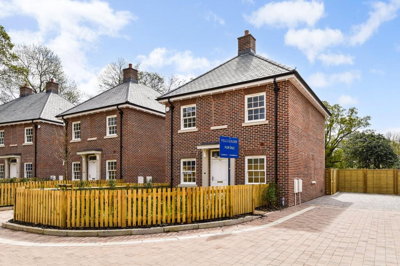
Browse 1 home new builds in Lyndhurst, New Forest from local developer agents.
Three bedroom properties represent a significant portion of the Lyndhurst housing market, offering space for families with multiple reception rooms and gardens in many cases. Browse detached, semi-detached, and terraced options ranging across new residential developments.
£475k
9
1
127
Source: home.co.uk
Showing 9 results for 3 Bedroom Houses new builds in Lyndhurst, New Forest. 1 new listing added this week. The median asking price is £475,000.
Source: home.co.uk
Semi-Detached
5 listings
Avg £427,000
Detached
4 listings
Avg £791,250
Source: home.co.uk
Source: home.co.uk
The Lyndhurst property market has demonstrated steady and sustainable growth, with overall house prices increasing by 2.5% over the past twelve months. Detached properties command the highest values at an average of £925,000, reflecting strong demand from families seeking generous living space and proximity to the forest. Semi-detached homes average £480,000, offering excellent value for buyers looking for a comfortable family home in a village setting. Terraced properties at around £400,000 provide an accessible entry point to village life, while flats averaging £250,000 appeal to first-time buyers, investors, and those seeking a lock-and-leave lifestyle.
Property types in Lyndhurst are predominantly detached houses, comprising approximately 45-50% of the housing stock, with semi-detached properties making up a further 25-30%. The village architecture reflects its New Forest heritage, with many homes featuring traditional brick construction, often in characteristic red or brown hues, alongside properties incorporating local stone and timber cladding. Roofs typically use clay tiles or slate, adding to the timeless aesthetic. The age distribution shows a significant proportion of pre-1919 properties in the village centre, alongside inter-war, post-war, and more recent builds, creating a diverse housing stock that caters to various tastes and budgets.
Approximately 75 properties have changed hands in Lyndhurst over the past twelve months, with demand consistently outstripping supply due to the strict planning restrictions within the New Forest National Park. Rather than large housing estates, development tends toward small-scale infill projects and bespoke builds that respect the village's protected character. This scarcity of new supply continues to support property values and makes existing homes in good condition particularly desirable. For buyers, securing a property in Lyndhurst often requires acting decisively, as well-presented homes in the village centre and sought-after streets regularly attract multiple interested parties.
Breaking down the recent price movements, detached properties showed the strongest growth at 3% over the year, followed by semi-detached at 2%, terraced at 1.5%, and flats at 1%. This tiered growth pattern reflects the particular appeal of family-sized homes with gardens in the New Forest setting, where the lifestyle benefits of larger properties command a premium. Despite the varying growth rates, all segments remain competitively priced relative to comparable villages in the South East, making Lyndhurst a sound long-term investment for property buyers.

Lyndhurst has earned its reputation as the "capital" of the New Forest, serving as the main service centre for this unique national park. The village supports a population of approximately 3,000 to 3,500 residents across 1,400 to 1,600 households, creating an intimate community atmosphere while offering comprehensive local amenities. The high street features a welcoming atmosphere with independent retailers, art galleries, and specialist food shops selling local produce including the famous New Forest ponies and artisanal preserves. Regular farmers markets and village events throughout the year foster a strong sense of community belonging that newcomers quickly come to appreciate.
The surrounding New Forest National Park provides an extraordinary natural playground that defines daily life for residents. Ancient woodland, open heathland, and picturesque villages are all accessible from your doorstep, with famous beauty spots like Bolderwood, Rhinefield, and the Beaulieu River within easy reach. The famous New Forest ponies, cattle, and donkeys roam freely across the landscape, creating a quintessentially English scene that delights residents and visitors alike. Outdoor activities include walking, cycling, and horse riding along an extensive network of trails, while fishing, sailing, and water sports are available at nearby locations.
The local economy draws strength from tourism, with visitors drawn to the area's natural beauty, historic sites, and outdoor recreational opportunities. This supports a vibrant hospitality sector featuring traditional coaching inns, contemporary restaurants, and charming tea rooms where residents gather for social occasions. Healthcare services, local government employment, and education contribute to the economic mix, while the village's location enables commuting to major employment centres in Southampton and Bournemouth. The popularity of Lyndhurst with retirees reflects the area's peaceful environment, excellent healthcare access, and availability of bungalows and single-level living options.
Economic factors beyond tourism shape the local housing market significantly. Agriculture and traditional forestry continue to provide some employment within the New Forest, while local services including healthcare, education, and public administration offer stable employment for residents. The ability to commute to larger employment centres means that many residents combine the benefits of rural living with urban careers, a demographic that consistently drives demand for family homes in the village. The area's popularity across all age groups ensures a balanced community where young families, professionals, and retirees coexist harmoniously.

Education provision in Lyndhurst serves families well, with the village supporting a primary school that provides education for children from reception through to Year 6. Families in Lyndhurst benefit from access to several well-regarded primary schools in the surrounding New Forest villages, many of which are within comfortable driving distance. The infant and junior school structure typically sees children progress through dedicated phases, with smaller class sizes allowing for individual attention and strong pastoral care that parents consistently value. School performance data and Ofsted reports are readily available for parents conducting thorough research before committing to a property purchase.
Secondary education options include schools in nearby Brockenhurst, which is home to a popular secondary school serving the central New Forest area, and Lynhams School, which offers both secondary and sixth form provision. The Brockenhurst school in particular has earned a strong reputation for academic achievement and extracurricular activities, making it a draw for families considering properties across the wider area. For families seeking grammar school education, access to selective schools in Southampton and Hampshire requires careful consideration of catchment areas and transportation arrangements, though many parents find the quality of local alternatives more than sufficient for their children's needs.
Further education opportunities are well-served by colleges in the wider area, including Brockenhurst College, which offers A-levels and vocational qualifications for students progressing from secondary education. The college has an excellent reputation across Hampshire and attracts students from across the New Forest region. For younger children, nurseries and pre-school facilities in Lyndhurst and neighbouring villages provide early years education, supporting working parents and giving children a gentle introduction to structured learning before they start primary school. The availability of quality education across all age groups makes Lyndhurst particularly attractive to families with children of varying ages.
Lyndhurst enjoys convenient road connections that make commuting to major employment centres straightforward for residents who work further afield. The village sits just off the A337, which provides direct access to the M27 motorway at junctions 1 and 2 near Cadnam, connecting Lyndhurst to Southampton in approximately 30 minutes and Bournemouth in around 40 minutes under normal traffic conditions. The A35 runs through the village connecting to Winchester and the wider south coast road network, making destinations along the south of England readily accessible. Road travel to London is typically via the M3 from Southampton or the more scenic route via the A31 to the M25.
Rail services from nearby stations expand commuting options considerably, with Brockenhurst station offering regular services to London Waterloo via Southampton Central and Winchester. The journey from Brockenhurst to London takes approximately 90 minutes, placing the capital within realistic commuting range for those working hybrid schedules. Local bus services connect Lyndhurst with surrounding villages and railway stations, supporting those who prefer not to drive for everyday journeys. The proximity of the New Forest to Southampton Airport provides additional flexibility for business and leisure travel further afield.
For those who enjoy cycling, the New Forest offers scenic routes suitable for leisure riding and commuting alike, with traffic-free paths connecting many villages. The forest roads, while shared with vehicles, are generally quiet and offer an enjoyable cycling experience through stunning scenery. Parking within Lyndhurst village centre is adequate for a village of its size, though can be busier during peak tourist season when day visitors flock to the area. Many residents find that owning a car is necessary for complete independence, though the village itself is walkable enough that short trips to the shops can easily be made on foot.
Explore current listings on Homemove to understand what properties are available in Lyndhurst and the surrounding New Forest villages. Research average prices for different property types and consider working with a local estate agent who knows the area intimately.
Before scheduling viewings, approach a lender to obtain an Agreement in Principle. This demonstrates your financial credibility to sellers and estate agents, strengthening your position when making an offer in a competitive market like Lyndhurst where well-presented homes regularly attract multiple interested parties.
Visit properties that match your requirements, paying attention to the village atmosphere, proximity to amenities, and the condition of the property. Take notes and photographs to help compare options later. In Lyndhurst, consider the specific location within the village as flood risk varies considerably depending on proximity to watercourses.
For properties over 50 years old, which make up a significant portion of Lyndhurst's housing stock, a Level 2 Survey is essential. This will identify any structural concerns, timber defects, damp issues, or other defects that may not be visible during a standard viewing. Given the underlying clay geology in the New Forest, particular attention should be paid to signs of subsidence or heave.
Appoint a solicitor experienced in New Forest property transactions to handle the legal aspects of your purchase. Given the conservation area and National Park status, specialist knowledge of local planning considerations is valuable for ensuring your intended renovations comply with local regulations.
Once your mortgage offer is confirmed and surveys completed, your solicitor will exchange contracts and set a completion date. On completion day, keys are handed over and your new life in Lyndhurst begins.
Properties in Lyndhurst require careful inspection due to several area-specific factors that buyers should understand before purchasing. The underlying geology of the New Forest features significant clay deposits that create a moderate to high shrink-swell risk, meaning properties with shallow foundations or those near large trees may be susceptible to subsidence or heave over time. A thorough survey is particularly important for older properties with traditional foundations, as movement in clay soils can lead to structural cracking and requires ongoing monitoring or remedial work.
Flood risk awareness is essential when buying in Lyndhurst, despite the village not being coastal. Properties adjacent to watercourses and tributaries of the Beaulieu River can face fluvial flooding during periods of heavy rainfall, and surface water pooling in low-lying areas is also a concern. The Environment Agency provides detailed flood risk mapping that prospective buyers should consult, and buildings insurance costs may reflect the flood risk profile of specific locations. Properties in elevated positions within the village generally offer safer options for flood-conscious buyers.
The conservation area status of Lyndhurst village centre brings significant planning implications that buyers must consider carefully. Properties within the designated area are subject to additional controls on alterations, extensions, and demolition, requiring planning permission or listed building consent for work that might be permitted elsewhere. The New Forest National Park Authority administers planning decisions with a strong emphasis on preserving character and the natural landscape, which can restrict development potential. For buyers planning renovations or extensions, understanding these constraints before purchase is essential to avoid disappointment.
Building materials in Lyndhurst properties reflect the village's heritage and require informed assessment. Older properties built before 1945 typically feature solid brick walls, timber suspended floors, and traditional roof construction with slate or clay tiles, often using lime mortar that requires specialist maintenance. Many properties incorporate timber cladding that, while aesthetically appropriate for the New Forest setting, requires regular upkeep to prevent decay. Understanding the maintenance implications of traditional construction methods will help buyers budget appropriately for ongoing property care.
Given the proximity to extensive woodland, tree root damage represents a specific concern for Lyndhurst property buyers. Tree root ingress into drainage systems and foundations is not uncommon, particularly for properties adjacent to the forest or with mature trees in the grounds. Our inspectors frequently identify root-related damage to drains and boundary structures, which should be checked during any property survey. Properties with large trees nearby should receive particular attention to foundations and drainage condition.
The current average house price in Lyndhurst stands at £620,000, with detached properties averaging £925,000 and semi-detached homes at approximately £480,000. Terraced properties typically sell for around £400,000, while flats average £250,000. Prices have increased by 2.5% over the past twelve months, with detached properties showing the strongest growth at 3%, reflecting sustained demand for property in this protected village setting.
Properties in Lyndhurst fall under New Forest District Council tax band system. Most family homes in the village fall into bands C through F, with smaller cottages and flats typically in bands A to C, and larger detached properties in bands E to G. Exact council tax charges vary depending on the specific property valuation and are payable annually to New Forest District Council. For budgeting purposes, band D properties in the New Forest typically pay around £1,800 to £2,000 per year, though this varies by band.
Lyndhurst offers good primary education provision, with the village school serving children from reception through to Year 6. Secondary education is available at popular schools in nearby Brockenhurst, including options with sixth form provision. The wider area provides several primary school options in surrounding New Forest villages, all accessible within reasonable driving distance for families. Brockenhurst College provides excellent further education opportunities for older students seeking A-levels or vocational qualifications.
Lyndhurst is served by local bus routes connecting to surrounding villages and railway stations, including Brockenhurst station which provides regular services to London Waterloo in approximately 90 minutes. Road connections via the A337 give easy access to the M27 motorway, reaching Southampton in around 30 minutes. The nearest major airport is Southampton Airport, approximately 25 miles away, offering flights across the UK and Europe.
Lyndhurst offers strong investment fundamentals thanks to its protected position within the New Forest National Park, which restricts new supply and supports property values. The village's enduring appeal to families, professionals, and retirees, combined with limited new build development, suggests continued demand for quality properties. Rental yields may be moderate compared to urban areas, but capital growth potential and the desirability of the location make it attractive for long-term investment.
Standard SDLT rates apply to purchases in Lyndhurst, with 0% charged on the first £250,000 of property value, 5% on the portion from £250,001 to £925,000, and 10% on the next tranche up to £1.5 million. First-time buyers may benefit from relief on the first £425,000, paying 5% between £425,001 and £625,000. Properties above £625,000 receive no first-time buyer relief.
Given the high proportion of older properties in Lyndhurst, buyers should watch for damp issues including rising and penetrating damp, timber defects such as woodworm and wet or dry rot, and deterioration of traditional roof coverings. Properties near trees should be checked for subsidence risk due to the underlying clay geology, with particular attention to foundations near large trees that may cause soil movement during dry periods. Drainage problems and outdated electrics and plumbing are also commonly encountered in period homes here. Our surveyors frequently identify issues with lime mortar pointing, timber window frames, and flat roof coverings that require maintenance or replacement.
From 4.5% APR
Expert mortgage advice and competitive rates for Lyndhurst property purchases
From £499
Specialist property solicitors for New Forest transactions including conservation area considerations
From £500
Essential survey for Lyndhurst properties identifying damp, timber defects, and structural concerns
From £800
Comprehensive structural survey recommended for older and period properties in the New Forest
From £80
Energy performance certificate required for all property sales
Purchasing a property in Lyndhurst involves several costs beyond the purchase price that buyers should factor into their budget from the outset. Stamp Duty Land Tax (SDLT) is calculated on a tiered basis, with the standard nil-rate threshold currently set at £250,000. For a typical Lyndhurst property at the average price of £620,000, a standard buyer would pay £18,750 in SDLT, calculated as 5% on the portion between £250,001 and £625,000. First-time buyers benefit from a higher threshold of £425,000 with a 5% rate applying between £425,001 and £625,000, reducing the SDLT burden significantly for eligible purchasers.
Survey costs represent an important investment given the age and construction type of many Lyndhurst properties. A RICS Level 2 Survey for a typical 3-bedroom semi-detached home typically ranges from £500 to £750, while larger detached properties may cost between £700 and £1,000 or more. These surveys provide essential protection against hidden defects that are common in older properties, including damp, timber issues, and structural concerns related to the local clay geology. For period properties or those with unusual construction, a more detailed RICS Level 3 Building Survey may be advisable despite the higher cost.
Legal fees for conveyancing typically start from around £499 for straightforward transactions, though complexities such as listed building status, conservation area considerations, or leasehold elements will increase costs. Additional disbursements include Land Registry fees, search fees, and bank transfer charges, which can add several hundred pounds to the overall legal bill. Mortgage arrangement fees vary by lender, with many charging between 0% and 1.5% of the loan amount, though these are often negotiable or available at zero cost with slightly higher interest rates. Buildings insurance should be arranged before completion, with quotes obtained for properties in flood-risk areas as premiums can vary significantly.
Beyond the primary purchase costs, buyers should budget for moving expenses, potential renovation works identified during survey, and ongoing maintenance of period properties. Properties in Lyndhurst often require ongoing investment in traditional building elements including lime mortar repointing, timber window restoration, and roof maintenance that differs from modern property upkeep. Factor in solicitor search fees specific to New Forest National Park regulations, which may require additional checks on planning history and environmental constraints. Setting aside a contingency fund of 10-15% above purchase price is prudent for any property renovation project in the village.
Properties New Builds In London

Properties New Builds In Plymouth

Properties New Builds In Liverpool

Properties New Builds In Glasgow

Properties New Builds In Sheffield

Properties New Builds In Edinburgh

Properties New Builds In Coventry

Properties New Builds In Bradford

Properties New Builds In Manchester

Properties New Builds In Birmingham

Properties New Builds In Bristol

Properties New Builds In Oxford

Properties New Builds In Leicester

Properties New Builds In Newcastle

Properties New Builds In Leeds

Properties New Builds In Southampton

Properties New Builds In Cardiff

Properties New Builds In Nottingham

Properties New Builds In Norwich

Properties New Builds In Brighton

Properties New Builds In Derby

Properties New Builds In Portsmouth

Properties New Builds In Northampton

Properties New Builds In Milton Keynes

Properties New Builds In Bournemouth

Properties New Builds In Bolton

Properties New Builds In Swansea

Properties New Builds In Swindon

Properties New Builds In Peterborough

Properties New Builds In Wolverhampton

Enter your details to see if this property is within your budget.
Loans, cards, car finance
Estimated property budget
Borrowing + deposit
You could borrow between
Typical borrowing
Monthly repayment
Est. at 4.5%
Loan-to-value
This is an estimate only. Your actual budget may vary depending on interest rates, credit history, and personal circumstances. For an accurate affordability assessment, speak to one of our free mortgage advisors.
This calculator provides estimates for illustrative purposes only and does not constitute financial advice. Your home may be repossessed if you do not keep up repayments on your mortgage. Estimates based on 4.5% interest rate, repayment mortgage. Actual rates depend on your circumstances.
Homemove is a trading name of HM Haus Group Ltd (Company No. 13873779, registered in England & Wales). Homemove Mortgages Ltd (Company No. 15947693) is an Appointed Representative of TMG Direct Limited, trading as TMG Mortgage Network, which is authorised and regulated by the Financial Conduct Authority (FRN 786245). Homemove Mortgages Ltd is entered on the FCA Register as an Appointed Representative (FRN 1022429). You can check registrations at NewRegister or by calling 0800 111 6768.

We use cookies to show you personalised content and improve your experience of our website. Find out more in our Privacy policy and Cookie policy.