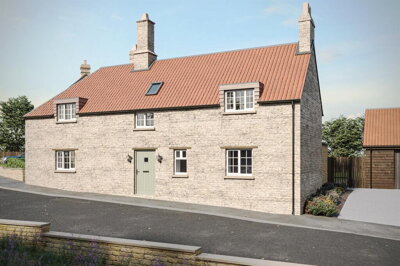
Browse 1 home new builds in Lowick from local developer agents.
The property market in Sitlington reflects the character of the parish itself: grounded, traditional, and representative of authentic West Yorkshire living. While specific aggregated average price data for the civil parish is not published, properties in the surrounding WF12 and WF4 postcode areas provide useful context for buyers researching the local market. The housing stock predominantly consists of semi-detached and terraced properties built during the twentieth century, alongside older period homes that reflect the parish's longer settlement history dating back to its origins as an ancient township.
Properties in Sitlington tend to offer competitive pricing compared to more urban areas of West Yorkshire, making the parish particularly attractive to buyers seeking more space for their money. The mix of property types includes traditional stone-built cottages in the older village cores, inter-war semi-detached houses along established residential roads, and more modern developments that have expanded the parish's housing options over recent decades. Families moving to the area often cite the village atmosphere and sense of community as major drawcards, while the relative affordability compared to Leeds or Sheffield metropolitan areas makes Sitlington an increasingly popular choice for commuters working in larger cities.
The local property market has shown resilience in recent years, with demand supported by the area's transport connections, schools, and quality of life factors. Properties in desirable positions, particularly those with views across the Yorkshire countryside or proximity to the River Calder which forms the parish's north-eastern boundary, command premium values within the local market. Buyers should note that the area contains no major new-build developments currently active, meaning the market primarily consists of existing properties where careful viewing and property condition assessment are essential.

Life in Sitlington offers residents a genuine sense of community rooted in the parish's remarkable heritage and stunning natural surroundings. The civil parish takes its name from the historic township and incorporates five distinct villages, each contributing to the area's diverse character. Middlestown serves as one of the larger settlements, offering local amenities and community facilities, while Netherton and Overton provide additional services and historic interest. The smaller hamlets of Midgley and Coxley add rural charm and accessibility to beautiful countryside, including Coxley Woods where a disused quarry exposes the Thornhill Rock, a sandstone formation created approximately 300 million years ago.
The National Coal Mining Museum for England, located at the former Caphouse Colliery in Overton, stands as the parish's most significant cultural and heritage attraction. This award-winning museum draws visitors from across the country and provides educational programs celebrating the area's industrial heritage. Two buildings from the former colliery are Grade II* listed, reflecting their national importance in understanding Yorkshire's mining history. The museum's presence contributes to local employment and tourism, while also serving as a reminder of the community's resilience and the importance of mining in shaping both the landscape and the people of Sitlington.
The local geology has shaped the parish's physical character in profound ways. The area sits within the Coal Measures of the South Yorkshire Coalfield, with underlying sandstone, coal seams, and Millstone Grit creating the distinctive landscape. The historical mining activity has left its mark on the terrain, though modern Sitlington is primarily a residential and rural community. Residents enjoy access to numerous public footpaths and bridleways crossing the parish, with the River Calder providing additional recreational opportunities along the north-eastern boundary. The combination of heritage, landscape, and community spirit creates a distinctive living experience that long-term residents frequently cite as reasons for staying in the area.

Families considering a move to Sitlington will find a selection of educational options within the parish and the wider Wakefield area. The local primary schools serve the communities of each village, providing education for children from reception through to Year 6. These schools play a central role in village life, hosting community events and providing after-school activities that contribute to the strong family atmosphere characteristic of the parish. Parents should research individual school performance data and Ofsted ratings when considering properties, as catchment areas can influence which school children attend.
Secondary education options in the surrounding area include schools in Wakefield and the neighbouring towns, accessible via the local bus services that connect Sitlington villages. Secondary schools in the wider metropolitan borough offer a range of specialisms and extracurricular programs. For families prioritising academic excellence, the grammar school system in the Wakefield area provides selective education options, though admission is based on the 11-plus examination and competition can be strong. Sixth form and further education provision is available at schools and colleges in Wakefield city centre, easily reachable by public transport for older students.
The presence of the National Coal Mining Museum also provides unique educational opportunities for young people, with the museum offering learning programs and workshops that connect to the local area's industrial heritage. Many local schools incorporate visits to the museum as part of their curriculum, giving children in Sitlington a special connection to their community's history. Parents moving to the area frequently comment on the community-minded atmosphere in local schools and the opportunities for parental involvement in school life, factors that contribute to the family-friendly reputation of the parish.
Sitlington enjoys practical transport connections that make commuting feasible for residents working in nearby cities or requiring access to wider amenities. The parish is served by bus routes connecting the individual villages to Wakefield city centre, with regular services providing reliable access for those without private vehicles. Bus connections extend to neighbouring towns and villages, with the WF12 and WF4 postcodes well-served by local transport networks. Residents working in Leeds can access bus routes that connect to the city via the M1 corridor, though journey times should be factored into any commuting calculations.
For rail travel, the nearest major railway stations are located in Wakefield and Barnsley, providing access to the national rail network. Wakefield Westgate station offers direct services to London King's Cross, with journey times of approximately two hours, while Wakefield Kirkgate provides additional regional connections. Barnsley station offers routes to Sheffield, Leeds, and Manchester, expanding the range of commuting options available to Sitlington residents. The proximity to the M1 motorway, accessible via the A638, provides road connections to Leeds, Sheffield, and the wider motorway network, making car travel a practical option for many residents.
The local road network within the parish itself consists of country lanes and residential streets, with the A636 serving as a key route connecting the villages to the wider area. Cyclists will find both on-road and off-road cycling options, with public footpaths and bridleways providing routes for recreational cycling as well as commuting. The River Calder, which forms part of the parish boundary, is not a significant transport route but contributes to the scenic character of the area. Overall, Sitlington strikes a balance between rural tranquility and practical connectivity, making it viable for residents who need to access employment in larger cities while enjoying village-style living.
Purchasing a property in Sitlington requires attention to several local-specific factors that differ from more urban property markets. The parish's geology, situated on the Coal Measures of the South Yorkshire Coalfield, means that some properties may be built on ground with historical mining activity. While modern regulations require mining risk assessments for new developments, buyers of older properties should consider commissioning appropriate surveys to check for any potential ground instability or historical mining features. Properties in areas adjacent to the River Calder should also be assessed for flood risk, as the river forms the north-eastern boundary of the parish.
The presence of ten listed buildings within the civil parish indicates that certain properties in Sitlington carry heritage protections that affect what modifications owners can make. When you buy a listed property in Sitlington, you become responsible for maintaining features of historical significance, and any external alterations typically require Listed Building Consent from Wakefield Council. Grade II listed buildings account for the majority of designations, with two properties holding the higher Grade II* status associated with the former Caphouse Colliery. These heritage considerations add character to the area but require additional research before purchasing. No specific conservation areas were identified within the parish, meaning planning restrictions beyond standard national requirements are limited in most locations.
Property tenure in Sitlington predominantly involves freehold houses, which aligns with the area's suburban and village housing stock. However, any properties converted from commercial use or forming part of larger estates should be checked carefully for leasehold arrangements, ground rent clauses, and service charge obligations. When viewing properties, prospective buyers should pay attention to the condition of traditional building materials, as stone and brick properties in the area require ongoing maintenance. The age of the local housing stock means that electrical wiring, plumbing, and insulation standards should be assessed, potentially requiring updates or improvements after purchase.
Understanding the total costs of purchasing property in Sitlington helps buyers budget accurately and avoid financial surprises during the transaction. The Stamp Duty Land Tax (SDLT) represents the most significant government levy, with current thresholds set at 0% for purchases up to £250,000, 5% on the portion between £250,001 and £925,000, 10% on amounts from £925,001 to £1.5 million, and 12% on any portion exceeding £1.5 million. Given that property values in Sitlington typically fall within the lower portions of this structure, most buyers will only encounter the first two tax bands.
First-time buyers benefit from increased thresholds, paying 0% SDLT on purchases up to £425,000 and 5% on the portion between £425,001 and £625,000. This relief can result in meaningful savings compared to the standard rates, though properties valued above £625,000 do not qualify for any first-time buyer relief. The typical price range of properties in Sitlington means that first-time buyers purchasing modest family homes or starter properties could benefit significantly from these reduced rates, improving the overall affordability of entering the property market in this attractive West Yorkshire parish.
Beyond SDLT, buyers should budget for solicitor fees, which typically range from £500 to £2,000 depending on the complexity of the transaction and whether the property is freehold or leasehold. Search fees, including local authority searches, drainage searches, and environmental searches, typically cost between £200 and £400. A RICS Level 2 Survey costs from approximately £350 and provides essential condition information, particularly important given the age of much of the local housing stock. Survey costs are separate from any mortgage valuation fee that your lender may require. Moving costs, including removal services and potential temporary storage, should also be factored into your overall budget for moving to your new Sitlington home.
Spend time exploring the villages of Sitlington, visiting at different times of day and week to understand the community atmosphere. Check local amenities, transport connections, and proximity to schools before focusing your property search.
Contact lenders or mortgage brokers to obtain an agreement in principle before viewing properties. This strengthens your position when making offers and demonstrates your financial readiness to estate agents in the competitive local market.
Contact local estate agents to arrange viewings of properties matching your criteria. Take notes during viewings, ask about property history, any recent renovations, and considerations that might affect your decision.
Once your offer is accepted, arrange a RICS Level 2 Survey for properties up to traditional construction and mortgage valuation purposes. Given the age of housing stock in Sitlington, a thorough survey is particularly important.
Choose a conveyancing solicitor to handle the legal aspects of your purchase. They will conduct searches, review contracts, and manage the transfer of ownership through to completion.
Your solicitor will coordinate the final steps, including local authority searches, property registration, and the transfer of funds. On completion day, you will receive the keys to your new Sitlington home.
Specific aggregated average price data for Sitlington civil parish is not published by major property portals. Price data for the surrounding WF12 and WF4 postcode areas shows that properties in the wider Wakefield metropolitan area offer good value compared to Leeds and major cities. Traditional semi-detached houses and terraced properties in the parish typically represent the most affordable entry point, while detached homes and period properties in elevated positions command higher values. For accurate current pricing, we recommend searching listings on Homemove or contacting local estate agents directly.
Properties in Sitlington fall under Wakefield Council's jurisdiction for council tax purposes. The parish contains properties across all council tax bands, reflecting the mix of housing types from traditional cottages to modern family homes. Band valuations relate to the property's assessed value as of April 1991 and determine the annual council tax charge. You can check the specific band for any property through the Valuation Office Agency website or by contacting Wakefield Council directly.
Sitlington contains several primary schools serving the individual villages, with families also able to access schools in the wider Wakefield area. When researching schools, parents should consult the Ofsted website for current inspection reports and performance data. Secondary education options in the surrounding area include both comprehensive and selective schools, with grammar schools accessible through the 11-plus selection process. The quality of schools can vary, so direct research using official performance data is essential when choosing where to buy.
Bus services connect the villages of Sitlington to Wakefield city centre and surrounding areas via regular routes. The nearest railway stations are in Wakefield and Barnsley, providing access to national rail services including direct trains to London. The M1 motorway is accessible via the A638, making car travel practical for commuting to Leeds, Sheffield, and beyond. The combination of public transport options and road connections makes Sitlington viable for residents who work in larger cities but prefer village-style living.
Sitlington offers several factors that appeal to property investors, including relative affordability compared to major cities, strong rental demand from local workers and commuters, and the community appeal that attracts long-term tenants. The area's heritage, including the National Coal Mining Museum, contributes to its distinctive character and desirability. The strong transport links to Wakefield and the M1 corridor make the parish attractive to tenants working in the city or commuting further afield. Capital growth potential exists, though it typically tracks the Wakefield market rather than the faster-growing urban centres of Leeds or Sheffield.
Stamp duty rates for 2024-25 are 0% on properties up to £250,000, 5% on the portion from £250,001 to £925,000, 10% from £925,001 to £1.5 million, and 12% above £1.5 million. First-time buyers receive relief on properties up to £625,000, paying 0% up to £425,000 and 5% on the portion between £425,001 and £625,000. Most properties in Sitlington fall within the lower tax bands, making the total SDLT cost manageable for standard purchases. Always verify your individual circumstances with a financial adviser.
Sitlington contains ten listed buildings on the National Heritage List, including two Grade II* structures associated with the former Caphouse Colliery now housing the National Coal Mining Museum for England. Properties in the older village cores may have historic features that are protected or that indicate the property's age and construction type. The local geology, including evidence of historical mining and quarrying, is part of the area's character. Coxley Woods features a disused quarry exposing the Thornhill Rock, a sandstone formation approximately 300 million years old.
Properties New Builds In London

Properties New Builds In Plymouth

Properties New Builds In Liverpool

Properties New Builds In Glasgow

Properties New Builds In Sheffield

Properties New Builds In Edinburgh

Properties New Builds In Coventry

Properties New Builds In Bradford

Properties New Builds In Manchester

Properties New Builds In Birmingham

Properties New Builds In Bristol

Properties New Builds In Oxford

Properties New Builds In Leicester

Properties New Builds In Newcastle

Properties New Builds In Leeds

Properties New Builds In Southampton

Properties New Builds In Cardiff

Properties New Builds In Nottingham

Properties New Builds In Norwich

Properties New Builds In Brighton

Properties New Builds In Derby

Properties New Builds In Portsmouth

Properties New Builds In Northampton

Properties New Builds In Milton Keynes

Properties New Builds In Bournemouth

Properties New Builds In Bolton

Properties New Builds In Swansea

Properties New Builds In Swindon

Properties New Builds In Peterborough

Properties New Builds In Wolverhampton

Enter your details to see if this property is within your budget.
Loans, cards, car finance
Estimated property budget
Borrowing + deposit
You could borrow between
Typical borrowing
Monthly repayment
Est. at 4.5%
Loan-to-value
This is an estimate only. Your actual budget may vary depending on interest rates, credit history, and personal circumstances. For an accurate affordability assessment, speak to one of our free mortgage advisors.
This calculator provides estimates for illustrative purposes only and does not constitute financial advice. Your home may be repossessed if you do not keep up repayments on your mortgage. Estimates based on 4.5% interest rate, repayment mortgage. Actual rates depend on your circumstances.
Homemove is a trading name of HM Haus Group Ltd (Company No. 13873779, registered in England & Wales). Homemove Mortgages Ltd (Company No. 15947693) is an Appointed Representative of TMG Direct Limited, trading as TMG Mortgage Network, which is authorised and regulated by the Financial Conduct Authority (FRN 786245). Homemove Mortgages Ltd is entered on the FCA Register as an Appointed Representative (FRN 1022429). You can check registrations at NewRegister or by calling 0800 111 6768.

We use cookies to show you personalised content and improve your experience of our website. Find out more in our Privacy policy and Cookie policy.