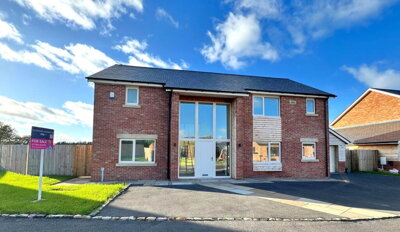
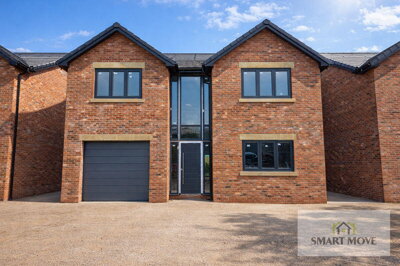
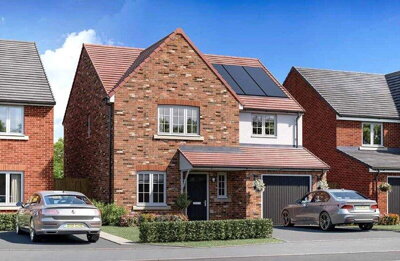
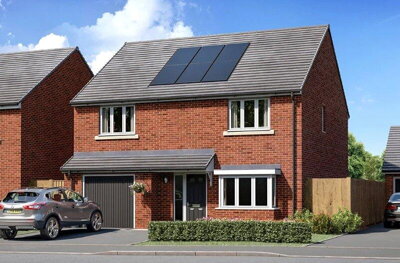
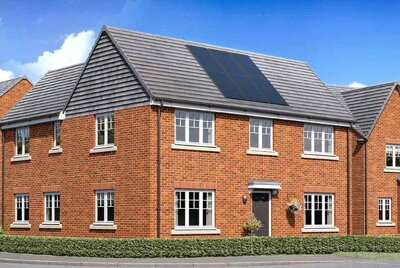
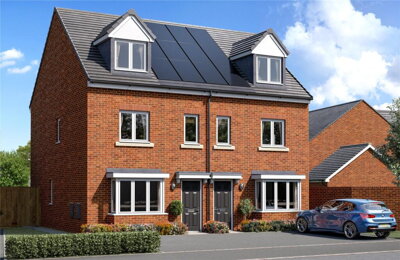
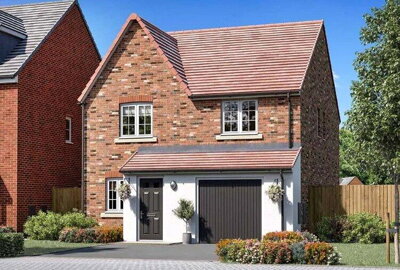
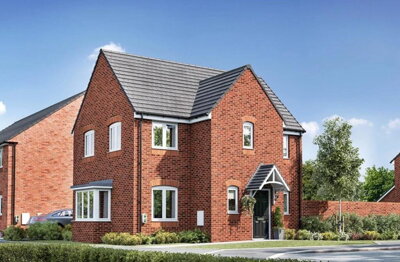
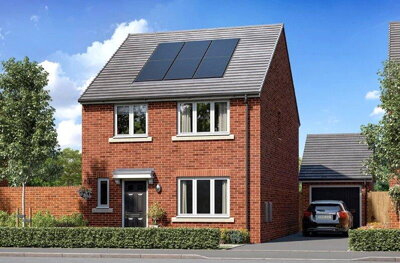
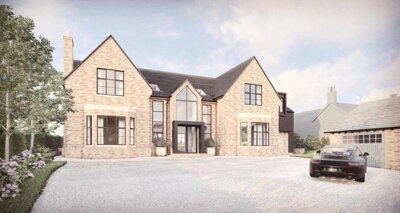
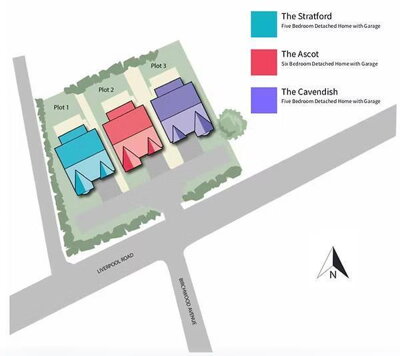
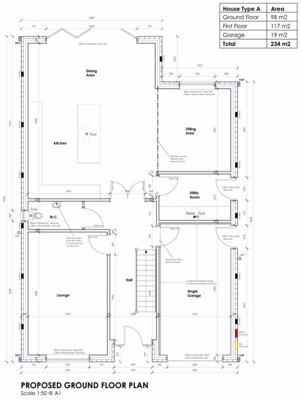
Browse 14 homes new builds in Longton, South Ribble from local developer agents.
£410k
34
0
95
Source: home.co.uk
Source: home.co.uk
Detached
14 listings
Avg £896,068
Semi-Detached
7 listings
Avg £367,129
Detached Bungalow
4 listings
Avg £426,225
Semi-Detached Bungalow
3 listings
Avg £225,000
Terraced
2 listings
Avg £352,475
Cottage
1 listings
Avg £300,000
End of Terrace
1 listings
Avg £199,950
House
1 listings
Avg £290,000
Not Specified
1 listings
Avg £2.35M
Source: home.co.uk
Source: home.co.uk
The housing market in Longton, South Ribble offers good value compared to central Preston, making it an attractive option for first-time buyers and families looking to get onto the property ladder. The area features a mix of property types including traditional terraced houses, semi-detached family homes, and some detached properties in newer developments. Property prices in Longton and the surrounding South Ribble area tend to be competitive, with homes often selling quickly when priced correctly due to strong local demand.
The local market has shown resilience in recent years, with steady activity from buyers looking to take advantage of the area's good schools, transport links, and family-friendly environment. Semi-detached properties are particularly popular with families, while terraced homes offer an affordable entry point for first-time buyers. If you are considering selling your property, current market conditions in Longton, South Ribble remain favourable for vendors with well-presented homes achieving strong prices.
First-time buyers will find terraced properties in Longton starting from around £120,000, offering an accessible route onto the property ladder in this desirable location. Semi-detached family homes typically range from £150,000 to £250,000 depending on size, location, and condition, with properties on popular roads commanding premium prices. Larger detached properties in established cul-de-sacs and newer developments can exceed £300,000, reflecting the space and privacy they offer.

Longton, South Ribble is a town with a strong sense of community and a pleasant mix of residential streets, local shops, and amenities. The town centre features a variety of independent businesses, pubs, and restaurants, while the nearby Market Shopping Centre provides additional retail options. The area is well-served by local parks and green spaces, including the nearby River Lostock corridor, which offers scenic walks and outdoor recreational opportunities for residents of all ages.
The demographics of Longton and South Ribble reflect a family-oriented community with a good balance of age groups. The area combines historic elements with more recent housing developments, creating a diverse streetscape that appeals to different buyer preferences. Local amenities include supermarkets, healthcare facilities, and community centres, making daily life convenient for residents. The town's proximity to Preston means that city centre attractions, shopping centres, and cultural venues are easily accessible while maintaining the character of a smaller town.
For those who enjoy outdoor activities, the surrounding South Ribble countryside offers numerous walking routes and cycling paths. The Lane Ends area provides convenient access to open green spaces, while the Leeds and Liverpool Canal passes nearby offering scenic towpath walks. Local sports clubs and community groups cater to various interests, from football and cricket to art societies and gardening clubs. The weekly market in nearby Preston city centre, held on Fridays and Saturdays, draws visitors from across the region and showcases the best of local produce and crafts.

Education is a significant factor for families considering a move to Longton, South Ribble, and the area is well-served by a range of educational establishments. Primary schools in the local area include Longton Primary School and St. Mary's Catholic Primary School, serving families within the town itself. Secondary education options in the wider South Ribble area include well-regarded schools such as Lostock Hall Academy and Balshaw's Church of England High School, both of which serve students from the Longton area.
The quality of local schools makes Longton particularly attractive to families with children, and parents should research specific catchment areas when considering properties for sale. For those seeking further education, the area benefits from excellent connections to Preston College and the University of Central Lancashire in Preston, providing a range of further and higher education opportunities. School performance data, including Ofsted inspection results, should be reviewed by prospective buyers with school-age children to ensure they understand the educational landscape in the local area.
Beyond traditional schooling, Longton and the surrounding South Ribble area offer various extracurricular activities and childcare options. Local nursery schools and early years settings provide care for younger children, while private tutoring and specialist educational support services are available for families requiring additional assistance. Parents moving to the area should register their interest with preferred schools as early as possible, since popular primary schools can have waiting lists, particularly for admissions in Reception Year.

Longton enjoys excellent transport connections, making it an ideal location for commuters working in Preston, Manchester, or the wider North West region. The town is situated near the A59 trunk road, providing direct access to Preston city centre and connections to the M6 and M65 motorways. For rail travel, nearby Preston railway station offers regular services to major cities including Manchester, Liverpool, London Euston, and Edinburgh, with journey times to Manchester of approximately 45 minutes by train.
Local bus services connect Longton with surrounding towns and Preston city centre, providing convenient options for those who prefer public transport. The proximity to the M6 motorway makes car travel straightforward for commuters heading to Manchester, Liverpool, or further afield. For air travel, Manchester Airport and Liverpool John Lennon Airport are both accessible within approximately one hour by car, offering international travel connections. These transport links significantly enhance the appeal of Longton as a location for commuters and those who travel regularly for work or leisure.
Daily commuters will find that parking facilities at Preston station are well-managed, with season tickets available for regular rail users. The A59 provides a reliable route for those driving to work, avoiding the heavier traffic of more central Preston routes. For professionals working in Manchester, the train service from Preston offers a practical alternative to driving, with free parking often available at lesser-used stations on the line. Cycle storage facilities at local transport hubs make combined commuting options viable for those who prefer cycling part of their journey.

The housing stock in Longton, South Ribble reflects the area's development history, with properties ranging from Victorian-era terraced homes to modern new-build developments. Traditional terraced houses, many dating from the late 19th and early 20th centuries, characterise several streets near the town centre. These properties often feature original architectural details such as bay windows, fireplaces, and stained glass features, though they may require updating of systems like electrics and plumbing.
Semi-detached properties form a significant portion of the residential housing in Longton, with many built during the interwar period (1920s-1930s) and later extended in subsequent decades. These homes typically offer generous rear gardens, off-road parking, and three or four bedrooms, making them ideal for growing families. The layout of these properties often provides good natural light and versatile living spaces that adapt well to modern family life.
More recent residential development in and around Longton has brought contemporary detached homes and executive-style properties to the market. These modern homes typically feature open-plan living areas, en-suite bathrooms, integral garages, and energy-efficient fittings. Newer developments often include thoughtfully designed outdoor spaces and may be situated within management company schemes that maintain communal areas. Buyers considering new-build properties should carefully review the specification and understand what is included as standard versus optional extras.
Before viewing properties, obtain a mortgage agreement in principle from a lender. This strengthens your position when making offers and helps you understand your budget. Longton, South Ribble offers properties at various price points, so knowing your limit is essential before starting your search.
Spend time exploring Longton, South Ribble to understand the different neighbourhoods, local amenities, and transport options. Visit at different times of day and check out local schools if you have children. The area has distinct character areas worth discovering.
Sign up with Homemove to receive alerts when new properties matching your criteria are listed in Longton. Our platform aggregates listings from multiple estate agents, giving you a comprehensive view of available homes.
Once you find properties that interest you, arrange viewings through the listing agent. Take notes and photographs during viewings, and do not hesitate to revisit properties before making an offer.
Before completing your purchase, we recommend booking a RICS Level 2 Survey to assess the property's condition. This is particularly important for older properties where issues like damp, roof condition, or outdated electrics may be present. Our team works with qualified local surveyors who understand the common construction methods used in South Ribble properties.
Choose a conveyancing solicitor to handle the legal aspects of your purchase. They will conduct searches, handle contracts, and ensure a smooth transaction through to completion.
When purchasing property in Longton, South Ribble, there are several area-specific factors to consider. If you are buying a period property, be aware that older homes may have features requiring maintenance such as original windows, older roofing, or dated electrical systems. Properties in established residential areas may be subject to specific planning considerations, so it is worth checking with South Ribble Borough Council about any local restrictions or planned developments that might affect your purchase.
For those buying flats or leasehold properties, carefully review the terms of the lease, including the length remaining and any ground rent arrangements. Service charges and management company responsibilities should be clearly understood before committing to a purchase. If you are considering a new-build property, review the specification carefully and understand what is included and what may need to be added after purchase. Independent surveys provide invaluable information and can identify issues that might not be visible during a standard viewing.
Pay particular attention to the condition of key structural elements when viewing properties in Longton. Look for signs of subsidence or movement around door frames and windows, check for damp patches on walls particularly in ground-floor rooms and basements, and assess the age and condition of the roof. Properties with original double-glazing may need updating, while those with older heating systems should be evaluated for efficiency. Our surveyors are experienced in assessing the types of properties commonly found in South Ribble and can provide detailed reports on their condition.

House prices in Longton, South Ribble vary by property type and condition. The area generally offers good value compared to central Preston, with terraced properties typically starting from around £120,000, semi-detached homes from £150,000 to £250,000, and larger detached properties commanding higher prices. For the most current and accurate average price data, we recommend checking our live listings or consulting with local estate agents who can provide up-to-date market information for specific streets and neighbourhoods within Longton. Property values can vary significantly between different parts of the town, with roads close to good schools and transport links often attracting premiums.
Properties in Longton, South Ribble fall under South Ribble Borough Council's council tax bands. Bands range from A to H depending on the property's assessed value. Most standard terraced and semi-detached homes in the area typically fall into bands A through C, with larger or newer properties in higher bands. Prospective buyers can check specific properties on the Valuation Office Agency website or ask their solicitor to confirm the council tax band during the conveyancing process. Understanding the council tax band is important for budgeting your ongoing costs of homeownership.
Longton and the surrounding South Ribble area are served by several well-regarded schools. Primary options include Longton Primary School and St. Mary's Catholic Primary School. For secondary education, Lostock Hall Academy and Balshaw's Church of England High School are popular choices in the local area. Parents should check the latest Ofsted reports and understand specific catchment area boundaries, as school admissions can be competitive in popular areas. The proximity of properties to these schools can also affect both property values and the ease of securing a place for your children.
Longton benefits from good public transport connections, with regular bus services linking the town to Preston city centre and surrounding areas. The nearest major railway station is Preston, which offers frequent services to Manchester, Liverpool, London, and other major cities. The area is also well-served by local bus routes, making it practical for residents who prefer not to drive. For those commuting by car, the proximity to the A59, M6, and M65 provides excellent road connections across the North West. These transport links make Longton particularly appealing to those who work in Preston or travel further afield for business.
Longton, South Ribble can be a sound investment choice for several reasons. The area benefits from its proximity to Preston, excellent transport links, and good local schools, all of which maintain consistent demand from buyers and renters. Property values in South Ribble have shown steady performance over time, and the area attracts a mix of first-time buyers, families, and commuters. As with any property investment, thorough research into specific locations, rental yields, and future development plans is recommended before making a purchase decision. The strong rental demand from professionals working in Preston also makes buy-to-let a viable consideration in the right areas.
Stamp Duty Land Tax (SDLT) rates for 2024-25 are as follows: 0% on properties up to £250,000, 5% on the portion from £250,001 to £925,000, 10% on the portion from £925,001 to £1.5 million, and 12% on amounts above £1.5 million. First-time buyers may qualify for relief on properties up to £625,000, paying 0% on the first £425,000 and 5% on the portion between £425,001 and £625,000. Your solicitor or conveyancer can calculate the exact SDLT payable on your specific purchase. Given the typical price range of properties in Longton, many first-time buyers will benefit from reduced SDLT rates.
When viewing properties in Longton, pay attention to the condition of the roof, any signs of damp or subsidence, and the age of the heating system. Period properties may have original features that need updating, while newer homes should be checked for build quality. Ask about the age of the boiler, when the windows were last replaced, and any recent renovations or repairs. Our surveyors can identify issues that may not be apparent during a standard viewing, potentially saving you significant money on future repairs.
Understanding the full costs of buying a property in Longton, South Ribble is essential for budgeting effectively. Beyond the property purchase price, buyers should budget for Stamp Duty Land Tax, solicitor conveyancing fees, survey costs, and various other expenses. For a property priced at the typical Longton, South Ribble range, Stamp Duty will depend on whether you qualify as a first-time buyer and the purchase price of the property.
Solicitors in the Longton and Preston area typically charge between £500 and £1,500 for conveyancing on a standard residential purchase, depending on the complexity of the transaction and whether the property is leasehold or freehold. A RICS Level 2 Homebuyer Report typically costs from £350 depending on the property size and value. Additional costs may include mortgage arrangement fees, valuation fees, search fees, and moving expenses. We recommend obtaining quotes from several providers to ensure competitive pricing for these essential services.
Other costs to budget for include building insurance (which you will need in place from completion day), moving company fees, and potential repairs or renovations after purchase. Setting aside a contingency fund equivalent to around 10% of your purchase price is advisable to cover unexpected costs identified after survey or during the moving process. Our team can provide guidance on typical costs in the Longton area to help you plan your budget accurately.

Properties New Builds In London

Properties New Builds In Plymouth

Properties New Builds In Liverpool

Properties New Builds In Glasgow

Properties New Builds In Sheffield

Properties New Builds In Edinburgh

Properties New Builds In Coventry

Properties New Builds In Bradford

Properties New Builds In Manchester

Properties New Builds In Birmingham

Properties New Builds In Bristol

Properties New Builds In Oxford

Properties New Builds In Leicester

Properties New Builds In Newcastle

Properties New Builds In Leeds

Properties New Builds In Southampton

Properties New Builds In Cardiff

Properties New Builds In Nottingham

Properties New Builds In Norwich

Properties New Builds In Brighton

Properties New Builds In Derby

Properties New Builds In Portsmouth

Properties New Builds In Northampton

Properties New Builds In Milton Keynes

Properties New Builds In Bournemouth

Properties New Builds In Bolton

Properties New Builds In Swansea

Properties New Builds In Swindon

Properties New Builds In Peterborough

Properties New Builds In Wolverhampton

Enter your details to see if this property is within your budget.
Loans, cards, car finance
Estimated property budget
Borrowing + deposit
You could borrow between
Typical borrowing
Monthly repayment
Est. at 4.5%
Loan-to-value
This is an estimate only. Your actual budget may vary depending on interest rates, credit history, and personal circumstances. For an accurate affordability assessment, speak to one of our free mortgage advisors.
This calculator provides estimates for illustrative purposes only and does not constitute financial advice. Your home may be repossessed if you do not keep up repayments on your mortgage. Estimates based on 4.5% interest rate, repayment mortgage. Actual rates depend on your circumstances.
Homemove is a trading name of HM Haus Group Ltd (Company No. 13873779, registered in England & Wales). Homemove Mortgages Ltd (Company No. 15947693) is an Appointed Representative of TMG Direct Limited, trading as TMG Mortgage Network, which is authorised and regulated by the Financial Conduct Authority (FRN 786245). Homemove Mortgages Ltd is entered on the FCA Register as an Appointed Representative (FRN 1022429). You can check registrations at NewRegister or by calling 0800 111 6768.

We use cookies to show you personalised content and improve your experience of our website. Find out more in our Privacy policy and Cookie policy.