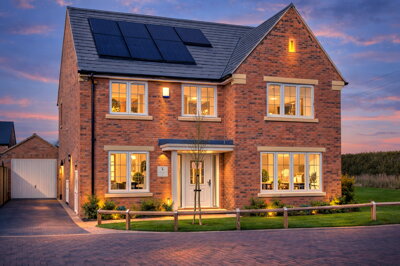
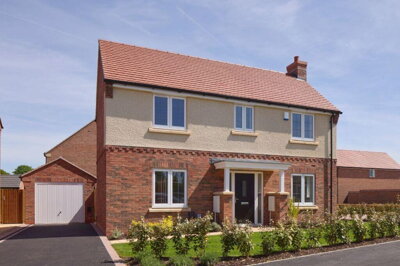
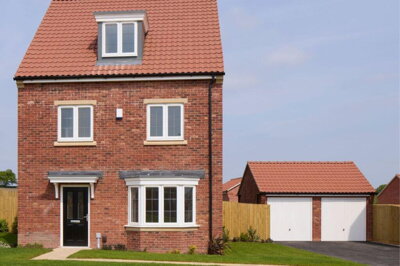
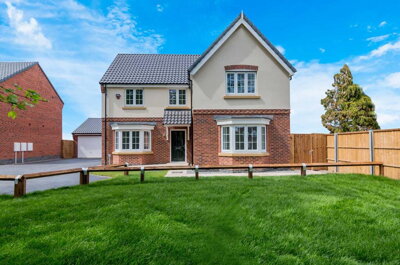
Browse 4 homes new builds in Long Whatton and Diseworth from local developer agents.
The larger property sector typically features multiple bathrooms, substantial reception space, and private gardens or off-street parking. Four bedroom houses in Long Whatton And Diseworth span detached, semi-detached, and occasionally terraced configurations, with styles ranging from period properties to modern executive homes.
The Long Whatton and Diseworth property market has demonstrated remarkable resilience and growth in recent years. Zoopla records an average sold house price of £385,841 in Long Whatton over the last 12 months, with overall sold prices rising 20% compared to the previous year. While prices remain 11% below the 2022 peak of £437,910, the market has shown strong recovery momentum. Our data indicates the most recent recorded sale in the area occurred on September 26, 2025, for £610,000, highlighting the continued appeal of premium properties in this location.
Property types in Long Whatton and Diseworth reflect the villages' historical development, with detached homes commanding the highest prices at an average of £493,750. Semi-detached properties average £301,350, while terraced homes offer more accessible entry points at around £220,000. The housing stock predominantly consists of older, traditional properties built using red brick, rubble stone, plain tiles, and slate materials that characterise the Leicestershire countryside. No active new-build developments were identified within the immediate postcode area, meaning buyers seeking modern homes may need to consider nearby locations or accept the character that comes with period properties.
The combination of limited supply, strong local demand, and proximity to major employment hubs has created a competitive market environment. First-time buyers and families relocating from larger cities often discover that Long Whatton and Diseworth offer significantly more space and character than comparable properties in urban areas, albeit at premium village prices. The conservation area designations in both villages help preserve property values by maintaining the architectural integrity that makes these locations so desirable.

Understanding the construction methods used in Long Whatton and Diseworth properties helps buyers appreciate the character and maintenance requirements of homes in this area. The predominant building materials include red brick, rubble stone, plain tiles, and slate, reflecting centuries of traditional building practice in Leicestershire. Properties such as The Cedars, a mid-19th century red brick residence with plain tiled roofs, exemplify the classic construction style found throughout the villages. Manor House Farmhouse demonstrates the evolution of local building, with a gabled cross wing dating from circa 1600 and a later left wing from circa 1700, showing how properties were adapted over generations.
Whatton House, rebuilt in 1876, represents later Victorian construction with ashlar stonework and hipped slate roofs, while the Church of All Saints features rubble stone construction with slate coverings. These varied construction methods mean that properties in Long Whatton and Diseworth may present different maintenance considerations depending on their age and building style. Timber roof structures with traditional felt underlays are common in period properties, requiring periodic inspection and maintenance. The solid-wall construction typical of older properties means that modern insulation standards may not have been met, and buyers should consider potential upgrade costs when evaluating properties.
Given the significant proportion of properties over 50 years old in these villages, with many dating to the 17th, 18th, and 19th centuries, prospective buyers should budget for the particular maintenance needs of traditional construction. The prevalence of natural materials such as stone and brick generally provides durable and attractive finishes, but these can be susceptible to weathering and may require repointing or repairs over time. Our local market knowledge helps buyers understand which construction types are prevalent on specific streets and how this might affect their purchasing decisions and future maintenance obligations.
Life in Long Whatton and Diseworth revolves around community, heritage, and the beautiful Leicestershire countryside. The civil parish, covering an area straddling the LE12 and DE74 postcodes, maintains a population of approximately 1,827 residents with an average household size of 2.3 people. The average resident age of 47.1 years reflects a settled, established community where families have put down roots across generations. This demographic profile suggests a stable environment with strong community networks and excellent facilities for residents of all ages.
The villages are characterised by their historic building stock, including notable landmarks such as St. Michael and All Angels Church dating from the 12th century, the Grade II* listed Church of All Saints with its late 12th-century tower, and numerous farms and cottages constructed throughout the 17th and 18th centuries. The Cedars, a mid-19th century red brick property, exemplifies the traditional construction methods still prevalent throughout the area, with plain tiled roofs and classic Leicestershire brickwork. Walking through the conservation areas of either village reveals an architectural character that has evolved organically over several centuries, with streets such as Clements Gate, Hall Gate, Main Street, and West End featuring the highest concentration of listed buildings.
Local amenities within the villages cater to everyday needs, while the proximity to larger towns like Loughborough and Ashby-de-la-Zouch provides access to comprehensive shopping, healthcare, and recreational facilities. The Donington Park motor racing circuit, situated nearby, hosts major events throughout the year and contributes to the local character of the area. Residents benefit from the unique combination of rural tranquility and excellent connectivity, with East Midlands Airport just a short drive away offering international travel options and the M1 motorway providing road connections to Nottingham, Leicester, and Derby.

Flood risk is a documented environmental factor that prospective buyers should carefully consider when purchasing property in Long Whatton and Diseworth. Both villages have experienced fluvial flooding from Diseworth Brook and Long Whatton Brook, most recently in November 2012 when significant flooding affected the area. Heavy rainfall can cause catchments to become saturated, leading to rapid runoff into watercourses, and the limited conveyance capacity of the brooks means that floodwaters can rise quickly during storm events. Constrictions in channels at bridges and culverts have historically contributed to flooding, particularly where water is forced through restricted openings.
Surface water runoff from East Midlands Airport and the M1 motorway can also contribute to flood risk during periods of heavy rainfall. Water draining from these large paved surfaces can overwhelm local drainage systems and increase the burden on watercourses downstream. A flood risk mitigation and resilience improvement project has been commissioned to assess these concerns and identify potential solutions, including the impact of drainage from EMA, the M1, and the A42. Properties in Diseworth have been considered for waterproofing measures, highlighting that certain locations face elevated flood risk compared to others in the village.
Property buyers should request a comprehensive flood risk report from the Environment Agency and review the specific flood history of any property under consideration. Properties located near watercourses or in low-lying areas may face higher insurance premiums and could require specialist mortgage consideration. However, many properties in the villages are situated away from flood risk areas, and understanding the topography and drainage characteristics of a specific location is essential. Our local knowledge helps buyers identify which areas of the villages have historically been most affected by flooding and which streets and developments sit on higher ground with lower risk profiles.
Families considering a move to Long Whatton and Diseworth will find educational provision centred on the nearby town of Ashby-de-la-Zouch and surrounding villages. Primary education within reasonable driving distance includes several Ofsted-rated Good and Outstanding schools that serve the local catchment areas. The village community itself has historically supported local primary schools, with many families appreciating the smaller class sizes and community-focused approach that village schools provide. Parents should verify specific catchment areas with Leicestershire County Council, as admission policies can significantly affect which school a child can attend.
Secondary education options in North West Leicestershire include the well-regarded Ashby School, which serves students from Year 7 through to Sixth Form and is located in the nearby market town of Ashby-de-la-Zouch. For families seeking grammar school provision, nearby towns offer selective education options, though admission depends on catchment areas and selective test results. The proximity to Loughborough means additional secondary and further education options are readily accessible, with Loughborough College and Loughborough University providing further and higher education pathways for older students. The comprehensive education options available to residents of Long Whatton and Diseworth make the area attractive to families at all stages of their educational journey.
Given the average resident age of 47.1 years in the parish, the community includes a mix of families with children and older couples whose families have grown up locally. This demographic suggests that local schools are well-established with good community links and parental engagement. Properties in the Long Whatton and Diseworth ward that fall within desirable school catchment areas often attract premium valuations due to consistent demand from families. Prospective buyers with school-age children should research specific catchment areas and admission arrangements directly with Leicestershire County Council, as these can significantly impact property choices and daily routines.
Long Whatton and Diseworth enjoy exceptional connectivity for a rural Leicestershire location, making them particularly attractive to commuters and professionals working across the East Midlands. The villages sit within easy reach of the M1 motorway, providing direct access to Nottingham to the north and Leicester to the east. The A42 dual carriageway, connecting to the M1 and A50, offers additional route options for drivers heading towards Derby and Birmingham. This road network positions residents within comfortable commuting distance of major employment centres without the need to live within the cities themselves.
East Midlands Airport, located just a few miles from the villages, provides international connectivity with scheduled flights to destinations across Europe and beyond. The airport also contributes to local employment, with significant logistics and aviation-related jobs at East Midlands Airport itself, Donington Park, and the East Midlands Gateway freight terminal. The nearby Prologis Park East Midlands Interchange, a major logistics and manufacturing hub adjacent to the airport, offers additional employment opportunities in the distribution and manufacturing sectors. Many residents find that the combination of village living and excellent transport links makes this area ideal for balancing career and lifestyle.
Public transport options include bus services connecting the villages to nearby towns, though these may be limited compared to urban areas. For rail travel, the nearest stations are likely to be in Loughborough or East Midlands Parkway, providing access to the Midland Main Line with connections to London St Pancras, Sheffield, and other major destinations. East Midlands Parkway station offers regular services to London in approximately 90 minutes, making day commuting to the capital feasible for those working in finance, consulting, or government roles. Cycling infrastructure varies, as is typical for rural villages, though the surrounding countryside offers pleasant routes for recreational cycling. Most residents in Long Whatton and Diseworth rely on car ownership as the primary means of transport for daily activities and commuting.
Explore property listings and understand the local market dynamics in Long Whatton and Diseworth before making any commitments. The villages offer different character areas, with conservation zones around Clements Gate, Hall Gate, Main Street, and West End featuring the highest concentration of listed buildings. Consider proximity to flood risk areas near Diseworth Brook and Long Whatton Brook when evaluating specific properties.
Before viewing properties, obtain a mortgage agreement in principle from a lender to understand your budget and demonstrate seriousness to sellers. With average house prices around £385,841 and detached properties averaging £493,750, you may need a substantial deposit to secure favourable lending terms in this market. Speaking with a mortgage broker familiar with Leicestershire properties can help you navigate the lending criteria for period properties and listed buildings.
Visit multiple properties across both villages to compare the different housing styles, from period cottages to traditional farmhouses and modern conversions. Pay attention to the construction materials and age of properties, as many homes date from the 17th and 19th centuries and may require different maintenance considerations. Viewing properties at different times of day and in various weather conditions can reveal issues not apparent during a single brief visit.
Once you have found your ideal home, arrange a professional survey to assess the property condition thoroughly. Given the prevalence of older properties in the area, potential flood risk concerns, and the likelihood of traditional construction methods, a professional survey is essential to identify any structural issues, damp problems, or timber defects that may not be visible during viewings. Properties over 100 years old or those of non-standard construction may require a more detailed Level 3 Building Survey.
Appoint a solicitor experienced in Leicestershire property transactions to handle the legal aspects of your purchase. They will conduct searches, handle land registry matters, and ensure all planning permissions and listed building consents are in order for the property you are buying. Local knowledge of North West Leicestershire District Council planning department can be valuable for properties in conservation areas or those with listed status.
Finalise your purchase by working closely with your solicitor and mortgage lender to meet all deadlines and legal requirements. On completion day, you will receive the keys to your new home in Long Whatton and Diseworth and can begin enjoying village life in this charming corner of Leicestershire. Buildings insurance should be arranged from the point of exchange, and you may wish to change locks and update security systems immediately on taking ownership.
The older housing stock in Long Whatton and Diseworth presents specific defect patterns that prospective buyers should understand before purchasing. Damp issues represent one of the most common problems found in period properties, particularly those with solid-wall construction that lacks modern cavity insulation. Rising damp can affect properties where original damp-proof courses have failed or were never installed, while penetrating damp may occur where traditional brick or stone work has weathered or become cracked. Properties near watercourses face additional moisture exposure risk, making thorough inspections of walls, floors, and timbers particularly important in flood-prone locations.
Roof defects frequently affect older properties in these villages, where traditional plain tiles or slate coverings may have reached the end of their serviceable life. Common issues include slipped or missing tiles, deteriorated felt underlays, and timber rot in roof structures where ventilation has been inadequate. The timber rafters and joists in older roofs may show signs of wet rot, dry rot, or woodworm infestation, particularly where leaks have allowed moisture to accumulate over time. Given the cost of roof repairs and re-covering work, a professional survey can identify whether immediate maintenance or complete re-roofing is likely to be required.
Outdated electrical wiring and plumbing systems are common in period properties throughout Long Whatton and Diseworth. Many homes dating from the 17th through 19th centuries will have had electrical systems added or modified at various points, potentially creating a patchwork of wiring standards that may not meet current requirements. Similarly, plumbing systems may comprise a mix of old iron, copper, and more modern materials, with some properties still relying on tank-fed cold water systems rather than mains pressure supplies. Buyers should budget for potential rewiring and plumbing upgrades when purchasing older properties, as these works can be disruptive but are essential for modern living standards and safety compliance.
Understanding the full cost of purchasing property in Long Whatton and Diseworth extends beyond the sale price to encompass stamp duty, solicitor fees, survey costs, and other associated expenses. The current stamp duty land tax thresholds for 2024-25 apply the standard rate of 0% on properties up to £250,000, with 5% charged on the portion between £250,001 and £925,000. Given that the average house price in Long Whatton stands at approximately £385,841, most buyers purchasing at or near the average price point would incur stamp duty on approximately £135,841 above the threshold, resulting in a tax liability of around £6,792.
First-time buyers purchasing property in Long Whatton and Diseworth benefit from enhanced thresholds, with 0% stamp duty applying up to £425,000 and 5% on the portion between £425,001 and £625,000. This relief can save first-time buyers several thousand pounds compared to standard rates. However, first-time buyer relief is only available to those who have never owned property anywhere in the world, and the relief phases out completely for properties priced above £625,000. For detached properties averaging £493,750, a first-time buyer would pay 5% on the £68,750 above the £425,000 threshold, amounting to approximately £3,437 in stamp duty.
Beyond stamp duty, buyers should budget for additional costs including mortgage arrangement fees typically ranging from £0 to £2,000 depending on the lender and product chosen. Survey costs vary significantly based on property type and age, with a standard survey for a conventional property in reasonable condition starting from around £400, while older properties or those with complex features may incur higher fees. Listed buildings typically add £150-400 to survey costs due to specialist inspection requirements, and properties over 100 years old may attract a 20-40% premium reflecting the additional time and expertise needed for thorough assessment. Solicitor conveyancing fees for a purchase typically start from around £499 for basic transactions, rising depending on complexity, searches, and legal work required. Search fees through North West Leicestershire District Council, drainage and water searches, and land registry fees typically add several hundred pounds to the total. Buildings insurance should be arranged from the point of exchange, and you may also need to budget for mortgage valuation fees if your lender requires this.
The average house price in Long Whatton stands at approximately £385,841 based on properties sold over the last 12 months according to Zoopla data. This represents a rise of 17.7% over the previous year, with overall sold prices rising 20% compared to the prior year. Detached properties average £493,750, semi-detached homes around £301,350, and terraced properties approximately £220,000. The most recent recorded sale in the area on September 26, 2025, achieved £610,000, demonstrating strong demand for premium properties in this desirable Leicestershire village location. Properties in the conservation areas along Clements Gate, Hall Gate, Main Street, and West End often command premiums due to their architectural significance and protected status.
Properties in Long Whatton and Diseworth fall under North West Leicestershire District Council for council tax purposes. Bands vary by individual property depending on value and characteristics assessed at the 1991 valuation. Given the mix of property types from traditional cottages to converted farmhouses and historic manor houses, council tax bands in the area typically range from Band B through to Band H for larger period properties. You can check specific bandings using the Valuation Office Agency website or by contacting the local council directly. Properties with extensive gardens, outbuildings, or those that have been modernised may fall into higher bands than comparable properties without these features.
Primary education is provided by schools in the surrounding villages and towns, with several Ofsted-rated Good and Outstanding options within reasonable driving distance of Long Whatton and Diseworth. The specific primary school catchment depends on your exact address within the civil parish, and catchment boundaries should be verified with Leicestershire County Council before purchasing. Secondary education options include Ashby School in nearby Ashby-de-la-Zouch, which offers comprehensive education through to Sixth Form and serves many families from the surrounding villages. The proximity to Loughborough provides additional educational pathways, with Loughborough University offering higher education opportunities for older students. Properties within desirable school catchment areas often maintain their value well due to consistent parental demand.
Long Whatton and Diseworth have limited public transport options typical of rural Leicestershire villages, with bus services connecting to nearby towns but with reduced frequencies compared to urban areas. The nearest railway stations are in Loughborough or East Midlands Parkway, providing access to the Midland Main Line for travel to London St Pancras in approximately 90 minutes from East Midlands Parkway. The villages excel in road connectivity, with easy access to the M1 motorway, A42, and A50 providing routes to Nottingham, Leicester, Derby, and Birmingham. Most residents rely on car ownership as their primary means of transport, though the excellent road network compensates for limited public transport options.
Long Whatton and Diseworth offer several factors that make property investment attractive to certain buyers. House prices have risen 17.7% over the past year, demonstrating strong market performance in this Leicestershire village location. The proximity to major employment hubs including East Midlands Airport, Donington Park, and East Midlands Gateway attracts professional tenants seeking village living with good transport connections. The limited supply of properties, combined with conservation area restrictions on new development, helps maintain property values by restricting housing supply. However, flood risk in certain areas and the age of much of the housing stock require careful consideration during due diligence. Properties in good condition within conservation areas or near good schools tend to hold their value well and attract consistent buyer interest when reselling.
Stamp duty rates for 2024-25 apply to all property purchases in Long Whatton and Diseworth, with standard rates of 0% on properties up to £250,000, 5% on the portion from £250,001 to £925,000, 10% from £925,001 to £1.5 million, and 12% above £1.5 million. First-time buyers benefit from relief on properties up to £425,000 with 5% applied between £425,001 and £625,000. Given average prices around £385,841, most buyers purchasing at the average price point would pay approximately £6,792 in stamp duty on the amount above the threshold. If purchasing a detached property averaging £493,750, you should budget for approximately £12,187 in stamp duty at the standard rate. Consulting a solicitor or tax adviser can help clarify your specific liability based on your circumstances and whether any reliefs apply.
Flood risk is a significant consideration when purchasing property in Long Whatton and Diseworth. Both villages have experienced fluvial flooding from Diseworth Brook and Long Whatton Brook, most recently in November 2012, with primary flood sources from these watercourses and their tributaries. Heavy rainfall can cause rapid runoff into watercourses, and constrictions at bridges and culverts have historically contributed to flood events. Runoff from East Midlands Airport and the M1 motorway also contributes to surface water issues during heavy rainfall periods. A flood risk mitigation project has been commissioned to assess these concerns. Property buyers should request a flood risk report from the Environment Agency, review the property's flood history, and consider whether flood resilience measures are in place. Properties in flood-risk areas may face higher insurance premiums, and some lenders may apply additional conditions to mortgage offers for properties with significant flood history.
From 4.5% APR
Expert mortgage advice tailored to your situation
From £499
Solicitors experienced in Leicestershire property transactions
From £400
Professional property survey for traditional homes
From £600
Detailed building survey for older or complex properties
Properties New Builds In London

Properties New Builds In Plymouth

Properties New Builds In Liverpool

Properties New Builds In Glasgow

Properties New Builds In Sheffield

Properties New Builds In Edinburgh

Properties New Builds In Coventry

Properties New Builds In Bradford

Properties New Builds In Manchester

Properties New Builds In Birmingham

Properties New Builds In Bristol

Properties New Builds In Oxford

Properties New Builds In Leicester

Properties New Builds In Newcastle

Properties New Builds In Leeds

Properties New Builds In Southampton

Properties New Builds In Cardiff

Properties New Builds In Nottingham

Properties New Builds In Norwich

Properties New Builds In Brighton

Properties New Builds In Derby

Properties New Builds In Portsmouth

Properties New Builds In Northampton

Properties New Builds In Milton Keynes

Properties New Builds In Bournemouth

Properties New Builds In Bolton

Properties New Builds In Swansea

Properties New Builds In Swindon

Properties New Builds In Peterborough

Properties New Builds In Wolverhampton

Enter your details to see if this property is within your budget.
Loans, cards, car finance
Estimated property budget
Borrowing + deposit
You could borrow between
Typical borrowing
Monthly repayment
Est. at 4.5%
Loan-to-value
This is an estimate only. Your actual budget may vary depending on interest rates, credit history, and personal circumstances. For an accurate affordability assessment, speak to one of our free mortgage advisors.
This calculator provides estimates for illustrative purposes only and does not constitute financial advice. Your home may be repossessed if you do not keep up repayments on your mortgage. Estimates based on 4.5% interest rate, repayment mortgage. Actual rates depend on your circumstances.
Homemove is a trading name of HM Haus Group Ltd (Company No. 13873779, registered in England & Wales). Homemove Mortgages Ltd (Company No. 15947693) is an Appointed Representative of TMG Direct Limited, trading as TMG Mortgage Network, which is authorised and regulated by the Financial Conduct Authority (FRN 786245). Homemove Mortgages Ltd is entered on the FCA Register as an Appointed Representative (FRN 1022429). You can check registrations at NewRegister or by calling 0800 111 6768.

We use cookies to show you personalised content and improve your experience of our website. Find out more in our Privacy policy and Cookie policy.