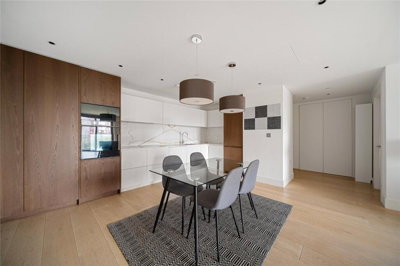
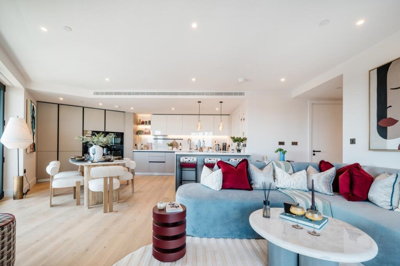
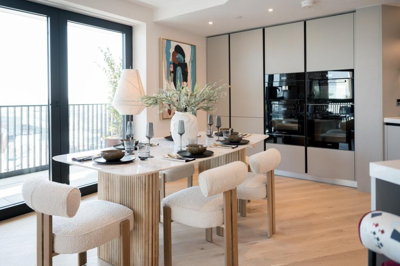
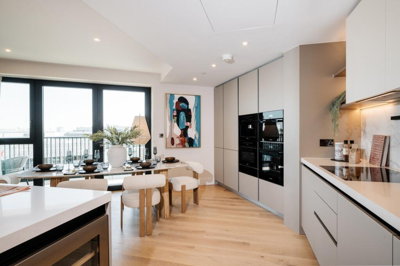
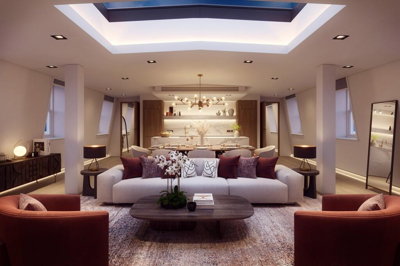
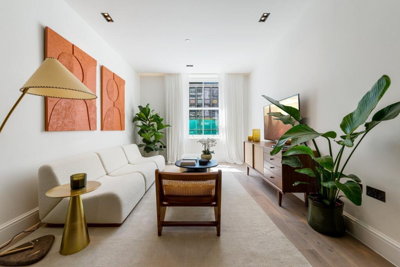
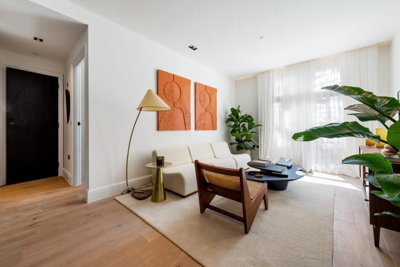
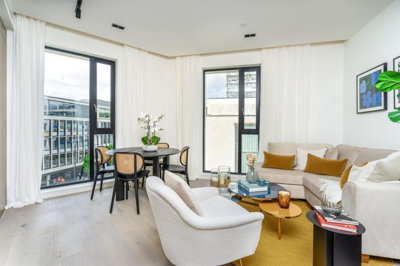
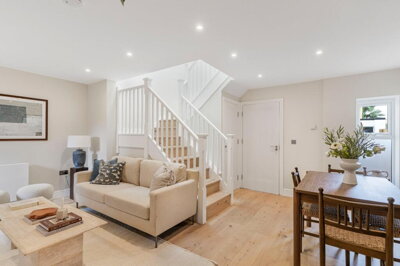
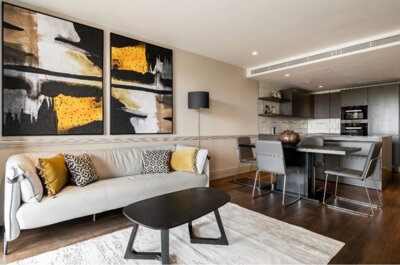
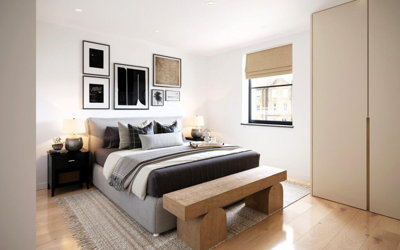
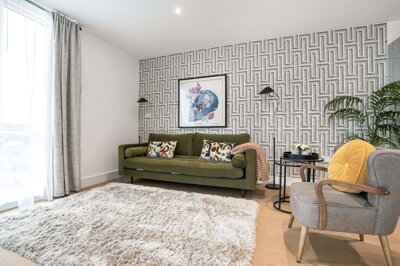
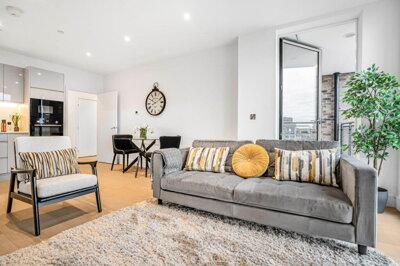
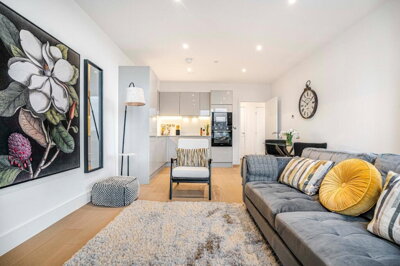
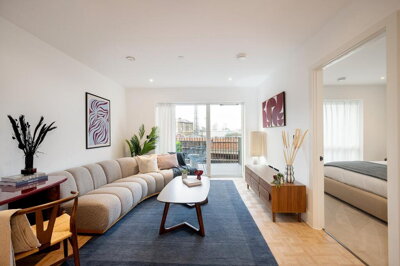
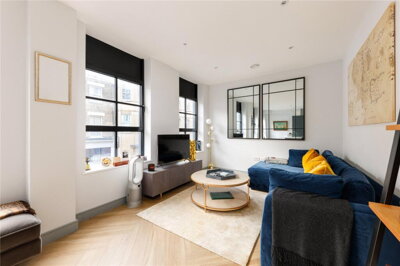
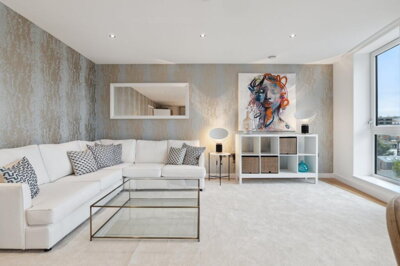
Browse 615 homes new builds in London Borough of Hammersmith and Fulham from local developer agents.
The Hammersmith and Fulham property market offers remarkable variety, from compact one-bedroom flats to substantial detached family homes. Current data shows flats and maisonettes averaging £554,000, making them the most accessible entry point to this prestigious borough. Terraced properties command an average of £1,080,000, reflecting the popularity of Victorian and Edwardian houses with their generous proportions and period features. Semi-detached homes average £1,421,000, while detached properties reach £1,634,000 on average, typically found in prestigious addresses near the Thames or within private garden squares.
Market conditions have shifted favourably for buyers, with average prices falling 9.5% year-on-year as of December 2025. Rightmove records an average price of £936,355 over the last twelve months, while OnTheMarket shows sold properties averaging £885,000, representing a 16.3% decrease. This cooling period follows years of sustained growth and presents genuine opportunities for buyers who have been waiting for more favourable conditions. Transaction volumes have decreased significantly, with Hammersmith seeing only 316 residential sales over the past year compared to 463 the previous year, meaning reduced competition for well-priced properties.
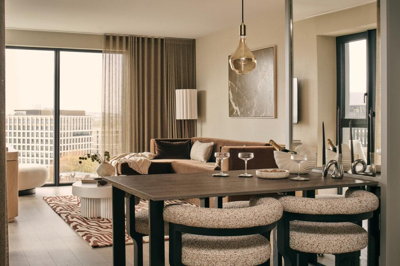
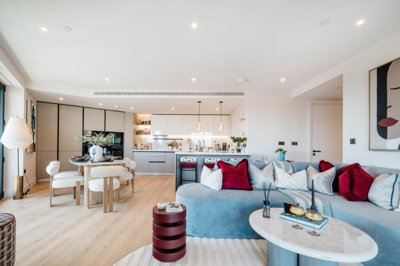
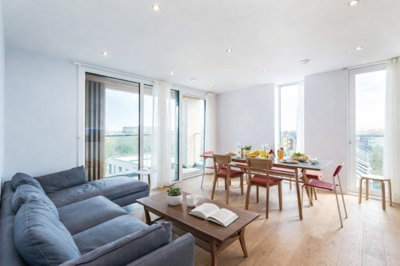
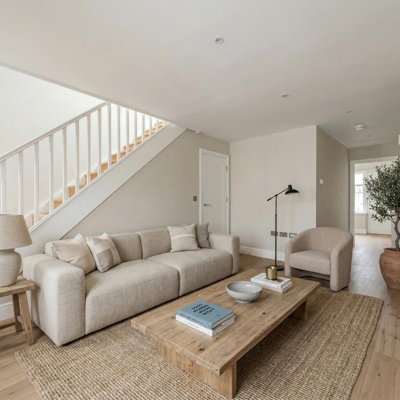
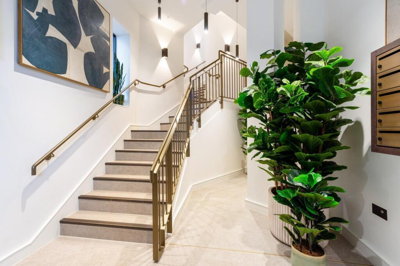
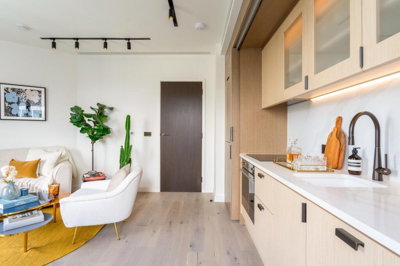
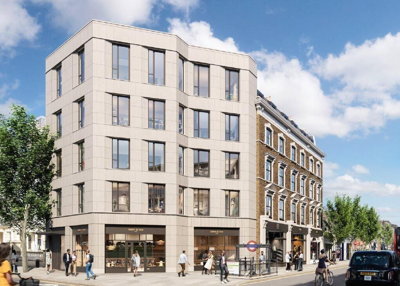
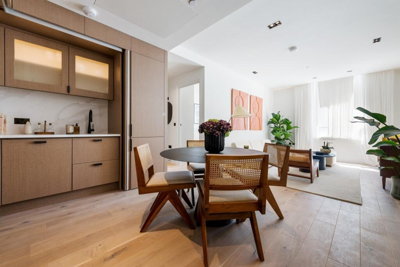
New build options continue to expand across the borough. The council is delivering 1,800 new homes across 22 development projects, including The Civic Campus with 204 homes and Watermeadow Court with 264 homes. Private developers offer apartments at Royal Gateway from £440,000 to £675,000, while 361 King Street W6 presents options from £575,000 to £1,100,000. Shared ownership opportunities exist at 2 Palliser Road, where buyers can purchase a 25% share from £145,000 to £187,500, with full market values between £580,000 and £750,000. Additional council developments include Hartopp Point and Lannoy Point with 134 new homes and Lillie Road with 42 new homes, half of which will be affordable and prioritised for existing West Kensington and Gibbs Green Estate residents.
Looking ahead, the borough's fundamentals remain strong despite the current price correction. The working-age population of 75% exceeds both London and national averages, supporting sustained demand for housing. Limited supply of period properties in conservation areas creates inherent scarcity, while excellent transport links ensure the borough remains attractive to commuters. The council's commitment to 1,800 new homes demonstrates continued investment in the area's infrastructure and community facilities, including new schools, community halls, and play areas that enhance the liveability of existing neighbourhoods.

Life in Hammersmith and Fulham combines the best of London living with a distinct sense of community that sets it apart from neighbouring boroughs. The population of 183,157 residents enjoys a young, dynamic demographic with 24% of people aged between 20 and 29, well above London and national averages. Some 75% of the population falls within working age, supporting a vibrant local economy and diverse high street culture. The borough has one of the highest proportions of economically active residents in London at 61.5%, contributing to its thriving daytime and evening economies.
The riverside location defines much of the borough's character, with properties positioned between Frank Banfield Park and the River Thames benefiting from views and recreational access. The Thames Path provides scenic walking and cycling routes connecting Hammersmith to Putney and beyond. Local parks include Bishops Park with its historic bandstand and Fulham's Hurlingham Park, offering tennis courts and a premium sports club. The borough's excellent pubs, restaurants and theatres attract visitors from across London, while regular farmers markets and independent shops along King Street and Fulham Road provide everyday necessities within walking distance.
Demographically, the borough shows interesting patterns that reflect its diverse population and property stock mix. Average household size stands at 2.25 persons, with 36% of households being one-person dwellings. The 81,244 households across the borough represent a 0.8% increase since the 2011 Census, indicating sustained demand for housing in this well-connected location. Income levels are relatively healthy, with 19% of residents living below 60% of the UK median after housing costs, and only 9.9% earning below the Living Wage as of 2023, better than the average London borough.
The borough's cultural amenities add significantly to its appeal. Two Premier League football clubs bring sporting excitement, while the Lyric Hammersmith, Eventim Apollo, and Riverside Studios provide world-class entertainment options. The dining scene spans everything from traditional pubs like The Andover Arms and The Crown to riverside restaurants offering international cuisine. Educational institutions at all levels, from nurseries through to further education colleges, serve the substantial family population while maintaining the borough's attraction for young professionals entering the workforce.
Education provision in Hammersmith and Fulham serves families well across all levels, though competition for places at popular schools can be intense. The borough hosts numerous primary schools, with many achieving good or outstanding Ofsted ratings. Parents should research individual school performance and catchment areas carefully, as property prices in catchment zones reflect the premium placed on access to the best state schools. Several primary schools have religious affiliations, including those linked to the Catholic and Church of England traditions, adding diversity to educational options.
Secondary education in the borough includes several well-regarded comprehensives, though the borough also falls within the catchment areas for some of London's most sought-after grammar schools in neighbouring areas. Independent schools are well represented, with established names providing alternatives to the state sector. The proximity to Kensington and Chelsea opens additional options for families willing to travel slightly further. Parents should factor school transport arrangements and journey times into their property search, particularly for secondary school aged children where travel distances become more significant.
For further education, the borough benefits from good sixth form provision at both state and independent schools, while nearby colleges in central London offer extensive A-level and vocational courses accessible via the excellent transport network. University access is straightforward, with central London institutions reachable within 30 minutes by tube. The combination of school quality and accessibility makes Hammersmith and Fulham particularly attractive to families at all stages of their education journey, from nursery through to university applications.
Transport connections from Hammersmith and Fulham rank among the best in outer London, making the borough particularly attractive to commuters. Hammersmith itself serves as a major interchange with four tube lines: the Circle, Hammersmith & City, Metropolitan, and Piccadilly lines. The District line also serves several stations across the borough. The Hammersmith bridge closure has impacted journeys to south London, though ferry services and alternative routes via Putney bridge maintain connectivity. The West London line connects Shepherd's Bush to Clapham Junction and beyond, providing useful links without central London interchange.
The arrival of the Elizabeth Line has significantly enhanced connectivity, with stations across the borough providing direct access to the City, Canary Wharf, and Heathrow Airport. The Central Line from Shepherd's Bush and White City offers rapid access to the West End in approximately 20 minutes. Local bus services connect every corner of the borough, while the Thames riverside path provides an attractive option for cycling and walking. For drivers, the A4 and A40 provide direct routes to the M4 and M40 motorways respectively, though traffic conditions in the borough can be challenging during peak hours.
Commute times from Hammersmith to key destinations are competitive. The City can be reached in around 25 minutes via the Circle or Hammersmith & City lines. Canary Wharf takes approximately 35 minutes via the District and Jubilee lines. Heathrow Airport is accessible in 30 minutes via the Piccadilly line or 20 minutes on the Elizabeth Line from certain stations. The borough's position in Zone 2 means most tube stations offer good value travel compared to central London, while the extended Elizabeth Line has opened up new employment centres across the capital and Thames Valley.
Obtain a mortgage agreement in principle before beginning your property search. This strengthens your position when making offers and demonstrates you are a serious buyer to estate agents in this competitive market. Average property prices of around £714,000 mean most buyers will need substantial mortgages, so speaking to a broker familiar with London property transactions is advisable.
Spend time exploring different areas within the borough. Consider proximity to transport links, local schools, parks and riverside access. The borough's 44 conservation areas each have distinct characters and planning restrictions that may affect your purchase decisions. Pay particular attention to flood risk areas, especially if considering basement properties.
Many properties in this borough sell off-market or before full listings appear online. Building relationships with local estate agents can give you early access to new instructions. Online property portals complement agent searches but should not be your only resource in a market where good properties sell quickly.
View multiple properties to understand what your budget delivers across different areas. Note the condition of flats versus houses, service charges, and ground rent implications for leasehold properties. A typical Victorian terraced home will require different maintenance considerations than a new build apartment.
Once your offer is accepted, arrange a RICS Level 2 Survey to assess the property condition. Given the borough's significant number of period properties and conservation area constraints, professional surveys identify issues like damp, structural movement, or renovation restrictions before you commit.
Your conveyancing solicitor will handle searches, contracts and Land Registry registration. In a conservation area borough, local authority searches will reveal planning constraints, listed building status and any proposed developments nearby. Exchange typically occurs 4-6 weeks after offer acceptance, with completion following shortly after.
Flood risk deserves serious attention in Hammersmith and Fulham, where surface water flooding threatens 56% of buildings according to Environment Agency data. Almost 60,000 properties in the borough face some degree of flood risk from rivers, sewers or surface water, representing nearly 60% of the entire housing stock. Basement properties require particular scrutiny, as they are especially vulnerable to sewer flooding during heavy rainfall. Checking the exact flood zone classification for any property, requesting flood risk reports, and understanding the property's history of flooding should form part of your due diligence before purchasing.
Conservation area status brings both benefits and obligations. With 44 conservation areas covering approximately half the borough and almost 500 statutory listed buildings, many properties carry restrictions on alterations and home improvements. Listed building consent is required for any external or structural changes to Grade I, II* or II listed properties, and carrying out works without consent is a criminal offence. Properties in conservation areas face stricter planning requirements for extensions, loft conversions and even window replacements. These constraints can affect future renovation plans and resale value, so understanding the specific conservation area designation is essential.
The leasehold versus freehold distinction matters significantly in this borough where flats predominate. Service charges and ground rent terms should be examined carefully, as these ongoing costs vary considerably between developments. Older mansion blocks may have higher maintenance requirements despite lower initial purchase prices. Freehold houses offer freedom from these charges but require owners to maintain all repairs themselves. New build apartments typically come with 999-year or 250-year leases, while some developments offer shared freehold arrangements that provide more control over service charges and maintenance decisions.
The average house price in the London Borough of Hammersmith and Fulham was £714,000 as of December 2025, according to provisional Land Registry data. This represents a 9.5% decrease from December 2024. Other sources show slightly different figures, with Rightmove reporting £936,355 over the last year and OnTheMarket averaging £885,000 for properties sold in the past year. Property types vary significantly in price, with flats averaging £554,000, terraced homes at £1,080,000, semi-detached properties at £1,421,000, and detached homes reaching £1,634,000 on average.
Properties in Hammersmith and Fulham fall across all council tax bands from A through to H, reflecting the diversity of the housing stock from modest flats to substantial riverside mansions. The borough operates under Hammersmith and Fulham Council, and specific bandings depend on the property's assessed value. Flats and smaller terraced properties typically fall into bands A through D, while larger Victorian and Edwardian houses often occupy bands E through G. Prospective buyers should verify the exact council tax band for any property they are considering, as this affects ongoing running costs.
Hammersmith and Fulham offers good state primary schools, many of which achieve good or outstanding Ofsted ratings. Secondary school options include several well-regarded comprehensives within the borough, with additional grammar school access possible through neighbouring boroughs. Independent schools are well represented, with established names attracting families from across west London. School catchment areas can significantly impact property values, and parents should research specific schools and their admission criteria when house hunting in this competitive borough.
Public transport connectivity in Hammersmith and Fulham is excellent, with Hammersmith serving as a major tube interchange on the Circle, Hammersmith & City, Metropolitan and Piccadilly lines. The Elizabeth Line provides direct access to the City, Canary Wharf and Heathrow. Shepherd's Bush connects to the Central Line, while the District line serves multiple stations across the borough. Local buses provide comprehensive coverage, and the Thames Path offers scenic walking and cycling routes. Journey times to central London typically range from 20 to 35 minutes depending on the destination.
Hammersmith and Fulham has historically performed well as a property investment location, though recent price decreases of around 9.5% reflect broader London market cooling. The borough's combination of excellent transport, riverside location, strong demographics and limited supply supports long-term demand. The council's 22 development projects delivering 1,800 new homes indicate continued investment in infrastructure. Rental demand remains strong given the concentration of young professionals, and void periods tend to be shorter than in many comparable areas. However, buyers should note the significant flood risk affecting 60% of properties and conservation area restrictions on certain developments.
Stamp Duty Land Tax for 2024-25 applies at 0% on the first £250,000 of residential property purchases, 5% between £250,001 and £925,000, 10% between £925,001 and £1.5 million, and 12% above £1.5 million. First-time buyers benefit from increased thresholds, paying 0% on the first £425,000 and 5% between £425,001 and £625,000. Given average property prices of £714,000, a typical buyer would expect to pay approximately £23,200 in SDLT, while first-time buyers would pay around £14,450. Buyers purchasing buy-to-let properties or second homes pay an additional 3% surcharge on each band.
The borough has 44 conservation areas covering approximately half its total area, each with distinct architectural character. Notable conservation areas include Bishops Park near the Thames riverside, Brook Green with its Victorian housing stock, Hurlingham with its garden suburb feel, and Shepherd's Bush with its Edwardian and Victorian terraces. The Gunter Estate in Fulham represents one of London's finest Victorian planned estates, while Ravenscourt and Starch Green maintain village character. Properties in these areas face planning restrictions on external alterations, extensions and loft conversions, which can affect renovation potential and future resale value.
Flood risk is a significant consideration in Hammersmith and Fulham, where nearly 60,000 properties face some degree of flood risk from rivers, sewers or surface water. Surface water flooding poses the greatest threat, with 56% of buildings in the borough susceptible to flash flooding during heavy rainfall. Basement properties and lower-ground floor flats are especially vulnerable to sewer flooding. While the Thames Barrier provides protection from river flooding, some properties near Thames embankments remain at residual risk. We recommend requesting a flood risk report and checking the specific flood zone classification before committing to any purchase.
Purchasing property in Hammersmith and Fulham involves several costs beyond the purchase price itself. Stamp Duty Land Tax represents the most significant additional expense, calculated on a tiered system based on the property price. For a typical property priced at the borough average of £714,000, standard rate buyers would pay approximately £23,200 in SDLT. This calculation works by applying 0% to the first £250,000, then 5% on the amount between £250,001 and £925,000. First-time buyers using all available relief would pay around £14,450, making meaningful savings that can be redirected towards moving costs or renovations.
Survey costs warrant careful consideration given the borough's property profile. A RICS Level 2 Survey for properties above £500,000 averages around £586, with flats typically costing slightly less due to their smaller footprint. Given that flats average £554,000 in this borough, a typical survey would cost approximately £402 to £420 for a one or two-bedroom apartment. For larger terraced or semi-detached properties averaging over £1 million, survey costs increase to reflect the additional inspection time required. Period properties with complex construction or those in conservation areas may warrant the more comprehensive RICS Level 3 Building Survey, which provides deeper analysis of structural issues and renovation considerations.
Legal costs for conveyancing typically start from £499 for basic transactions, rising to £1,500 or more for leasehold properties with management company complications or conservation area constraints. Search fees from Hammersmith and Fulham Council, along with drainage and environmental searches, typically total £250 to £400. Mortgage arrangement fees vary considerably between lenders, ranging from zero to around £2,000, though these can often be added to the loan amount. Removal costs, valuation fees, and potential renovation expenses round out the budget, so buyers should ensure they have access to additional funds beyond their mortgage deposit to cover these necessary costs of acquiring a property in this desirable west London borough.
Properties New Builds In London

Properties New Builds In Plymouth

Properties New Builds In Liverpool

Properties New Builds In Glasgow

Properties New Builds In Sheffield

Properties New Builds In Edinburgh

Properties New Builds In Coventry

Properties New Builds In Bradford

Properties New Builds In Manchester

Properties New Builds In Birmingham

Properties New Builds In Bristol

Properties New Builds In Oxford

Properties New Builds In Leicester

Properties New Builds In Newcastle

Properties New Builds In Leeds

Properties New Builds In Southampton

Properties New Builds In Cardiff

Properties New Builds In Nottingham

Properties New Builds In Norwich

Properties New Builds In Brighton

Properties New Builds In Derby

Properties New Builds In Portsmouth

Properties New Builds In Northampton

Properties New Builds In Milton Keynes

Properties New Builds In Bournemouth

Properties New Builds In Bolton

Properties New Builds In Swansea

Properties New Builds In Swindon

Properties New Builds In Peterborough

Properties New Builds In Wolverhampton

Enter your details to see if this property is within your budget.
Loans, cards, car finance
Estimated property budget
Borrowing + deposit
You could borrow between
Typical borrowing
Monthly repayment
Est. at 4.5%
Loan-to-value
This is an estimate only. Your actual budget may vary depending on interest rates, credit history, and personal circumstances. For an accurate affordability assessment, speak to one of our free mortgage advisors.
This calculator provides estimates for illustrative purposes only and does not constitute financial advice. Your home may be repossessed if you do not keep up repayments on your mortgage. Estimates based on 4.5% interest rate, repayment mortgage. Actual rates depend on your circumstances.
Homemove is a trading name of HM Haus Group Ltd (Company No. 13873779, registered in England & Wales). Homemove Mortgages Ltd (Company No. 15947693) is an Appointed Representative of TMG Direct Limited, trading as TMG Mortgage Network, which is authorised and regulated by the Financial Conduct Authority (FRN 786245). Homemove Mortgages Ltd is entered on the FCA Register as an Appointed Representative (FRN 1022429). You can check registrations at NewRegister or by calling 0800 111 6768.

We use cookies to show you personalised content and improve your experience of our website. Find out more in our Privacy policy and Cookie policy.