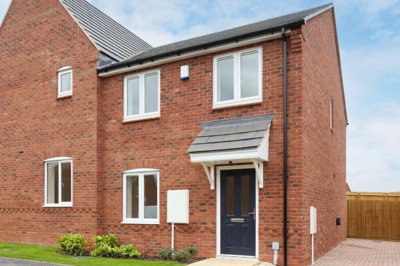
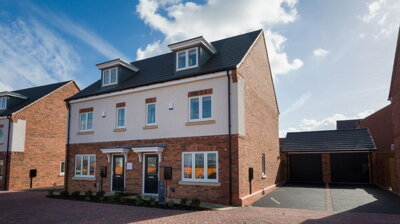
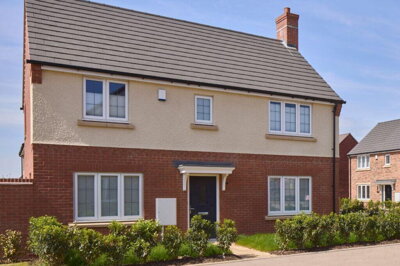
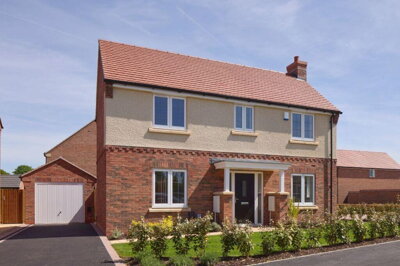
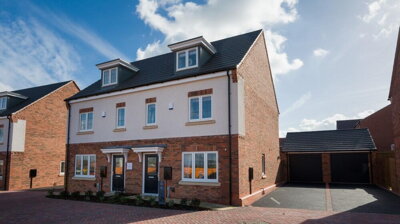
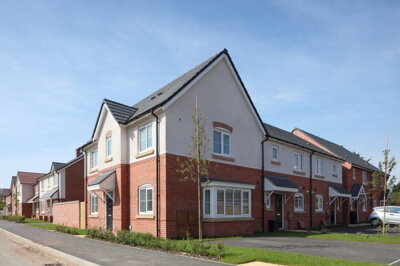
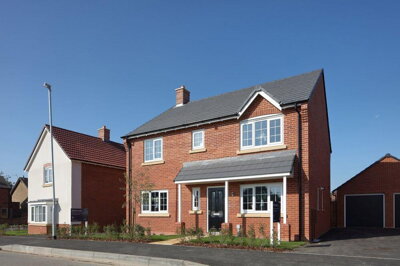
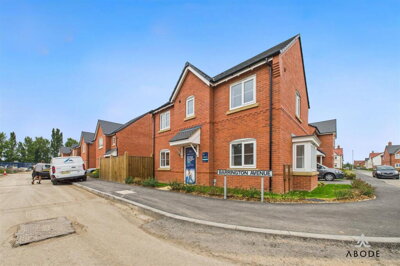
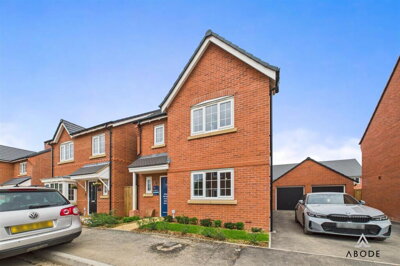
Browse 9 homes new builds in Lockington-Hemington from local developer agents.
The Lockington Hemington property market offers detached, semi-detached, and terraced houses spanning various price ranges and neighbourhoods. Each listing includes detailed property information, photographs, and direct contact with the marketing agent.
The Kirkby Underwood property market reflects the character of this small Lincolnshire village, with a housing stock dominated by detached and semi-detached homes set within a picturesque rural landscape. Recent sales data shows detached properties averaging around £165,000, while semi-detached homes have fetched higher prices at approximately £290,000. The wider Kirkby Underwood area has recorded around 39 property sales over the past year according to Rightmove data, with PropertyResearch.uk indicating continued transaction activity into 2025. House prices in the locality have shown positive growth, rising by approximately 12.3% over the past 12 months based on Land Registry data.
New build activity within Kirkby Underwood itself remains limited, though recent planning approvals include a single dwelling with garage on Kirkby Underwood Road, granted consent by South Kesteven District Council in August 2024. The village contains numerous historic properties built using traditional methods, including the red brick buildings constructed from materials manufactured at the Bourne brickworks that once thrived in the nearby market town. Properties featuring ashlar surrounds with stone lintels and sills, along with roofs clad in blue Collyweston slate, represent the quality of construction found throughout the village. For those seeking newer construction, nearby towns such as Bourne and Morton offer additional new build options within a short drive, though these fall outside the Kirkby Underwood parish boundary.

Kirkby Underwood embodies the essence of rural Lincolnshire living, offering residents a close-knit community atmosphere surrounded by productive agricultural farmland and traditional English countryside. With a population of just 193 residents according to the 2021 Census, the village maintains an intimate scale where neighbours often know one another and community spirit thrives through local events and shared spaces. The village centre features a notable concentration of historic architecture, including the Grade I listed St Mary and All Saints Church with its striking embattled western tower dating back five centuries, and the Old Rectory, a handsome Grade II listed stone property constructed in 1840. These heritage assets give the village a sense of permanence and visual richness that newer developments cannot replicate.
The local economy of Kirkby Underwood remains largely agricultural, with farming operations shaping both the landscape and the character of daily life in the parish. Residents depend on nearby Bourne, approximately four miles south, for essential services including post office facilities, library access, and a wider range of shopping opportunities. The village itself offers limited retail amenities, meaning most practical needs require a short journey by car. However, this dependency on neighbouring towns is balanced by the considerable benefits of village living, including lower traffic volumes, strong community bonds, and abundant countryside walks right on the doorstep. The presence of Ye Olde Three Tuns public house, reputedly the oldest building in the village apart from the church, provides a traditional focal point for socialising and maintaining community connections. This establishment originally featured a thatched roof until a fire necessitated replacement with pantile roofing, illustrating the challenges of maintaining historic building fabric in the village.
Families considering a move to Kirkby Underwood will find educational facilities primarily located in the surrounding market towns, with Bourne offering the closest range of schooling options for village residents. Primary education is available at schools in nearby villages and Bourne itself, with secondary education options including established comprehensive schools in the broader South Kesteven district. The village's small population means that local primary school age children typically travel to schools in surrounding communities, making transport arrangements an important consideration for families with young children. Parents should research specific school catchments and admission arrangements through Lincolnshire County Council's education services to identify the most suitable options for their circumstances.
For families seeking faith-based education or specialist provision, the market towns of Bourne, Spalding, and Grantham offer additional choices including grammar schools and independent schools within reasonable commuting distance. Sixth form and further education college options become relevant as children progress through secondary school, with Grantham College providing vocational and academic courses for older students in the wider area. Given the rural nature of Kirkby Underwood, school transport arrangements and journey times should factor into property search decisions, particularly for families with children at different educational stages. The quality of local schools can significantly impact property values and demand in surrounding areas, making it worthwhile for buyers to investigate current Ofsted ratings and admission policies for schools they are considering.

Kirkby Underwood benefits from its position just one mile west of the A15 trunk road, providing a direct connection to the regional road network for car-borne commuters and errand runners alike. The A15 runs north-south through Lincolnshire, connecting the village to Bourne to the south and onward to Sleaford, Lincoln, and the Humber Bridge region to the north. To the east lies the market town of Spalding, while Grantham and the A1 motorway are accessible to the west via the A151 and connecting roads. This strategic location means that residents can reach a reasonable range of employment centres within a manageable commute, though journey times will naturally be longer than those achievable from larger towns with motorway access.
Public transport options serving Kirkby Underwood are limited, reflecting the village's small scale and rural character. Bus services connecting the village to Bourne and surrounding settlements operate on reduced frequencies typical of rural Lincolnshire routes, making car ownership effectively essential for most residents. The nearest railway stations are located in larger towns, with Grantham providing East Coast Main Line services to London and Edinburgh. For residents working in Peterborough, Stamford, or the surrounding agricultural and service sectors, the village's rural position offers a peaceful base from which to commute, though the lack of direct rail access means greater dependence on road transport. Cyclists will find quiet country lanes for recreational riding, though the undulating Lincolnshire countryside presents challenges for less experienced riders.
Before committing to a purchase in Kirkby Underwood, spend time exploring the village at different times of day and week to understand the local community, noise levels from nearby farms, and the true availability of local services. Visit nearby Bourne to assess your practical dependency on this larger settlement for shopping, healthcare, and entertainment needs.
Speak to lenders or use online comparison tools to obtain a mortgage agreement in principle before beginning property viewings. This strengthens your position as a buyer and demonstrates to sellers that you have secured financing, which is particularly important in a village market with limited stock where properties may attract multiple interest.
View multiple properties across different price ranges in Kirkby Underwood and the surrounding area to understand what your budget can secure. Pay attention to property construction materials, ages, and conditions, noting that many village homes date from the Victorian era or earlier and may require updating.
Given the age of much housing stock in Kirkby Underwood, arrange a RICS Level 2 Home Survey before completing your purchase. This inspection will identify any structural issues, damp problems, roof defects, or outdated electrics common in period properties, typically costing between £400 and £800 depending on property size and complexity.
Choose a conveyancing solicitor to handle the legal aspects of your purchase, including searches, contracts, and land registry registration. Request quotes from several providers and ensure they have experience with rural properties and any local planning considerations that may affect your purchase.
Once all searches are satisfactory and mortgage finance is confirmed, you will exchange contracts and pay your deposit. Completion typically follows within days or weeks, at which point you will receive your keys and become the official owner of your Kirkby Underwood home.
Properties in Kirkby Underwood present both opportunities and considerations specific to their age, construction, and rural setting that buyers should carefully evaluate before proceeding with a purchase. The village contains numerous properties built in the 18th and 19th centuries using traditional methods, including solid-walled construction, original timber framing, and period features that require ongoing maintenance. When viewing period properties, look for signs of damp including musty odours, discoloured walls, and damaged skirting boards, as rising damp and penetrating damp are common issues in older homes without modern damp-proof courses. The roofs of historic properties may feature blue Collyweston slate or original clay tiles that have endured for generations but can develop leaks and require specialist repair work.
Many properties in Kirkby Underwood date from before 1952, the year electricity arrived in the village, meaning electrical installations may be original or significantly outdated. When evaluating older homes, check whether wiring has been modernised or still comprises potentially hazardous older systems that would require rewiring to meet current standards. Lead pipework, another common feature in pre-war properties, should also be investigated as it poses health concerns and may need replacement. The presence of clay-rich soils in parts of Lincolnshire can create subsidence risks for properties with shallow foundations, particularly during extended dry periods when ground movement may occur. Look for signs of structural movement such as cracking to walls, sticking doors, or uneven floors.
Flood risk deserves consideration despite Kirkby Underwood's inland position, as the village experienced surface water flooding following heavy snowfall in March 1999, and properties near drainage channels may face elevated risk during periods of intense precipitation. Properties located at lower elevations or near tributaries of the South Forty Foot Drain may have greater flood awareness requirements, so investigate the specific topography of any property you are considering and review Environment Agency flood maps for the area. Planning considerations in Kirkby Underwood include the conservation area designation affecting a section of Kirkby Underwood Road and the presence of listed buildings throughout the village. If you are purchasing a listed property or one within the conservation area, any external alterations, extensions, or significant interior changes may require Listed Building Consent or planning permission from South Kesteven District Council. These restrictions preserve the village's character but can limit future development potential. For properties with thatched roofs, specialist insurance and maintenance arrangements may be necessary, while those with original timber casement windows and solid fuel heating systems may need upgrading to meet modern energy efficiency standards and building regulations.
The average house price in Kirkby Underwood is approximately £227,500 based on recent sales data, with detached properties averaging around £165,000 and semi-detached homes fetching higher prices at approximately £290,000. House prices in the village have risen by around 12.3% over the past year, indicating continued demand for properties in this rural Lincolnshire location. However, the small number of annual transactions means that individual property prices can vary significantly depending on condition, size, and specific location within the parish. Buyers should note that Zoopla and OnTheMarket report higher average sold prices of around £290,000, reflecting differences in data sources and calculation methodologies.
Properties in Kirkby Underwood fall under South Kesteven District Council's jurisdiction for council tax purposes, with bands ranging from A to H depending on the property's assessed value. The village contains a mix of older properties that may fall into lower council tax bands and newer or larger homes in higher bands. Specific band allocations for individual properties can be checked through the Valuation Office Agency website using the property address. Council tax revenue funds local services including police, fire, and Lincolnshire County Council services, with the amount payable depending on the assigned band and current council tax rates set by South Kesteven District Council.
Kirkby Underwood itself does not have a primary or secondary school within the village boundaries, with children typically travelling to schools in nearby towns and villages for their education. Bourne offers primary schools within approximately four miles, while secondary education options in the surrounding area include comprehensive schools accessible by school transport. For families seeking faith-based or grammar school provision, Grantham and surrounding market towns offer additional choices including grammar schools and independent options. Parents should consult Lincolnshire County Council's school admissions information to understand catchment areas, travel arrangements, and admission criteria for schools they are considering.
Kirkby Underwood has limited public transport connections, reflecting its status as a small rural village with a population of under 200 residents. Bus services operate between the village and Bourne with frequencies typical of rural Lincolnshire routes, meaning car ownership is effectively essential for most residents to access employment, shopping, and services. The nearest railway stations are located in larger towns, with Grantham offering East Coast Main Line services to London, Edinburgh, and destinations nationwide. For commuters working in Peterborough, Stamford, or other nearby towns, the village's position near the A15 provides reasonable road access despite the absence of direct rail connections.
Kirkby Underwood offers potential for buyers seeking long-term investment in rural Lincolnshire property, particularly given the 12% price growth observed over recent years. The village's limited housing stock, historic character, and proximity to the A15 create a market niche appealing to buyers prioritising rural lifestyle over urban conveniences. However, investors should recognise that the small population and lack of local employment opportunities may limit rental demand, while the age of much housing stock means maintenance costs can be higher than average. Properties in conservation areas or with listed status may appreciate over time due to their rarity, though planning restrictions on alterations could limit development potential.
Stamp duty Land Tax rates for purchases in Kirkby Underwood follow standard England thresholds, with no residential property relief specific to this location. For standard purchases, you pay nothing on the first £250,000, 5% on the portion between £250,001 and £925,000, 10% on the portion between £925,001 and £1,500,000, and 12% on any amount above £1,500,000. First-time buyers benefit from relief on the first £425,000 of a property purchase, paying 5% on amounts between £425,001 and £625,000 with no relief above this threshold. For a typical Kirkby Underwood property at the village average of £227,500, a standard buyer would pay no stamp duty at all under current thresholds.
From 3.89%
Compare mortgage deals from trusted lenders
From £499
Expert property solicitors for your purchase
From £400
Professional survey by RICS qualified inspectors
From £80
Energy performance certificate for your new home
Understanding the full costs of purchasing property in Kirkby Underwood helps you budget accurately and avoid financial surprises during the transaction process. The stamp duty Land Tax payable depends on your purchasing circumstances, with standard buyers paying nothing on the first £250,000 of a property's purchase price, 5% on amounts between £250,001 and £925,000, 10% on the next bracket, and 12% on any portion exceeding £1,500,000. Given that the average property price in Kirkby Underwood sits around £227,500, most standard buyers purchasing at or near the village average would pay no stamp duty at all under current thresholds. First-time buyers benefit from more generous relief, paying nothing on the first £425,000 and 5% on amounts between £425,001 and £625,000.
Beyond stamp duty, buyers should budget for solicitor conveyancing costs, which typically range from £500 to £1,500 depending on the complexity of the transaction and whether the property is freehold or leasehold. Local search fees through South Kesteven District Council and Lincolnshire County Council usually total between £250 and £400, covering information about local planning, highways, and environmental factors affecting the property. A RICS Level 2 Home Survey costs between £400 and £800 depending on property size and construction type, with older or non-standard properties in Kirkby Underwood potentially incurring higher fees due to their complexity. Energy Performance Certificate assessment costs around £80 to £120, while mortgage arrangement fees typically range from zero to £2,000 depending on the lender and product chosen. Removal costs, furniture purchases, and potential renovation expenses complete the typical moving budget for buyers transitioning to Kirkby Underwood.
Properties New Builds In London

Properties New Builds In Plymouth

Properties New Builds In Liverpool

Properties New Builds In Glasgow

Properties New Builds In Sheffield

Properties New Builds In Edinburgh

Properties New Builds In Coventry

Properties New Builds In Bradford

Properties New Builds In Manchester

Properties New Builds In Birmingham

Properties New Builds In Bristol

Properties New Builds In Oxford

Properties New Builds In Leicester

Properties New Builds In Newcastle

Properties New Builds In Leeds

Properties New Builds In Southampton

Properties New Builds In Cardiff

Properties New Builds In Nottingham

Properties New Builds In Norwich

Properties New Builds In Brighton

Properties New Builds In Derby

Properties New Builds In Portsmouth

Properties New Builds In Northampton

Properties New Builds In Milton Keynes

Properties New Builds In Bournemouth

Properties New Builds In Bolton

Properties New Builds In Swansea

Properties New Builds In Swindon

Properties New Builds In Peterborough

Properties New Builds In Wolverhampton

Enter your details to see if this property is within your budget.
Loans, cards, car finance
Estimated property budget
Borrowing + deposit
You could borrow between
Typical borrowing
Monthly repayment
Est. at 4.5%
Loan-to-value
This is an estimate only. Your actual budget may vary depending on interest rates, credit history, and personal circumstances. For an accurate affordability assessment, speak to one of our free mortgage advisors.
This calculator provides estimates for illustrative purposes only and does not constitute financial advice. Your home may be repossessed if you do not keep up repayments on your mortgage. Estimates based on 4.5% interest rate, repayment mortgage. Actual rates depend on your circumstances.
Homemove is a trading name of HM Haus Group Ltd (Company No. 13873779, registered in England & Wales). Homemove Mortgages Ltd (Company No. 15947693) is an Appointed Representative of TMG Direct Limited, trading as TMG Mortgage Network, which is authorised and regulated by the Financial Conduct Authority (FRN 786245). Homemove Mortgages Ltd is entered on the FCA Register as an Appointed Representative (FRN 1022429). You can check registrations at NewRegister or by calling 0800 111 6768.

We use cookies to show you personalised content and improve your experience of our website. Find out more in our Privacy policy and Cookie policy.