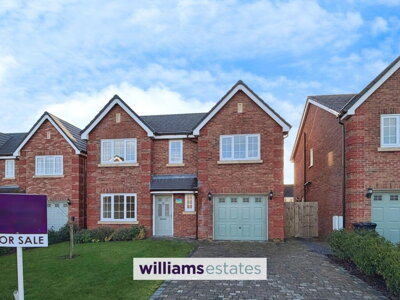
Browse 1 home new builds in Llanfair Dyffryn Clwyd from local developer agents.
The larger property sector typically features multiple bathrooms, substantial reception space, and private gardens or off-street parking. Four bedroom houses in Llanfair Dyffryn Clwyd span detached, semi-detached, and occasionally terraced configurations, with styles ranging from period properties to modern executive homes.
The property market in Llanfair Dyffryn Clwyd demonstrates the stability and appeal of North Wales village living. Current average prices range from £232,500 according to Rightmove data to £300,000 on OnTheMarket, reflecting a diverse range of property types and conditions available to buyers. Detached properties command prices around £210,000 on average, while semi-detached homes typically sell for approximately £255,000. These figures position Llanfair Dyffryn Clwyd as accessible compared to larger Welsh towns and cities, making it particularly attractive to buyers seeking more space for their investment. The village benefits from proximity to Ruthin, where additional amenities and services support the local housing market and attract buyers from surrounding areas.
Recent market activity shows some variation in price trends across different sources, with Rightmove indicating a 23% decrease from the 2022 peak of £320,871, while OnTheMarket reports a 15.4% increase over the past twelve months. This mixed picture reflects broader national market conditions and the impact of interest rate changes on buyer purchasing power. For postcode area LL15 2AZ specifically, prices have risen 6% year-on-year and stand 12% above the 2022 peak of £227,750, demonstrating resilience in certain segments of the local market. Long-term data from Bricks&Logic shows prices in LL15 2RU have increased by an impressive 50.6% since September 2013, underlining the area's enduring appeal as an investment location. First-time buyers and growing families will find particular value in the village's mix of period properties and newer developments.
The majority of properties sold in Llanfair Dyffryn Clwyd during the last year have been detached homes, reflecting buyer preferences for space and the rural character of the village. New build options at Cae Mair offer contemporary construction with modern amenities, including 2-bedroom bungalows, 2 and 3-bedroom townhouses, semi-detached houses, and 4-bedroom detached homes. Some phases of this development have sold out, indicating strong demand for new-build properties in the area. The combination of traditional stone cottages dating from the 18th and 19th centuries, possibly medieval farmhouses, and modern developments creates a varied housing stock catering to different tastes and budgets.

Understanding the construction methods used in Llanfair Dyffryn Clwyd helps buyers appreciate the character of local properties and anticipate maintenance requirements. The village's architectural history spans several centuries, with building materials evolving significantly over time. Early structures dating before the 17th century were predominantly timber-framed with thatched roofs, reflecting the limited materials available to medieval builders. Little evidence of these early buildings survives today apart from the medieval stone church, which stands as the craftsmanship of 15th and 16th-century builders using local stone.
From the early 17th century onwards, stone and slate became the dominant building materials for farmhouses and outbuildings throughout the village. Local uncoursed axe-dressed limestone with its distinctive light grey colouring features prominently in older properties, often contrasted with dark fawn freestone dressings as seen in the 1859 National School building. Traditional cottages from the 18th and 19th centuries typically feature rendered stonework with slate roofs and tile ridges, embodying the classic Welsh vernacular that defines much of the village's character today. Brick became more commonly used during the 18th century and increasingly for outbuildings during the 19th century, often visible in agricultural ranges and later additions to older properties.
This variety in construction methods means buyers in Llanfair Dyffryn Clwyd encounter properties ranging from solid stone-walled cottages with traditional timber roof structures to brick-built houses from the Victorian era. Each construction type carries its own maintenance considerations, with older stone properties requiring attention to mortar pointing, render condition, and drainage around foundations. The traditional timber roof structures found in many period properties may show signs of wear after decades of service, making professional surveys particularly valuable before purchase.
Life in Llanfair Dyffryn Clwyd revolves around the rhythms of rural Welsh living, where community spirit and natural beauty combine to create an exceptional quality of life. The village takes its name from the Welsh "Llanfair" (church of Saint Mary) and "Dyffryn Clwyd" (valley of the River Clwyd), positioning it in one of North Wales's most treasured landscapes. Present-day land use is predominantly pastoral, with rolling green fields and farmland surrounding the historic village centre. The Dwr Iâl stream flows through the area, contributing to the verdant character of the landscape while historically requiring careful drainage management on lower-lying ground. Residents enjoy easy access to the open countryside, with extensive walking routes and scenic drives through the Vale of Clwyd accessible directly from the village.
The village's architectural heritage reflects its long history, with building materials evolving from early timber and thatch construction through to the stone and slate properties that now dominate the landscape from the 17th century onwards. Local limestone with distinctive light grey colouring features prominently in older properties, including rendered stonework and the medieval church that stands as the village's most significant historic building. Limestone cottages from the 18th and 19th centuries line the village lanes, many with slate roofs that characterise the traditional Welsh vernacular. Numerous Grade II listed buildings, including Ty'n Llanfair, agricultural ranges at Plas-newydd, and the historic Capel Ebenezer chapel, add character to the built environment. The village war memorial in the centre provides a focal point for community gatherings and commemorations. Gardens at Garthgynan and Plas-newydd are registered in the Register of Landscapes, Parks and Gardens, further highlighting the area's horticultural and historical significance.
Ruthin, the historic market town just two miles away, provides essential services and amenities that complement village life in Llanfair Dyffryn Clwyd. The town offers excellent facilities including doctors' surgeries, a sports centre, library, supermarket, pubs, restaurants, hotels, and a range of shops and businesses. For families, this proximity means access to additional educational options, healthcare facilities, and leisure activities without the need to travel to larger urban centres. The relationship between the village and Ruthin creates a practical balance of rural tranquility and urban convenience that attracts buyers seeking the best of both worlds.

Education provision in and around Llanfair Dyffryn Clwyd serves families seeking a quality learning environment within a rural community setting. Llanfair Dyffryn Clwyd Primary School provides local primary education, with children typically progressing to secondary schools in nearby Ruthin upon completion. The village's proximity to Ruthin means families can access a range of educational options including Ysgol Brynhyfryd, a Welsh-medium secondary school, and St. Richard's Catholic Primary School for those seeking faith-based education. Parents should research current catchment areas and admission arrangements through Denbighshire County Council, as these can affect school placement decisions for families moving to the area. The village's small population means primary school classes benefit from close teacher-pupil relationships, fostering individual attention and strong academic foundations.
For older students and vocational learners, Llysfasi College of Agriculture offers further education opportunities in the village itself, specialising in land-based studies and agricultural training. This college, complete with a modern Cattle Breeding Centre, provides valuable vocational pathways for students interested in agriculture, horticulture, and environmental management. Young people can also access sixth form provision and further education colleges in Ruthin, Wrexham, and Colwyn Bay, with regular bus connections making these destinations accessible from Llanfair Dyffryn Clwyd. The presence of Llysfasi College within the village community adds a unique educational dimension not found in many comparable rural settlements, supporting families with teenagers pursuing agricultural or environmental careers while maintaining village living.
Welsh-medium education is readily accessible in the surrounding area, with Ysgol Brynhyfryd in Ruthin providing secondary education through the medium of Welsh. Families prioritising Welsh language education will find this option valuable, as the school maintains strong academic results and cultural traditions. For English-language secondary education, families typically consider schools in Ruthin or may travel to Wrexham for broader options. The variety of educational pathways available within a short distance of Llanfair Dyffryn Clwyd ensures families can find suitable arrangements for children of all ages and academic aspirations.
Transport connections from Llanfair Dyffryn Clwyd make it practical for residents to commute to employment centres while enjoying village life. The A55 expressway runs nearby, providing direct access to Chester (approximately 30 miles east), Liverpool, Manchester, and the wider motorway network beyond. This strategic positioning makes Llanfair Dyffryn Clwyd particularly attractive to workers in business parks around Wrexham and St Asaph, where technology, manufacturing, and service sector employers offer diverse employment opportunities. The journey to Chester takes around 45 minutes by car under normal traffic conditions, opening up possibilities for workers in the professional and financial services sectors based in England's second city. Regular bus services connect the village to Ruthin, where additional public transport options including train services from Chester and Llandudno Junction expand travel possibilities.
For air travel, Liverpool John Lennon Airport and Manchester Airport are both accessible within approximately 75 minutes to two hours by car, offering international connections for business and leisure travellers. The nearest mainline railway stations are located in Chester and Rhyl, with direct services to London Euston, Birmingham, and Manchester available from these hubs. Local cycling infrastructure and walking routes through the Vale of Clwyd provide sustainable alternatives for shorter journeys, with Ruthin just two miles away and easily reached by bike or on foot along designated routes. Parking provision in the village accommodates residents with vehicles, addressing a common concern in rural communities. The combination of road, rail, and air connectivity positions Llanfair Dyffryn Clwyd as practically located for professionals seeking rural tranquility without compromising on career opportunities.
Daily commuters to professional centres in Chester or Manchester will find the location practical with a car, though those relying on public transport should factor in the limited evening and weekend service frequencies common in rural areas. The bus connection to Ruthin provides essential access for those without vehicles, with Ruthin serving as a hub for further travel options. For remote workers and those with flexible employment arrangements, the village's broadband connectivity enables modern working practices while enjoying the quality of life benefits that rural living offers.
Before viewing properties in Llanfair Dyffryn Clwyd, obtain a mortgage agreement in principle from a lender to understand your borrowing capacity. Current average prices of £232,500 to £300,000 mean most buyers will need mortgage finance, and having this arranged demonstrates serious intent to sellers. Factor in additional costs including stamp duty, legal fees, survey costs, and moving expenses when setting your maximum budget.
Browse our comprehensive listings for Llanfair Dyffryn Clwyd, noting property types including detached farmhouses, traditional stone cottages, modern semi-detached homes, and new-build options at Cae Mair. Arrange viewings through listed estate agents, paying attention to the condition of older properties given the prevalence of 18th and 19th-century buildings in the village. Take notes on property condition, noting any signs of damp, structural concerns, or maintenance requirements that warrant further investigation.
Before proceeding with your purchase, arrange a RICS Level 2 Survey to assess the property's condition thoroughly. For properties valued between £200,000 and £300,000 in the Llanfair Dyffryn Clwyd area, expect to pay £500 to £525 for this comprehensive inspection. Given the prevalence of older stone-built properties in the village, the survey will check for damp, roof condition, timber defects, structural movement in solid walls, and potential issues with outdated electrics common in historic buildings. Properties with listed status or pre-1900 construction may require additional specialist assessment.
Appoint a conveyancing solicitor to handle the legal aspects of your purchase. Your solicitor will conduct local authority searches with Denbighshire County Council, check for any planning restrictions affecting the property, and ensure all listed building consents are properly documented if you are purchasing a Grade II protected property. Search fees typically range from £150 to £300, with additional drainage and water searches required. For properties near the Dwr Iâl stream or on lower-lying ground, your solicitor should investigate drainage arrangements and any historical flooding records.
Once all searches are satisfactory and your mortgage offer is confirmed, your solicitor will exchange contracts and set a completion date. Budget for additional costs including stamp duty (SDLT), legal fees averaging £500-£1,500, and moving expenses when planning your overall purchase budget. Buildings insurance must be in place from exchange of contracts. Arrange for utility transfers and Council Tax registration in your name upon completion, and notify relevant parties of your change of address.
Purchasing a property in Llanfair Dyffryn Clwyd requires careful attention to specific local factors that can affect your investment and quality of life. The village's abundance of listed buildings means buyers should verify whether their chosen property carries listed status, as this significantly affects permitted renovations and alterations. Grade II listed properties at Tyn Llanfair and similar historic homes offer character and heritage value but require special consideration when planning any building works. Before purchasing any older property in the village, arrange a thorough survey to check for issues common to stone-built homes, including rising damp, structural movement in solid walls, and the condition of traditional timber roof structures that may require maintenance after decades of service.
The local geology and drainage characteristics deserve attention during the property buying process. Historical records indicate natural drainage is impeded on some lower-lying ground in the area, which could affect properties in certain locations, particularly during periods of heavy rainfall. Buyers should check the property's position relative to local watercourses and drainage channels, and verify that existing systems are adequately maintained. Properties with large gardens or adjacent farmland may involve additional maintenance responsibilities that should be factored into your decision. New build options at Cae Mair offer modern construction with the benefit of NHBC or similar warranties, presenting a lower-risk alternative for buyers concerned about potential issues in older properties. Always review service charges, ground rent terms, and any communal maintenance arrangements before committing to a purchase.
Common defects found in Llanfair Dyffryn Clwyd's older property stock include damp penetration through solid stone walls, deterioration of traditional lime mortar pointing, and wear to timber elements including roof trusses and floor joists. Properties built before electrical regulations were introduced may have outdated wiring that requires updating before occupation. The solid-wall construction typical of many period properties offers less insulation than modern cavity-wall buildings, potentially resulting in higher heating costs. A comprehensive RICS Level 2 Survey will identify these issues and provide cost estimates for necessary remedial works, enabling you to make an informed decision and negotiate accordingly.
With many properties in Llanfair Dyffryn Clwyd dating from the 18th and 19th centuries, a professional RICS survey is essential. Our inspectors commonly identify damp, structural movement, and timber defects in older stone properties. A Level 2 Survey costs from £500 for properties in the £200,000-£300,000 price range and could save you thousands in unexpected repair costs.
Understanding the full costs of purchasing property in Llanfair Dyffryn Clwyd helps you budget accurately and avoid financial surprises during your transaction. The current SDLT threshold for standard buyers stands at £250,000, meaning properties at or below this value attract no stamp duty. Given the village's average prices ranging from £232,500 to £300,000, many properties fall at or just above this threshold. A property priced at £275,000 would incur SDLT of £1,250, calculated as 5% on £25,000 (the amount above £250,000). Properties priced above £925,000 face the higher 10% rate on amounts between £925,001 and £1.5 million. First-time buyers benefit from an increased threshold of £425,000 at 0% and 5% between £425,001 and £625,000, potentially eliminating SDLT costs entirely for those purchasing at average price levels.
Beyond stamp duty, budget for conveyancing costs averaging £500 to £1,500 depending on complexity and whether your property is listed. Local search fees through Denbighshire County Council typically range from £150 to £300, with drainage and water searches adding further costs. Survey costs for a RICS Level 2 Survey range from £500 to £550 for properties valued between £200,000 and £300,000. Properties with non-standard construction, pre-1900 build dates, or listed status may incur additional survey fees of £150 to £400. Removal costs vary based on distance and volume, while mortgage arrangement fees typically range from 0% to 1.5% of the loan amount. Buildings insurance must be in place from exchange of contracts, and your solicitor will recommend appropriate cover for your new home.
For buyers considering older properties, factor in potential renovation costs when setting your overall budget. Traditional stone cottages in Llanfair Dyffryn Clwyd may require updating of electrical systems, replacement of outdated heating systems, or remedial work to address damp or structural concerns. Properties with listed status may require specialist contractors for any alterations, potentially increasing costs. A detailed survey report will help you understand the true condition of the property and estimate any works needed before or shortly after purchase, ensuring you can plan your finances appropriately.
Average house prices in Llanfair Dyffryn Clwyd currently range from £232,500 (Rightmove) to £300,000 (OnTheMarket), depending on the data source and property types included. Detached properties average around £210,000 while semi-detached homes typically sell for approximately £255,000. Prices have shown mixed trends recently, with some postcodes showing increases of 6% to 15.4% year-on-year, while longer-term data shows prices have risen over 50% since 2013 in certain areas. The village offers good value compared to larger towns, with properties available across various price points to suit different budgets and property preferences.
Properties in Llanfair Dyffryn Clwyd fall under Denbighshire County Council's jurisdiction for council tax purposes. Bands range from A to H depending on the property's assessed value, with typical band A properties valued up to £58,000 and band D properties around £88,000 to £118,000. New build properties at developments like Cae Mair often fall into higher bands due to modern construction and contemporary fittings. Properties with significant historic features or larger detached homes typically attract higher bandings. You can check specific band information for any property through the Valuation Office Agency website or request this information during your conveyancing process.
Llanfair Dyffryn Clwyd Primary School serves the village's younger children, with good Ofsted inspection records reflecting quality teaching in a small community setting. Secondary school options are available in nearby Ruthin, including Ysgol Brynhyfryd for Welsh-medium education and St. Richard's Catholic Primary School for primary-aged children of faith. Llysfasi College of Agriculture within the village provides further education in land-based studies, complete with a modern Cattle Breeding Centre for practical training. The village's small class sizes offer advantages for primary-aged children, with individual attention from teachers supporting strong academic foundations. Parents should verify current catchment areas and admission policies through Denbighshire County Council before purchasing.
Llanfair Dyffryn Clwyd has regular bus services connecting to Ruthin, where additional public transport options are available. The village sits close to the A55 expressway, providing road access to Chester (45 minutes), Liverpool, Manchester, and Wrexham for those with vehicles. Nearest mainline railway stations are in Chester and Rhyl, offering connections to London, Birmingham, and Manchester for longer-distance travel. For air travel, Liverpool and Manchester airports are accessible within two hours by car. Daily commuters to professional centres in Chester or Manchester will find the location practical with a car, while those relying on public transport should check bus timetables carefully as evening and weekend services may be limited.
Llanfair Dyffryn Clwyd offers solid investment fundamentals for property buyers seeking long-term growth. Long-term price data shows average increases of 50.6% since September 2013 in the LL15 2RU postcode, demonstrating sustained capital growth over more than a decade. The village's proximity to Ruthin, excellent transport connections via the A55 corridor, and limited new housing supply support ongoing demand from buyers seeking village living. Rental demand exists from professionals working in nearby business parks in Wrexham and St Asaph, where employers offer diverse employment opportunities. Traditional stone cottages requiring renovation may offer value-add opportunities for investors willing to undertake improvement works. As with any investment, buyers should research current market conditions and local rental yields before committing.
For standard purchases, stamp duty (SDLT) applies at 0% on the first £250,000, 5% on £250,001 to £925,000, 10% on £925,001 to £1.5 million, and 12% above that. First-time buyers qualify for relief on the first £425,000 at 0%, with 5% applying between £425,001 and £625,000. Given average prices of £232,500 to £300,000, most buyers in Llanfair Dyffryn Clwyd would pay no stamp duty if purchasing at current average prices. A property at £275,000 would incur SDLT of £1,250 for standard buyers. Higher-value properties above £425,000 would incur SDLT for non-first-time buyers. Always verify your position with a financial adviser based on your specific circumstances and eligibility for any relief schemes.
We strongly recommend commissioning a RICS Level 2 Survey before purchasing any property in Llanfair Dyffryn Clwyd, particularly given the prevalence of older stone-built properties in the village. Many homes date from the 18th and 19th centuries with solid stone walls and traditional construction methods that can harbour hidden defects. Our inspectors commonly identify damp penetration through solid walls, deterioration of traditional mortar pointing, timber defects in roof structures, and outdated electrical systems in period properties. For properties at the current average price levels of £232,500 to £300,000, a Level 2 Survey costs between £500 and £550, representing excellent value against potential repair bills that could reach thousands of pounds. Properties with listed status or pre-1900 construction may benefit from a more comprehensive RICS Level 3 Building Survey.
From £500
Detailed homebuyer report for properties in reasonable condition
From £499
Legal services for your property purchase
From 4.5% APR
Competitive mortgage deals for buyers
From £85
Energy performance certificate for your property
Properties New Builds In London

Properties New Builds In Plymouth

Properties New Builds In Liverpool

Properties New Builds In Glasgow

Properties New Builds In Sheffield

Properties New Builds In Edinburgh

Properties New Builds In Coventry

Properties New Builds In Bradford

Properties New Builds In Manchester

Properties New Builds In Birmingham

Properties New Builds In Bristol

Properties New Builds In Oxford

Properties New Builds In Leicester

Properties New Builds In Newcastle

Properties New Builds In Leeds

Properties New Builds In Southampton

Properties New Builds In Cardiff

Properties New Builds In Nottingham

Properties New Builds In Norwich

Properties New Builds In Brighton

Properties New Builds In Derby

Properties New Builds In Portsmouth

Properties New Builds In Northampton

Properties New Builds In Milton Keynes

Properties New Builds In Bournemouth

Properties New Builds In Bolton

Properties New Builds In Swansea

Properties New Builds In Swindon

Properties New Builds In Peterborough

Properties New Builds In Wolverhampton

Enter your details to see if this property is within your budget.
Loans, cards, car finance
Estimated property budget
Borrowing + deposit
You could borrow between
Typical borrowing
Monthly repayment
Est. at 4.5%
Loan-to-value
This is an estimate only. Your actual budget may vary depending on interest rates, credit history, and personal circumstances. For an accurate affordability assessment, speak to one of our free mortgage advisors.
This calculator provides estimates for illustrative purposes only and does not constitute financial advice. Your home may be repossessed if you do not keep up repayments on your mortgage. Estimates based on 4.5% interest rate, repayment mortgage. Actual rates depend on your circumstances.
Homemove is a trading name of HM Haus Group Ltd (Company No. 13873779, registered in England & Wales). Homemove Mortgages Ltd (Company No. 15947693) is an Appointed Representative of TMG Direct Limited, trading as TMG Mortgage Network, which is authorised and regulated by the Financial Conduct Authority (FRN 786245). Homemove Mortgages Ltd is entered on the FCA Register as an Appointed Representative (FRN 1022429). You can check registrations at NewRegister or by calling 0800 111 6768.

We use cookies to show you personalised content and improve your experience of our website. Find out more in our Privacy policy and Cookie policy.