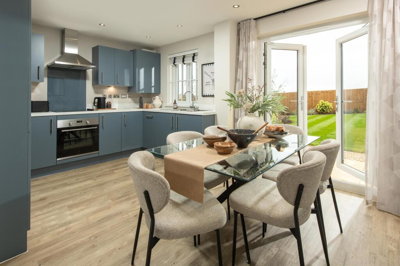
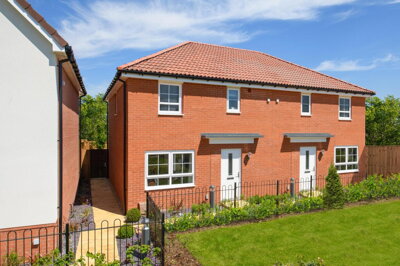
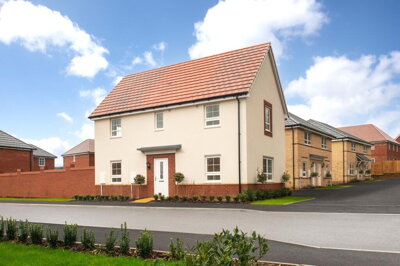
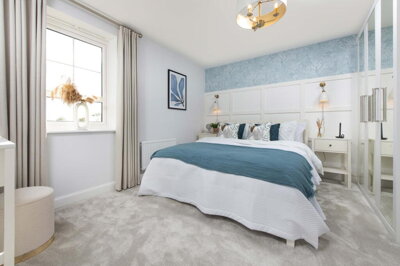
Browse 4 homes new builds in Little Oakley from local developer agents.
Three bedroom properties represent a significant portion of the Little Oakley housing market, offering space for families with multiple reception rooms and gardens in many cases. Browse detached, semi-detached, and terraced options ranging across new residential developments.
The Little Oakley property market has shown remarkable stability over the past year, with average prices remaining similar to the previous year and only 3% down from the 2023 peak of £317,195. This consistency makes the village an attractive option for buyers seeking a steady investment in the Essex property market. Detached properties dominate the sales mix, commanding the highest average price of £351,667, reflecting the strong demand for family homes with generous garden space and off-street parking that characterises the village.
Semi-detached properties in Little Oakley average £295,333, offering excellent value for families looking for three-bedroom accommodation at a more accessible price point. Terraced properties, averaging around £250,000, present an affordable entry into village life, while flats in the area average £210,000. New build activity in Little Oakley itself remains limited to small-scale developments, with most available stock comprising established period properties that showcase traditional Essex construction using Gault brick, red brick, and handmade clay tiles.
The village contains numerous listed buildings requiring specialist considerations during purchase, including the Grade II* Church of St Peter and Manor Farmhouse with its attached outbuildings. Properties along the historic lanes leading to the village centre should be subject to careful survey inspection given their age and heritage status. The Tendring district continues to pursue development initiatives, including the Freeport East project targeting completion by 2030, which may influence demand in the wider area over coming years.

Life in Little Oakley revolves around community spirit and the gentle rhythms of rural Essex living. With a population of approximately 1,195 residents according to the 2021 Census, the village maintains an intimate atmosphere where neighbours recognise one another and local events bring the community together. The village forms part of the Tendring district, which continues to develop with initiatives including affordable housing programmes targeting 500 new homes annually and infrastructure improvements such as the proposed link road connecting the A120 to Jaywick Sands.
The geological character of Little Oakley is fascinating, with the nearby Little Oakley Channel Deposit designated as a Site of Special Scientific Interest. This ancient river channel from an interglacial period of the River Thames offers an intriguing glimpse into prehistoric landscapes and contributes to the area's scientific interest. The designation reflects the unique underlying geology of the area, which includes clay deposits that can present shrink-swell considerations for property foundations over time.
The village's heritage is evident throughout its architecture, from the medieval Church of St Peter to the early 19th-century Little Oakley Hall, which exemplifies traditional construction using Gault brick in Flemish bond with handmade red clay roof tiles. Local amenities include essential shops, pubs, and community facilities, with comprehensive services available in the nearby towns of Harwich and Clacton-on-Sea. The village pub serves as a focal point for community gatherings, while the church hosts regular events throughout the year.

Families considering a move to Little Oakley will find educational options available within the local area, with primary schools serving the village and surrounding communities. The nearest primary schools are typically found in neighbouring villages and towns, including Harwich and the surrounding Tendring settlements, where Ofsted-rated schools provide foundation stage and key stage one education. Parents should research specific catchment areas as school admissions policies can influence property values and availability in surrounding streets.
The closest primary schools to Little Oakley include those in the Harwich area, such as Harwich Primary School and All Saints' Church of England Primary School, both serving the early years of education. These schools cater to children from Reception through to Year 6, with school transport arrangements varying depending on the specific location of your property purchase within the village. The Tendring district maintains a coordinated admissions process for primary school placements, with applications managed through the Essex County Council portal.
Secondary education in the Tendring area includes several options, with schools in Clacton-on-Sea providing key stage three and four curricula. Clacton County High School and St. Helena School are among the secondary options available, with reputations that vary and Ofsted ratings that parents should research thoroughly before committing to a property purchase. For families seeking grammar school education, Essex maintains a selective system with schools in Colchester serving eligible pupils who pass the 11-plus examination, though transport arrangements from Little Oakley require careful consideration given the distance involved.
Sixth form and further education opportunities are available at colleges in Clacton-on-Sea and Colchester, providing vocational and academic courses for post-16 students. The proximity of Manningtree station makes Colchester schools accessible to families willing to consider commuting arrangements for older children. The presence of listed buildings and heritage properties in Little Oakley means that historical interest and architectural character often feature alongside educational considerations when choosing a family home.
Transport connectivity from Little Oakley balances the village's rural character with practical commuting options for workers and families. The A120 provides direct access to Colchester, approximately 20 miles away, connecting residents to the A12 and onward to Chelmsford and London. The nearby town of Harwich offers ferry connections for those travelling to the Netherlands and Scandinavia via the Stena Line terminal, providing an alternative route for international travel and freight.
Local bus services operated by Arriva and other providers connect Little Oakley with surrounding villages and towns, offering essential connectivity for those without private vehicles. Bus routes serve Harwich, Manningtree, and Colchester, though service frequency may be limited compared to urban areas, particularly during evenings and weekends. Residents should review current timetables carefully when assessing transport options for daily commuting or school runs.
The nearest railway stations include Manningtree and Colchester, both offering regular services to London Liverpool Street, with journey times of approximately one hour from Manningtree and around 45 minutes from Colchester. Manningtree station is particularly accessible for Little Oakley residents, situated approximately 6 miles away via the A120 and B1352 route. The mainline connections make day commuting to London feasible for those working in the capital, though the coastal location means residents should consider parking availability at stations, particularly during summer months when tourist traffic increases on local roads.
Explore Little Oakley's property listings, understand local price trends across different property types, and visit the village at different times to get a genuine feel for community life, local amenities, and commute times to schools and transport connections. The village's intimate scale means visiting at weekends and weekdays provides different perspectives on traffic, parking, and community atmosphere.
Contact lenders or a mortgage broker to obtain a mortgage agreement in principle before viewing properties. This strengthens your position when making offers and helps you understand your budget range across different property types available in Little Oakley, from flats around £210,000 to detached family homes exceeding £350,000.
Schedule viewings of properties matching your criteria, taking time to examine the property condition, garden space, parking, and proximity to schools and transport links. Given the village's older housing stock, viewings should include attention to construction materials, roof condition, and signs of damp or structural movement that may require further investigation.
Before purchasing, arrange a RICS Level 2 Survey to assess the property's condition. Given Little Oakley's older housing stock featuring traditional Gault brick construction, solid walls, and listed buildings, this survey can identify defects requiring attention and help you budget for necessary repairs or renovations.
Choose a conveyancing solicitor to handle the legal aspects of your purchase, including local searches, contract review, and registration with HM Land Registry. Your solicitor should be familiar with Tendring district requirements and any specific considerations for listed buildings or properties in flood risk areas.
Once searches are satisfactory and financing is confirmed, exchange contracts with the seller and arrange a completion date. Collect your keys and move into your new Little Oakley home, ensuring you have arranged utility connections, council tax registration, and any necessary permissions for listed property alterations.
Buying a property in Little Oakley requires careful consideration of factors unique to this historic Essex village. Flood risk should be evaluated, as the coastal location near the North Sea means properties may be subject to coastal flood risk management measures. The approved sea wall realignment project, approved by Tendring District Council in March 2024, indicates ongoing efforts to manage tidal flooding along the coastline, so prospective buyers should review Environment Agency flood maps and consider the flood history of specific streets and property types.
The village's wealth of listed buildings requires particular attention from buyers. Properties bearing listed status, such as those in the village centre near St Peter's Church or along the historic lanes, require Listed Building Consent for alterations, and unauthorized works constitute a criminal offence. The Grade II* listed Manor Farmhouse with its attached outbuildings and the extensive range of Grade II listed buildings throughout the village demonstrate the heritage considerations that affect property ownership in this area. Buyers should budget for the additional costs and timescales associated with obtaining necessary consents for any planned works.
Older properties in Little Oakley often feature traditional construction methods including solid walls without cavity insulation, original timber frames, and period features that require specialist maintenance. Common defects found in the village's older housing stock include penetrating damp in solid-walled buildings, deteriorating ridge mortar on handmade clay tile roofs, timber decay where ventilation is poor, and outdated electrical systems predating modern safety standards. Prospective buyers should budget for potential upgrades to insulation, electrical systems, and plumbing when purchasing older homes, particularly those without recent renovation works.
Leasehold versus freehold tenure is relevant for any flats or properties with shared ownership arrangements in the area. Understanding service charges, ground rent terms, and any remaining lease duration is essential before committing to purchase. The predominant semi-detached and detached housing stock typically offers freehold ownership, but checking the title register and lease documents remains crucial for every transaction. The Tendring district has seen various shared ownership schemes developed in recent years, so clarification on tenure should be sought early in the conveyancing process.
Little Oakley's housing stock includes numerous properties constructed before modern building standards, making professional surveys particularly valuable for prospective buyers. Traditional construction using Gault brick in Flemish bond, as seen in Little Oakley Hall, characterises many period properties throughout the village. These solid-walled buildings lack cavity insulation, making them more susceptible to penetrating damp, particularly where pointing has deteriorated or render has failed over the decades.
Roof defects commonly affect the village's older properties, where handmade red clay tiles and traditional mortar work have weathered over time. Slipping or cracked tiles, deteriorating ridge mortar, and failed flashings around chimneys and valleys can lead to water ingress and subsequent timber decay. Our inspectors frequently identify these issues during surveys of period properties in the Tendring area, where the coastal climate accelerates weathering of external elements.
Timber defects including woodworm and wet or dry rot occur where moisture has penetrated building fabric or where ventilation is inadequate. Properties with suspended timber floors, common in older construction, require careful inspection of floor joists and bridging beams. The clay geology underlying parts of Little Oakley can contribute to foundation movement over time, potentially causing structural cracks that require professional assessment by a chartered building surveyor.
Electrical and plumbing systems in older properties often require updating to meet current safety standards. Original wiring, which may include rubber or fabric-covered cables, poses fire risk and should be replaced. Lead pipework, still found in some older village properties, should be upgraded to copper or plastic supply pipes. Buyers should budget for these essential upgrades when purchasing period properties in Little Oakley, as electrical rewiring alone can cost several thousand pounds depending on property size.
The average house price in Little Oakley over the past year was £306,133, similar to the previous year and approximately 3% down from the 2023 peak of £317,195. Detached properties average £351,667, semi-detached homes around £295,333, terraced properties at £250,000, and flats approximately £210,000. These prices reflect the village's position in the Tendring property market, offering more affordable options compared to coastal towns like Frinton or Walton on the Naze. The village's stable pricing makes it attractive for buyers seeking predictable property costs in a rural Essex setting.
Properties in Little Oakley fall under Tendring District Council, which sets council tax rates for the area in conjunction with Essex County Council and local parish precepts. Band A properties typically start from around £1,300 annually, while higher band properties command proportionally more, with Band H properties in the village potentially exceeding £3,900 per year. Prospective buyers should check the specific council tax band for any property through the Valuation Office Agency website or the property listing details, as this forms part of the ongoing costs of homeownership that should be factored into your budget calculations.
Little Oakley itself has limited primary school provision within the village boundary, with families typically relying on schools in neighbouring communities such as Harwich Primary School and All Saints' Church of England Primary School. Primary schools in the wider Tendring area serve different catchment zones, and parents should verify school locations relative to their intended property before completing a purchase, as catchment boundaries can affect admissions outcomes significantly. Secondary schools in Clacton-on-Sea provide key stage education, while grammar school options exist for eligible pupils in the Essex selective system, with schools in Colchester serving the wider area.
Little Oakley has bus services connecting to surrounding villages and towns, though frequency may be limited compared to urban areas, with services reducing during evenings and weekends. The nearest railway stations at Manningtree and Colchester provide mainline services to London Liverpool Street, with journey times of approximately one hour from Manningtree, making daily commuting feasible for those working in the capital. The A120 road provides access to Colchester and the wider motorway network via the A12, while ferry services from nearby Harwich offer international travel options to the Netherlands and Scandinavia via Stena Line.
Little Oakley offers a stable property market with prices showing consistent performance over recent years, having recovered from the 2023 peak with only modest reductions. The village benefits from regional development initiatives in the Tendring district, including affordable housing programmes and the Freeport East project targeting completion by 2030, which may influence future demand. The village's rural character, heritage properties, proximity to the Essex coast, and accessibility to London via Manningtree make it attractive to certain buyer segments including commuters seeking more affordable housing than London offers.
Stamp Duty Land Tax rates from April 2024 start at 0% on the first £250,000 of residential property purchases, rising to 5% on the portion between £250,001 and £925,000. Properties priced between £925,001 and £1.5 million attract 10% stamp duty, with 12% applying above £1.5 million. First-time buyers benefit from relief on the first £425,000, with 5% charged between £425,001 and £625,000. Most properties in Little Oakley fall within the lower tax bands, making purchasing costs relatively manageable, with typical stamp duty bills for the village's average £306,133 property around £2,807 for standard buyers.
From 3.84%
Compare rates from leading lenders for your Little Oakley purchase
From £499
Solicitors familiar with Tendring district transactions
From £376
Professional survey for your Little Oakley property
From £60
Energy performance certificate for your property
Understanding the full costs of purchasing property in Little Oakley helps buyers budget accurately and avoid surprises during the transaction process. Stamp Duty Land Tax forms a significant part of the purchase cost, with the current thresholds offering relief for buyers of properties priced below £250,000. For a typical Little Oakley property averaging £306,133, a standard buyer would pay approximately £2,807 in stamp duty, calculated at 0% on the first £250,000 and 5% on the remaining £56,133.
First-time buyers purchasing properties up to £425,000 benefit from increased relief, potentially reducing or eliminating stamp duty costs entirely on lower-priced properties. For a terraced property around £250,000, a first-time buyer would pay zero stamp duty, while a semi-detached at £295,333 would attract stamp duty of approximately £1,267 after the relief threshold. These savings make property purchase in Little Oakley particularly attractive for those entering the housing market for the first time.
Beyond stamp duty, buyers should budget for solicitor conveyancing costs typically starting from £499 for standard transactions, plus disbursements including local authority searches, HM Land Registry fees, and bankruptcy checks. Survey costs should be included, with RICS Level 2 surveys starting from around £376 for properties under £200,000, rising to approximately £586 for homes valued above £500,000. Given Little Oakley's older property stock and listed buildings, budgeting for a thorough survey is particularly important, with additional costs potentially required for specialist historic building assessments.
Mortgage arrangement fees, valuation fees, and broker charges should also be considered when calculating the total cost of purchasing your new home. Survey costs for the village's older properties may be higher than average due to the complexity of traditional construction, with properties exceeding £500,000 attracting fees around £586 for RICS Level 2 inspections. Building insurance should be arranged from completion, with quotes obtained before exchange of contracts to ensure adequate cover is in place for your new property.
Properties New Builds In London

Properties New Builds In Plymouth

Properties New Builds In Liverpool

Properties New Builds In Glasgow

Properties New Builds In Sheffield

Properties New Builds In Edinburgh

Properties New Builds In Coventry

Properties New Builds In Bradford

Properties New Builds In Manchester

Properties New Builds In Birmingham

Properties New Builds In Bristol

Properties New Builds In Oxford

Properties New Builds In Leicester

Properties New Builds In Newcastle

Properties New Builds In Leeds

Properties New Builds In Southampton

Properties New Builds In Cardiff

Properties New Builds In Nottingham

Properties New Builds In Norwich

Properties New Builds In Brighton

Properties New Builds In Derby

Properties New Builds In Portsmouth

Properties New Builds In Northampton

Properties New Builds In Milton Keynes

Properties New Builds In Bournemouth

Properties New Builds In Bolton

Properties New Builds In Swansea

Properties New Builds In Swindon

Properties New Builds In Peterborough

Properties New Builds In Wolverhampton

Enter your details to see if this property is within your budget.
Loans, cards, car finance
Estimated property budget
Borrowing + deposit
You could borrow between
Typical borrowing
Monthly repayment
Est. at 4.5%
Loan-to-value
This is an estimate only. Your actual budget may vary depending on interest rates, credit history, and personal circumstances. For an accurate affordability assessment, speak to one of our free mortgage advisors.
This calculator provides estimates for illustrative purposes only and does not constitute financial advice. Your home may be repossessed if you do not keep up repayments on your mortgage. Estimates based on 4.5% interest rate, repayment mortgage. Actual rates depend on your circumstances.
Homemove is a trading name of HM Haus Group Ltd (Company No. 13873779, registered in England & Wales). Homemove Mortgages Ltd (Company No. 15947693) is an Appointed Representative of TMG Direct Limited, trading as TMG Mortgage Network, which is authorised and regulated by the Financial Conduct Authority (FRN 786245). Homemove Mortgages Ltd is entered on the FCA Register as an Appointed Representative (FRN 1022429). You can check registrations at NewRegister or by calling 0800 111 6768.

We use cookies to show you personalised content and improve your experience of our website. Find out more in our Privacy policy and Cookie policy.