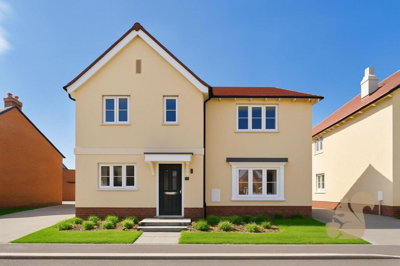
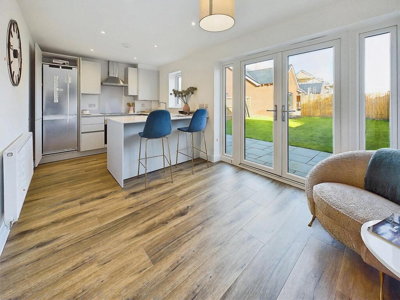
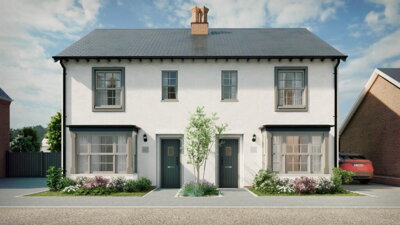
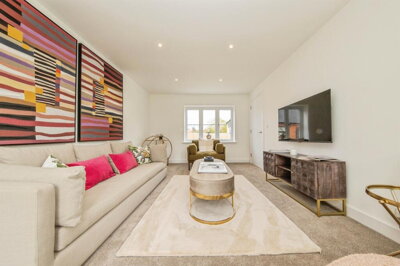
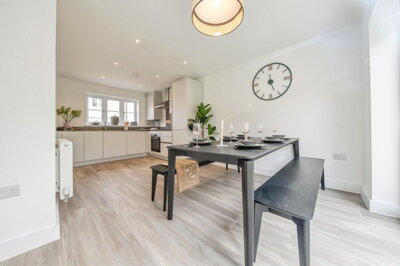
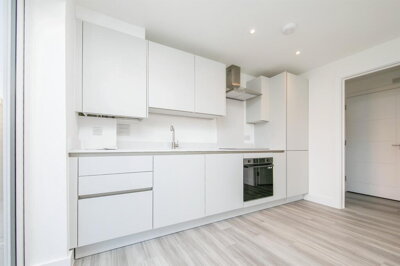
Browse 6 homes new builds in Little Henny from local developer agents.
Three bedroom properties represent a significant portion of the Little Henny housing market, offering space for families with multiple reception rooms and gardens in many cases. Browse detached, semi-detached, and terraced options ranging across new residential developments.
£363,553
Average House Price (CO10)
+1.2%
12-Month Price Change
397
Annual Sales Volume (CO10)
£511,623
Detached Average
The property market in Little Henny and the surrounding CO10 postcode area has demonstrated steady growth, with average house prices reaching £363,553 as of February 2026. This figure represents a 1.2% increase over the preceding twelve months, indicating sustained demand for homes in this desirable rural corridor between Essex and Suffolk. The market benefits from its strategic position, offering buyers excellent value compared to more urbanised parts of the Home Counties while retaining strong transport connections to London and Cambridge.
Property types in the CO10 area show a clear preference for larger family homes, with detached properties averaging £511,623. Semi-detached homes offer more accessible entry points at around £323,244, while terraced properties average £252,698. Flats in the area, though less common in this rural setting, start from approximately £165,658. The diversity of property types available means that whether you are seeking a spacious period farmhouse, a modern family home, or a charming cottage, Little Henny and its neighbouring villages have options to suit various budgets and requirements.
Transaction volumes in the postcode district remain healthy, with 397 property sales completed in the last twelve months. This activity level demonstrates a robust market where sellers can achieve realistic valuations and buyers benefit from a reasonable selection of properties to compare. New build activity in Little Henny itself remains limited, as is typical for villages of this size, but buyers seeking modern specifications may find recent conversions or updated period properties that combine contemporary living with traditional charm.
For those considering property investment in Little Henny, the village's position within the CO10 postcode area makes it part of a broader market that has shown consistent resilience. The area attracts buyers from London and the Home Counties seeking better value for money, as well as local families upgrading from smaller towns like Sudbury. This demand profile supports both the current price levels and the outlook for future appreciation.

Life in Little Henny offers an authentic taste of rural English living at its finest. The village forms part of a cluster of picturesque settlements scattered across the Suffolk-Essex border region, an area celebrated for its timber-framed cottages, medieval churches, and network of public footpaths that traverse rolling farmland and meadows. The village itself maintains a strong sense of community, with residents gathering for local events and supporting the traditional pubs and village facilities that serve the surrounding agricultural community. The pace of life here deliberately contrasts with the bustle of nearby towns, offering residents space to breathe and genuine neighbourly connections.
The surrounding landscape is dominated by arable farmland, with the River Stour flowing nearby and providing scenic walks, birdwatching opportunities, and a habitat for local wildlife. The geology of the wider Essex area, including Little Henny, is characterised by London Clay, which has historically influenced local building traditions. Properties in the village showcase traditional Essex construction techniques, featuring red brick, render, and weatherboarding, with roofs typically finished in clay or concrete tiles. This architectural heritage contributes to the village's visual character and provides buyers with properties that possess genuine period features and solid construction.
Local amenities are primarily accessed in nearby Sudbury, which offers a comprehensive range of shops, restaurants, healthcare facilities, and recreational activities including a cinema, leisure centre, and markets. The town's Victorian architecture and riverside setting complement the rural charm of Little Henny, providing residents with the best of both worlds. Community life in the village is enriched by various clubs and societies, country fairs, and seasonal events that bring residents together throughout the year. For families, the village environment offers children the freedom to explore the countryside safely while benefiting from strong educational provision in the wider area.
Properties in Little Henny showcase the traditional building methods that have characterised rural Essex for centuries. The predominant construction materials include local red brick, often laid in decorative patterns on more prestigious properties, combined with timber framing on older buildings. Many homes feature render finishes that have weathered over decades to create the warm, textured facades that define the village streetscape. Weatherboarding, typically in white or cream, appears on cottage outbuildings and some domestic properties, adding visual variety to the architectural mix.
The roofscapes of Little Henny are characterised by pitched roofs finished with clay tiles or slate, materials that have proved durable across generations of use. Traditional detailing such as brick chimneys, lead flashing, and timber fascias remain intact on many properties, reflecting the quality of original craftsmanship. These period features require ongoing maintenance but contribute significantly to the character and value of homes in the village. Buyers should factor the maintenance of traditional materials into their long-term ownership costs.
Given the age of much of the housing stock in Little Henny, with a significant proportion of properties likely dating from before 1945, buyers should expect features such as solid walls rather than cavity insulation, suspended timber floors rather than solid concrete, and older electrical and plumbing systems. These characteristics are part of the village's heritage but may require updating to meet modern standards of comfort and efficiency. A thorough survey can identify which properties have been sympathetically modernised and which may require investment in essential upgrades.

Education provision for families moving to Little Henny benefits from the presence of several well-regarded schools in the surrounding area. Primary education is available through village schools in nearby communities, with many small rural schools maintaining excellent reputations for nurturing academic achievement and personal development. Parents in Little Henny typically find that their children can access quality primary schooling within a short journey, with schools in the surrounding villages and Sudbury offering places to local families. Many of these schools benefit from small class sizes that allow for individual attention and strong pupil-teacher relationships.
Secondary education in the region is served by schools in Sudbury and the wider Braintree district, with several establishments receiving positive Ofsted ratings for academic performance and student welfare. Families may wish to research specific school catchments and admissions criteria when considering where to purchase, as catchment areas can significantly influence school placement. For those seeking alternative educational approaches, the surrounding area offers various options including faith schools, academies, and schools with specialist subjects or strong extracurricular programmes in areas such as music, sports, or the arts.
Sixth form and further education provision is available in Sudbury, with the local college offering a range of A-level subjects and vocational courses. Older students may also access educational opportunities in Colchester and Chelmsford, with bus services connecting these larger towns to the Little Henny area. For families prioritising educational excellence, the presence of grammar schools in nearby areas may influence decisions, with selective places available to academically able students who pass the entrance examinations.
Transport connectivity from Little Henny combines the benefits of rural tranquility with practical access to major centres of employment and amenities. The village is situated within reasonable distance of Sudbury, which provides mainline railway services connecting to London Liverpool Street via Marks Tey. This route offers commuters a journey time of approximately 90 minutes to the capital, making Little Henny viable for professionals who need to travel to London regularly while enjoying the lifestyle benefits of countryside living. The train service runs throughout the day with regular departures, providing flexibility for those with varied working patterns.
Road connectivity is centred on the A131 and A134 which link the village to surrounding towns and villages. The A12, providing access to Chelmsford, Colchester, and the wider motorway network, is accessible via the surrounding road system. For those working in Cambridge or the technology hubs along the M11 corridor, the road network offers reasonable journey times. Local bus services connect Little Henny to Sudbury and surrounding villages, providing essential transport for those without private vehicles, though frequency may be limited compared to urban services.
Cycling is popular in the area, with many residents choosing bicycles for local journeys and leisure rides along the network of country lanes and designated cycle routes. The flat terrain of the Essex-Suffolk border region is particularly suited to cycling, making it accessible for riders of various abilities. For air travel, Stansted Airport is accessible within approximately 45 minutes by car, providing international connections for business and leisure travellers. London Stansted offers flights to numerous European destinations and serves as a practical airport for residents of Little Henny.
Properties near the River Stour require careful consideration regarding flood risk before purchasing in Little Henny. The village's proximity to the river means that some properties, particularly those in lower-lying areas or with gardens extending toward the watercourse, may face elevated flood risk during periods of heavy rainfall or sustained high water levels. The Environment Agency flood maps for the area indicate zones where properties may be affected by fluvial flooding, and this information should form part of any due diligence process for homes for sale in Little Henny near the river.
The underlying London Clay geology presents specific considerations for property owners in Little Henny. This clay type is prone to shrink-swell behaviour, expanding when saturated with water and contracting during dry periods. Properties with shallow foundations or inadequate drainage can experience ground movement that manifests as cracking in walls, sticking doors, or uneven floors. Our inspectors frequently identify subsidence-related defects in properties across this region, and a comprehensive survey is essential to assess whether any movement has occurred and whether remedial works may be needed.
Surface water flooding can also affect properties in low-lying areas of the village, particularly where drainage infrastructure may be overwhelmed during exceptional rainfall events. Buyers should inspect gutters, downpipes, and drainage channels as part of any property viewing, and discuss any history of water ingress with current owners or neighbours. Properties in affected areas may face higher insurance premiums, so factoring these potential costs into your budget is advisable when evaluating homes for sale in Little Henny.
Before viewing properties, take time to understand what makes Little Henny special and how prices in the CO10 postcode area compare to your budget. Our platform provides detailed market data, recent sale prices, and neighbourhood information to help you build a clear picture of value in this rural location. Consider visiting at different times of day and speaking with residents to get an authentic feel for village life.
Speak to a mortgage broker to obtain an agreement in principle before you start viewing properties. This strengthens your position when making offers and demonstrates to sellers that you are a serious, financially prepared buyer with access to funding. In the current market, having your finances arranged can make the difference between a successful purchase and missing out to another buyer.
Visit homes in Little Henny that match your criteria, paying attention to construction quality, garden space, and the condition of period features. Consider factors such as flood risk near the River Stour, proximity to local schools, and your daily transport requirements. Take notes and photographs to help compare properties after viewings.
Once your offer is accepted, arrange a comprehensive survey of the property. Given the age of many homes in Little Henny and the presence of London Clay in the local geology, a detailed survey can identify issues such as subsidence risk, damp problems, or roof condition that may affect your decision or negotiating position. Our team works with qualified RICS surveyors who understand local construction methods.
Choose an experienced solicitor to handle the legal aspects of your purchase. They will conduct searches, review contracts, and manage the transfer of funds to ensure your purchase proceeds smoothly and all legal requirements are met. Local knowledge of the CO10 area can be valuable when dealing with rural property transactions.
Once all searches are satisfactory and your mortgage is finalised, you will exchange contracts and pay your deposit. Completion follows shortly after, when you receive the keys to your new home in Little Henny and can begin enjoying life in this beautiful rural village.
Properties in Little Henny often feature traditional construction methods that require careful inspection during the buying process. Many homes in this rural village were built before modern building regulations, meaning they may have solid walls rather than cavity insulation, original timber frames, and older electrical and plumbing systems. A thorough survey is essential to assess the condition of these features and identify any remedial work that may be needed. The presence of London Clay in the local geology means that properties should be carefully examined for signs of subsidence or heave, which can manifest as cracking in walls or doors that stick due to ground movement.
Damp issues are among the most common defects identified in older properties across Little Henny and the wider Essex region. Rising damp can occur where original damp-proof courses have failed or were never installed, while penetrating damp may affect walls exposed to prevailing winds or with damaged render.Condensation problems can develop in properties with inadequate ventilation, particularly where modern improvements have reduced natural air circulation. Our inspectors check for these issues systematically during every survey, using moisture meters and thermal imaging where appropriate to identify hidden problems.
Timber defects including woodworm and both wet and dry rot can affect the structural integrity of properties in Little Henny. The original floor joists, roof timbers, and window frames in period properties are particularly vulnerable where dampness has taken hold. Early identification of these defects can prevent costly remedial works and protect your investment in your new home.
Buyers should also investigate whether properties in Little Henny fall within a conservation area designation, which is common in villages with significant historical character. Conservation area status brings additional planning controls that restrict permitted development rights, meaning that extensions, outbuildings, or significant alterations may require formal consent from Braintree District Council. Similarly, any listed buildings in the village will be subject to strict regulations governing their alteration and maintenance. Understanding these constraints before purchase prevents unexpected complications when you come to make changes to your new home.
While specific data for Little Henny itself is not available at the village level, properties in the surrounding CO10 postcode area have an average price of £363,553 as of February 2026. Detached properties average £511,623, semi-detached homes around £323,244, and terraced properties approximately £252,698. The market has shown a 1.2% increase over the past twelve months, indicating stable demand for homes in this desirable rural location between Essex and Suffolk. With 397 transactions completing in the last year, the CO10 area demonstrates healthy market activity that benefits both buyers and sellers.
Properties in Little Henny fall under Braintree District Council's jurisdiction. Council tax bands in the village range from band A for lower-value properties through to band H for the most substantial homes. The village's rural character and mix of period cottages and larger farmhouses means that buyers will find properties across the full spectrum of council tax bands. Prospective buyers should check specific properties with Braintree District Council or the listing agent to confirm the exact band and associated annual charges.
The Little Henny area offers access to several well-regarded primary schools in surrounding villages, many of which maintain small class sizes and strong academic records. Secondary education is available at schools in Sudbury and the wider Braintree district, with several establishments receiving positive Ofsted ratings. For sixth form education, students can access courses in Sudbury or travel to Colchester and Chelmsford for a wider range of A-level and vocational options. Families should verify catchment areas and admissions criteria with specific schools before committing to a purchase.
Public transport from Little Henny is primarily served by local bus routes connecting to Sudbury, where mainline railway services run to London Liverpool Street via Marks Tey. The train journey takes approximately 90 minutes, making commuting viable for London-based workers. Bus services to surrounding villages are available but less frequent than urban routes, so private transport is generally recommended for daily commuting needs. The nearest major airport is London Stansted, accessible within 45 minutes by car, providing international connections for business and leisure travellers.
Little Henny and the surrounding CO10 postcode area offer several factors that make property investment attractive. The area benefits from strong demand driven by its rural character, proximity to excellent schools, and reasonable transport links to London. House prices have shown consistent growth, with a 1.2% increase over the past twelve months and 397 transactions completing in the area. Properties in villages with conservation area status or near the River Stour may hold particular appeal, though buyers should carefully consider flood risk assessments and planning restrictions when evaluating investment potential.
Stamp duty land tax rates for 2024-25 apply as follows: there is no SDLT on the first £250,000 of residential property, 5% on the portion from £250,001 to £925,000, 10% on the portion from £925,001 to £1.5 million, and 12% on any amount above £1.5 million. First-time buyers benefit from relief on the first £425,000, with 5% applying between £425,001 and £625,000. For most buyers purchasing typical family homes in Little Henny, the nil-rate threshold and standard rates will significantly reduce overall purchase costs compared to properties in London or the Home Counties.
Given that many properties in Little Henny are likely to be over 50 years old, common defects to watch for include damp issues affecting walls and timbers, roof covering wear requiring repair or replacement, and signs of subsidence or heave related to the underlying London Clay geology. Electrical wiring and plumbing systems in period properties may require updating to meet current standards. A comprehensive RICS Level 2 Survey will identify these issues and help you understand the true condition of any property you are considering purchasing in the village.
As a traditional English village with significant historical character, Little Henny is likely to contain individual listed buildings subject to strict regulations governing their alteration and maintenance. Properties within the village may also fall under a conservation area designation, which would impose stricter planning controls on alterations and developments. These designations protect the village's character but limit what owners can do without formal consent from Braintree District Council. Buyers should verify the status of any specific property before purchase to understand these constraints.
Beyond the property price and stamp duty, buyers should budget for solicitor fees typically ranging from £500 to £1,500, survey costs of approximately £400 to £800 for a RICS Level 2 Survey, plus land registry fees, local authority searches, and mortgage arrangement fees. For properties with land or unusual features, additional specialist searches regarding flood risk or environmental factors may be required. Building a comprehensive budget that accounts for all these costs ensures a smooth purchase without financial pressure.
From £400
Professional home buyer report identifying defects in properties across Little Henny
From £600
Detailed structural survey for older or complex properties
From £80
Energy performance certificate for your new home
From £499
Expert legal services for your property purchase
From 3.5%
Competitive mortgage deals for Little Henny buyers
Understanding the full cost of purchasing property in Little Henny is essential for budgeting effectively and avoiding surprises during the transaction. Beyond the property price itself, buyers should budget for stamp duty land tax, which applies to all residential property purchases in England above £250,000 at standard rates. For a typical family home in Little Henny priced around the CO10 area average of £363,553, a standard buyer would pay approximately £5,678 in stamp duty, calculated on the portion of the price between £250,000 and £363,553 at the 5% rate.
First-time buyers benefit from more generous relief, with SDLT nil-rated on the first £425,000 and 5% applying between £425,001 and £625,000. This means that first-time buyers purchasing properties up to £425,000 pay no stamp duty at all, representing significant savings. For purchases above these thresholds, the relief phases out, making it important to calculate your actual liability based on the specific property price. Properties priced above £625,000 do not qualify for any first-time buyer relief.
Additional buying costs include solicitor fees for conveyancing, which typically range from £500 to £1,500 depending on the complexity of the transaction and whether the property is freehold or leasehold. Survey costs for a RICS Level 2 HomeBuyer Report in the Sudbury area range from approximately £400 to £800 depending on property size and value. Land registry fees, search costs, and mortgage arrangement fees should also be factored into your budget. For properties in Little Henny with land or unusual features, additional specialist searches may be required. Building a comprehensive budget that accounts for all these costs ensures a smooth purchase without financial pressure.
Properties New Builds In London

Properties New Builds In Plymouth

Properties New Builds In Liverpool

Properties New Builds In Glasgow

Properties New Builds In Sheffield

Properties New Builds In Edinburgh

Properties New Builds In Coventry

Properties New Builds In Bradford

Properties New Builds In Manchester

Properties New Builds In Birmingham

Properties New Builds In Bristol

Properties New Builds In Oxford

Properties New Builds In Leicester

Properties New Builds In Newcastle

Properties New Builds In Leeds

Properties New Builds In Southampton

Properties New Builds In Cardiff

Properties New Builds In Nottingham

Properties New Builds In Norwich

Properties New Builds In Brighton

Properties New Builds In Derby

Properties New Builds In Portsmouth

Properties New Builds In Northampton

Properties New Builds In Milton Keynes

Properties New Builds In Bournemouth

Properties New Builds In Bolton

Properties New Builds In Swansea

Properties New Builds In Swindon

Properties New Builds In Peterborough

Properties New Builds In Wolverhampton

Enter your details to see if this property is within your budget.
Loans, cards, car finance
Estimated property budget
Borrowing + deposit
You could borrow between
Typical borrowing
Monthly repayment
Est. at 4.5%
Loan-to-value
This is an estimate only. Your actual budget may vary depending on interest rates, credit history, and personal circumstances. For an accurate affordability assessment, speak to one of our free mortgage advisors.
This calculator provides estimates for illustrative purposes only and does not constitute financial advice. Your home may be repossessed if you do not keep up repayments on your mortgage. Estimates based on 4.5% interest rate, repayment mortgage. Actual rates depend on your circumstances.
Homemove is a trading name of HM Haus Group Ltd (Company No. 13873779, registered in England & Wales). Homemove Mortgages Ltd (Company No. 15947693) is an Appointed Representative of TMG Direct Limited, trading as TMG Mortgage Network, which is authorised and regulated by the Financial Conduct Authority (FRN 786245). Homemove Mortgages Ltd is entered on the FCA Register as an Appointed Representative (FRN 1022429). You can check registrations at NewRegister or by calling 0800 111 6768.

We use cookies to show you personalised content and improve your experience of our website. Find out more in our Privacy policy and Cookie policy.