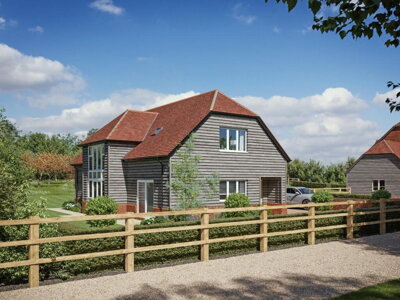
Browse 1 home new builds in Little Bedwyn from local developer agents.
The larger property sector typically features multiple bathrooms, substantial reception space, and private gardens or off-street parking. Four bedroom houses in Little Bedwyn span detached, semi-detached, and occasionally terraced configurations, with styles ranging from period properties to modern executive homes.
The Little Bedwyn property market presents a picture of sustained value and quiet demand. Our data shows that properties on the village High Street have achieved impressive sale prices, with detached homes averaging £559,500, semi-detached properties at £551,667, and terraced houses reaching £576,250. These figures reflect the premium commanded by period properties in conservation villages where supply is inherently limited by planning controls and the historic nature of the built environment. The most coveted properties tend to be 4-bedroom detached houses and well-presented 3-bedroom semi-detached homes that offer family accommodation without compromising on character.
Recent market activity in the SN8 postcode area has shown resilience despite broader national fluctuations. Properties in the SN8 3JR postcode have risen by 2.2% over the past year, 17.9% over five years, and an impressive 40.1% over the past decade, demonstrating the long-term investment potential of homes in this part of Wiltshire. While the wider Little Bedwyn, Marlborough area has seen prices decline by an average of 3.3% since March 2022, this correction reflects broader economic conditions rather than any weakness in the fundamental appeal of the village itself. The rarity of properties coming to market, combined with consistent demand from buyers seeking village life within commuting distance of London, supports values in this established conservation area.
It is worth noting that Little Bedwyn, Marlborough, SN8 has seen no recorded sales in the last twelve months, with the most recent transaction dating to October 2022. This scarcity of available stock is typical of conservation villages where the planning authority restricts new development and the existing housing stock is tightly held by long-term owners. Over the past 22 years, there have been only 3 property sales recorded in the SN8 3JR postcode area, underscoring how rare opportunities to purchase in this village genuinely are. For buyers who identify a suitable property, acting decisively is advisable given the limited pool of available homes.

Life in Little Bedwyn revolves around the rhythms of the English countryside. The village name derives from the Old English "Beddeleah" meaning "the meadow where bedstraw grows," and the settlement has preserved its agricultural character and linear village form for centuries. The population stood at 250 according to the 2011 census, though numbers have fluctuated historically, reaching a peak of 579 in 1871 before the decline of local industries shifted the community towards residential living. Today, the village maintains a close-knit atmosphere where neighbours know one another and community spirit is sustained through shared events and the patronage of local establishments.
The architectural character of Little Bedwyn is defined by its construction materials and building traditions. Flint rubble with Bath stone dressings, local red brick, thatched roofs, clay tiles, and timber framing create a streetscape of exceptional visual coherence. The Church of St. Michael dates from the 12th or 13th century with 15th-century additions and 1868 restoration, while the Manor House stands as an elegant mid-18th century red brick residence. Late 18th and early 19th-century cottages, many thatched and built in the local brick tradition, line the village lanes and contribute to the conservation area that was formally designated in October 1985. Walking through Little Bedwyn, you are surrounded by buildings that tell the story of English rural architecture across five centuries.
The surrounding countryside offers excellent walking and cycling opportunities, with the Kennet and Avon Canal providing a scenic route for leisurely rides towards Great Bedwyn or towards Marlborough. Savernake Forest, part of which falls within the Little Bedwyn parish boundary, is a registered Grade II* park and garden offering ancient woodland walks and bridleways. The canal towpath is particularly popular during summer months when boaters traverse the waterway, bringing visitors to the village pubs and shops. Tourism represents an important element of the local economy, with public houses and community venues benefiting from visitors exploring this picturesque corner of Wiltshire.
Understanding the traditional construction methods used in Little Bedwyn helps buyers appreciate the character of local properties while identifying potential maintenance concerns. The predominant building materials reflect the local geology and resources: flint rubble with Bath stone dressings forms the fabric of the medieval Church of St. Michael, while the mid-18th century Manor House showcases elegant red brick construction. Late Georgian and Victorian cottages were typically built using local red brick, often with clay tile or thatched roofs, creating the warm, honey-toned streetscape visitors see today.
Timber framing represents another significant construction tradition in the village. A 17th-century timber-framed farmhouse in Little Bedwyn has much of its original walling clad with brick, illustrating how local builders adapted construction methods over time. This combination of timber frame and solid brick wall construction creates buildings with different structural behaviour patterns, and buyers should understand how these traditional approaches affect modern maintenance and energy efficiency improvements. Solid wall properties cannot be treated the same as modern cavity wall construction when considering insulation upgrades or damp remediation.
Traditional solid wall construction, prevalent in most pre-1919 properties in Little Bedwyn, typically lacks the damp-proof courses found in modern buildings. Lime-based mortars and renders, used throughout the village's historic buildings, allow walls to breathe in ways that modern cement-based products do not. This breathability is essential for the long-term health of traditional structures but requires different maintenance approaches than modern properties. Buyers planning renovation work should budget for specialist advice on appropriate materials and techniques for listed and conservation area properties.
Families considering a move to Little Bedwyn will find educational provision available in the surrounding area, with primary schools serving the village and secondary options within reasonable daily travel distance. The village falls within the Wiltshire local education authority, which manages a network of primary and secondary schools across the county. Parents should research specific catchment areas and admission arrangements, as these are determined by the local authority and can vary depending on proximity to schools and available places. Open days and visits to potential schools are strongly recommended to assess the best fit for your children's needs.
Wiltshire schools consistently perform well in national assessments, with the county maintaining standards that attract families to the area. For families requiring independent schooling, options exist within the broader Marlborough area and surrounding towns. The proximity to Marlborough College, a renowned independent school founded in 1843, adds to the educational prestige of the wider area. Parents are encouraged to check current Ofsted ratings and performance data for all schools within reasonable commuting distance, as these can influence property values and the desirability of specific areas within the village. Transport arrangements for secondary school pupils typically involve school buses or private transport, as is common across rural Wiltshire.
Many families choosing Little Bedwyn accept that secondary school commutes will involve travelling to Marlborough, Hungerford, or surrounding towns. The school bus network serving these routes can add considerable time to the school day, and parents should factor this into their decision-making process. Some families opt for boarding arrangements for secondary-aged children, particularly given the proximity to Marlborough College and other independent schools in the region. The commute from Little Bedwyn to Marlborough takes approximately 20 minutes by car, while Hungerford secondary schools are accessible in around 15 minutes.
Little Bedwyn enjoys excellent transport connections for a village of its size, making it particularly attractive to commuters who require access to major employment centres. Bedwyn railway station, located in the neighbouring village of Great Bedwyn, provides regular services on the Reading to Taunton line operated by Great Western Railway. From Bedwyn station, passengers can reach Reading in approximately 45 minutes, where connections to London Paddington are available via the Elizabeth line. The station also provides direct access to the south-west, with regular services to Salisbury, Southampton, and beyond. This railway connection transforms Little Bedwyn from a purely rural retreat into a viable base for professionals working in London or the Thames Valley.
For road travel, the A4 corridor provides access to Marlborough approximately 8 miles to the north-west and Hungerford approximately 5 miles to the south-east. The M4 motorway, accessible via the A4 at Hungerford or further north, connects the area to Swindon, Reading, Bristol, and London. Bus services operate within the local area, though frequencies are limited typical of rural provision, making private transport advantageous for daily needs. Cyclists benefit from quieter country lanes, though the Wiltshire countryside does present challenging gradients. For international travel, London Heathrow and London Gatwick airports are accessible within approximately 90 minutes by car, providing global connectivity for business and leisure travellers.
The popularity of the area with commuters has influenced local house prices significantly. Research indicates that 54% of residents in nearby Great Bedwyn travel more than ten miles to work, reflecting the predominantly residential character of the village and the lack of extensive local employment opportunities. This commuter-driven demand supports property values but also means that access to a car is considered essential for daily life. Homebuyers without private transport should carefully consider bus service frequencies and whether proximity to Bedwyn railway station would be necessary for their circumstances.

Given the age and traditional construction methods prevalent in Little Bedwyn, prospective buyers should familiarise themselves with defects commonly found in period properties. Dampness represents one of the most frequent issues in historic buildings, manifesting as rising damp from failed or absent damp-proof courses, penetrating damp from leaks in walls, roofs, or windows, and condensation resulting from poor ventilation in tightly sealed properties. The solid wall construction used throughout the village does not accommodate standard damp-proofing methods, and remediation often requires specialist advice from contractors experienced in traditional buildings.
Roof deterioration affects many period properties in the village, with missing or broken tiles, leaks, sagging areas, poor insulation, and deterioration of ridge mortar and flashings requiring ongoing maintenance. Thatched roofs, while contributing significantly to the village's character, require specialist knowledge and regular maintenance. The timber structures beneath traditional roofs are vulnerable to rot when water ingress occurs, and early intervention prevents more extensive and costly repairs. Buyers should commission thorough roof inspections as part of any survey, particularly for properties where roof age is unknown or where previous maintenance appears minimal.
Subsidence presents a particular risk in Little Bedwyn due to the underlying clay deposits that characterise northern Wiltshire. Clay-rich soils undergo shrink-swell behaviour in response to moisture changes, causing ground movement that can damage foundations and structures. Properties with shallow traditional foundations are especially vulnerable, and buyers should look for signs of cracking, sticking doors or windows, and any history of foundation work or underpinning. The BGS GeoSure dataset identifies areas where geological deposits create elevated shrink-swell risk, and this information should form part of any due diligence for property purchases in the village.
Spend time exploring Little Bedwyn at different times of day and week. Visit local amenities, speak with residents, and understand the community character. Check local planning applications at the Wiltshire Council planning portal to identify any proposed developments that might affect your chosen area. Given the limited number of properties that become available in the village, understanding your priorities before beginning your search will help you act quickly when suitable homes appear on the market.
Contact a mortgage broker or lender to obtain an agreement in principle before beginning your property search. This strengthens your position when making offers and demonstrates to sellers that you have secured financing. With average property values around £611,559, most buyers will require substantial mortgages. Having your finances organised before making an offer on a property in this competitive market can make the difference between success and disappointment.
Work with local estate agents who know the Little Bedwyn market intimately. View properties at various stages of the market, paying particular attention to the condition of older properties, listed building status, and any conservation area restrictions that might affect future plans. Our team can connect you with local agents who understand the nuances of village property transactions and can advise on appropriate offers given the scarcity of available stock.
Given the age of many Little Bedwyn properties, a thorough survey is essential. For properties valued around £611,559, a Level 2 survey typically costs approximately £586, though this varies based on property size, age, and complexity. This investment identifies defects in period properties, assesses roof conditions, checks for damp and timber issues, and evaluates the building's overall condition. For older or more complex properties, particularly listed buildings, a Level 3 survey may be advisable.
Appoint a solicitor with experience in rural and listed property transactions. They will handle searches, title checks, and the legal transfer of ownership. Budget for costs from approximately £499 for basic conveyancing, though more complex transactions involving listed buildings may cost significantly more. Our conveyancing partners understand the specific requirements of conservation area and listed property transactions in Wiltshire.
Once all surveys, searches, and negotiations are complete, your solicitor will exchange contracts and set a completion date. On completion day, the remaining balance is transferred and you receive the keys to your new home in Little Bedwyn. Given the scarcity of properties in the village, completion dates are often flexible to accommodate the logistics of sellers and buyers, but having your finances and legal work organised will ensure a smooth transaction.
Buyers considering properties in Little Bedwyn should be aware of several local-specific factors that can affect purchase decisions and future ownership costs. The village sits on clay deposits that are susceptible to shrink-swell behaviour, meaning the ground can expand and contract with moisture changes. This geological characteristic can cause foundation movement and subsidence, particularly in older properties with shallow traditional foundations. A thorough structural survey is strongly recommended for any property purchase, and buyers should look for signs of cracking, sticking doors or windows, and any history of foundation work or underpinning.
The proximity to the River Dun and Kennet and Avon Canal introduces flood considerations that buyers should investigate carefully. Nearby Great Bedwyn has experienced flooding history, and the Wiltshire Local Flood Risk Management Strategy identifies river, surface water, groundwater, and sewer flooding as interconnected risks in this part of the county. The sewage treatment works in Great Bedwyn have been regularly overwhelmed during heavy rainfall, leading to sewage discharge into the canal and River Dun. Wiltshire experienced severe flooding between December 2013 and March 2014 affecting over 500 properties, with surface water runoff being a significant problem. Properties in low-lying areas or those adjacent to watercourses warrant particular scrutiny.
Little Bedwyn's conservation area status and the presence of 23 listed buildings mean that any alterations, extensions, or significant works may require consent from Wiltshire Council. These designations preserve the village's character but also impose obligations on owners to maintain properties in accordance with conservation principles. Prospective buyers should understand what listed building consent covers, as obligations can extend to internal as well as external features. The predominantly traditional construction methods, including timber framing, thatch roofing, and solid wall insulation, may require specialist approaches to modernisation and energy efficiency improvements. Buildings insurance costs may be higher for properties with significant flood exposure or those designated as listed buildings.
The average sale value for properties in Little Bedwyn, Marlborough, SN8 is £611,559, with prices per square foot averaging £358. Prices range from approximately £276,939 for 2-bedroom freehold houses to £924,091 for 5-bedroom detached homes. Properties on the High Street have achieved impressive values, with terraced houses averaging £576,250 and detached properties at £559,500. The wider SN8 3JR postcode area shows higher values at approximately £2,099,810, reflecting the premium nature of properties in this specific location. The scarcity of properties coming to market - no sales recorded in the past twelve months - means that achieved prices can vary significantly depending on competition at the time of sale.
Little Bedwyn falls under Wiltshire Council for council tax purposes, with bands ranging from A through H based on property valuation. Period properties and listed buildings may have been valued based on historical criteria that differ from modern assessments, and some older village properties may benefit from lower banding due to their historic character. Prospective buyers should check the current council tax band for any specific property through the Wiltshire Council website or by requesting this information during the conveyancing process. Budget figures for annual council tax charges can be obtained from Wiltshire Council's online portal before committing to a purchase.
Little Bedwyn itself is a small village without its own primary or secondary school, but the surrounding area offers educational provision across all levels. The village falls within Wiltshire's education catchment system, with primary schools available in nearby Great Bedwyn and other neighbouring villages. Secondary education options include schools in Marlborough, including St John's Academy, and Hungerford School, with travel times of approximately 15-20 minutes by car. The nearby town of Marlborough is home to Marlborough College, a prestigious independent school founded in 1843 that serves day and boarding pupils. Parents should check current Ofsted ratings and admission criteria for all schools within reasonable commuting distance, as catchment boundaries can change annually.
Little Bedwyn benefits from proximity to Bedwyn railway station in Great Bedwyn, which provides regular services on the Reading to Taunton line operated by Great Western Railway. Services reach Reading in approximately 45 minutes, where connections to London Paddington are available via the Elizabeth line, providing a viable commute option for London-based professionals. The station also offers direct services to Salisbury, Southampton, and the south-west. Bus services operate in the local area, though frequencies reflect rural provision with limited evening and weekend services. For those dependent on public transport, living within walking distance of Bedwyn station would be advantageous, as bus connections to the station may be limited.
Little Bedwyn offers several characteristics that make it attractive for property investment, including its conservation area status with 23 listed buildings that severely restrict new property supply. The SN8 3JR postcode has shown 40.1% value growth over the past decade and 17.9% over five years, demonstrating sustained capital appreciation. Properties command premiums due to their character, location, and the rarity of available stock - with only 3 sales recorded in the postcode over 22 years. The rural location limits rental demand, so investors should consider whether capital appreciation or eventual sale aligns with their investment strategy rather than expecting significant rental yields. The Kennet and Avon Canal and proximity to Savernake Forest add tourism value to the area.
Stamp Duty Land Tax applies to all property purchases in England with no SDLT on the first £250,000 of the purchase price, 5% on the portion from £250,001 to £925,000, 10% on £925,001 to £1,500,000, and 12% above £1,500,000. Given that average Little Bedwyn prices of £611,559 would attract approximately £8,078 in SDLT for a standard buyer, first-time buyers benefit from relief on the first £425,000, reducing their liability significantly on most village properties. For buyers purchasing additional properties or buy-to-let investments, a 3% surcharge applies to each SDLT band, significantly increasing the total tax liability. Our conveyancing partners can provide accurate calculations based on your specific circumstances.
Little Bedwyn sits on the River Dun and near the Kennet and Avon Canal, introducing flood considerations for some properties in the village. The Wiltshire Local Flood Risk Management Strategy identifies multiple flood sources including rivers, surface water, groundwater, and sewers, with local geology being a significant factor in flood risk. Nearby Great Bedwyn has a history of flooding, and the clay-dominated geology of northern Wiltshire contributes to flood risk from excessive surface water runoff during intense rainfall. The Risk of Flooding from Surface Water map shows areas where rainwater is likely to flow and accumulate during high rainfall events, and buyers should request flood risk searches before purchasing any property in low-lying areas.
Given that Little Bedwyn has 23 listed buildings including the Grade I Church of St. Michael and the Grade II* Knowle House, buyers purchasing listed properties should consider specialist surveys beyond standard RICS Level 2 assessments. Listed buildings require surveys that address unique construction, materials, and the strict conservation regulations governing any alterations or repairs. Standard surveys may not fully address issues specific to older buildings, such as timber frame movement and decay, lime mortar degradation, and compliance with listed building regulations. Our RICS Level 3 Survey service provides more detailed assessment suitable for period properties, listed buildings, and non-standard construction throughout the village.
Understanding the full costs of purchasing property in Little Bedwyn helps buyers budget accurately and avoid surprises during the transaction process. The Stamp Duty Land Tax on a typical Little Bedwyn property priced at £611,559 would amount to approximately £8,078 for a standard buyer purchasing with a mortgage. First-time buyers would benefit from relief on the first £425,000, reducing their SDLT to approximately £9,325 on a £625,000 property, though relief phases out completely above £625,000. For buyers purchasing additional properties or buy-to-let investments, a 3% surcharge applies to each SDLT band, significantly increasing the total tax liability on what may already be premium-priced village properties.
Beyond stamp duty, buyers should budget for survey costs, solicitor fees, and various third-party searches that form part of the conveyancing process. A RICS Level 2 survey for a property valued around £611,559 would typically cost approximately £586, though this varies based on property size, age, and complexity. For the older period properties common in Little Bedwyn, a Level 3 structural survey may be advisable at approximately £600 or more, given the prevalence of traditional construction methods, timber framing, and listed building status. Older properties constructed before 1900 typically incur survey premiums of 20-40% due to their complexity, and listed building status may add further costs.
Solicitor fees typically start from £499 for straightforward transactions but increase for leasehold properties, listed buildings, or complex titles involving historic boundaries or rights of way. Land Registry searches, local authority searches, drainage and water searches, and environmental searches can add several hundred pounds to the total costs. Buyers should also account for removal costs, potential renovation expenses for period properties, and the ongoing costs of ownership including council tax, utilities, and buildings insurance. Properties in flood risk areas or those with listed building status may incur higher insurance premiums, and buyers should obtain buildings insurance quotes before completing their purchase.
From 3.84% APR
From 3.84% APR representative
From £499
Expert property solicitors
From £380
Detailed inspection for conventional properties
From £600
Comprehensive structural survey for older properties
Properties New Builds In London

Properties New Builds In Plymouth

Properties New Builds In Liverpool

Properties New Builds In Glasgow

Properties New Builds In Sheffield

Properties New Builds In Edinburgh

Properties New Builds In Coventry

Properties New Builds In Bradford

Properties New Builds In Manchester

Properties New Builds In Birmingham

Properties New Builds In Bristol

Properties New Builds In Oxford

Properties New Builds In Leicester

Properties New Builds In Newcastle

Properties New Builds In Leeds

Properties New Builds In Southampton

Properties New Builds In Cardiff

Properties New Builds In Nottingham

Properties New Builds In Norwich

Properties New Builds In Brighton

Properties New Builds In Derby

Properties New Builds In Portsmouth

Properties New Builds In Northampton

Properties New Builds In Milton Keynes

Properties New Builds In Bournemouth

Properties New Builds In Bolton

Properties New Builds In Swansea

Properties New Builds In Swindon

Properties New Builds In Peterborough

Properties New Builds In Wolverhampton

Enter your details to see if this property is within your budget.
Loans, cards, car finance
Estimated property budget
Borrowing + deposit
You could borrow between
Typical borrowing
Monthly repayment
Est. at 4.5%
Loan-to-value
This is an estimate only. Your actual budget may vary depending on interest rates, credit history, and personal circumstances. For an accurate affordability assessment, speak to one of our free mortgage advisors.
This calculator provides estimates for illustrative purposes only and does not constitute financial advice. Your home may be repossessed if you do not keep up repayments on your mortgage. Estimates based on 4.5% interest rate, repayment mortgage. Actual rates depend on your circumstances.
Homemove is a trading name of HM Haus Group Ltd (Company No. 13873779, registered in England & Wales). Homemove Mortgages Ltd (Company No. 15947693) is an Appointed Representative of TMG Direct Limited, trading as TMG Mortgage Network, which is authorised and regulated by the Financial Conduct Authority (FRN 786245). Homemove Mortgages Ltd is entered on the FCA Register as an Appointed Representative (FRN 1022429). You can check registrations at NewRegister or by calling 0800 111 6768.

We use cookies to show you personalised content and improve your experience of our website. Find out more in our Privacy policy and Cookie policy.