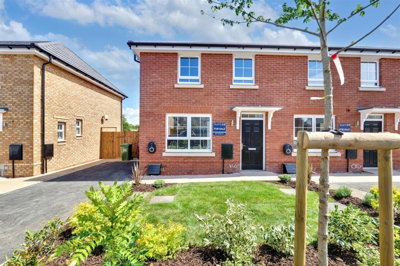
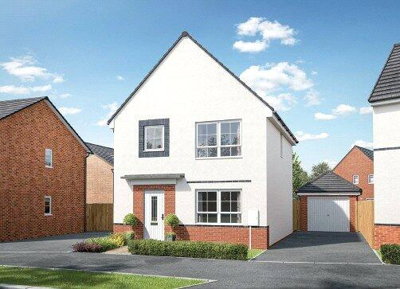
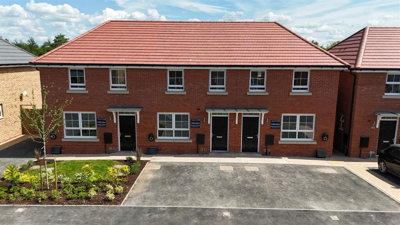
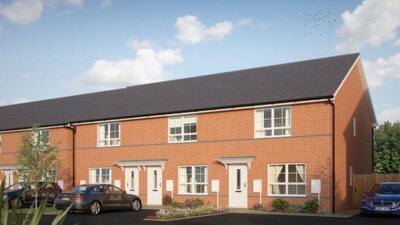
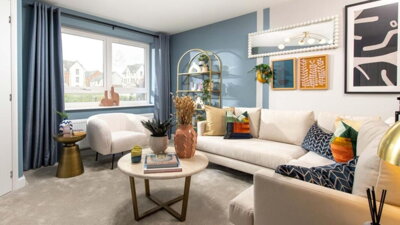
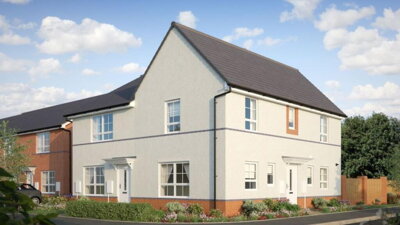
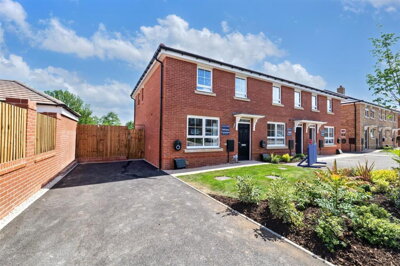
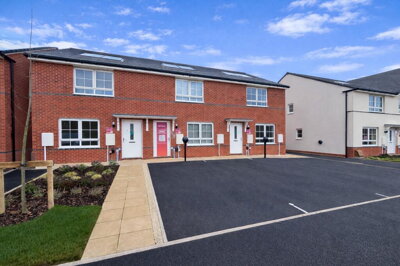
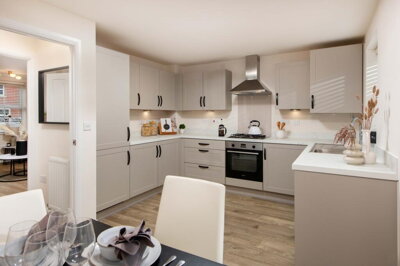
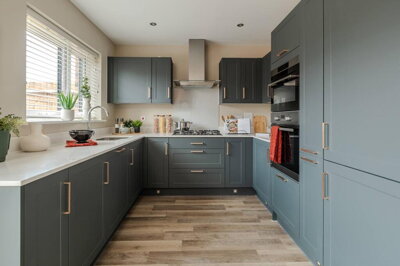
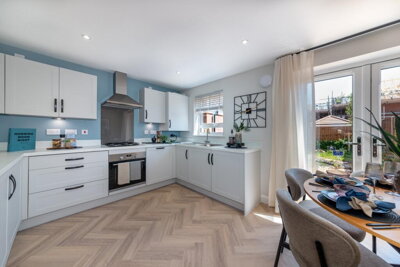
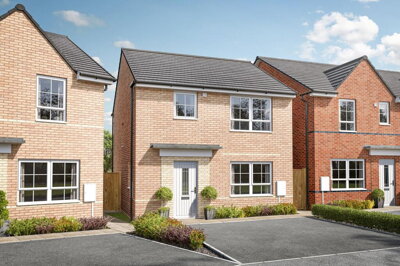
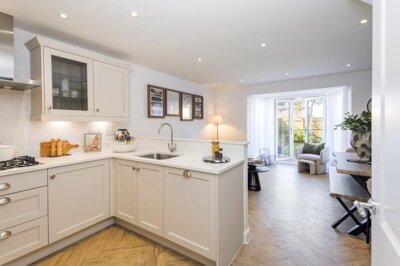
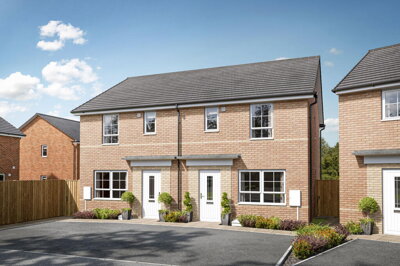
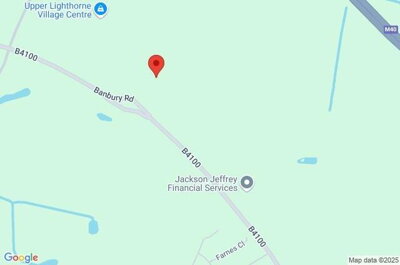
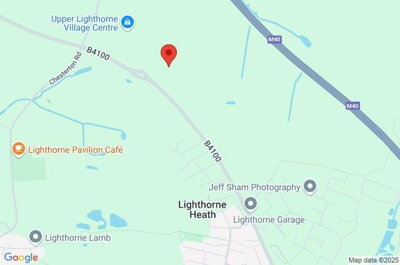
Browse 24 homes new builds in Lighthorne, Stratford-on-Avon from local developer agents.
Three bedroom properties represent a significant portion of the Lighthorne housing market, offering space for families with multiple reception rooms and gardens in many cases. Browse detached, semi-detached, and terraced options ranging across new residential developments.
£525k
1
0
11
Source: home.co.uk
Showing 1 results for 3 Bedroom Houses new builds in Lighthorne, Stratford-on-Avon. The median asking price is £525,000.
Source: home.co.uk
Detached
1 listings
Avg £525,000
Source: home.co.uk
Source: home.co.uk
The Lighthorne property market has demonstrated notable activity over the past year, with house prices showing strong growth in certain segments. According to Rightmove data, overall house prices in the area were 22% up on the previous year, though still sitting 22% below the 2022 peak of £910,008. Plumplot recorded 6 sales in Lighthorne Parish during 2025 with an average price of £635,833, compared to 8 sales in 2024 averaging £520,625. This upward trajectory reflects growing demand for properties in this desirable rural location, particularly those offering generous space and proximity to major employers in the automotive sector.
Property types available in Lighthorne span a wide spectrum to suit various buyer requirements and budgets. Detached homes command the highest prices, with averages ranging from £486,960 to £893,220 depending on the data source and exact location, reflecting the premium placed on space and privacy in this rural setting. Semi-detached properties typically fetch between £303,440 and £395,000, offering excellent value for families seeking a balance between character and practicality. Terraced homes in the village centre, many constructed from the distinctive White Lias limestone that defines Lighthorne's built environment, generally range from £302,000 to £303,288, presenting attractive options for first-time buyers or those seeking a smaller footprint.
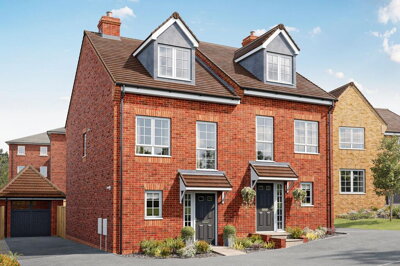
New build opportunities in and around Lighthorne have expanded significantly through major developments including Bamford Park at Windmill View by Linden Homes, Valiant Fields by Taylor Wimpey in Upper Lighthorne, Heritage Grange by David Wilson Homes, and Aston Grange by Barratt Homes. These developments offer two to five-bedroom homes ranging from approximately £190,000 for a one-bedroom maisonette at Valiant Fields up to £622,000 for larger detached properties at Heritage Grange and Aston Grange. Vistry Group received planning approval in September 2025 for phase two of Windmill View, adding 280 homes to the Upper Lighthorne masterplan that will eventually provide around 1,000 homes in total.

Lighthorne village is defined by its remarkable architectural heritage, with the majority of the settlement falling within a designated Conservation Area that preserves its historic character. Twenty Grade II listed buildings dot the village, including the Parish Church of St Laurence with its tower built in 1771 and the remainder constructed in 1875-76, The Old Rectory, and several historic farmhouses dating from the 16th and 18th centuries. The village centre centres around The Green and the area surrounding St Laurence Church, creating an atmospheric setting that feels removed from modern pressures while maintaining excellent connections to surrounding towns.
The demographic composition of Lighthorne reflects its appeal to families and those seeking a quiet rural lifestyle. The 2013 Housing Needs Survey indicated an ageing population with 91 out of 136 residents aged 45 and above, though the development of Upper Lighthorne has brought younger families to the area. Upper Lighthorne, which was formerly known as Lighthorne Heath and has grown to an estimated population of 1,561 by 2024, represents a significant expansion of the community with new facilities and amenities being developed. The village's location within the rural triangle formed by Warwick, Stratford-upon-Avon, and Leamington Spa places residents within easy reach of cultural attractions, shopping districts, and employment opportunities.
The local economy benefits substantially from proximity to major automotive employers at Gaydon, including Jaguar Land Rover and Aston Martin facilities. These companies draw workers to the region and contribute to sustained demand for quality housing in surrounding villages like Lighthorne. The planned village centre at Upper Lighthorne will provide additional local employment and services, reducing the need for residents to travel for everyday requirements and further establishing the area as a sustainable community.

Education provision in Lighthorne serves families through a network of primary schools in the surrounding villages and secondary schools in nearby market towns. The village's small scale means that younger children typically attend primary schools in neighbouring communities, with transport arrangements available for families requiring school bus services. Primary schools in the wider area provide foundation stage and key stage one education, with good Ofsted ratings reflecting the quality of teaching and pastoral care available to young learners in this part of Warwickshire.
Secondary education options for Lighthorne residents include schools in Stratford-upon-Avon, Warwick, and Southam, each offering comprehensive curricula and a range of extracurricular activities. Parents should research current catchment areas and admissions criteria, as these can change annually and directly impact which schools children can access from Lighthorne addresses. The presence of grammar schools in Warwickshire provides additional options for academically selective pupils, with entrance examinations typically taken during the final year of primary school.
For families considering sixth form education or further study, the proximity of Warwick School, Stratford-upon-Avon College, and the University of Warwick expands opportunities significantly. These institutions offer A-level programmes, vocational qualifications, and undergraduate degrees, ensuring that students from Lighthorne have clear progression pathways regardless of their academic interests or career ambitions. The strong university presence in the region also contributes to the overall desirability of the area for families planning their children's educational journey over the long term.
Lighthorne enjoys excellent connectivity through the M40 motorway corridor, placing London, Birmingham, Oxford, and the wider national motorway network within straightforward reach. Junction 12 of the M40 at Warwick provides quick access to the motorway for residents, while the A429 and A46 trunk roads offer alternative routes for regional travel. This strategic positioning makes Lighthorne particularly attractive to commuters working in major cities but seeking the lifestyle benefits of rural Warwickshire living.
Rail services from nearby stations at Warwick Parkway, Leamington Spa, and Stratford-upon-Avon provide additional commuting options for those working in Birmingham, London, or other regional centres. Warwick Parkway station offers direct services to Birmingham Snow Hill and London Marylebone via the Chiltern main line, with journey times to the capital taking approximately 90 minutes. Leamington Spa station provides further connectivity through West Midlands Trains services, connecting passengers to destinations across the rail network. Bus services operated by Stagecoach and local operators link Lighthorne with surrounding villages and market towns, though frequency may be limited on weekends and evenings.
For cycling enthusiasts, the Warwickshire countryside offers scenic routes through villages and farmland, though the rolling terrain requires some fitness. National Cycle Route 41 passes through the region, providing longer-distance options for recreational cycling and sustainable commuting where feasible. The village itself has limited parking, reflecting its historic layout, though newer developments at Upper Lighthorne incorporate contemporary parking standards including electric vehicle charging points in line with modern requirements.
Spend time exploring Lighthorne at different times of day and week to understand the community atmosphere, noise levels, and local amenities. Visit The Green, St Laurence Church, and The Antelope Inn to appreciate the village's historic character. Research the difference between properties in the conservation village and those in the new Upper Lighthorne development to determine which environment suits your lifestyle preferences.
Before scheduling viewings, obtain a mortgage agreement in principle from a lender to understand your budget and demonstrate your seriousness to sellers. Property prices in Lighthorne range significantly, from around £302,000 for terraced homes to over £800,000 for detached properties, so understanding your financial position early helps focus your search effectively.
Work with local estate agents familiar with Lighthorne to arrange viewings of properties matching your criteria. Pay particular attention to the construction materials and condition of older properties, many of which feature traditional White Lias limestone walls and may require specialist surveys given the local geology and conservation area status.
For any property you seriously consider purchasing, commission a RICS Level 2 Survey to assess the condition thoroughly. Given Lighthorne's mix of older properties and new builds, this survey can identify issues such as damp, roof condition, and potential subsidence risks related to the local Boulder Clay geology. Properties above £500,000 typically cost around £586 for a comprehensive survey.
Choose a conveyancing solicitor with experience in Warwickshire property transactions, particularly those familiar with conservation areas and listed buildings if applicable. The solicitor will conduct local searches, check title deeds, and manage the legal transfer of ownership through to completion.
Once all surveys, searches, and mortgage arrangements are finalised, the solicitor will coordinate the exchange of contracts and set a completion date. Properties in Lighthorne typically complete within 4-8 weeks of exchange, with the keys handed over on the agreed date.
Properties in Lighthorne showcase two distinct construction traditions that buyers should understand when evaluating a potential purchase. The historic village centre features predominantly White Lias limestone construction, a pale grey porcellanous calcite-mudstone that weathers to cream or pale brown tones. This distinctive local stone appears throughout the village in walls, cobbled pavements, and traditional farm buildings, with some properties featuring quoins and dressings in Horton Stone transported from the Burton Dassett area. Newer properties in Upper Lighthorne follow contemporary construction methods with energy-efficient features including solar panels and triple glazing.
The underlying Boulder Clay geology presents specific considerations for property buyers throughout the Lighthorne area. This expansive clay layer, deposited during the last Ice Age and covering much of the surrounding geology, creates potential shrink-swell risks that can affect foundations over time. Changes in soil moisture content, whether from drought conditions or heavy rainfall, can cause ground movement particularly in the upper 1.5-2 metres of the subsurface. Several older cottages on The Bank and Post Office Lane sit on a natural spring line where groundwater emerges at the junction between permeable limestone and impervious clay, requiring particular attention to drainage and damp-proofing measures.
Our inspectors frequently identify damp as a primary concern in Lighthorne's older properties, where traditional lime mortar construction differs significantly from modern cement-based approaches. Rising damp, penetrating damp through weathered stone walls, and condensation issues commonly affect buildings constructed before the introduction of modern building regulations. The White Lias limestone used extensively throughout the village, while durable, requires periodic repointing with appropriate lime mortar to maintain weather resistance. Properties featuring solid walls rather than cavity construction typically experience higher heat loss and may show signs of condensation during colder months.
Roof condition represents another area where our team commonly finds defects during surveys of Lighthorne properties. Traditional slate and stone tile roofs on older buildings require regular maintenance to prevent water ingress, with missing or damaged covering, deteriorated flashings, and sagging gutters serving as early warning signs. Flat roof sections on some historic properties can be particularly problematic as felt and tar products degrade over time. In newer properties, our inspectors assess the quality of modern roofing materials and check for adequate ventilation to prevent condensation build-up in roof spaces.
Electrical systems in older Lighthorne properties often require careful evaluation, as wiring installed to outdated specifications may not meet current safety standards. Properties constructed before the 1970s may still contain aluminium wiring or early PVC installations that have deteriorated, requiring partial or complete rewire before occupation. Our surveyors check consumer units, visible wiring, socket outlets, and light fittings for signs of damage, overloading, or non-compliance with current regulations. Any property where electrical work appears incomplete or outdated should prompt further investigation by a qualified electrician before proceeding with a purchase.
Properties within the Lighthorne Conservation Area or those carrying Grade II listed status face additional considerations that our surveyors address in detail. Listed Building Survey services provide comprehensive assessments focusing on traditional building techniques, conservation best practices, and compliance with planning requirements. Twenty Grade II listed buildings exist within Lighthorne, including Curacy Farmhouse dating from the 16th century, the Parish Church of St Laurence, and various historic cottages along Church Lane and The Green. Any works affecting listed buildings require specialist contractors and may need consent from Stratford-on-Avon District Council, factors that significantly impact renovation budgets and timelines.
Buyers considering properties in Lighthorne should pay particular attention to the construction materials and age of buildings, given the village's significant heritage. The predominant use of White Lias limestone in older properties requires careful assessment for weathering, structural integrity, and any signs of movement or water penetration. Properties on The Green and Church Lane often feature traditional lime mortar pointing that requires periodic maintenance, which differs significantly from modern cement-based mortars used in newer construction.
The local geology presents specific considerations for property buyers, as the underlying Boulder Clay and Rhaetic beds create potential shrink-swell risks that can affect foundations over time. Properties on The Bank and Post Office Lane sit on a spring line where groundwater emerges at the junction of limestone and clay, requiring particular attention to drainage and damp-proofing measures. Any signs of cracking, subsidence, or uneven floors should be investigated thoroughly by a structural engineer before proceeding with a purchase.
Conservation Area restrictions apply to all properties within Lighthorne village, meaning that exterior alterations, extensions, and certain works may require planning permission from Stratford-on-Avon District Council. Listed Building status for twenty properties in the village imposes additional requirements for any works affecting the building's character or structure. Buyers should factor these considerations into renovation budgets and timelines, as specialist contractors and heritage consents may be necessary for older properties.
House prices in Lighthorne average around £635,833 based on recent sales data from Plumplot for Lighthorne Parish, though figures vary between sources with Rightmove showing £710,000 and Zoopla at £555,000. Detached properties command the highest prices, typically ranging from £486,960 to £893,220, while semi-detached homes sell for between £303,440 and £395,000. Terraced properties in the village generally range from £302,000 to £303,288. The market has shown 22% growth year-on-year according to Rightmove data, though prices remain slightly below the 2022 peak of £910,008.
Properties in Lighthorne fall under Stratford-on-Avon District Council for council tax purposes, with banding varying by property based on the 1991 valuation. Smaller terraced cottages typically fall into Band B or C, while substantial detached family homes can reach Band G or H. You can verify the specific band for any property through the Valuation Office Agency website using the property address or council tax reference number. Council tax charges for 2024-25 range from £1,566.86 annually for Band B properties to £2,915.88 for Band H in this district.
Lighthorne village itself has limited schooling facilities due to its small size, with children typically attending primary schools in neighbouring villages and secondary schools in Stratford-upon-Avon, Warwick, or Southam. Primary schools in the wider area consistently achieve good Ofsted ratings, while secondary options include comprehensive schools and grammar schools for academically selective pupils. The proximity of Warwick School, Stratford-upon-Avon College, and the University of Warwick provides excellent further and higher education opportunities for older students. School catchment areas should be confirmed with Warwickshire County Council before purchasing, as admissions policies can change annually.
Public transport options from Lighthorne include bus services connecting to surrounding villages and market towns, though frequencies are limited on evenings and weekends. The nearest railway stations are Warwick Parkway, Leamington Spa, and Stratford-upon-Avon, offering direct services to Birmingham and London. Warwick Parkway provides the fastest rail connection to London Marylebone via the Chiltern main line, with journey times of approximately 90 minutes. For commuters, the M40 motorway provides road connectivity to London, Birmingham, and Oxford, with junction 12 at Warwick providing the nearest access point for Lighthorne residents.
Lighthorne presents several factors that make it attractive for property investment. The ongoing development of Upper Lighthorne, which will eventually provide around 1,000 homes, indicates long-term growth in the area with phase two adding 280 further properties. Proximity to major employers including Jaguar Land Rover and Aston Martin at Gaydon sustains demand for housing from commuting professionals. The conservation village status and limited supply of traditional properties help maintain values, while new-build developments from Linden Homes, Taylor Wimpey, David Wilson Homes, and Barratt Homes offer different price points for buyers. The planned village centre at Upper Lighthorne will further enhance the area's appeal and rental potential once completed.
Stamp duty rates for England apply to all Lighthorne properties. For primary residences, there is no stamp duty on purchases up to £250,000, with 5% charged on the portion between £250,001 and £925,000. For properties above £925,000, the rate increases to 10% up to £1.5 million and 12% above that threshold. First-time buyers benefit from relief on purchases up to £425,000, paying 5% on amounts between £425,001 and £625,000. Given the average property price in Lighthorne of £635,833, a typical buyer would pay approximately £19,292 in stamp duty under standard rates. Always verify current thresholds with HMRC or your solicitor, as rates can change.
Lighthorne itself is not classified as a high flood risk area, though the wider Warwick District has areas with fluvial flood risk from various watercourses. The presence of Boulder Clay in the local geology means surface water drainage can sometimes be a concern during periods of heavy rainfall. The Tach Brook near Lighthorne Heath is a local watercourse, though recent data indicates no sewage discharge issues at the treatment works serving the area. Properties on The Bank and Post Office Lane sit on a natural spring line where groundwater emerges, which can affect basement or cellar areas. We recommend checking the Environment Agency flood maps for any specific property address before purchasing.
Several major new build developments serve the Lighthorne and Upper Lighthorne area. Bamford Park at Windmill View by Linden Homes offers two to four-bedroom homes from £304,995 to £515,995 for the CV35 0AE postcode. Valiant Fields by Taylor Wimpey in Upper Lighthorne provides one to five-bedroom homes and apartments ranging from £190,000 for a maisonette up to £600,000, located at CV33 8AE. Heritage Grange and Aston Grange, developed by David Wilson Homes and Barratt Homes respectively, offer two to four-bedroom properties priced between £306,000 and £622,000 in the CV33 8AH area. All developments form part of the Upper Lighthorne masterplan that will eventually accommodate around 1,000 homes.
Understanding the full costs of purchasing property in Lighthorne extends beyond the advertised sale price. Stamp Duty Land Tax represents a significant consideration, with standard rates applying 0% on the first £250,000, 5% on amounts between £250,001 and £925,000, 10% on the next portion up to £1.5 million, and 12% on any value exceeding £1.5 million. For a typical Lighthorne property at the average price of £635,833, a buyer paying standard rates would incur approximately £19,292 in stamp duty, calculated as 5% on £385,833 above the threshold.
First-time buyers purchasing properties up to £425,000 benefit from relief that eliminates stamp duty entirely on the first £425,000, with 5% applied only to the portion between £425,001 and £625,000. This relief does not apply to purchases above £625,000, meaning first-time buyers at higher price points receive no benefit. Given the average property prices in Lighthorne, many buyers will fall outside first-time buyer relief thresholds, making the standard rates the relevant consideration.
Additional purchase costs include mortgage arrangement fees typically ranging from £0 to £2,000 depending on the lender and product chosen. Survey costs for a RICS Level 2 Survey range from approximately £400 for a one-bedroom property to £559 for a five-bedroom home, with older properties potentially incurring premiums due to their construction and condition. Conveyancing fees generally start from £499 for standard transactions, though leasehold properties, conservation area constraints, or listed building status may increase costs due to additional legal work required. Buildings insurance should be arranged from the point of exchange, typically costing between £150 and £400 annually depending on property value and coverage requirements.
Properties New Builds In London

Properties New Builds In Plymouth

Properties New Builds In Liverpool

Properties New Builds In Glasgow

Properties New Builds In Sheffield

Properties New Builds In Edinburgh

Properties New Builds In Coventry

Properties New Builds In Bradford

Properties New Builds In Manchester

Properties New Builds In Birmingham

Properties New Builds In Bristol

Properties New Builds In Oxford

Properties New Builds In Leicester

Properties New Builds In Newcastle

Properties New Builds In Leeds

Properties New Builds In Southampton

Properties New Builds In Cardiff

Properties New Builds In Nottingham

Properties New Builds In Norwich

Properties New Builds In Brighton

Properties New Builds In Derby

Properties New Builds In Portsmouth

Properties New Builds In Northampton

Properties New Builds In Milton Keynes

Properties New Builds In Bournemouth

Properties New Builds In Bolton

Properties New Builds In Swansea

Properties New Builds In Swindon

Properties New Builds In Peterborough

Properties New Builds In Wolverhampton

Enter your details to see if this property is within your budget.
Loans, cards, car finance
Estimated property budget
Borrowing + deposit
You could borrow between
Typical borrowing
Monthly repayment
Est. at 4.5%
Loan-to-value
This is an estimate only. Your actual budget may vary depending on interest rates, credit history, and personal circumstances. For an accurate affordability assessment, speak to one of our free mortgage advisors.
This calculator provides estimates for illustrative purposes only and does not constitute financial advice. Your home may be repossessed if you do not keep up repayments on your mortgage. Estimates based on 4.5% interest rate, repayment mortgage. Actual rates depend on your circumstances.
Homemove is a trading name of HM Haus Group Ltd (Company No. 13873779, registered in England & Wales). Homemove Mortgages Ltd (Company No. 15947693) is an Appointed Representative of TMG Direct Limited, trading as TMG Mortgage Network, which is authorised and regulated by the Financial Conduct Authority (FRN 786245). Homemove Mortgages Ltd is entered on the FCA Register as an Appointed Representative (FRN 1022429). You can check registrations at NewRegister or by calling 0800 111 6768.

We use cookies to show you personalised content and improve your experience of our website. Find out more in our Privacy policy and Cookie policy.