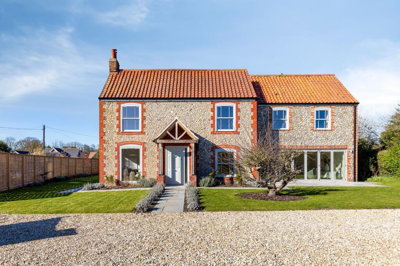
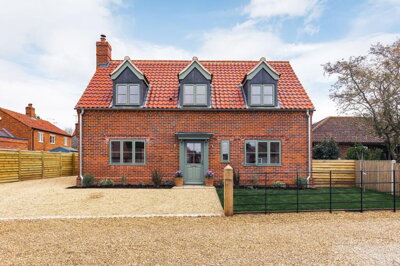
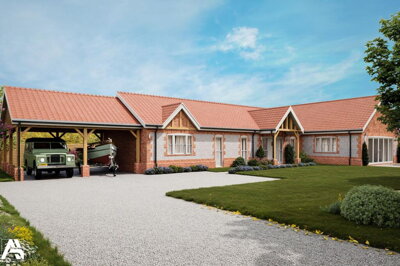
Browse 3 homes new builds in Langham from local developer agents.
The Cressing property market offers a diverse range of housing options to suit different budgets and lifestyles. Detached properties dominate the upper end of the market, with average prices around £487,640 according to Rightmove data, while Zoopla records a slightly lower figure of £481,250. Semi-detached homes provide popular family options averaging £342,071 (Rightmove) or £357,417 (Zoopla), representing good value compared to similar properties in neighbouring towns. Terraced properties in Cressing average £287,000, while flats start from approximately £165,000, offering more accessible entry points for first-time buyers or those seeking a smaller footprint.
Market activity in 2025 shows a mixed picture across property types. Detached homes have seen a modest price increase of 3.0% compared to 2024, indicating continued demand for larger family accommodation. However, semi-detached properties have dipped slightly by 1.3%, terraced homes have experienced a more significant correction of 15.1%, and flats have fallen by 9.6%. Overall, sold prices in Cressing over the last year were 11% down on the previous year and 11% below the 2021 peak of £442,864, suggesting a market that has normalised following the pandemic boom while maintaining relative stability.
New build activity continues to shape the local market, with significant development happening in and around Cressing. The Maples development by Persimmon Homes on Long Green offers two, three, and four-bedroom properties ranging from approximately £305,000 to £525,000, while Templar Green provides similar options starting from £385,000 with detached four-bedroom homes reaching around £535,000. Planning applications for up to 120 new homes south of Witham Road and a further 475 properties in Cressing Tye Green indicate sustained growth in the area, bringing approximately 600 additional homes to the village over the coming years.

Cressing is a small rural parish with a population of 1,988 residents according to the 2021 Census, offering an intimate village atmosphere that contrasts sharply with nearby urban centres. The village forms part of the Silver End and Cressing Ward alongside neighbouring parishes, with a combined population of approximately 7,000 and a density of 284.9 residents per square kilometre. The area maintains a predominantly rural character, with detached and semi-detached properties forming the majority of housing stock, reflecting the village's agricultural heritage and generous plot sizes that distinguish it from more densely populated urban areas.
The local economy shows healthy activity with an average household income of £45,800 in the Silver End and Cressing area. Construction is the most popular industry for local workers, followed by employment across various sectors. The Braintree District boasts an impressive 87.2% economic activity rate among residents aged 16-64, exceeding both Essex and national averages. Residents enjoy a moderate commute distance of 10-19km on average, with most working 31-48 hours per week, suggesting a balanced lifestyle between work and home that appeals to families and professionals alike.
Community life in Cressing revolves around its historic assets and natural surroundings. The village contains a business park serving local employment needs, while the presence of Cressing railway station makes commuting to larger employment centres straightforward. Residents benefit from proximity to both Braintree and Witham for shopping, healthcare, and leisure facilities, while the village itself maintains a peaceful atmosphere with easy access to countryside walks along the Brain Valley and surrounding farmland. The Cressing Parish Council actively supports community events and maintains local facilities, contributing to the strong sense of neighbourhood that characterises the area.

Education provision in Cressing centres on Cressing Primary School, which serves the village and surrounding hamlets. The school is conveniently located within easy walking distance of The Maples development on Long Green, making it particularly accessible for families with young children purchasing new-build properties in the village. For secondary education, pupils typically travel to schools in nearby Braintree or Witham, with several options available across the Braintree district. Parents should research specific catchment areas, as these can influence which schools children attend based on residential address.
The broader Braintree district offers a range of educational settings from primary through to further education, with various Academy schools and specialist subjects at secondary level. For families considering older properties in Cressing, the presence of several period buildings and the historic built environment provides educational opportunities beyond the classroom, with the Grade I listed Cressing Temple Barns offering insight into medieval agricultural practices and timber-framed construction techniques. The village's proximity to Colchester and Chelmsford also opens access to grammar school options for those who qualify through selective entrance examinations.
Families relocating to Cressing should note that school intake years can be highly competitive, particularly for popular primary schools serving the village. Planning ahead is advisable, as securing a place at Cressing Primary School may require purchasing property within the school's defined catchment zone. The Braintree district local education authority publishes annual admission information, and prospective buyers can verify which schools serve specific addresses by consulting the school admissions portal or contacting the council directly.
Cressing railway station provides the village's key transport link, offering direct train services to London Liverpool Street via the mainline route through Chelmsford and Stratford. This commuter connection makes the village particularly attractive to professionals working in the capital who seek a rural lifestyle without the daily grind of lengthy car journeys. The station sits within the village, making it accessible to residents on foot or by bicycle from most residential areas. Journey times to London Liverpool Street are competitive, typically taking around 50-60 minutes depending on the service.
Road connections from Cressing are equally well-developed, with the village positioned between the A12 trunk road to the south and the A120 providing links toward Braintree and beyond. The nearby town of Braintree offers extensive bus services connecting surrounding villages, while the strategic position of Cressing at the intersection of the B1018 and other local roads gives residents straightforward access to shopping, healthcare, and employment opportunities in the market towns. For those travelling by car, Stansted Airport is accessible within approximately 30 minutes, opening international travel options for business and leisure.
Local road infrastructure continues to evolve alongside new development. The Persimmon Homes development of 250 homes in Braintree Road near Galley's Corner, situated between Braintree and Tye Green, has necessitated improvements to local road access arrangements. Prospective residents should factor in potential increases in local traffic as these new developments become fully occupied, particularly during peak morning and evening travel periods when the B1018 and surrounding roads may experience heavier volumes.
Explore current listings and recently sold prices in Cressing to understand what your budget can achieve. Detached homes average £487,640 while terraced properties offer more accessible entry at around £287,000. Consider new-build options at developments like The Maples on Long Green or Templar Green off Orchard Drive if you prefer brand-new accommodation with warranties and modern energy efficiency standards.
Before arranging viewings, contact a mortgage broker to obtain an agreement in principle. This strengthens your position when making offers and demonstrates to sellers that you have financing in place. Current rates vary, so comparing options across multiple lenders can save thousands over your mortgage term. With Cressing's average property price of £396,276, most buyers will need a mortgage of around £316,000, requiring a deposit of approximately £80,000 for a 20% down payment.
Visit properties that match your criteria, both in Cressing village centre and at the newer developments between Braintree and Witham. Pay attention to the age of properties, their proximity to the railway station, and any conservation area restrictions that might affect future plans. For period properties along Church Road, The Street, or within the Cressing Conservation Area, verify whether listed building consent would be required for any proposed alterations.
Once your offer is accepted, instruct a RICS Level 2 Home Survey before proceeding. For Cressing's mix of historic and modern properties, surveys typically cost between £395 and £1,250 depending on property value and size. This professional inspection identifies any structural issues, particularly important given the clay-rich soils in Essex that can cause subsidence and the prevalence of timber-framed construction in older properties.
Choose a solicitor experienced in Essex property transactions to handle the legal work. They will conduct searches with Braintree District Council, check flooding and drainage records, and manage the transfer of ownership through to completion. Given Cressing's location along the Brain Valley and the area's ranking seventh in Essex for surface water flood risk, drainage and flood risk searches are particularly important.
Your solicitor will coordinate with the seller's legal team to exchange contracts and set a completion date. On the day, the remaining funds are transferred and you receive the keys to your new Cressing home. Budget an additional £500-1,500 for removal costs and ensure your buildings insurance is in place from the day of completion.
Cressing's housing stock spans several centuries of construction, meaning buyers may encounter properties with age-related defects that require careful assessment. Historic properties along The Street, Polecat Road, and Mill Lane often feature timber-framed construction with wattle and daub or brick nogging infill, materials that can deteriorate over time if not properly maintained. Our inspectors frequently identify timber decay, woodworm infestation, and failed pargetting (the decorative lime plasterwork traditional to Essex properties) in buildings of this age. Properties within the Cressing Conservation Area, designated along Church Road and The Street in 1981, often have unique maintenance requirements that specialist contractors should address.
The clay-rich geology underlying much of Essex creates specific challenges for property owners in Cressing. The silty clays, sandy clays, and London Clay present in the area are susceptible to shrink-swell behaviour, which occurs when moisture content changes cause the ground to expand and contract. This shrink-swell risk, classified as moderate to high across the region, represents the most damaging geohazard in Britain and can lead to subsidence, foundation movement, and cracking in both historic and modern properties. Signs of this type of movement include diagonal cracks widening above doors and windows, sticking doors or windows, and uneven floor levels. Properties with mature trees or those on plots with poor drainage are particularly vulnerable.
Roof condition requires careful scrutiny across all property ages in Cressing. Historic properties typically feature steeply pitched tiled roofs, which may have been recovered multiple times with incompatible modern materials that trap moisture. Missing or slipped tiles, sagging roof lines, and deteriorated flashings around chimneys are common findings during property surveys. The external chimney stacks prominent on older Cressing buildings are particularly susceptible to weather damage and may require repointing or structural repair. Flat roof sections on extensions or dormer conversions can suffer from failed felt, blistering, or ponding water, especially where original construction standards were inadequate.
Dampness remains one of the most frequently identified issues in Cressing's older housing stock. Rising damp occurs where original damp-proof courses have failed or been bridged by external ground levels raised over decades of garden maintenance. Penetrating damp affects properties where mortar joints have eroded, render has cracked, or lead flashings have deteriorated. Condensation problems are common in inadequately insulated properties with poor ventilation, particularly during winter months when temperature differentials are greatest. For buyers considering properties with solid walls (common in buildings pre-1920), budget for potential remedial works such as tanking, cavity wall insulation, or the installation of positive ventilation systems.
Prospective buyers in Cressing should be aware of several area-specific considerations that can affect property condition and value. The presence of clay-rich soils across Essex, including the silty clays and sandy clays of the Harwich Formation and London Clay, creates a moderate to high shrink-swell risk that can lead to ground movement. This geological factor makes a thorough structural survey essential, particularly for older properties where minor cracks might indicate more serious foundation issues. The 47 listed buildings in Cressing Parish require careful consideration, as listed status imposes restrictions on alterations, extensions, and even exterior paint colours.
Flood risk assessment is another important consideration despite current low alert levels in the village. Cressing sits along the Brain Valley, placing it within a region ranked seventh in Essex for properties at risk of surface water flooding. During extreme weather events, certain properties could be vulnerable, and a burst water main in Cressing Road in March 2019 demonstrated that localised flooding incidents can occur. Properties in lower-lying areas near watercourses or with inadequate surface water drainage should be scrutinised carefully. Review the long-term flood risk for specific properties and consider whether flood resilience measures are in place or could be installed. Properties within the Cressing Conservation Area, designated in 1981 along Church Road and The Street, face additional planning considerations that can affect renovation projects.
Building materials and construction methods vary significantly across Cressing's housing stock, requiring different assessment approaches. Within the Conservation Area, detached timber structures with clay tile roofs and weatherboarded elevations represent traditional Essex building practice, with some properties dating back to the 15th and 16th centuries. Rook Hall and The Horse Shoes are examples of vernacular buildings that may retain original construction features requiring specialist maintenance. Modern properties at developments like The Maples and Templar Green will typically feature contemporary brick and block construction with pitched tiled roofs, offering different maintenance considerations and typically benefiting from NHBC or similar structural warranties.
The overall average house price in Cressing is £396,276 according to Rightmove data. Detached properties average around £487,640, semi-detached homes cost approximately £342,071, terraced properties average £287,000, and flats start from £165,000. The market has seen an 11% reduction from the 2021 peak of £442,864, though detached properties have shown a modest 3% increase in 2025 compared to the previous year. New-build properties at The Maples and Templar Green range from approximately £305,000 for a two-bedroom home up to £535,000 for a four-bedroom detached house, providing alternatives to the existing housing stock for buyers seeking modern accommodation with warranties.
Properties in Cressing fall under Braintree District Council's jurisdiction for council tax purposes. Bands range from A through to H depending on property value, with most residential properties in the village falling within bands B to D. Terraced properties and flats typically occupy bands A to C, while larger detached family homes often fall into bands D to F. Prospective buyers should check the specific band with Braintree District Council as charges directly impact ongoing monthly costs, with annual bills varying from around £1,400 for a band A property to over £3,000 for a band F home.
Cressing Primary School serves the village and is within walking distance of new developments such as The Maples on Long Green and Templar Green off Orchard Drive. The school has been rated by Ofsted, and parents should consult the latest inspection reports when evaluating educational options. Secondary school pupils typically attend schools in nearby Braintree or Witham, with catchment areas determined by residential address and admission criteria applied annually. The broader Braintree district offers various Academy schools and grammar school options for those meeting selective entry criteria, with places allocated according to the school's oversubscription policy.
Cressing railway station provides direct services to London Liverpool Street, with journey times of approximately 50-60 minutes depending on the service and whether a change at Chelmsford is required. The station is situated centrally within the village and serves residents across Cressing, Tye Green, and surrounding hamlets. Local bus services connect to Braintree and Witham, providing access to wider public transport networks and local amenities. For car travel, the village sits between the A12 and A120 trunk roads, with Stansted Airport reachable within 30 minutes, making international travel highly accessible from Cressing.
Cressing offers several investment considerations for buyers seeking long-term value. The village benefits from excellent London commuter links via Cressing railway station, strong local employment in the construction sector (the most popular industry in the area), and ongoing new-build development bringing approximately 600 new homes plus planning applications for a further 475 properties in surrounding areas. Average household incomes of £45,800 and an 87.2% economic activity rate suggest a stable resident population with spending power. The presence of 47 listed buildings and the Cressing Temple Barns maintains local character and desirability, while new developments at The Maples, Templar Green, and land south of Witham Road add modern housing stock appealing to various buyer segments.
Stamp Duty Land Tax (SDLT) applies based on purchase price. For properties purchased from April 2025, there is no SDLT on the first £250,000 of residential property. Between £250,001 and £925,000 the rate is 5%, between £925,001 and £1.5 million it is 10%, and above £1.5 million it is 12%. First-time buyers enjoy relief on the first £425,000, with 5% applied between £425,001 and £625,000. At Cressing's average price of £396,276, most buyers would pay no stamp duty or only on amounts exceeding £250,000, resulting in a maximum SDLT charge of £7,314 for a standard buyer purchasing at the village average.
While Cressing currently has no active flood warnings from rivers, the sea, or groundwater, the area carries long-term flood risk considerations that buyers should understand. Properties in Cressing may be at risk from rivers, the sea, surface water, or groundwater, and the Braintree and Witham area ranks seventh within Essex for surface water flood risk. The village sits along the Brain Valley, which can experience elevated water levels during heavy rainfall. A burst water main in Cressing Road in March 2019 caused flooding to some homes, demonstrating that localised incidents can occur. Buyers should request a detailed flood risk assessment from the Environment Agency and consider whether specific properties have adequate drainage and any existing flood resilience measures installed.
From 4.5%
Professional mortgage advice to secure funding for your Cressing home purchase
From £499
Expert legal services for your property transaction in Cressing
From £395
Professional property survey tailored to Cressing's mix of historic and modern homes
From £60
Energy performance certificate required for your Cressing property
Understanding the full cost of purchasing property in Cressing extends beyond the advertised sale price. Stamp Duty Land Tax (SDLT) represents a significant consideration, with current thresholds (from April 2025) setting zero SDLT on the first £250,000 of residential property purchases. For a typical Cressing home at the village average of £396,276, a standard buyer would pay SDLT only on the amount exceeding £250,000, resulting in a charge of £7,314. First-time buyers benefit from more generous relief, with zero SDLT on the first £425,000, meaning many first-time purchases in Cressing would attract no stamp duty at all.
Beyond SDLT, buyers should budget for additional costs including mortgage arrangement fees (typically 0.5-1% of the loan amount), valuation fees, and survey costs. A RICS Level 2 Home Survey for a Cressing property typically ranges from £395 to £1,250 depending on the property's size and value, while an Energy Performance Certificate (EPC) costs from £60 and is legally required before marketing. For older or listed properties in Cressing, a more comprehensive RICS Level 3 Building Survey may be recommended, with costs ranging from £600 to over £1,500. Conveyancing fees for legal work typically start from £499 and cover local authority searches with Braintree District Council, Land Registry checks, and contract preparation.
Ongoing costs following purchase include council tax (Braintree District Council bands A-H), buildings and contents insurance (essential given the area's clay soil subsidence risk), and ground rent or service charges for leasehold properties. Utility costs vary significantly between older and newer properties, with modern homes at developments like The Maples typically offering superior insulation and lower energy bills compared to period properties that may require upgrading. Factor in removal costs of approximately £500-1,500 depending on distance and volume, plus potential redecoration or renovation budgets to arrive at a complete financial plan for your Cressing home purchase.
Properties New Builds In London

Properties New Builds In Plymouth

Properties New Builds In Liverpool

Properties New Builds In Glasgow

Properties New Builds In Sheffield

Properties New Builds In Edinburgh

Properties New Builds In Coventry

Properties New Builds In Bradford

Properties New Builds In Manchester

Properties New Builds In Birmingham

Properties New Builds In Bristol

Properties New Builds In Oxford

Properties New Builds In Leicester

Properties New Builds In Newcastle

Properties New Builds In Leeds

Properties New Builds In Southampton

Properties New Builds In Cardiff

Properties New Builds In Nottingham

Properties New Builds In Norwich

Properties New Builds In Brighton

Properties New Builds In Derby

Properties New Builds In Portsmouth

Properties New Builds In Northampton

Properties New Builds In Milton Keynes

Properties New Builds In Bournemouth

Properties New Builds In Bolton

Properties New Builds In Swansea

Properties New Builds In Swindon

Properties New Builds In Peterborough

Properties New Builds In Wolverhampton

Enter your details to see if this property is within your budget.
Loans, cards, car finance
Estimated property budget
Borrowing + deposit
You could borrow between
Typical borrowing
Monthly repayment
Est. at 4.5%
Loan-to-value
This is an estimate only. Your actual budget may vary depending on interest rates, credit history, and personal circumstances. For an accurate affordability assessment, speak to one of our free mortgage advisors.
This calculator provides estimates for illustrative purposes only and does not constitute financial advice. Your home may be repossessed if you do not keep up repayments on your mortgage. Estimates based on 4.5% interest rate, repayment mortgage. Actual rates depend on your circumstances.
Homemove is a trading name of HM Haus Group Ltd (Company No. 13873779, registered in England & Wales). Homemove Mortgages Ltd (Company No. 15947693) is an Appointed Representative of TMG Direct Limited, trading as TMG Mortgage Network, which is authorised and regulated by the Financial Conduct Authority (FRN 786245). Homemove Mortgages Ltd is entered on the FCA Register as an Appointed Representative (FRN 1022429). You can check registrations at NewRegister or by calling 0800 111 6768.

We use cookies to show you personalised content and improve your experience of our website. Find out more in our Privacy policy and Cookie policy.