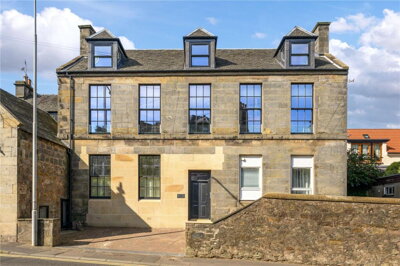
Browse 1 home new builds in KY16 from local developer agents.
One bed apartments provide a separate bedroom alongside distinct living space, bathroom, and kitchen areas. Properties in KY16 are available in various building types including new apartment complexes and contemporary developments.
£198k
4
0
286
Source: home.co.uk
Showing 4 results for 1 Bedroom Flats new builds in KY16. The median asking price is £197,500.
Source: home.co.uk
Flat
4 listings
Avg £224,500
Source: home.co.uk
Source: home.co.uk
The KW3 property market presents a diverse range of housing options to suit various budgets and preferences. Our data shows detached properties averaging £250,000, with semi-detached homes available from around £98,000 and terraced properties typically ranging from £130,750. Flats in the Lybster area average £220,000, offering apartment living for those seeking a lower-maintenance lifestyle in this coastal setting. The variation in prices across property types reflects the mix of traditional stone cottages, Victorian-era dwellings, and more modern constructions that make up the local housing stock.
Recent market trends indicate that sold prices in KW3 have increased by 2% over the past year, though they remain 1% below the 2023 peak of £188,231. This modest growth suggests a stable market with opportunities for buyers, particularly in specific postcode areas where prices have shown significant movement. For instance, KW3 6BT saw prices rise by 113% compared to the previous year, while KW3 6BA experienced a 26% decline, illustrating the importance of micro-location within the broader KW3 postcode area. These variations often reflect property condition, views, and proximity to the harbour and village centre. The postcode KW3 6AQ, which covers the main street area including the listed Grey Place buildings, saw prices fall 36% from the 2021 peak of £172,000, possibly reflecting sales of properties requiring significant renovation.
New build activity in KW3 remains limited, with no major housing developments currently active in the Lybster area. A lapsed planning permission for a bespoke family home with garage at Lybster, KW3 6DA, indicates potential for future development, but the market currently consists predominantly of existing properties. This means buyers purchasing in KW3 are likely to acquire homes with genuine character and history, many built using traditional coursed rubble stone construction methods that reflect the local architectural heritage. For buyers seeking modern specifications, renovations of existing properties offer an alternative to new build construction in this area. Our listings include both traditional properties requiring modernisation and those that have been updated to contemporary standards, allowing buyers to choose according to their preferences and budget.

Lybster offers a distinctive lifestyle rooted in its rich maritime heritage and stunning coastal landscape. The village was deliberately planned and founded in 1802, creating a structured settlement with a defined centre centred around the harbour and Main Street. Walking through Lybster today, visitors encounter traditional stone buildings, many constructed from coursed rubble with tooled dressings, that speak to the prosperity the herring fishing industry brought to the area in the 19th century. The village's Conservation Area designation protects this architectural character, ensuring that new development respects the historic built environment that defines Lybster's identity.
The local economy, while transformed from its fishing heyday, retains connections to the sea and broader industrial sectors. Gow's Lybster Ltd, an engineering firm established in 1987, operates from Scaraben House in Lybster, providing mechanical engineering services to sectors including civil nuclear decommissioning, oil and gas, defence, and renewables. This established local employer demonstrates that skilled manufacturing and engineering roles exist within the KW3 area, supporting employment for residents without requiring commuting to larger towns. Tourism also contributes to the local economy, with Lybster situated on the John o' Groats Trail, attracting walkers and visitors exploring the dramatic Caithness coastline. The harbour continues to support commercial fishing boats catching lobsters and crabs, maintaining a link to the maritime traditions that shaped the village.
The physical geography of the KW3 area is defined by its relationship with the Moray Firth. The Lybster to Dunbeath coastline is designated as a Flood Warning Area, with coastal flooding expected to affect low-lying land, roads, and properties during high tides and severe weather conditions. Properties near the harbour and lower-lying areas require particular consideration regarding flood risk, though many traditional buildings have stood for over a century without significant flooding events. The underlying geology of the region features Caithness Flagstone Groups, thick sequences of grey and green dolomitic rocks formed in ancient lake environments, overlaid with Shelly till containing marine molluscan shells. The Wick and Lybster Railway, which opened in 1903 and closed in 1944, once connected the village to the regional rail network, and the former railway line now forms part of the walking and cycling infrastructure that makes the area attractive to outdoor enthusiasts.

Families considering a move to KW3 will find educational provision centred around Lybster Primary School, which serves the local community and surrounding rural area. Primary education in Scottish rural communities typically maintains smaller class sizes, allowing for more individual attention and a strong community connection between teachers, pupils, and families. The Highland Council, as the local education authority, oversees educational standards and curriculum delivery across the KW3 area, ensuring compliance with Scotland's Curriculum for Excellence framework. The postcode area KW3 6BA, which had 43 households recorded in the 2011 Census, illustrates the small-scale nature of communities within the broader KW3 postal district, meaning that primary school rolls fluctuate with local births and families moving to or from the area.
For secondary education, pupils from Lybster generally travel to schools in Wick or further afield, with school transport provided by the local authority for those living beyond reasonable walking distance. Wick, approximately 20 miles east of Lybster, offers additional educational options and is home to Wick High School, which provides secondary education up to sixth year. Parents buying in KW3 should factor school transport arrangements and journey times into their decision-making, particularly for families with secondary-age children. The daily journey to Wick involves approximately 40 minutes each way along the A99 and A9 roads, which can be affected by weather conditions during winter months.
The proportion of older properties in KW3, many dating from the 19th century when Lybster was founded, means that many families live in substantial period homes with generous room sizes that can accommodate home study and working arrangements. The rural setting also offers opportunities for outdoor learning and activities that complement formal education, with the coastline, hills, and natural environments providing rich educational resources. Further education and higher education provision is available at colleges and universities in Inverness, approximately 100 miles south, accessible for older students considering vocational or degree courses. Families moving to KW3 from larger towns or cities may find the transition to Scottish rural education different from their previous experience, with Highland Council's approach to delivering services across its vast geographic area requiring some adjustment.

Transport connections from Lybster reflect its position on the north coast of Scotland, with journey times to major cities requiring careful planning. The A9 trunk road, which runs along the north coast through Thurso and Wick, provides the main road artery connecting KW3 to the wider region. Lybster sits on the A99 road, which links to the A9 and provides access to Thurso to the west (approximately 30 miles) and Wick to the east (approximately 20 miles). The journey from Lybster to Inverness, the nearest city and regional capital, takes approximately two to two and a half hours by car, covering roughly 100 miles of predominantly single-carriageway roads. This isolation means that residents rely heavily on private vehicles for day-to-day travel, and any move to KW3 should account for the additional running costs and maintenance requirements this entails.
Public transport options are limited, consistent with rural Caithness provision. Bus services operate along the A99 corridor, connecting Lybster with Wick and other communities, though frequencies are likely to reflect the low population density of the area. The nearest railway stations are in Thurso and Wick, offering connections to Inverness and the broader Scottish rail network. For those commuting regularly to Inverness, the rail journey from Thurso or Wick to Inverness takes approximately three to four hours, making daily commuting impractical for most professionals. The lack of frequent public transport means that residents without access to a car face significant challenges in accessing services, employment, and social activities beyond the immediate local area.
For air travel, Wick John O'Groats Airport provides regional connectivity, though schedules are limited to specific destinations and times. Inverness Airport, approximately 110 miles south, offers a broader range of domestic and international flights, with the drive from Lybster taking around two hours in good conditions. Cyclists will find that the John o' Groats Trail passes through Lybster, offering both recreational cycling opportunities and an established route for those comfortable with cycling longer distances. The village has seen some investment in local amenities in recent years, and parking provision, particularly near the harbour area, accommodates both residents and visiting tourists during peak season. Planning a property purchase in KW3 should include consideration of how transport connections will affect your daily life, work arrangements, and access to healthcare and other essential services.

Start by exploring our comprehensive property listings for KW3, noting prices, property types, and locations. Given the variation in prices across different postcode sections of KW3, research which areas offer the best value for your requirements. Consider registering with local estate agents who handle properties in Lybster and the surrounding Caithness area, as many properties may not appear on major national portals.
Arrange viewings of properties that match your criteria. Lybster's coastal position means weather conditions can vary significantly, so visiting in different seasons can reveal how properties and the area perform in various conditions. Pay particular attention to property condition, as many homes are older constructions that may require maintenance or renovation. Take time to explore the village and surrounding area, speaking to local residents about what life is like living in KW3 throughout the year.
Before making an offer, obtain a mortgage agreement in principle from a lender. This strengthens your position as a serious buyer and helps you understand your budget. Given the rural location of KW3, some lenders may have specific criteria regarding properties in remote areas or those of non-standard construction, so seek advice from a mortgage broker familiar with Scottish rural property markets.
Given the age of properties in KW3, we strongly recommend arranging a RICS Level 2 or Level 3 survey before purchase. Properties dating from the 19th century require thorough inspection for common issues including damp, roof condition, structural movement, and outdated services. Our RICS Level 2 survey for KW3 properties starts from around £420 for a typical 2-bedroom cottage, rising to approximately £495 for larger 4-bedroom homes, with older pre-1900 properties potentially incurring additional charges of 20-40% due to the more thorough inspection required.
Choose a solicitor experienced in Scottish conveyancing to handle the legal aspects of your purchase. They will conduct searches, handle the Land Register transfer, and ensure all documentation is in order. For properties in Conservation Areas or listed buildings such as the mid-19th century buildings at Main Street, KW3 6AQ, additional considerations apply regarding permitted development rights and obligations for maintenance.
Once all surveys and legal work are satisfactory, your solicitor will arrange the completion date. On completion day, you will receive the keys to your new home in Lybster, ready to begin the exciting process of settling into your new KW3 property. Remember to arrange buildings insurance from day one of ownership, as properties in the Flood Warning Area require appropriate coverage.
Properties in KW3 require careful inspection due to their age and coastal location. The traditional stone construction of many Lybster homes, while durable, can present issues including penetrating damp, especially in properties where mortar pointing has deteriorated or where original damp-proof courses have failed over time. When viewing properties, examine walls at ground level for signs of damp staining, peeling paint, or mortar erosion. The presence of coursed rubble stone construction, while architecturally desirable, may require more maintenance than modern cavity wall construction. Properties built before the 1970s may contain asbestos in walls and roofing materials, which should be assessed by a professional surveyor.
The coastal setting of Lybster brings specific considerations for buyers. The Lybster to Dunbeath Flood Warning Area designation means that properties near the harbour, on lower ground, or with sea-facing aspects require particular scrutiny regarding flood risk. Enquire about any historical flooding, check the condition of drainage systems, and consider the potential impact of rising sea levels and changing weather patterns on coastal properties. Buildings insurance costs may reflect this risk, and mortgage lenders will require appropriate flood risk assessments. The Scottish Environment Protection Agency (SEPA) issues flood warnings for the area when conditions combine high tides with severe weather, particularly affecting low-lying land around Lybster Harbour and Portormin Road.
The Conservation Area status affecting parts of Lybster imposes restrictions on alterations, extensions, and external changes to properties. If you are considering making modifications to a KW3 property, contact Highland Council planning department to understand consent requirements before proceeding. Similarly, any listed building status, such as the mid-19th century property at Main Street (Grey Place), KW3 6AQ, imposes additional obligations regarding maintenance and alteration. These restrictions protect property values and character but require buyer awareness before purchase. A RICS Level 3 Building Survey is often recommended for listed buildings to thoroughly assess traditional construction methods and historic fabric.
The underlying geology of the area, featuring Caithness Flagstone and Shelly till deposits, may present shrink-swell risks in clay-containing soils, particularly relevant given climate change projections for increased extreme weather events. Look for signs of structural movement including cracking to walls, uneven floors, or doors that do not close properly. The coastal location also means properties may be subject to coastal erosion over time, which can affect foundations and structural integrity. As a coastal village, Lybster faces ongoing challenges from sea-level rise and extreme weather events that may become more frequent in coming decades. A professional survey will identify these issues, and given that most KW3 properties are over 50 years old with many dating from the 19th century, a thorough inspection is essential before committing to purchase.

The average sold house price in KW3 is £208,594 based on transactions over the past 12 months. Property prices vary significantly by type, with detached homes averaging £250,000, terraced properties around £130,750, semi-detached homes from £98,000, and flats averaging £220,000. Recent market trends show prices are 2% up on the previous year, though still 1% below the 2023 peak of £188,231. Micro-location within KW3 can affect prices considerably, with some postcode areas showing price movements of over 100% year-on-year, such as KW3 6BT where prices rose 113%.
Properties in KW3 fall under Highland Council jurisdiction, which operates Scottish council tax bands (A through H). The specific band for any property depends on its assessed value as of April 1991, with smaller traditional stone cottages in Lybster generally falling into bands A to C, while larger family homes or more valuable properties could be in higher bands. You can check the specific council tax band for any KW3 property through the Scottish Assessors Association portal or by contacting Highland Council directly. Council tax payments in Highland support local services including education, roads maintenance, and waste collection across the vast rural area.
The primary school serving Lybster is Lybster Primary School, which provides education for children in the village and surrounding rural KW3 postcode area. For secondary education, pupils typically travel to Wick High School, approximately 20 miles away, with school transport provided by Highland Council. The school operates under the Scottish Curriculum for Excellence framework, and primary class sizes in rural Scottish schools tend to be smaller than urban averages, providing individual attention for pupils. Parents should factor the daily journey time and transport arrangements into their decision-making when buying in KW3 with school-age children.
Public transport connectivity in KW3 reflects the rural nature of Caithness, with bus services running along the A99 corridor connecting Lybster to Wick and Thurso. Bus frequencies are limited due to low population density, so personal transport is highly recommended for residents. The nearest railway stations are in Thurso and Wick, providing connections to Inverness and the wider rail network, with journeys to Inverness taking three to four hours. Wick John O'Groats Airport offers limited regional flights, while Inverness Airport is approximately 110 miles south for broader domestic and international destinations.
Property investment in KW3 should be considered carefully, weighing the attractions of a historic coastal village against the challenges of rural living. The 2% annual price increase indicates relative stability, and properties in Conservation Areas with traditional stone construction may hold their value well over time. Rental demand likely comes from local workers, those seeking holiday lets, or people drawn to the John o' Groats Trail and tourism. However, limited local employment, potential flood risk for coastal properties, and the age of the housing stock requiring ongoing maintenance should all factor into investment decisions.
As KW3 is in Scotland, buyers pay Land and Buildings Transaction Tax (LBTT) rather than Stamp Duty. LBTT thresholds for residential properties are: 0% on the first £145,000, 2% on £145,001 to £250,000, 5% on £250,001 to £325,000, 10% on £325,001 to £750,000, and 12% on anything above £750,000. First-time buyer relief in Scotland applies to properties up to £175,000, exempting them from LBTT on the first £145,000 and providing relief on the next portion. For a typical KW3 property at the area average of £208,594, LBTT would be approximately £1,272, and your solicitor will calculate the exact liability based on your purchase price and circumstances.
Lybster to Dunbeath is designated as a Flood Warning Area by the Scottish Environment Protection Agency (SEPA), with coastal flooding expected to affect low-lying land, roads, and properties around Lybster Harbour, Latheronwheel Harbour, and Portormin Road. Properties near the waterfront, in lower-lying areas, or with sea-facing aspects carry higher flood risk, and buyers should enquire about historical flooding events and check property flood resilience measures. Buildings insurance availability and costs should be confirmed before purchase, as some insurers may have restrictions on properties in designated flood warning areas. Consider having a flood risk assessment as part of your property survey to fully understand the implications for any specific property you are considering.
Given that most properties in KW3 are over 50 years old with many dating from the 19th century when Lybster was founded, we strongly recommend a thorough survey before purchase. A RICS Level 2 Homebuyer Report for a typical 2-bedroom cottage costs from around £420, rising to approximately £495 for a 4-bedroom property. Pre-1900 properties like those common in Lybster may incur additional charges of 20-40% due to the more thorough inspection required for traditional construction. For listed buildings within the Conservation Area, a RICS Level 3 Building Survey at £600 or more is often recommended to thoroughly assess traditional construction methods and historic fabric. Our surveyors understand the common defects found in older Scottish stone properties, including damp penetration, roof deterioration, and structural movement.
From £420
A detailed inspection of KW3 properties, ideal for traditional stone cottages and period homes. Covers all major defects including damp, roof condition, and structural issues.
From £600
A comprehensive building survey recommended for older KW3 properties, listed buildings, and homes requiring extensive inspection. Provides detailed advice on construction, defects, and renovation.
From £499
Scottish conveyancing for your KW3 property purchase. Our solicitors handle all legal work including searches, title checks, and Land Register transfer.
From 4.5% APRC
Competitive mortgage rates for buying property in rural Scotland. Expert advice on financing your KW3 home purchase.
Understanding the full costs of purchasing property in KW3 helps you budget accurately for your move. The primary purchase cost is the property price itself, with LBTT (Land and Buildings Transaction Tax) replacing Stamp Duty in Scotland. For a typical KW3 property at the area average of £208,594, LBTT would be calculated at 0% on the first £145,000 and 2% on the balance of £63,594, totalling approximately £1,272. First-time buyers purchasing properties up to £175,000 may qualify for relief, reducing or eliminating this cost, and your solicitor will calculate the exact amount due based on your circumstances and purchase price.
Survey costs are particularly important for KW3 properties given the age and traditional construction of many homes. A RICS Level 2 Homebuyer Report for a typical 2-bedroom cottage costs from £420, rising to around £495 for a 4-bedroom property. Older properties, particularly those built before 1900, may incur additional charges of 20-40% due to the more thorough inspection required for traditional stone construction. For listed buildings in Lybster's Conservation Area, a RICS Level 3 Building Survey at £600 or more is often recommended to thoroughly assess traditional construction methods and historic fabric. Our surveyors providing RICS Level 2 and Level 3 surveys in KW3 understand the specific challenges of inspecting and reporting on older coastal properties.
Solicitors' fees for Scottish conveyancing typically start from around £499 for standard transactions, covering the legal work, title checks, and Land Register transfer. Additional costs include search fees, registration fees (approximately £200-300), and Land Register extract charges. Factor in mortgage arrangement fees if applicable, buildings insurance from day one of ownership, and moving costs to Caithness, which may be substantial if travelling from central Scotland. For a property at the KW3 average price of £208,594, total buying costs excluding mortgage arrangement fees typically range from £2,500 to £4,000, though this figure will be higher for more expensive properties or those requiring specialist surveys such as listed building assessments.

Properties New Builds In London

Properties New Builds In Plymouth

Properties New Builds In Liverpool

Properties New Builds In Glasgow

Properties New Builds In Sheffield

Properties New Builds In Edinburgh

Properties New Builds In Coventry

Properties New Builds In Bradford

Properties New Builds In Manchester

Properties New Builds In Birmingham

Properties New Builds In Bristol

Properties New Builds In Oxford

Properties New Builds In Leicester

Properties New Builds In Newcastle

Properties New Builds In Leeds

Properties New Builds In Southampton

Properties New Builds In Cardiff

Properties New Builds In Nottingham

Properties New Builds In Norwich

Properties New Builds In Brighton

Properties New Builds In Derby

Properties New Builds In Portsmouth

Properties New Builds In Northampton

Properties New Builds In Milton Keynes

Properties New Builds In Bournemouth

Properties New Builds In Bolton

Properties New Builds In Swansea

Properties New Builds In Swindon

Properties New Builds In Peterborough

Properties New Builds In Wolverhampton

Enter your details to see if this property is within your budget.
Loans, cards, car finance
Estimated property budget
Borrowing + deposit
You could borrow between
Typical borrowing
Monthly repayment
Est. at 4.5%
Loan-to-value
This is an estimate only. Your actual budget may vary depending on interest rates, credit history, and personal circumstances. For an accurate affordability assessment, speak to one of our free mortgage advisors.
This calculator provides estimates for illustrative purposes only and does not constitute financial advice. Your home may be repossessed if you do not keep up repayments on your mortgage. Estimates based on 4.5% interest rate, repayment mortgage. Actual rates depend on your circumstances.
Homemove is a trading name of HM Haus Group Ltd (Company No. 13873779, registered in England & Wales). Homemove Mortgages Ltd (Company No. 15947693) is an Appointed Representative of TMG Direct Limited, trading as TMG Mortgage Network, which is authorised and regulated by the Financial Conduct Authority (FRN 786245). Homemove Mortgages Ltd is entered on the FCA Register as an Appointed Representative (FRN 1022429). You can check registrations at NewRegister or by calling 0800 111 6768.

We use cookies to show you personalised content and improve your experience of our website. Find out more in our Privacy policy and Cookie policy.