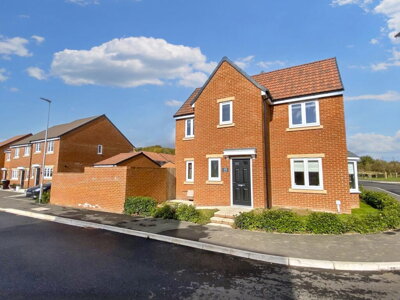
Browse 1 home new builds in Kelloe, County Durham from local developer agents.
Three bedroom properties represent a significant portion of the Kelloe housing market, offering space for families with multiple reception rooms and gardens in many cases. Browse detached, semi-detached, and terraced options ranging across new residential developments.
£130k
3
0
40
Source: home.co.uk
Showing 3 results for 3 Bedroom Houses new builds in Kelloe, County Durham. The median asking price is £130,000.
Source: home.co.uk
Semi-Detached
3 listings
Avg £129,983
Source: home.co.uk
Source: home.co.uk
The Puncheston property market reflects the character of the village itself - unpretentious, traditional, and rooted in centuries of Pembrokeshire history. Our data shows that the SA62 postcode area offers an average property price of around £160,000 for freehold properties, making this one of the more affordable locations within Pembrokeshire while still delivering genuine rural character. Properties here tend to be characterful rather than contemporary, with stone walls, slate roofs, and original fireplaces common features that newer developments simply cannot replicate. The village sits naturally within the landscape formed by the Preseli Mountains, and properties reflect that geology with traditional construction methods using local materials.
New build development in Puncheston is virtually non-existent, which actually works in favour of those seeking genuine character properties. This scarcity of new supply means that existing homes - many dating from the 19th century or earlier - retain their historic appeal and often their value more robustly than in areas with frequent new development. First-time buyers and those seeking a weekend retreat will find that traditional cottages and farmhouses provide more space and character per pound than comparable properties in coastal Pembrokeshire. The market here moves at a measured pace, with properties that are well-presented and realistically priced attracting serious interest from buyers seeking the authentic Pembrokeshire village lifestyle.
Most properties in Puncheston are constructed from local stone with slate roofs, reflecting the traditional building methods of rural Pembrokeshire. Our inspectors frequently encounter these construction types when surveying properties in the area, and understanding the specific characteristics of traditional Welsh construction helps buyers appreciate both the benefits and maintenance requirements of older properties. The solid wall construction common to these buildings provides excellent thermal mass, though insulation upgrades may be worth considering for those seeking to improve energy efficiency.

Life in Puncheston centres on the rhythms of rural Wales, where community ties run deep and the landscape shapes daily life. The village forms part of a community that includes the surrounding settlements of Henry's Moat, Little Newcastle, Castlebythe, Morvil, and Tufton, each contributing to a network of small communities that share local facilities and social events. The Afon Anghof river flows through the parish, threading past fields and farms to form a natural feature that has shaped the land and the lives of those who have farmed it for centuries. Walking routes connect the village to neighbouring communities, following paths that were once trodden by generations of local people going about their daily business.
The history here is tangible and ever-present. Five listed buildings stand within the community, including the traditional cottages of Ty Newydd and White Hart, while 21 Scheduled Ancient Monuments dot the landscape speaking to millennia of human activity in this part of Pembrokeshire. The ringwork castle of Castell Mael stands as a reminder of medieval times when this area formed part of Norman frontier territory, and St. Mary's Church, rebuilt in the early 19th century but sitting on an older site, continues to serve as the spiritual heart of the community. The demographics of the village show a stable population of 551 people, with the 221 households representing a mix of families, older residents who have lived here for decades, and newcomers drawn by the quality of life on offer.
Daily life in Puncheston means embracing traditional rural occupations and pastimes. Local farms produce food that ends up on tables across Pembrokeshire, while smallholdings provide fresh produce for the community. The old railway line that ran from 1895 to 1949 has left behind traces that now form part of the walking network, connecting villagers to neighbouring communities along routes that once carried goods and passengers by train. Village pubs provide focal points for social gatherings, and the nearby towns of Fishguard and Haverfordwest offer markets, shops, and services that supplement what the village itself provides. The proximity to the Pembrokeshire Coast Path and the Preseli Hills makes this an exceptional base for walkers and outdoor enthusiasts, while the coastline itself remains within easy reach for day trips.
Our inspectors who survey properties in Puncheston regularly note the strong sense of community that characterises the village and surrounding parishes. Buyers frequently comment on the welcome they receive from long-established residents, and the various village events throughout the year provide opportunities for newcomers to integrate quickly into local life. This community spirit is one of the most frequently cited reasons why people who buy property in Puncheston choose to stay long-term.

Education provision in Puncheston reflects the village's role as a small rural community within the wider Pembrokeshire educational framework. For primary education, Puncheston is served by local schools that cater to children from the village and surrounding small communities. These primary schools provide a solid foundation in the core subjects while also embracing the unique aspects of Welsh culture and language that are integral to life in Pembrokeshire. Class sizes in rural primary schools often remain smaller than in urban areas, allowing teachers to provide more individual attention to each pupil and creating a supportive learning environment that many families find appealing.
Secondary education requires travel to nearby towns, with Fishguard and Haverfordwest both offering secondary school options for Puncheston families. School transport arrangements are typically managed by Pembrokeshire Council, providing bus services that allow students from outlying villages to attend secondary schools in these towns. Parents considering a move to Puncheston should research current school transport arrangements and timetables, as these arrangements can influence daily routines significantly. The journey times to secondary schools in Fishguard or Haverfordwest are manageable, and many families in rural Pembrokeshire have established routines around school transport that work well for both parents and children.
Further and higher education options are naturally concentrated in the larger towns of Pembrokeshire and beyond. Haverfordwest offers further education college facilities, while students seeking university education typically travel to institutions in Swansea, Cardiff, or other Welsh university towns. The proximity of Puncheston to the A40 road means that these journeys, while requiring some planning, are entirely feasible for students who can drive or who use the available public transport links. Families moving to Puncheston with children at various stages of education will find that the village provides an excellent environment for primary years, with secondary and further education arrangements requiring some additional planning but proving manageable with good local knowledge.
Getting around Puncheston and the surrounding Pembrokeshire countryside requires a car as the primary mode of transport for most residents. The village sits in a rural location with limited public transport provision, though bus services do connect Puncheston to nearby towns and villages at frequencies typical of rural Pembrokeshire. These bus services provide essential connectivity for those without cars, connecting villagers to markets, shops, and medical facilities in the nearest towns. However, anyone considering a move to Puncheston should be realistic about the need for a vehicle as the main means of getting to work, school, and activities.
For car travel, Puncheston sits approximately 20 minutes drive from Fishguard, where the ferry port connects to Rosslare in Ireland, and around 35 minutes from the county town of Haverfordwest. The A40 runs through the area, connecting Fishguard to Haverfordwest and providing access to the M4 motorway corridor at Carmarthen, approximately 45 minutes away. From the M4, Swansea is around one hour and 15 minutes, Cardiff approximately two hours, and Bristol around three hours. This makes Puncheston potentially viable for weekly commuting for those with flexible working arrangements or who primarily work from home, though daily commuting would be challenging for most professions.
Rail connections are available from Fishguard Harbour and Haverfordwest stations, with regular services to Swansea, Cardiff, and London via the Great Western Railway network. The journey from Fishguard to London Paddington takes around three and a half hours, making occasional business trips feasible for those based in Puncheston. For cyclists and walkers, the network of country lanes and bridleways provides pleasant routes for local travel, though longer journeys require vehicle support. The walking routes connecting Puncheston to neighbouring villages offer opportunities for car-free local trips, particularly for those working within the community itself.
Start by browsing listings on Homemove to understand what properties are available in the village and surrounding SA62 postcode area. Consider visiting at different times of day and week to get a feel for the local community, noise levels, and traffic patterns. Speaking with current residents can provide invaluable insights that no website can offer. Our team recommends visiting both during the week and at weekends to appreciate how the community rhythm changes across different days.
Speak with a mortgage broker to establish your budget and get a mortgage agreement in principle before making any offers. Having your finances organised strengthens your position as a buyer and demonstrates to sellers that you are serious and capable of completing. First-time buyers should also explore Wales-specific schemes that may be available. For Puncheston properties at typical price points, many buyers find that smaller deposits relative to urban purchases can still secure excellent mortgage terms.
Book viewings through Homemove and visit properties that match your requirements. Pay attention to both the property itself and the surrounding area, noting things like road noise, mobile signal strength, and the condition of neighbouring properties. Traditional Puncheston properties may have features that differ from standard modern homes. We recommend taking notes during each viewing and revisiting promising properties before making an offer.
Before committing to purchase, arrange for a qualified surveyor to inspect the property and produce a detailed condition report. This is particularly important in Puncheston given the age of local properties and the geological conditions. A Level 2 survey will flag any structural concerns, defects, or areas requiring attention. Our inspectors have extensive experience surveying traditional Pembrokeshire properties and understand the specific issues that affect properties built from local stone and slate.
Choose a conveyancing solicitor with experience of rural Pembrokeshire properties to handle the legal work. They will conduct searches on matters including drainage, rights of way, and planning history. Homemove can connect you with recommended solicitors in the area who understand the specific considerations that affect rural properties, including those near watercourses and those with listed status or Scheduled Ancient Monument implications.
Once all searches are satisfactory and your mortgage is in place, you will exchange contracts with the seller and pay your deposit. Completion typically follows within 4-8 weeks, at which point you will receive the keys to your new Puncheston home. Our team can guide you through each stage of this process, ensuring that nothing is overlooked when purchasing a property in this distinctive corner of Pembrokeshire.
Buying property in Puncheston requires attention to several local-specific factors that differ from urban property purchases elsewhere in Britain. The underlying geology of the area consists of Ordovician sedimentary rocks overlaid by post-Ice Age boulder clays, which creates potential for ground movement affecting property foundations. Properties with shallower foundations or those that have experienced prolonged dry spells followed by wet periods may show signs of subsidence or heave. A thorough survey will identify any existing movement issues, but buyers should also consider the age and construction type of any property they are seriously considering.
Our inspectors frequently encounter damp issues in traditional Puncheston properties, particularly rising damp where original damp-proof courses have failed or were never installed. Penetrating damp can affect properties where pointing has deteriorated or where slate roofs have slipped, and our surveyors will check for evidence of these issues during any inspection. Timber decay, including both rot and woodworm activity, is common in older properties with traditional construction, and buyers should expect thorough investigation of floor timbers, roof structures, and any external joinery. Properties that have been vacant for extended periods may have accumulated moisture-related issues that require attention.
Flood risk in Puncheston is primarily associated with the Afon Anghof river that flows through the community. While major flooding events are not common, properties located close to watercourses should be subject to careful flood risk assessment as part of the conveyancing process. Standard environmental searches will provide information on flood risk, and buyers should understand what insurance implications might arise from any flood history or risk assessment. Properties in the village centre or on slightly elevated ground generally face lower flood risk than those immediately adjacent to streams or drainage channels.
The listed buildings and Scheduled Ancient Monuments within the Puncheston community create additional considerations for buyers. Properties with listed status require Listed Building Consent for many alterations and improvements, which adds a layer of planning consideration to any renovation work. The 21 Scheduled Ancient Monuments in the parish may impose restrictions on groundworks or development near archaeological features, something that your solicitor should investigate through local authority searches. Buyers seeking a property to renovate should factor in the additional time and cost that planning constraints may introduce.
Electrical and plumbing systems in older Puncheston properties may require updating to meet current standards. Properties built before the 1970s frequently have dated consumer units, inadequate earthing, and pipework that does not meet modern requirements. While these issues do not necessarily prevent purchase, they should be factored into your renovation budget. Our surveyors will note any electrical or plumbing concerns during a Level 2 inspection, allowing you to prioritise essential upgrades before moving in.
Understanding the full costs of buying property in Puncheston extends beyond the purchase price to include Stamp Duty Land Tax and various other fees that buyers should budget for carefully. In Wales, Stamp Duty Land Tax applies to residential property purchases with the following thresholds for 2024-25: zero percent on the first £250,000 of purchase price, five percent on the portion between £250,001 and £925,000, ten percent on the portion between £925,001 and £1.5 million, and twelve percent on any amount above £1.5 million. For a typical Puncheston property priced at around £160,000, most buyers would pay no Stamp Duty at all, making this an exceptionally affordable entry point to the Welsh property market.
First-time buyers purchasing property in Wales receive relief that increases the zero-rate threshold to £425,000, with five percent applying between £425,001 and £625,000. Above £625,000, no first-time buyer relief is available. This means that first-time buyers purchasing at typical Puncheston prices would pay no Stamp Duty whatsoever, freeing up more of their deposit for other costs or improvements to the property. Non-first-time buyers should note that the standard thresholds apply regardless of equity from previous property sales.
Beyond Stamp Duty, buyers should budget for survey costs with a RICS Level 2 survey typically costing between £350 and £600 depending on the size and complexity of the property. Given that many Puncheston properties are older constructions with potential issues related to age, geology, or listed status, a comprehensive survey is money well spent. Solicitors fees for conveyancing typically range from £500 to £1,500 plus disbursements, while mortgage arrangement fees vary significantly between lenders and products. Homemove can connect buyers with recommended surveyors, solicitors, and mortgage brokers who understand the Puncheston and Pembrokeshire property market, helping to ensure professional support throughout the buying process.
Puncheston properties typically range from £120,000 for a modest cottage up to £250,000 or more for a substantial farmhouse or period property with land. Our data shows the SA62 postcode area average is around £160,000, though specific Puncheston transactions may vary depending on property type, condition, and location within the community. Properties in the village itself command a premium over those in outlying parts of the parish, while those with gardens, outbuildings, or views of the Preseli Hills may exceed typical prices. The rural nature of Puncheston and its relative distance from the coast makes it more affordable than coastal Pembrokeshire villages, while still offering the genuine character that buyers seek.
Council tax bands in Puncheston are set by Pembrokeshire Council and vary according to the assessed value of individual properties. Most traditional cottages and modest farmhouses in the village fall into bands A through C, which means lower annual council tax payments than comparable properties in urban areas. Larger period properties or those with significant alterations may be placed in higher bands. Buyers should check the specific banding for any property they are considering, as this forms part of the ongoing cost of ownership alongside utility bills, maintenance, and any rural property-specific costs such as septic tank emptying.
Puncheston has a primary school serving the village and surrounding small communities, providing education for children from reception through to Year 6. Secondary education is available in nearby Fishguard or Haverfordwest, with Pembrokeshire Council providing school transport for pupils who live beyond walking distance of these schools. Parents should verify current school admissions policies, catchment areas, and transport arrangements, as these can affect which schools children can attend from specific addresses. Many families in rural Pembrokeshire choose their school based on quality ratings and what feels right for their children's individual needs.
Public transport connections from Puncheston are limited, reflecting the rural nature of the village and its small population. Bus services run between Puncheston and nearby towns, but frequencies are typically two or three services per week rather than daily, making a car essential for most residents. The nearest railway stations are in Fishguard and Haverfordwest, both offering connections across the national rail network including direct services to Cardiff, Swansea, and London. For those working from home or with flexible working arrangements, the limited public transport is less of a constraint, but anyone expecting to commute daily to a distant workplace should factor in the logistics carefully.
Puncheston offers genuine value for those seeking rural Welsh property with character at accessible prices. The village attracts buyers looking for weekend retreats, retirement homes, or permanent residences in an authentic community away from tourist crowds. Property values in Puncheston and the wider SA62 postcode have shown relative stability, supported by limited supply of traditional properties and consistent demand from buyers seeking what rural Pembrokeshire can offer. Holiday let potential exists given the proximity to the Pembrokeshire Coast Path and Preseli Hills, though buyers should understand any planning requirements for short-term letting. As with any rural property purchase, long-term appreciation is likely to be modest compared to urban hotspots, but the quality of life benefits are significant.
Most property purchases in Puncheston will incur little or no Stamp Duty Land Tax. Properties priced at typical Puncheston levels of £160,000 fall entirely within the zero-rate band, meaning first-time buyers and non-first-time buyers alike would pay zero SDLT. Only purchases significantly above £250,000 would begin to attract SDLT, and even then only on the portion exceeding that threshold. First-time buyer relief in Wales raises the zero-rate band to £425,000, which means that even properties at the upper end of the Puncheston market would typically incur no SDLT for eligible buyers. Your solicitor will calculate the exact SDLT liability based on your individual circumstances and the purchase price agreed with the seller.
Our inspectors frequently find damp issues in traditional Puncheston properties, including rising damp where original damp-proof courses have failed and penetrating damp from deteriorated pointing or slipped slate tiles. Timber decay affecting floor joists, roof structures, and external joinery is common in older properties built from local materials. The boulder clay geology underlying the area can cause foundation movement during periods of dry weather followed by wet conditions, leading to subsidence or heave that may require professional assessment. Electrical systems in properties built before the 1970s often need upgrading to meet current safety standards, and dated plumbing with lead or galvanised steel pipes may require replacement. A thorough RICS Level 2 survey will identify these issues before you commit to purchase.
Properties with listed status in Puncheston require Listed Building Consent for most alterations and improvements, adding planning requirements to any renovation project. The 21 Scheduled Ancient Monuments in the parish may restrict groundworks or development near archaeological features, and your solicitor should investigate these through local authority searches during conveyancing. Properties not listed or within scheduled areas have more flexibility, but all renovations in rural Pembrokeshire should comply with building regulations and any relevant planning conditions. We recommend consulting with Pembrokeshire Council planning department before committing to any significant renovation work to understand current requirements and any historical restrictions that may apply.
Competitive mortgage rates for Puncheston property buyers
From 4.5%
Conveyancing solicitors with Pembrokeshire experience
From £499
Detailed property surveys by qualified inspectors
From £350
Energy performance certificates for Puncheston properties
From £85
Properties New Builds In London

Properties New Builds In Plymouth

Properties New Builds In Liverpool

Properties New Builds In Glasgow

Properties New Builds In Sheffield

Properties New Builds In Edinburgh

Properties New Builds In Coventry

Properties New Builds In Bradford

Properties New Builds In Manchester

Properties New Builds In Birmingham

Properties New Builds In Bristol

Properties New Builds In Oxford

Properties New Builds In Leicester

Properties New Builds In Newcastle

Properties New Builds In Leeds

Properties New Builds In Southampton

Properties New Builds In Cardiff

Properties New Builds In Nottingham

Properties New Builds In Norwich

Properties New Builds In Brighton

Properties New Builds In Derby

Properties New Builds In Portsmouth

Properties New Builds In Northampton

Properties New Builds In Milton Keynes

Properties New Builds In Bournemouth

Properties New Builds In Bolton

Properties New Builds In Swansea

Properties New Builds In Swindon

Properties New Builds In Peterborough

Properties New Builds In Wolverhampton

Enter your details to see if this property is within your budget.
Loans, cards, car finance
Estimated property budget
Borrowing + deposit
You could borrow between
Typical borrowing
Monthly repayment
Est. at 4.5%
Loan-to-value
This is an estimate only. Your actual budget may vary depending on interest rates, credit history, and personal circumstances. For an accurate affordability assessment, speak to one of our free mortgage advisors.
This calculator provides estimates for illustrative purposes only and does not constitute financial advice. Your home may be repossessed if you do not keep up repayments on your mortgage. Estimates based on 4.5% interest rate, repayment mortgage. Actual rates depend on your circumstances.
Homemove is a trading name of HM Haus Group Ltd (Company No. 13873779, registered in England & Wales). Homemove Mortgages Ltd (Company No. 15947693) is an Appointed Representative of TMG Direct Limited, trading as TMG Mortgage Network, which is authorised and regulated by the Financial Conduct Authority (FRN 786245). Homemove Mortgages Ltd is entered on the FCA Register as an Appointed Representative (FRN 1022429). You can check registrations at NewRegister or by calling 0800 111 6768.

We use cookies to show you personalised content and improve your experience of our website. Find out more in our Privacy policy and Cookie policy.