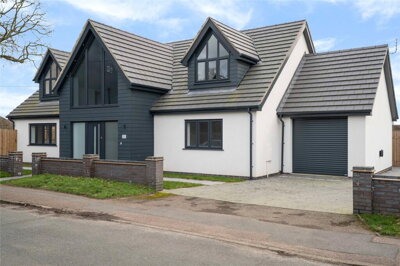
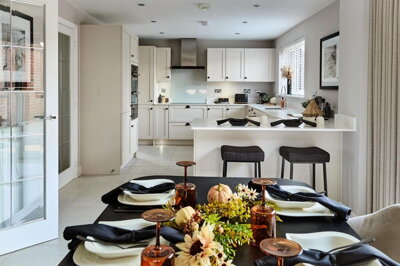
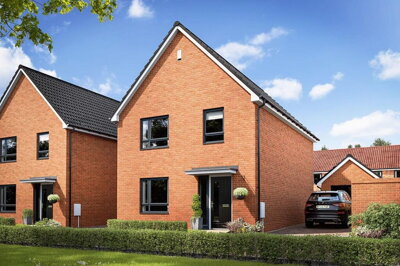
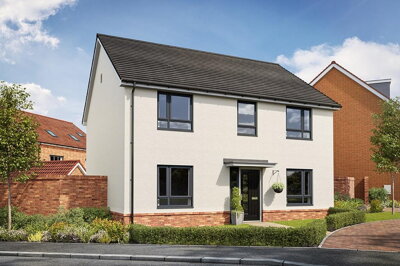
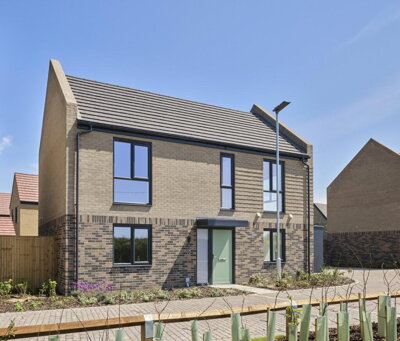
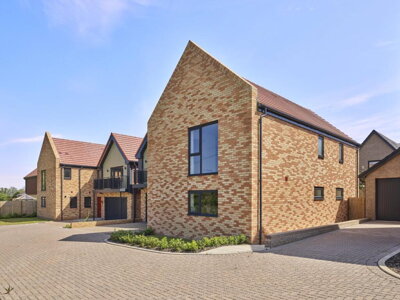
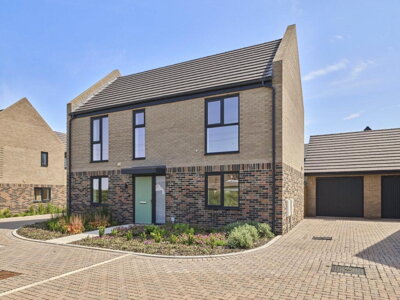
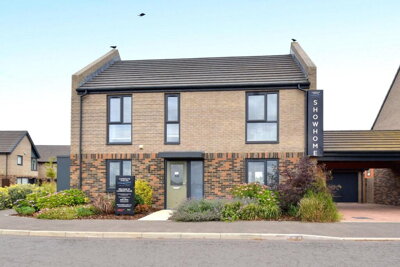
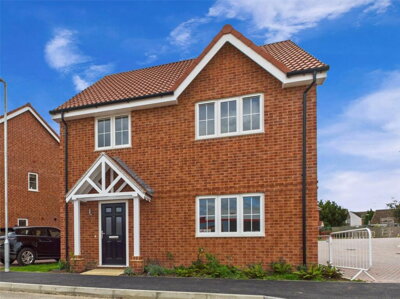
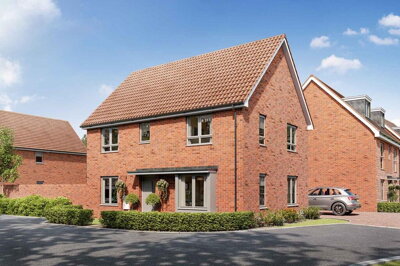
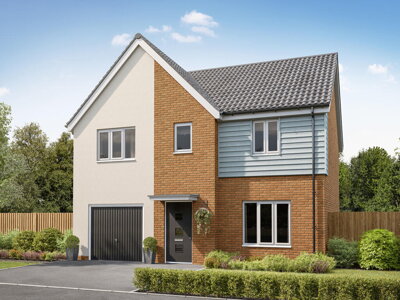
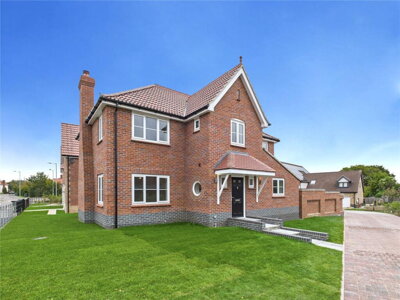
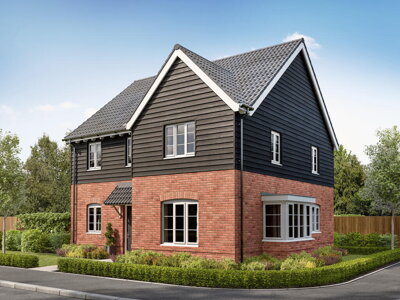
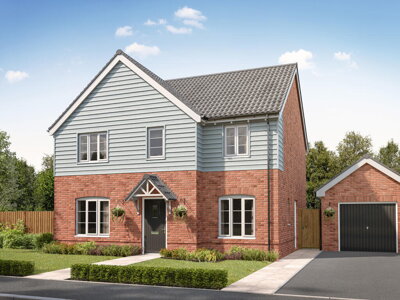
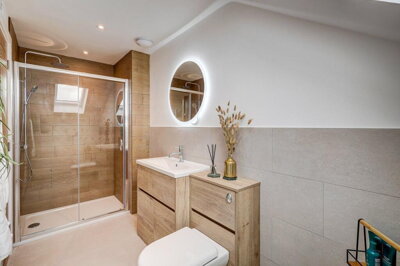
Browse 15 homes new builds in IP10 from local developer agents.
The larger property sector typically features multiple bathrooms, substantial reception space, and private gardens or off-street parking. Four bedroom houses in IP10 span detached, semi-detached, and occasionally terraced configurations, with styles ranging from period properties to modern executive homes.
£695k
5
0
125
Source: home.co.uk
Showing 5 results for 4 Bedroom Houses new builds in IP10. The median asking price is £695,000.
Source: home.co.uk
Detached
4 listings
Avg £811,250
Semi-Detached
1 listings
Avg £450,000
Source: home.co.uk
Source: home.co.uk
The HU20 property market has demonstrated remarkable strength over the past twelve months, with average house prices reaching £381,632. This represents a significant 25% increase compared to the previous year, with prices now sitting 7% above the 2023 peak of £355,439. The market in this East Riding postcode has attracted considerable interest from buyers seeking more space and a better quality of life, driving demand for family homes in the village locations. Detached properties command premium prices averaging £431,343, reflecting the desirability of larger homes with gardens in a semi-rural setting. Semi-detached homes in HU20 average £232,500, offering more accessible entry points for buyers seeking the village lifestyle without the premium associated with detached accommodation.
Property types available across HU20 include traditional village houses spanning various periods, with many homes built during the 1920s and 1930s offering generous proportions and period features. The village of Skidby has recorded recent sales activity with detached homes achieving a median price of £410,500 across four sales in 2025, while semi-detached properties reached a median of £248,000 across seven transactions. These figures illustrate the active nature of the local market and the consistent demand for quality family homes. While no large new-build developments were identified within the HU20 postcode itself, the surrounding area offers new homes in nearby postcodes, and individual properties occasionally come to market with redevelopment potential that appeals to buyers seeking something different. We monitor these listings daily to ensure you have access to the most current information when making your property decisions.
The broader Cottingham area, which HU20 is part of, shows a housing stock dominated by detached and semi-detached properties, particularly in villages like Little Weighton and Skidby. Flats are available but represent a smaller proportion of the overall housing stock in this postcode area. For buyers specifically looking for terraced properties or apartments, the nearby towns of Hull and Beverley offer a wider variety of property types and price points, though the village character of HU20 remains its defining feature.

The HU20 postcode area embodies the essence of East Riding village life, with Cottingham serving as the largest settlement and often described as one of the most desirable villages in the region. The area character combines rural tranquility with practical convenience, making it particularly appealing to families and professionals who want to escape the city without sacrificing accessibility. Local amenities include traditional pubs, village shops, and community facilities that foster a strong sense of belonging among residents. The villages maintain their historic character through architecture dating back to the early twentieth century and beyond, creating streetscapes that feel established and rooted in local history.
Demographically, HU20 attracts a mix of families, professionals, and older couples drawn to the area for its schools, commuting links, and quality of life. The surrounding countryside offers excellent walking and cycling opportunities, with public rights of way crossing farmland and connecting the various villages. Community events throughout the year bring residents together, from village fetes to pub quizzes, creating the social fabric that makes village living so rewarding. The proximity to both Hull and Beverley means residents can access major supermarkets, hospitals, entertainment venues, and employment opportunities while returning each evening to the peaceful surroundings of their village home.
For those who enjoy outdoor pursuits, the HU20 area provides direct access to some of Yorkshire's finest countryside. The Yorkshire Wolds Way National Trail passes nearby, offering spectacular views and challenging terrain for walkers and cyclists alike. The area's geology, characterised by chalk deposits around Little Weighton and the underlying granite batholith identified near Market Weighton, creates the distinctive rolling landscape that defines this part of the East Riding. This combination of natural beauty and practical location makes HU20 an ideal choice for buyers prioritising quality of life alongside connectivity.

Education is a significant factor driving families to the HU20 postcode area, with several well-regarded schools serving the local villages. Primary education is available through schools in Cottingham, Little Weighton, and Skidby, providing local options for families with young children. These village primary schools typically serve their immediate communities and benefit from smaller class sizes that allow for more individual attention. The area falls within catchment zones for secondary schools that consistently attract positive reports from parents, making the location particularly attractive to families with children of school age. Parents should research current catchment boundaries and admission arrangements through the East Riding of Yorkshire Council website, as these can influence which schools children can access from different property locations.
For families seeking additional educational options, the nearby towns of Hull and Beverley offer a wider selection of secondary schools including grammar schools, academies, and independent schools. Hull Grammar School and Beverley High School provide academic pathways for students achieving the required standards in entrance assessments. The proximity of these options extends the educational choices available to HU20 residents beyond what the immediate villages can offer. Sixth form provision is available in both Hull and Beverley, with colleges and school sixth forms offering A-level courses across a range of subjects. Families moving to HU20 should prioritise school research during their property search, as catchment areas and admission policies can significantly impact which schools children can realistically access from different property locations.
The presence of good schools significantly influences property values throughout HU20, with homes in desirable catchment areas typically commanding premium prices. Detached family homes near popular primary schools in Cottingham frequently appear at the higher end of the market, reflecting the premium parents place on proximity to quality education. When budgeting for your HU20 purchase, we recommend factoring in potential school-related costs and the impact of catchment boundaries on your long-term investment. This is particularly important given that approximately 44% of housing stock in England was built before 1980, meaning many properties in HU20 have established reputations within their local school communities.

Commuting from HU20 benefits from excellent transport connections that link these East Riding villages to major employment centres. The village of Cottingham lies just a few miles north of Hull city centre, with regular bus services connecting residents to the city throughout the day. Hull railway station provides direct services to major destinations including Leeds, York, Sheffield, and London Kings Cross, with journey times to Leeds typically around one hour. The nearby market town of Beverley also offers railway connections, providing additional commuting options for residents who prefer that route into the rail network. Many HU20 residents choose to commute by car, with the A164 and A1079 providing direct routes toward Hull and toward York respectively.
For those working in Hull, the daily commute by car typically takes between twenty and thirty minutes depending on the specific village and time of travel. The development of the A164 has improved traffic flow between the villages and the city, though rush-hour congestion can occur on the approaches to Hull. Cycling is popular among commuters of all ages, with dedicated cycle routes connecting many villages to the city and making environmentally friendly commuting a realistic option for those within reasonable cycling distance of their workplace. The proximity to the A63 provides access to the wider motorway network for those travelling further afield, connecting to the M1 and M62 for journeys to Leeds, Manchester, and beyond.
The HU20 area genuinely offers the best of both worlds for commuters, combining the peace of village living with practical access to urban employment opportunities. For professionals working in Hull's growing business districts or the hospitals and universities, living in HU20 provides a daily retreat to countryside settings. The strong rail connections to Leeds, York, and London also make the area attractive to those working in larger cities further afield, with the flexible working arrangements increasingly common in professional roles making the semi-rural location even more viable for knowledge economy workers.

Start by exploring the different villages within HU20, from Cottingham to Little Weighton and Skidby, to understand which community best suits your lifestyle and requirements. Consider factors like distance to schools, commuting needs, and the character of properties available in each location. Cottingham offers the widest range of amenities and largest property selection, while smaller villages like Skidby provide a more intimate community feel.
Before viewing properties, obtain a mortgage agreement in principle from a lender. This demonstrates your financial readiness to estate agents and sellers, strengthening your position when making offers on properties you wish to purchase. Given that average prices in HU20 stand at £381,632, having your financing arranged puts you in a competitive position in what remains an active local market.
Use Homemove to browse all available listings in HU20 and arrange viewings through listed estate agents. Visit properties at different times of day to assess noise levels, light, and the surrounding neighbourhood thoroughly. We recommend viewing at least three to five properties before making any offers, as this gives you a clear understanding of what represents fair value in the current market.
Once your offer is accepted, arrange a RICS Level 2 Survey to assess the property condition thoroughly. Given the age of many properties in HU20, a thorough survey is essential to identify any issues with damp, roofing, or structural concerns before you commit to the purchase. Many homes in this postcode were built during the 1920s and 1930s, meaning they may have original features that require attention or updating.
Choose a conveyancing solicitor to handle the legal aspects of your purchase. They will conduct searches, review contracts, and manage the transfer of ownership through to completion. Your solicitor should include local authority searches, environmental searches, and water authority enquiries as standard practice for properties in the East Riding.
Your solicitor will coordinate the final steps, including searches, mortgage arrangements, and any conditions attached to your offer. On completion day, the remaining balance transfers and you receive the keys to your new HU20 home. We recommend having your removal arrangements in place before completion day to ensure a smooth transition into your new property.
Property buyers considering the HU20 area should be aware of local geological conditions that can affect properties in this part of East Riding. The underlying geology around Little Weighton and the surrounding villages includes chalk deposits and clay soils, with the latter presenting a potential shrink-swell risk when clay-rich soils expand and contract with moisture changes. This movement can occasionally cause structural issues in properties, particularly those with shallow foundations or trees nearby that extract moisture from the soil during dry periods. An underlying granite batholith has been identified near Market Weighton, intruding the pre-Carboniferous basement, which influences the overall geological character of the region. We always recommend a thorough survey to assess any signs of movement or subsidence before committing to a purchase.
Flood risk should also form part of your due diligence when purchasing in the East Riding, though HU20 itself sits inland away from immediate coastal concerns. The area can experience surface water flooding during periods of heavy rainfall, particularly in lower-lying locations where water naturally drains. East Riding of Yorkshire Council provides flood risk information that your solicitor can include in their searches, giving you a complete picture of any flood history affecting a property. Properties in flood zones 2 and 3 are at risk, with zone 3 representing a high probability of flooding, so checking the specific flood zone classification for any property you consider purchasing is essential due diligence.
Older properties throughout HU20 may require updates to electrical systems, plumbing, and insulation to meet modern standards, and these potential costs should factor into your overall budget when evaluating different properties. Many homes built before 1980, which represents a substantial portion of HU20's housing stock, often lack the insulation standards expected in modern living, leading to higher energy costs. Common defects our surveyors frequently identify in older properties include inadequate ventilation leading to condensation and damp, outdated electrical systems that may not meet current safety standards, and roof conditions requiring attention. Properties in conservation areas or those with listed status may face restrictions on modifications and alterations, which can affect both your renovation plans and your home insurance requirements. Your solicitor will confirm whether any listed building status applies during the conveyancing process.

The average house price in HU20 currently stands at £381,632 based on recent sales data and Rightmove listings. Detached properties average £431,343 while semi-detached homes average £232,500, reflecting the premium buyers pay for larger gardens and additional space in this semi-rural postcode. House prices in the area have risen 25% over the past year, with prices now sitting 7% above the previous 2023 peak of £355,439, indicating strong demand for properties in this East Riding postcode. The village of Skidby specifically has seen active trading in 2025, with detached homes achieving a median of £410,500 and semi-detached properties reaching £248,000, demonstrating consistent market activity throughout HU20.
Properties in HU20 fall under East Riding of Yorkshire Council's jurisdiction for council tax purposes. Bands range from A through to H depending on the property value, with most village homes in the area typically falling into bands B through E. Smaller terraced properties or flats may fall into bands A or B, while larger detached family homes often occupy bands D or E. You can check the specific band for any property through the East Riding of Yorkshire Council website or your solicitor during the conveyancing process.
The HU20 area is served by several well-regarded primary schools in villages including Cottingham, Little Weighton, and Skidby, each serving their local communities with the benefit of smaller class sizes. For secondary education, students typically access schools in the surrounding towns, with good options available in Hull and Beverley including grammar schools for academically selective students such as Hull Grammar School and Beverley High School. Families should research current catchment areas through East Riding of Yorkshire Council as these can influence which schools children can attend from specific addresses. The proximity to both Hull and Beverley also opens access to independent schools and further education colleges for older students.
HU20 benefits from regular bus services connecting the villages to Hull city centre, with Cottingham particularly well-served by public transport throughout the day. Hull railway station provides direct train services to Leeds (around 1 hour), York, Sheffield, and London Kings Cross, making this postcode attractive to commuters who work in larger cities. Beverley railway station also offers connections for residents preferring that route. The villages have good road connections via the A164 and A1079, making car travel to surrounding towns straightforward, with the A63 providing access to the wider motorway network for journeys to Leeds, Manchester, and beyond.
The HU20 property market has demonstrated consistent growth, with prices rising 25% year-on-year and continuing to climb beyond previous peaks. The combination of village character, good schools, and proximity to Hull and Beverley maintains steady demand from buyers and tenants alike. For landlords, the area attracts families seeking rental property in a desirable location with strong local amenities and access to good schools. The stable economic fundamentals of the East Riding region and limited new-build supply within HU20 itself suggest the market should remain supportive of property values. The semi-rural nature of the villages means demand tends to be resilient even during broader market fluctuations, as buyers consistently seek the lifestyle proposition these locations offer.
Stamp duty rates for 2024-25 start at 0% on the first £250,000 of residential property purchases, rising to 5% on the portion between £250,001 and £925,000, 10% between £925,001 and £1.5 million, and 12% above £1.5 million. First-time buyers benefit from relief on the first £425,000, paying 5% on the amount between £425,001 and £625,000. Given the HU20 average price of £381,632, a first-time buyer purchasing an average-priced property would pay no stamp duty, while existing homeowners would pay approximately £6,582 on such a purchase. Your solicitor will calculate the exact amount due based on your individual circumstances and any additional properties you own.
Given that many properties in HU20 date from the 1920s and 1930s, common issues include damp arising from poor ventilation or failing damp-proof courses, roof damage such as missing or slipped tiles and deteriorating flashing, and structural concerns related to the underlying clay soils that can cause shrink-swell movement affecting foundations. Outdated electrical systems using older wiring methods and aging plumbing with galvanized steel pipes are also frequently encountered in this age of property. We strongly recommend arranging a RICS Level 2 Survey before completing your purchase, as this will identify any defects and help you negotiate repairs or price adjustments with the seller where appropriate.
No active new-build developments with verified HU20 postcodes were identified in recent searches, as new housing developments in the Cottingham area typically fall into neighbouring postcodes like HU10 or HU17. However, individual properties occasionally come to market with redevelopment potential, such as larger plots on New Village Road in Little Weighton that offer opportunities for extension or demolition and rebuilding subject to planning consent. For buyers specifically seeking brand new properties, nearby developments in Kirk Ella (HU10), Beverley (HU17), and Hull offer new homes from national builders including Bellway, Persimmon, and David Wilson Homes.
From 4.5%
Finding the right mortgage is essential for your HU20 purchase. We compare rates from leading lenders to help you secure the best deal for your situation.
From £499
Our conveyancing partners handle all legal aspects of your HU20 property purchase, from searches to completion.
From £500
A thorough condition survey is essential for properties in HU20, many of which date from the 1920s-1930s.
From £85
Check the energy efficiency of any HU20 property before you buy with an official EPC assessment.
Understanding the full costs of purchasing property in HU20 helps you budget accurately for your move. Beyond the property price, buyers should account for stamp duty land tax, solicitor fees, survey costs, and various other expenses that accumulate during the buying process. For a property at the HU20 average price of £381,632, a buyer who already owns property would pay stamp duty of approximately £6,582, calculated at 0% on the first £250,000 and 5% on the remaining £131,632. First-time buyers purchasing at this price point would pay no stamp duty thanks to the increased threshold, making the HU20 market particularly accessible for those entering the property market for the first time.
Solicitor fees for conveyancing in the HU20 area typically start from around £499 for standard transactions, though complex purchases involving leasehold properties or extensive searches may cost more. Your solicitor will conduct essential searches including local authority checks, environmental searches, and water authority enquiries, all of which contribute to the overall legal costs. These searches are particularly important in the East Riding given the varied geology and flood risk considerations that can affect properties in this area. A RICS Level 2 Survey costs from around £500 depending on property size and value, but represents money well spent given the age of many properties in HU20 and the potential for issues with damp, structural movement, or outdated systems.
Factor in mortgage arrangement fees, which vary between lenders but can reach several hundred pounds, and budget for removal costs, valuation fees, and the various smaller expenses that accumulate when moving home. Buildings insurance must be in place from the moment you exchange contracts, and you should also consider life insurance and contents cover for your new property. We recommend setting aside an additional 10% of your property price as a contingency fund to cover unexpected costs that frequently arise when purchasing older properties. Getting your finances properly organised before you start property hunting ensures a smoother path to completion.

Properties New Builds In London

Properties New Builds In Plymouth

Properties New Builds In Liverpool

Properties New Builds In Glasgow

Properties New Builds In Sheffield

Properties New Builds In Edinburgh

Properties New Builds In Coventry

Properties New Builds In Bradford

Properties New Builds In Manchester

Properties New Builds In Birmingham

Properties New Builds In Bristol

Properties New Builds In Oxford

Properties New Builds In Leicester

Properties New Builds In Newcastle

Properties New Builds In Leeds

Properties New Builds In Southampton

Properties New Builds In Cardiff

Properties New Builds In Nottingham

Properties New Builds In Norwich

Properties New Builds In Brighton

Properties New Builds In Derby

Properties New Builds In Portsmouth

Properties New Builds In Northampton

Properties New Builds In Milton Keynes

Properties New Builds In Bournemouth

Properties New Builds In Bolton

Properties New Builds In Swansea

Properties New Builds In Swindon

Properties New Builds In Peterborough

Properties New Builds In Wolverhampton

Enter your details to see if this property is within your budget.
Loans, cards, car finance
Estimated property budget
Borrowing + deposit
You could borrow between
Typical borrowing
Monthly repayment
Est. at 4.5%
Loan-to-value
This is an estimate only. Your actual budget may vary depending on interest rates, credit history, and personal circumstances. For an accurate affordability assessment, speak to one of our free mortgage advisors.
This calculator provides estimates for illustrative purposes only and does not constitute financial advice. Your home may be repossessed if you do not keep up repayments on your mortgage. Estimates based on 4.5% interest rate, repayment mortgage. Actual rates depend on your circumstances.
Homemove is a trading name of HM Haus Group Ltd (Company No. 13873779, registered in England & Wales). Homemove Mortgages Ltd (Company No. 15947693) is an Appointed Representative of TMG Direct Limited, trading as TMG Mortgage Network, which is authorised and regulated by the Financial Conduct Authority (FRN 786245). Homemove Mortgages Ltd is entered on the FCA Register as an Appointed Representative (FRN 1022429). You can check registrations at NewRegister or by calling 0800 111 6768.

We use cookies to show you personalised content and improve your experience of our website. Find out more in our Privacy policy and Cookie policy.