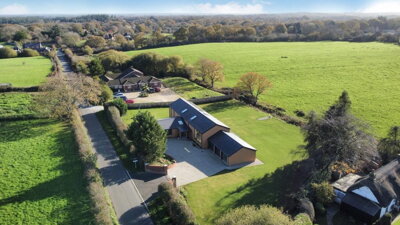
Browse 1 home new builds in Hinton from local developer agents.
The Hinton property market offers detached, semi-detached, and terraced houses spanning various price ranges and neighbourhoods. Each listing includes detailed property information, photographs, and direct contact with the marketing agent.
The St. Kew property market reflects the character of this rural North Cornwall village, offering a diverse range of property types to suit different buyer requirements. Detached properties command the highest prices in the area, with an average of £485,000, making them ideal for families seeking generous space and privacy. These substantial homes often occupy generous plots with mature gardens, reflecting the village's rural character and the generous proportions of plots traditionally associated with Cornish farmsteads and country houses. The premium pricing for detached homes in St. Kew reflects both the scarcity of such properties and the high demand from buyers seeking quintessential rural Cornwall living.
Semi-detached properties in St. Kew average around £300,000, representing good value for buyers seeking family accommodation without the premium associated with detached homes. These properties often include pleasant gardens and benefit from the village's peaceful setting while remaining accessible to nearby towns. Terraced properties average £275,000, offering an entry point to the local market for first-time buyers or those seeking a smaller property. The market data indicates consistent demand across all property types, with the 2% annual price increase suggesting stable conditions that appeal to both primary residence buyers and investors considering the area's potential for holiday lets or rental income.
The local housing stock in St. Kew predominantly consists of detached and semi-detached properties, reflecting the rural character of the parish and the agricultural heritage that shaped the village's development over centuries. Property ages vary significantly, with many stone cottages and farmhouses dating from before 1919, alongside a smaller proportion of post-1980 infill developments and individual new-build properties. This mix of historic and contemporary housing creates a varied market where buyers can find everything from character-filled period cottages requiring modernisation to more recent constructions meeting modern building standards.

Life in St. Kew embodies the essence of traditional Cornish village living, where community spirit thrives alongside stunning natural beauty. The village takes its name from the parish church of St. James, a Grade I listed building that stands as the area's rich heritage and centuries of history. The surrounding parish encompasses rolling farmland, hedgerow-lined lanes, and the characteristic landscape that has drawn people to Cornwall for generations. Local residents enjoy an active community calendar, with events ranging from village hall activities to seasonal celebrations that bring neighbours together throughout the year.
The local economy in St. Kew and the surrounding area centres on agriculture, tourism, and small businesses that serve both the resident population and the significant number of visitors drawn to North Cornwall each year. Many residents combine the benefits of rural village life with commuting to larger towns such as Wadebridge, Bodmin, or even Truro for work, taking advantage of the relatively short distances involved. The desirability of the area contributes to a seasonal dimension in the local population, with second homes and holiday lets forming part of the housing market. This characteristic can present both opportunities and considerations for buyers, potentially influencing rental income potential and affecting the year-round character of the community.
The North Cornwall location offers residents access to an exceptional quality of life, combining rural tranquility with proximity to some of the county's most celebrated coastline and tourist attractions. The Eden Project near Bodmin is within easy reach for days out, while the fishing villages of Port Isaac and Polzeath offer traditional Cornish seaside experiences. The surrounding countryside provides extensive footpaths and bridleways for walking and cycling, with the Camel Trail offering a scenic route from Wadebridge to Padstow for cyclists and walkers alike. This combination of natural beauty, community spirit, and accessibility makes St. Kew an attractive proposition for buyers seeking to relocate to Cornwall.

Families considering a move to St. Kew will find educational options available both within the immediate area and in the surrounding North Cornwall towns. The village itself falls within the catchment area for primary schools serving the local rural community, with several well-regarded primary schools located in nearby villages and towns. These smaller schools often benefit from close community involvement and individual attention for pupils, reflecting the nurturing environment that many families seek for their children's early education. Parents should research specific school performance data and catchment area boundaries when considering properties, as these can vary and change over time.
Secondary education options in the area include schools in Wadebridge and Bodmin, both of which offer comprehensive secondary education with sixth form provision for older students. These larger schools provide a broader range of subjects and extracurricular activities, with students travelling from across the surrounding rural parishes. For families seeking specialist or independent education, additional options exist in Truro and the wider Cornwall area. The presence of quality educational institutions within reasonable travelling distance adds to St. Kew's appeal for families, combining the benefits of rural living with access to comprehensive schooling options.
For families prioritising education in their property search, the availability of good schools within daily commuting distance represents a significant factor in St. Kew's attractiveness as a residential location. Primary school children from St. Kew typically attend schools in the surrounding villages, with school transport arrangements often available for families living beyond walking distance of local primary schools. Secondary school pupils generally travel to Wadebridge or Bodmin for their education, with dedicated school bus services operating from the village. The journey times, typically 15-20 minutes by car, mean that secondary school-age children can access good educational provision without the disruption of boarding arrangements.
St. Kew enjoys a strategic position within North Cornwall, offering reasonable access to the region's road network while maintaining its peaceful rural character. The village sits off the A39 Atlantic Highway, which provides connections to Wadebridge to the north and Bodmin to the south, linking residents with broader Cornwall and the national motorway network via the A30. This main road accessibility means that destinations such as Truro, the Eden Project, and the ferry port at Plymouth remain within reasonable reach for those travelling for work or leisure. Daily commuters to larger employment centres will find the journey times manageable, though the rural nature of the location does mean that some travel is necessary for work purposes.
Public transport options serving St. Kew include bus services connecting the village with surrounding towns, providing an alternative to car travel for those without private vehicles. The bus route along the A39 provides regular connections to Wadebridge, where passengers can access additional bus services and rail connections. The nearest railway stations are located in Bodmin and Bodmin Parkway, offering connections to the national rail network with services to London Paddington, Plymouth, and beyond. For those travelling to work in Exeter, Bristol, or further afield, the rail connections from Cornwall provide viable options, though the journey times involved mean that remote or hybrid working arrangements are often beneficial for those commuting long distances.
Road travel from St. Kew provides access to the wider Cornwall road network, with the A39 connecting to the A30 at Bodmin for journeys across the county and beyond. The journey to Truro takes approximately 40 minutes by car, while Exeter can be reached in around 90 minutes under normal traffic conditions. Plymouth and the ferry terminal for cross-Channel services is approximately an hour's drive, making continental travel accessible for residents who need to travel for business or leisure. The relatively short distances to major employment centres, compared to more remote parts of Cornwall, give St. Kew an advantage for residents who need to commute occasionally while enjoying the benefits of rural village life on a daily basis.
Begin by exploring our comprehensive listings of properties for sale in St. Kew and the surrounding North Cornwall area. Understanding the local market conditions, including average prices for different property types, will help you set realistic expectations and identify the best opportunities for your budget and requirements. With an average property price of £408,000 and detached homes averaging £485,000, knowing what your budget achieves in St. Kew is essential for an efficient property search.
Once you have identified properties of interest, contact the listing estate agents to arrange viewings. Viewing multiple properties in different conditions and price ranges will give you a clear picture of what your budget can achieve in St. Kew, helping you refine your search criteria and priorities. Given the relatively small number of properties available in this rural village market, being prepared to move quickly on suitable properties is advisable.
Before making an offer, approach a lender to secure a mortgage agreement in principle. This demonstrates your financial readiness to sellers and their agents, strengthening your position when negotiating on what is often a competitive local market for quality properties. Given the average property values in St. Kew, most buyers will require mortgage financing, making a decision in principle an important first step.
Given the age and character of many properties in St. Kew, we strongly recommend arranging a RICS Level 2 Survey before completing your purchase. Survey costs in the area typically range from £400 to £900 depending on property size and complexity. This thorough inspection will identify any structural issues, hidden defects, or renovation requirements that may affect your decision or negotiating position. With many homes in the village dating from before 1919, professional surveys are particularly valuable for identifying issues common to historic Cornish properties.
Your solicitor will handle the legal aspects of your purchase, including local searches, property surveys, and the transfer of ownership. Choose a conveyancer with experience in Cornwall properties to ensure familiarity with local issues such as radon testing, mining heritage considerations, and any planning constraints that may affect your new home. Cornwall-specific searches will include drainage and water searches, local authority checks, and environmental reports covering radon risk and potential surface water flooding.
Once all searches are satisfactory and finances are in place, you will exchange contracts with the seller and agree on a completion date. On completion day, the remaining funds are transferred and you receive the keys to your new St. Kew home, ready to begin the next chapter in this beautiful North Cornwall village. Your solicitor will notify Land Registry and arrange for the transfer of any relevant documents relating to the property.
Properties in St. Kew often feature traditional construction methods and materials that reflect the village's historic character, requiring specific considerations during the buying process. Many homes in the area were built before 1919 using traditional stone construction with lime mortar, slate roofing, and solid walls that breathe differently from modern properties. These charming period features require appropriate maintenance and care, so prospective buyers should factor potential renovation costs into their budget. A thorough RICS Level 2 Survey will identify any current defects or maintenance requirements specific to these older construction methods, providing valuable negotiating leverage if issues are identified.
The geology of St. Kew, situated on Devonian slates and sandstones, creates specific environmental considerations for property buyers in the area. Cornwall is classified as a high radon risk area, and properties should be tested for radon gas levels with appropriate mitigation measures installed if necessary. This is particularly important for ground-floor rooms and basements, where radon concentrations can be highest. Surface water flooding represents another consideration in low-lying areas or near smaller watercourses, and buyers should review the Environment Agency flood risk maps for specific properties. While shrink-swell clay risks are generally lower than in other UK regions due to the slate-based geology, localised ground movement can occasionally occur near trees or due to drainage issues.
Common defects found in St. Kew properties during surveys include damp issues in older stone-built homes with solid walls, where inadequate damp-proofing or poor ventilation can lead to moisture problems. Roof condition requires careful inspection, as older slate roofs often suffer from slipped or broken slates, deteriorated pointing, and timber decay. Outdated electrical systems and plumbing that do not meet current standards are frequently encountered in period properties, requiring budget allocation for rewiring or pipework replacement. Timber defects including woodworm and rot can affect older structural elements, particularly in damp conditions or where maintenance has been neglected. The lack of modern insulation in older properties represents both a maintenance consideration and an opportunity for energy efficiency improvements after purchase.
The presence of listed buildings in St. Kew, including the Grade I listed St. James' Church, indicates the historic character that permeates the village. Properties that are listed or located within any designated conservation area may be subject to additional planning controls affecting permitted development rights and renovation options. These restrictions can add complexity to renovation projects but also protect the character and value of historic properties. For listed buildings, a RICS Level 3 Survey (Building Survey) may be more appropriate than a standard Level 2, providing more detailed assessment of the property's condition and specific guidance on appropriate maintenance and restoration approaches. Buyers considering listed properties should discuss any planned works with the local planning authority before completing a purchase, ensuring full awareness of any constraints or requirements that may affect their ownership plans.
The average house price in St. Kew is currently £408,000 based on data from the past twelve months, with 10 property sales recorded during this period. Detached properties average £485,000, semi-detached homes around £300,000, and terraced properties approximately £275,000. The market has shown steady growth with prices increasing by around 2% year-on-year, indicating stable conditions for buyers and sellers alike. While no specific data was available for flats in St. Kew, the Cornwall average for flats is around £200,000, suggesting limited flat options in this primarily rural village setting.
Properties in St. Kew fall under Cornwall Council's jurisdiction, with council tax bands ranging from A to H depending on the property's assessed value. Most traditional stone cottages and smaller properties in the village typically fall into bands A to C, while larger detached homes and more substantial properties may be assessed in higher bands D through F. The banding reflects the property's assessed value at the time of creation, with newer developments potentially falling into different bands than comparable older properties. You can check the specific band for any property through the Cornwall Council website or your chosen conveyancing solicitor during the purchase process.
St. Kew is served by primary schools in the surrounding villages and catchment areas, with several well-regarded options within reasonable driving distance. Key primary schools serving the parish include those in nearby villages such as St. Tudy and St. Breward, each offering quality early years education within approximately 10-15 minutes' drive. Secondary education is available at schools in Wadebridge and Bodmin, both offering comprehensive education with sixth form provision. The nearest secondary schools include Wadebridge School and Bodmin College, both of which have good reputations for academic achievement and extracurricular activities. When buying in St. Kew, parents should research current catchment boundaries and admission policies, as these can affect school placement for children and are subject to change.
St. Kew is connected to surrounding towns by local bus services, with stops providing access to Wadebridge, Bodmin, and other North Cornwall destinations via the A39 Atlantic Highway route. Bus services operate several times daily, though frequency is more limited than in urban areas, making private vehicle ownership practically necessary for most residents. The nearest railway stations are at Bodmin and Bodmin Parkway, offering connections to the national rail network with direct services to London Paddington, Plymouth, and beyond. Bodmin Parkway station, approximately 25 minutes' drive from St. Kew, provides the most convenient rail access for longer-distance travel. For daily commuting to major cities, the rail services from Cornwall provide options, though journey times to London of approximately 4-5 hours mean that remote or hybrid working arrangements are often beneficial for those commuting long distances.
St. Kew offers potential for property investment given the enduring appeal of North Cornwall as a tourist destination and residential location. The area attracts visitors throughout the year, drawn by the natural beauty, coastal attractions, and cultural events including those filmed in nearby Port Isaac for the TV series Doc Martin. Holiday lets and rental properties represent a viable consideration, particularly for properties offering character and charm that appeal to holidaymakers seeking authentic Cornish experiences. The steady 2% annual price growth suggests a stable market, though buyers should be aware of seasonal factors and the proportion of second homes in the village that may affect long-term rental demand. Properties suitable for holiday letting include traditional stone cottages, barn conversions, and character homes with period features that attract premium rental rates during peak season.
Stamp duty rates for 2024-25 apply at 0% on the first £250,000 of property value, 5% between £250,001 and £925,000, 10% from £925,001 to £1.5 million, and 12% above £1.5 million. First-time buyers qualify for relief on the first £425,000, with 5% applying between £425,001 and £625,000. Given the average property price of £408,000 in St. Kew, most purchases would attract stamp duty below the higher rate thresholds. A first-time buyer purchasing at the average price would pay £0 in stamp duty, while a standard buyer would pay £7,900. Secondary home purchases attract an additional 3% surcharge on all bands, bringing the total for an average property to £12,240.
Cornwall's geology presents specific environmental considerations for property buyers in St. Kew. The area is classified as a high radon risk zone, requiring testing and potential mitigation measures that can cost from a few hundred to several thousand pounds depending on the property type and severity of the issue. Surface water flooding can occur in low-lying areas during heavy rainfall, and buyers should consult Environment Agency flood risk maps for specific properties. While St. Kew is inland and not affected by coastal erosion, the broader Cornwall mining heritage means some rural properties may warrant investigation for historical mining activity, though this is less likely to be a primary concern within the village itself. Our inspectors frequently encounter radon issues during surveys of properties in this part of North Cornwall, and we always recommend including radon testing as part of any property purchase in the area.
When viewing properties in St. Kew, pay particular attention to the condition of traditional stone walls, checking for signs of damp, cracking, or previous repairs that may indicate underlying structural movement. Inspect the roof condition carefully, looking for slipped or missing slates, moss accumulation, and the condition of lead flashing around chimneys and valleys. Given the age of many properties in the village, the electrical systems and plumbing are likely to require updating to meet current standards, so check whether re-wiring or new pipework has been carried out recently. Look for evidence of woodworm or timber decay in exposed beams and floor joists, particularly in properties with suspended wooden floors. The condition of original lime mortar versus modern cement repairs can indicate the quality of previous maintenance and whether sympathetic restoration methods have been employed. We recommend requesting copies of any previous survey reports, building works certificates, and energy performance certificates to build a complete picture of the property's condition and maintenance history.
Understanding the additional costs associated with buying property in St. Kew is essential for budgeting effectively and avoiding surprises during the purchase process. Beyond the property purchase price, buyers should budget for stamp duty land tax, solicitor fees, survey costs, and various other expenses that can add substantially to the overall investment. At current rates, a property purchased at the St. Kew average price of £408,000 would attract stamp duty of £7,900 for standard buyers, or £0 for qualifying first-time buyers claiming full relief. These figures underscore the importance of understanding your stamp duty position before budgeting for your purchase.
Professional fees for a purchase in St. Kew typically include conveyancing costs from £499 upward, with more complex transactions or properties requiring additional investigation attracting higher fees. Your solicitor will conduct local searches including drainage and water searches, local authority checks, and environmental searches that may reveal radon risk or surface water flooding considerations specific to Cornwall. Survey costs range from £400 to £900 for a RICS Level 2 Survey, depending on property size and complexity. Given the age and character of many properties in St. Kew, this investment in professional survey advice is particularly valuable for identifying issues before you commit to your purchase. Properties that are listed or within a conservation area may require specialist surveys that consider historical construction methods and permitted development restrictions.
Additional moving costs to consider include removal expenses, potential mortgage arrangement fees, buildings insurance from the point of exchange, and any renovations or improvements you plan to undertake after moving in. For properties with higher radon readings, budget for mitigation system costs that can range from a few hundred to several thousand pounds depending on the property type and severity. If the property requires rewiring or updates to meet current electrical standards, allow £5,000-15,000 depending on the property size and scope of works required. New heating systems or boiler replacements may add £3,000-8,000 to initial costs. Taking a comprehensive approach to budgeting ensures you can proceed confidently through your St. Kew purchase, knowing you have accounted for all the costs associated with acquiring your new North Cornwall home.
Properties New Builds In London

Properties New Builds In Plymouth

Properties New Builds In Liverpool

Properties New Builds In Glasgow

Properties New Builds In Sheffield

Properties New Builds In Edinburgh

Properties New Builds In Coventry

Properties New Builds In Bradford

Properties New Builds In Manchester

Properties New Builds In Birmingham

Properties New Builds In Bristol

Properties New Builds In Oxford

Properties New Builds In Leicester

Properties New Builds In Newcastle

Properties New Builds In Leeds

Properties New Builds In Southampton

Properties New Builds In Cardiff

Properties New Builds In Nottingham

Properties New Builds In Norwich

Properties New Builds In Brighton

Properties New Builds In Derby

Properties New Builds In Portsmouth

Properties New Builds In Northampton

Properties New Builds In Milton Keynes

Properties New Builds In Bournemouth

Properties New Builds In Bolton

Properties New Builds In Swansea

Properties New Builds In Swindon

Properties New Builds In Peterborough

Properties New Builds In Wolverhampton

Enter your details to see if this property is within your budget.
Loans, cards, car finance
Estimated property budget
Borrowing + deposit
You could borrow between
Typical borrowing
Monthly repayment
Est. at 4.5%
Loan-to-value
This is an estimate only. Your actual budget may vary depending on interest rates, credit history, and personal circumstances. For an accurate affordability assessment, speak to one of our free mortgage advisors.
This calculator provides estimates for illustrative purposes only and does not constitute financial advice. Your home may be repossessed if you do not keep up repayments on your mortgage. Estimates based on 4.5% interest rate, repayment mortgage. Actual rates depend on your circumstances.
Homemove is a trading name of HM Haus Group Ltd (Company No. 13873779, registered in England & Wales). Homemove Mortgages Ltd (Company No. 15947693) is an Appointed Representative of TMG Direct Limited, trading as TMG Mortgage Network, which is authorised and regulated by the Financial Conduct Authority (FRN 786245). Homemove Mortgages Ltd is entered on the FCA Register as an Appointed Representative (FRN 1022429). You can check registrations at NewRegister or by calling 0800 111 6768.

We use cookies to show you personalised content and improve your experience of our website. Find out more in our Privacy policy and Cookie policy.