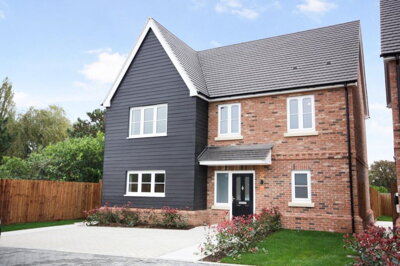
Browse 1 home new builds in Herongate and Ingrave from local developer agents.
The Great Paxton property market has demonstrated remarkable resilience and growth, with average house prices reaching £457,083 over the last twelve months. This figure represents an 11% increase compared to the previous year, and a substantial 16% rise from the 2021 peak of £394,423. OnTheMarket data confirms a similar upward trajectory, recording a 10.3% increase in sold prices over the same period as of January 2026. These statistics position Great Paxton as one of the stronger performing markets within Huntingdonshire, attracting both owner-occupiers and investors seeking capital appreciation in a historically significant location.
Property types available in Great Paxton skew heavily towards detached and semi-detached family homes, reflecting the village's predominantly residential character. Detached properties command an average price of £496,875, while semi-detached homes average £377,500. The village's housing stock includes numerous period properties concentrated along High Street, Church Lane, and Adams Lane, many of which are listed buildings dating back several centuries. This heritage architecture adds considerable character and value to the local property market, though buyers should budget for the potential maintenance requirements associated with older construction.
Transaction volumes in Great Paxton remain modest, consistent with the village's small population and limited housing stock. Rightmove records 4 property sales over the past year, while Home.co.uk similarly shows 4 sales in the six months leading to February 2026. Over the past decade, approximately 452 properties have changed hands in the wider area, indicating a steady but measured market activity typical of rural Cambridgeshire villages. No active new-build developments were identified within the village itself, meaning buyers seeking modern construction may need to look to neighbouring settlements such as St Neots, where recent housing developments have expanded the available stock.

Understanding current property values is essential for anyone considering a move to this sought-after Cambridgeshire village. The overall average house price in Great Paxton stands at £457,083 based on sales over the last twelve months, representing significant growth from the 2021 peak of £394,423. This 16% increase over five years demonstrates consistent demand for property in this historic location, driven by the village's combination of heritage character, rural setting, and excellent commuter links.
Detached properties form the backbone of the Great Paxton market, with these larger family homes averaging £496,875 over the past year. The premium commanded by detached homes reflects the generous plot sizes and spacious accommodation typical of properties along High Street and the surrounding lanes. Semi-detached properties offer more accessible entry points to the village market, averaging £377,500 and providing suitable options for first-time buyers or families seeking period features without the premium attached to fully detached homes.
The limited supply of available properties means that well-presented homes in Great Paxton can command strong prices, particularly those with original features, converted outbuildings, or generous gardens. The village's relative isolation from major new-build development means that demand consistently outstrips supply, supporting prices even during periods of broader market uncertainty. Buyers should note that properties along River Lane may command lower values due to flood risk considerations, which we cover in detail below.
Great Paxton thrives as a rural community characterised by its agricultural heritage and unwavering sense of village spirit. The settlement's historical development centres around the ancient routeways and lanes that still define its structure today, with High Street, Church Lane, and Adams Lane forming the backbone of this compact village. The presence of the 11th-century Holy Trinity Church provides not only architectural grandeur but also serves as a focal point for community gatherings and village events throughout the year. The Minster Church of the Holy Trinity, designated Grade I listed, represents one of the finest examples of Anglo-Saxon ecclesiastical architecture in Cambridgeshire and draws visitors from across the region.
The village supports a range of local amenities within walking distance of most residential areas. Essential services include a village shop, traditional public house, and community facilities that serve both residents and visitors alike. The surrounding Cambridgeshire countryside offers extensive walking and cycling opportunities, with footpaths crossing farmland and meadows that showcase the area's rural character. The nearby towns of St Neots and Huntingdon provide access to larger retail centres, supermarkets, healthcare facilities, and a broader range of leisure activities within a short drive.
Demographically, Great Paxton attracts families, professionals, and retirees seeking a balanced lifestyle away from urban pressures. The 2021 Census recorded 1,005 residents, a figure that has remained relatively stable compared to the 2011 population of 1,007, suggesting a settled community with low turnover. The village ward estimate of 3,106 residents in 2024 reflects the broader administrative area that includes neighbouring settlements. Evening and weekend community life revolves around the local pub, village hall events, and church activities, creating opportunities for social connection that many urban environments lack.
Community facilities in Great Paxton include the village hall, which hosts regular events from quiz nights to craft markets, and the local pub serving as a social hub for residents. The nearby market town of St Neots, approximately 4 miles away, provides additional leisure options including sports facilities, restaurants, and cultural venues. Families appreciate the range of primary schools within easy reach, with several outstanding or good-rated options in surrounding villages and the Ernulf Academy in St Neots serving secondary education needs.
Great Paxton enjoys excellent connectivity despite its rural village setting, making it particularly attractive to commuters who work in Cambridge, Peterborough, or London. The village sits within easy reach of major road networks, with the A1 trunk road passing nearby to provide direct access to London and the north. The A14 trunk road connects the area to Cambridge to the east and the wider motorway network, enabling straightforward journeys to Birmingham, Stansted Airport, and the Channel ports. For village residents, the strategic road position balances countryside living with practical commuting options.
Rail services from nearby stations offer convenient access to major destinations. St Neots railway station, located approximately 3 miles from Great Paxton village centre, provides regular services to London King's Cross with journey times of around 40-50 minutes. This direct connection to central London makes Great Paxton particularly appealing to commuters who require regular access to the capital but wish to reside in a more affordable and peaceful location. Cambridge station can be reached by road or via connecting rail services, opening up employment opportunities in the city's growing technology and research sectors.
Local bus services operate routes connecting Great Paxton with surrounding villages and market towns, providing essential transport options for residents without private vehicles. Bus services run regularly between Great Paxton and St Neots, where passengers can connect to additional routes and rail services. The village benefits from adequate parking provision for a settlement of its size, though residents should note that parking availability may be limited during village events or church services. Cycling infrastructure in the wider area continues to improve, with National Cycle Network routes passing through nearby communities and providing car-free commuting alternatives for the more energetic.
For international travel, Stansted Airport is accessible via the M11 and A120 in approximately one hour, while Luton Airport can be reached in around 75 minutes via the A1 and M1. Heathrow and Gatwick require longer journey times but remain feasible for occasional travel. This connectivity makes Great Paxton suitable for professionals working in London while living in a more affordable and peaceful Cambridgeshire village.
Great Paxton presents a distinctive opportunity for buyers seeking period properties with genuine historical significance. The village contains an exceptional concentration of listed buildings, ranging from the magnificent 11th-century Holy Trinity Church to numerous residential properties on High Street and surrounding lanes. Grade II listed buildings include 26 and 31-33 High Street, Harvest Cottage, Lilac Cottage, Lime Cottage, Low Farmhouse, Paxton Hill House, Paxton Place, Pilgrim Cottage, and The Lodge, among others. This heritage-rich environment creates a unique streetscape where centuries-old properties stand alongside more recent additions, all contributing to the village's undeniable character.
Purchasing a listed building in Great Paxton requires careful consideration of the responsibilities and opportunities this entails. Grade I and Grade II listing designations provide legal protection against unsympathetic alterations, ensuring the preservation of architectural features that define the village's character. However, owners benefit from access to historic building grants and specialist advice through organisations such as Historic England. Properties constructed using traditional materials such as stone, brick, and timber require ongoing maintenance using appropriate techniques and materials, which can affect renovation budgets and timescales.
The village lacks a designated conservation area, though the collective value of listed buildings effectively creates a conservation-like environment throughout the historic core. Any significant works to listed properties require consent from Huntingdonshire District Council, and prospective buyers should factor any existing permissions or outstanding enforcement notices into their purchasing decisions. Properties on High Street and Church Lane represent the most significant concentration of heritage assets, offering buyers authentic period homes in one of Cambridgeshire's most historically important villages.
The Churchyard Cross, situated approximately 10 yards west of Holy Trinity Church, adds further historical dimension to the village centre and demonstrates the depth of heritage that characterises Great Paxton. This Grade II listed stone cross dates from medieval times and serves as a reminder of the village's long history as a centre of religious significance in the Anglo-Saxon period. Buyers considering properties near the church should appreciate that the ecclesiastical buildings and their settings contribute significantly to the village's special character.
Explore current property listings in Great Paxton and surrounding villages using Rightmove, OnTheMarket, and Zoopla. Understanding price trends, including the 11% annual increase and average price of £457,083, helps set realistic expectations. Consider property types ranging from period cottages to modern family homes, and register with local estate agents operating in the St Neots and Huntingdonshire area.
Before arranging viewings, obtain a mortgage agreement in principle from a lender. This demonstrates your purchasing capacity to sellers and agents, strengthening your position in a competitive market where limited supply can lead to multiple interest. Fixed-rate and tracker mortgages are available from multiple providers, with rates typically ranging from 4.5% to 6% depending on deposit size and loan-to-value ratio.
Visit properties that match your requirements, paying particular attention to the condition of older and listed buildings. Check for signs of damp, roof condition, and maintenance needs. Take measurements and photographs for future reference, and note any features that may require specialist insurance or planning consent.
For typical properties in reasonable condition, a Level 2 Homebuyer Report provides professional assessment of condition and defects. Given the number of older properties in Great Paxton, surveys typically cost between £376 and £930 depending on property value. Listed buildings may require the more detailed Level 3 Building Survey, which provides comprehensive analysis of construction, defects, and maintenance requirements.
Choose a conveyancing solicitor to handle the legal aspects of your purchase. They will conduct searches including local authority, environmental, and water drainage checks, review contracts, and coordinate with your mortgage lender. Flood risk searches are particularly important in Great Paxton due to the village's position in the Great Ouse river valley.
Once searches are satisfactory and all conditions are met, you will exchange contracts and pay your deposit, typically 10% of the purchase price. Completion typically follows within weeks, when you receive the keys to your new Great Paxton home. Factor in Stamp Duty Land Tax, which for properties averaging £457,083 amounts to approximately £10,354 for standard rate buyers.
Flood risk represents the most significant environmental consideration for property buyers in Great Paxton. The village sits within the Great Ouse river valley and carries a formal flood warning area designation, with River Lane identified as particularly vulnerable to flooding during periods of high rainfall. Cambridgeshire County Council and the Environment Agency are actively undertaking studies and implementing works to address flood risk throughout the wider Great Ouse Catchment, including measures that may benefit Great Paxton over time. Prospective buyers should request flood search results, review the property's flood history, and consider whether appropriate insurance cover is available and affordable.
The village's predominantly older housing stock requires careful inspection for common defects associated with period properties. Traditional construction using stone, brick, and timber can develop issues with damp penetration, particularly in properties without modern damp-proof courses. Roof conditions on older buildings should be assessed thoroughly, as replacement or significant repair costs can be substantial. Electrical installations in heritage properties may require updating to meet current safety standards, and buyers should budget for potential re-wiring work alongside other renovation costs.
Buyers considering listed properties should verify the extent of listing designations and understand the implications for future modifications or improvements. Planning permission requirements for listed buildings extend beyond those applicable to unlisted properties, and some works may require consent that would not be needed elsewhere. Building insurance for listed properties can be more expensive than standard cover, and not all insurers offer policies suitable for heritage buildings. These ongoing costs should form part of your overall affordability assessment when considering period properties in the village.
Properties in Great Paxton fall within Huntingdonshire District Council's jurisdiction for council tax purposes. Most period cottages and terraced properties typically fall within bands A to C, while larger detached family homes and listed properties may occupy higher bands. You should verify the specific council tax band for any property under offer, as this forms part of the ongoing cost of ownership alongside mortgage payments, insurance, and maintenance reserves.
The average house price in Great Paxton currently stands at £457,083 based on sales over the last twelve months. This represents an impressive 11% increase compared to the previous year, and a 16% rise from the 2021 peak of £394,423. Detached properties average £496,875, while semi-detached homes command around £377,500. The strong price growth reflects the village's popularity with buyers seeking character properties in a tranquil rural setting with excellent transport connections to London and Cambridge.
Properties in Great Paxton fall under Huntingdonshire District Council's jurisdiction for council tax purposes. Bands range from A to H depending on property value, with most period cottages and terraced properties typically falling in bands A to C, while larger detached family homes and listed properties may be in higher bands. The specific council tax band for any property can be verified through the Valuation Office Agency website or confirmed by your solicitor during the conveyancing process.
Great Paxton itself is a small village without its own primary school, so children typically attend schools in nearby villages and towns. Primary schools in the surrounding area include several rated good or outstanding by Ofsted, serving families within the Cambridgeshire County Council catchment. Secondary education options include the Ernulf Academy in St Neots and Hinchingbrooke School in Huntingdon, both offering comprehensive education for students aged 11-18. Selective grammar schools in nearby towns provide additional options for academically able students. Families relocating to the area should research specific catchment areas and admission arrangements through Cambridgeshire County Council's education department.
Great Paxton benefits from good connectivity despite its rural setting. The nearest railway station is St Neots, approximately 3 miles away, offering regular services to London King's Cross in around 40-50 minutes. Local bus services connect the village with surrounding communities and market towns, providing essential access for residents without private vehicles. Bus routes operate between Great Paxton and St Neots, where additional connections are available. The village's proximity to the A1 and A14 trunk roads also enables straightforward road travel to Cambridge, Peterborough, and beyond.
Great Paxton has demonstrated consistent price growth, with an 11% increase over the past year and a 16% rise over the previous five years. The village's combination of historic character, rural setting, and excellent transport links to London and Cambridge positions it favourably for both capital growth and rental demand. Limited new-build supply in the village supports the value of existing properties, while the presence of listed buildings helps maintain the area's distinctive character. However, flood risk should be factored into any investment decision, and buyers should ensure appropriate insurance is available before committing to purchase.
Great Paxton carries a formal flood warning area designation due to its position in the Great Ouse river valley. River Lane has been specifically identified as at-risk during periods of high rainfall and flood warnings have been issued for this area. The Environment Agency and Cambridgeshire County Council are undertaking works to address flood risk in the wider catchment area, though buyers should not assume these works will eliminate risk in the near term. We recommend commissioning a detailed flood risk assessment as part of your property searches, verifying insurance availability for the specific property, and considering elevation and flood history when evaluating specific homes.
Stamp Duty Land Tax rates for residential purchases start at 0% on the first £250,000 of property value, rising to 5% on the portion between £250,001 and £925,000. Properties priced above £925,000 incur 10% on the next band and 12% on amounts exceeding £1.5 million. First-time buyers benefit from relief on the first £425,000, with 5% applying between £425,001 and £625,000. At the current Great Paxton average price of £457,083, most buyers incur SDLT of approximately £10,354, though first-time buyers would pay nothing on the first £425,000 and 5% on the remaining £32,083.
Great Paxton contains a significant concentration of listed buildings, with the village's heritage centred around the Grade I listed Holy Trinity Church dating from the 11th century. Numerous residential properties hold Grade II listing status, including 26 and 31-33 High Street, Harvest Cottage, Lilac Cottage, Lime Cottage, Low Farmhouse, Paxton Hill House, Paxton Place, Pilgrim Cottage, and The Lodge. The Churchyard Cross, located west of the church, is also Grade II listed. This heritage designation protects the village's character but imposes obligations on owners regarding maintenance and alterations.
Understanding the full cost of purchasing property in Great Paxton requires careful budgeting beyond the advertised purchase price. Stamp Duty Land Tax represents the most significant additional cost, with standard rates starting at 0% on the first £250,000 of residential property value. For properties priced between £250,001 and £925,000, a rate of 5% applies to the amount exceeding the lower threshold. Properties commanding prices above £925,000 incur 10% on the amount between £925,001 and £1.5 million, with 12% applying to any value exceeding £1.5 million. At current Great Paxton average prices of £457,083, most buyers would incur SDLT of approximately £10,354 on a full-rate purchase.
First-time buyers purchasing residential property benefit from increased thresholds under current SDLT relief provisions. The first £425,000 of property value attracts zero SDLT, with 5% applying to the portion between £425,001 and £625,000. This relief is unavailable for properties priced above £625,000, where standard rates apply to the full purchase price. Given that the average Great Paxton property price of £457,083 falls comfortably within the first-time buyer relief threshold, qualifying purchasers could save over £10,000 compared to standard rate buyers.
Beyond stamp duty, buyers should budget for solicitor conveyancing costs typically ranging from £500 to £1,500 depending on complexity and whether the property is freehold or leasehold. Survey costs for a RICS Level 2 Homebuyer Report typically range from £376 for properties under £200,000 to £930 for homes valued above £600,000, with Great Paxton's average price of £457,083 likely placing most purchases in the £400-600 range. Mortgage arrangement fees, valuation fees, and search costs add further expenses, while buyers purchasing leasehold properties should carefully review ground rent terms and service charge provisions before committing to purchase.
From 4.5%
Connect with competitive mortgage rates from multiple lenders
From £499
Expert property solicitors offering fixed-fee conveyancing
From £376
Professional survey including condition report and valuation
From £600
Comprehensive building survey for older or complex properties
Properties New Builds In London

Properties New Builds In Plymouth

Properties New Builds In Liverpool

Properties New Builds In Glasgow

Properties New Builds In Sheffield

Properties New Builds In Edinburgh

Properties New Builds In Coventry

Properties New Builds In Bradford

Properties New Builds In Manchester

Properties New Builds In Birmingham

Properties New Builds In Bristol

Properties New Builds In Oxford

Properties New Builds In Leicester

Properties New Builds In Newcastle

Properties New Builds In Leeds

Properties New Builds In Southampton

Properties New Builds In Cardiff

Properties New Builds In Nottingham

Properties New Builds In Norwich

Properties New Builds In Brighton

Properties New Builds In Derby

Properties New Builds In Portsmouth

Properties New Builds In Northampton

Properties New Builds In Milton Keynes

Properties New Builds In Bournemouth

Properties New Builds In Bolton

Properties New Builds In Swansea

Properties New Builds In Swindon

Properties New Builds In Peterborough

Properties New Builds In Wolverhampton

Enter your details to see if this property is within your budget.
Loans, cards, car finance
Estimated property budget
Borrowing + deposit
You could borrow between
Typical borrowing
Monthly repayment
Est. at 4.5%
Loan-to-value
This is an estimate only. Your actual budget may vary depending on interest rates, credit history, and personal circumstances. For an accurate affordability assessment, speak to one of our free mortgage advisors.
This calculator provides estimates for illustrative purposes only and does not constitute financial advice. Your home may be repossessed if you do not keep up repayments on your mortgage. Estimates based on 4.5% interest rate, repayment mortgage. Actual rates depend on your circumstances.
Homemove is a trading name of HM Haus Group Ltd (Company No. 13873779, registered in England & Wales). Homemove Mortgages Ltd (Company No. 15947693) is an Appointed Representative of TMG Direct Limited, trading as TMG Mortgage Network, which is authorised and regulated by the Financial Conduct Authority (FRN 786245). Homemove Mortgages Ltd is entered on the FCA Register as an Appointed Representative (FRN 1022429). You can check registrations at NewRegister or by calling 0800 111 6768.

We use cookies to show you personalised content and improve your experience of our website. Find out more in our Privacy policy and Cookie policy.