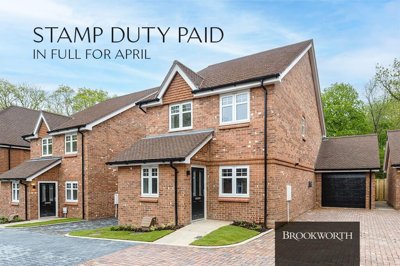
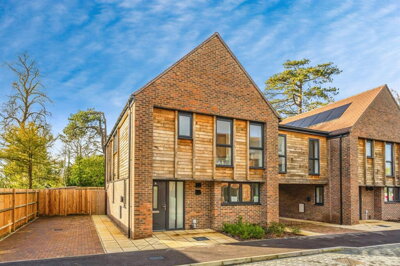
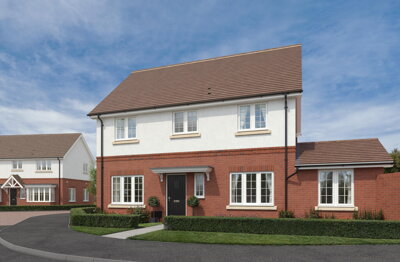
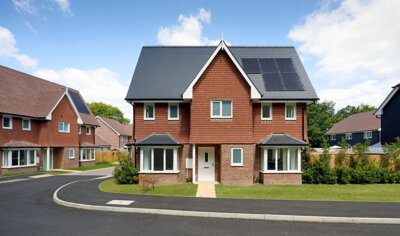
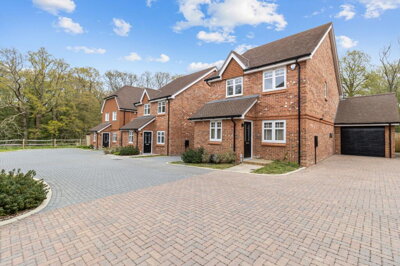
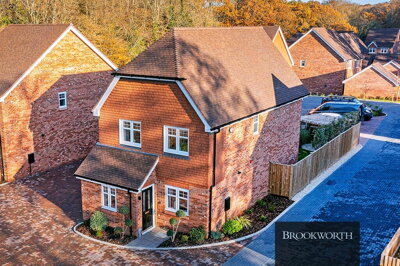
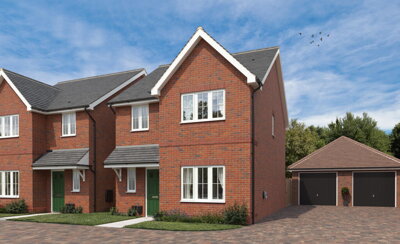
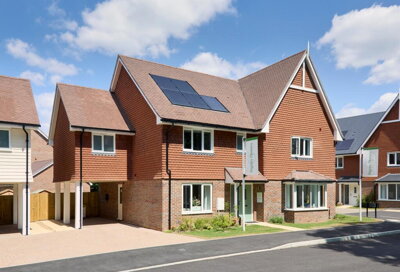
Browse 9 homes new builds in Haywards Heath from local developer agents.
Three bedroom properties represent a significant portion of the Haywards Heath housing market, offering space for families with multiple reception rooms and gardens in many cases. Browse detached, semi-detached, and terraced options ranging across new residential developments.
£480,736
Average Price
500+
Annual Sales
£727,000
Detached Average
£255,000
Flat Average
Haywards Heath presents a diverse range of property types that reflect the town's evolution from a Victorian railway settlement into a thriving modern commuter town. The oldest properties date from the mid-19th century, when the railway station opened in 1841, creating demand for characterful terraced homes and larger detached residences built for the emerging professional classes. Many of these Victorian and Edwardian properties feature traditional timber sash windows and solid brick construction, with external walls often built using the distinctive Cuckfield Stone that quarries from local seams. This fine-grained sandstone, ranging from grey to light brown in colour, appears throughout the older buildings and boundary walls, giving the town its characteristic warm appearance.
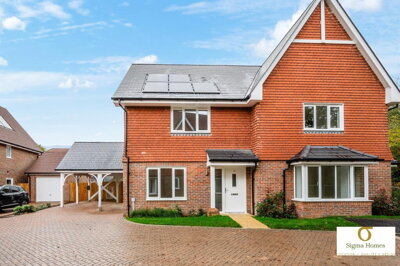
The 1930s brought significant expansion with the development of Franklands Village, now a designated conservation area where tree-lined streets showcase the architectural styles of that era. These semi-detached and detached family homes remain highly sought after today, offering generous room sizes and mature gardens that newer properties often struggle to match. The 1960s and 1970s added further housing estates and light industrial development, creating more affordable entry points to the local market. Contemporary buyers will also find new build options including Spring Bank on the outskirts, where Sigma Homes offers three and four-bedroom homes from £550,000 with modern energy-efficient features such as solar panels and air source heat pumps.
The underlying geology of Haywards Heath creates specific considerations for property condition. The solid geology consists of the Hastings Beds, a complex succession of sandstones, silty sandstones, and mudstones from the Lower Cretaceous period. This includes the Wadhurst Clay Formation, which weathers to heavy ochre and greenish grey clays prone to volume changes with moisture fluctuations. These clay-rich soils present a shrink-swell risk that can lead to subsidence or ground movement, particularly during extended dry spells or periods of heavy rainfall. Our inspectors assess foundation conditions carefully when surveying older properties, noting any signs of cracking, sticking doors or windows, and evidence of previous structural work or underpinning.
The traditional construction methods found throughout Haywards Heath reflect the local geology and the availability of building materials from nearby quarries. Cuckfield Stone, a fine- to medium-grained sandstone, has been used extensively in older properties throughout the area. This local stone can be identified by its characteristic grey to light-brown colouring and its relatively easy workability compared to harder stones. The basal part of Cuckfield Stone sometimes features a distinctive quartz-pebble conglomerate, which occasionally contains rolled dinosaur bones and teeth from the Cretaceous period when these sediments were deposited. This geological feature represents a fascinating connection between the built environment and the ancient history beneath our feet.
Ardingly Sandstone, often referred to locally as sandrock, also appears throughout Haywards Heath in certain buildings and boundary walls. This clean white or greyish-white soft quartzose sandstone gives properties their characteristic warm, pale appearance and was particularly popular for decorative detailing and window surrounds. Our surveyors are familiar with both stone types and understand how they perform over time, noting any signs of weathering, spalling, or mortar deterioration that may require attention. The combination of traditional stone construction with more modern brick and render finishes creates varied external appearances across the town, from the solid stone walls of period properties to the rendered finishes common on mid-20th century housing estates.
Traditional timber sash windows remain a defining feature of Victorian and Edwardian properties throughout Haywards Heath, with their elegant proportions and attention to architectural detail. These windows require regular maintenance including painting, putty replacement, and occasional rope and weight mechanism repairs. Many owners have upgraded to double-glazing while attempting to retain the original appearance, though such alterations should comply with conservation requirements in the six designated Conservation Areas that Mid Sussex District Council maintains. The combination of traditional construction materials and the need for ongoing maintenance represents an important consideration when evaluating older properties in this area.
The Haywards Heath property market presents diverse options across all price brackets, reflecting the town's popularity among families, professionals, and retirees alike. Detached properties command the highest prices, with averages ranging from £727,000 to £737,000 depending on the source, while semi-detached homes typically sell for around £492,000 to £493,000. Terraced properties offer a more accessible entry point at approximately £403,000, and flats provide the most affordable options from around £255,000 to £261,000. This range ensures that first-time buyers can find studio and one-bedroom apartments, while larger families can explore generous detached houses in sought-after streets.
Recent market data indicates a period of modest correction following the post-pandemic peak of 2023, with Rightmove recording a 3% reduction from the £457,683 high and overall prices down approximately 2% year-on-year. However, certain postcode sectors show resilience, with RH16 3 posting growth of 2.9% over the past year. The broader RH16 1 postcode area showed more modest 0.3% growth, demonstrating that local market conditions can vary significantly within a relatively small geographic area. New build activity continues to refresh the housing stock, with Spring Bank offering contemporary three and four-bedroom homes from £550,000, while McCarthy Stone's Greenstead development at Boltro Road provides specially designed retirement apartments starting from £360,000 for a one-bedroom unit and £490,000 for two-bedroom apartments.
The local economy benefits from Haywards Heath's position as a regional centre for retail and services, while historical factors such as the Sussex County Mental Health Facility at St Francis Hospital, which opened in 1859, created sustained employment that boosted local housing demand. The former Bannister's Cattle Market, operating from 1868 until 1989, represented another significant economic driver that shaped the town's development. Today, many residents commute to London, Brighton, Crawley, and Gatwick Airport, taking advantage of the excellent rail connections that have made Haywards Heath one of the most desirable commuter locations in West Sussex.

Haywards Heath blends Georgian elegance with Victorian and Edwardian character, creating a townscape that rewards those who appreciate architectural heritage. Many properties feature the distinctive Cuckfield Stone, a fine-grained sandstone ranging from grey to light brown that appears throughout the older buildings and walls. Some properties incorporate Ardingly Sandstone, known locally as sandrock, which gives certain buildings their characteristic warm, pale appearance. The 1930s expansion brought the charming Franklands Village, now a designated conservation area, where tree-lined streets showcase the architectural styles of that era. Over 45 listed buildings dot the town, including the Grade II listed Priory of Our Lady of Good Counsel on Franklynn Road, the Grade I listed Elizabethan Wakehurst mansion with its Grade II* listed stables, and various barns and houses on Sunnywood Drive.
The town centre centres around The Orchards shopping precinct, offering essential amenities alongside independent retailers and cafes. Victoria Park and Beech Hurst Gardens provide beautiful green spaces for relaxation and recreation, while the surrounding countryside offers excellent walking routes through the Sussex Downs and Ashdown Forest beyond. The population of approximately 30,830 residents enjoys a community atmosphere that retains its village character despite steady growth over recent decades. Local amenities include major supermarkets, healthcare facilities including the Princess Royal Hospital on Lewes Road, and a selection of restaurants and pubs that cater to diverse tastes. Clair Hall hosts regular events and entertainment, adding to the cultural life of the town.
For those considering the broader area, Haywards Heath sits within easy reach of several attractive villages including Lindfield, famous for its traditional village green and historic buildings, and Cuckfield with its distinctive high street. The nearby South Downs National Park provides outstanding countryside for recreation, while the coast at Brighton is reachable in approximately 30 minutes by car. This combination of rural charm, excellent connectivity, and comprehensive local amenities explains why property values in Haywards Heath have demonstrated long-term resilience, with demand consistently strong from buyers seeking the Sussex lifestyle without the premium prices of more commuter-focused towns closer to London.

Education provision in Haywards Heath ranks among the town's most attractive features for families considering a move to the area. The town and its surrounding villages host a selection of primary schools that consistently achieve favourable outcomes, with several schools in the Mid Sussex district receiving Good or Outstanding Ofsted ratings. Warden Primary School and Harlands Primary School serve the immediate town area, while north Haywards Heath is served by St Wilfrid's CofE Primary School. These establishments provide solid foundations for younger children, with dedicated staff and good facilities that support early years development. The surrounding villages add further options, with many primary schools achieving Outstanding ratings from Ofsted inspectors.
Secondary education options include Oathall Community College, a comprehensive school serving Haywards Heath that offers a broad curriculum and various extracurricular activities. The school has developed a positive reputation within the local community, providing education for students from Year 7 through to sixth form. For families considering independent education, several well-regarded private schools operate within commuting distance, including Cumnor House Sussex and Great Walstead School. Sixth form provision is available locally at Oathall, with students also travelling to nearby towns including Brighton and East Grinstead for specialist courses and wider subject choices.
The presence of highly performing schools significantly influences property values in catchment areas throughout Haywards Heath, making early investigation essential for buyers with school-age children. Properties within the catchment zones of popular primary schools command premium values, and the rental market also shows strong demand from families seeking access to good schools. Our surveyors often note the proximity to schools when assessing properties, as this factor affects both current value and future resale potential. Families relocating from London frequently cite the quality of local education as a primary motivation for choosing Haywards Heath over more urban alternatives.
Haywards Heath railway station serves as the town's primary transport hub, offering frequent services that have cemented the town's reputation as a prime commuter location. Direct trains to London Victoria take approximately one hour, making day commuting entirely feasible, while Brighton is reachable in just 20 minutes. The station also provides connections to Gatwick Airport, allowing international travellers easy access to worldwide destinations via the Thameslink route to the airport. Southbound services extend along the coast, opening up exploration opportunities across East and West Sussex, with connections to Eastbourne, Hastings, and Bexhill available with a single change.
Road connectivity complements the rail network, with the A272 passing through the town and connecting to the A23 near Pease Pottage, approximately 10 miles north. This provides straightforward access to Crawley and the motorway network linking to London, the Channel ports, and the South Coast. The M23 motorway is accessible via the A23, connecting to the M25 London orbital and onwards to Heathrow, Stansted, and Gatwick airports. For those working locally, the surrounding Mid Sussex area offers employment in retail, healthcare, education, and the service sector, reducing the need to commute longer distances for work.
Local bus services operate within Haywards Heath and connect to surrounding villages including Lindfield, Cuckfield, and Ardingly, providing public transport options for those without cars. Cycling infrastructure has improved in recent years with dedicated routes appearing in new developments and connections to the National Cycle Network. For those who work from home, fast broadband connectivity supports remote working requirements that have become increasingly important to modern buyers. The combination of excellent transport links and modern digital infrastructure makes Haywards Heath particularly attractive to professionals who can divide their time between home working and office attendance in London or Brighton.
Contact us to select the appropriate survey level for your Haywards Heath property. A RICS Level 2 Survey suits conventional properties in reasonable condition, while a RICS Level 3 Building Survey provides detailed analysis for older properties, unusual construction, or those requiring significant renovation. Our team will confirm the scope and provide a fixed-fee quote based on the property value and size.
Our inspector visits the Haywards Heath property at an agreed time, typically spending two to three hours examining all accessible areas. We check the roof, walls, floors, and foundations, looking for signs of damp, structural movement, timber defects, and other issues. Given the prevalence of clay soils throughout Haywards Heath, we pay particular attention to foundation conditions and any evidence of historic subsidence or ground movement that may relate to shrink-swell behaviour in the local geology.
We produce a comprehensive RICS survey report within five working days of the inspection. This document provides clear ratings for each element of the property, from the roof and structure through to the plumbing and electrical systems. The report includes specific recommendations for repairs and maintenance, with prioritised actions to help you understand which issues require immediate attention and which can be scheduled for later.
Following delivery of your report, our team remains available to discuss the findings and answer any questions. We can recommend specialist contractors for any concerning issues, provide cost estimates for remedial work, or arrange a follow-up inspection if you need additional analysis of a specific problem. This ongoing support continues throughout your purchase process, helping you negotiate confidently with sellers based on factual survey information.
Properties in Haywards Heath present characteristic defects that our inspectors encounter regularly during surveys throughout the area. Victorian and Edwardian properties, which form a significant proportion of the housing stock, commonly show signs of damp penetration, particularly in solid wall constructions where modern damp-proof courses may be absent or compromised. Our surveyors use moisture meters and thermal imaging equipment to identify damp issues that may not be visible to the untrained eye, including rising damp, penetrating damp from defective gutters or parapet walls, and condensation problems associated with inadequate ventilation.
Timber defects represent another significant concern in period properties throughout Haywards Heath, where original timber joists, floorboards, and structural elements have been in place for over a century. Our inspectors check for signs of woodworm activity, wet rot, and dry rot, noting any areas where timber has been replaced or treated previously. The presence of Cuckfield Stone and Ardingly Sandstone in external walls can create particular challenges where iron or steel dowels and ties have corroded, causing stone spalling and potential structural concerns. Roof conditions frequently require attention on older properties, with slipped tiles, deteriorated felt, and lead flashing problems representing common findings during our inspections.
The local geology creates specific structural challenges that affect properties throughout Haywards Heath. The underlying clay soils of the Hastings Beds, including the Wadhurst Clay Formation, exhibit shrink-swell behaviour that can cause foundation movement and subsidence. Signs of this movement include diagonal cracking in walls, doors and windows that stick or fail to close properly, and uneven floors. Our surveyors assess the severity of any movement indicators and recommend appropriate action, which may range from monitoring the situation to instructing a structural engineer for more detailed analysis. Properties in areas with alluvial drift deposits near the Scrase Stream require particular attention regarding flood risk and ground conditions.
Understanding the environmental and planning context of Haywards Heath helps buyers appreciate factors that may affect their property purchase. The Scrase Stream flows through the town as a tributary of the River Ouse, with areas near this watercourse and those with alluvial drift deposits carrying elevated flood risk. Your solicitor will conduct environmental searches that identify any flood risk classifications applicable to the property, while our surveyors note any signs of previous flooding or water damage. Surface water flooding can also occur in areas with impermeable surfaces during periods of heavy rainfall, a consideration that has become more relevant with changing weather patterns.
Mid Sussex District Council maintains six Conservation Areas within Haywards Heath, including Franklands Village and areas around Muster Green. These designations affect permitted development rights and require planning permission for certain alterations including extensions, dormer windows, and some forms of cladding. The approximately 45 listed buildings throughout the town, ranging from the Grade I listed Wakehurst mansion to numerous Grade II listed houses and agricultural buildings, are protected under the Planning Listed Buildings Act. Any works affecting the character or fabric of listed properties require consent from the local planning authority, adding complexity to renovation projects.
The local planning department has approved various new developments throughout Haywards Heath in recent years, with further sites allocated for future housing growth. The Turners Mill development on Harlands Road represents a notable brownfield opportunity, where planning is expected for 16 residential units on the former Haywards Heath College campus. These new developments must comply with modern building regulations regarding energy efficiency, accessibility, and construction standards, representing a contrast to the traditional methods used in older properties. Our surveyors can advise on the planning status of specific properties and any nearby development proposals that may affect the local area or property values.
Current average house prices in Haywards Heath range from approximately £446,000 to £481,000 depending on the data source consulted. Detached properties average around £727,000 to £737,000, while semi-detached homes sell for approximately £492,000 to £493,000. Terraced properties command around £403,000 and flats offer more affordable options from £255,000 to £261,000. The market has experienced modest correction recently, with prices around 2-3% below the 2023 peak of £457,683, though certain postcode sectors like RH16 3 have shown growth.
Our RICS Level 2 Survey provides essential protection when purchasing property in Haywards Heath, where the mix of Victorian, Edwardian, and newer construction creates varied defect risks. Our inspectors specifically assess foundation conditions affected by the local clay soils, check for damp in period properties built with traditional methods, and identify timber defects common in older homes. The average RICS Level 2 survey fee in Haywards Heath is approximately £432, representing excellent value compared to the potential costs of undetected structural problems or expensive repairs after purchase.
Properties in Haywards Heath fall under Mid Sussex District Council, with bands ranging from A to H depending on property value and size. Victorian and Edwardian houses typically fall into bands D to F, while larger detached properties in areas like Franklands Village may attract bands G or H. Flats and smaller terraced properties commonly attract bands A to C. You can verify the specific band for any property through the Valuation Office Agency website or your solicitor during conveyancing searches.
Haywards Heath offers strong educational provision at all levels. Primary schools serving the town include Warden Primary School, Harlands Primary School, and St Wilfrid's CofE Primary School, all with positive reputations among local families. Oathall Community College provides secondary education locally with a broad curriculum and extracurricular activities. Several primary schools in the surrounding Mid Sussex area have achieved Outstanding Ofsted ratings, and independent options including Cumnor House Sussex operate within commuting distance. The presence of highly performing schools significantly influences property values in catchment areas throughout Haywards Heath.
Haywards Heath railway station provides excellent connectivity with direct services to London Victoria taking approximately one hour and Brighton reachable in just 20 minutes. Gatwick Airport is accessible via direct train, making international travel straightforward for residents. Local bus services connect the town to surrounding villages including Lindfield and Cuckfield, while the A272 provides road connections to the A23 motorway network. This exceptional connectivity, combined with fast broadband for remote working, explains why Haywards Heath has become such a popular choice for commuters seeking more affordable housing than central London or Brighton.
Haywards Heath demonstrates several characteristics that make it attractive for property investment. Strong commuter links maintain consistent demand from London and Brighton workers seeking affordable housing with good transport access. The local economy benefits from healthcare, retail, and service sector employment, while the Princess Royal Hospital provides significant healthcare sector jobs. Property values have shown long-term resilience with modest annual growth, and rental demand remains steady given the town's amenities and connectivity. However, investors should note the recent modest price correction following the 2023 peak and consider both capital appreciation and rental yield when evaluating opportunities.
Our inspectors frequently identify damp issues in Victorian and Edwardian properties throughout Haywards Heath, where solid wall constructions may lack adequate damp-proof courses. Timber defects including woodworm and rot affect many period properties with original floor joists and structural timbers. The local clay soils create shrink-swell risks that can cause subsidence or foundation movement, particularly in older properties. Roof condition issues including slipped tiles and deteriorated flashing represent common findings, while properties near the Scrase Stream may face elevated flood risk from alluvial deposits. Our RICS Level 2 Survey specifically checks for these area-specific concerns.
Stamp Duty Land Tax rates from April 2025 apply as follows: no tax on purchases up to £250,000, 5% on the portion from £250,001 to £925,000, 10% from £925,001 to £1.5 million, and 12% above £1.5 million. First-time buyers receive relief on purchases up to £625,000, paying 0% on the first £425,000 and 5% on the remainder. For a typical £480,000 property in Haywards Heath, standard buyers would pay £11,500 in stamp duty, while first-time buyers would pay £2,750.
From £350
A survey suitable for most conventional properties in Haywards Heath, checking condition and identifying defects in standard construction.
From £500
Comprehensive analysis for older, larger, or non-standard properties, providing detailed assessment of construction and recommendations.
From £80
Energy Performance Certificate required for property sales and rentals, rating energy efficiency from A to G.
From £150
RICS valuations for mortgage, Help to Buy, and other lending requirements in the Haywards Heath area.
Properties New Builds In London

Properties New Builds In Plymouth

Properties New Builds In Liverpool

Properties New Builds In Glasgow

Properties New Builds In Sheffield

Properties New Builds In Edinburgh

Properties New Builds In Coventry

Properties New Builds In Bradford

Properties New Builds In Manchester

Properties New Builds In Birmingham

Properties New Builds In Bristol

Properties New Builds In Oxford

Properties New Builds In Leicester

Properties New Builds In Newcastle

Properties New Builds In Leeds

Properties New Builds In Southampton

Properties New Builds In Cardiff

Properties New Builds In Nottingham

Properties New Builds In Norwich

Properties New Builds In Brighton

Properties New Builds In Derby

Properties New Builds In Portsmouth

Properties New Builds In Northampton

Properties New Builds In Milton Keynes

Properties New Builds In Bournemouth

Properties New Builds In Bolton

Properties New Builds In Swansea

Properties New Builds In Swindon

Properties New Builds In Peterborough

Properties New Builds In Wolverhampton

Enter your details to see if this property is within your budget.
Loans, cards, car finance
Estimated property budget
Borrowing + deposit
You could borrow between
Typical borrowing
Monthly repayment
Est. at 4.5%
Loan-to-value
This is an estimate only. Your actual budget may vary depending on interest rates, credit history, and personal circumstances. For an accurate affordability assessment, speak to one of our free mortgage advisors.
This calculator provides estimates for illustrative purposes only and does not constitute financial advice. Your home may be repossessed if you do not keep up repayments on your mortgage. Estimates based on 4.5% interest rate, repayment mortgage. Actual rates depend on your circumstances.
Homemove is a trading name of HM Haus Group Ltd (Company No. 13873779, registered in England & Wales). Homemove Mortgages Ltd (Company No. 15947693) is an Appointed Representative of TMG Direct Limited, trading as TMG Mortgage Network, which is authorised and regulated by the Financial Conduct Authority (FRN 786245). Homemove Mortgages Ltd is entered on the FCA Register as an Appointed Representative (FRN 1022429). You can check registrations at NewRegister or by calling 0800 111 6768.

We use cookies to show you personalised content and improve your experience of our website. Find out more in our Privacy policy and Cookie policy.