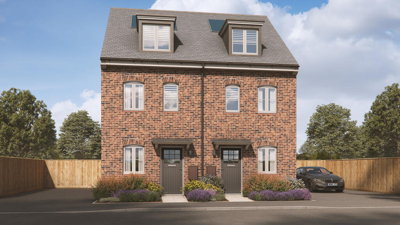
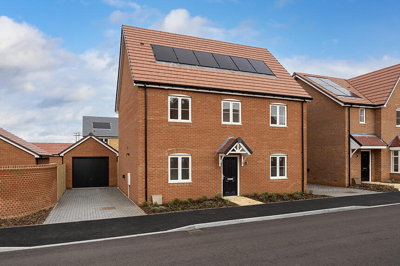
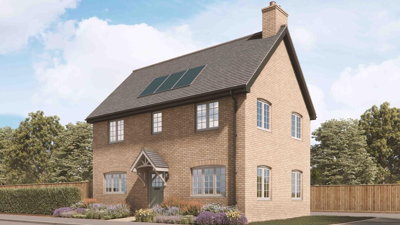
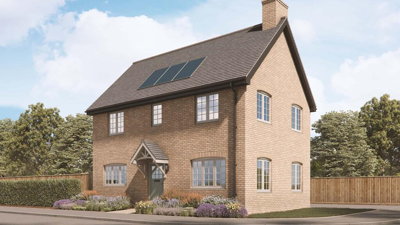
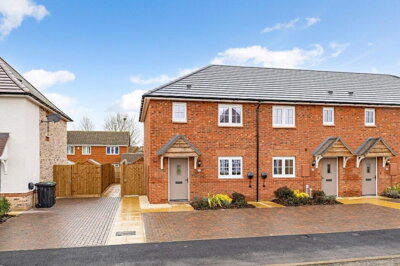
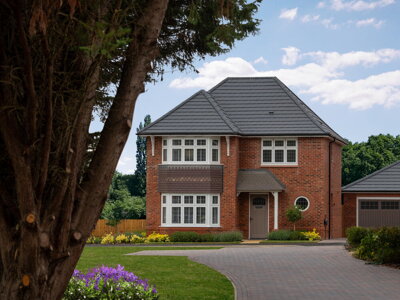
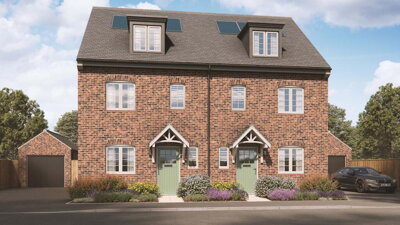
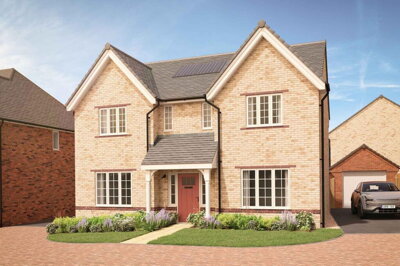
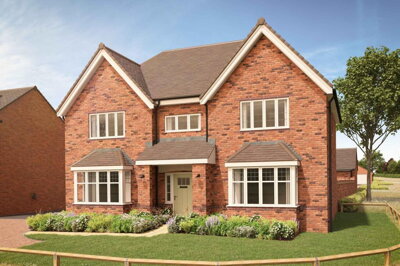
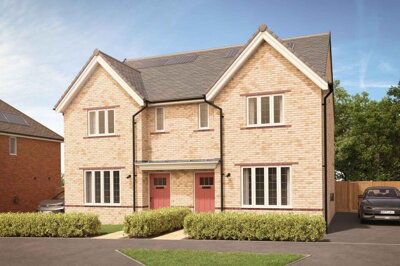
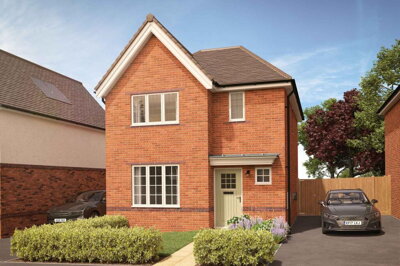
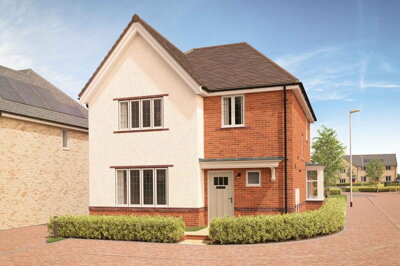
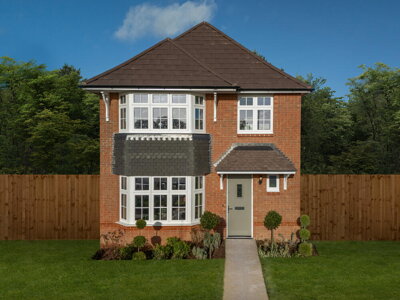
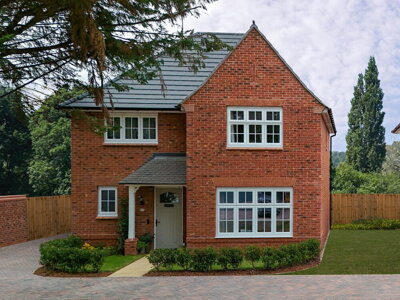
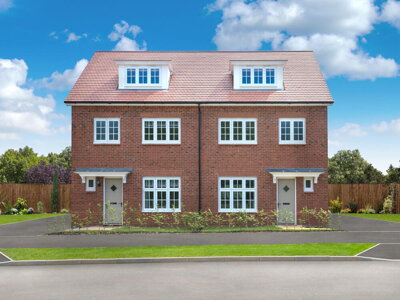
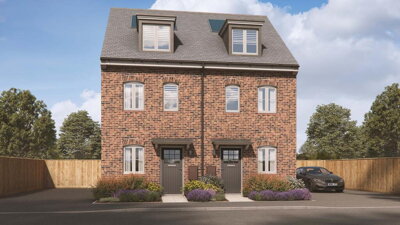
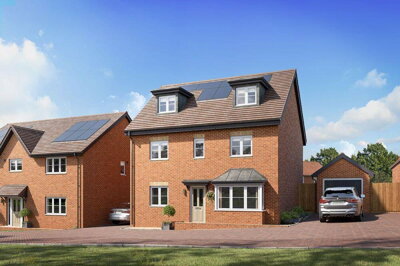
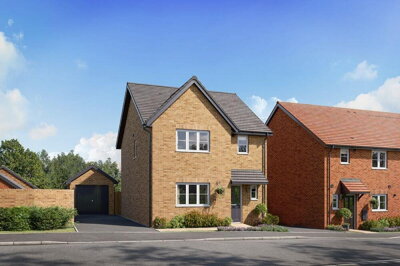
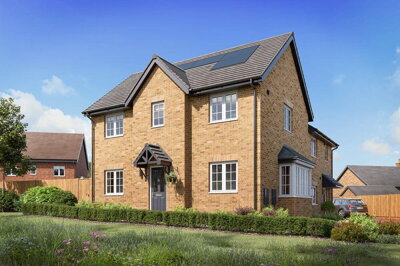
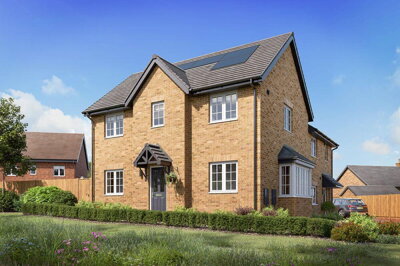
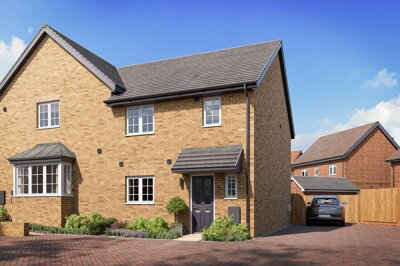
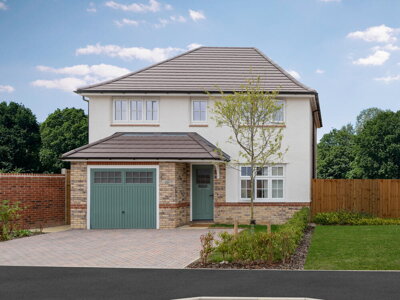
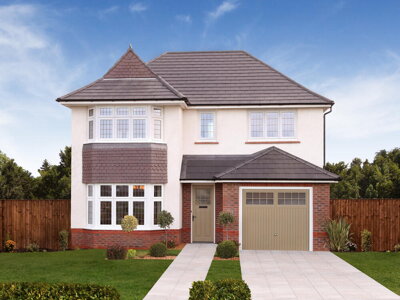
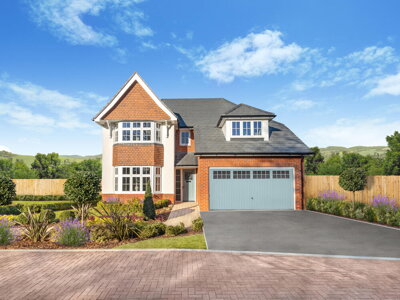
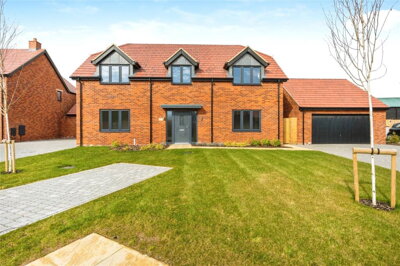
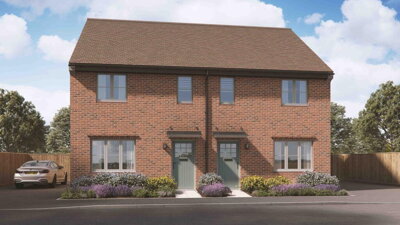
Browse 54 homes new builds in Harlington, Central Bedfordshire from local developer agents.
The Harlington property market offers detached, semi-detached, and terraced houses spanning various price ranges and neighbourhoods. Each listing includes detailed property information, photographs, and direct contact with the marketing agent.
£490k
31
1
86
Source: home.co.uk
Showing 31 results for Houses new builds in Harlington, Central Bedfordshire. 1 new listing added this week. The median asking price is £490,000.
Source: home.co.uk
Detached
15 listings
Avg £640,600
Semi-Detached
12 listings
Avg £454,583
Terraced
4 listings
Avg £408,750
Source: home.co.uk
Source: home.co.uk
£358,165
Average Price
£466,516
Detached Average
£312,938
Semi-Detached Average
£324,600
Terraced Average
43
Properties Sold (12mo)
+16%
Price Growth (YoY)
The Ashburton property market has demonstrated remarkable resilience and growth over the past year, with 43 residential property sales completing in the twelve-month period. Detached properties command the highest prices, averaging £466,516 across the town, reflecting strong demand from families seeking generous space and proximity to Dartmoor's outdoor pursuits. Semi-detached homes average £312,938, offering excellent value for buyers looking for a balance between character and practicality. The terraced property sector averages £324,600, with these homes often featuring the charming stone and render facades that define Ashburton's historic streetscape.
Flats and apartments in Ashburton start from around £201,400, providing a more accessible entry point to the local property market for first-time buyers or those seeking a low-maintenance lifestyle. The Longstone Cross development by LiveWest has brought 39 affordable homes to the area, including shared ownership options and properties suitable for wheelchair users. Phase II of this development, built by Devonshire Homes, offers 2 to 5-bedroom homes priced between £525,000 and £590,000. Another significant development at Chuley Road proposes 29 dwellings following outline planning consent, further expanding housing options in this sought-after Dartmoor gateway town.
Property Solvers reports that average prices in Ashburton have shown minimal movement over the last 12 months, with a marginal decrease of -0.07% according to HM Land Registry data. This stability contrasts with the stronger growth figures reported by Rightmove and suggests a market that is finding its equilibrium after the significant gains of recent years. Housemetric data for the TQ13 7 postcode sector shows a 2.0% decline in the last year, indicating that while prices remain elevated compared to 2023, some cooling has occurred in this popular Dartmoor town.
Searching for property in Ashburton reveals a diverse range of homes spanning several centuries of construction. The majority of the town's housing stock consists of period properties built using traditional Devon methods, including cob walls, stone construction, and timber-framed structures with natural slate roofs. Many homes date from the Georgian and Victorian periods, when the town's prosperity as a Stannary town and agricultural market centre supported considerable building activity. The Conservation Area designation has preserved this architectural heritage, meaning buyers can find homes with original features including exposed beams, stone fireplaces, and period joinery that would be prohibitively expensive to replicate today.

Understanding the construction methods used in Ashburton's properties helps buyers appreciate both the character and the maintenance requirements of homes in this historic Dartmoor town. Many of Ashburton's older buildings feature timber-framed front and rear walls, with stone side walls constructed using local materials including Devonian slates and the distinctive Ashburton Marble. This locally quarried limestone, known for its striking patterns of white calcite and red haematite against grey, was historically used for decorative purposes in prestigious buildings throughout South Devon. Roofs across the town predominantly feature natural slate, with eaves typically running parallel to the street in the traditional Devon manner.
Solid rendered walls using stone rubble and cob construction are also prevalent in Ashburton's older properties, particularly in buildings that have been altered over centuries. These traditional construction methods allowed buildings to breathe, regulating moisture levels naturally through the fabric of the walls. However, inappropriate modern alterations using non-breathable materials such as cement render or modern paints can trap moisture within these historic walls, leading to deterioration of the fabric. Prospective buyers should look for signs of dampness in solid-walled properties and consider having a detailed survey carried out before purchase.
The local geology presents additional considerations for property owners in Ashburton. The British Geological Survey GeoSure dataset indicates that properties in this area may be affected by shrink-swell behaviour in the underlying clay minerals. During periods of drought followed by wet weather, clay soils can expand and contract, potentially causing movement in foundations and structural elements. This shrink-swell hazard means that buyers should pay particular attention to signs of subsidence or structural movement, especially in older properties that may have shallow foundations. A RICS Level 3 Building Survey is particularly advisable for any property where ground conditions are a concern.
Life in Ashburton centres around its historic market town identity, with the weekly livestock market historically establishing the town as a vital agricultural hub within South Devon. Today, the town maintains a thriving High Street with independent shops, artisan bakeries, traditional pubs, and cafes that cater to both residents and the steady stream of visitors exploring Dartmoor. The townscape reflects centuries of prosperity followed by gradual preservation, resulting in an unspoilt environment where medieval street patterns coexist with Georgian townhouses and Victorian terraces. This architectural heritage, protected by the Conservation Area designation first established in January 1971, creates a distinctive sense of place that appeals strongly to buyers seeking character-rich properties.
The local economy of Ashburton and the broader Teignbridge area relies heavily on tourism, retail, health, and education sectors, which together account for 42.7% of employment in Devon. The proximity to Dartmoor National Park brings additional economic benefits through visitor spending, while the holiday let market remains active across the region. However, Devon faces an acute housing shortage with affordable homes in short supply, a factor that has contributed to younger residents leaving due to unaffordability while older, wealthier individuals move to the area. This dynamic has implications for the long-term demographic balance of the town and the availability of rental accommodation.
Ashburton itself sits within the River Ashburn valley, where properties along roads including the Bull Ring, East Street, West Street, and North Street face periodic flood risk during periods of heavy rainfall. The Environment Agency maintains flood warning areas for the River Ashburn that encompass riverside properties and several roads throughout the town. Understanding these local characteristics helps buyers appreciate both the lifestyle benefits and practical considerations of living in this picturesque Dartmoor gateway town. Surface water flooding can also occur during heavy rainfall events, particularly in the deep, steeply sided valleys that characterise the landscape around Ashburton.
Families considering a move to Ashburton will find educational provision centred on the town's primary school, which serves the local community and surrounding rural catchment areas. The presence of good schools significantly influences the desirability of properties in any area, and Ashburton's educational facilities contribute to the town's appeal for families seeking a balanced lifestyle away from larger urban centres. Parents should research current Ofsted ratings and catchment area boundaries when considering properties, as these can influence school allocation for children of various ages. The rural catchment means that some properties may fall outside the immediate town boundaries, affecting which school children would be entitled to attend.
Secondary education is available in nearby towns, with school transport links connecting Ashburton to secondary schools across the Teignbridge district. Schools in Newton Abbot, Bovey Tracey, and Totnes serve the wider catchment area, with dedicated bus services operating from Ashburton to these destinations. The journey times vary depending on the specific school and route, but families should factor in transport arrangements when evaluating properties at different locations within the Ashburton area. College-level education is accessible in Newton Abbot, approximately eight miles away, where colleges provide vocational and academic courses including A-levels, BTECs, and apprenticeship programmes.
The proximity to Dartmoor National Park offers unique educational opportunities that distinguish Ashburton from larger urban areas. Outdoor learning centres and activity providers operating within the national park offer programmes in environmental education, bushcraft, navigation, and outdoor sports. These facilities provide valuable enrichment opportunities for children and young people, complementing formal academic education with practical skills and an appreciation for the natural environment. For families prioritising educational provision, viewing school performance data alongside property listings helps identify homes that combine excellent schooling with the character and community benefits that Ashburton offers.
Despite its position on the edge of Dartmoor, Ashburton benefits from practical transport connections that link the town to the wider region. The A38 Devon Expressway passes nearby, providing swift access to Plymouth to the west and Exeter to the east, making the town viable for commuters who work in these larger employment centres. For those who drive, the journey to Exeter takes approximately 30 minutes via the A38 and A30 routes, while Plymouth is reachable in around 25 minutes. The scenic drives through and around Dartmoor provide both commuting routes and recreational opportunities, with the national park's road network offering spectacular routes for leisure driving.
The historic Ashburton railway station, closed during the Beeching cuts of the 1960s, has left a legacy of train services being accessed via nearby stations including Totnes and Newton Abbot. Totnes station offers regular connections to Exeter St Davids, Plymouth, Bristol Temple Meads, and London Paddington, with the fastest services to the capital taking around three hours. Newton Abbot provides additional options with services to similar destinations, making rail travel a practical option for commuters working further afield. Bus services operated by regional carriers connect Ashburton with surrounding towns, providing essential access for residents without private vehicles.
Cyclists and walkers benefit from extensive public footpaths, bridal paths, and cycle routes that radiate from Ashburton into the moorland terrain. The Dartmoor landscape offers exceptional opportunities for outdoor recreation, with routes ranging from gentle valley walks to challenging moorland treks. The town also maintains good parking provision, with several car parks serving the town centre and local amenities. For visitors and residents alike, the parking facilities make it convenient to access the town centre's shops and services before exploring the surrounding countryside on foot or by bicycle.
Purchasing a property in Ashburton requires careful consideration of factors specific to this historic Dartmoor town. Properties within the designated Conservation Area are subject to additional planning controls that affect permitted development rights, meaning external alterations, extensions, and demolition may require consent from Dartmoor National Park Authority. The concentration of Listed Buildings along streets including St Lawrence Lane, Whistley Hill, Kingsbridge Lane, and North Street means that many properties carry Grade II listing protection, requiring specialist surveys and potentially Listed Building Consent for works that might be straightforward on unlisted properties.
Flood risk from the River Ashburn affects properties along the Bull Ring, East Street, West Street, North Street, Old Totnes Road, Church Path, Stonepark Crescent, Chuley Road, and Tuckers Meadow. Prospective buyers should review the Environment Agency flood maps and consider appropriate insurance provisions. The local geology presents another consideration, with the shrink-swell hazard associated with clay minerals in the soil potentially affecting foundations. Properties with natural slate roofs require regular maintenance to check for slipped tiles and deteriorating mortar, while timber-framed buildings need vigilance for signs of wet rot or woodworm.
Common defects in Ashburton's older properties include penetrating damp and rising damp in solid-walled construction where modern damp-proof courses have been incorrectly installed or where breathable materials have been replaced with impermeable alternatives. Outdated electrical systems and original lead pipework are frequently encountered in period properties, requiring updating to meet current safety standards. Loft conversions and extensions added decades ago may not comply with current Building Regulations, and a thorough survey can identify these issues before purchase. The historical tin mining activity in the area, while not posing active risks, means that some localised ground stability concerns may exist in specific locations.
Understanding the full costs of purchasing property in Ashburton helps buyers budget effectively for their move. For standard buyers purchasing a property at the local average price of £358,165, Stamp Duty Land Tax (SDLT) applies at 0% on the first £250,000 and 5% on the amount between £250,000 and £358,165, resulting in a SDLT liability of £5,408. First-time buyers benefit from relief that increases the nil-rate threshold to £425,000, meaning no SDLT would be due on purchases up to this value, with 5% applying between £425,000 and £625,000.
Beyond stamp duty, buyers should budget for solicitor fees typically starting from £499-799 for conveyancing, plus search fees, land registry fees, and disbursements. A RICS Level 2 Survey costs approximately £400-500 for properties in this price range, with additional costs if you require a valuation element. Survey costs increase for larger properties, with four-bedroom homes averaging around £495. For higher-value properties such as those at the Longstone Cross development priced between £525,000 and £590,000, survey costs would be approximately £586 or higher. Factor in mortgage arrangement fees, survey costs, and moving expenses to arrive at a complete budget for your Ashburton property purchase.
Before viewing properties, spend time exploring Ashburton at different times of day and on different days of the week to understand the community, traffic patterns, and local amenities. Visit the town centre, local shops, and nearby Dartmoor to gauge whether the lifestyle matches your expectations. Speak to existing residents about their experiences living in the town and any considerations for newcomers.
Speak to a mortgage broker or lender to obtain an Agreement in Principle before making offers. With average prices around £358,165, understanding your borrowing capacity helps you focus your search on properties within your budget and strengthens your position when making offers. Having your financing in place demonstrates to sellers that you are a serious buyer capable of completing the purchase.
Work with local estate agents to arrange viewings of properties that match your criteria. In a town with significant heritage properties, consider viewing several different property types to understand the range of construction methods, maintenance requirements, and character on offer. Pay attention to the condition of roofs, walls, and foundations during viewings, noting any visible defects that warrant further investigation.
Given Ashburton's historic housing stock with many properties over 50 years old, a RICS Level 2 Survey is highly recommended. This homebuyer report identifies defects common in older properties including dampness, timber decay, and roof deterioration. Our inspectors have experience surveying period properties throughout the Teignbridge area and understand the construction methods used locally. Factor in typical costs of £400-600 depending on property value and size.
Choose a conveyancing solicitor to handle the legal aspects of your purchase. They will conduct local authority searches, check flood risk and planning history, and manage the transfer of ownership through to completion. Your solicitor will also investigate any mining records that may be relevant given Ashburton's history as a Stannary town.
Once all searches are satisfactory and financing is confirmed, you will exchange contracts and pay your deposit. Completion typically follows within 28 days, when you receive the keys to your new Ashburton home. Our team can recommend conveyancing solicitors with experience in the Ashburton and Teignbridge area who understand local property matters.
The overall average house price in Ashburton stands at £358,165 according to recent Rightmove data, with Zoopla reporting £360,155 for properties sold in the last 12 months. Detached properties average £466,516, semi-detached homes £312,938, terraced properties £324,600, and flats start from £201,400. The market has shown strong growth over recent years, with prices 16% up on the previous year and 6% above the 2023 peak of £337,671. However, recent data from Property Solvers indicates a marginal decrease of -0.07% over the last 12 months, suggesting the market is stabilising after this period of growth.
Properties in Ashburton fall within the Teignbridge District Council area, and council tax bands range from A to H depending on the property's assessed value. Most period cottages and terraced properties fall into bands A to C, while larger detached homes and period houses may be in higher bands. The Longstone Cross new build properties will have been assessed for council tax recently and likely fall within bands C to E. Contact Teignbridge District Council for specific band information on any property you are considering purchasing.
Ashburton has a primary school serving the local community and surrounding rural catchment areas. Parents should check current Ofsted ratings and catchment area boundaries when evaluating properties, as these can affect school placement for children. Secondary education is provided by schools in the wider Teignbridge district including schools in Newton Abbot, Bovey Tracey, and Totnes, accessible via school transport. Further education colleges are available in nearby Newton Abbot, approximately eight miles away, offering A-levels, vocational courses, and apprenticeships for older students.
Ashburton is served by regional bus routes connecting the town to nearby towns including Totnes, Newton Abbot, and Plymouth. The nearest mainline railway stations are in Totnes and Newton Abbot, offering regular services to Exeter, Plymouth, Bristol, and London Paddington with the fastest journey to London taking around three hours. The A38 Devon Expressway provides excellent road connections, with Exeter reachable in approximately 30 minutes and Plymouth in around 25 minutes by car. Cyclists and walkers benefit from extensive public footpaths and bridal paths radiating from the town into Dartmoor.
Ashburton's position on the boundary of Dartmoor National Park, combined with its historic character and Conservation Area protection, makes it attractive to buyers seeking long-term value. The local economy benefits from tourism and proximity to larger employment centres in Exeter and Plymouth. However, Devon faces an acute housing shortage with affordable homes in short supply, and the thriving holiday let market has removed potential long-term rentals from the housing stock, which can limit rental yields. Properties with good access to the A38 and those offering home-working potential tend to hold their value well in this area.
On a typical property priced at £358,165, a standard buyer pays SDLT of £5,408, calculated at 0% on the first £250,000 and 5% on the amount above that threshold. First-time buyers purchasing properties up to £425,000 pay no stamp duty under current relief provisions, and those buying between £425,000 and £625,000 pay 5% on the amount above £425,000. Properties above £625,000 do not qualify for first-time buyer relief. Calculate your specific liability using HMRC's online calculator or consult your solicitor for personalised advice.
Properties along the River Ashburn face fluvial flood risk, particularly those on the Bull Ring, East Street, West Street, North Street, Old Totnes Road, Church Path, Stonepark Crescent, Chuley Road, Kingsbridge Lane, St Lawrence Lane, Station Yard, and Tuckers Meadow. The Environment Agency maintains flood warning areas for these locations, and property buyers should check these maps before committing to a purchase. Surface water flooding can also occur during heavy rainfall events, especially given the steeply sided valleys surrounding the town. Ensure adequate insurance cover is available for properties in affected areas.
Given Ashburton's historic housing stock with many properties dating back centuries, a RICS Level 2 Survey (homebuyer report) is strongly recommended for most purchases. This identifies common defects including dampness in solid-walled construction, slate roof deterioration, timber decay, and potential subsidence from shrink-swell clay in the local geology. For Listed Buildings or particularly historic properties, a RICS Level 3 Building Survey provides more detailed assessment and specialist advice on traditional building techniques and conservation requirements. Our surveyors have extensive experience examining period properties throughout the Ashburton and Teignbridge area.
Properties New Builds In London

Properties New Builds In Plymouth

Properties New Builds In Liverpool

Properties New Builds In Glasgow

Properties New Builds In Sheffield

Properties New Builds In Edinburgh

Properties New Builds In Coventry

Properties New Builds In Bradford

Properties New Builds In Manchester

Properties New Builds In Birmingham

Properties New Builds In Bristol

Properties New Builds In Oxford

Properties New Builds In Leicester

Properties New Builds In Newcastle

Properties New Builds In Leeds

Properties New Builds In Southampton

Properties New Builds In Cardiff

Properties New Builds In Nottingham

Properties New Builds In Norwich

Properties New Builds In Brighton

Properties New Builds In Derby

Properties New Builds In Portsmouth

Properties New Builds In Northampton

Properties New Builds In Milton Keynes

Properties New Builds In Bournemouth

Properties New Builds In Bolton

Properties New Builds In Swansea

Properties New Builds In Swindon

Properties New Builds In Peterborough

Properties New Builds In Wolverhampton

Enter your details to see if this property is within your budget.
Loans, cards, car finance
Estimated property budget
Borrowing + deposit
You could borrow between
Typical borrowing
Monthly repayment
Est. at 4.5%
Loan-to-value
This is an estimate only. Your actual budget may vary depending on interest rates, credit history, and personal circumstances. For an accurate affordability assessment, speak to one of our free mortgage advisors.
This calculator provides estimates for illustrative purposes only and does not constitute financial advice. Your home may be repossessed if you do not keep up repayments on your mortgage. Estimates based on 4.5% interest rate, repayment mortgage. Actual rates depend on your circumstances.
Homemove is a trading name of HM Haus Group Ltd (Company No. 13873779, registered in England & Wales). Homemove Mortgages Ltd (Company No. 15947693) is an Appointed Representative of TMG Direct Limited, trading as TMG Mortgage Network, which is authorised and regulated by the Financial Conduct Authority (FRN 786245). Homemove Mortgages Ltd is entered on the FCA Register as an Appointed Representative (FRN 1022429). You can check registrations at NewRegister or by calling 0800 111 6768.

We use cookies to show you personalised content and improve your experience of our website. Find out more in our Privacy policy and Cookie policy.