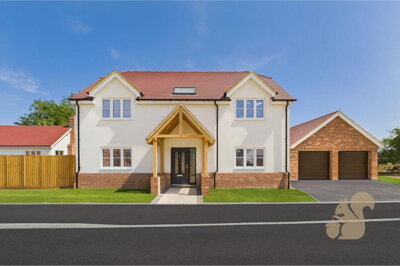
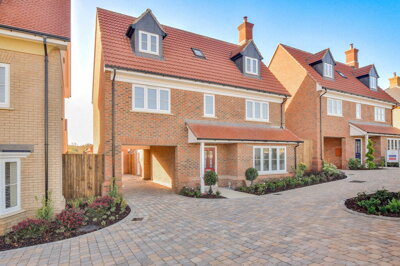
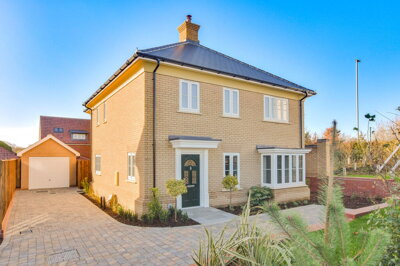
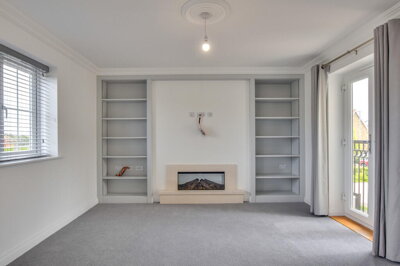
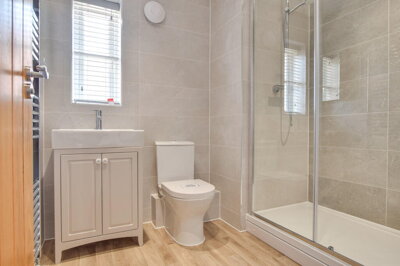
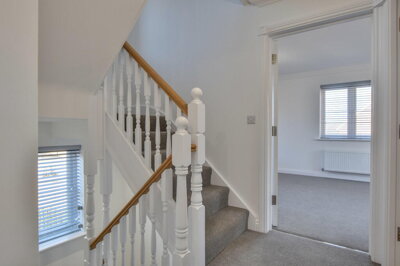
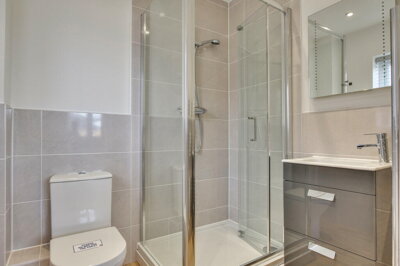
Browse 11 homes new builds in Great Easton from local developer agents.
The larger property sector typically features multiple bathrooms, substantial reception space, and private gardens or off-street parking. Four bedroom houses in Great Easton span detached, semi-detached, and occasionally terraced configurations, with styles ranging from period properties to modern executive homes.
The most recent sold price data for Great Easton shows an average of £228,500 for properties in the last 12 months, representing a significant shift from the peak market activity seen in 2018 when the average price reached £656,786. This correction reflects broader national market adjustments, but Uttlesford remains an economically buoyant district with strong fundamentals driving demand. Our listings feature properties spanning various price points, from traditional village cottages to substantial detached homes, giving buyers flexibility in their search criteria.
Planning activity in the Great Easton area indicates continued interest in the village's development potential. Recent applications within the CM6 postcode have included proposals for residential conversions, extensions to existing properties, and the construction of new self-build dwellings. For example, applications have been submitted for the erection of a single-storey three-bedroom detached self-build bungalow following the demolition of an existing tennis court, as well as proposals for the extension and conversion of an existing garage building to create a single dwelling with associated garden and parking. These developments suggest an active local market where buyers can find both established properties and opportunities to create their own homes.
Uttlesford District benefits from strong economic fundamentals that support the local property market. The district's proximity to Stansted Airport, excellent transport links to London and Cambridge, and attractive rural environment make it a popular destination for professionals and families alike. The conservation area status and listed buildings of Great Easton help maintain property values by preserving the village character that attracts buyers. For those considering investment in the area, these factors suggest continued demand for quality properties in the village.

Great Easton is a village with roots stretching back to the 12th century, its linear settlement pattern following Brook End Road and Church End through the heart of the parish. The village centre encompasses the historic core that was formally designated as a Conservation Area following appraisal in 2014, protecting the architectural heritage that defines the village's character. Within the parish, there are 48 Listed Buildings or groups of Listed Buildings, with 16 of these situated within the Conservation Area itself, testament to the village's historical significance and the quality of its built environment.
The predominant building materials in Great Easton's historic core reflect centuries of local construction traditions. Properties constructed on oak timber frames typically feature lime render, either plain or with decorative pargeting, while principal buildings from the eighteenth century onwards were built using handmade red bricks, sometimes with black stock brick detailing for visual interest. Flintwork panels and moulded window copings adorn better quality properties from the nineteenth and early twentieth centuries, adding to the visual richness of the village streetscape. A small brickworks operated in the parish during the mid to late nineteenth century, likely supplying materials for the Hamiltons estate and other local developments of that period.
The village provides essential everyday amenities for residents, with a village shop, traditional pub, and community facilities serving the local population. Broxted and the surrounding villages offer additional local services, while the nearby market towns of Saffron Walden and Bishop's Stortford provide comprehensive shopping, healthcare, and leisure facilities. The combination of village charm and access to larger town amenities makes Great Easton particularly attractive to families and those seeking a balanced lifestyle in the Essex countryside.
Families considering a move to Great Easton will find a selection of educational options within Uttlesford District, which consistently performs well in national school rankings. The district maintains a network of primary schools serving village communities, with several rated Good or Outstanding by Ofsted. Primary schools in the surrounding area include facilities in Dunmow, Stansted, and the various villages that make up the Uttlesford school catchment system. Parents should verify specific catchment areas with Uttlesford District Council, as school placements can vary depending on the exact property location within the parish.
Secondary education options include the Stansted Airport area schools and facilities in nearby Saffron Walden, providing families with choices as their children progress through the education system. Saffron Walden County High School is a notable option serving the wider Uttlesford area, while families seeking grammar school education can consider accessible options in Chelmsford and Colchester. These grammar schools are reachable via the excellent transport links from the Stansted area, making them practical options for secondary-age children. Sixth form and further education provision in Saffron Walden and Bishop's Stortford offers comprehensive options for older students.
The village's older housing stock, with properties dating from the twelfth century through to the twentieth century, means that many families will be considering period properties that may require updating but offer generous proportions and character features. When purchasing a period property in Great Easton's Conservation Area, families should factor potential renovation costs into their budget. Properties with original features such as timber beams, fireplaces, and period joinery often require specialist maintenance, but these features contribute significantly to the character and value of the property over time.
One of Great Easton's most significant advantages is its exceptional connectivity, with Stansted Airport located just a short distance away, providing international travel links and domestic flights across the UK and Europe. The mainline railway station at Stansted Mountfitchet offers regular services to London Liverpool Street, with journey times of approximately 50 minutes, making the village practical for commuters who work in the capital but seek a quieter home environment. Cambridge is also readily accessible by road via the M11 corridor, opening employment and cultural opportunities in that university city.
Road connections from Great Easton provide straightforward access to the surrounding region. The M11 motorway passes nearby, connecting the village to London to the south and Cambridge to the north. The A120 trunk road runs through the district, providing connections to Bishop's Stortford, Chelmsford, and the wider Essex road network. Local bus services connect Great Easton with nearby towns and villages, providing practical options for daily travel and accessing amenities without private transport. The 33 bus service operates through the village, connecting residents to Saffron Walden and Stansted Airport.
For those working in London but choosing to live in Great Easton, the commute is manageable despite its rural setting. The Stansted Mountfitchet station offers off-peak and peak hour services, with many commuters finding the approximately 50-minute journey comparable to or better than longer commutes from more expensive London suburbs. The village's proximity to Stansted Airport also makes it attractive to professionals in logistics, aviation, and international business sectors.
Explore current listings on Homemove and set up property alerts for new homes matching your criteria. Understanding the price range in Great Easton, where recent sales averaged £228,500, helps set realistic expectations before beginning your formal search. We recommend creating saved searches that notify you immediately when new properties matching your requirements come to market, as desirable village properties in Great Easton can attract multiple interested buyers quickly.
Contact a mortgage broker to obtain an agreement in principle before viewing properties. Having your finances arranged strengthens your position when making offers and demonstrates to sellers that you are a serious buyer ready to proceed. Given the varied property types in Great Easton, from Victorian cottages to modern conversions, your broker can advise on appropriate lending criteria for different property ages and construction types.
View multiple properties in Great Easton to compare the condition, character, and value of different options. Pay particular attention to the age and condition of period properties, noting any features that may require maintenance or renovation. We recommend viewing properties at different times of day and in various weather conditions to assess aspects such as natural light, drainage, and heating efficiency.
For older properties with significant heritage features, a RICS Level 2 Survey provides essential assessment of condition, highlighting issues such as damp, structural movement, or the need for repairs. Given the prevalence of listed buildings and period properties in Great Easton, a professional survey is particularly valuable. Our surveyors understand the construction methods typical of properties in this area, including oak timber frame, lime render, and Victorian brickwork.
Appoint a solicitor experienced in Uttlesford property transactions to handle the legal aspects of your purchase. They will conduct searches, review contracts, and manage the transfer of ownership through to completion. For properties in Great Easton's Conservation Area or those with listed status, your solicitor should specifically advise on any planning conditions, listed building consents, or restrictive covenants that may affect your use of the property.
Once all searches are satisfactory and financing is confirmed, you will exchange contracts and pay your deposit. Completion typically follows within weeks, when the remaining funds are transferred and you receive the keys to your new home in Great Easton. We recommend arranging building insurance from the point of exchange to protect your investment against unforeseen events.
Properties in Great Easton include a significant proportion of historic homes, many of which are listed buildings or situated within the conservation area. If you are considering a listed property, factor the additional responsibilities into your decision-making. Listed building consent may be required for alterations, and specialist contractors may be needed for work using appropriate materials and techniques. Your solicitor should confirm the listed status of any property during conveyancing and advise on the implications for future maintenance and improvement plans.
Flood risk should be considered when evaluating properties in Great Easton. While the village itself is not in a high-risk flood zone, any property near water courses or low-lying ground should be investigated carefully. A RICS Level 2 Survey will assess drainage and identify any signs of previous water ingress. Buildings insurance costs may vary depending on the specific location and flood history of a property, so obtaining quotes before committing to a purchase is advisable.
The age of many properties in the village means that electrical systems, heating installations, and insulation may require updating to meet modern standards. Properties constructed before the 1970s often have outdated consumer units, textile-insulated wiring, and solid wall construction without cavity insulation. Our surveyors specifically assess these elements during inspection, identifying works that may be required to bring a property up to current standards. Budget for potential upgrades when considering period properties in the village.
Structural movement should be carefully assessed in older properties, particularly those built on oak timber frames. While minor cracks are common in period properties due to natural timber movement, significant structural issues require professional evaluation. Our inspectors look for signs of subsidence, heave, and lintel failure, which can affect properties across Uttlesford District. Early identification of structural concerns can save significant expense and ensure you are fully informed before completing your purchase.

The village's historic building stock means that properties in Great Easton often exhibit defects typical of their age and construction type. Oak timber frame properties, common throughout the village's historic core, may show signs of beetle activity, woodworm, or fungal decay in structural members. These issues are often treatable when identified early, but can become significant structural concerns if left unchecked. Our surveyors carry moisture meters and sounding equipment to assess timber condition during inspections.
Lime render finishes on timber frame properties require specific maintenance regimes that differ from modern cement-based renders. Properties featuring decorative pargeting, the traditional Essex craft of decorative lime plasterwork, may have suffered from inappropriate repair using cement mortars, which can trap moisture and accelerate decay of the underlying timber structure. Identifying where sympathetic repairs have been carried out using traditional materials is important when assessing a property's condition and future maintenance needs.
handmade red brick properties from the eighteenth and nineteenth centuries may exhibit issues related to historic mortars that have softer composition than modern bricks. Black stock brick detailing, a feature noted in better quality properties of this period, can be particularly susceptible to frost damage if original mortar has eroded. Our inspectors assess the condition of brickwork comprehensively, noting areas of spalling, cracking, or mortar erosion that may indicate the need for repointing or repair works.
Flintwork panels, found on the finest quality properties from the nineteenth century, require specialist knowledge to assess properly. While flint is an extremely durable material, the ironstone or limestone mortar courses that hold the flintwork can deteriorate over time. Properties featuring these decorative panels should be evaluated by surveyors familiar with traditional Essex building techniques, as repairs require skilled craftsmen using appropriate traditional materials.
The most recent sold price data for Great Easton shows an average of £228,500 for properties sold in the last 12 months. This represents a significant adjustment from the 2018 peak of £656,786, reflecting broader market conditions and the types of properties changing hands in the village. Property prices in Uttlesford vary considerably depending on property type, with detached family homes commanding higher prices than terraced cottages or flats. Period properties with original features and those within the Conservation Area may command premiums reflecting their character and heritage value.
Properties in Great Easton fall under Uttlesford District Council for council tax purposes. The district uses the standard council tax banding system from Band A through to Band H. Most period properties and family homes in the village typically fall within Bands C through E, though specific bands depend on the property's rateable value. Detached homes of substantial size may fall into Band F or G, while smaller cottages may be in Band B or C. You can check the banding for any specific property through the Valuation Office Agency website or your solicitor during the conveyancing process.
Uttlesford District maintains a strong selection of primary and secondary schools, with several achieving Good or Outstanding Ofsted ratings. Primary schools serving Great Easton include those in nearby villages and the Stansted area, with several within easy driving distance. Secondary options include schools in Saffron Walden and Stansted, with the latter providing education for the 11-16 age range. For families seeking grammar school education, accessible options exist in Chelmsford and Colchester, reachable via the excellent transport links from the Stansted area.
Great Easton benefits from excellent transport connectivity for a village of its size. Stansted Mountfitchet railway station provides regular services to London Liverpool Street in approximately 50 minutes, with frequent trains throughout the day. Stansted Airport offers domestic and international flights, plus coach services to various destinations across the UK. Local bus services, including the 33 service, connect Great Easton with nearby towns and villages, providing practical options for daily travel and accessing amenities without private transport.
Uttlesford District is consistently ranked as one of the most desirable places to live in Essex, with strong demand for properties in villages like Great Easton. The area's economic buoyancy, driven by proximity to Stansted Airport, London, and Cambridge, supports continued demand for housing. The conservation area status and listed buildings of Great Easton help maintain property values by preserving the village character that attracts buyers. For landlords or investors, the strong transport links make the village attractive to tenants working in London or the airport area. Property values in Uttlesford have historically shown resilience and steady growth over the long term.
Stamp duty rates for 2024-25 are calculated on the purchase price of your property. For properties up to £250,000, no stamp duty is payable. From £250,001 to £925,000, the rate is 5% on that portion. Properties priced between £925,001 and £1.5 million incur 10% stamp duty, with 12% on any amount above £1.5 million. First-time buyers purchasing properties up to £625,000 pay no stamp duty on the first £425,000, with 5% charged between £425,001 and £625,000. Given the current average price in Great Easton of £228,500, most buyers would pay no stamp duty at current thresholds. Your solicitor will calculate the exact amount due based on your circumstances and property purchase price.
While Great Easton itself is not in a high-risk flood zone, properties near water courses or low-lying ground require careful investigation. The village's topography means that some areas may be susceptible to surface water flooding, particularly after periods of heavy rainfall. Your solicitor should arrange a local authority drainage search and an environmental search that will identify any flood risk associated with the specific property location. Buildings insurance costs may vary depending on the exact location and flood history, so obtaining quotes before committing to a purchase is advisable. A RICS Level 2 Survey will assess drainage and identify any signs of previous water ingress.
With 48 Listed Buildings or groups of Listed Buildings in the parish, many buyers will consider purchasing a property with listed status. Listed buildings are protected under the Planning Listed Buildings and Conservation Areas Act, meaning that listed building consent is required for any alterations, extensions, or demolition works that would affect the building's character. If you are considering a listed property, factor the additional responsibilities and potential costs into your decision. Specialist contractors may be needed for work using appropriate materials and techniques, and repair costs for period features can be higher than for modern equivalents. Your solicitor should confirm the listed status and any relevant conditions during conveyancing.
From £400
A detailed inspection of the property condition, essential for period properties with significant heritage features
From £600
A comprehensive building survey recommended for older, complex, or unusual properties
From £85
Energy Performance Certificate required for all property sales
From £499
Legal services for your property purchase
From 3.5%
Competitive mortgage rates from trusted lenders
Beyond the purchase price of your property in Great Easton, budget carefully for the additional costs associated with buying a home. Stamp duty, formally known as Stamp Duty Land Tax, represents a significant expense that varies according to your purchase price and buyer status. For a typical property in Great Easton priced around the village average of £228,500, most buyers would pay no stamp duty at current thresholds. Your solicitor will calculate the exact amount based on your specific circumstances and ensure payment is made to HM Revenue and Customs following completion.
A RICS Level 2 Survey typically costs between £400 and £900 depending on the size and complexity of the property, with older properties potentially incurring additional charges due to their construction age and any heritage features. For properties over £500,000, the average survey cost rises to around £586 compared with £384 for properties under £200,000. Given the age of properties in Great Easton, with many dating from the seventeenth century and earlier, buyers should budget towards the higher end of this range to ensure a thorough inspection.
A conveyancing solicitor in Uttlesford generally charges between £499 and £1,500 for their services, covering title checks, local authority searches, and contract preparation. Local searches specific to Uttlesford District Council will include drainage and water authority searches, environmental searches, and local land charges. For properties in Great Easton's Conservation Area, additional searches may be advisable to identify any planning conditions or Tree Preservation Orders that could affect your use of the property. Buildings insurance should be arranged from the point of exchange, and you should factor in moving costs, potential renovation expenses for period properties, and ongoing maintenance when setting your total budget for moving to Great Easton.
Properties New Builds In London

Properties New Builds In Plymouth

Properties New Builds In Liverpool

Properties New Builds In Glasgow

Properties New Builds In Sheffield

Properties New Builds In Edinburgh

Properties New Builds In Coventry

Properties New Builds In Bradford

Properties New Builds In Manchester

Properties New Builds In Birmingham

Properties New Builds In Bristol

Properties New Builds In Oxford

Properties New Builds In Leicester

Properties New Builds In Newcastle

Properties New Builds In Leeds

Properties New Builds In Southampton

Properties New Builds In Cardiff

Properties New Builds In Nottingham

Properties New Builds In Norwich

Properties New Builds In Brighton

Properties New Builds In Derby

Properties New Builds In Portsmouth

Properties New Builds In Northampton

Properties New Builds In Milton Keynes

Properties New Builds In Bournemouth

Properties New Builds In Bolton

Properties New Builds In Swansea

Properties New Builds In Swindon

Properties New Builds In Peterborough

Properties New Builds In Wolverhampton

Enter your details to see if this property is within your budget.
Loans, cards, car finance
Estimated property budget
Borrowing + deposit
You could borrow between
Typical borrowing
Monthly repayment
Est. at 4.5%
Loan-to-value
This is an estimate only. Your actual budget may vary depending on interest rates, credit history, and personal circumstances. For an accurate affordability assessment, speak to one of our free mortgage advisors.
This calculator provides estimates for illustrative purposes only and does not constitute financial advice. Your home may be repossessed if you do not keep up repayments on your mortgage. Estimates based on 4.5% interest rate, repayment mortgage. Actual rates depend on your circumstances.
Homemove is a trading name of HM Haus Group Ltd (Company No. 13873779, registered in England & Wales). Homemove Mortgages Ltd (Company No. 15947693) is an Appointed Representative of TMG Direct Limited, trading as TMG Mortgage Network, which is authorised and regulated by the Financial Conduct Authority (FRN 786245). Homemove Mortgages Ltd is entered on the FCA Register as an Appointed Representative (FRN 1022429). You can check registrations at NewRegister or by calling 0800 111 6768.

We use cookies to show you personalised content and improve your experience of our website. Find out more in our Privacy policy and Cookie policy.