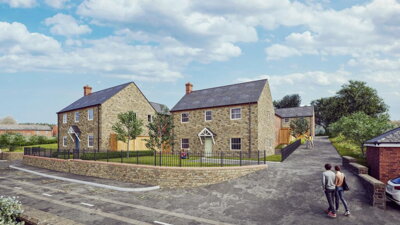
Browse 1 home new builds in Gayton from local developer agents.
The Gayton property market has demonstrated steady resilience over the past twelve months, with house prices rising by approximately 1-6% compared to the previous year. This growth aligns with broader trends across West Northamptonshire, where the overall market saw a 2.9% increase from December 2024 to December 2025. The village primarily features detached family homes, which dominate the sales mix and reflect the semi-rural character that makes Gayton so appealing to buyers seeking space and privacy. Semi-detached properties also feature prominently in the local market, offering more accessible entry points for first-time buyers or those downsizing from larger homes.
Properties in Gayton typically feature traditional brick construction under tiled roofs, with Victorian-era homes particularly sought after for their character and charm. A typical listing describes properties as "brick under tile" construction, reflecting the solid building methods used historically in the village. Estate agents including Savills market detached Victorian properties in the area, highlighting original features and period details that appeal to buyers seeking properties with history. Our data shows that terraced properties and apartments are less common within Gayton itself, though the broader West Northamptonshire 018 area (Northampton North) offers terraced properties averaging £250,288 and apartments around £113,000 for those willing to expand their search radius.
New build developments within Gayton village itself are currently limited, making existing properties with character particularly valuable to the local market. The scarcity of new supply supports property values and ensures that character properties in the village maintain their appeal. For buyers specifically seeking modern new-build homes, nearby towns such as Northampton or Milton Keynes offer more new development options, though these come without the established village atmosphere that Gayton provides.

Gayton is characterised as a desirable village community southwest of Northampton, offering residents a peaceful village atmosphere while remaining well-connected to larger towns and cities. The presence of the Grand Union Canal near the village adds to its scenic appeal, providing opportunities for walking, cycling, and boating along historic waterways. The canal towpaths offer particularly pleasant routes for walkers and cyclists, connecting Gayton with surrounding villages and the wider countryside of Northamptonshire. Many residents enjoy weekend walks along the canal, spotting narrowboats and wildlife in this protected rural corridor.
The village itself maintains traditional English charm with period properties lining its streets, creating an aesthetic that appeals to those seeking an escape from urban density while still accessing modern conveniences. Local amenities include traditional pubs, village shops, and community facilities that foster a strong sense of neighbourhood identity. The village pub serves as a social hub for locals, while community events throughout the year bring residents together and reinforce the tight-knit nature of village life. The combination of historic architecture and active community spirit makes Gayton distinctive among Northamptonshire villages.
The village attracts a mix of demographics, from young families drawn by the community atmosphere to professionals and retirees seeking quieter surroundings. Property types in Gayton reflect this diversity, ranging from spacious Victorian detached houses with large gardens to more modest semi-detached homes suitable for first-time buyers. The predominantly residential character means the village maintains a safe, family-friendly environment where neighbours often know one another and community events bring residents together throughout the year. West Northamptonshire Council serves Gayton, providing local authority services including waste collection, planning permissions, and community development initiatives that help maintain the village's quality of life.

Education provision in and around Gayton serves families with children of all ages, with primary schools located within the village or in nearby communities. Parents considering a move to Gayton will find several primary options within easy reach, typically offering Reception through Year 6 education with good reputations for pastoral care and academic achievement. The village's position within West Northamptonshire means children can access local primary schools in Gayton itself or in neighbouring villages such as Roade, Blisworth, or Hartwell, all of which serve the surrounding rural community. Primary schools in this area typically perform well in Ofsted inspections, with many achieving Good or Outstanding ratings that attract families specifically to the catchment area.
Secondary education is available at schools in surrounding towns, with school transport arrangements making these accessible for families living in the village. Options in Northampton include both comprehensive and grammar schools, with the latter offering academically selective education for students who pass the entrance examination. Parents should research specific school catchments and admission arrangements directly, as catchment boundaries can influence which schools children attend from a given address. School performance data is available through the government website or directly from schools, allowing prospective buyers to make informed decisions about which areas of Gayton best suit their family's educational needs.
For older students, sixth form and further education facilities are available in Northampton and nearby towns, providing academic and vocational pathways for young adults. The University of Northampton offers higher education options within reasonable commuting distance, while vocational courses are available at colleges in the wider area. Property buyers with school-age children frequently prioritise proximity to good-rated schools when house hunting in areas like Gayton, making this a significant factor in property values and demand within the village. Checking current Ofsted ratings and understanding admission catchment areas before purchasing helps ensure your children can access preferred schools without relying on appeals or out-of-area placements.
Gayton benefits from its position southwest of Northampton, offering residents access to the M1 motorway for journeys north to Leicester and Nottingham or south towards Milton Keynes and London. The village location means commuting by car typically requires travel into Northampton or towards nearby towns to access major road routes, but the relative proximity means many destinations remain accessible within reasonable journey times. The M1 junction 15A at Northampton is approximately 8 miles from Gayton, connecting the village to the national motorway network and making cities such as Birmingham, Nottingham, and London reachable for work or leisure. Many Gayton residents working in Milton Keynes find the shorter commute particularly manageable, with the town offering employment opportunities in retail, logistics, and technology sectors.
Bus services connect Gayton with surrounding communities, providing public transport options for those who prefer not to drive or who wish to reduce their environmental impact. Local bus routes link the village with Northampton town centre, allowing residents to access shopping, healthcare, and entertainment facilities without driving. Rail connections from Northampton station provide access to services running to London Euston and Birmingham New Street, with journey times to London taking approximately 50-60 minutes. Avanti West Coast and other operators serve Northampton station, offering regular connections to major destinations including the capital and the West Midlands.
For residents working in Milton Keynes, the journey is shorter still, making Gayton a viable option for commuters seeking more affordable housing than these larger towns command. Cyclists will find rural roads and canal paths offer pleasant routes for local travel, though longer commutes by bike may be challenging given the distances involved. The village position means planning journey times carefully and considering traffic conditions during peak hours helps residents optimise their daily commute. Parking availability within the village is generally good, reflecting the lower density of the area compared to urban centres, and many properties feature off-street parking that proves valuable for households with multiple cars.
Start by exploring listings for Gayton on Homemove, comparing prices for detached and semi-detached properties to understand current market values. Look at recent sales data and price trends to establish your budget and identify properties that meet your criteria. Our database shows current average prices ranging from £517,000 to £562,500, with detached properties averaging £633,333 and semi-detached homes around £350,000.
Contact lenders or mortgage brokers to obtain an Agreement in Principle before viewing properties. This strengthens your position when making offers and demonstrates to sellers that you are a serious, financially prepared buyer. With average Gayton property prices above £500,000, most buyers will require a substantial mortgage, making pre-approval essential before beginning property viewings.
Schedule viewings of properties that match your requirements, taking time to assess the condition of homes, check for signs of damp or structural issues, and consider the neighbourhood character. Victorian properties in Gayton may require more maintenance, so factor potential renovation costs into your decision. Properties with original features often command premiums but can require ongoing investment to maintain period details.
Once your offer is accepted, arrange a Level 2 Homebuyer Report survey to assess the property condition thoroughly. Given the presence of Victorian properties in Gayton, this survey is particularly valuable for identifying issues such as damp, roof problems, or outdated electrics. Survey costs typically start from around £350 for standard properties, with larger or more complex homes requiring additional fees.
Appoint a solicitor to handle the legal aspects of your purchase, including searches, contracts, and registration of ownership. Your solicitor will liaise with the seller's representatives and manage the transaction through to completion. Conveyancing fees in the Gayton area typically range from £500 to £1,500 depending on complexity and whether the property is freehold or leasehold.
Once all legal requirements are satisfied and your mortgage is finalised, contracts are exchanged and a completion date is set. On completion day, you receive the keys to your new Gayton home. Our team can connect you with recommended conveyancers experienced in West Northamptonshire property transactions.
When purchasing property in Gayton, understanding the local housing stock helps you identify potential issues before committing to a purchase. Many properties in the village are older Victorian homes built with traditional methods, which means features like solid walls, older electrical systems, and period joinery are common. A thorough survey by a qualified RICS surveyor will identify any defects specific to these property types, from structural concerns to damp penetration that can affect older brick-built homes. Properties described as "brick under tile" construction represent the typical building method found locally, with solid brick walls requiring different maintenance approaches compared to modern cavity wall construction.
Budgeting for potential maintenance or renovation work is wise when purchasing character properties that may have been well-maintained but still carry the signs of their age. Common issues in Victorian properties include rising damp, where moisture travels up through solid brick walls from the ground, and penetrating damp caused by damaged pointing or failed gutters and downpipes. Roof conditions should be assessed carefully, as original slate or tile roofs on older properties may have been partially replaced over the years with materials that do not exactly match the original. Electrical systems in period properties frequently require updating to meet current safety standards, and buyers should budget for potential rewiring if the property still has original wiring.
Flood risk should be considered given Gayton's proximity to the Grand Union Canal, though no specific flood risk assessment data was found for the village itself. Prospective buyers should ask sellers about any previous flooding incidents and consider ordering a specific flood risk report if the property is close to watercourses. Planning restrictions in Gayton may affect what modifications homeowners can make to properties, particularly for listed buildings or homes within any designated conservation areas. Checking with West Northamptonshire Council planning portal before purchasing helps ensure your intended changes to the property are permissible under local planning policies.
Average house prices in Gayton currently range from approximately £517,000 to £562,500, according to data from Rightmove and OnTheMarket. Detached properties command higher prices, with an average of around £633,333, while semi-detached homes typically sell for approximately £350,000. Property prices have shown positive growth over the past year, rising between 1% and 6% depending on the data source consulted. The village's NN7 postcode reflects its premium positioning within West Northamptonshire, where the broader market saw a 2.9% increase from December 2024 to December 2025.
Properties in Gayton fall under West Northamptonshire Council's jurisdiction for council tax purposes. Specific council tax bands vary by property depending on the valuation band assigned by the Valuation Office Agency. Bands range from A through H, with the average Gayton property typically falling in bands D to F given current property values. Prospective buyers can check specific properties on the Valuation Office Agency website or request the band from the seller during the conveyancing process. Council tax payments fund local services including education, bin collection, and local authority maintenance.
Gayton has access to primary education through local schools in the village and surrounding communities, with several Good or Outstanding-rated schools within reasonable distance. Parents should research specific school catchments, as admission is typically determined by proximity to the school. Primary options include schools in Gayton itself and nearby villages such as Roade and Blisworth, all serving the NN7 postcode area. Secondary schools in Northampton and nearby towns serve the area, with options including grammar schools for academically selective students in the West Northamptonshire region.
Bus services connect Gayton with surrounding villages and Northampton, providing public transport options for residents. Local bus routes serve the village throughout the day, connecting to Northampton town centre where residents can access the full range of urban amenities. The nearest rail station is in Northampton, offering services to London Euston and Birmingham New Street via Avanti West Coast. For commuting by car, the M1 motorway is accessible via junction 15A approximately 8 miles away, providing connections to Leicester, Nottingham, Milton Keynes, and London. Many Gayton residents find Northampton station adequate for their rail commuting needs despite the drive to reach it.
The Gayton property market has demonstrated steady price growth of around 1-6% over the past year, indicating consistent demand for properties in this desirable village location. The proximity to Northampton, combined with the village's character and community atmosphere, continues to attract buyers seeking a balance between rural living and urban accessibility. Limited new build supply within the village itself supports demand for existing properties, as the village maintains its character without the influx of modern developments seen in surrounding towns. For long-term investment, the combination of village appeal, good transport connections, and quality local schools suggests Gayton will continue to hold its value well within the West Northamptonshire property market.
For properties in Gayton purchased at the current average price of around £517,000, standard stamp duty rates apply. The current SDLT thresholds (2024-25) charge 0% on the first £250,000 and 5% on the portion between £250,001 and £517,000, meaning approximately £13,350 in SDLT for a typical Gayton property. First-time buyers may benefit from relief on the first £425,000, paying 5% only on the amount between £425,001 and £517,000, which would reduce the SDLT to around £4,600. Purchases above £625,000 do not qualify for first-time buyer relief under current rules.
The Gayton property market is dominated by detached family homes, with semi-detached properties also available at more accessible price points. Traditional Victorian detached houses are particularly sought after for their character and period features, often featuring original fireplaces, sash windows, and decorative cornicing. Properties in Gayton typically feature brick construction under tiled roofs, representing solid traditional building methods. Terraced properties and apartments are less common within Gayton itself, with the broader West Northamptonshire 018 area offering terraced properties averaging £250,288 and apartments around £113,000 for those seeking more affordable options or different property types.
Gayton is located near the Grand Union Canal, and areas near canals can be susceptible to some level of flooding from canal breaches or overtopping during extreme weather events. While no specific flood risk assessment for Gayton was found in research data, prospective buyers should make enquiries about any historical flooding incidents and consider ordering a detailed flood risk report before completing a purchase, particularly for properties close to watercourses. The Environment Agency website provides flood risk information for specific locations, and we recommend checking this for any property near the canal or low-lying ground. Standard buildings insurance should cover most flood risks, though premiums may be higher for properties in identified flood risk areas.
From £350
Recommended for all Gayton properties, especially Victorian homes where defects like damp and roof issues are common
From £500
Comprehensive structural survey for older or complex properties
From £80
Energy performance certificate required for all property sales
From £499
Legal services for your property purchase
From 4.5%
Finance options for your Gayton property
Understanding the full costs of purchasing property in Gayton helps you budget accurately for your move. Beyond the property price, buyers should account for Stamp Duty Land Tax (SDLT), which for a property at the Gayton average price of around £517,000 would incur SDLT on the portion above £250,000. The standard rate means approximately £13,350 in SDLT, though first-time buyers benefiting from relief would pay less on the first £425,000 of the purchase price. These thresholds apply to properties across England and are set by HM Revenue and Customs for the 2024-25 tax year. Higher rates apply for additional properties and for non-UK residents purchasing property in England.
Additional purchase costs include solicitor fees for conveyancing, typically ranging from £500 to £1,500 depending on complexity and whether the property is freehold or leasehold. Solicitors handle essential tasks including local authority searches, which reveal planning permissions, road schemes, and environmental information relevant to the property. Electronic search fees, land registry fees, and bankruptcy checks add modest costs to the conveyancing total, typically around £200-400 in total. Survey costs for a RICS Level 2 Homebuyer Report start from around £350, with more expensive properties or those requiring more detailed assessment potentially costing more, particularly for larger Victorian homes that need thorough inspection of all accessible areas.
Mortgage arrangement fees, valuation fees, and land registry charges add further costs, typically totalling between £1,000 and £3,000 for most purchases. Mortgage arrangement fees vary significantly between lenders, ranging from £0 to £2,000 or more, so comparing deals carefully helps avoid unnecessary costs. Booking fees and valuation fees charged by lenders typically amount to a few hundred pounds depending on the property value and mortgage size. Obtaining a mortgage Agreement in Principle before searching for property is essential, as it confirms your borrowing capacity and strengthens your position when making offers in the competitive Gayton market where desirable properties may attract multiple buyers. Building insurance must be in place from the day of completion, and removals costs should also be factored into your overall moving budget.
Properties New Builds In London

Properties New Builds In Plymouth

Properties New Builds In Liverpool

Properties New Builds In Glasgow

Properties New Builds In Sheffield

Properties New Builds In Edinburgh

Properties New Builds In Coventry

Properties New Builds In Bradford

Properties New Builds In Manchester

Properties New Builds In Birmingham

Properties New Builds In Bristol

Properties New Builds In Oxford

Properties New Builds In Leicester

Properties New Builds In Newcastle

Properties New Builds In Leeds

Properties New Builds In Southampton

Properties New Builds In Cardiff

Properties New Builds In Nottingham

Properties New Builds In Norwich

Properties New Builds In Brighton

Properties New Builds In Derby

Properties New Builds In Portsmouth

Properties New Builds In Northampton

Properties New Builds In Milton Keynes

Properties New Builds In Bournemouth

Properties New Builds In Bolton

Properties New Builds In Swansea

Properties New Builds In Swindon

Properties New Builds In Peterborough

Properties New Builds In Wolverhampton

Enter your details to see if this property is within your budget.
Loans, cards, car finance
Estimated property budget
Borrowing + deposit
You could borrow between
Typical borrowing
Monthly repayment
Est. at 4.5%
Loan-to-value
This is an estimate only. Your actual budget may vary depending on interest rates, credit history, and personal circumstances. For an accurate affordability assessment, speak to one of our free mortgage advisors.
This calculator provides estimates for illustrative purposes only and does not constitute financial advice. Your home may be repossessed if you do not keep up repayments on your mortgage. Estimates based on 4.5% interest rate, repayment mortgage. Actual rates depend on your circumstances.
Homemove is a trading name of HM Haus Group Ltd (Company No. 13873779, registered in England & Wales). Homemove Mortgages Ltd (Company No. 15947693) is an Appointed Representative of TMG Direct Limited, trading as TMG Mortgage Network, which is authorised and regulated by the Financial Conduct Authority (FRN 786245). Homemove Mortgages Ltd is entered on the FCA Register as an Appointed Representative (FRN 1022429). You can check registrations at NewRegister or by calling 0800 111 6768.

We use cookies to show you personalised content and improve your experience of our website. Find out more in our Privacy policy and Cookie policy.