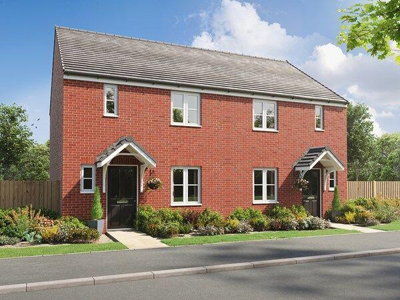
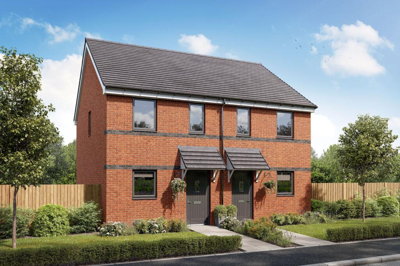
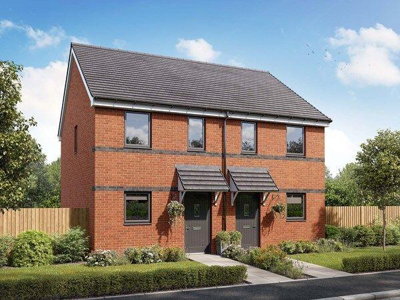
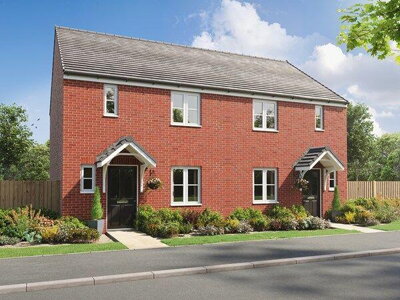
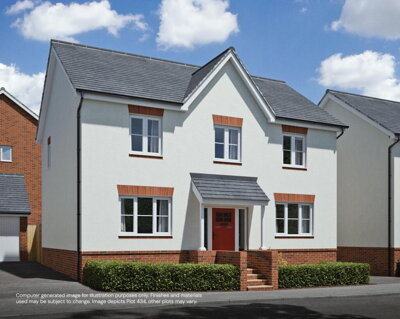
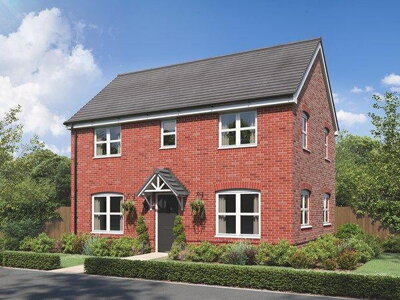
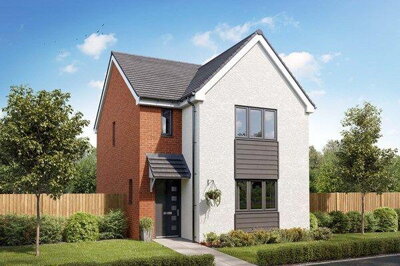
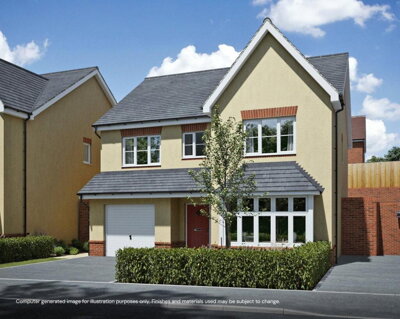
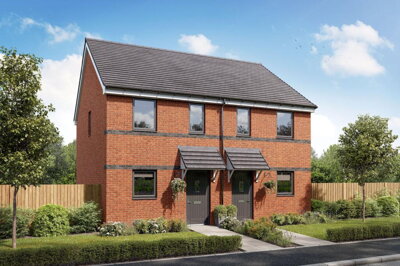
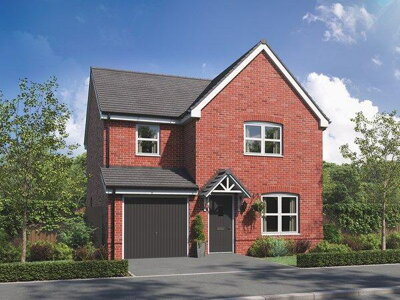
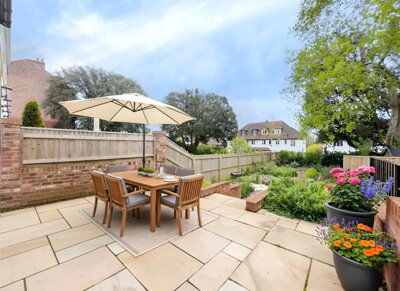
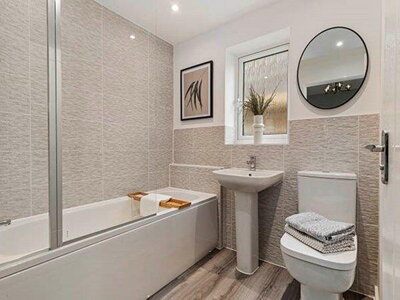
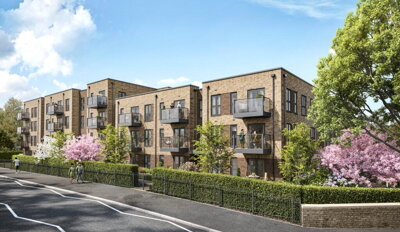
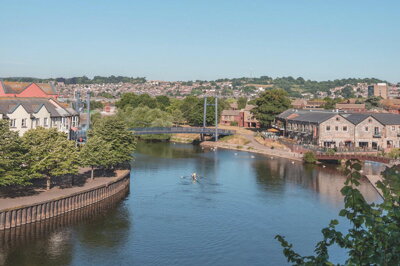
Browse 19 homes new builds in Exeter, Devon from local developer agents.
Studio apartments feature open-plan living spaces without separate bedrooms, incorporating sleeping, living, kitchen, and bathroom facilities. The Exeter studio market includes properties in modern apartment complexes, modern purpose-built developments and new residential complexes.
£175k
138
4
147
Source: home.co.uk
Showing 138 results for Studio Flats new builds in Exeter, Devon. 4 new listings added this week. The median asking price is £175,000.
Source: home.co.uk
Flat
138 listings
Avg £183,159
Source: home.co.uk
Source: home.co.uk
£358,690
Average Property Price
1,570
Properties for Sale
-1.15%
Annual Price Change
£532,874
Detached Average
Exeter's property market has shown remarkable resilience, with 1,570 sales completed in the past twelve months demonstrating continued demand for homes in this historic city. The market has experienced a modest 1.15% price adjustment over the past year, creating opportunities for buyers who may have been priced out during previous peak periods. Our data shows detached properties averaging £532,874, reflecting the premium space and gardens that appeal to families seeking room to grow. The semi-detached sector averages £354,261, while terraced homes offer more accessible entry points at around £298,284 on average.
The flat market in Exeter averages £214,888, making it one of the more affordable property types for first-time buyers and investors seeking rental yields in a city with strong tenant demand from university students and NHS staff. Property types across Exeter range from elegant Georgian townhouses in St Leonard's and Southernhay to Victorian terraces in St Thomas and Whipton, alongside inter-war semis in areas like Pennsylvania and modern developments on the city's expanding outskirts. The variety of architectural styles reflects Exeter's long history as a regional centre, with properties built using the distinctive local Heavitree stone that gives the city its characteristic warm red appearance.
Several new build developments are currently underway across Exeter, offering modern alternatives to the city's historic housing stock. Hillside Gardens on Old Crediton Road features two, three, and four-bedroom homes from £299,995, while Cavanna @ Elm Park in EX2 offers two to four-bedroom properties from £320,000. For buyers seeking larger family homes, Tithe Barn on the eastern outskirts provides three, four, and five-bedroom properties from £395,000, and Bovis Homes' Victoria Heights development offers premium three and four-bedroom homes from £399,995. These new build options sit alongside the established housing stock in areas like Pinhoe, which has seen significant development activity in recent years.
Exeter's population of approximately 131,405 residents across 56,100 households creates a vibrant city atmosphere while maintaining an approachable, community-focused character. The city divides into distinctive neighbourhoods, each offering its own atmosphere and amenities. St James sits close to the university and offers a youthful energy with cafes and bookshops, while Topsham to the southeast combines maritime heritage with excellent pubs and the convenience of a local railway station. The St Thomas neighbourhood, built around an historic medieval crossing of the River Exe, offers character properties at relatively competitive prices compared to central areas.
The local economy benefits from major employers including the University of Exeter, which contributes significantly to the city's academic and cultural life, and the Royal Devon University Healthcare NHS Foundation Trust at Wonford Hospital. The Met Office headquarters on the outskirts brings highly skilled professionals to the area, while Exeter Science Park supports growing technology and innovation sectors. Retail therapy is well catered for through the intimate lanes of the historic Quayside, the Harlequins Shopping Centre, and the convenient Princesshay complex near the Cathedral Green, where independent boutiques coexist alongside national retailers.
Green spaces including the Riverside Valley Path, St James Park, and the extensive Exeter Country Park provide recreation without requiring travel beyond the city boundaries. The Quayside area offers waterside dining and the historic Custom House dating back to the 1680s, while Topsham's riverside position provides access to the Exeter and Exmouth railway line and regular boat trips along the River Exe. For those moving from larger cities, Exeter delivers an exceptional quality of life with the Dartmoor National Park accessible within thirty minutes by car, and the Jurassic Coast World Heritage Site equally nearby for coastal days out.

Exeter offers an impressive range of educational options, making it particularly attractive to families considering a move to the area. At primary level, the city boasts several outstanding schools including St Michael's Church of England Primary Academy in Topsham, which consistently achieves excellent Ofsted ratings, and St James School in the St James neighbourhood. The Exeter Primary School and Montgomery Primary School serve diverse communities in the city centre and wider areas. Many parents specifically seek properties in catchments for these popular schools, which can influence house prices in neighbouring streets significantly.
Secondary education in Exeter includes the highly regarded St Peter's Church of England School in St Albans, which offers a strong academic curriculum and good facilities, alongside the grammar school system for those meeting the entrance criteria. The city operates a competitive grammar school selection process, with schools including Exeter School and St Luke's School serving academically selective students from across the region. Parents relocating for schooling often prioritise areas like Topsham, Alphington, and the western suburbs where good primary schools cluster alongside family-sized housing stock.
Higher education opportunities are exceptional in Exeter, with the University of Exeter ranking among the top UK universities for multiple disciplines including business, humanities, and sciences. The university campus on Streatham Lane has expanded significantly in recent years and now accommodates over 30,000 students. The presence of the university creates substantial demand for rental properties among students and staff, making buy-to-let investments particularly attractive in postcodes close to the Streatham campus such as EX1, EX2, and EX4. Rental demand from students focuses particularly on houses of multiple occupation in areas like St James, Pennsylvania, and the city centre, while academic and professional staff typically seek family homes in suburban areas.

Exeter St David's station provides the city with excellent rail connectivity, offering regular services to London Paddington in around two hours, Bristol Temple Meads in approximately one hour, and Plymouth in roughly 50 minutes. The recently upgraded station facilities and improved passenger services have enhanced Exeter's appeal as a commuter base for professionals working in larger cities while enjoying a lower cost of living. Additional stations at Exeter Central in the city centre and Topsham provide further local and regional connections, with regular bus services connecting these hubs to residential neighbourhoods throughout the city.
Road access is well-served by the M5 motorway, which passes to the east of the city and connects Exeter to Bristol and Birmingham, while the A30 provides a direct route to Cornwall and the South West peninsula. The A38 provides access to Plymouth and the Torbay area, making Exeter an excellent base for exploring the South West region. Exeter International Airport offers domestic flights and seasonal European destinations from its location at Clyst Honiton, with the city also benefiting from coach services providing budget-friendly alternatives to rail travel.
For daily commuters within Exeter, the city centre and main employment zones including the RD&E Hospital, the University, and the Marsh Barton industrial area are accessible by bus or cycling, with parking available at various locations for those preferring to drive. Stagecoach operates comprehensive bus services throughout the city and surrounding villages, while the introduction of electric bike hire schemes and improved cycle infrastructure has made sustainable commuting increasingly practical. The Exeter Ship Canal path provides a scenic cycling route connecting the Quayside to the Topsham area, popular with commuters and recreational cyclists alike.

Before viewing properties, obtain a mortgage agreement in principle from a lender to understand your budget and demonstrate your seriousness to sellers. Exeter estate agents will typically ask about your finances before arranging viewings, and having this documentation ready streamlines the process considerably.
Explore areas like Topsham, St Leonard's, Alphington, and the western suburbs to find neighbourhoods that match your lifestyle needs, commute requirements, and school preferences. Each area offers different property types and price points, from Victorian terraces in St Thomas to modern apartments near the Quayside.
Use Homemove to search available properties and book viewings through listed estate agents. During viewings, ask about the history of the property, any renovation work completed, and details of the local area including neighbours, noise levels, and upcoming developments that might affect the neighbourhood.
Book a RICS Level 2 Survey for your chosen property, particularly important given Exeter's prevalence of older properties where defects like damp, roof issues, and outdated electrics are common. Our inspectors find that properties in conservation areas often require more detailed assessment due to their age and traditional construction methods.
Choose a conveyancing solicitor to handle the legal aspects of your purchase, including searches, contracts, and registration with HM Land Registry. Many Exeter solicitors specialise in property transactions and are familiar with local issues such as conservation area requirements and flood risk assessments.
Once surveys and searches are satisfactory, your solicitor will coordinate the exchange of contracts and set a completion date. On completion day, you will receive the keys to your new Exeter home and can begin settling into your chosen neighbourhood.
Understanding local construction methods helps buyers appreciate the characteristics and potential maintenance needs of Exeter properties. The city's historic buildings often feature local red sandstone, particularly the distinctive Heavitree stone that gives Exeter its characteristic warm appearance and earned the city its "Red City" nickname. Many period properties in St Leonard's, Southernhay, and the city centre were constructed using this local sandstone with solid wall construction, which differs significantly from modern cavity wall insulation and requires different approaches to insulation and damp management.
The underlying geology of Exeter consists largely of Permian breccias and sandstones, including the Aylesbeare Mudstone Group, which creates clay soils in certain areas. These clay soils present a shrink-swell risk to property foundations, particularly during prolonged dry spells or when vegetation with high water demand grows near buildings with shallow foundations. Our surveyors commonly identify minor structural movement in older Exeter properties that relates to these soil conditions, though significant subsidence is relatively rare. Properties in areas like Whipton, Pinhoe, and the newer developments on the city's outskirts may sit on different geology depending on their specific location.
Building methods evolved significantly throughout Exeter's history. Pre-1919 properties typically feature solid wall construction with timber suspended floors, lath and plaster internal walls, and slate or clay tile roofs. Properties from the inter-war period (1919-1945) introduced cavity wall brick construction alongside rendered finishes and concrete or clay tiled roofs. Post-war development from 1945-1980 continued with cavity wall construction, while modern properties from the 1980s onwards incorporate contemporary insulation standards and construction techniques. New build developments currently underway in Exeter, including those by Barratt Homes, Bovis Homes, Cavanna Homes, and Burrington Estates, use modern cavity wall construction with brick and render finishes.
Exeter's historic building stock presents both opportunities and considerations for buyers. Properties built before 1919, particularly those using local Heavitree sandstone or solid wall construction, often require more maintenance than modern equivalents but offer character that newer homes cannot replicate. When viewing older properties, look for signs of damp which commonly affects solid wall constructions, and check the condition of original features like sash windows, ornate plasterwork, and timber floors that contribute to the property's value.
Flood risk deserves careful attention in certain Exeter locations. Properties near the River Exe, particularly in St Thomas, Alphington, and areas close to the city centre, face elevated flood risk from both river and surface water during heavy rainfall. The Environment Agency flood maps available online can help identify specific postcodes with historical flooding issues. Buildings insurance premiums may be higher in flood risk areas, and mortgage lenders will require appropriate surveys and flood risk assessments for affected properties. Surface water flooding has become increasingly relevant in recent years, affecting areas beyond traditional river flood zones during periods of intense rainfall.
Conservation areas in Exeter cover significant portions of the city centre, St Leonard's, St David's, and Newtown, meaning any exterior alterations, extensions, or significant renovations will require planning permission and adherence to conservation guidelines that preserve the historic character. Properties within these areas may be listed (Grade I, II*, or II), adding further requirements for any works. The high concentration of listed buildings around the Cathedral Green, High Street, and Southernhay reflects Exeter's rich heritage and means buyers should budget for potentially higher maintenance costs on period properties with historic features.
The latest data shows an average property price in Exeter of £358,690, with detached homes averaging £532,874, semi-detached properties at £354,261, terraced homes around £298,284, and flats at approximately £214,888. Prices have shown a modest 1.15% decrease over the past twelve months, which may present opportunities for buyers who have been watching the market. Property prices vary considerably by neighbourhood, with central locations like St Leonard's and Southernhay commanding premiums over suburban areas like Pinhoe or Whipton, where buyers often find better value for money while maintaining good access to city amenities.
Council tax in Exeter is set by Exeter City Council. Property bands range from A through H, with the majority of terraced homes and smaller properties falling into bands A to C, semi-detached homes typically in bands C to D, and larger detached properties or those in prestigious postcodes often in bands E to G. A typical three-bedroom Victorian terraced house in St Thomas or Whipton would likely fall into Band B or C, while a substantial Georgian property in St Leonard's could command a Band E or F rating. You can check the specific band for any property through the Valuation Office Agency website using the property address, and council tax rates for Exeter City Council are published annually on their website.
Exeter offers excellent educational options at all levels. Primary schools such as St Michael's Church of England Primary Academy in Topsham and several schools in the St James neighbourhood receive outstanding Ofsted ratings, while St Peter's Church of England School has a strong academic reputation at secondary level alongside the city's grammar schools. The University of Exeter itself ranks among the UK's top institutions, creating demand for rental properties near the Streatham campus. Families should research specific catchment areas as school admissions often depend on proximity to the school, and properties within popular catchment zones such as Topsham, Alphington, and the western suburbs typically command a premium due to sustained demand from parents seeking access to these educational options.
Exeter benefits from excellent transport connections that make it practical for commuters and visitors alike. Exeter St David's station provides regular services to London Paddington in approximately two hours, Bristol in one hour, and Plymouth in under an hour, while Exeter Central station serves the city centre and Topsham station provides additional local options for residents in the southeast of the city. The M5 motorway passes east of the city, A30 provides access to Cornwall, and Exeter International Airport offers domestic and seasonal European flights from its location near Clyst Honiton. Local bus services operated by Stagecoach connect all major neighbourhoods throughout the city and surrounding villages, making car-free living practical for many residents, and improved cycle infrastructure including the Exeter Ship Canal path has made sustainable commuting increasingly viable.
Exeter's property market benefits from strong fundamentals supporting both capital growth and rental yields, driven by the University of Exeter with over 30,000 students and staff, the Royal Devon NHS Foundation Trust at Wonford Hospital, and growing technology sectors at Exeter Science Park. The combination of limited new development in central areas and ongoing demand means properties in established neighbourhoods tend to hold their value well over time. Rental yields in Exeter typically range from 4-6% depending on property type and location, with flats near the university commanding the strongest rental demand from students, while houses in commuter-friendly areas like Topsham appeal to NHS staff and university employees. Properties in catchments for popular schools also attract premium rents from families willing to pay more for access to good education, making family houses in areas like Alphington particularly attractive to investors seeking long-term tenants.
Stamp Duty Land Tax rates for standard purchases are 0% on the first £250,000 of property value, 5% on the portion from £250,001 to £925,000, 10% on the portion from £925,001 to £1.5 million, and 12% on any amount above £1.5 million. For a property at Exeter's average price of £358,690, a standard buyer would pay £0 on the first £250,000 plus 5% on the remaining £108,690, totalling approximately £5,434 in SDLT. First-time buyers qualify for relief on the first £425,000, paying 5% on the portion from £425,001 to £625,000, meaning a first-time buyer purchasing at the average Exeter price of £358,690 would pay zero stamp duty under current first-home buyer relief, making Exeter an attractive option for those entering the property market for the first time.
Certain Exeter locations carry elevated flood risk that buyers should investigate before committing to a purchase. Properties near the River Exe face the highest river flood risk, particularly in St Thomas and Alphington which sit on the river floodplain, while surface water flooding can affect other areas during heavy rainfall events when drainage systems become overwhelmed. The Environment Agency maintains detailed flood maps online that show historical flood extents and risk probabilities for specific postcodes, and buyers should request this information during the conveyancing process. Properties in affected areas may face higher buildings insurance premiums, and mortgage lenders typically require a flood risk assessment before approving finance. Our conveyancing partners can arrange appropriate searches to identify flood risk for any specific property you are considering purchasing in Exeter.
Our surveyors regularly identify several recurring issues when inspecting Exeter properties, particularly in the significant proportion of homes built before modern construction standards. Damp affects many solid wall properties across the city, including rising damp in properties without physical damp-proof courses and penetrating damp in areas where pointing or rendering has deteriorated. Roof defects including worn slate or tile coverings, failing lead flashing, and defective rainwater goods appear frequently in older properties throughout Exeter's historic neighbourhoods. Timber defects such as wet rot, dry rot, and woodworm infestation commonly affect floor timbers and structural elements where ventilation is poor or damp has penetrated. Properties with original wiring from pre-1980s construction may have electrical systems that do not meet current safety standards and require upgrading. The clay soils underlying parts of Exeter can cause subsidence or settlement issues, particularly for properties with shallow foundations during extended dry periods, though significant structural problems remain relatively uncommon in the area.
When purchasing a property in Exeter, budget for additional costs beyond the purchase price. Stamp Duty Land Tax applies to all transactions above £250,000 for standard buyers, though at Exeter's average price of £358,690, most buyers purchasing at median prices would pay approximately £5,434 in SDLT. First-time buyers purchasing properties up to £425,000 would pay no stamp duty at all, providing significant savings for those entering the property market. Above £625,000, first-time buyer relief no longer applies, and standard rates become payable on the full amount.
Additional buying costs include mortgage arrangement fees which typically range from £500-£2,000 depending on the lender and product chosen, and mortgage valuation fees which vary based on property value but often fall between £300-£700 for properties in this price range. A RICS Level 2 Survey is strongly recommended for Exeter properties given the prevalence of older construction, with local surveyors typically charging £400-£700 depending on property size and complexity. Conveyancing costs for a standard Exeter property purchase generally start from around £500-£1,500 including searches and Land Registry registration fees. Buildings insurance should be budgeted from day one of ownership, and for properties in flood risk areas such as St Thomas or Alphington, specialist flood insurance may be required at higher premiums. Finally, moving costs vary depending on distance and volume, but should typically be budgeted at £500-£2,000 for local moves within the Exeter area.

Properties New Builds In London

Properties New Builds In Plymouth

Properties New Builds In Liverpool

Properties New Builds In Glasgow

Properties New Builds In Sheffield

Properties New Builds In Edinburgh

Properties New Builds In Coventry

Properties New Builds In Bradford

Properties New Builds In Manchester

Properties New Builds In Birmingham

Properties New Builds In Bristol

Properties New Builds In Oxford

Properties New Builds In Leicester

Properties New Builds In Newcastle

Properties New Builds In Leeds

Properties New Builds In Southampton

Properties New Builds In Cardiff

Properties New Builds In Nottingham

Properties New Builds In Norwich

Properties New Builds In Brighton

Properties New Builds In Derby

Properties New Builds In Portsmouth

Properties New Builds In Northampton

Properties New Builds In Milton Keynes

Properties New Builds In Bournemouth

Properties New Builds In Bolton

Properties New Builds In Swansea

Properties New Builds In Swindon

Properties New Builds In Peterborough

Properties New Builds In Wolverhampton

Enter your details to see if this property is within your budget.
Loans, cards, car finance
Estimated property budget
Borrowing + deposit
You could borrow between
Typical borrowing
Monthly repayment
Est. at 4.5%
Loan-to-value
This is an estimate only. Your actual budget may vary depending on interest rates, credit history, and personal circumstances. For an accurate affordability assessment, speak to one of our free mortgage advisors.
This calculator provides estimates for illustrative purposes only and does not constitute financial advice. Your home may be repossessed if you do not keep up repayments on your mortgage. Estimates based on 4.5% interest rate, repayment mortgage. Actual rates depend on your circumstances.
Homemove is a trading name of HM Haus Group Ltd (Company No. 13873779, registered in England & Wales). Homemove Mortgages Ltd (Company No. 15947693) is an Appointed Representative of TMG Direct Limited, trading as TMG Mortgage Network, which is authorised and regulated by the Financial Conduct Authority (FRN 786245). Homemove Mortgages Ltd is entered on the FCA Register as an Appointed Representative (FRN 1022429). You can check registrations at NewRegister or by calling 0800 111 6768.

We use cookies to show you personalised content and improve your experience of our website. Find out more in our Privacy policy and Cookie policy.