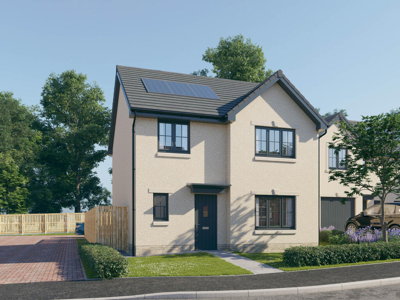
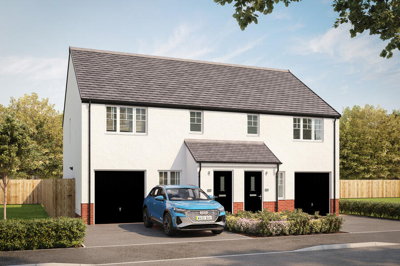
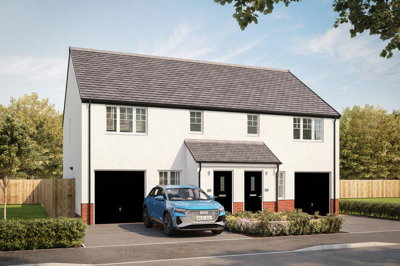
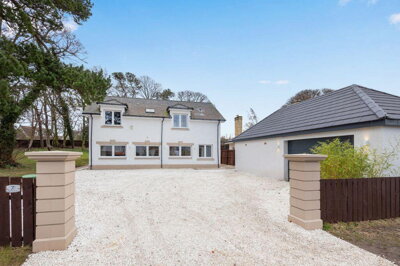
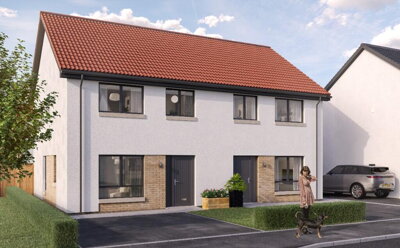
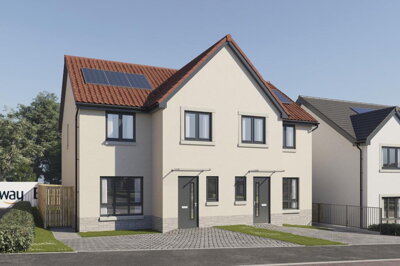
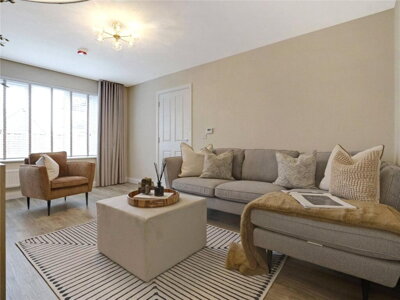
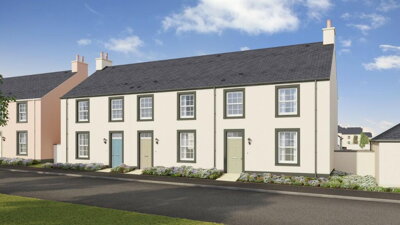
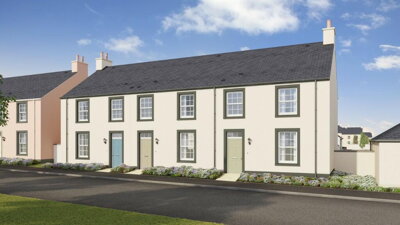
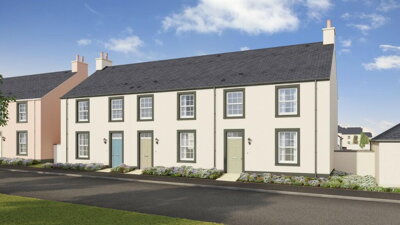
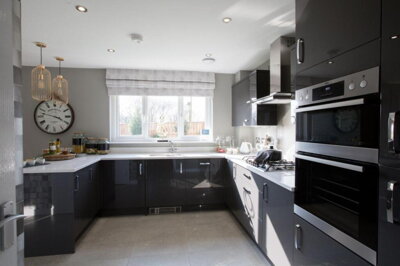
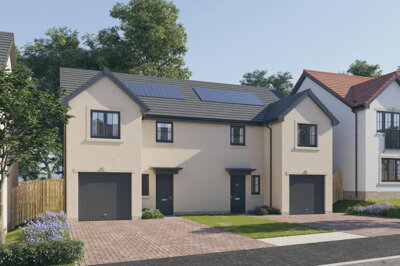
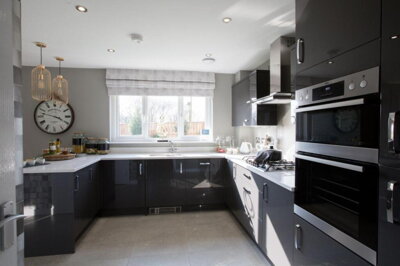
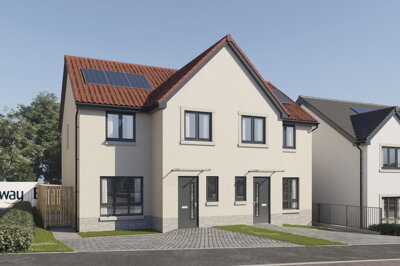
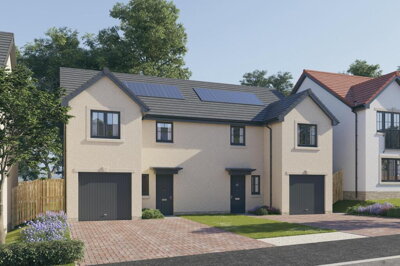
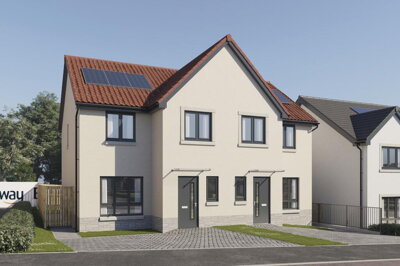
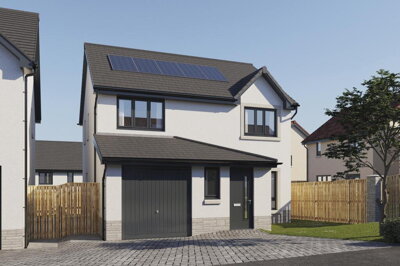
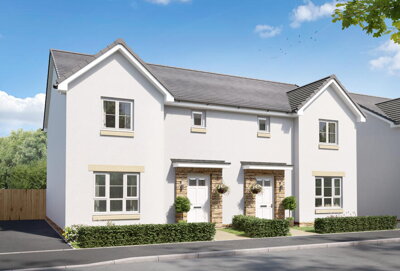
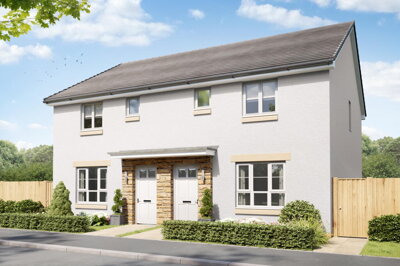
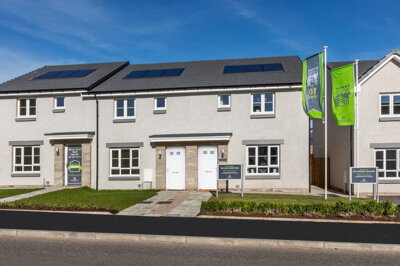
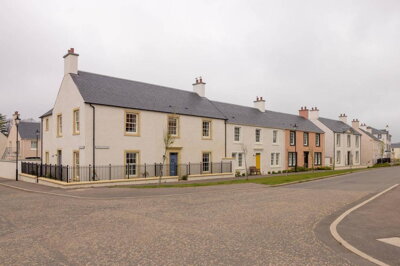
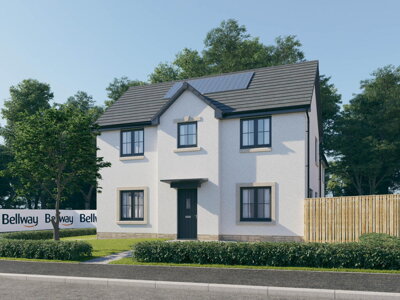
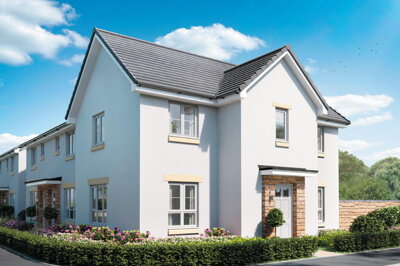
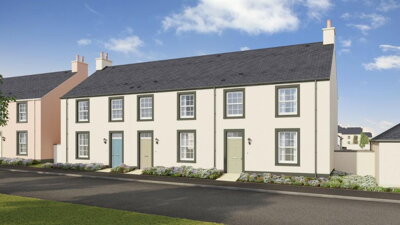
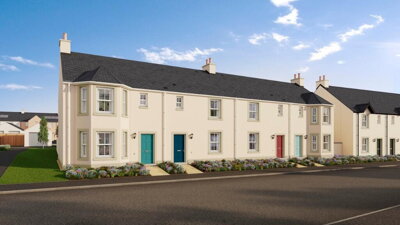
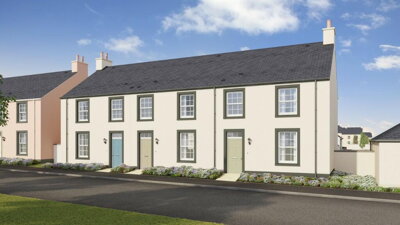
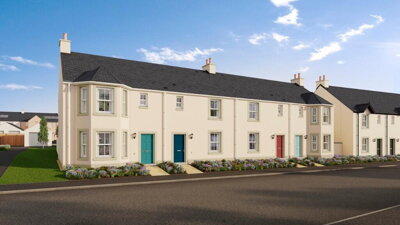
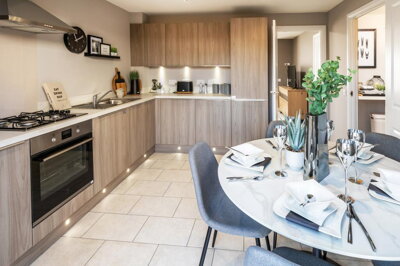
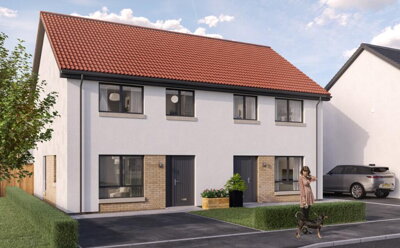
Browse 33 homes new builds in EH33 from local developer agents.
Three bedroom properties represent a significant portion of the EH33 housing market, offering space for families with multiple reception rooms and gardens in many cases. Browse detached, semi-detached, and terraced options ranging across new residential developments.
£295k
18
1
69
Source: home.co.uk
Showing 18 results for 3 Bedroom Houses new builds in EH33. 1 new listing added this week. The median asking price is £294,995.
Source: home.co.uk
Semi-Detached
15 listings
Avg £281,863
Detached
2 listings
Avg £338,995
Terraced
1 listings
Avg £175,000
Source: home.co.uk
Source: home.co.uk
The EH7 property market has experienced modest cooling over the past twelve months, with prices decreasing by approximately 1% according to recent Land Registry data. This adjustment comes after sustained growth in previous years and presents opportunities for buyers who may have found Edinburgh's market challenging in earlier cycles. The current market offers buyers more negotiating power than some neighbouring postcodes, with properties spending longer on market before securing a sale.
Property prices in EH7 vary considerably by type. Detached properties command the highest prices at an average of £530,000, though these represent only 3.9% of the housing stock. Semi-detached homes average £385,000 while terraced properties, making up 11.6% of the area, sell for around £330,000. Flats dominate the market at 79.5% of all properties and average £230,000, offering the most accessible entry point for first-time buyers and investors. The prevalence of flats reflects EH7's urban character and the popularity of tenement living in this part of Edinburgh.
Several significant new build developments are currently active in EH7. Meadowbank Waterfront, delivered by Barratt Homes and David Wilson Homes, offers 1, 2, and 3-bedroom apartments with prices starting from around £220,000 for a one-bedroom unit. The Engine Yard on Leith Walk, developed by Places for People, provides contemporary apartments priced from approximately £240,000. These new build options complement the older housing stock and give buyers seeking modern specifications additional choices within the postcode.
Looking at the age distribution of the existing housing stock helps explain the character of EH7's property market. Properties built between 1919 and 1945 comprise 14.1% of the housing stock, representing the interwar period of modest brick-built homes. A further 20.3% of properties were constructed between 1945 and 1980, typically cavity-wall construction with rendered finishes. The remaining 16.9% post-1980 properties include both private developments and the more recent regeneration schemes that have transformed parts of Meadowbank.

EH7 is home to approximately 31,540 residents across 15,310 households, creating a dense urban community with excellent local amenities. The postcode contains a fascinating mix of architectural periods, with nearly half of all properties (48.7%) built before 1919. These pre-Victorian and Victorian buildings, predominantly constructed in traditional Edinburgh sandstone, give much of EH7 its distinctive golden and russet tones. Walking through Abbeyhill or Meadowbank, you will encounter elegant Georgian proportions alongside the grander Victorian terraces that characterise Edinburgh's classic tenement districts.
The character of EH7 varies considerably between its component neighbourhoods. Leith Walk serves as a major commercial artery with shops, cafes, restaurants, and pubs catering to diverse tastes. Meadowbank has undergone significant regeneration in recent years, including improvements to Meadowbank Sports Centre and surrounding infrastructure. Abbeyhill offers a quieter residential atmosphere while remaining close to both Holyrood Park and the Palace of Holyroodhouse. The proximity of these areas means residents can enjoy the benefits of city centre living while accessing green space and cultural attractions within minutes.
Holyrood Park dominates the eastern edge of EH7, providing 650 acres of wild parkland including Arthur's Seat, an extinct volcano and volcanic rock formation that offers spectacular views across Edinburgh. This natural asset transforms EH7 from a typical urban postcode into a location where residents can step directly from their front door into dramatic highland landscapes. The park attracts walkers, runners, and outdoor enthusiasts throughout the year, contributing significantly to quality of life for those living in the surrounding streets. The park's proximity influences property values in nearby streets including Joppa Road, Duddingston Road, and the eastern sections of Meadowbank, where views and access to open space command premiums.
The local economy benefits from EH7's proximity to key employment sectors including the Scottish Parliament, NHS Lothian, and the city's university campuses. Many residents work in public administration, healthcare, education, and the creative industries, contributing to a stable employment base that supports the local housing market. The ongoing regeneration of Meadowbank, including the new Meadowbank Sports Centre facility, demonstrates continued investment in local infrastructure that benefits both current residents and property buyers.

Education provision in EH7 serves families with children at every stage of their school journey. The area contains several primary schools including Abbeyhill Primary School, Leith Walk Primary School, and Craigentinny Primary School, each serving their local catchment areas. Primary schools in Edinburgh typically follow a curriculum focused on literacy, numeracy, and health and wellbeing, with class sizes generally remaining below the Scottish national average. Parents should verify current catchment boundaries with Edinburgh City Council as these are reviewed periodically and can affect property values significantly.
Secondary education in EH7 is served by schools including Leith Academy, which occupies a prominent position on the Coatfield Lane site, and further options available in neighbouring postcodes. Edinburgh's secondary schools follow the Curriculum for Excellence framework, preparing students for National 4 and National 5 qualifications before potential progression to Higher and Advanced Higher courses. The city's strong tradition of state education, combined with selective schooling options including Royal High School and Flora Stevenson Primary, means parents have meaningful choices when selecting educational pathways for their children.
Higher and further education opportunities in Edinburgh are extensive, with the University of Edinburgh, Heriot-Watt University, and Napier University all accessible from EH7. Many residents of EH7 work in academic and research roles at these institutions, contributing to the area's educated demographic profile. For families considering long-term education costs, Edinburgh's public university system provides excellent value compared to English alternatives, with Scottish students benefiting from free tuition at Scottish universities through the Student Awards Agency Scotland scheme.
The rental market in EH7 benefits significantly from the student population, with numerous properties near the universities commanding consistent rental income. Parents purchasing investment properties near university campuses or those planning for future student accommodation can explore specific postcodes around Leith Walk and Meadowbank where demand from students remains strong throughout the academic year. University accommodation offices can provide guidance on typical rental yields in surrounding postcodes.
EH7 benefits from excellent public transport connections that make commuting straightforward for city centre workers. The Edinburgh Tram line serves the area, providing direct access to Edinburgh Airport, the city centre, and the Ocean Terminal retail development. Bus services throughout EH7 are frequent and comprehensive, with routes connecting to Waverley Station, the bus station at St Andrew Square, and destinations across the city. Transport for Edinburgh operates the majority of local bus services, and real-time arrival information is available through mobile applications.
Edinburgh Waverley Station, the city's main railway station, is located within easy reach of EH7. From Waverley, travellers can access East Coast Main Line services to London King's Cross, CrossCountry services reaching Birmingham and the South West, and ScotRail connections throughout Scotland. Regular ScotRail services connect Edinburgh to Glasgow (approximately 50 minutes), Stirling (around 1 hour), and numerous intermediate stations. The forthcoming High Speed 2 rail link, when complete, will further enhance connectivity with journey times to London reduced to under 4 hours.
Road connections from EH7 are equally strong, with the A1 trunk road running through the area providing direct access to the City Bypass (A720) and subsequently the M8, M9, and broader motorway network. Edinburgh's park-and-ride facilities at Ingliston and others provide alternative options for those preferring to drive into the city centre. For cyclists, EH7's relatively flat terrain and improving cycle infrastructure make bicycle commuting practical, while the city centre's compact nature means many daily errands can be completed on foot or by bicycle without difficulty.
The postcode's position between Holyrood Park and the Water of Leith creates natural barriers affecting some transport routes, but the overall connectivity remains excellent. Properties on streets like Easter Road, Duke Street, and Leith Walk benefit from particularly strong bus connections, while those in quieter residential areas such as Meadowbank still maintain reasonable access to public transport options. Travel times to key employment centres including the financial district around Hanover Street and the business parks at Edinburgh Park can be estimated using Transport for Edinburgh journey planning tools.
Explore the different areas within EH7 including Meadowbank, Abbeyhill, and Leith Walk. Consider proximity to schools, transport links, and green spaces. Review recent sale prices using Land Registry data to understand local values and identify suitable streets. Spend time walking the streets at different times of day to assess noise levels, neighbour activity, and the condition of communal areas in flatted properties.
Contact a mortgage broker or lender to obtain an Agreement in Principle before beginning property viewings. EH7's varied property types mean mortgage products differ between traditional tenement flats and newer apartments. Having your finances arranged strengthens your position when making offers. Scottish property purchases proceed quickly once missives are exchanged, so having financing in place before making an offer is essential.
Work with local estate agents in EH7 to arrange viewings of properties matching your criteria. Take detailed notes and photographs during each viewing. Pay attention to the condition of communal areas in flatted properties, the age of any conversions, and signs of maintenance backlog in tenement buildings. Look particularly at the state of roof coverings, stonework pointing, and window condition on older properties.
Commission a RICS Level 2 Survey before purchasing, particularly given EH7's high proportion of older properties. Survey costs for flats typically range from £400 to £700, while larger houses may cost £800 to £1,000 or more. Given that 48.7% of EH7 properties were built before 1919, a professional survey is essential to identify defects common in traditional sandstone construction including rising damp, timber deterioration, and stonework erosion.
Appoint a solicitor specialising in Scottish conveyancing to handle the legal aspects of your purchase. They will conduct searches including title checks, search the Registers of Scotland, and manage the transfer of funds. Conveyancing costs typically start from around £500 to £1,000 depending on complexity. Your solicitor should also investigate whether the property is in a conservation area or is listed, as these designations affect renovation options.
In Scottish conveyancing, missives (contracts) are exchanged when all terms are agreed, and completion typically follows shortly after. Your solicitor will coordinate with the seller's representatives to confirm the completion date and arrange the transfer of remaining funds. Unlike English conveyancing, there is no separate exchange and completion date in Scotland - once missives are concluded, a binding agreement exists.
The age of EH7's housing stock presents both opportunities and considerations for buyers. With nearly half of all properties constructed before 1919, traditional sandstone buildings are prevalent throughout the postcode. These Victorian and Edwardian tenements offer generous room sizes, original features including cornicing and fireplaces, and solid construction that has endured for over a century. However, older properties require ongoing maintenance and buyers should budget for eventual repairs to roofs, stonework, and original windows.
Conservation areas cover significant portions of EH7, particularly around Leith Walk, Abbeyhill, and Meadowbank. Properties within these designated areas are subject to planning controls intended to preserve their character, which can affect permitted development rights and renovation options. Listed buildings, which are numerous throughout EH7, require Listed Building Consent for most alterations and must be maintained to standards agreed with Historic Environment Scotland. Buyers considering renovation projects should investigate these restrictions before purchasing. For listed properties, we typically recommend a more detailed RICS Level 3 Building Survey rather than a standard Level 2, given the specialist requirements for assessing historic building fabric and the statutory obligations placed on owners.
Flood risk in EH7 requires careful consideration given the area's topography. While not coastal, lower-lying areas particularly those near the Water of Leith can experience surface water flooding during periods of heavy rainfall. The Scottish Environment Protection Agency maintains flood maps that identify at-risk locations, and a solicitor's local search should reveal whether the property has been affected by or is at risk from flooding. Properties with solid walls or in lower-lying positions should be inspected carefully for signs of damp or previous water damage.
The local geology of Edinburgh includes areas of glacial till (boulder clay) which can present shrink-swell risks affecting foundations. While EH7 is not considered a high-risk area for coal mining subsidence, the complex geological history of the Edinburgh area means some localised historic workings may exist. A basic local authority search will reveal whether the property falls within any mining search area. Properties showing signs of structural movement, cracking, or doors and windows that stick should be investigated further before proceeding.
Common defects in EH7 properties reflect the age and construction methods of the housing stock. In pre-1919 sandstone buildings, rising damp is frequently encountered due to the absence or failure of original damp-proof courses. Penetrating damp may affect walls where pointing has deteriorated or where sandstone has spalled due to moisture penetration. Timber defects including wet rot, dry rot, and woodworm are common in sub-floor areas, roof timbers, and window frames where moisture has been present. Electrical wiring in many older properties will not meet current standards and often requires complete re-wiring. Properties built between 1919 and 1945 may feature early cavity wall construction with different insulation properties, while post-war properties may have concrete floor slabs requiring consideration for timber treatment.
The current average property price in EH7 is £273,089 according to recent market data. Prices vary significantly by property type: flats average around £230,000, terraced houses average £330,000, semi-detached properties average £385,000, and detached homes average £530,000. The postcode has experienced a modest 1% decrease in values over the past twelve months, which may present buying opportunities for those entering the market. Given the high proportion of flats (79.5% of the housing stock), the overall average is weighted toward this property type, meaning family houses in EH7 typically sell for considerably more than the headline average.
Properties in EH7 fall under Edinburgh City Council's jurisdiction and are assigned council tax bands A through H based on their 1991 valuation. Band valuations in Edinburgh reflect property values from that base year and can vary considerably within the postcode given the mix of property types. Flats in EH7 typically fall into bands A to D, while larger Victorian terraces and houses may be in bands D to F. Prospective buyers should check the Scottish Assessors' Portal for specific property bands, as these affect monthly council tax payments and can influence purchasing decisions for budget-conscious buyers.
EH7 offers good primary school options including Abbeyhill Primary School, Leith Walk Primary School, and Craigentinny Primary School, each serving their local catchment areas. Secondary education is provided by Leith Academy and other nearby options. Edinburgh's public schools consistently perform well in national league tables, and the presence of selective schools including the Royal High School provides additional educational pathways for families willing to participate in the entrance assessment process. School catchment areas in Edinburgh are determined by geographic boundaries, and properties near catchment boundaries may offer access to multiple schools.
EH7 has excellent public transport connections including Edinburgh Tram services providing access to the airport and city centre. Multiple bus routes operate throughout the area connecting to Waverley Station, the bus station at St Andrew Square, and destinations across Edinburgh. Leith Walk in particular is well-served by frequent bus services. Edinburgh Waverley Station offers national rail connections to Glasgow, London, and other major cities. Properties on Leith Walk, Easter Road, and streets near tram stops typically command premiums due to transport accessibility.
EH7 presents several attractive features for property investors. The high proportion of flats (79.5% of the housing stock) and strong rental demand from students, young professionals, and key workers support consistent rental yields. Regeneration projects in Meadowbank and ongoing improvements to local amenities enhance the area's appeal. The 1% price decrease over twelve months may indicate a buyer's market, while Edinburgh's long-term position as Scotland's capital city continues to underpin property values. Investors should note that approximately 48.7% of properties were built before 1919 and may require more maintenance expenditure, while properties in conservation areas or listed buildings face additional renovation constraints.
As EH7 is in Scotland, buyers pay Land and Buildings Transaction Tax (LBTT) rather than Stamp Duty. The LBTT rates for 2024-25 start at 0% on the first £145,000 of residential property purchases, rising to 2% on the portion from £145,001 to £250,000, 5% from £250,001 to £325,000, 10% from £325,001 to £750,000, and 12% on amounts exceeding £750,000. First-time buyers in Scotland may qualify for relief raising the zero-rate threshold to £175,000, though this relief is withdrawn for purchases exceeding £500,000. For a typical EH7 flat at £230,000, LBTT would be £1,700 using the standard rates.
Given that 48.7% of EH7 properties were built before 1919, dampness (rising, penetrating, and condensation) is a common issue in older sandstone buildings with solid walls. Roof deterioration affecting slates, leadwork, and gutters frequently requires attention. Timber defects including woodworm and wet or dry rot appear in sub-floor areas, roof timbers, and window frames. Many older properties contain electrical wiring and plumbing systems that do not meet current standards and will require updating. For listed buildings and properties in conservation areas, a RICS Level 3 Building Survey is often recommended rather than a standard Level 2 survey given the specialist assessment requirements for historic building fabric.
Edinburgh has a history of mining activity, though EH7 is generally not considered a high-risk area for coal mining subsidence compared to other parts of Scotland. The local geology includes areas of glacial till which can present shrink-swell risks affecting foundations, particularly in properties built before modern foundation standards were introduced. Our inspectors frequently identify foundation movement or cracking in older properties that may relate to ground conditions. A local authority mining search should reveal whether the property falls within a former mining area, and any signs of structural cracking or movement should be investigated before purchase.
For most properties in EH7, a RICS Level 2 Survey provides appropriate inspection and reporting. However, for listed buildings (which are numerous throughout the postcode), properties in conservation areas where significant renovation is planned, or buildings showing signs of structural movement, a RICS Level 3 Building Survey offers more comprehensive assessment. Given that 48.7% of EH7 properties predate 1919, many contain construction methods and materials that benefit from specialist assessment. Our surveyors can advise on the most appropriate survey type based on the specific property.
From £400
A detailed inspection of your EH7 property before purchase. Essential for older buildings with potential defects.
From £499
Expert Scottish conveyancing solicitors to handle your EH7 property purchase.
From 3.5%
Competitive mortgage deals for your EH7 property purchase.
From £80
Energy Performance Certificate for your EH7 property.
Purchasing property in Scotland involves different taxation arrangements than England and Wales, and understanding these costs helps buyers budget accurately for their EH7 purchase. Land and Buildings Transaction Tax (LBTT) replaced Stamp Duty Land Tax in Scotland and applies to all residential property transactions. For a typical flat in EH7 priced around the average of £230,000, LBTT would be calculated as follows: nothing on the first £145,000, then 2% on the remaining £85,000, totaling £1,700. Buyers should use the Revenue Scotland calculator for precise figures based on their specific purchase price.
First-time buyers in Scotland receive beneficial LBTT treatment through the First-Time Buyer Relief scheme. This relief raises the zero-rate threshold from £145,000 to £175,000, meaning first-time buyers pay no LBTT on purchases up to that amount. For purchases between £175,000 and £500,000, the relief reduces the tax burden compared to standard rates. However, first-time buyer relief is completely withdrawn for purchases exceeding £500,000, so higher-value EH7 properties including larger Victorian terraces would attract standard rates.
Beyond LBTT, buyers should budget for additional costs including mortgage arrangement fees (typically £500 to £2,000 depending on the lender), survey costs (RICS Level 2 surveys in EH7 range from £400 to £1,000 depending on property size and type), and solicitor fees (typically £500 to £1,500 for conveyancing). Buildings insurance should be arranged from completion (typically £200 to £500 per year for a flat), and removals costs vary according to distance and volume. Getting a mortgage Agreement in Principle before viewing properties strengthens your position and helps you understand your true budget.
For properties in EH7 with asking prices exceeding £750,000, the LBTT rate rises to 12% on amounts above that threshold. A Victorian terrace in EH7 priced at £400,000 would attract LBTT of £5,250 using standard rates (nothing on the first £145,000, then 2% on £105,000 equals £2,100, plus 5% on £75,000 equals £3,750, totaling £5,850). Budgeting accurately for these costs before making an offer ensures buyers do not face unexpected shortfalls at completion.
Properties New Builds In London

Properties New Builds In Plymouth

Properties New Builds In Liverpool

Properties New Builds In Glasgow

Properties New Builds In Sheffield

Properties New Builds In Edinburgh

Properties New Builds In Coventry

Properties New Builds In Bradford

Properties New Builds In Manchester

Properties New Builds In Birmingham

Properties New Builds In Bristol

Properties New Builds In Oxford

Properties New Builds In Leicester

Properties New Builds In Newcastle

Properties New Builds In Leeds

Properties New Builds In Southampton

Properties New Builds In Cardiff

Properties New Builds In Nottingham

Properties New Builds In Norwich

Properties New Builds In Brighton

Properties New Builds In Derby

Properties New Builds In Portsmouth

Properties New Builds In Northampton

Properties New Builds In Milton Keynes

Properties New Builds In Bournemouth

Properties New Builds In Bolton

Properties New Builds In Swansea

Properties New Builds In Swindon

Properties New Builds In Peterborough

Properties New Builds In Wolverhampton

Enter your details to see if this property is within your budget.
Loans, cards, car finance
Estimated property budget
Borrowing + deposit
You could borrow between
Typical borrowing
Monthly repayment
Est. at 4.5%
Loan-to-value
This is an estimate only. Your actual budget may vary depending on interest rates, credit history, and personal circumstances. For an accurate affordability assessment, speak to one of our free mortgage advisors.
This calculator provides estimates for illustrative purposes only and does not constitute financial advice. Your home may be repossessed if you do not keep up repayments on your mortgage. Estimates based on 4.5% interest rate, repayment mortgage. Actual rates depend on your circumstances.
Homemove is a trading name of HM Haus Group Ltd (Company No. 13873779, registered in England & Wales). Homemove Mortgages Ltd (Company No. 15947693) is an Appointed Representative of TMG Direct Limited, trading as TMG Mortgage Network, which is authorised and regulated by the Financial Conduct Authority (FRN 786245). Homemove Mortgages Ltd is entered on the FCA Register as an Appointed Representative (FRN 1022429). You can check registrations at NewRegister or by calling 0800 111 6768.

We use cookies to show you personalised content and improve your experience of our website. Find out more in our Privacy policy and Cookie policy.