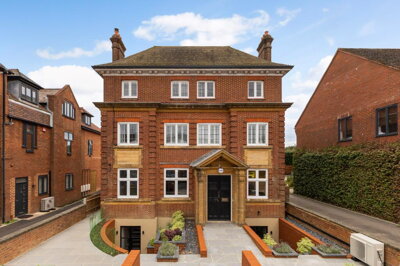
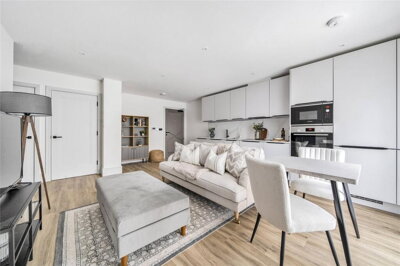
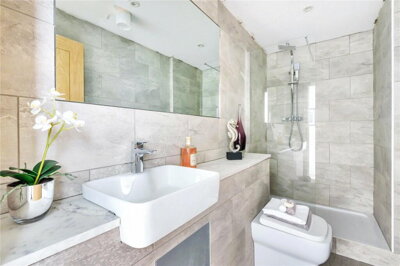
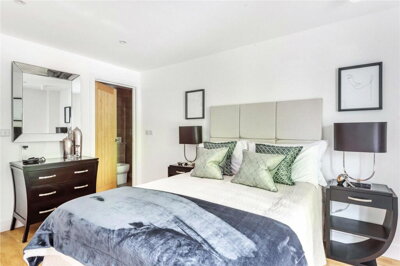
Browse 10 homes new builds in East Hampshire from local developer agents.
One bed apartments provide a separate bedroom alongside distinct living space, bathroom, and kitchen areas. Properties in East Hampshire are available in various building types including new apartment complexes and contemporary developments.
The East Hampshire property market offers a varied selection of property types to cater to different buyer requirements. Detached properties command the highest average prices at £701,000, reflecting the premium associated with larger family homes with generous gardens and private parking. Semi-detached properties, averaging £430,000, represent strong value in the current market and saw prices rise by 1.8% in the year to December 2025, indicating growing demand for this configuration. For those seeking more affordable options, terraced properties average £334,000, while flats and maisonettes start from around £201,000, though flat prices have softened by 2.2% over the same period.
Transaction volumes across the broader Hampshire county reached 21,900 sales in the twelve months ending December 2025, though this represents an 11.8% decrease from the previous year. Newly built properties accounted for 461 sales, representing 2.1% of total transactions, with an average price of £455,000. The postcode sector SO32 2 recorded the highest new build activity with 44 sales, suggesting active development in specific areas of the district. Despite the broader cooling seen in the Hampshire market, with average prices falling 2% year-on-year and sitting 3% below the 2022 peak of £406,073, East Hampshire's premium positioning has helped maintain relative stability in property values.
Housing stock across the district reflects a balanced mix typical of southern England, with terraced properties accounting for approximately 29.6% of sales, detached homes comprising 26%, semi-detached properties at 24.1%, and flats representing 20.3% of transactions. This variety ensures that buyers across all segments can find suitable options, from compact starter homes to substantial family residences. The prevalence of different property types also means that survey requirements vary significantly, with older terraced and detached properties often requiring more detailed assessment than newer builds.
Understanding the breakdown of property types and their typical price ranges helps buyers navigate the East Hampshire market with confidence. The market data shows clear segmentation between property categories, with each offering distinct advantages for different buyer profiles. Whether you are a first-time buyer considering a flat or maisonette, a growing family seeking a semi-detached home, or someone looking for space and privacy in a detached property, the East Hampshire market provides options across all configurations.

East Hampshire offers an exceptional quality of life shaped by its stunning natural landscape and thriving communities. The district sits at the edge of the South Downs National Park, providing residents with immediate access to rolling chalk hills, ancient woodlands, and protected heathland. The towns of Petersfield and Alton serve as the commercial and social hubs of the area, each retaining their historic market town character with cobbled streets, medieval churches, and architectural heritage dating back centuries. Community life remains strong here, with regular farmers markets, cultural festivals, and village events that foster a genuine sense of belonging among residents.
The local economy benefits from proximity to major centres including Portsmouth, Southampton, and Basingstoke, all within reasonable commuting distance. Many residents work in the defence and aerospace sectors that cluster around Portsmouth and Farnborough, while others commute to London for City professions. The area's geological character includes stretches of chalk downland and clay vales, with the River Rother and River Meon threading through the landscape. This diverse terrain creates varied outdoor recreational opportunities, from walking and cycling on the South Downs Way to water sports on the coast at nearby Chichester Harbour. The presence of conservation areas and listed buildings throughout the district reflects the area's historical significance and contributes to its distinctive character and visual appeal.
The district's villages each possess their own unique character, from the chocolate-box cottages of Selborne to the riverside settings along the Meon Valley. Local amenities are well distributed across the larger settlements, with Petersfield offering a comprehensive range of shops, restaurants, and services including a modern medical centre and leisure facilities. Alton provides similar conveniences alongside its famous cricket ground and heritage railway. Village communities, while smaller, typically maintain local pubs, churches, and community halls that serve as social focal points for residents.
The combination of natural beauty, strong communities, and practical amenities makes East Hampshire an attractive location for buyers at all life stages. Families appreciate the space and outdoor opportunities, professionals value the commute-friendly locations, and retirees are drawn to the peaceful village settings and excellent transport connections.
Education provision in East Hampshire serves families well across all stages, from primary through to further education. The district contains a mix of excellent primary schools, many situated in charming village settings, alongside larger primary schools in the towns of Petersfield and Alton. Secondary education is well catered for, with several established schools serving the area and achieving strong results. Parents should research specific catchment areas when considering properties, as school admissions in Hampshire are determined primarily by geographic proximity, making property location critical for families prioritising educational access.
For families seeking selective education, Hampshire operates a grammar school system, with places allocated based on academic selection. The assessment process typically takes place during Year 6, and proximity to grammar schools can significantly influence property values in surrounding areas. Alton Grammar School and Amery Hill School in Alton serve the western part of the district, while allocation to these institutions depends on catchment boundaries that extend into surrounding villages. The nearby towns of Petersfield and Horndean also have access to grammar school provision through the County's selective system.
Sixth form provision is available at secondary schools and colleges across the district, with several institutions offering a wide range of A-level and vocational courses. Alton College is widely regarded as one of the best sixth form colleges in Hampshire, attracting students from across the region. Early years childcare and preschool facilities are plentiful throughout the area, reflecting the family-oriented nature of the community. When purchasing property in East Hampshire, families should verify current school performance data and admission policies directly with schools or Hampshire County Council's education department, as these details can change and may significantly impact your decision.
The quality of local schools often plays a decisive role in property purchase decisions for families with children. Properties within the catchment areas of highly-rated primary and secondary schools typically command a premium, making early research essential for budget-conscious buyers. Our platform allows you to explore properties across different school catchment areas throughout East Hampshire.
East Hampshire offers practical transport connections that balance rural tranquility with accessibility to major employment centres. Petersfield railway station provides regular services to London Waterloo, with journey times of approximately one hour and fifteen minutes, making it viable for daily commuters working in the capital. The station sits on the Portsmouth Direct line, offering convenient connections to Guildford and Woking for those working in the aerospace and technology corridors of Surrey. Alton station offers similar services to London via a connection at Alton itself, with a journey time to London Waterloo of around two hours when changing at Woking or Basingstoke.
The strategic position of the district means that the major employment hubs of Portsmouth, Southampton, Farnborough, and Basingstoke are all accessible within 30 to 45 minutes by car. Portsmouth provides significant employment in the defence and maritime sectors, with Portsmouth Naval Base and commercial port operations offering skilled job opportunities. Southampton's cruise terminal, port operations, and growing technology sector attract workers from across the region. Farnborough's concentration of aerospace and technology companies, including the headquarters of major defence contractors, draws commuters from throughout East Hampshire. Basingstoke offers retail, manufacturing, and professional services employment within easy reach.
Road connectivity is excellent, with the A3 trunk road providing direct access to Guildford and the M25 orbital motorway, connecting to the wider national road network. The A31 runs through the district, offering routes to Winchester and the south coast. Local bus services operate throughout the area, including the 67 service connecting Alton to Alton College and the 46 linking Petersfield to Horndean, though frequencies may be limited in more rural villages, making car ownership practically essential for many residents. Cycling infrastructure has improved in recent years, with designated routes connecting towns and villages for recreational use and shorter local journeys. Parking provision varies by location, with town centre parking typically available though limited during peak periods, while village locations often rely on on-street parking arrangements. For those working from home, superfast broadband coverage is generally good in the main towns, though rural properties may experience more variable speeds.
Whether you need to commute to London, work locally, or split your time between home and office, East Hampshire's transport network offers options to suit different working patterns. Our search allows you to filter properties by proximity to railway stations and major road connections, helping you find a home that fits your commute.
Purchasing property in East Hampshire requires careful consideration of several area-specific factors that can significantly impact your investment. The district's geology includes areas of clay soil, which can present shrink-swell risks affecting property foundations, particularly for older buildings with shallow foundations. When viewing properties, look for signs of subsidence such as cracking to walls, doors that stick, or uneven floors. A RICS Level 2 Survey can identify these issues and provide professional assessment of any structural concerns before you commit to purchase.
Flood risk should be evaluated for properties near watercourses including the River Rother and River Meon, as well as low-lying areas that may be susceptible to surface water flooding during periods of heavy rainfall. The Environment Agency publishes detailed flood risk maps that prospective buyers should consult, and your surveyor should assess drainage arrangements and any history of flooding. Properties in areas such as the Meon Valley and low-lying parts of Petersfield should be checked carefully, particularly those with basements or cellars that may be prone to damp ingress.
Given the prevalence of conservation areas and listed buildings throughout the district, buyers should understand the planning restrictions these designations impose, which can limit permitted development rights and affect renovation options. Properties within these areas may require specialist surveys and consent for alterations from East Hampshire District Council. The historic towns of Petersfield and Alton contain numerous Grade I and Grade II listed buildings, with some properties dating back to the sixteenth and seventeenth centuries. These older properties, while charming, may require more frequent maintenance and specialist care when issues arise. Leasehold properties, common in newer developments, warrant particular scrutiny regarding remaining lease terms, ground rent arrangements, and service charges, which can accumulate significantly over time. The postcode sector SO32 2 around Bishop's Waltham includes newer developments where leasehold arrangements are more common.
Our team has extensive experience helping buyers navigate the East Hampshire property market. We understand the local housing stock, common issues affecting properties in the area, and the factors that influence property values across different parts of the district. This local expertise can help you make a more informed decision when purchasing your new home.
Properties in East Hampshire span a wide range of ages, from historic timber-framed cottages in conservation villages to modern developments built within the last decade. This variety in housing stock means that buyers encounter different defect patterns depending on the property type and age. Older properties, particularly those constructed before 1930, often feature traditional construction methods including lime mortar, solid walls, and timber frames that differ significantly from modern building standards. Our inspectors frequently identify issues with damp penetration in solid-walled properties, where the absence of cavity insulation can allow moisture to travel through walls over time.
The clay soils prevalent across parts of East Hampshire create specific challenges for properties with older foundations. During prolonged dry spells, clay contracts and can cause subtle movement in foundations, while rehydration during wet periods leads to expansion. This shrink-swell behaviour can result in cracking to walls, particularly in properties built with shallow strip foundations common in the early twentieth century. Signs of past movement include diagonal cracking above door frames, floors that slope noticeably, and partitions that have pulled away from ceiling joists. Our surveyors assess these indicators carefully and report their findings clearly in our RICS Level 2 Surveys.
Roof conditions require careful assessment across all property ages in the district. Properties with clay tile roofs, common on older homes throughout East Hampshire, may show deterioration through slipped or missing tiles, while the mortar on ridge tiles can erode over time, leading to water ingress. Flat roofs on extensions and garage structures are particularly vulnerable to failure and should be inspected for ponding water and membrane deterioration. Timber fascias, soffits, and bargeboards frequently show signs of rot where they have been painted but not maintained adequately. Electrical systems in properties built before the 1970s often require updating, with older cloth-covered wiring presenting fire safety concerns that warrant immediate attention.
Understanding the stamp duty land tax (SDLT) implications of your purchase is essential for budgeting accurately when buying property in East Hampshire. For standard residential purchases, no SDLT is payable on the first £250,000 of the purchase price. The rate then increases to 5% on the portion between £250,001 and £925,000, rising to 10% for values between £925,001 and £1.5 million, with a rate of 12% applying to any amount above £1.5 million. Given that the average property price in East Hampshire is £440,000, most buyers would expect to pay SDLT of approximately £9,500 on a typical purchase, calculated on the amount above the £250,000 threshold.
First-time buyers benefit from increased relief, with SDLT charged at 0% on the first £425,000 of the purchase price, 5% between £425,001 and £625,000, with no relief available above this threshold. This relief applies only to buyers who have never previously owned property anywhere in the world. Properties purchased at or below £425,000 by first-time buyers would therefore attract no SDLT whatsoever, representing significant savings for those entering the market. For properties purchased above £625,000, first-time buyer relief is not available, and standard rates apply.
Beyond SDLT, buyers should budget for solicitor conveyancing fees typically starting from around £499, plus disbursements for searches, registration fees, and mortgage arrangement costs. Searches specific to East Hampshire include local authority searches with East Hampshire District Council, drainage and water searches, and environmental searches that assess ground conditions and potential contamination. A RICS Level 2 HomeBuyer Report costs from approximately £350 depending on property size and value, while a mortgage arrangement fee may apply if using a broker or lender. Buildings insurance must be in place from completion, and removals costs should also be factored into your moving budget. East Hampshire District Council typically bands properties across council tax bands A through H, with actual bands depending on property value, and these ongoing costs should be confirmed before purchase.

Start by exploring the East Hampshire property market thoroughly to understand price trends, local amenities, transport links, and school catchments. Use online property portals to browse available listings and attend open viewings in areas that match your requirements. Our platform allows you to browse all available properties and save searches for properties that match your requirements.
Before viewing properties, obtain a mortgage agreement in principle from a lender or broker to strengthen your position when making offers. This document demonstrates to sellers that you have financing secured and can proceed quickly once your offer is accepted. The agreement in principle is typically valid for 60 to 90 days and involves a basic credit check. Our mortgage comparison tool helps you find competitive rates from lenders active in the East Hampshire market.
Visit properties that match your criteria and assess their condition, surroundings, and neighbourhood character during daylight hours and in different weather conditions. Take notes and photographs to help remember details after viewing multiple properties, and ask about the property's history, any recent works, and reasons for selling. Consider returning for a second viewing before making an offer, particularly for properties you are seriously considering.
Once your offer is accepted, commission a RICS Level 2 HomeBuyer Report from a qualified surveyor before proceeding to exchange contracts. This professional survey identifies defects, structural issues, and maintenance needs, giving you leverage to renegotiate if significant problems are discovered. Our team includes experienced surveyors familiar with the East Hampshire housing stock and common issues affecting properties in the area.
Appoint a conveyancing solicitor to handle the legal aspects of your purchase, including conducting searches, verifying ownership, handling contracts, and managing the registration process with Land Registry. Your solicitor will communicate with the seller's legal team, raise enquiries on search results, and report to you on any issues that arise. Our conveyancing comparison service helps you find qualified solicitors with experience handling East Hampshire property transactions.
Your solicitor will exchange contracts once all searches are satisfactory and your mortgage offer is received, at which point the transaction becomes legally binding. A deposit typically representing 10% of the purchase price is paid at exchange, so ensure you have funds available. Completion, when you receive the keys, is arranged for a mutually agreed date and your solicitor registers your ownership with Land Registry.
The average house price in East Hampshire was £440,000 as of December 2025, according to provisional Land Registry data. This represents a 0.4% increase from December 2024, indicating a stable market. Different property types command significantly different prices, with detached properties averaging £701,000, semi-detached properties at £430,000, terraced properties at £334,000, and flats at £201,000. Alternative data sources suggest some variation in these figures, with OnTheMarket reporting an average of £521,000 as of January 2026, though this may reflect different methodology or property types included.
East Hampshire offers strong educational provision across all levels, though specific school performance varies year by year. The district contains numerous primary schools rated Good or Outstanding by Ofsted, with particularly well-regarded options in Petersfield and Alton. Secondary schools serving the area include both comprehensive and grammar schools, with admission typically determined by catchment area or selective testing for grammar places. Alton College provides excellent sixth form provision and attracts students from across the district. Parents should research current Ofsted ratings and admission policies directly with schools or Hampshire County Council, as school performance and catchment boundaries can change annually.
Properties in East Hampshire fall under East Hampshire District Council and are assigned council tax bands A through H based on their assessed value. Actual bands depend on the property's market value at the time of its last valuation, which was 1991 for most properties. Properties in the district range from modest flats and terraced houses in Bands A through C, through family homes in Bands D and E, to larger detached properties and period homes in Bands F through H. To find the specific council tax band for a property you are considering, check the Valuation Office Agency's online database or request this information from the seller or estate agent during the buying process.
East Hampshire benefits from practical public transport options, though car ownership remains advantageous for residents in rural areas. Petersfield railway station provides regular services to London Waterloo with journey times of approximately 75 minutes, making daily commuting to the capital viable for many workers. Alton station offers similar connections via the South Western Railway network. Local bus services operate throughout the district, connecting villages to towns, though frequencies in rural areas may be limited, particularly on evenings and weekends. The A3 and A31 roads provide good road connectivity to major centres including Portsmouth, Southampton, Guildford, and Basingstoke.
East Hampshire offers several characteristics that make it attractive for property investment. The area benefits from proximity to major employment centres, excellent natural environment, strong community character, and good schools, all of which sustain demand for housing. The average price of £440,000 positions the market accessibly compared to London and surrounding areas, while the presence of historic towns, conservation areas, and the South Downs National Park boundary helps preserve property values. Rental demand is supported by commuters, families, and professionals seeking the lifestyle balance the area provides, though specific rental yields will vary by property type and location. New build activity remains relatively limited at 2.1% of sales, suggesting sustained demand for existing properties.
For properties purchased at the East Hampshire average price of £440,000, standard buyers would pay SDLT of £9,500, calculated as 5% on the amount between £250,001 and £440,000. First-time buyers benefit from increased relief, paying 5% only on the amount between £425,001 and £440,000, totalling £750. SDLT rates increase for higher value properties, reaching 10% on amounts between £925,001 and £1.5 million, and 12% on any portion exceeding £1.5 million. Properties priced above £1.5 million represent a significant investment in the local market and include many substantial detached homes and period properties in desirable locations.
Certain areas of East Hampshire carry elevated flood risk, particularly properties located near the River Rother, River Meon, or in other low-lying areas adjacent to watercourses. Surface water flooding can also occur during periods of heavy rainfall, especially where drainage is constrained. The villages along the Meon Valley, including Corhampton and Droxford, sit near the River Meon and may experience elevated flood risk during periods of heavy rainfall. Prospective buyers should consult the Environment Agency's flood risk maps for specific locations, discuss flood history with current owners, and ensure adequate buildings insurance is available before completing purchase. A RICS Level 2 Survey will assess drainage and any visible signs of water damage or damp.
East Hampshire has a rich heritage reflected in its concentration of listed buildings and conservation areas, particularly in the historic towns of Petersfield and Alton and throughout its picturesque villages. The district contains numerous properties protected under listed building status, ranging from minor structures to substantial manor houses and farm buildings. Properties within conservation areas are subject to planning restrictions that can limit permitted development rights and require consent for alterations. Listed buildings receive additional protection and any works affecting their character or structure require consent from East Hampshire District Council. These designations contribute significantly to the area's visual appeal and character but require careful consideration when purchasing and planning any modifications.
East Hampshire offers a diverse range of property types to suit different buyer requirements and budgets. The housing stock includes Victorian and Edwardian terraced houses in the towns, particularly around Petersfield and Alton town centres, often featuring bay windows, original fireplaces, and generous ceiling heights. Semi-detached properties from the interwar period provide family accommodation with gardens, representing good value at an average of £430,000. Detached homes range from 1930s semis with garages to substantial modern executive houses, commanding an average price of £701,000. Flats and maisonettes, averaging £201,000, are concentrated in town centre locations and newer developments, offering more affordable entry points to the local market. Rural properties include thatched cottages, converted barns, and farmhouses, particularly in conservation villages like Selborne.
From £350
Our RICS Level 2 Survey identifies defects and provides professional assessment of property condition across the East Hampshire housing stock.
From £500
For older properties, listed buildings, or complex properties, our RICS Level 3 Building Survey provides detailed analysis of construction and defects.
From £80
Energy Performance Certificates are required for all property sales and provide details of energy efficiency and potential improvements.
From £499
Our conveyancing service connects you with experienced solicitors handling property transactions across East Hampshire and Hampshire.
Properties New Builds In London

Properties New Builds In Plymouth

Properties New Builds In Liverpool

Properties New Builds In Glasgow

Properties New Builds In Sheffield

Properties New Builds In Edinburgh

Properties New Builds In Coventry

Properties New Builds In Bradford

Properties New Builds In Manchester

Properties New Builds In Birmingham

Properties New Builds In Bristol

Properties New Builds In Oxford

Properties New Builds In Leicester

Properties New Builds In Newcastle

Properties New Builds In Leeds

Properties New Builds In Southampton

Properties New Builds In Cardiff

Properties New Builds In Nottingham

Properties New Builds In Norwich

Properties New Builds In Brighton

Properties New Builds In Derby

Properties New Builds In Portsmouth

Properties New Builds In Northampton

Properties New Builds In Milton Keynes

Properties New Builds In Bournemouth

Properties New Builds In Bolton

Properties New Builds In Swansea

Properties New Builds In Swindon

Properties New Builds In Peterborough

Properties New Builds In Wolverhampton

Enter your details to see if this property is within your budget.
Loans, cards, car finance
Estimated property budget
Borrowing + deposit
You could borrow between
Typical borrowing
Monthly repayment
Est. at 4.5%
Loan-to-value
This is an estimate only. Your actual budget may vary depending on interest rates, credit history, and personal circumstances. For an accurate affordability assessment, speak to one of our free mortgage advisors.
This calculator provides estimates for illustrative purposes only and does not constitute financial advice. Your home may be repossessed if you do not keep up repayments on your mortgage. Estimates based on 4.5% interest rate, repayment mortgage. Actual rates depend on your circumstances.
Homemove is a trading name of HM Haus Group Ltd (Company No. 13873779, registered in England & Wales). Homemove Mortgages Ltd (Company No. 15947693) is an Appointed Representative of TMG Direct Limited, trading as TMG Mortgage Network, which is authorised and regulated by the Financial Conduct Authority (FRN 786245). Homemove Mortgages Ltd is entered on the FCA Register as an Appointed Representative (FRN 1022429). You can check registrations at NewRegister or by calling 0800 111 6768.

We use cookies to show you personalised content and improve your experience of our website. Find out more in our Privacy policy and Cookie policy.