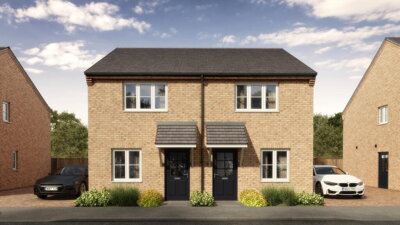
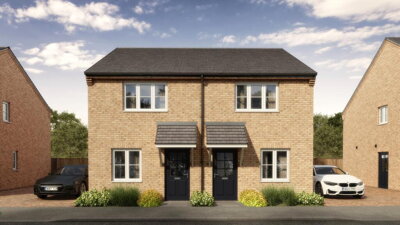
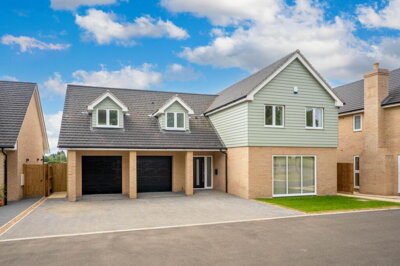
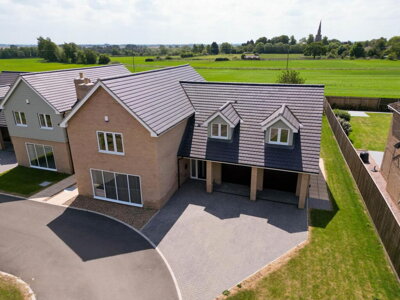
Browse 4 homes new builds in Earith, Huntingdonshire from local developer agents.
The Earith property market offers detached, semi-detached, and terraced houses spanning various price ranges and neighbourhoods. Each listing includes detailed property information, photographs, and direct contact with the marketing agent.
£370k
10
0
111
Source: home.co.uk
Showing 10 results for Houses new builds in Earith, Huntingdonshire. The median asking price is £370,000.
Source: home.co.uk
Detached
4 listings
Avg £425,000
Semi-Detached
4 listings
Avg £312,500
Terraced
2 listings
Avg £530,000
Source: home.co.uk
Source: home.co.uk
The Denston property market reflects the broader trends affecting rural Suffolk, though with certain unique characteristics driven by the village's historic status and limited housing supply. Our data shows that property prices in Denston have remained stable over the past twelve months, recording a 1.2% increase as of February 2026. This modest growth indicates a resilient local market that continues to attract buyers seeking quality over quantity, with just 4 property sales completing in the twelve-month period from February 2025 to February 2026.
When examining property types available in Denston, detached properties dominate the upper end of the market at an average of £575,000, offering generous proportions and often sitting on substantial plots with views across the surrounding farmland. Semi-detached homes provide more accessible entry points at around £350,000, while terraced properties, though rarer in this rural setting, can be found from approximately £275,000. The scarcity of new build developments in the immediate postcode area means that buyers acquiring period properties should budget for potential renovation work to bring older homes up to contemporary standards.
Investment potential in Denston remains solid, supported by the village's Conservation Area status and the inherent scarcity of available properties. The historic character of the village, combined with its proximity to larger employment centres such as Bury St Edmunds, Sudbury, and Newmarket, ensures continued demand from buyers willing to trade urban convenience for rural tranquility. Those considering property purchase in Denston should note that the limited supply pool typically means competitive conditions when quality properties come to market.
The Denston property market reflects the broader trends affecting rural Suffolk, though with certain unique characteristics driven by the village's historic status and limited housing supply. Our data shows that property prices in Denston have remained stable over the past twelve months, recording a 1.2% increase as of February 2026. This modest growth indicates a resilient local market that continues to attract buyers seeking quality over quantity, with just 4 property sales completing in the twelve-month period from February 2025 to February 2026.

Denston embodies the quintessential English village experience, where the pace of life slows and community bonds strengthen over time. The village centre clusters around The Street, where centuries-old cottages sit alongside traditional public houses and the magnificent St Nicholas' Church, a Grade I listed building dating from the medieval period. The parish sits atop boulder clay deposits overlying chalk bedrock, characteristic of the Suffolk countryside, with the gently flowing River Glem passing nearby and contributing to the rural charm that defines this part of West Suffolk.
The community spirit in Denston manifests through various village activities and the shared appreciation for the local environment. Residents benefit from access to beautiful walking routes across the surrounding agricultural landscape, with public footpaths traversing fields and meadows that have been farmed for generations. The predominant building materials reflect Suffolk's architectural heritage, with traditional Suffolk brick in pale red and yellow tones, timber framing, and rendered finishes creating a cohesive visual identity throughout the village. This architectural consistency is protected by the Conservation Area designation, ensuring that future development respects the historic character that makes Denston so appealing.
For everyday amenities, residents typically travel to nearby market towns, with Bury St Edmunds offering comprehensive shopping, healthcare, and cultural facilities within a short drive. The village's small population of 134 residents means that local services are necessarily limited, though this scarcity is offset by the strong sense of community and the genuine peace and quiet that defines daily life here. Families drawn to Denston appreciate the safe environment for children, the absence of traffic congestion, and the opportunity to grow up surrounded by Suffolk's beautiful rolling countryside.
Denston embodies the quintessential English village experience, where the pace of life slows and community bonds strengthen over time. The village centre clusters around The Street, where centuries-old cottages sit alongside traditional public houses and the magnificent St Nicholas' Church, a Grade I listed building dating from the medieval period. The parish sits atop boulder clay deposits overlying chalk bedrock, characteristic of the Suffolk countryside, with the gently flowing River Glem passing nearby and contributing to the rural charm that defines this part of West Suffolk.

Parents considering a move to Denston will find that the village is served by a selection of primary schools in the surrounding area, with families often travelling to nearby villages and towns for educational provision. Primary school-aged children in Denston typically attend schools in surrounding villages, with places allocated according to catchment area policies administered by Suffolk County Council. The close-knit nature of rural communities often means that smaller schools can provide individual attention and strong pastoral care, though class sizes and curriculum breadth may differ from larger urban primaries.
Secondary education options in the area include schools in towns such as Sudbury, Bury St Edmunds, and Haverhill, with many families factoring school transport arrangements into their relocation decisions. Several secondary schools in the wider West Suffolk area have earned strong reputations for academic achievement and extracurricular provision, making them popular choices for Denston families despite the associated travel distances. Parents should research specific school performance data, including recent Ofsted inspection outcomes, to identify the most suitable options for their children's educational needs and aptitudes.
For families requiring sixth form or further education provision, the nearby towns offer comprehensive options, with sixth form colleges and further education institutions providing academic and vocational pathways. The proximity to Bury St Edmunds, a major educational hub for the region, means that older students have access to a broader range of A-level and vocational courses than might be available in smaller settlements. Many Denston families choose to remain in the area through secondary education, accepting the travel commitments in exchange for the lifestyle benefits that rural village living provides.
Parents considering a move to Denston will find that the village is served by a selection of primary schools in the surrounding area, with families often travelling to nearby villages and towns for educational provision. Primary school-aged children in Denston typically attend schools in surrounding villages, with places allocated according to catchment area policies administered by Suffolk County Council. The close-knit nature of rural communities often means that smaller schools can provide individual attention and strong pastoral care, though class sizes and curriculum breadth may differ from larger urban primaries.
Connectivity from Denston relies primarily on road networks, with the village situated within easy reach of major A-roads that connect West Suffolk to the wider region. The A143 passes through nearby towns, providing routes toward Bury St Edmunds to the north and Haverhill to the south, while connections to the A14 trunk road offer access to Cambridge to the west and the port of Felixstowe to the east. For residents commuting to employment centres, planning journey times during peak hours is advisable, as rural roads can become congested at popular travel times.
Public transport options serving Denston reflect the village's rural character, with limited bus services providing connections to surrounding towns and villages. Cambridgeshire and Suffolk County Councils administer local bus routes, though service frequencies are typically reduced compared to urban areas, making car ownership practically essential for most Denston residents. The nearest railway stations are located in larger towns, with Bury St Edmunds offering direct services to Cambridge and Norwich, providing connectivity for longer-distance commuters and those travelling to major cities.
For cyclists, the quiet country lanes surrounding Denston offer pleasant routes for recreational cycling and occasional commuting, though the narrow nature of some rural roads requires appropriate caution. The topography of the area is generally flat, making cycling accessible for most fitness levels, and several signed routes traverse the surrounding countryside. Parking provision within the village is generally adequate given the low population density, though residents should note that larger properties may require multiple vehicles, necessitating appropriate off-street parking arrangements.
Connectivity from Denston relies primarily on road networks, with the village situated within easy reach of major A-roads that connect West Suffolk to the wider region. The A143 passes through nearby towns, providing routes toward Bury St Edmunds to the north and Haverhill to the south, while connections to the A14 trunk road offer access to Cambridge to the west and the port of Felixstowe to the east. For residents commuting to employment centres, planning journey times during peak hours is advisable, as rural roads can become congested at popular travel times.
Start by exploring current property listings in Denston through Homemove, reviewing available homes and understanding price points. Given the limited supply, consider extending your search to surrounding villages if you do not find suitable properties immediately.
Contact lenders or use Homemove's mortgage comparison tools to secure an agreement in principle before making viewings. This demonstrates your financial readiness to sellers and agents in what can be a competitive market.
Schedule viewings of properties that match your criteria, taking time to assess the condition of period properties and considering factors such as proximity to the River Glem floodplain and access to neighbouring amenities.
Before completing your purchase, arrange for a RICS Level 2 Survey to assess the condition of the property. Given Denston's prevalence of older properties and Conservation Area restrictions, this survey is particularly valuable for identifying potential defects and renovation requirements.
Appoint a solicitor experienced in rural property transactions to handle the legal aspects of your purchase. They will conduct searches, verify ownership, and manage the transfer of funds through to completion.
Once all surveys, searches, and mortgage arrangements are finalized, your solicitor will exchange contracts and arrange a completion date. On completion day, you will receive the keys to your new Denston home.
Purchasing property in Denston requires particular attention to the unique characteristics of rural Suffolk housing stock. The village's Conservation Area status means that exterior alterations, including extensions, outbuildings, and even changes to windows or doors, may require Listed Building Consent or Conservation Area consent from West Suffolk Council. Buyers should factor potential planning restrictions into their renovation budgets and timeline, ensuring that any planned improvements are permissible before committing to a purchase.
The geological conditions in Denston warrant careful consideration during the property survey process. Properties built on boulder clay are susceptible to subsidence and heave, particularly those with older, shallower foundations or those situated near large trees whose roots can affect soil moisture levels. A thorough RICS Level 2 Survey should specifically address foundation conditions and signs of movement, as remediation work for subsidence can prove costly. Additionally, the proximity to the River Glem means that buyers should investigate flood risk, checking property history for any flooding incidents and considering the implications for insurance premiums.
Building materials in Denston's older properties typically include traditional Suffolk brick, timber framing with wattle and daub or brick infill, lime mortar pointing, and clay tile or slate roofing. These traditional materials require specific maintenance approaches that differ from modern construction, and inappropriate repairs using cementitious products can cause lasting damage to historic structures. Buyers should assess the maintenance history of any period property, looking for signs of damp, timber decay, and roof condition issues that commonly affect homes of this age. Properties with existing renovation work should be evaluated to ensure that previous owners used appropriate materials and techniques for heritage buildings.
Purchasing property in Denston requires particular attention to the unique characteristics of rural Suffolk housing stock. The village's Conservation Area status means that exterior alterations, including extensions, outbuildings, and even changes to windows or doors, may require Listed Building Consent or Conservation Area consent from West Suffolk Council. Buyers should factor potential planning restrictions into their renovation budgets and timeline, ensuring that any planned improvements are permissible before committing to a purchase.
As of February 2026, the average property price in Denston is £415,000. Detached properties command around £575,000, semi-detached homes average £350,000, and terraced properties start from approximately £275,000. The market has shown modest growth of 1.2% over the past twelve months, indicating stable conditions in this sought-after rural village.
Properties in Denston fall under West Suffolk Council's jurisdiction. Council tax bands are assigned based on property valuation, and most period properties in the village typically fall within bands C through E. Prospective buyers should check specific bandings with West Suffolk Council or the Valuation Office Agency, as band allocations can vary significantly between properties depending on their character and size.
Denston is served by primary schools in surrounding villages, with allocations determined by catchment area policies from Suffolk County Council. Secondary education options include schools in nearby towns such as Bury St Edmunds and Sudbury, with transport arrangements typically required. Parents should research individual school performance data and Ofsted ratings to identify the most suitable options for their children's educational needs.
Public transport serving Denston is limited, reflecting the village's rural character. Bus services connect the village to nearby towns, though frequencies are reduced compared to urban areas. Most residents rely on private vehicle ownership for daily transportation needs. The nearest railway stations are located in surrounding towns, with Bury St Edmunds offering rail connections to Cambridge and Norwich.
Denston offers solid investment potential due to its Conservation Area status, limited housing supply, and proximity to employment centres including Bury St Edmunds, Sudbury, and Newmarket. The village's peaceful rural setting continues to attract buyers seeking quality of life, supporting long-term demand. However, investors should note that the limited rental market and planning restrictions may affect immediate returns and future flexibility.
Standard SDLT rates for 2024-25 apply to purchases in Denston, with 0% charged on properties up to £250,000, 5% on the portion from £250,001 to £925,000, and 10% up to £1.5 million. First-time buyers may benefit from relief on properties up to £625,000, paying 0% up to £425,000 then 5% on the remainder. Given the average property price of £415,000, many buyers will fall within the basic rate band.
Denston is situated near the River Glem, which presents a generally low but present risk of fluvial flooding during periods of intense rainfall. Surface water flooding can also occur in areas with poor drainage. Properties near the river or in low-lying areas warrant particular investigation. Standard buildings insurance should cover flood risk, though premiums may reflect the proximity to watercourses.
Yes, Denston's Conservation Area designation and the presence of numerous listed buildings mean that exterior alterations often require consent from West Suffolk Council. This includes changes to windows, doors, roofs, and any extensions or outbuildings. Interior renovations are generally less restricted unless the property is listed. Buyers planning renovation work should consult with the local planning authority before completing their purchase.
From 4.5%
Compare mortgage deals and find the best rate for your Denston property purchase
From £499
Expert solicitors to handle your Denston property purchase
From £450
Essential property survey for Denston's older housing stock
From £85
Energy performance certificate for your Denston property
When purchasing a property in Denston, understanding the full cost of acquisition is essential for budgeting effectively. Stamp Duty Land Tax (SDLT) represents the most significant additional cost, with standard rates for 2024-25 requiring no payment on the first £250,000 of a purchase price, 5% on amounts between £250,001 and £925,000, 10% on the portion from £925,001 to £1.5 million, and 12% on any amount exceeding £1.5 million. For a typical Denston property at the current average price of £415,000, a standard buyer would incur SDLT of £8,250.
First-time buyers benefit from enhanced SDLT relief, paying nothing on the first £425,000 and 5% on the portion between £425,001 and £625,000. This relief can significantly reduce purchase costs for qualifying buyers, though properties priced above £625,000 do not qualify for any first-time buyer relief. Given that most Detached properties in Denston exceed this threshold, first-time buyers may need to focus their search on semi-detached and terraced homes to maximize their relief entitlement.
Beyond SDLT, buyers should budget for solicitor conveyancing costs, typically ranging from £500 to £2,000 depending on complexity and property value. Survey costs for a RICS Level 2 Survey in the Denston area range from approximately £450 for smaller properties up to £800 for substantial detached homes. Additional costs include mortgage arrangement fees, search fees, Land Registry fees, and removal expenses, which together can add several thousand pounds to the total purchase cost. Obtaining a mortgage agreement in principle before property hunting is strongly recommended, as it clarifies your budget and demonstrates seriousness to sellers in what can be a competitive village market.
When purchasing a property in Denston, understanding the full cost of acquisition is essential for budgeting effectively. Stamp Duty Land Tax (SDLT) represents the most significant additional cost, with standard rates for 2024-25 requiring no payment on the first £250,000 of a purchase price, 5% on amounts between £250,001 and £925,000, 10% on the portion from £925,001 to £1.5 million, and 12% on any amount exceeding £1.5 million. For a typical Denston property at the current average price of £415,000, a standard buyer would incur SDLT of £8,250.
Properties New Builds In London

Properties New Builds In Plymouth

Properties New Builds In Liverpool

Properties New Builds In Glasgow

Properties New Builds In Sheffield

Properties New Builds In Edinburgh

Properties New Builds In Coventry

Properties New Builds In Bradford

Properties New Builds In Manchester

Properties New Builds In Birmingham

Properties New Builds In Bristol

Properties New Builds In Oxford

Properties New Builds In Leicester

Properties New Builds In Newcastle

Properties New Builds In Leeds

Properties New Builds In Southampton

Properties New Builds In Cardiff

Properties New Builds In Nottingham

Properties New Builds In Norwich

Properties New Builds In Brighton

Properties New Builds In Derby

Properties New Builds In Portsmouth

Properties New Builds In Northampton

Properties New Builds In Milton Keynes

Properties New Builds In Bournemouth

Properties New Builds In Bolton

Properties New Builds In Swansea

Properties New Builds In Swindon

Properties New Builds In Peterborough

Properties New Builds In Wolverhampton

Enter your details to see if this property is within your budget.
Loans, cards, car finance
Estimated property budget
Borrowing + deposit
You could borrow between
Typical borrowing
Monthly repayment
Est. at 4.5%
Loan-to-value
This is an estimate only. Your actual budget may vary depending on interest rates, credit history, and personal circumstances. For an accurate affordability assessment, speak to one of our free mortgage advisors.
This calculator provides estimates for illustrative purposes only and does not constitute financial advice. Your home may be repossessed if you do not keep up repayments on your mortgage. Estimates based on 4.5% interest rate, repayment mortgage. Actual rates depend on your circumstances.
Homemove is a trading name of HM Haus Group Ltd (Company No. 13873779, registered in England & Wales). Homemove Mortgages Ltd (Company No. 15947693) is an Appointed Representative of TMG Direct Limited, trading as TMG Mortgage Network, which is authorised and regulated by the Financial Conduct Authority (FRN 786245). Homemove Mortgages Ltd is entered on the FCA Register as an Appointed Representative (FRN 1022429). You can check registrations at NewRegister or by calling 0800 111 6768.

We use cookies to show you personalised content and improve your experience of our website. Find out more in our Privacy policy and Cookie policy.