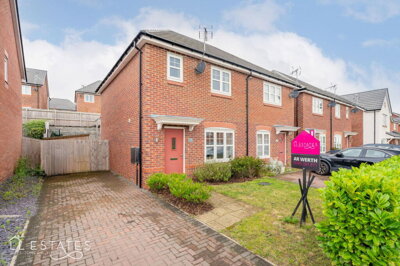
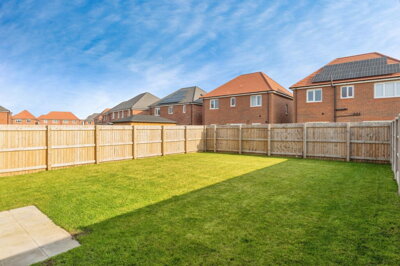
Browse 2 homes new builds in Dyserth, Denbighshire from local developer agents.
The Dyserth property market offers detached, semi-detached, and terraced houses spanning various price ranges and neighbourhoods. Each listing includes detailed property information, photographs, and direct contact with the marketing agent.
£380k
15
1
169
Source: home.co.uk
Showing 15 results for Houses new builds in Dyserth, Denbighshire. 1 new listing added this week. The median asking price is £380,000.
Source: home.co.uk
Detached
12 listings
Avg £580,167
Semi-Detached
3 listings
Avg £164,333
Source: home.co.uk
Source: home.co.uk
The Powys property market presents a compelling opportunity for buyers seeking value in rural Wales. Our data shows the overall average house price stands at £239,837 as of early 2026, with detached properties averaging £304,010 and semi-detached homes at £194,188. Over the past twelve months, prices have experienced a modest decline of 2.31%, creating potential buying opportunities for those enterprising enough to act now. Terraced properties in Powys average £165,160, while flats offer the most accessible entry point at approximately £105,714, making the county attractive for first-time buyers working with tighter budgets.
Powys boasts a distinctive housing stock profile, with detached properties comprising 47.9% of all homes - significantly higher than the national average and reflecting the rural nature of the county. Semi-detached homes account for 26% of the housing stock, with terraced properties at 17.5% and flats representing just 7.9%. This abundance of detached homes means buyers can often secure generous garden space, private parking, and scenic views that would be unaffordable in more urbanised regions.
Several new build developments offer modern specifications for buyers preferring contemporary construction. The Pastures in Newtown (Bellway, SY16 1AL) features 3 and 4-bedroom homes from £229,995 to £319,995. Maes Y Dderwen in Brecon (Charles Church, LD3 9AU) offers 3, 4 and 5-bedroom homes ranging from £289,995 to £429,995. The Coppice in Welshpool (Persimmon Homes, SY21 7AY) provides 2, 3 and 4-bedroom options from £199,995 to £309,995, while Llys Y Coed in Llandrindod Wells (Elan Homes, LD1 6BH) features 3 and 4-bedroom homes from £259,995 to £369,995.

Life in Powys unfolds at a refreshingly unhurried pace, characterised by close-knit communities, stunning landscapes, and a genuine sense of Welsh heritage. The county is the least densely populated local authority in Wales, with just 26 persons per square kilometre, offering residents the space and tranquility that city dwellers can only dream of. Agriculture, forestry, and fishing employ 14% of the workforce - the highest proportion of any local authority in Wales and far exceeding the Welsh average of 3%. This rural economy shapes daily life, from farmers' markets in market towns to the rhythms of the farming calendar that punctuate the year.
The Brecon Beacons National Park dominates the southern portion of Powys, offering world-class walking, cycling, climbing, and pony trekking against a backdrop of heather-clad peaks and sparkling reservoirs. Hay-on-Wye has earned international fame for its second-hand bookshops, hosting the renowned Hay Festival of Literature each spring. The county benefits from a thriving arts scene, with galleries, theatres, and cultural venues in towns like Brecon and Newtown. The Royal Welsh Show, held annually at the showground near Builth Wells, celebrates Welsh agriculture and rural life, drawing visitors from across the UK.
Working from home has increased significantly in Powys, rising from 22% in 2011 to 30% according to the 2021 Census, reflecting the growing ability of residents to enjoy rural living without sacrificing career opportunities. The county's public sector, including NHS Powys Teaching Health Board, Powys County Council, and local education establishments, provides stable employment for many residents. Small businesses and rural enterprises thrive alongside traditional agriculture, creating a diverse economy that supports the housing market across the county's market towns and villages.
Education provision in Powys serves students from nursery through sixth form, with a network of primary schools scattered across the county's villages and towns, alongside secondary schools in the main population centres. Families relocating to Powys will find a mix of community primary schools and faith schools, with several primary schools rated highly by Ofsted. Llandrindod Wells Primary School and Brecon County Primary School serve their respective towns with strong reputations, while Cradoc Primary School near Brecon benefits from its location within the Brecon Beacons National Park catchment area.
Secondary education is concentrated in market towns including Brecon, Newtown, Welshpool, and Ystradgynlais, with schools offering a range of GCSE and A-Level subjects alongside vocational courses. Llandrindod High School serves the county town and surrounding villages, while Welshpool High School provides secondary education for the northern Powys area. Brecon has developed a particular reputation for educational excellence, with its secondary school serving students from across the surrounding area and achieving strong academic results relative to similar rural authorities.
The county offers several options for post-16 education, with sixth forms attached to secondary schools and further education colleges providing vocational qualifications and apprenticeship opportunities. Parents should note that catchment areas can be extensive in this rural county, and transportation arrangements for students living in more remote areas are coordinated through Powys County Council. Independent schooling options are more limited than in urban areas, though several preparatory schools serve younger children across the region. When purchasing property in Powys, verifying the specific school catchment area is essential, as properties may fall within surprising catchments given the county's geography.
Transport connectivity in Powys reflects its rural character, with the county served by the Heart of Wales railway line running through towns including Knighton, Llandrindod Wells, and Craven Arms. The Cambrian Line provides additional rail connections, with stations at Caersws, Newtown, and Pontdolgoch serving communities along the River Severn valley. The main railway station at Newtown provides connections to the West Midlands and the national rail network, though journey times to major cities are longer than in urban areas - expect around two and a half hours to Birmingham New Street and approximately three hours to London Euston.
Road travel is essential for most Powys residents, with the A458, A44, A470, and A483 providing the main arterial routes connecting market towns and villages. The A465 heads north through the county towards Shropshire, while the A40 connects Powys with Hereford and Oxford to the east. The A479 provides a scenic route through the heart of the Brecon Beacons, passing through Defynnog and Cray before reaching the A40 near Brecon. Bus services operate throughout the county, including the TrawsCymru network providing cross-county connections, though frequencies are reduced compared to urban areas, making car ownership a practical necessity for many residents.
For international travel, Birmingham Airport and Cardiff Airport offer the most practical connections, both accessible within approximately two hours' drive from most parts of the county. Bristol Airport provides an alternative for some residents in southern Powys. Cycling infrastructure has improved in recent years, with several scenic routes now mapped and signposted, particularly around the Brecon Beacons and along the Montgomeryshire Canal towpath. Parking in town centres is generally free or low-cost, a significant advantage compared to congestion and charges in larger towns and cities, making the weekly market trips to Brecon or Welshpool pleasantly straightforward.
Explore our listings to understand current prices and property types available across the county. The Powys market offers detached homes from around £200,000 to over £500,000 for character properties in sought-after locations, with significant variation between market towns like Brecon, Welshpool, and Llandrindod Wells. Understanding local market conditions helps you set realistic expectations before beginning your property search.
Contact a mortgage broker or lender to secure your agreement in principle before viewing properties. With average prices around £239,837, most buyers will need a mortgage, and having your finances confirmed strengthens your position when making offers on homes in competitive market towns. Several local and national lenders offer mortgages for rural properties, though some lenders have restrictions on properties in flood risk areas or those with non-standard construction.
Schedule viewings through our platform or directly with estate agents listing properties in your preferred towns and villages. Consider factors like proximity to schools, travel times to work, and the character of different neighbourhoods within the county when evaluating potential homes. In Powys, viewing properties at different times of day can reveal useful information about road noise, flood risk after rainfall, and the availability of mobile signal for those working remotely.
Given that 72.1% of Powys properties were built before 1980, a thorough survey is essential before committing to purchase. Our data shows RICS Level 2 surveys in Powys typically cost between £400 and £900 depending on property size and complexity. The survey will identify defects common to the area, including potential damp issues in stone-built properties, roof condition in older homes with slate coverings, and any signs of structural movement related to the local geology.
Appoint a solicitor experienced in Welsh property transactions to handle the legal work. Your solicitor will conduct searches with Powys County Council, check for planning restrictions in conservation areas such as Montgomery, Presteigne, and Hay-on-Wye, and ensure smooth transfer of ownership from completion day. Given the number of listed buildings in Powys, your solicitor will also investigate whether the property is listed and advise on any planning conditions that may affect your intended use.
Once searches are satisfactory and mortgages are approved, you will exchange contracts and pay your deposit. Completion typically follows within 28 days, at which point you will receive the keys to your new Powys home. For rural properties, we recommend arranging building insurance to commence from exchange of contracts, as you become legally responsible for the property at that point.
Purchasing property in Powys requires careful attention to several area-specific factors that differ from urban property searches. Flood risk represents a significant consideration given the county's network of rivers including the Severn, Wye, Usk, and Teme. Properties in low-lying areas adjacent to these waterways may face higher insurance premiums or mortgage restrictions, so review Environment Agency flood maps before committing to a purchase. Surface water flooding can also occur during periods of intense rainfall, particularly where drainage systems are inadequate in older properties.
The prevalence of listed buildings throughout Powys means many properties carry legal protections that affect what works you can carry out. Approximately 30.7% of homes were built before 1919, with conservation areas in Montgomery, Presteigne, Hay-on-Wye, and parts of Brecon imposing additional planning controls. If you are considering a listed building, factor in the costs of maintaining heritage features and obtaining Listed Building Consent for any alterations. The county also has areas where radon gas levels exceed national averages, and a specialist radon test may be advisable for properties in higher-risk zones - particularly those with solid wall construction and limited ventilation.
Powys has a geological diversity that can affect properties in certain areas. The county features significant areas of Silurian and Ordovician shales, mudstones, and sandstones, with Devonian Old Red Sandstone in southern areas. The presence of clay-rich shales and glacial till in various locations indicates potential for shrink-swell risk affecting foundations, particularly where these deposits are near the surface and subject to moisture changes. While Powys is not a major historical coal mining area, some localised metal mining activities for lead and zinc occurred historically in certain parts of the county, and your solicitor should advise on whether a mining search is necessary for your specific location.
Building materials in Powys require specific knowledge when assessing property condition. Traditional properties feature local sandstone, shale, and render with slate roofing, while timber framing is found in some older rural buildings. These materials can perform differently from modern brick and tile construction, requiring specialist knowledge when assessing defects. Properties built before 1919 often have solid walls without cavity insulation, which can lead to condensation issues if ventilation is inadequate. Always review survey reports carefully and consider commissioning a RICS Level 3 Building Survey for period properties of significant character or value, particularly those in conservation areas or with listed building status.

The average property price in Powys currently stands at approximately £239,837 according to recent market data. Detached properties average £304,010, semi-detached homes are priced around £194,188, terraced properties at £165,160, and flats at approximately £105,714. Prices have shown a modest decline of 2.31% over the past twelve months, creating potential opportunities for buyers in this rural Welsh county. With 2,125 property sales completed in the past year, the market remains active with properties available across all price points.
Powys County Council sets council tax bands based on property valuations, with bands ranging from A through to H. Most standard family homes in the county fall within bands A to D, while larger detached properties and period homes in desirable locations may be placed in higher bands. Given the abundance of character properties and historic farmhouses in the county, many substantial homes fall into bands E to G. You can check the specific band for any property through the Valuation Office Agency website using the property address, which is useful when comparing ongoing costs between potential purchases.
Powys offers a range of primary and secondary schools, with several primary schools and at least one secondary school rated as good or outstanding by Ofsted. Brecon has developed a strong educational reputation, with Brecon County Primary School and its secondary school serving students from across the surrounding area. Llandrindod Wells Primary School and Welshpool High School provide reliable options for families in those towns. Parents should research individual school performance data and consider catchment areas, which can be extensive in rural areas, when choosing a property location.
Public transport in Powys is limited compared to urban areas, reflecting the county's rural character. The Heart of Wales railway line serves several towns including Knighton, Llandrindod Wells, and Craven Arms, while the Cambrian Line provides connections through Newtown and Caersws. Bus services connect smaller villages to market towns, with the TrawsCymru network offering cross-county routes. Most residents rely on car ownership for daily travel, though the county's main towns offer reasonable access to essential services. Birmingham Airport is approximately two hours' drive from most parts of the county.
Powys offers several investment considerations for property buyers. The county's relatively low average prices compared to surrounding English counties make it accessible for first-time buyers and those seeking more property for their money. The tourism sector, supported by the Brecon Beacons National Park, creates demand for holiday lets in popular areas like Hay-on-Wye and Brecon. However, property values have shown modest decline recently, and the rural economy may limit capital growth compared to more dynamic urban markets. Buyers seeking lifestyle over investment returns will find Powys particularly attractive, especially those valuing space, scenery, and community spirit.
Stamp Duty Land Tax rates in Wales follow similar thresholds to England, though the rates and thresholds are set by the Welsh Government. For standard purchases, you pay nothing on the first £225,000, then 5% on the portion up to £625,000, and higher rates above that threshold. First-time buyers in Wales may qualify for relief on purchases up to £425,000. As Powys properties are priced below the national average, many purchases fall within lower tax bands, reducing the upfront costs of buying. At the county average of £239,837, a first-time buyer would pay no stamp duty at all.
Given that 72.1% of Powys properties were built before 1980, buyers should watch for defects common to older construction. These include damp (particularly rising damp in properties with inadequate damp-proof courses), roof defects affecting slate or tile coverings, timber defects such as rot or woodworm, and outdated electrical and plumbing systems. Properties in areas with clay-rich soils may face shrink-swell risk affecting foundations. The county's traditional sandstone and shale construction can be susceptible to weathering and water penetration if not properly maintained. Always commission a RICS Level 2 survey to identify these issues before completing your purchase.
Flood risk varies significantly across Powys depending on proximity to the county's rivers, including the Severn, Wye, Usk, and Teme. Properties in low-lying areas adjacent to these waterways face the highest risk of fluvial flooding - particularly properties near the River Severn at Newtown and along the River Wye in the east of the county. Surface water flooding can occur during heavy rainfall, particularly where drainage is inadequate in older properties. Powys is landlocked, so there is no coastal flood risk. Always check Environment Agency flood maps and factor flood risk into your insurance calculations when purchasing property in the county.
While Powys is not a major historical coal mining area like parts of South Wales, some localised metal mining activities - particularly for lead and zinc - occurred in certain parts of the county during the 19th century. Areas around Van Mine and other historic mining sites may warrant additional investigation. Your solicitor should conduct a mining search as part of the conveyancing process, particularly for properties in the central and western parts of the county. Mining-related ground instability is less common in Powys than in South Wales, but localised risks can exist near historic mine entries.
Powys is identified as an area where radon gas levels can be higher than the national average in certain locations. Radon is a radioactive gas that occurs naturally in some geological formations and can accumulate in buildings, particularly those with limited ventilation. Properties with solid wall construction common in older Powys homes may be more susceptible to radon accumulation. A Level 2 survey will typically recommend a radon test for properties in higher-risk areas, and testing kits are readily available. Mitigation measures such as increased ventilation or positive pressure systems can effectively reduce radon levels if testing reveals elevated concentrations.
From 4.5%
Find competitive mortgage rates for your Powys purchase
From £499
Expert solicitors for Welsh property transactions
From £400
Professional property survey by RICS qualified inspectors
From £80
Energy performance certificate for your new home
Understanding the full costs of purchasing property in Powys helps you budget accurately for your move. The purchase price represents the largest expense, but additional costs including stamp duty, solicitor fees, survey fees, and moving costs can add several thousand pounds to your budget. With the average Powys property priced at £239,837, most buyers will fall within the lower stamp duty bands, though the exact amount depends on whether you are a first-time buyer and whether you own other properties.
For standard purchases in England and Wales, Stamp Duty Land Tax applies at 0% on the first £250,000 of property value, 5% on the portion from £250,001 to £925,000, 10% from £925,001 to £1,500,000, and 12% above £1,500,000. First-time buyers in England benefit from relief on purchases up to £625,000, paying nothing on the first £425,000 and 5% on the remainder. Wales operates its own Land Transaction Tax system with different bands. At Powys average prices, a typical first-time buyer property of £180,000 would attract no stamp duty, while a family home at £280,000 would incur approximately £1,500 in SDLT.
RICS Level 2 survey costs in Powys typically range from £400 to £900 depending on property size and type. Flats and smaller terraced properties are at the lower end of this range, while larger detached homes with complex features command higher fees. Conveyancing costs vary but typically start from £499 for standard transactions, rising for leasehold properties or those with complex titles. Removal costs, mortgage arrangement fees, and potential renovation expenses should all feature in your comprehensive budget when purchasing in this scenic Welsh county.
Properties New Builds In London

Properties New Builds In Plymouth

Properties New Builds In Liverpool

Properties New Builds In Glasgow

Properties New Builds In Sheffield

Properties New Builds In Edinburgh

Properties New Builds In Coventry

Properties New Builds In Bradford

Properties New Builds In Manchester

Properties New Builds In Birmingham

Properties New Builds In Bristol

Properties New Builds In Oxford

Properties New Builds In Leicester

Properties New Builds In Newcastle

Properties New Builds In Leeds

Properties New Builds In Southampton

Properties New Builds In Cardiff

Properties New Builds In Nottingham

Properties New Builds In Norwich

Properties New Builds In Brighton

Properties New Builds In Derby

Properties New Builds In Portsmouth

Properties New Builds In Northampton

Properties New Builds In Milton Keynes

Properties New Builds In Bournemouth

Properties New Builds In Bolton

Properties New Builds In Swansea

Properties New Builds In Swindon

Properties New Builds In Peterborough

Properties New Builds In Wolverhampton

Enter your details to see if this property is within your budget.
Loans, cards, car finance
Estimated property budget
Borrowing + deposit
You could borrow between
Typical borrowing
Monthly repayment
Est. at 4.5%
Loan-to-value
This is an estimate only. Your actual budget may vary depending on interest rates, credit history, and personal circumstances. For an accurate affordability assessment, speak to one of our free mortgage advisors.
This calculator provides estimates for illustrative purposes only and does not constitute financial advice. Your home may be repossessed if you do not keep up repayments on your mortgage. Estimates based on 4.5% interest rate, repayment mortgage. Actual rates depend on your circumstances.
Homemove is a trading name of HM Haus Group Ltd (Company No. 13873779, registered in England & Wales). Homemove Mortgages Ltd (Company No. 15947693) is an Appointed Representative of TMG Direct Limited, trading as TMG Mortgage Network, which is authorised and regulated by the Financial Conduct Authority (FRN 786245). Homemove Mortgages Ltd is entered on the FCA Register as an Appointed Representative (FRN 1022429). You can check registrations at NewRegister or by calling 0800 111 6768.

We use cookies to show you personalised content and improve your experience of our website. Find out more in our Privacy policy and Cookie policy.