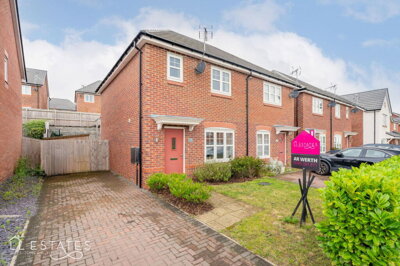
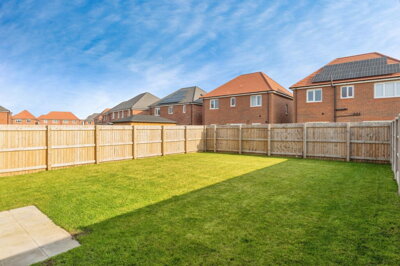
Browse 2 homes new builds in Dyserth, Denbighshire from local developer agents.
Three bedroom properties represent a significant portion of the Dyserth housing market, offering space for families with multiple reception rooms and gardens in many cases. Browse detached, semi-detached, and terraced options ranging across new residential developments.
£283k
4
0
44
Source: home.co.uk
Showing 4 results for 3 Bedroom Houses new builds in Dyserth, Denbighshire. The median asking price is £282,500.
Source: home.co.uk
Detached
3 listings
Avg £286,667
Semi-Detached
1 listings
Avg £100,000
Source: home.co.uk
Source: home.co.uk
The Powys property market offers remarkable diversity, with detached homes dominating the housing stock at 47.9 percent according to the 2021 Census. This preference for spacious, individual properties reflects the county's rural character and the desire of buyers for privacy and outdoor space. Our current listings show detached properties averaging £304,010, while semi-detached homes are available from around £194,188 and terraced properties from £165,160, providing options to suit various budgets and family requirements.
Recent market data indicates that property prices in Powys have shown relative stability with a slight downward adjustment of 2.31 percent over the past twelve months, according to February 2026 figures. This modest correction follows national trends and presents opportunities for buyers entering the market. The county recorded 2,125 property transactions in the past year, demonstrating continued activity despite broader economic conditions. First-time buyers will find the average flat price of £105,714 particularly accessible, while those seeking larger family homes can explore the substantial period properties that characterise many Powys towns and villages.
New build developments across Powys provide modern alternatives for buyers seeking turnkey properties. The Pastures in Newtown offers three and four-bedroom homes from £229,995 to £319,995 through Bellway Homes, while Charles Church's Maes Y Dderwen development in Brecon presents larger family homes priced from £289,995 to £429,995. Persimmon Homes' The Coppice in Welshpool and Elan Homes' Llys Y Coed in Llandrindod Wells add further choice with two to five-bedroom properties ranging from £199,995 to £369,995.

Life in Powys offers a distinctive quality shaped by its dramatic landscapes, rich heritage, and strong sense of community. The county takes its name from the ancient Welsh kingdom of Powys and retains deep connections to Welsh language and culture, with many communities maintaining traditional customs and festivals. The landscape varies from the mountainous terrain of the Brecon Beacons in the south to the rolling hills and valleys of Mid Wales, creating diverse environments for residents to explore. The River Severn, River Wye, River Usk, and River Teme carve through the county, providing not only scenic beauty but also recreational opportunities for fishing, walking, and wildlife watching.
The local economy reflects Powys's rural character, with agriculture, forestry, and fishing employing 14 percent of the workforce, significantly above the Welsh average of 3 percent. This makes Powys the highest local authority in Wales for agricultural employment, supporting a network of farms, rural enterprises, and associated businesses. The public sector also plays a vital role, with the NHS Powys Teaching Health Board, Powys County Council, and education providers offering stable employment. The tourism industry thrives on the county's natural attractions, with the Brecon Beacons National Park drawing visitors throughout the year and supporting local hospitality businesses, shops, and attractions.
Working patterns in Powys have evolved significantly, with remote working increasing from 22 percent in 2011 to 30 percent in 2021 according to Census data. This shift has made the county more attractive to professionals seeking to escape urban congestion while maintaining careers, and has supported the growth of small businesses and creative enterprises. The low population density of 26 persons per square kilometre ensures that residents enjoy space and tranquility rarely found elsewhere in Britain, while the close-knit communities in towns like Hay-on-Wye, Montgomery, and Presteigne offer genuine neighbourliness and cultural activities throughout the year.

Powys maintains a strong network of primary and secondary schools serving communities across the county. Families moving to Powys will find a mix of community schools and faith schools, with several secondary schools offering sixth form provision for post-16 education. The county's education authority, Powys County Council, works to maintain standards across rural schools that serve smaller pupil populations, ensuring that children receive quality teaching regardless of location. Many primary schools in smaller villages feed into larger secondary schools in market towns, with school transport arrangements supporting families in more remote areas.
The property age distribution data reveals that 30.7 percent of homes in Powys were built before 1919, with a further 31 percent constructed between 1945 and 1980. This means that school buildings themselves are often characterful period properties, with some schools occupying historic converted buildings that form the heart of their communities. Parents researching schools in specific areas should consult the Estyn inspection reports and league tables, though it is worth noting that smaller rural schools often achieve excellent outcomes with dedicated teachers who know each pupil individually.
For families seeking independent education, options within Powys are limited, though several preparatory and independent schools operate in neighbouring counties. Further and higher education opportunities include the campuses of colleges and universities in larger towns within and adjacent to Powys, with Aberystwyth University and the University of Wales Trinity Saint David offering options for older students. Many young people from Powys commute to universities in Cardiff, Swansea, and Birmingham, while others pursue vocational qualifications through Coleg Cambria and other regional providers.
Transport connectivity in Powys reflects its status as a rural county, with the road network forming the backbone of travel for most residents. The A470 trunk road runs north to south through the county, connecting Brecon to Llandrindod Wells and on to Cardiff, while the A458 provides an east-west link from Welshpool to Shrewsbury. The A44 connects Aberystwyth to Oxford via the county. Major towns including Newtown, Brecon, and Welshpool are all accessible by car, though journey times to larger cities reflect the rural nature of the road network. Families relocating from urban areas should expect to adjust expectations regarding commute times and plan accordingly.
Rail services operate through several stations in Powys, with the Heart of Wales Line connecting places including Knighton, Llandrindod Wells, and Builth Wells to Swansea and Shrewsbury. The Marches Line runs through the eastern border areas, with stations at Welshpool and Newtown providing connections to Birmingham and Manchester via Shrewsbury. These services are vital for commuters working in larger towns and cities, though frequencies are less regular than on urban networks. Journey times of around two to three hours to major cities mean that daily commuting is feasible for those with flexible working arrangements but may not suit those requiring daily presence in an office.
Local bus services connect smaller communities to market towns and villages, though frequencies vary significantly depending on location. The county's sparse population means that some rural areas have limited public transport options, making car ownership essential for many residents. Cycling infrastructure has improved in recent years, with several scenic routes attracting recreational cyclists, though utility cycling for commuting remains less common than in urban areas. Parking provision in market towns is generally good, with free or low-cost options available in most town centres, supporting the local economy and making shopping trips convenient for residents.
Before beginning your property search in Powys, research the different towns and villages to understand which areas match your lifestyle preferences and practical needs. Consider commute times, school catchment areas, and proximity to amenities. Get a mortgage agreement in principle from a lender to understand your borrowing capacity, which will help you focus your search on properties within your price range.
Use Homemove to browse the full range of properties for sale in Powys, filtering by property type, number of bedrooms, and price range. Once you have identified properties of interest, contact the listing agents to arrange viewings. In rural Powys, some properties may require advance notice for viewings, particularly if they are occupied by tenants or located on working farms.
When you find your ideal property, submit an offer through the selling agent. In Powys's market, negotiation on price and conditions is common, particularly for older properties where survey findings may reveal issues requiring price adjustments. Your offer should be subject to contract and survey, protecting you until these stages are completed satisfactorily.
Given that over 72 percent of Powys properties were built before 1980, a RICS Level 2 Homebuyer Report is strongly recommended for most purchases. This survey will identify defects common in the area, including damp in stone-built properties, slate roof deterioration, and potential radon exposure in higher-risk zones. Survey costs typically range from £400 for smaller properties to £700 or more for larger detached homes.
Appoint a conveyancing solicitor to handle the legal aspects of your purchase. They will conduct searches on the property, including local authority searches, drainage and water searches, and potentially a mining search given the area's history of metal mining activity. Your solicitor will handle contracts, liaise with the seller's legal team, and manage the transfer of funds through to completion.
Once all searches are satisfactory and both parties agree on the terms, contracts are exchanged and a completion date is set. On completion day, your solicitor transfers the remaining funds to the seller's solicitor, and you receive the keys to your new Powys home. Arrange for utilities to be transferred to your name and update your address with relevant organisations.
Properties in Powys present unique considerations for buyers due to the county's distinctive building traditions and geological conditions. Traditional homes frequently feature local stone construction using sandstone or shale, often with lime mortar rather than modern cement, which allows buildings to breathe and prevents moisture retention. When viewing period properties, look for signs of damp, particularly rising damp where original damp-proof courses may have failed or been damaged. The prevalence of slate roofing across the county means that roof inspections should check for slipped, broken, or deteriorating slates, as well as the condition of leadwork around chimneys and valleys.
Flood risk is an important consideration in Powys, particularly for properties located near the River Severn, River Wye, River Usk, River Teme, or their tributaries. Properties in low-lying areas adjacent to these rivers face potential fluvial flooding, and surface water flooding can occur across the county during periods of heavy rainfall. Always ask about flood history when viewing properties in river valleys, and check whether the property is in a flood risk zone through the government Flood Risk Checker. Insurance costs and availability may be affected for properties with significant flood exposure.
The high concentration of listed buildings in Powys means that many properties carry additional responsibilities and restrictions. Grade II listed properties require consent from the local planning authority for most alterations and improvements, which can add complexity and cost to any future plans. If considering a listed property, factor in the potential costs of maintaining historic features to heritage standards. Conservation areas in towns such as Montgomery, Presteigne, Hay-on-Wye, and parts of Brecon impose their own planning constraints, protecting the architectural character of these places but limiting permitted development rights.
Radon gas represents an environmental consideration specific to certain areas of Powys, where levels can exceed the national average. This colourless, odourless gas occurs naturally in some geological formations and can accumulate in buildings without adequate ventilation. A radon test is advisable for any property purchase in Powys, particularly in areas identified as higher-risk zones. The cost of testing is modest, and mitigation measures such as increased ventilation or sumps can be installed if elevated levels are detected.
The average property price in Powys currently stands at approximately £239,837 according to February 2026 data. Detached properties average £304,010, semi-detached homes around £194,188, terraced properties £165,160, and flats £105,714. Prices have shown a modest decline of around 2.3 percent over the past twelve months, making this an opportune time for buyers to enter the market with greater purchasing power. The relative affordability compared to other parts of Wales and England means buyers often secure significantly more space for their money in Powys than in urban centres.
Powys County Council sets council tax rates based on property valuation bands A through H, with band values determined by assessed property values as of April 1991. Properties in Powys typically fall across all bands depending on their type and size, with detached farmhouses and larger period properties often in higher bands D through G. You can contact Powys County Council directly or check the Valuation Office Agency website to verify the specific band for any property you are considering purchasing in towns like Brecon, Welshpool, or Llandrindod Wells.
Powys offers a network of primary and secondary schools across the county, with notable secondary schools including Brecon High School, Welshpool High School, and Newtown High School. Primary schools in towns like Montgomery, Hay-on-Wye, and Llandrindod Wells serve their local communities well. The county's rural nature means class sizes are often smaller than in urban areas, allowing for more individual attention from teachers who know each pupil by name. Parents should consult Estyn inspection reports and consider school catchment areas when choosing properties, as admission policies typically prioritise children living within the designated area.
Public transport in Powys primarily consists of rail services on the Heart of Wales Line and Marches Line, connecting towns like Welshpool and Newtown to Shrewsbury, Swansea, and Birmingham. Bus services link smaller communities to market towns, though frequencies vary considerably depending on location. The A470 provides north-south road connectivity, while the A458 and A44 offer east-west routes. Daily commuting to major cities typically requires car travel for most of the journey, though rail connections make occasional commuting feasible with flexible working arrangements. Those considering Powys for a commute should factor in journey times of two to three hours to larger employment centres.
Powys offers several investment considerations for property buyers. The county's relative affordability compared to other parts of the UK makes it attractive for first-time buyers and those seeking more space for their money. The tourism sector, supported by the Brecon Beacons National Park, creates opportunities for holiday lets in popular areas like Hay-on-Wye and around the lake district of the Elan Valley. The increase in remote working has made Powys more attractive to professionals, potentially supporting demand. However, the low population density and rural economy mean that capital growth may be slower than in urban hotspots, and properties may take longer to sell when reselling.
Stamp Duty Land Tax rates for residential properties (2024-25) are 0% on the first £250,000 of purchase price, 5% on £250,001 to £925,000, 10% on £925,001 to £1.5 million, and 12% above £1.5 million. First-time buyers benefit from relief on the first £425,000, paying 5% on the next £200,000 only. Given the average property price of £239,837, most Powys purchases fall within the nil-rate band, meaning no SDLT for standard buyers, or a minimal amount for first-time buyers. This represents a significant saving compared to purchasing in higher-priced regions.
Given that over 72 percent of Powys properties were built before 1980, buyers should be alert to common issues in period properties. These include damp (rising and penetrating) due to failed or absent damp-proof courses, roof defects affecting slate tiles and leadwork, timber rot and woodworm, and outdated electrical and plumbing systems. The clay-rich geological deposits in some areas of Powys create potential for subsidence, particularly where trees are close to foundations. Properties near rivers like the Severn, Wye, or Usk face flood risk, and certain areas have elevated radon levels that may require testing and mitigation. We recommend commissioning a RICS Level 2 survey before proceeding with any purchase of an older Powys property.
From 4.5%
Compare mortgage deals from leading lenders to find the best rate for your Powys property purchase
From £499
Expert conveyancing solicitors to handle your Powys property purchase legally and efficiently
From £400
Professional RICS Level 2 Homebuyer Report tailored to Powys property types and common defects
From £80
Energy Performance Certificate required for all Powys property sales
Understanding the costs of buying property in Powys helps you budget accurately and avoid surprises during the transaction. The most significant purchase cost for most buyers is Stamp Duty Land Tax, though at current average prices in Powys, many buyers will find this charge minimal or non-existent. For a property priced at the county average of £239,837, standard buyers pay no SDLT as the entire amount falls within the nil-rate band. First-time buyers purchasing at this price point would similarly pay no stamp duty thanks to the raised threshold for first-time buyer relief.
Additional costs to factor into your budget include solicitor fees for conveyancing, which typically range from £500 to £1,500 depending on the complexity of the transaction and whether the property is freehold or leasehold. Local authority searches with Powys County Council generally cost between £150 and £300, while drainage and water searches add further amounts. A RICS Level 2 survey in Powys typically costs between £400 and £900 depending on property size and type, with larger detached homes commanding higher fees. Given that over 70 percent of Powys properties are over 50 years old, this investment in a professional survey is particularly valuable for identifying defects before you commit to purchase.
Removal costs vary depending on the volume of belongings and distance of your move, with local moves within Powys typically costing £500 to £1,500. Land Registry fees for registering your ownership are generally modest, and your solicitor will handle these. Buildings insurance must be in place from the moment of completion, so arrange this before the big day. If the property you are buying is in a flood risk area, factor in potentially higher insurance premiums. For properties with elevated radon levels, budget for testing and any necessary mitigation measures. Being thorough with your budget ensures a smooth path to completion and helps you enjoy your new Powys home without financial strain.
Properties New Builds In London

Properties New Builds In Plymouth

Properties New Builds In Liverpool

Properties New Builds In Glasgow

Properties New Builds In Sheffield

Properties New Builds In Edinburgh

Properties New Builds In Coventry

Properties New Builds In Bradford

Properties New Builds In Manchester

Properties New Builds In Birmingham

Properties New Builds In Bristol

Properties New Builds In Oxford

Properties New Builds In Leicester

Properties New Builds In Newcastle

Properties New Builds In Leeds

Properties New Builds In Southampton

Properties New Builds In Cardiff

Properties New Builds In Nottingham

Properties New Builds In Norwich

Properties New Builds In Brighton

Properties New Builds In Derby

Properties New Builds In Portsmouth

Properties New Builds In Northampton

Properties New Builds In Milton Keynes

Properties New Builds In Bournemouth

Properties New Builds In Bolton

Properties New Builds In Swansea

Properties New Builds In Swindon

Properties New Builds In Peterborough

Properties New Builds In Wolverhampton

Enter your details to see if this property is within your budget.
Loans, cards, car finance
Estimated property budget
Borrowing + deposit
You could borrow between
Typical borrowing
Monthly repayment
Est. at 4.5%
Loan-to-value
This is an estimate only. Your actual budget may vary depending on interest rates, credit history, and personal circumstances. For an accurate affordability assessment, speak to one of our free mortgage advisors.
This calculator provides estimates for illustrative purposes only and does not constitute financial advice. Your home may be repossessed if you do not keep up repayments on your mortgage. Estimates based on 4.5% interest rate, repayment mortgage. Actual rates depend on your circumstances.
Homemove is a trading name of HM Haus Group Ltd (Company No. 13873779, registered in England & Wales). Homemove Mortgages Ltd (Company No. 15947693) is an Appointed Representative of TMG Direct Limited, trading as TMG Mortgage Network, which is authorised and regulated by the Financial Conduct Authority (FRN 786245). Homemove Mortgages Ltd is entered on the FCA Register as an Appointed Representative (FRN 1022429). You can check registrations at NewRegister or by calling 0800 111 6768.

We use cookies to show you personalised content and improve your experience of our website. Find out more in our Privacy policy and Cookie policy.