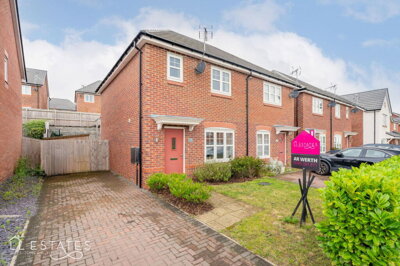
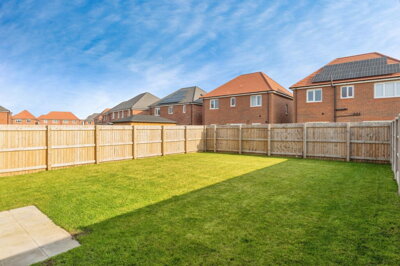
Browse 2 homes new builds in Dyserth, Denbighshire from local developer agents.
£285k
23
2
144
Source: home.co.uk
Source: home.co.uk
Detached
12 listings
Avg £580,167
Bungalow
4 listings
Avg £256,250
Semi-Detached
3 listings
Avg £164,333
Semi-Detached Bungalow
2 listings
Avg £240,000
Cottage
1 listings
Avg £145,000
House
1 listings
Avg £235,000
Source: home.co.uk
Source: home.co.uk
The Powys property market has shown modest resilience despite broader national fluctuations, with overall prices declining by approximately 2.3% over the past twelve months according to recent data. This gentle correction brings the overall average property price to £239,837, offering buyers relatively stable conditions compared to more volatile urban markets. Detached properties remain the dominant housing type in the county, accounting for nearly half of all homes, which reflects Powys's predominantly rural character and the preference among buyers for space and privacy that the countryside provides.
The market benefits from several active new build developments that cater to different buyer requirements and budgets. The Pastures in Newtown, developed by Bellway, offers three and four bedroom homes priced from £229,995 to £319,995, providing modern family accommodation in one of Powys's largest towns. Maes Y Dderwen in Brecon presents more luxurious options through Charles Church, with three to five bedroom properties ranging from £289,995 to £429,995, appealing to buyers seeking higher specifications in a town with strong historical and cultural significance. For more modest budgets, The Coppice in Welshpool from Persimmon Homes provides two to four bedroom options from £199,995, while Llys Y Coed in Llandrindod Wells offers three and four bedroom homes from £259,995 through Elan Homes.
Property types across the county show distinct price variations that reflect both location and accommodation style. Semi-detached homes average around £194,188, providing a practical middle ground for families seeking more space than a terrace offers without the higher costs associated with detached properties. Flats and maisonettes remain the most affordable entry point at approximately £105,714 on average, though these represent only around 8% of the housing stock. The variety of price points across different property types means Powys can accommodate buyers across a wide range of budgets, from first-time purchasers seeking affordable terraced homes to families requiring larger detached properties with generous gardens.

Powys represents the largest county in Wales by area yet maintains the lowest population density of any local authority in the country at just 26 persons per square kilometre. This combination of expansive landscape and intimate community creates a lifestyle that appeals strongly to those seeking escape from urban congestion while retaining access to essential services and cultural amenities. The population of approximately 133,000 residents across 60,000 households enjoys a strong sense of community identity rooted in the county's agricultural heritage, with 14% of employment stemming from agriculture, forestry, and fishing activities compared to just 3% across Wales as a whole.
The county's economy has evolved to embrace modern working patterns, with remote and hybrid working increasing significantly from 22% in 2011 to 30% by the 2021 Census. This shift has made Powys increasingly attractive to professionals who can conduct their work from home while enjoying the considerable quality of life benefits that rural living provides. The tourism sector plays a vital role in supporting local economies, particularly in towns bordering the Brecon Beacons National Park where visitor numbers sustain hospitality businesses, retail shops, and recreational services throughout the seasons. Hay-on-Wye has become internationally renowned for its literary festival and secondhand bookshops, while the traditional market towns continue hosting weekly markets that maintain their historic commercial and social functions.
Housing stock in Powys reflects centuries of continuous habitation and adaptation, with nearly a third of all properties built before 1919 using traditional materials such as local sandstone, shale, and Welsh slate. A further 31% of homes date from the post-war period through to 1980, representing the mid-twentieth century expansion of housing to accommodate a growing population. The predominance of detached properties at nearly 48% of the housing stock, combined with generous plot sizes typical of rural settings, provides residents with outdoor space and privacy that distinguishes Powys living from more densely populated areas of Wales and England.
The public sector forms a significant pillar of the local economy, with NHS Powys Teaching Health Board, Powys County Council, and various education establishments providing stable employment for local residents. Small and medium-sized enterprises contribute to economic diversity across the county, while proximity to larger towns and cities including Shrewsbury, Hereford, and Cardiff influences housing demand in border areas. Buyers considering properties near county boundaries should factor in potential access to employment opportunities and services in neighbouring areas, which can significantly enhance the viability of rural locations for daily commuting on an occasional basis.
Education provision in Powys serves communities across this extensive rural county through a network of primary schools, secondary schools, and further education facilities. Powys County Council maintains responsibility for state-funded education, with schools distributed to serve populations in market towns and surrounding villages. Parents considering relocation to the area should research specific catchment areas, as the rural nature of the county means that school transport arrangements and journey times form important practical considerations alongside academic performance and available facilities. The average journey time to secondary school can exceed 30 minutes in more remote areas, making location choice particularly important for families with school-age children.
Secondary education in Powys includes several comprehensive schools offering GCSE and A-level programmes, with notable institutions including Brecon High School in the county town and Welshpool High School serving the northern areas. For families seeking faith-based education or specialised curricula, neighbouring counties may offer additional options, though the practical logistics of cross-county travel require careful evaluation. The county also maintains relationships with further education colleges, with Powys College providing vocational and academic courses that serve both school leavers and adult learners seeking career advancement or retraining opportunities. Secondary schools in the county have shown consistent performance in Welsh Government baseline measures, though individual school performance data should be consulted when making relocation decisions.
The presence of the Brecon Beacons National Park influences educational opportunities in distinct ways, with outdoor education centres offering programmes that utilise the exceptional mountain and moorland environment for experiential learning. Schools throughout the county incorporate environmental studies and outdoor activities into their curricula, providing children with opportunities for adventure sports, geographical fieldwork, and ecological education that urban schools struggle to replicate. For families valuing holistic education approaches that emphasise connection to landscape and community, Powys offers environments that support these priorities alongside academic achievement. Several primary schools in the county have achieved the Eco-Schools Green Flag award, reflecting the strong environmental focus in local education.
Transport connectivity in Powys reflects its predominantly rural character, with road networks forming the primary means of accessing services and employment both within the county and to major urban centres beyond its borders. The A483 runs through the heart of the county, connecting Newtown to Swansea and Oswestry, while the A470 provides the main north-south route through mid Wales linking Llandudno on the coast with Cardiff via Builth Wells and Brecon. The A458 connects Welshpool eastward to Shrewsbury in Shropshire, offering access to the West Midlands and national motorway network. These arterial routes serve daily commuters from border areas and facilitate the transportation of agricultural produce and other goods that sustain the local economy.
Rail services operate through several stations including Aberystwyth, which connects to Birmingham via Shrewsbury on the Cambrian line, and stations at Newtown, Welshpool, and Caersws on the Birmingham to Aberystwyth route. Journey times to Birmingham from Welshpool typically take around 1 hour 40 minutes, making day travel to major employment centres feasible for those who occasionally need to commute to the city. However, the relatively limited frequency of rail services means that most residents rely on private vehicles for daily transportation, and the consideration of car ownership and maintenance costs forms an important element of budgeting for Powys residency. Bus services connecting market towns and villages operate with reduced frequencies compared to urban routes, making private vehicle ownership practically necessary for most residents.
For those working remotely or running businesses from home, the increasing availability of superfast broadband throughout Powys supports modern working practices despite the county's rural nature. Mobile network coverage varies across different areas, with some valley locations experiencing reduced signal strength that may affect connectivity for those dependent on mobile data. Air travel access is available through Birmingham Airport to the east and Cardiff Airport to the south, both offering extensive domestic and international connections within approximately two to three hours' drive of most Powys towns. The strategic location of the county between major urban centres provides flexibility for residents who need occasional access to international airports or larger employment markets.
Explore current listings on Homemove to understand available properties, price ranges across different property types, and typical features of homes in specific towns and villages. Given the county's varied geography, researching flood risk areas near rivers, conservation area restrictions in towns like Montgomery and Hay-on-Wye, and the implications of the high proportion of older properties requiring maintenance will help you make informed decisions. Pay particular attention to the age of construction and any listed building designations that may affect your plans for the property.
Before arranging viewings, obtain a mortgage agreement in principle from a lender to confirm your borrowing capacity and strengthen your position when making offers. With average prices around £239,000 in Powys, most buyers will require mortgage financing, and having this in place demonstrates serious intent to sellers and agents alike. Several local and national mortgage brokers operate in the area who understand Powys property values and can advise on appropriate lending products for rural properties.
Visit properties that match your requirements, paying attention to construction materials, property condition, and the practical aspects of daily life in each location. Consider factors such as proximity to schools, GP surgeries, shops, and your anticipated commuting patterns when evaluating different areas within this extensive county. Take time to explore the surrounding area at different times of day to understand traffic patterns, noise levels, and the character of the neighbourhood.
Given that 72% of properties in Powys were built before 1980, arranging a Level 2 survey before completing your purchase is strongly advisable. Surveys typically cost between £400 and £900 depending on property size and complexity, and can identify issues such as damp in traditional stone properties, roof condition on slate-covered buildings, and potential radon concerns in certain locations. The survey will also assess electrical and plumbing systems that may require updating in older properties.
Appoint a solicitor to handle the legal aspects of your purchase, including searches for planning restrictions, environmental risks, and any local authority requirements specific to Powys properties. The solicitor will also handle land registry checks, contract negotiations, and the transfer of funds on completion day. Given the county's rural nature, searches should include flood risk assessments for properties near rivers and mining searches where historical metal mining activity may be indicated.
Once all enquiries are resolved and financing is confirmed, you will exchange contracts with the seller and pay your deposit, typically 10% of the purchase price. On the agreed completion date, the remaining funds are transferred and you receive the keys to your new Powys home. Ensure buildings insurance is in place from this date, as properties in flood risk areas may require specialist insurance arrangements.
Properties in Powys present specific considerations that buyers should evaluate carefully before committing to a purchase. The county's geology includes areas with clay-rich shales and glacial till deposits that can cause shrink-swell movement affecting foundations, particularly where mature trees are located near properties. A thorough survey should assess the condition of foundations, look for signs of cracking or movement, and evaluate drainage conditions that may contribute to ground instability. Properties in towns along river valleys, including those near the River Severn, River Wye, River Usk, and River Teme, require specific evaluation for flood risk, and buyers should request information about previous flooding incidents and the property's flood history.
The high proportion of listed buildings throughout Powys means that buyers may encounter properties subject to architectural controls that affect permitted alterations and improvements. Grade II listed properties require Listed Building Consent from Powys County Council for most modifications to their character-defining features, which can restrict renovation options and add significant costs to any works requiring approval. Conservation areas in towns including Montgomery, Presteigne, and parts of Brecon impose additional controls on external alterations and developments that affect the street scene. If you are considering a period property, understanding these designations before purchasing will prevent costly surprises and ensure your plans align with what is practically achievable.
Traditional building methods used in Powys properties often result in solid wall construction without cavity insulation, which affects both thermal performance and heating costs. Properties built before 1919 may contain asbestos in materials such as Artex ceiling finishes, pipe lagging, and old floor tiles, which a Level 2 survey can identify but not remove or test. Electrical systems and plumbing in older properties frequently require updating to meet current standards, and budgeting for these potential works forms an important part of the overall cost assessment. The prevalence of Welsh slate roofing across the county means that buyers should evaluate roof condition carefully, as replacement or significant repair costs for natural slate can be substantial compared to modern concrete or artificial tiles.
Powys is identified as an area where radon gas levels can be higher than the national average in certain locations, particularly where underlying geology creates conditions for radon accumulation. A Level 2 survey should include assessment of potential radon risk, and buyers may wish to commission a radon test as part of their purchase investigations. Properties with elevated radon levels may require mitigation measures such as increased ventilation or radon sumps, which represent additional costs to factor into purchase planning. While Powys is not a major historical coal mining area like parts of South Wales, localised historical metal mining activities for lead and zinc occurred in certain parts of the county, and a mining search may be advisable for properties in affected localities.

The average property price in Powys currently stands at approximately £239,837 according to recent market data. Detached properties average around £304,010, semi-detached homes around £194,188, terraced properties around £165,160, and flats around £105,714. Prices have shown a modest decline of approximately 2.3% over the past twelve months, creating relatively stable conditions for buyers compared to more volatile urban markets. The county offers good value compared to many parts of Wales and England, with detached properties significantly more affordable than equivalent homes in metropolitan areas. Over 2,100 property sales completed in the county over the past year, indicating a healthy level of market activity despite broader economic uncertainty.
Council tax bands in Powys are set by Powys County Council based on property valuations. Bands range from A through to H, with most residential properties falling within bands A through D given the generally modest property values across the county. Properties in rural villages and smaller market towns often fall into lower bands, while larger detached homes and properties in more affluent areas may be assessed in higher bands. Prospective buyers should check specific bandings for individual properties through the Valuation Office Agency website before budgeting for ongoing costs. The average band for properties in Powys tends to be lower than in urban areas, reflecting the county's property value profile.
Powys maintains a network of primary and secondary schools serving communities across this extensive rural county. Schools are distributed throughout market towns including Brecon, Newtown, Welshpool, and Llandrindod Wells, with smaller primary schools serving surrounding villages. Parents should research specific catchment areas as school transport arrangements and journey times vary significantly depending on location. The county benefits from outdoor education opportunities associated with the Brecon Beacons National Park, and several schools incorporate environmental and adventurous activities into their curricula. For secondary education, notable options include Welshpool High School and the secondary provision in Brecon, while further education students access courses through Powys College campuses. Schools in the county have achieved recognition for environmental education, with several primary schools holding Eco-Schools Green Flag status.
Public transport connectivity in Powys reflects its rural character and is more limited than in urban areas. Rail services operate through the Birmingham to Aberystwyth line with stations at Newtown, Welshpool, and Caersws, providing connections to Birmingham and onward national rail services. Journey times from Welshpool to Birmingham take approximately 1 hour 40 minutes by train. Bus services connect market towns and villages but operate with reduced frequencies compared to urban routes, making private vehicle ownership practically necessary for most residents. The county's strategic road network includes the A483 and A470 as main routes, with good access to the M54 and M5 motorway network via Shrewsbury and the West Midlands. Birmingham Airport and Cardiff Airport are accessible within approximately two to three hours' drive of most locations.
Powys offers several investment considerations that vary depending on property type and location. Rural properties with agricultural connections benefit from the county's continued importance to Welsh agriculture, which accounts for 14% of local employment compared to just 3% across Wales as a whole. Holiday lets in areas near the Brecon Beacons National Park can generate income from tourism, and the county's growing appeal for remote working professionals has increased demand for properties suitable for home-based business operations. Property values have shown relative stability with modest recent adjustments, and the county's low population density means that rental demand exists in towns where employment opportunities attract workers seeking accommodation. However, investors should consider factors including property maintenance costs for older stock, potential voids during tenant changeovers in rural locations, and the practical challenges of property management at distance.
Stamp duty land tax rates for residential properties purchased in England and Wales start at 0% on the first £250,000 of purchase price. For purchases between £250,001 and £925,000, the rate increases to 5%, with further higher bands at 10% for £925,001 to £1.5 million and 12% for amounts exceeding £1.5 million. First-time buyers benefit from increased thresholds, paying 0% on the first £425,000 and 5% on the portion between £425,001 and £625,000, though no relief applies above £625,000. For the average Powys property priced around £239,000, most buyers would pay no stamp duty, though circumstances including previous property ownership, purchase price, and residency status affect individual calculations. The lower price profile of Powys properties means stamp duty is unlikely to be a significant cost for most transactions in the county.
Buyers in Powys should be aware of several specific risks associated with the county's geography and property stock. Properties near rivers including the Severn, Wye, Usk, and Teme face potential flood risk that should be assessed through environmental searches and surveys. The county's geology includes areas with shrink-swell clay soils where foundation movement can occur, particularly where trees are located close to properties. Given that 72% of properties were built before 1980, issues with damp, outdated electrics, and plumbing are common in older stock. Radon gas levels are elevated in some parts of Powys, requiring testing and potential mitigation. Properties in conservation areas or with listed building status face restrictions on alterations that can affect renovation plans and costs. A thorough RICS Level 2 survey will identify these and other issues before purchase, allowing buyers to make informed decisions and budget appropriately for any necessary works.
From £400
A detailed inspection ideal for conventional properties, highlighting defects and maintenance issues
From £600
Our most comprehensive survey for older or complex properties, providing detailed analysis and recommendations
From £80
Energy performance certificate required for property sales and rentals
From 4.5%
Expert mortgage advice with access to products from across the market
Understanding the full costs of purchasing property in Powys helps buyers budget accurately and avoid surprises during the transaction process. The stamp duty land tax thresholds applicable to Powys purchases follow the standard England and Wales rates, with no stamp duty payable on residential purchases up to £250,000. For the average Powys property priced at approximately £239,000, most buyers would complete their purchase without any stamp duty liability, representing a meaningful saving compared to equivalent purchases in higher-value areas where the starting threshold applies at higher prices.
First-time buyers purchasing in Powys benefit from the enhanced relief that increases the zero-rate threshold to £425,000, meaning that properties up to this price attract no stamp duty at all for those meeting the eligibility criteria. This enhanced threshold effectively removes stamp duty from the majority of Powys transactions, as the county's average property price falls well within this range. For buyers purchasing at higher price points, perhaps seeking larger detached properties or those in particularly desirable locations, the progressive rates of 5% on the portion between £425,001 and £625,000, 10% between £625,001 and £1.5 million, and 12% above £1.5 million will apply to the respective portions of the purchase price.
Beyond stamp duty, buyers should budget for solicitor conveyancing fees that typically range from £500 to £1,500 depending on complexity and property value, search fees of approximately £300 to £500 covering local authority, environmental, and drainage searches, mortgage arrangement fees if applicable, and survey costs of £400 to £900 for a RICS Level 2 survey. Buildings insurance must be in place from completion day, and removals costs vary significantly based on distance and volume of belongings. For those purchasing period properties in conservation areas or with listed building status, additional costs for specialist surveys, heritage-consultation fees, and potentially more complex renovation works should form part of the overall financial planning.
Properties New Builds In London

Properties New Builds In Plymouth

Properties New Builds In Liverpool

Properties New Builds In Glasgow

Properties New Builds In Sheffield

Properties New Builds In Edinburgh

Properties New Builds In Coventry

Properties New Builds In Bradford

Properties New Builds In Manchester

Properties New Builds In Birmingham

Properties New Builds In Bristol

Properties New Builds In Oxford

Properties New Builds In Leicester

Properties New Builds In Newcastle

Properties New Builds In Leeds

Properties New Builds In Southampton

Properties New Builds In Cardiff

Properties New Builds In Nottingham

Properties New Builds In Norwich

Properties New Builds In Brighton

Properties New Builds In Derby

Properties New Builds In Portsmouth

Properties New Builds In Northampton

Properties New Builds In Milton Keynes

Properties New Builds In Bournemouth

Properties New Builds In Bolton

Properties New Builds In Swansea

Properties New Builds In Swindon

Properties New Builds In Peterborough

Properties New Builds In Wolverhampton

Enter your details to see if this property is within your budget.
Loans, cards, car finance
Estimated property budget
Borrowing + deposit
You could borrow between
Typical borrowing
Monthly repayment
Est. at 4.5%
Loan-to-value
This is an estimate only. Your actual budget may vary depending on interest rates, credit history, and personal circumstances. For an accurate affordability assessment, speak to one of our free mortgage advisors.
This calculator provides estimates for illustrative purposes only and does not constitute financial advice. Your home may be repossessed if you do not keep up repayments on your mortgage. Estimates based on 4.5% interest rate, repayment mortgage. Actual rates depend on your circumstances.
Homemove is a trading name of HM Haus Group Ltd (Company No. 13873779, registered in England & Wales). Homemove Mortgages Ltd (Company No. 15947693) is an Appointed Representative of TMG Direct Limited, trading as TMG Mortgage Network, which is authorised and regulated by the Financial Conduct Authority (FRN 786245). Homemove Mortgages Ltd is entered on the FCA Register as an Appointed Representative (FRN 1022429). You can check registrations at NewRegister or by calling 0800 111 6768.

We use cookies to show you personalised content and improve your experience of our website. Find out more in our Privacy policy and Cookie policy.