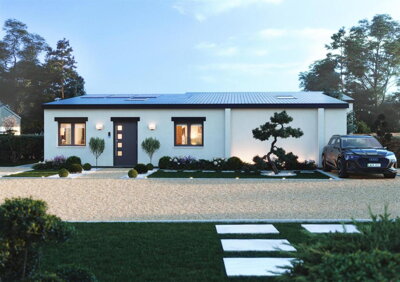
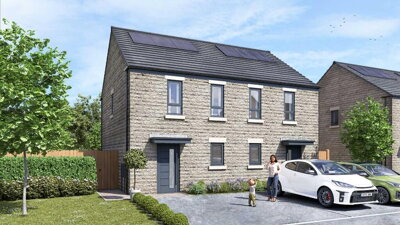
Browse 12 homes new builds in Derbyshire Dales from local developer agents.
The 2 bed house market features detached, semi-detached, and terraced properties with two separate bedrooms plus living spaces. Properties in Derbyshire Dales range across contemporary developments, with pricing varying across different neighbourhoods.
We track the Derbyshire Dales property market closely, having observed consistent stability with a 12-month price increase of 2.0% as of December 2025. Our listings span all property types, from affordable flats starting around £187,000 to substantial detached family homes reaching £474,000 on average. The market saw 804 property sales throughout 2025, with over 6,600 transactions completed in the past decade, reflecting sustained demand for homes in this desirable district. Semi-detached properties have shown particularly strong growth at 3.5% annually, making them an attractive option for families seeking space and value without the premium attached to detached homes.
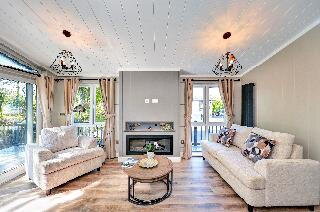
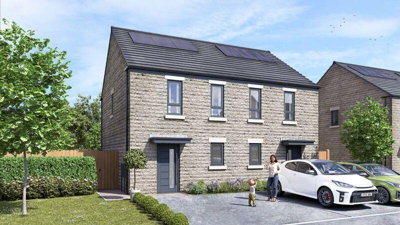
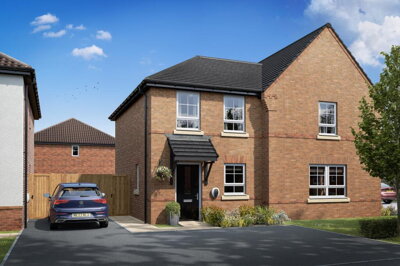
New build developments are enhancing the housing options available in Derbyshire Dales. Mill View Meadows in Wirksworth (DE4 4BG) offers contemporary two and three-bedroom homes from £265,000 with energy-efficient features including solar panels and high-performance insulation. The Ellerton development at Ashbourne Airfield provides additional new homes from £289,995, while the Stancliffe Homes development off Old Hackney Lane between Matlock and Darley Dale brings stone-built properties including bungalows and family homes to the northern part of the district. Further developments in Brailsford and other villages continue to expand choices for buyers seeking modern construction methods combined with traditional aesthetics.
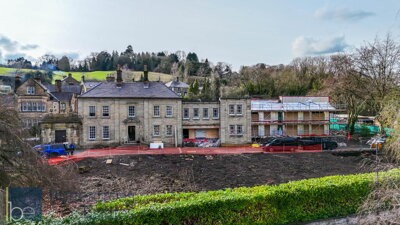
Stone-built properties remain a hallmark of the area, with traditional cottages and farmhouses featuring the characteristic local limestone that defines the Peak District aesthetic. These properties often command premiums over modern equivalents due to their solid construction and timeless appeal. When evaluating older properties, we recommend paying particular attention to the condition of stonework, roof coverings, and any signs of movement in walls, as the freeze-thaw cycles experienced in this upland area can accelerate deterioration of even well-maintained structures. Understanding these local factors helps buyers budget appropriately for any remediation work that may be needed.

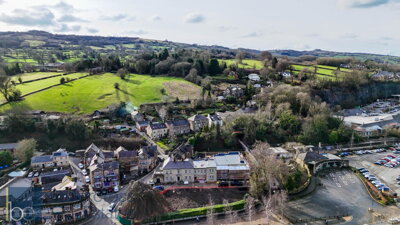
Life in Derbyshire Dales revolves around the stunning natural landscape that defines this exceptional corner of England. The district sits predominantly within the Peak District National Park, offering residents daily access to dramatic moorland, limestone dales, ancient woodlands, and some of Britain's most beloved walking routes. The River Derwent winds through the valley bottoms, creating picture-perfect scenes around towns like Bakewell, where the iconic five-arched bridge has drawn visitors for generations. The White Peak area, with its distinctive geological features including limestone outcrops and cave systems, provides unique recreational opportunities that simply cannot be replicated elsewhere in the country.
The demographic profile of Derbyshire Dales reflects its appeal to those seeking a balanced lifestyle away from urban congestion. The population skews towards families and retirees attracted by the excellent quality of life, strong community spirit, and comprehensive local services. Market towns maintain thriving high streets with independent shops, artisan bakeries, traditional pubs, and weekly farmers' markets selling local produce from farms throughout the surrounding countryside. Villages like Tissington, Hartington, and Eyam each offer their own character, from the historic wells-dressing traditions of Tissington to the plague village heritage of Eyam that draws visitors interested in the remarkable story of self-isolation during the 1665 outbreak.
Cultural attractions include Chatsworth House, one of England's greatest stately homes located near Bakewell, along with historic mills along the Derwent Valley, heritage railways including the Ecclesbourne Valley Railway in Wirksworth, and cavern systems at Castleton and elsewhere that provide year-round entertainment for residents and visitors alike. The Cromford Canal offers scenic walks and cycling routes, while the Via Gellia corridor provides dramatic views through the gorge between Matlock and Grangemill. We find that buyers who take time to explore these local attractions during their property search often develop a deeper appreciation for what makes Derbyshire Dales such a special place to live.

Derbyshire Dales offers an impressive range of educational establishments, making it particularly attractive to families considering relocation. The area boasts several primary schools that consistently achieve strong results in national assessments, with many rated Good or Outstanding by Ofsted inspectors. Village primary schools serve their local communities with dedicated teachers and supportive learning environments, while larger primaries in market towns accommodate growing families with expanded facilities and extracurricular programmes. Schools such as Hopton Primary School near Matlock, Barnesdown Primary School in Matlock itself, and the First School in Bakewell all serve their communities with excellent reputations for pastoral care alongside academic achievement.
Secondary education in the district includes well-regarded options such as Anthony Gell School in Wirksworth, which serves students from across the southern Derbyshire Dales area and maintains strong examination results. The English Rural Schools network, which includes several Derbyshire Dales primaries, often achieves above-average outcomes compared to similar rural settings nationally. Parents should research specific catchment areas when considering properties, as school admissions policies can significantly impact which institutions children attend. The geographically dispersed nature of the district means that some properties may fall within catchment areas that require longer journeys to secondary school, a factor worth considering when evaluating different locations.
Sixth form provision varies across the district, with some schools offering comprehensive post-16 programmes while others encourage progression to nearby colleges in Derby, Chesterfield, or Staffordshire. For families prioritising educational outcomes, reviewing current Ofsted ratings and examination results will help identify the most suitable neighbourhoods within this attractive rural district. We have noticed that properties located within good school catchments in market towns like Bakewell and Wirksworth often retain their value well, reflecting the sustained demand from families seeking these educational advantages.
Despite its rural character, Derbyshire Dales offers practical transport connections for commuters and families alike. The A6 runs through the heart of the district, connecting Matlock to Derby and providing access to the wider motorway network via the A38. The A515 offers a direct route south towards Birmingham, while the A50 provides connections to the East Midlands and Stoke-on-Trent. Bus services operated by Derbyshire County Council connect major towns and villages, with several routes offering hourly services during weekdays. However, prospective buyers should note that public transport options in more remote villages may be limited, making car ownership essential for many residents.
Rail access is available at Matlock station, which sits on the Derwent Valley Line connecting to Derby and Nottingham. The journey to Nottingham takes approximately one hour, making day commuting feasible for those working in the city. East Midlands Railway services from Derby provide faster connections to Nottingham (around 25 minutes) and Leicester, while the East Midlands Parkway station near Derby offers direct services to London St Pancras in approximately 90 minutes. For residents travelling to Sheffield, the scenic route through the Hope Valley provides regular connections, with journey times varying between 40 minutes and one hour depending on the service selected.
We always advise buyers to test their potential commute before committing to a purchase, particularly during winter months when rural roads may be affected by ice and snow. The higher elevations of the Dark Peak area can experience challenging driving conditions during cold spells, while minor roads that cut through farmland may flood during periods of heavy rainfall. Properties along the main valley routes such as the A6 and A515 generally offer more reliable access throughout the year, making them particularly popular with commuters who travel daily to employment centres in Derby, Nottingham, or further afield.
Explore different towns and villages within Derbyshire Dales to find the neighbourhood that best matches your requirements. Consider commute times, school catchments, property types, and local amenities when narrowing your search parameters. The difference between living in a village like Chellaston near Ashbourne versus central Matlock can significantly impact daily life, so take time to experience different areas at various times of day and week.
Before viewing properties, obtain a mortgage agreement in principle from a lender. This demonstrates your purchasing capacity to estate agents and sellers, strengthening your position when making offers on homes in this competitive market. Given that properties in desirable areas like Bakewell and the villages surrounding Chatsworth attract multiple interest, having your finances arranged upfront can make the difference between securing your chosen property and losing out to another buyer.
Schedule viewings of shortlisted properties, taking time to assess not only the home itself but also the surrounding neighbourhood, road noise, neighbouring properties, and proximity to essential services. We recommend visiting properties at different times of day to gauge traffic levels, parking availability, and the general atmosphere of the area once evening activities commence.
Once your offer is accepted, arrange a RICS Level 2 Homebuyer Report to identify any structural issues, maintenance concerns, or potential problems with the property before proceeding to completion. Given the prevalence of stone-built properties in Derbyshire Dales, a thorough inspection is particularly important to assess the condition of stonework, identify any signs of movement or subsidence, and evaluate the roof structure and rainwater goods.
Appoint a solicitor to handle the legal aspects of your purchase, including property searches, contract review, and registration of your ownership with the Land Registry. Local solicitors familiar with Derbyshire Dales properties can provide valuable insights into common issues such as rights of way across farmland, maintenance responsibilities for shared boundaries with agricultural land, and any planning constraints imposed by the Peak District National Park authority.
Finalise your mortgage, complete all legal requirements, and arrange your moving date. Your solicitor will transfer funds and confirm completion, handing you the keys to your new Derbyshire Dales home.
Properties in Derbyshire Dales often feature traditional construction methods and materials that require specific knowledge when assessing condition. Many homes are built with local limestone, which provides excellent durability but may require repointing over time. Stone-built properties can also present challenges with damp penetration if maintenance has been neglected, making a thorough survey essential before purchase. Conservation areas covering many villages and town centres impose restrictions on external alterations, so prospective buyers should verify planning constraints with Derbyshire Dales District Council before committing to a purchase. Properties within the Peak District National Park face additional planning considerations that can affect permitted development rights.
Flood risk varies across the district depending on proximity to rivers and streams, with properties in valley bottoms requiring particular caution. The River Derwent and its tributaries can experience rapid rises during periods of heavy rainfall, and we have seen properties near waterways suffer water damage that is not always disclosed in seller surveys. The Environment Agency flood maps provide useful indicators, though local knowledge from neighbours can reveal historical issues not captured in official records. Properties on higher ground within villages generally offer better protection against flood risk, though they may face different challenges such as slower broadband speeds or steeper access roads.
Some properties in former mining or quarrying areas may have mining subsidence concerns, particularly in the northern parts of the district where limestone extraction has occurred for centuries. Properties with large gardens or adjacent to agricultural land could experience occasional noise and odour associated with farming activities, including seasonal slurry spreading and harvest operations. Understanding these local factors helps buyers make informed decisions and avoid unexpected complications after moving into their new home. We always recommend speaking with current owners or long-term residents to gain insights that no survey can provide.
Budgeting for a property purchase in Derbyshire Dales requires careful consideration of all associated costs beyond the purchase price. The SDLT thresholds for 2024-25 mean that a typical family home at the area average of £345,000 incurs £4,750 in stamp duty for standard buyers, rising to £12,450 for premium properties at £600,000. First-time buyers purchasing under £625,000 benefit from relief that would reduce the SDLT on a £345,000 property to zero, making the area particularly accessible for those entering the property market for the first time. The combination of relatively modest average property prices compared to southern England and available first-time buyer relief makes Derbyshire Dales an attractive option for new buyers.
Additional purchasing costs include solicitor fees for conveyancing, typically ranging from £500 to £1,500 depending on complexity and property type. A RICS Level 2 Homebuyer Report costs from £350 and provides essential inspection of the property's condition, identifying defects that may not be visible during viewings. Survey costs for stone-built properties may warrant the more comprehensive RICS Level 3 Building Survey at higher prices, given the specific construction considerations in Derbyshire Dales. Mortgage arrangement fees, valuation fees, and land registry charges can add a further £1,000 to £2,000 to your total purchase costs, so ensuring you have sufficient funds beyond your mortgage deposit is crucial for a smooth transaction.
We have seen buyers caught out by unexpected costs when purchasing period properties in Derbyshire Dales. Properties with original features may require updating to meet current electrical and energy efficiency standards, while stone buildings without modern damp-proof courses can require investment in ventilation systems or remedial work. Factor in a contingency of around 5-10% of the purchase price for any unforeseen works identified during survey or required shortly after moving in. Properties that appear excellent value initially can prove more expensive over time if significant maintenance has been deferred, so we strongly recommend thorough inspection before committing to any purchase in this area.
The average house price in Derbyshire Dales stands at £345,000 as of December 2025, according to Land Registry data. The median sale price was £320,000 based on 804 transactions recorded throughout 2025. Property prices vary significantly by type, with detached homes averaging £474,000, semi-detached properties at £316,000, terraced homes at £266,000, and flats at £187,000. The market has shown steady growth of 2.0% over the past 12 months, indicating sustained demand for properties in this desirable Peak District location. Semi-detached properties have performed particularly well with 3.5% annual growth, reflecting strong family demand for this property type.
Council tax bands in Derbyshire Dales range from A to H depending on property value and type, managed by Derbyshire County Council with local services provided by Derbyshire Dales District Council. The district encompasses diverse property types from modest village cottages to substantial period homes, which means council tax bands vary considerably across the area. Prospective buyers can check specific bandings on the Valuation Office Agency website using the property address. Most residential properties in market towns like Matlock, Bakewell, and Ashbourne fall within bands A through D, with larger detached homes, converted barns, and period properties occasionally reaching higher bands.
Derbyshire Dales offers several well-regarded educational establishments, including primary schools in market towns that consistently achieve strong academic outcomes. Anthony Gell School in Wirksworth serves secondary students from across the southern part of the district and maintains a good reputation for student achievement. The rural primary schools scattered throughout villages often achieve results above national averages for similar settings, with the small class sizes providing individual attention that many families find beneficial. Parents should consult current Ofsted inspection reports and examine examination results when evaluating options, as school performance can vary year by year. School catchment areas significantly influence admissions, so confirming which schools serve a specific property address is essential before purchasing.
Public transport options in Derbyshire Dales include bus services operated by Derbyshire County Council connecting major towns and villages, though frequencies reduce in more rural areas. The 108 service between Matlock and Derby offers regular connections, while other routes serve villages throughout the district with varying frequencies. Matlock railway station provides access to the Derwent Valley Line with connections to Derby and Nottingham, where onward services to London, Birmingham, and Leeds are available. East Midlands Railway services from Derby offer direct routes to major cities including London, Birmingham, and Leeds. For commuting to Nottingham or Sheffield, rail journeys typically take one to one-and-a-half hours, making Derbyshire Dales viable for those working in urban centres while enjoying countryside living.
Derbyshire Dales has historically shown stable property values with consistent demand from buyers seeking Peak District living. The 2.0% annual price growth indicates a resilient market less prone to extreme fluctuations than some urban areas. Rental demand exists from professionals, families, and retirees attracted to the area's quality of life, making buy-to-let investments viable in suitable locations. Properties with good transport access to the A6 corridor, near schools in market towns, or offering exceptional views of the surrounding countryside tend to command premium values and maintain strong rental yields. As with any investment, prospective buyers should conduct thorough research and consider long-term local development plans.
Stamp Duty Land Tax (SDLT) applies to property purchases in England, with standard rates starting at 0% for properties up to £250,000. For properties priced between £250,001 and £925,000, the rate increases to 5%, while £925,001 to £1.5 million attracts 10% and anything above £1.5 million is taxed at 12%. First-time buyers benefit from increased thresholds, paying 0% up to £425,000 with 5% applying between £425,001 and £625,000. For a typical Derbyshire Dales property at the area average of £345,000, a standard buyer would pay £4,750 in SDLT, while first-time buyers would pay £0 under current relief provisions. This makes Derbyshire Dales particularly accessible for first-time buyers compared to many other desirable rural locations in southern England.
Stone properties in Derbyshire Dales require careful inspection of several specific areas before purchase. The condition of the stonework itself is paramount, as freeze-thaw cycles in this upland area can cause deterioration even in well-maintained walls. We recommend checking for signs of bulging or leaning walls, which may indicate foundation movement or failed tie-bars. The roof structure should be examined for sagging or displaced tiles, while the junction between stone walls and any modern extensions requires close inspection. Internally, look for cracking around door and window frames, uneven floors, and any signs of damp penetration at low level. A RICS Level 3 Building Survey is often money well spent for period stone properties given the complexity of potential issues.
From 4.5%
Compare mortgage rates from leading lenders for your Derbyshire Dales purchase
From £499
Expert solicitors to handle your property purchase legal work
From £350
Professional survey to identify any issues with your new home
From £60
Energy performance certificate required for all property sales
Properties New Builds In London

Properties New Builds In Plymouth

Properties New Builds In Liverpool

Properties New Builds In Glasgow

Properties New Builds In Sheffield

Properties New Builds In Edinburgh

Properties New Builds In Coventry

Properties New Builds In Bradford

Properties New Builds In Manchester

Properties New Builds In Birmingham

Properties New Builds In Bristol

Properties New Builds In Oxford

Properties New Builds In Leicester

Properties New Builds In Newcastle

Properties New Builds In Leeds

Properties New Builds In Southampton

Properties New Builds In Cardiff

Properties New Builds In Nottingham

Properties New Builds In Norwich

Properties New Builds In Brighton

Properties New Builds In Derby

Properties New Builds In Portsmouth

Properties New Builds In Northampton

Properties New Builds In Milton Keynes

Properties New Builds In Bournemouth

Properties New Builds In Bolton

Properties New Builds In Swansea

Properties New Builds In Swindon

Properties New Builds In Peterborough

Properties New Builds In Wolverhampton

Enter your details to see if this property is within your budget.
Loans, cards, car finance
Estimated property budget
Borrowing + deposit
You could borrow between
Typical borrowing
Monthly repayment
Est. at 4.5%
Loan-to-value
This is an estimate only. Your actual budget may vary depending on interest rates, credit history, and personal circumstances. For an accurate affordability assessment, speak to one of our free mortgage advisors.
This calculator provides estimates for illustrative purposes only and does not constitute financial advice. Your home may be repossessed if you do not keep up repayments on your mortgage. Estimates based on 4.5% interest rate, repayment mortgage. Actual rates depend on your circumstances.
Homemove is a trading name of HM Haus Group Ltd (Company No. 13873779, registered in England & Wales). Homemove Mortgages Ltd (Company No. 15947693) is an Appointed Representative of TMG Direct Limited, trading as TMG Mortgage Network, which is authorised and regulated by the Financial Conduct Authority (FRN 786245). Homemove Mortgages Ltd is entered on the FCA Register as an Appointed Representative (FRN 1022429). You can check registrations at NewRegister or by calling 0800 111 6768.

We use cookies to show you personalised content and improve your experience of our website. Find out more in our Privacy policy and Cookie policy.