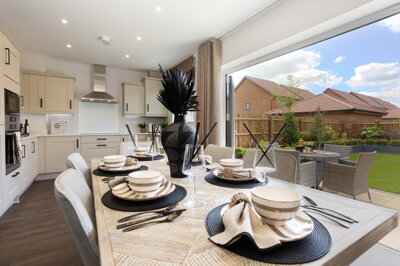
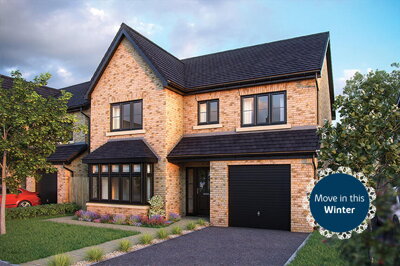
Browse 2 homes new builds in Cotterstock, North Northamptonshire from local developer agents.
The larger property sector typically features multiple bathrooms, substantial reception space, and private gardens or off-street parking. Four bedroom houses in Cotterstock span detached, semi-detached, and occasionally terraced configurations, with styles ranging from period properties to modern executive homes.
£0k
0
0
0
Source: home.co.uk
Showing 0 results for 4 Bedroom Houses new builds in Cotterstock, North Northamptonshire.
The Cotterstock property market is characterised by its exclusive, village-based character with limited turnover. Our records show approximately 2 property sales completed in the village over the past twelve months, a figure that reflects both the small scale of the community and the quality of homes available. Detached properties command an average price of £500,000, with these substantial homes representing the dominant housing stock in the area. The overall average price has shown a slight adjustment of -1.0% over the past year, indicating a stable market in this well-established village location.
Housing in Cotterstock skews heavily towards larger detached properties, which account for 80.5% of the available stock according to ONS Census 2021 data. Semi-detached homes represent 14.5% of the housing mix, while terraced properties make up just 5% of the total. Notably, there are no flats in the village, reinforcing Cotterstock's position as a location for those seeking space and privacy. This predominance of family homes makes the village particularly attractive to families looking for a rural lifestyle without sacrificing the character and charm of a traditional English village setting.
The age profile of Cotterstock's housing stock reveals a village dominated by historic properties, with 45% of homes built before 1919 and a further 35% constructed between 1919 and 1980. This means approximately 80% of all properties in the village are over 45 years old, many featuring traditional construction methods that require specific knowledge when assessing condition. The village's Conservation Area status has helped preserve the historic character of these older properties, though it also means that any significant alterations or extensions will require consideration of planning constraints. Property values are supported by this scarcity of supply, with new build activity in the PE8 5XX postcode area remaining virtually non-existent, ensuring that Cotterstock maintains its exclusivity within the Northamptonshire property market.

Cotterstock embodies the essence of rural English village life, offering residents a close-knit community atmosphere that is increasingly rare in modern Britain. The village's population of 172 people means that neighbours know one another, local events bring the community together, and the pace of life remains gentle and unhurried. The village centre features several historic buildings constructed from the local limestone that characterises the area's architecture, creating a cohesive aesthetic that has been preserved through the village's Conservation Area designation. St Andrew's Church stands as a focal point of the community, its medieval origins testament to Cotterstock's long history.
The local economy is primarily agricultural, with farms and smallholdings dotting the surrounding countryside. Many residents choose to commute to nearby employment centres including Oundle, Corby, and Peterborough, taking advantage of the village's strategic position. The surrounding landscape offers excellent opportunities for walking, cycling, and enjoying the natural beauty of North Northamptonshire. The presence of the River Nene adds to the village's charm, though buyers should be aware of flood risk in areas close to the river and its tributaries. Local amenities in nearby towns ensure that residents have access to shops, restaurants, and services while enjoying the peace and quiet of village life.
The underlying geology of Cotterstock consists primarily of Oolitic Limestone and Jurassic Clay, which has historically provided the building materials for the village's distinctive architecture. This geological foundation also influences property conditions, as areas underlain by clay present moderate to high shrink-swell risk that can affect foundations over time. Properties in low-lying areas near the river may also be susceptible to surface water flooding during periods of heavy rainfall, making flood risk assessment an important part of any property evaluation in the village. The combination of historic building fabric, traditional construction methods, and local geological conditions means that professional surveys are particularly valuable for Cotterstock buyers.

Families considering a move to Cotterstock will find a range of educational options within reasonable driving distance. Primary education is available at schools in the surrounding villages and market towns, with many village primary schools serving small, rural catchments. The Oundle area provides several primary school options, while secondary education is typically accessed through schools in the nearby towns. Parents should research specific catchment areas and admission arrangements, as these can be competitive in popular rural locations. School transport arrangements from Cotterstock to nearby educational establishments are generally well-established.
Northamptonshire's education system includes both state and independent options, with several independent schools located within driving distance of the village. Grammar schools in nearby towns provide an alternative for families seeking selective education, with preparation and entry testing typically required. For families with older children, sixth form provision and further education colleges are available in Peterborough, offering a wide range of academic and vocational courses. The rural location means that school runs may involve longer journeys than in urban areas, so families should factor travel times into their decision-making process when purchasing property in Cotterstock.
The journey to secondary school from Cotterstock typically involves travel to Oundle, Thrapston, or Corby, with typical commute times of 15 to 30 minutes by car. Oundle School is a notable independent secondary option in the nearby market town, offering both day and boarding places for students aged 13 to 18. For families prioritising state secondary education, Corby's schools offer a wider catchment area with dedicated school transport services. Many Cotterstock families find that the village's primary school provision adequately serves younger children through Key Stage 2, with secondary arrangements made as children approach transition age.
Cotterstock enjoys excellent transport connections that belay its rural village setting. The village is well-positioned for road travel, with the A605 providing direct access to Peterborough to the northeast and Oundle to the northwest. The A14 trunk road runs nearby, connecting Cotterstock to the wider motorway network and making cities such as Cambridge, Leicester, and Northampton accessible for commuters. Many residents with professional careers in larger towns have made Cotterstock their home precisely because of this balance between rural peace and urban accessibility. Road conditions in the village are generally good, though country lanes require careful driving.
Public transport options from Cotterstock include bus services connecting the village to nearby market towns, providing essential links for those without private vehicles. The nearest railway stations are located in Peterborough and Stamford, both offering East Coast Main Line services to London and the North. Peterborough station provides fast trains to London King's Cross, with journey times of approximately 45 minutes making regular commuting feasible for city workers. For air travel, London Stansted and Birmingham Airport are both within reasonable driving distance, connecting residents to domestic and international destinations. Cyclists will find the Northamptonshire countryside rewarding, though the terrain includes some hilly sections typical of the region.
The strategic position of Cotterstock along the A605 corridor places it within easy reach of employment opportunities across Northamptonshire and Cambridgeshire. Peterborough, with its expanding financial and services sector, is a particularly common destination for commuters, with the city offering major employers in retail, healthcare, and public services. The growing town of Corby provides additional employment options, particularly in manufacturing and logistics, while Oundle maintains a selection of professional services and boutique businesses serving the wider area. For those working further afield, the proximity to the A14 provides direct access to the M1 motorway at Northampton and connections to the M11 towards Cambridge.
Before you start your property search, spend time exploring Cotterstock at different times of day and week to get a genuine feel for village life. Visit local amenities in nearby towns, speak to residents about their experiences, and research local property prices to understand what your budget can achieve in this exclusive market. Given that only around 2 properties sell in the village each year, opportunities are rare and preparation is essential.
Speak to a mortgage broker to obtain an agreement in principle before viewing properties. With detached homes averaging £500,000, most buyers will require substantial mortgage borrowing. Having your finances pre-approved demonstrates your seriousness to sellers and can give you an advantage when making an offer in what can be a competitive village market. First-time buyers should also verify their eligibility for any applicable stamp duty relief.
Contact local estate agents to arrange viewings of properties that match your requirements. Given the limited number of sales in Cotterstock, be prepared to act quickly when suitable properties become available. Take time to view properties thoroughly and ask questions about the property's history, construction, and any renovation work undertaken. Properties in the village often have unique characteristics given their age and traditional construction methods.
We strongly recommend booking a RICS Level 2 Survey before purchasing in Cotterstock. With 80% of properties built before 1980 and many featuring traditional stone construction, a professional survey is essential to identify potential issues with foundations, damp, or structural movement. Survey costs in the area typically range from £400 to £900 depending on property size and complexity. For listed properties or those with significant historic fabric, a more detailed RICS Level 3 Building Survey may be appropriate.
Once your offer is accepted, instruct a conveyancing solicitor to handle the legal aspects of your purchase. Your solicitor will conduct searches, review the contract, and ensure all necessary checks are completed before completion. They will also liaise with your mortgage lender if applicable and advise on any planning constraints related to the Conservation Area status.
After all searches and surveys are satisfactory, you will exchange contracts and pay your deposit. Completion typically follows within a few weeks, after which you will receive the keys to your new Cotterstock home. Allow time for moving logistics, as rural locations may require additional planning for larger removal vehicles and careful coordination with local service providers.
Buyers considering properties in Cotterstock should pay particular attention to construction type and age, as the village's housing stock is predominantly older with 45% of properties built before 1919. Traditional stone-built properties require specific maintenance knowledge and may have features such as solid walls, traditional timber floors, and period windows that require careful upkeep. A thorough RICS Level 2 Survey is essential to identify any structural issues, particularly given the clay soils underlying parts of the village that can cause subsidence and movement in properties with shallow foundations. The moderate to high shrink-swell risk in the area makes foundation condition assessment particularly important for older properties.
The predominant building materials in Cotterstock include local limestone and brick, reflecting the village's geological setting and long construction history. Properties built before 1919 typically feature solid wall construction rather than the cavity walls found in post-war housing, which means different approaches to insulation and moisture management are required. Roof construction in older properties often uses traditional pitched roofs with slate or clay tile coverings, and the condition of these roofs, including lead flashing and rainwater goods, should be carefully assessed. Many historic properties also feature timber floor structures, which can be susceptible to wet rot, dry rot, or woodworm if not properly maintained.
Flood risk should be carefully considered when purchasing in Cotterstock, particularly for properties located near the River Nene and its tributaries. The village has areas in flood zones 2 and 3, and surface water flooding can occur in low-lying areas during periods of heavy rainfall. Your solicitor should conduct thorough drainage and flood risk searches as part of the conveyancing process. Properties in the Conservation Area may be subject to planning restrictions affecting alterations and extensions, so potential buyers should discuss these limitations with North Northamptonshire Council planning department. Building materials and construction methods used in older village properties, including potential issues with damp proof courses, timber defects, and outdated electrical systems, should all be assessed as part of your property evaluation.
The village's Conservation Area status means that many properties are either listed or subject to special planning considerations that affect what works can be undertaken. Cotterstock Hall and St Andrew's Church are notable listed buildings that contribute to the village's heritage character. If you are considering purchasing a listed property, you should budget for the additional costs and constraints associated with maintaining historic fabric using appropriate traditional materials and techniques. Your surveyor should specifically note any features of historical significance and flag whether specialist inspection by a building historian may be warranted.
The average house price in Cotterstock currently sits at £500,000, based on recent sales data for the village. Detached properties dominate the market at this price point, reflecting the village's character as an exclusive rural location with predominantly large family homes. The market has shown remarkable stability with only a -1.0% change over the past twelve months. Given Cotterstock's small population and limited property turnover, individual transactions can have a significant impact on average figures, so buyers should research specific property types and locations within the village for more detailed pricing information.
Properties in Cotterstock fall under North Northamptonshire Council's jurisdiction for council tax purposes. Specific banding depends on the property's valuation, but larger detached homes in the village typically fall into higher bands due to their size and quality. Buyers should request the specific council tax band from the seller or their solicitor during the conveyancing process. Banding can range from A through to H, with most period properties in rural villages falling into bands D through F.
Cotterstock itself does not have schools within the village, with primary education typically accessed through nearby villages and the town of Oundle. Outstanding primary schools in the surrounding area serve the local community, with catchment areas determined by Northamptonshire County Council. Secondary education options include schools in Oundle, Corby, and Thrapston, with grammar school options available for academically selective students. Families should verify current catchment areas and admission policies, as these can change and may affect school placement for their children.
Cotterstock has limited but functional public transport links, with bus services connecting the village to nearby market towns for essential amenities. The nearest railway stations are in Peterborough and Stamford, both offering East Coast Main Line services to London and connections to the north of England. Peterborough station provides the most comprehensive rail options, with regular services to London King's Cross taking approximately 45 minutes. Many residents rely on private vehicles for daily commuting, though the village's position near major road routes makes driving practical for most journeys.
Cotterstock offers strong appeal for buyers seeking a long-term investment in rural Northamptonshire property. The village's Conservation Area status, combined with its limited housing stock and desirable location, suggests that properties are likely to maintain their value over time. The small population and low turnover mean that properties rarely appear on the market, creating potential for capital appreciation when opportunities arise. Families seeking countryside living within commuting distance of major cities will continue to drive demand, making Cotterstock a sound choice for those planning to settle rather than speculate.
Stamp duty land tax on a £500,000 property in Cotterstock will depend on your buyer status and any applicable relief. For standard buyers, the first £250,000 is taxed at 0%, the next £175,000 (from £250,001 to £425,000) is taxed at 5%, and the remaining £75,000 (from £425,001 to £500,000) is taxed at 10%, bringing your total SDLT to £12,500. First-time buyers purchasing properties under £625,000 may qualify for relief on the first £425,000, reducing the tax to £3,750. Always verify current thresholds with HMRC or your solicitor, as rates can change during the tax year.
Given that approximately 80% of properties in Cotterstock were built before 1980, buyers should be alert to defects commonly found in older construction. Rising or penetrating damp is frequently encountered in solid-walled stone and brick properties, particularly where original damp proof courses have failed or been bridged by external ground levels. Timber defects including wet rot, dry rot, and woodworm can affect floor structures, roof timbers, and window frames, especially in properties where maintenance has been deferred. Subsidence risk associated with clay soils and inadequate foundations is a genuine concern in parts of the village, and evidence of cracking or movement should prompt thorough investigation. Outdated electrical systems and plumbing are also common in older properties, with many homes still containing original rubber-sheathed wiring or lead pipes that will require updating.
Cotterstock contains a significant number of listed buildings that contribute to the village's historic character, including the notable Cotterstock Hall and St Andrew's Church. The entire village falls within a designated Conservation Area, which means properties may be subject to planning constraints affecting external alterations, extensions, or demolition of boundary walls. Listed buildings carry additional responsibilities for owners, requiring consent for works that might affect their character or fabric. If you are considering purchasing a listed property, you should factor in the potential costs of sympathetic maintenance and repairs using traditional building techniques and materials.
Purchasing a property in Cotterstock involves several costs beyond the purchase price that buyers should budget for carefully. Stamp duty land tax represents the most significant additional cost, with rates currently set at 0% on the first £250,000 of the purchase price. For the portion between £250,001 and £925,000, the rate rises to 5%, meaning a £500,000 property incurs £12,500 in SDLT for standard buyers. First-time buyers purchasing residential properties under £625,000 may benefit from relief that increases the nil-rate threshold to £425,000, reducing their SDLT liability to £3,750 on the same property.
Professional services form an essential part of any property purchase, and buyers should expect to pay solicitor fees of typically £800 to £1,500 for conveyancing on a Cotterstock property. Survey costs should also be factored into your budget, with RICS Level 2 Surveys in the area ranging from £400 to £900 depending on property size and complexity. Given that Cotterstock's housing stock is predominantly older, with 45% of properties pre-1919 and 80% built before 1980, we strongly recommend budgeting for a thorough survey to identify any issues with stone construction, foundations, or historic building fabric. Search fees, land registry charges, and removal costs will add further to your moving expenses, with total buying costs typically ranging from 2% to 4% of the property price.
For buyers purchasing stone-built properties in Cotterstock, additional specialist surveys may occasionally be warranted beyond the standard RICS Level 2 assessment. Properties with significant historic fabric, unusual construction methods, or visible defects may benefit from a more detailed RICS Level 3 Building Survey that provides comprehensive analysis of condition and guidance on maintenance requirements. Given the village's Jurassic Clay geology and associated shrink-swell risk, a geotechnical assessment of foundations may be advisable for properties showing signs of movement or for those purchasing properties with large trees nearby that could affect soil moisture content over time.
Properties New Builds In London

Properties New Builds In Plymouth

Properties New Builds In Liverpool

Properties New Builds In Glasgow

Properties New Builds In Sheffield

Properties New Builds In Edinburgh

Properties New Builds In Coventry

Properties New Builds In Bradford

Properties New Builds In Manchester

Properties New Builds In Birmingham

Properties New Builds In Bristol

Properties New Builds In Oxford

Properties New Builds In Leicester

Properties New Builds In Newcastle

Properties New Builds In Leeds

Properties New Builds In Southampton

Properties New Builds In Cardiff

Properties New Builds In Nottingham

Properties New Builds In Norwich

Properties New Builds In Brighton

Properties New Builds In Derby

Properties New Builds In Portsmouth

Properties New Builds In Northampton

Properties New Builds In Milton Keynes

Properties New Builds In Bournemouth

Properties New Builds In Bolton

Properties New Builds In Swansea

Properties New Builds In Swindon

Properties New Builds In Peterborough

Properties New Builds In Wolverhampton

Enter your details to see if this property is within your budget.
Loans, cards, car finance
Estimated property budget
Borrowing + deposit
You could borrow between
Typical borrowing
Monthly repayment
Est. at 4.5%
Loan-to-value
This is an estimate only. Your actual budget may vary depending on interest rates, credit history, and personal circumstances. For an accurate affordability assessment, speak to one of our free mortgage advisors.
This calculator provides estimates for illustrative purposes only and does not constitute financial advice. Your home may be repossessed if you do not keep up repayments on your mortgage. Estimates based on 4.5% interest rate, repayment mortgage. Actual rates depend on your circumstances.
Homemove is a trading name of HM Haus Group Ltd (Company No. 13873779, registered in England & Wales). Homemove Mortgages Ltd (Company No. 15947693) is an Appointed Representative of TMG Direct Limited, trading as TMG Mortgage Network, which is authorised and regulated by the Financial Conduct Authority (FRN 786245). Homemove Mortgages Ltd is entered on the FCA Register as an Appointed Representative (FRN 1022429). You can check registrations at NewRegister or by calling 0800 111 6768.

We use cookies to show you personalised content and improve your experience of our website. Find out more in our Privacy policy and Cookie policy.