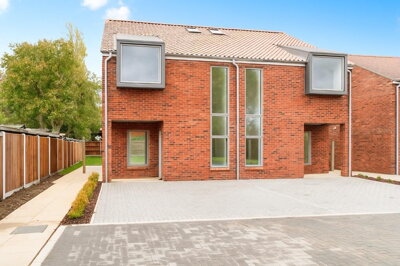
Browse 1 home new builds in Colkirk, Breckland from local developer agents.
Three bedroom properties represent a significant portion of the Colkirk housing market, offering space for families with multiple reception rooms and gardens in many cases. Browse detached, semi-detached, and terraced options ranging across new residential developments.
£385k
1
0
95
Source: home.co.uk
Showing 1 results for 3 Bedroom Houses new builds in Colkirk, Breckland. The median asking price is £385,000.
Source: home.co.uk
Semi-Detached
1 listings
Avg £385,000
Source: home.co.uk
Source: home.co.uk
The Colkirk property market presents a compelling opportunity for buyers seeking rural Norfolk living at accessible price points. Detached properties command the highest values, averaging around £350,000, reflecting the desirability of generous gardens, off-street parking, and the generous proportions that characterise this property type in village settings. Semi-detached homes average approximately £275,000, offering excellent value for families seeking a balance between space and affordability. The limited availability of terraced and flat properties in Colkirk means these tend to attract strong interest from first-time buyers and downsizers looking to enter the village property market.
Recent transaction data shows modest but meaningful market activity, with two sales completing in the past twelve months and ten transactions recorded over the past five years. This relatively low volume of sales reflects both the small size of the village and the tendency for residents to remain in their homes for extended periods once settled. The housing stock is predominantly detached (58.3%) and semi-detached (30.0%), with terraced properties accounting for just 10% and flats representing a mere 1.7%. This configuration means that buyers seeking more affordable entry-level properties may face limited options, making early engagement with the market advisable for those with specific requirements.
No active new-build developments exist within Colkirk itself, meaning the market comprises primarily existing properties ranging from centuries-old cottages to mid-twentieth-century family homes. This absence of new supply has contributed to sustained demand for the limited properties available, particularly those offering character features such as exposed beams, original fireplaces, and traditional Norfolk brick and flint construction. Buyers should be prepared for competitive conditions when quality properties come to market, especially those priced below the village average of £309,500.

Life in Colkirk offers a quintessentially English village experience, where a population of approximately 542 residents across 239 households creates a close-knit community atmosphere. The village sits within the Breckland district, a region characterised by its distinctive landscape of heathland, farmland, and traditional Norfolk villages. Residents benefit from an active village hall hosting regular events, while local clubs and societies provide ample opportunities for social engagement. The surrounding Norfolk countryside offers excellent walking and cycling opportunities, with scenic routes connecting Colkirk to neighbouring villages and the broader regional footpath network.
The village's location provides practical accessibility to larger towns for those requiring more extensive amenities. Fakenham, located approximately 7 miles to the north, offers a weekly market, supermarkets, independent shops, and healthcare facilities including a pharmacy and dental practices. Dereham, situated to the southwest, provides additional shopping options, a cinema, and further educational and medical services. This proximity means that Colkirk residents enjoy the best of both worlds: peaceful village living with convenient access to town facilities when needed.
The housing stock in Colkirk reflects its rural character and historical development. Census data reveals that 58.3% of properties are detached, with a further 30% being semi-detached, meaning the vast majority of homes offer the space and privacy that families and couples seek. The prevalence of older properties, many built before 1919 using traditional Norfolk brick and flint construction, gives the village its distinctive appearance and charm. Several properties benefit from period features including exposed beams, original fireplaces, and thick walls that provide natural insulation. However, these same characteristics require understanding and ongoing maintenance, and our team always advises buyers to factor in potential renovation costs when assessing property value.
Families considering a move to Colkirk will find a selection of educational options within reasonable driving distance. Colkirk itself has a small primary school serving its immediate community, providing early years and Key Stage 1 education with the benefit of small class sizes and strong community links. For primary education beyond Reception and Key Stage 1, several village primaries in neighbouring communities such as Whissonsett, Dereham, and the surrounding area offer Key Stage 2 provision, with many small primaries serving their local communities with dedicated teaching and strong community connections.
Secondary education is typically accessed through schools in nearby towns, with bus services connecting Colkirk to secondary schools in Fakenham and further afield. The area provides several options including Fakenham Academy, which offers secondary education and sixth form provision, and schools in Dereham including Northgate High School and Dereham Neatherd High School. Parents are advised to research specific catchment areas and admission arrangements, as these can influence school placement decisions and vary depending on individual circumstances and sibling connections.
For those seeking specialist or independent education, the broader Norfolk area offers several options. Sixth form provision is available at secondary schools in nearby towns, while further education colleges in Norfolk including East Coast College in Great Yarmouth and Norfolk Rural Training provide vocational and academic pathways for older students. The presence of well-regarded schools within the region contributes to Colkirk's appeal as a location for families, though buyers should always verify current Ofsted ratings and admission policies directly with schools, as these can change and vary significantly between institutions. Transport arrangements for secondary school pupils typically involve school bus services, with journey times varying depending on the specific school and route.
Colkirk's position in rural Norfolk means that private transport remains essential for most residents, though the village is well-connected to the surrounding road network. The A1065 provides north-south connectivity, linking Colkirk to Fakenham to the north and Brandon to the south. For travel east-west, the A47 provides access to Norwich and King's Lynn, while the broader Norfolk road network enables access to most destinations within reasonable driving times. Journey times to Norwich city centre typically range from 45 minutes to an hour by car, depending on traffic conditions and the specific route taken.
For commuters requiring rail access, the nearest stations are in Norwich and King's Lynn, offering connections to London and other major destinations. Norwich station provides regular services to London Liverpool Street, with journey times of approximately two hours, while King's Lynn offers connections to London King's Cross via Cambridge, typically taking around two and a half hours. These rail links make Colkirk viable for commuters who work in the capital but wish to enjoy rural village living, particularly given the increasing feasibility of hybrid working arrangements.
Bus services operated by Norfolk's local transport network connect Colkirk to nearby towns, providing options for those who prefer not to drive. These services are particularly valuable for students, retirees, and others who may not have regular access to a private vehicle. For air travel, Norwich International Airport offers domestic and limited international flights, while larger airports including Stansted and Luton are accessible via road and rail for a broader range of destinations. Cyclists benefit from the quiet country lanes surrounding Colkirk, though the undulating Norfolk landscape and occasional narrow roads require careful navigation.
Understanding the construction methods used in Colkirk's properties is essential for any prospective buyer. The village's older properties, which make up a significant portion of the housing stock, predominantly feature traditional Norfolk brick and flint construction. This method involves alternating courses of bricks with bands of flints, often set in lime mortar, creating the distinctive speckled appearance seen on many village cottages and farmhouses. These walls are typically thick, providing excellent thermal mass and natural insulation, though they require breathability in any repair work to prevent moisture retention.
Timber framing is another common feature in Colkirk's older properties, with many homes featuring exposed oak beams both internally and externally. These timber-framed structures were often infilled with wattle and daub or later brick nogging, and the passage of centuries means that such timbers may have experienced movement, decay, or woodworm infestation over time. Our surveyors regularly encounter these characteristics when inspecting properties in the Breckland area, and a thorough assessment of timber condition is a critical component of any property survey in the village.
Roof construction in Colkirk's period properties typically features pitched roofs covered with clay tiles or slate, depending on the property's age and original specification. These roofs often have deep eaves and may incorporate decorative features such as finials or ornamental ridge tiles. The underlying structure usually consists of traditional cut or trussed rafters, and our inspectors always examine these carefully for signs of deterioration, inadequate fastening, or previous modification. Leadwork around chimneys, valleys, and parapets is a common area of concern in older roofs, as lead can deteriorate over decades and cause water ingress if not properly maintained.
Properties in Colkirk, like many rural Norfolk villages, are susceptible to several specific defects that buyers should understand before purchasing. Damp is perhaps the most frequently encountered issue in period properties, arising from various causes including absent or defective damp-proof courses, bridging due to ground level changes, poor ventilation, or defective rainwater goods. Given Colkirk's underlying boulder clay geology, which can contribute to moisture retention in the ground, properties with original construction may be particularly vulnerable to rising damp if their damp-proof courses have failed or were never installed.
Timber defects represent another significant consideration for Colkirk buyers. Woodworm can affect structural and non-structural timbers in properties of any age, though it is more commonly found in older homes where timber has been exposed to conditions conducive to infestation. Wet rot and dry rot can develop when timbers remain damp for extended periods, often as a result of plumbing leaks, roof defects, or inadequate ventilation. Our inspectors always examine accessible timbers thoroughly, including floor joists, roof rafters, and any exposed structural elements, to identify signs of active or historic infestation or decay.
The local geology of the Breckland area presents a moderate to high shrink-swell risk due to the underlying boulder clay soils. This risk can affect property foundations, particularly in older properties that may have shallow footings inadequate for modern standards. Signs of potential subsidence or heave include cracking to walls (particularly diagonal cracks around door and window openings), sticking doors or windows, and uneven or bouncing floors. Any prospective buyer should commission a detailed structural survey, particularly for older properties, to assess foundation condition and identify any movement-related issues.
Begin by exploring properties available in Colkirk on Homemove to understand current market offerings and pricing. Familiarise yourself with the village's character, amenities, transport links, and the specific considerations that come with owning a period property in rural Norfolk. We recommend visiting the village at different times to experience daily life, speaking with residents, and getting a feel for the community atmosphere that makes Colkirk distinctive.
Before viewing properties, obtain a mortgage agreement in principle from a lender. This demonstrates your financial readiness to sellers and estate agents, strengthening your position when making an offer. Given Colkirk's average property price of £309,500, most buyers will find their mortgage requirements fall within standard lending criteria, though speaking with an independent mortgage broker can help identify the most suitable products for your circumstances.
Schedule viewings of properties that match your criteria. When visiting Colkirk, take time to explore the village beyond the property itself, visit local amenities, and speak with residents to gain genuine insight into daily life here. Pay particular attention to the condition of properties, noting any visible defects or maintenance concerns that might warrant further investigation through a professional survey.
Once your offer is accepted, arrange a RICS Level 2 Survey to assess the property's condition thoroughly. Given Colkirk's prevalence of older properties built using traditional methods, this survey is particularly valuable for identifying issues such as damp, timber defects, roof problems, or potential subsidence risk from the local clay soils. Our surveyors have extensive experience inspecting properties across Norfolk and understand the specific construction methods and common defects found in village properties like those in Colkirk.
Appoint a solicitor to handle the legal aspects of your purchase. They will conduct searches with Breckland Council, review contracts, and ensure all necessary checks are completed before exchange. Local knowledge is valuable here, as solicitors familiar with Colkirk and the NR21 7 postcode area will understand any specific local issues that might affect the transaction.
Finalise your mortgage, pay your deposit, and exchange contracts through your solicitor. On completion day, the property transfers to you and you receive the keys to your new Colkirk home. Our team wishes you every happiness in your new village property and remains available to assist with any future survey requirements.
Purchasing a property in Colkirk requires careful attention to several area-specific factors that can significantly impact your ownership experience. The underlying geology of the area, characterised by boulder clay and glacial deposits, creates a moderate to high shrink-swell risk that can affect property foundations. Buyers should pay particular attention to signs of subsidence or ground movement, especially in older properties that may have shallow foundations inadequate for the local soil conditions. A thorough RICS Level 2 Survey is strongly recommended to identify any structural concerns before commitment.
Flood risk in Colkirk is generally low, with minimal risk from rivers and coastal sources given the village's inland position. However, some areas near minor watercourses and low-lying ground may experience surface water flooding during periods of heavy rainfall, and buyers should investigate the specific flood risk for any property under consideration. The presence of several listed buildings in the village means that buyers purchasing historic properties should be prepared for potential restrictions on alterations and maintenance requirements. Properties may require specialist insurance and more attentive upkeep than modern equivalents.
Traditional construction methods prevalent in Colkirk's older properties bring both charm and considerations. Brick and flint walls, timber frames, and pitched roofs with clay tiles or slate are characteristic features that require understanding and proper maintenance. Issues commonly found in period properties include damp due to absent or defective damp-proof courses, outdated electrical wiring, and roof defects. Buyers should budget for potential renovation costs and consider whether the property has been updated to meet modern standards while retaining its period character.
The average house price in Colkirk is currently £309,500 according to recent market data. Detached properties average around £350,000, while semi-detached homes typically sell for approximately £275,000. Prices have increased by 14% over the past twelve months, reflecting growing demand for rural Norfolk properties. Given the village's limited property stock and small population of 542 residents, prices can vary considerably based on property condition, location within the village, and specific features such as garden size, parking provision, and period character.
Properties in Colkirk fall under Breckland Council's jurisdiction for council tax purposes. Specific bandings depend on the property's valuation, with smaller terraced properties and flats typically falling into bands A to C, while larger detached homes often occupy bands D to F. You can check the exact council tax band for any specific property through the Valuation Office Agency website using the property address or postcode NR21 7. Current Breckland Council rates for a Band D property are approximately £1,976 per year, though this figure is subject to annual review and may have changed since the most recent data.
Colkirk itself has a small primary school serving its immediate community, with additional primary schools available in neighbouring villages and towns. Secondary education is accessed through schools in nearby Fakenham, Dereham, and surrounding areas, with bus services providing transport for pupils. Parents should research current Ofsted ratings and admission policies, as school performance and catchment boundaries can change over time. The nearest secondary schools include Fakenham Academy and Northgate High School in Dereham, both of which offer sixth form provision for students continuing their education locally.
Colkirk has limited public transport options typical of a small rural village. Local bus services operated by Norfolk County Council connect the village to nearby towns including Fakenham and Dereham, though frequencies are reduced compared to urban routes. For commuting or accessing services requiring rail travel, the nearest stations are in Norwich and King's Lynn, both requiring car travel to reach. Most residents rely on private vehicles as their primary means of transport, with convenient access to the A1065 and broader Norfolk road network making car ownership essential for daily life in this rural location.
Colkirk and the surrounding Breckland area have shown resilient property values with recent price growth of 14% indicating healthy demand. The village's rural character, limited housing supply, and proximity to larger towns appeal to buyers seeking countryside living. Investment potential is moderate, with properties tending to hold value due to consistent demand rather than rapid appreciation. Rental demand in the village is likely limited due to its small size, making buy-to-let investments less attractive than in larger towns. Long-term capital appreciation prospects are positive, particularly as remote working trends enable more people to relocate from urban areas to desirable rural villages like Colkirk.
Stamp Duty Land Tax rates for standard purchases in England are 0% on the first £250,000, 5% on £250,001 to £925,000, 10% on £925,001 to £1.5 million, and 12% on amounts exceeding £1.5 million. First-time buyers benefit from relief on the first £425,000, paying 5% between £425,001 and £625,000, with no relief above £625,000. For a typical Colkirk property at the village average of £309,500, standard buyers would pay no stamp duty, while first-time buyers would also pay nothing due to the entire purchase falling within the zero-rate threshold.
While Colkirk does not appear to have a designated conservation area, several properties in the village are listed buildings, which means they are protected under special planning controls administered by Breckland Council and Historic England. Listed building consent is required for any alterations, extensions, or significant external changes to these properties. Buyers considering a listed property should budget for potential additional costs associated with specialist maintenance and should consult with the local planning authority before committing to any renovation work. Standard permitted development rights may be more limited for listed properties compared to non-listed homes.
Understanding the additional costs of buying property in Colkirk is essential for budgeting effectively. For most buyers purchasing a typical Colkirk property priced around the £309,500 average, stamp duty land tax will not apply due to the purchase falling below the £250,000 threshold. First-time buyers benefit even more substantially, with no SDLT payable on purchases up to £425,000. Properties priced above £625,000 will incur SDLT charges, with rates increasing progressively through the higher bands, so buyers of premium detached homes should budget accordingly for these costs.
Beyond stamp duty, buyers should account for several other expenses when calculating their total moving costs. Survey costs for a RICS Level 2 HomeBuyer Report typically range from £400 to £900 depending on property size and complexity, with larger detached homes commanding higher fees than smaller terraced properties. Given the prevalence of older construction in Colkirk, we sometimes recommend a more comprehensive RICS Level 3 Building Survey for listed properties or those with complex structural elements, which may cost more but provides greater detail and specialist assessment.
Conveyancing fees generally start from around £499 for straightforward purchases, though costs can increase for leasehold properties, those with complex titles, or situations requiring additional legal work. Local searches with Breckland Council, environmental searches, and land registry fees form part of the standard legal costs, while mortgage arrangement fees and valuation charges may apply depending on your lender. Budget typically £1,500 to £2,500 for legal fees and searches on a standard purchase, with additional mortgage-related costs varying according to your chosen lender and product.
Properties New Builds In London

Properties New Builds In Plymouth

Properties New Builds In Liverpool

Properties New Builds In Glasgow

Properties New Builds In Sheffield

Properties New Builds In Edinburgh

Properties New Builds In Coventry

Properties New Builds In Bradford

Properties New Builds In Manchester

Properties New Builds In Birmingham

Properties New Builds In Bristol

Properties New Builds In Oxford

Properties New Builds In Leicester

Properties New Builds In Newcastle

Properties New Builds In Leeds

Properties New Builds In Southampton

Properties New Builds In Cardiff

Properties New Builds In Nottingham

Properties New Builds In Norwich

Properties New Builds In Brighton

Properties New Builds In Derby

Properties New Builds In Portsmouth

Properties New Builds In Northampton

Properties New Builds In Milton Keynes

Properties New Builds In Bournemouth

Properties New Builds In Bolton

Properties New Builds In Swansea

Properties New Builds In Swindon

Properties New Builds In Peterborough

Properties New Builds In Wolverhampton

Enter your details to see if this property is within your budget.
Loans, cards, car finance
Estimated property budget
Borrowing + deposit
You could borrow between
Typical borrowing
Monthly repayment
Est. at 4.5%
Loan-to-value
This is an estimate only. Your actual budget may vary depending on interest rates, credit history, and personal circumstances. For an accurate affordability assessment, speak to one of our free mortgage advisors.
This calculator provides estimates for illustrative purposes only and does not constitute financial advice. Your home may be repossessed if you do not keep up repayments on your mortgage. Estimates based on 4.5% interest rate, repayment mortgage. Actual rates depend on your circumstances.
Homemove is a trading name of HM Haus Group Ltd (Company No. 13873779, registered in England & Wales). Homemove Mortgages Ltd (Company No. 15947693) is an Appointed Representative of TMG Direct Limited, trading as TMG Mortgage Network, which is authorised and regulated by the Financial Conduct Authority (FRN 786245). Homemove Mortgages Ltd is entered on the FCA Register as an Appointed Representative (FRN 1022429). You can check registrations at NewRegister or by calling 0800 111 6768.

We use cookies to show you personalised content and improve your experience of our website. Find out more in our Privacy policy and Cookie policy.