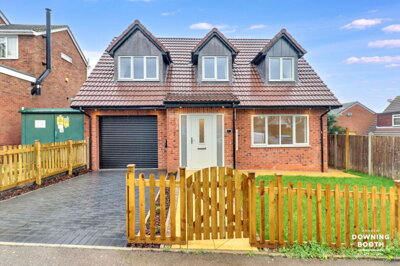
Browse 1 home new builds in Clifton Campville from local developer agents.
The property market in Whenby operates at a distinctly personal scale, reflecting the village's small size and rural character. With only around 20-31 households in the parish, properties rarely come to market, and when they do, they tend to attract significant interest from buyers seeking the rare combination of village living and proximity to York. The housing stock consists almost entirely of traditional cottages, many constructed from local ironstone and featuring Welsh slate roofs that mirror the materials used in the Grade II listed St Martin's Church. Detached and semi-detached properties dominate the available housing, with very few terraced properties and virtually no flats, given the exclusively residential nature of the village's development.
Specific average house prices for Whenby itself are not published at this granular level, as data is typically aggregated at the wider YO61 postcode district or North Yorkshire Council level. However, properties in this sought-after rural location command prices consistent with the area's desirability, its protected landscape setting, and the quality of the traditional architecture on offer. The strict planning permissions that govern development in Whenby ensure that new-build activity remains minimal, with any new housing taking the form of individual, bespoke projects rather than large-scale developments. This scarcity of new stock further reinforces the value of existing properties, particularly those that have been sympathetically modernised while retaining their original character. Buyers should be aware that properties in Whenby represent a genuinely limited market, and when suitable homes become available, they often sell quickly to buyers who are well-prepared and financially ready to proceed.

Life in Whenby revolves around the rhythms of the countryside, where the agricultural calendar shapes daily routines and the changing seasons bring new perspectives to the surrounding farmland. The village is described as a small farming community, with local farms providing both employment and the visual character that defines the parish. The population of 246 residents across approximately 31 households creates an intimate community where local events, village notices, and neighbourly connections form the social fabric. This is a place where children can play safely in the lanes, where evening walks take you past fields of wheat and barley, and where the night sky reveals stars unobscured by light pollution. The rich clay loam soil that characterises the area supports productive agriculture, and the undulating terrain creates pleasing views across the Howardian Hills landscape.
The village's position, though rural, offers practical access to essential services. The market town of Easingwold lies approximately 8 miles to the west, providing supermarkets, independent shops, medical practices, and secondary schooling options. York, one of England's most historic and vibrant cities, sits just 12 miles to the south, offering comprehensive retail, cultural, and employment opportunities alongside world-class restaurants and entertainment venues. Residents of Whenby enjoy the best of both worlds: the tranquillity and community spirit of village life, combined with the ability to access urban amenities within a reasonable drive. The parish church of St Martin, dating largely from around 1400, provides both spiritual focus and a tangible link to over six centuries of continuous village history. For those who value heritage, landscape, and an unhurried way of life, Whenby represents an exceptional place to call home.
Families considering a move to Whenby will find educational provision centred primarily on the surrounding towns, with the village itself being too small to support its own primary school. The nearest primary schools are located in nearby villages and small towns within reasonable driving distance, offering classes for children from Reception through to Year 6. These smaller rural schools often benefit from close community connections, dedicated teaching staff, and the kind of individual attention that can make a significant difference to young learners. Parents should research specific school performance data, Ofsted ratings, and catchment area boundaries when planning a move, as these factors can influence both school placement and property values in the surrounding area.
Secondary education is available in the market town of Easingwold, approximately 8 miles west of Whenby, where students can access comprehensive secondary schooling without the need for lengthy daily commutes. York also offers a wide range of secondary options, including grammar schools for academically gifted students, academy schools with specialist subjects, and independent schools for families considering private education. For sixth form and further education, York's colleges and the University of York provide extensive opportunities for older students, with the university consistently ranked among the UK's leading institutions. The proximity to York means that families in Whenby have access to educational choices that rival those available to urban residents, while still enjoying the benefits of countryside living during the formative school years.

Transport connections from Whenby reflect its rural character, with residents relying primarily on private vehicles for daily commuting and larger shopping trips. The village sits approximately 12 miles north of York and benefits from reasonable road connections to the A64, which provides onward access to Leeds, the A1(M) motorway, and the wider national road network. For those working in York, the daily commute by car typically takes around 25-35 minutes depending on traffic conditions, making it feasible for professionals who need to travel to the city several days per week. The surrounding country lanes, while narrow in places, are generally well-maintained and connect the village to the main road network without difficulty.
Public transport options are more limited, as would be expected for a village of Whenby's size. Bus services connecting Whenby to York and Easingwold operate on reduced frequencies compared to urban routes, so residents without private vehicles should carefully check timetables and consider whether service levels meet their practical needs. York railway station provides excellent connections to major cities including London, Edinburgh, Leeds, Manchester, and Newcastle, with London trains taking approximately two hours. Many Whenby residents who work in York choose to drive to the city and park, while others utilise the park and ride facilities that have been developed around York's perimeter. Cyclists can enjoy the quieter rural lanes, though the undulating terrain requires a reasonable level of fitness. Overall, Whenby suits those who have access to a car and appreciate the trade-off between rural isolation and countryside charm.
Before viewing properties, spend time exploring Whenby at different times of day and week. Visit the local area, speak to residents if possible, and understand the village's character. Research the types of properties available, noting that most are traditional cottages likely to be over 50 years old with associated maintenance considerations.
Obtain a mortgage agreement in principle before starting viewings. For a rural property in North Yorkshire, lenders will consider the property type, construction materials, and any planning restrictions. Having your finances prepared positions you as a serious buyer when properties rarely come to market.
Contact local estate agents who cover the Whenby and wider YO61 area. View properties in person to assess their condition, natural light, and how the accommodation suits your needs. Ask about the property's history, previous renovations, and any planning permissions obtained.
Given that most Whenby properties are older cottages, a Level 2 Homebuyer Report is strongly recommended. This survey will identify defects common in traditional construction such as damp, roof condition, timber defects, and potential subsidence issues related to the clay soil. Budget from around 400 pounds for this essential inspection.
Choose a solicitor with experience in rural property transactions and potential complications such as listed buildings, conservation areas, or agricultural covenants. They will handle searches, title checks, and coordinate with your mortgage lender through to completion.
Once surveys, searches, and mortgage offers are satisfactory, your solicitor will exchange contracts and agree a completion date. On completion day, the remaining funds are transferred and you receive the keys to your new Whenby home.
Purchasing a property in Whenby requires attention to several area-specific considerations that arise from the village's age, construction, and rural setting. The predominance of traditional cottages built from ironstone and covered with slate or clay tile roofs means that buyers should pay particular attention to roof condition, pointing quality, and the integrity of stonework. Older properties may have solid walls without cavity insulation, resulting in higher heating costs and potential condensation issues during colder months. A thorough RICS Level 2 survey will identify these concerns and allow you to budget for any necessary improvements or repairs.
The rich clay loam soil that underlies much of North Yorkshire presents a shrink-swell risk that buyers should understand, particularly for properties with older, shallower foundations. Signs of movement such as cracking, sticking doors or windows, and uneven floors warrant careful investigation before committing to a purchase. Whenby sits close to the Howardian Hills Area of Outstanding Natural Beauty, and parts of the parish fall within this protected landscape, meaning planning restrictions may affect what you can do with the property. The Grade II listed St Martin's Church demonstrates that historic designations apply in the area, and any property of similar vintage may carry listed building status that restricts alterations. Always verify the specific status of any property you are considering and understand the implications for future modifications or improvements.
Specific average house price data for Whenby itself is not published at this granular level, as the village contains only around 20-31 households. Data is typically aggregated at the wider YO61 postcode district or North Yorkshire Council level. Properties in Whenby tend to command prices consistent with the area's desirability, with traditional stone cottages and farmhouses in this protected rural location representing a premium segment of the North Yorkshire property market. Given the scarcity of properties for sale and the village's proximity to York, prices reflect both the quality of the housing stock and the rarity of available homes.
Properties in Whenby fall under North Yorkshire Council's council tax scheme. Traditional cottages and farmhouses in this rural area typically fall within Bands B through E, depending on their assessed value. Band D is common for mid-sized traditional properties. Prospective buyers should verify the specific band of any property they are considering, as this affects annual running costs alongside other expenses such as heating for older properties that may have solid walls and less insulation.
Whenby itself is too small to support its own primary school, so children typically attend schools in nearby villages or travel to Easingwold for primary education. Easingwold also provides secondary schooling options, with students able to progress to sixth form colleges or the University of York for higher education. Families should research specific school performance, Ofsted ratings, and catchment area boundaries, as these factors vary and can significantly influence educational outcomes and property desirability in surrounding areas.
Public transport options in Whenby are limited, reflecting the village's small size and rural location. Bus services connecting to York and Easingwold operate on reduced frequencies compared to urban routes, so residents without private vehicles should carefully check timetables against their practical needs. York railway station provides excellent intercity connections to London, Leeds, Edinburgh, and other major destinations, with trains taking approximately two hours to London King's Cross. Overall, Whenby suits those who have access to a car and appreciate the countryside setting.
Whenby offers several characteristics that appeal to property investors, including its proximity to York, its position near the Howardian Hills AONB, and its strict planning controls that limit new supply. Properties rarely come to market due to the village's small size and the strong attachment of residents to their homes, meaning demand for available properties can outstrip supply when homes do become available. However, the limited rental market in such a small village may reduce appeal for buy-to-let investors, and any investment should be considered primarily for personal occupation or long-term capital appreciation rather than rental income.
Stamp duty rates for residential properties are calculated on the purchase price using current thresholds. For standard purchases, there is no duty on properties up to £250,000, with 5% charged between £250,001 and £925,000, 10% from £925,001 to £1.5 million, and 12% above that. First-time buyers benefit from relief on properties up to £625,000, paying nothing up to £425,000 and 5% between £425,001 and £625,000. For a traditional cottage in Whenby priced around £400,000 to £600,000, a first-time buyer would pay between £0 and £8,750 in stamp duty.
From 4.5%
Expert mortgage advice for Whenby property purchases
From £499
Professional legal services for property transactions
From £400
Professional survey for traditional Whenby properties
From £60
Energy performance certificate for Whenby homes
Understanding the full costs of purchasing a property in Whenby extends beyond the asking price to encompass stamp duty, solicitor fees, survey costs, and the various other expenses that accumulate during a property transaction. For a residential property purchase in England, stamp duty land tax is calculated using current thresholds, with standard rates applying no duty on the first £250,000, then 5% on the portion between £250,001 and £925,000. For a Whenby cottage priced at £450,000, this would result in stamp duty of £10,000 on a standard purchase, or £1,250 for a first-time buyer claiming relief on properties up to £625,000. These costs should be factored into your overall budget alongside deposit and mortgage arrangement fees.
Solicitor fees for conveyancing in a rural North Yorkshire transaction typically start from around £499 for basic transaction work, rising depending on the complexity of the title, whether the property is listed, or if there are any unusual covenants or restrictions to investigate. A RICS Level 2 Homebuyer Report is strongly recommended for properties in Whenby, given that most are traditional cottages likely to be over 50 years old. Survey costs generally range from £400 to £900 depending on property size and value, with the investment well worth making to identify defects before completion. Additional costs include mortgage arrangement fees, valuation fees charged by your lender, land registry fees for title registration, and search fees from North Yorkshire Council. Budgeting carefully for these expenses ensures you are not caught out when completion day arrives, and working with experienced local professionals who understand rural property transactions can help navigate any unexpected complications smoothly.
Properties New Builds In London

Properties New Builds In Plymouth

Properties New Builds In Liverpool

Properties New Builds In Glasgow

Properties New Builds In Sheffield

Properties New Builds In Edinburgh

Properties New Builds In Coventry

Properties New Builds In Bradford

Properties New Builds In Manchester

Properties New Builds In Birmingham

Properties New Builds In Bristol

Properties New Builds In Oxford

Properties New Builds In Leicester

Properties New Builds In Newcastle

Properties New Builds In Leeds

Properties New Builds In Southampton

Properties New Builds In Cardiff

Properties New Builds In Nottingham

Properties New Builds In Norwich

Properties New Builds In Brighton

Properties New Builds In Derby

Properties New Builds In Portsmouth

Properties New Builds In Northampton

Properties New Builds In Milton Keynes

Properties New Builds In Bournemouth

Properties New Builds In Bolton

Properties New Builds In Swansea

Properties New Builds In Swindon

Properties New Builds In Peterborough

Properties New Builds In Wolverhampton

Enter your details to see if this property is within your budget.
Loans, cards, car finance
Estimated property budget
Borrowing + deposit
You could borrow between
Typical borrowing
Monthly repayment
Est. at 4.5%
Loan-to-value
This is an estimate only. Your actual budget may vary depending on interest rates, credit history, and personal circumstances. For an accurate affordability assessment, speak to one of our free mortgage advisors.
This calculator provides estimates for illustrative purposes only and does not constitute financial advice. Your home may be repossessed if you do not keep up repayments on your mortgage. Estimates based on 4.5% interest rate, repayment mortgage. Actual rates depend on your circumstances.
Homemove is a trading name of HM Haus Group Ltd (Company No. 13873779, registered in England & Wales). Homemove Mortgages Ltd (Company No. 15947693) is an Appointed Representative of TMG Direct Limited, trading as TMG Mortgage Network, which is authorised and regulated by the Financial Conduct Authority (FRN 786245). Homemove Mortgages Ltd is entered on the FCA Register as an Appointed Representative (FRN 1022429). You can check registrations at NewRegister or by calling 0800 111 6768.

We use cookies to show you personalised content and improve your experience of our website. Find out more in our Privacy policy and Cookie policy.