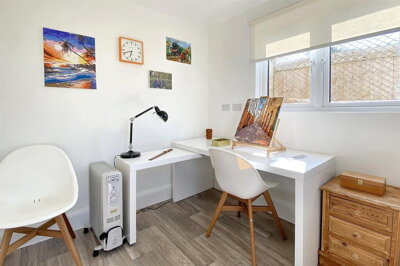
Browse 1 home new builds in Clayhidon, Mid Devon from local developer agents.
The larger property sector typically features multiple bathrooms, substantial reception space, and private gardens or off-street parking. Four bedroom houses in Clayhidon span detached, semi-detached, and occasionally terraced configurations, with styles ranging from period properties to modern executive homes.
£0k
0
0
0
Source: home.co.uk
Showing 0 results for 4 Bedroom Houses new builds in Clayhidon, Mid Devon.
£333,000
Average Property Price
67% of sales
Detached Properties
20.5%
5-Year Price Growth
37.9%
10-Year Price Growth
The Clayhidon property market reflects the character of this small rural parish, where detached properties dominate the housing stock at approximately 67% of all transactions. The most recent sold prices in the area show detached homes achieving between £590,000 and £735,000, demonstrating strong demand for character properties with generous land and countryside settings. Average prices across the parish have stabilised around the £333,000 mark according to Rightmove data from early 2026, though the broader postcode area of EX15 3QD shows average sold prices reaching £590,000 in recent months, indicating that higher-value properties are attracting active buyers.
Price trends over the past decade reveal significant long-term growth in the EX15 3QD postcode area, with property values increasing by 37.9% over ten years and 20.5% over five years. However, the market has experienced a notable correction from the 2018 peak of £567,000, with current prices sitting approximately 41% below that high-water mark. This adjustment has created opportunities for buyers seeking to enter this desirable AONB location at more accessible price points, while the limited number of annual transactions means each property that becomes available attracts serious interest from buyers drawn to the Blackdown Hills lifestyle.
New build activity in Clayhidon remains extremely limited, consistent with the Blackdown Hills AONB designation that prioritises landscape protection over development expansion. Rather than large housing estates, prospective buyers will find a market dominated by period properties, including traditional stone cottages, historic farmhouses, and sensitively converted agricultural buildings. This scarcity of new supply reinforces the enduring appeal of Clayhidon properties and supports long-term values for those purchasing with investment considerations in mind.

The character of Clayhidon is inseparable from its position within the Blackdown Hills AONB, a protected landscape spanning parts of Devon and Somerset characterised by rolling hills, steep combes, and traditional farmland. The local geology features Upper Greensand and Gault Clay formations, creating the distinctive clay soils that have shaped both the landscape and traditional building practices in the area. Properties here often feature local stone, render, and traditional cob construction, with roofs typically covered in slate or thatch for older cottages. This architectural heritage reflects centuries of farming activity and vernacular building traditions that continue to define the village's appearance today.
Daily life in Clayhidon revolves around the rhythms of the farming calendar and appreciation for the natural landscape. The parish church of St Andrew's provides a focal point for community gatherings, while the surrounding countryside offers extensive footpaths and bridleways for walking, riding, and exploring the Blackdown Hills. The nearest primary school is located in the nearby village of Culmstock, approximately three miles away, serving families with younger children who value the combination of village living and access to good education. Local amenities in Clayhidon itself remain limited to a village hall and pub, with residents travelling to Honiton or Taunton for supermarkets, healthcare, and other essential services.
The demographic profile of Clayhidon reflects patterns common to rural AONB villages, attracting professionals who work remotely, retirees seeking peaceful retirement locations, and families prioritising access to countryside over urban conveniences. The local economy centres on agriculture, with several working farms continuing to operate in the parish, alongside small businesses serving the wider rural community. Property values in the Blackdown Hills benefit from sustained demand from lifestyle buyers, with the AONB designation providing long-term protection against inappropriate development while ensuring the landscape that attracts buyers remains preserved for future generations.

Families considering a move to Clayhidon will find educational provision spread across the surrounding villages and towns, with the nearest primary schools located in the neighbouring communities of Culmstock and Hemyock. Culmstock Primary School serves the western side of the parish, offering education for children from Reception through to Year 6, while additional primary options are available in Hemyock approximately four miles away. These village schools maintain close relationships with their communities and benefit from the smaller class sizes that rural education can offer, though parents should verify current catchment arrangements and admissions policies when planning a school move.
Secondary education for Clayhidon residents is typically accessed through schools in the larger towns of Honiton and Cullompton, with The King's School in Ottery St Mary also serving parts of the surrounding area. Honiton Community College provides secondary education with sixth form provision, while Cullompton Community College offers comprehensive secondary coverage for families based in the eastern part of Mid Devon. Parents should note that transport arrangements for secondary schooling may require private arrangements or local authority support, as distances to secondary schools can be substantial from this rural location. School performance data and Ofsted ratings should be checked directly for the most current information on educational standards in these establishments.
For families with children of primary age, Clayhidon's position within easy reach of several good village primary schools provides reasonable educational options without requiring lengthy daily commutes. The combination of village primary schools and comprehensive secondary schools in nearby towns offers a balanced educational pathway, though families should carefully consider transport logistics when evaluating properties at different points within the parish. Independent schooling options in the region include schools in Exeter and Taunton, providing additional choices for families seeking alternative educational approaches for their children.
Transport connections from Clayhidon reflect its rural character, with the village lacking its own railway station and relying primarily on road access for daily commuting and connectivity. The nearest mainline railway stations are located in Honiton and Tiverton Parkway, both offering regular services to Exeter, Bristol, London Paddington, and destinations further afield. Honiton station provides CrossCountry services connecting to major cities, while Tiverton Parkway offers convenient access to London Paddington via the Great Western Railway route. Journey times from Honiton to Exeter take approximately 25 minutes by train, with London accessible in around two and a half hours from either station.
Road access from Clayhidon is provided via the A373 and connecting country lanes, with the M5 motorway accessible at junction 27 near Tiverton, approximately 20 miles from the village centre. This connection provides convenient access to Bristol, Exeter, and the wider motorway network for those commuting by car. Bus services serving the area are limited, with the 55 bus route connecting Honiton to Wellington via several villages, though frequencies are sparse and unlikely to serve regular commuting needs. Most residents of Clayhidon consider car ownership essential for daily life, shopping, and accessing services not available within the immediate village.
For those working remotely or in local businesses, Clayhidon offers a peaceful base with reliable mobile phone coverage and increasingly available superfast broadband in the village area. The Blackdown Hills AONB setting provides an attractive environment for home working, with dedicated workspace increasingly standard in period property renovations and conversions. Cyclists can enjoy the quiet country lanes and bridleways of the surrounding area, though the hilly terrain presents challenges for less experienced riders. Overall, transport considerations should be a key factor in the decision-making process for those contemplating a move to this beautiful but rural location.
Begin by exploring Clayhidon's property market through Homemove, reviewing current listings and recent sold prices in the area. Given average prices around £333,000 and the predominance of detached properties, establish a realistic budget that accounts for the rural location and potential additional costs such as surveying older properties. Obtain a mortgage agreement in principle before beginning property viewings to strengthen your position when making offers.
Contact local estate agents operating in the Blackdown Hills area to arrange viewings of properties matching your criteria. Properties in Clayhidon tend to be character homes, so viewings offer opportunities to assess condition, character, and potential renovation requirements. Take time to explore the village and surrounding countryside during different times of day to understand the lifestyle on offer and check accessibility to schools, shops, and transport connections.
Once your offer is accepted, arrange a RICS Level 2 Survey to assess the condition of the property. Given the age of many properties in Clayhidon and the local geology featuring clay soils, a thorough survey is essential to identify potential issues such as damp, subsidence risk, or roof problems. For older or listed properties, consider whether a more comprehensive RICS Level 3 Survey may be more appropriate to address the specific construction methods used in traditional Devon buildings.
Choose a conveyancing solicitor with experience in rural property transactions to handle the legal aspects of your purchase. They will conduct local authority searches, investigate drainage arrangements, and ensure all planning permissions are in order for any alterations or extensions to the property. Given the potential for conservation area or listed building considerations in Clayhidon, your solicitor should specifically investigate whether any planning restrictions apply to the property.
Once all searches are satisfactory and your mortgage is formally approved, your solicitor will arrange for contracts to be exchanged with the seller. A deposit, typically 10% of the purchase price, is paid at this stage, with the remaining balance transferred on the completion date. After completion, keys are released and you can move into your new home in Clayhidon, beginning your life in the Blackdown Hills.
Properties in Clayhidon reflect centuries of vernacular building traditions shaped by the local landscape and available materials. Traditional farmhouses and cottages typically feature cob walls constructed from earth and straw, a method particularly suited to the clay soils of the Blackdown Hills, while agricultural buildings and some older dwellings utilise local sandstone laid in lime mortar. Many properties have been rendered over the centuries, either to protect softer stone or cob walls from driving rain, and render condition should always be assessed during property viewings or surveys.
Roofing materials across Clayhidon vary by property age and construction period. Thatch remains common on the oldest cottages, with traditional combed wheat or water reed thatch requiring re-routing every 15-30 years by specialist craftspeople, a significant ongoing cost that any potential buyer should factor into their budget. Properties from the Victorian and Edwardian periods typically feature slate roofing, often sourced from Welsh quarries, while later properties may use plain clay tiles or modern concrete tiles. The steep valleys and combes characteristic of the Blackdown Hills mean roof slopes can be substantial, and maintenance access should be considered when evaluating properties on sloping sites.
The solid wall construction typical of period properties in Clayhidon brings specific challenges for modern living. Without cavity spaces, these properties lack the built-in insulation of newer homes, resulting in higher heating costs and different thermal performance characteristics. Traditional lime-based renders and mortars allow properties to breathe more freely than modern cement equivalents, so any renovation work should use appropriate breathable materials to avoid trapping moisture within the walls. Understanding these construction characteristics helps buyers appreciate both the character and the practical implications of owning a traditional Blackdown Hills property.
Purchasing property in Clayhidon requires attention to specific local factors that differ from urban property purchases elsewhere in Devon. The Blackdown Hills AONB designation brings planning restrictions designed to protect the landscape character, which can affect permissions for extensions, outbuildings, and alterations to existing properties. Before purchasing, investigate whether the property falls within any conservation area boundaries and check the status of any listed building designations, as these impose additional requirements on maintenance and renovation work that can significantly affect future costs.
The local geology featuring Gault Clay and clay soils throughout the Blackdown Hills presents potential foundation risks for properties in the area. Clay soils are susceptible to shrink-swell movement during extended dry periods or excessive wet weather, and properties with large trees nearby or those situated in lower-lying valley locations deserve particularly careful investigation. Foundation movement can manifest as cracking to walls, doors and windows sticking, or uneven floor levels, and any signs of previous movement should be documented during surveys and assessed by a structural engineer if necessary.
Once your offer is accepted, commissioning a RICS Level 2 Survey provides essential protection when purchasing a traditional Clayhidon property. Given the prevalence of older constructions featuring cob, local stone, or thatched roofs, a thorough survey by a qualified professional will identify defects, maintenance requirements, and any structural concerns that might affect your purchase decision. For properties showing signs of movement or with more complex construction, a comprehensive RICS Level 3 Survey may prove more appropriate.
Your solicitor will conduct essential local searches covering flood risk, drainage arrangements, and planning history. Given the prevalence of private drainage systems in rural Clayhidon and the potential for conservation area or listed building considerations, these searches provide crucial information about restrictions and obligations that affect how you can use and modify the property after purchase.
The average property price in Clayhidon currently stands around £333,000 according to Rightmove data from early 2026, though prices vary considerably depending on property type and condition. Detached properties in the area have recently sold for between £590,000 and £735,000, while smaller cottages and period properties may be available at lower price points. The EX15 3QD postcode area has seen prices increase by 20.5% over the past five years and 37.9% over the past decade, though the Clayhidon market experienced a significant correction from the 2018 peak of £567,000.
Properties in Clayhidon fall under Mid Devon District Council's council tax scheme, with most residential properties in the village allocated to bands A through C. Band B and C are particularly common for standard family homes in the area, reflecting the modest property values typical of this rural parish. Prospective buyers should verify the specific band with the estate agent or during conveyancing, as improvements or extensions can occasionally affect bandings. Current council tax charges for a Band D property in Mid Devon are approximately £1,900 per year, though this varies by band.
Clayhidon itself does not have a primary school, with the nearest options located in neighbouring villages such as Culmstock and Hemyock approximately three to four miles away. For secondary education, families typically access schools in Honiton, Cullompton, or Ottery St Mary, with school transport arrangements varying by location within the parish. The King's School in Ottery St Mary and Honiton Community College are among the options serving the area, and parents should verify current admissions arrangements and performance data directly with schools.
Public transport connections from Clayhidon are limited, with no railway station in the village and bus services operating at infrequent intervals. The nearest mainline stations are Honiton and Tiverton Parkway, both approximately 10-15 miles away, offering regular services to Exeter, Bristol, and London Paddington. The village is best served by private car ownership, with the M5 motorway accessible via the A373 and local country roads. A car is considered essential for daily life in this rural location.
Broadband availability in Clayhidon has improved in recent years, with superfast broadband services now accessible in parts of the village despite its rural location. However, speeds can vary significantly depending on your exact location within the parish and distance from the cabinet. Mobile phone coverage from major networks is generally good on higher ground, though valley locations may experience reduced signal strength. We recommend checking specific coverage at any property you are considering, as connectivity remains an important factor for those working from home or running businesses from rural locations.
Clayhidon offers several factors that appeal to property investors, including its location within the Blackdown Hills AONB, which provides long-term protection against inappropriate development and supports property values. The predominance of detached properties and period homes attracts lifestyle buyers seeking rural living, while limited new build supply ensures existing properties remain desirable. However, the small scale of the market, with very few annual transactions, means properties can take longer to sell than in urban areas, and investment returns depend heavily on maintaining property condition in line with buyer expectations.
Stamp duty on a Clayhidon property depends on your buyer status and purchase price. For a property priced at the area average of £333,000, first-time buyers would pay zero stamp duty under current thresholds. Standard buyers would pay £4,150 in Stamp Duty Land Tax. Higher-value properties approaching £925,000 would incur rates of 10% on the amount above £925,000, while the most expensive properties in the area would enter the 12% bracket for values exceeding £1.5 million. Always verify current thresholds with your solicitor, as thresholds and reliefs are subject to government policy changes.
Clayhidon sits within the Blackdown Hills Area of Outstanding Natural Beauty, and properties in the village may also fall within conservation areas or carry listed building status, all of which impose planning restrictions on development and alterations. Permission from Mid Devon District Council or East Devon District Council may be required for extensions, outbuildings, or significant external changes. If you are considering any works to a traditional property, we strongly recommend checking the planning status before committing to a purchase, as restrictions can significantly affect renovation budgets and project timelines.
From 4.5%
Find competitive mortgage rates for your Clayhidon property purchase
From £499
Expert property solicitors handling your legal work
From £350
Essential condition survey for traditional properties
From £600
Comprehensive survey for older or complex properties
Understanding the full cost of purchasing property in Clayhidon requires careful consideration of stamp duty and associated fees alongside the property purchase price. For a typical Clayhidon property priced around £333,000, first-time buyers benefit from relief on the first £425,000, meaning no stamp duty would be payable on this transaction. Standard buyers without first-time buyer status would pay £4,150 in Stamp Duty Land Tax at current rates, calculated on the portion of price between £250,000 and £333,000 at 5%.
Additional costs beyond stamp duty should be factored into your budget when purchasing in Clayhidon. A RICS Level 2 Survey typically costs between £350 and £600 depending on property size and value, while a more comprehensive Level 3 Survey for period properties may cost £600 or more. Conveyancing fees for a rural property transaction typically range from £500 to £1,500, with search fees adding a further £250-400 for local authority, drainage, and environmental searches. Mortgage arrangement fees vary by lender but commonly range from £0 to £1,500 for residential mortgages.
For higher-value Clayhidon properties, stamp duty costs increase significantly at each threshold. Properties priced between £925,000 and £1.5 million attract 10% on the amount above £925,000, while the most expensive detached homes in the area selling for over £1.5 million would incur 12% stamp duty on the value exceeding this threshold. Given the prevalence of period properties and potential for listed building considerations in Clayhidon, buyers should also budget for specialist surveys and potentially higher legal fees associated with more complex transactions. Planning your complete budget before beginning your property search ensures you can move forward with confidence when you find your ideal home in the Blackdown Hills.
Properties New Builds In London

Properties New Builds In Plymouth

Properties New Builds In Liverpool

Properties New Builds In Glasgow

Properties New Builds In Sheffield

Properties New Builds In Edinburgh

Properties New Builds In Coventry

Properties New Builds In Bradford

Properties New Builds In Manchester

Properties New Builds In Birmingham

Properties New Builds In Bristol

Properties New Builds In Oxford

Properties New Builds In Leicester

Properties New Builds In Newcastle

Properties New Builds In Leeds

Properties New Builds In Southampton

Properties New Builds In Cardiff

Properties New Builds In Nottingham

Properties New Builds In Norwich

Properties New Builds In Brighton

Properties New Builds In Derby

Properties New Builds In Portsmouth

Properties New Builds In Northampton

Properties New Builds In Milton Keynes

Properties New Builds In Bournemouth

Properties New Builds In Bolton

Properties New Builds In Swansea

Properties New Builds In Swindon

Properties New Builds In Peterborough

Properties New Builds In Wolverhampton

Enter your details to see if this property is within your budget.
Loans, cards, car finance
Estimated property budget
Borrowing + deposit
You could borrow between
Typical borrowing
Monthly repayment
Est. at 4.5%
Loan-to-value
This is an estimate only. Your actual budget may vary depending on interest rates, credit history, and personal circumstances. For an accurate affordability assessment, speak to one of our free mortgage advisors.
This calculator provides estimates for illustrative purposes only and does not constitute financial advice. Your home may be repossessed if you do not keep up repayments on your mortgage. Estimates based on 4.5% interest rate, repayment mortgage. Actual rates depend on your circumstances.
Homemove is a trading name of HM Haus Group Ltd (Company No. 13873779, registered in England & Wales). Homemove Mortgages Ltd (Company No. 15947693) is an Appointed Representative of TMG Direct Limited, trading as TMG Mortgage Network, which is authorised and regulated by the Financial Conduct Authority (FRN 786245). Homemove Mortgages Ltd is entered on the FCA Register as an Appointed Representative (FRN 1022429). You can check registrations at NewRegister or by calling 0800 111 6768.

We use cookies to show you personalised content and improve your experience of our website. Find out more in our Privacy policy and Cookie policy.