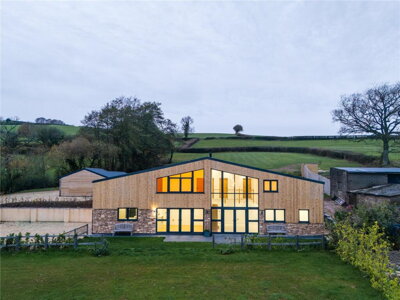
Browse 1 home new builds in Clayhanger, Mid Devon from local developer agents.
£1.60M
1
0
307
Source: home.co.uk
Source: home.co.uk
detached
1 listings
Avg £1.60M
Source: home.co.uk
Source: home.co.uk
The Catton property market offers a distinctive range of homes that reflect the village's rural character and agricultural heritage. Detached properties represent the most common housing type in the area, with recent sales data showing median prices around £295,885 to £463,385 depending on size and condition. These homes typically sit on generous plots with views across open farmland, offering the kind of outdoor space that urban buyers often crave. The village's position within the Howardian Hills Area of Outstanding Natural Beauty means that many properties enjoy stunning views and access to beautiful walking countryside.
Terraced properties in Catton provide an excellent entry point for first-time buyers or those seeking a more manageable property footprint. With terraced homes selling at a median of approximately £310,000 to £320,000, these properties often feature traditional stone construction, original fireplaces, and the kind of character details that modern builds simply cannot replicate. Semi-detached homes, while less common in this small village, offer practical family accommodation at around £225,000, providing good value compared to similar properties in the surrounding market towns. The limited number of sales recorded in recent years, with nine transactions in 2025, reflects the tight-knit nature of the local market where properties change hands less frequently than in urban areas.
Price trends in Catton have shown some variation in recent periods, with different data sources reporting conflicting movements. Some metrics indicate rises of around 34.6% over twelve months, while others show more modest adjustments. This variation likely reflects the small number of transactions in the village, where each sale can significantly influence average figures. For buyers, this underscores the importance of understanding that Catton is not a volume property market but rather a specialist niche where each property must be evaluated on its individual merits, location within the village, and condition.

Catton embodies the classic North Yorkshire village experience, where the rhythm of life follows the seasons rather than the clock. The village name derives from the Old Norse word meaning a farm or settlement, and the community retains much of that agricultural character today. Scattered farms, dry stone walls, and traditional country pubs define the landscape, creating an atmosphere that feels genuinely removed from modern life while remaining connected to essential amenities. The village sits within the Ryedale district, an area celebrated for its gentle rolling hills, historic villages, and the nearby North York Moors National Park to the north and east.
The community spirit in Catton remains strong despite the village's small population. The local pub serves as a gathering point for residents, while seasonal events throughout the year bring neighbours together for village celebrations and fundraisers. The surrounding countryside offers extensive public footpaths and bridleways, making the area particularly attractive to dog walkers, hikers, and anyone who values access to green space. The Howardian Hills, an Area of Outstanding Natural Beauty, lies immediately to the south and east of the village, providing exceptional scenery and recreational opportunities right on the doorstep.
Day-to-day amenities are available in nearby villages and market towns. The market town of Helmsley, just a short drive away, offers a weekly market, independent shops, and essential services including a doctors surgery and pharmacy. York, with its full range of shopping, dining, and cultural attractions, is accessible within thirty minutes by car, giving residents the best of both worlds: rural tranquility at home and urban amenities within easy reach. The village school, while small, serves the local community, and the parish church provides a focal point for community life and events throughout the year.
Education in Catton centres on the village primary school, which serves families with children of primary age and provides the foundation of local educational provision. Small class sizes mean teachers can offer individual attention, and the close-knit school community helps children develop strong social connections from an early age. The primary curriculum follows the national framework while incorporating opportunities for outdoor learning, with the surrounding countryside providing an exceptional natural classroom for science, geography, and physical education activities. Parents considering a move to Catton often cite the quality of primary education as a significant factor in their decision.
Secondary education options require travel to nearby towns, with several strong secondary schools accessible within reasonable commuting distance. Schools in York, Malton, and the surrounding area offer good Ofsted ratings and a range of specialist subjects that smaller schools cannot provide. The journey to these schools, typically requiring bus transport, is manageable for most families and is offset by the benefits of rural living and the space that comes with it. Some families choose to explore independent schooling options in York, which provides several well-regarded private schools at both primary and secondary level.
For families with older children considering further and higher education, the proximity to York opens up excellent opportunities. York College offers a wide range of A-level and vocational courses, while the University of York and York St John University provide undergraduate and postgraduate programmes across multiple disciplines. The transport connections from Catton make it practical for older students to commute to York for their studies, giving them the option to live at home while pursuing their education or to move into student accommodation as they progress. This flexibility adds another dimension to Catton's appeal for families at various stages of their educational journey.
Catton enjoys a strategic position within North Yorkshire, with the A1(M) running nearby and providing direct access to major cities throughout the north of England. The motorway intersection at nearby Dishforth puts the A1(M) within easy reach, connecting residents to Newcastle upon Tyne to the north and Leeds, Sheffield, and beyond to the south. This connectivity makes Catton practical for commuters who work in regional centres but prefer the quality of life that rural living offers. The journey time to York city centre is approximately twenty to twenty-five minutes by car, making regular trips to York entirely feasible for work, shopping, or leisure.
Rail services are accessible from York railway station, one of the north of England's major rail hubs with direct services to London, Edinburgh, Birmingham, and many other destinations. The station offers fast trains to London Kings Cross that complete the journey in under two hours, making day trips to the capital or regular business travel highly practical. East Coast Main Line services also provide connections to Newcastle, Edinburgh, and the East Midlands. For those who travel by rail regularly, the drive from Catton to York station takes approximately thirty minutes, and parking facilities at the station accommodate regular commuters.
Local bus services connect Catton to surrounding villages and market towns, providing essential transport for those without cars or for shorter journeys that do not require car travel. The bus network serves Helmsley, Malton, and York, offering scheduled services that allow residents to access supermarkets, hospitals, and other essential services without relying entirely on private vehicles. For cyclists, the quiet country lanes of North Yorkshire offer excellent riding opportunities, though the hilly terrain requires reasonable fitness. The nearest airport is Leeds Bradford Airport, approximately fifty miles away, providing international flight connections for business and leisure travel further afield.
Begin by exploring current property listings in Catton to understand what is available at various price points. The village market moves slowly compared to urban areas, so patience is essential. Review recent sales data to understand property values, and consider registering with local estate agents who can alert you to new listings before they appear on major portals.
Before viewing properties in Catton, obtain a mortgage agreement in principle from a lender. This documents your borrowing capacity and demonstrates to sellers that you are a serious buyer. Given the rural nature of Catton, some properties may be older constructions requiring specialist lending approaches, so discuss your mortgage options with an advisor who understands the local market.
Schedule viewings of properties that match your criteria, taking time to assess not just the property itself but also the surrounding area at different times of day. Consider the proximity to neighbours, access roads, and any farming operations that might affect your enjoyment of the property. Take photographs and notes to help compare properties later.
Once you have identified your preferred property, arrange a RICS Level 2 Survey to assess the condition of the building. Older properties in Catton may have traditional construction methods, and a thorough survey can identify any issues with the roof, walls, foundations, or damp proofing that might not be apparent during a standard viewing. The cost of a survey is small compared to the property value and can save significant expense later.
Appoint a solicitor to handle the legal aspects of your purchase. They will conduct searches with the local authority, check planning permissions and building regulations, and manage the transfer of funds on completion. Choose a solicitor with experience of rural property transactions, as some aspects of buying in North Yorkshire may differ from standard urban purchases.
Once all searches are satisfactory and your mortgage is confirmed, your solicitor will arrange for contracts to be exchanged, committing both parties to the sale. A deposit is paid at this stage, typically ten percent of the purchase price. Completion, when you receive the keys and take ownership, follows shortly after, and you can begin your new life in Catton.
Properties in Catton are predominantly older constructions, with many homes dating back to the eighteenth or nineteenth century. Traditional stone walls and solid construction are characteristic features, but buyers should look carefully for signs of damp, structural movement, or aging building fabric. The North Yorkshire climate, with its rainfall and cold winters, can take a toll on older properties, so roof conditions, gutters, and damp proofing deserve particular attention during viewings and surveys. Many properties in the village will have been updated over the years, but the quality of those updates varies considerably.
As a village within a designated Area of Outstanding Natural Beauty, Catton has planning restrictions that affect what owners can do with their properties. Any extensions, outbuildings, or significant alterations may require consent from the local planning authority. Buyers should verify that any previous work carried out on a property had the necessary permissions, as alterations carried out without consent can cause difficulties when selling. The Howardian Hills AONB partnership provides guidance on conservation and development within the area, and reviewing their advice before purchasing can help set realistic expectations for future plans.
Agricultural proximity is a factor worth considering in a village like Catton. Farming operations in the surrounding area may occasionally involve noise, smells, or traffic associated with normal agricultural activities. The seasonal nature of farming means that certain times of year bring increased activity, and buyers should factor this into their assessment of the location. Similarly, rural roads may see farm machinery at certain times, and properties adjacent to farm land may have different considerations regarding boundary maintenance and access rights. Understanding these dynamics helps ensure that your new home suits your lifestyle expectations.
House prices in Catton show considerable variation depending on property type and data source. The median price across all property types is around £192,000 according to the most recent data. Detached properties command higher prices, with median values between £295,000 and £463,000, while terraced homes typically sell for around £310,000 to £320,000. Semi-detached properties are less common but have sold at around £225,000. The small number of annual transactions in this village means that prices can fluctuate significantly based on the properties that happen to sell in any given period, so buyers should focus on individual property characteristics rather than aggregate statistics.
Properties in Catton fall under Ryedale District Council for council tax purposes, which operates bands A through H. Most traditional stone cottages and smaller terraced properties in the village typically fall into bands A to C, while larger detached homes and farmhouses may be in bands D to F. The actual band depends on the property valuation, and buyers should check the specific band for any property they are considering through the Valuation Office Agency website or by asking the selling agent or solicitor to confirm during the conveyancing process.
Catton has a small village primary school serving children from reception through to Year 6, providing intimate class sizes and strong community connections. Secondary education is available at schools in nearby towns including York, Malton, and Helmsley, with several schools achieving good or outstanding Ofsted ratings. For families seeking independent education, York offers several well-regarded private schools at primary and secondary level. Sixth form and further education options are comprehensive through York College and the University of York, which are accessible from Catton via the excellent road connections.
Catton is served by local bus routes connecting the village to nearby market towns and York. These services provide essential connectivity for residents without cars, though frequency is limited compared to urban areas. York railway station, approximately twenty-five minutes away by car, provides access to the national rail network with fast services to London, Edinburgh, and other major cities. Leeds Bradford Airport is around fifty miles away and accessible by road, offering domestic and international flights. Most residents rely on private vehicles as their primary transport, and the proximity to the A1(M) makes car travel straightforward.
Catton offers potential for property investment, particularly given the ongoing demand for rural homes with good connections to major cities. The village's location within the Howardian Hills Area of Outstanding Natural Beauty and proximity to York maintains appeal for buyers seeking the countryside lifestyle. However, investors should note that the market moves slowly due to limited transaction volumes, which affects liquidity. Rental demand in the village is likely modest given its small population, but properties in good condition within easy commuting distance of York can command rental values that reflect the rural premium and proximity to employment centres.
Stamp Duty Land Tax for standard buyers in England applies at 0% on the first £250,000 of property value, 5% on the portion from £250,001 to £925,000, and 10% on the portion from £925,001 to £1.5 million. First-time buyers benefit from relief that increases the zero-rate threshold to £425,000, with 5% applying between £425,001 and £625,000. On a typical Catton property priced around £300,000, a standard buyer would pay £2,500 in stamp duty, while a first-time buyer would pay nothing if the property qualifies for first-time buyer relief. Your solicitor will calculate the exact amount due based on your circumstances and the property purchase price.
From 3.5%
Compare mortgage rates from leading lenders and find the best deal for your Catton home
From £499
Expert solicitors to handle your purchase in Catton, North Yorkshire
From £350
Homebuyer report for your new property, ideal for older homes in Catton
From £60
Energy performance certificate required for all property sales
Understanding the full costs of buying a property in Catton, North Yorkshire, helps buyers budget accurately and avoid surprises as they progress through their purchase. The primary additional cost beyond the property price is Stamp Duty Land Tax, which applies to all property purchases in England above £250,000 at standard rates. For a property priced at the village median of around £192,000, a standard buyer would not owe any stamp duty, as purchases below the threshold are exempt. However, most properties in Catton that exceed this threshold, particularly detached homes, will incur stamp duty charges that need to be factored into the overall budget.
First-time buyers purchasing properties up to £625,000 can claim relief that increases the zero-rate threshold to £425,000, with 5% applying on the portion between £425,001 and £625,000. On a terraced property in Catton priced at £310,000, a first-time buyer would pay nothing in stamp duty thanks to this relief. This makes Catton particularly attractive for first-time buyers who have saved a deposit, as their stamp duty costs may be significantly reduced compared to purchasing in more expensive urban markets. Your solicitor will calculate the exact stamp duty based on your purchase price, residency status, and whether you qualify for any reliefs.
Beyond stamp duty, buyers should budget for solicitor fees, survey costs, mortgage arrangement fees, and moving expenses. Conveyancing fees for a standard purchase in Catton typically start from around £499 to £999 depending on complexity and whether the property is freehold or leasehold. A RICS Level 2 Survey costs from £350 and provides essential information about the condition of older properties that are common in the village. Mortgage arrangement fees vary by lender and product, ranging from zero to around £2,000, and should be weighed against the interest rate savings they offer. The total of these costs can add several thousand pounds to the purchase price, so accurate budgeting from the outset of your property search is essential.
Properties New Builds In London

Properties New Builds In Plymouth

Properties New Builds In Liverpool

Properties New Builds In Glasgow

Properties New Builds In Sheffield

Properties New Builds In Edinburgh

Properties New Builds In Coventry

Properties New Builds In Bradford

Properties New Builds In Manchester

Properties New Builds In Birmingham

Properties New Builds In Bristol

Properties New Builds In Oxford

Properties New Builds In Leicester

Properties New Builds In Newcastle

Properties New Builds In Leeds

Properties New Builds In Southampton

Properties New Builds In Cardiff

Properties New Builds In Nottingham

Properties New Builds In Norwich

Properties New Builds In Brighton

Properties New Builds In Derby

Properties New Builds In Portsmouth

Properties New Builds In Northampton

Properties New Builds In Milton Keynes

Properties New Builds In Bournemouth

Properties New Builds In Bolton

Properties New Builds In Swansea

Properties New Builds In Swindon

Properties New Builds In Peterborough

Properties New Builds In Wolverhampton

Enter your details to see if this property is within your budget.
Loans, cards, car finance
Estimated property budget
Borrowing + deposit
You could borrow between
Typical borrowing
Monthly repayment
Est. at 4.5%
Loan-to-value
This is an estimate only. Your actual budget may vary depending on interest rates, credit history, and personal circumstances. For an accurate affordability assessment, speak to one of our free mortgage advisors.
This calculator provides estimates for illustrative purposes only and does not constitute financial advice. Your home may be repossessed if you do not keep up repayments on your mortgage. Estimates based on 4.5% interest rate, repayment mortgage. Actual rates depend on your circumstances.
Homemove is a trading name of HM Haus Group Ltd (Company No. 13873779, registered in England & Wales). Homemove Mortgages Ltd (Company No. 15947693) is an Appointed Representative of TMG Direct Limited, trading as TMG Mortgage Network, which is authorised and regulated by the Financial Conduct Authority (FRN 786245). Homemove Mortgages Ltd is entered on the FCA Register as an Appointed Representative (FRN 1022429). You can check registrations at NewRegister or by calling 0800 111 6768.

We use cookies to show you personalised content and improve your experience of our website. Find out more in our Privacy policy and Cookie policy.